Making Good Decisions
o We are shaped by our choices

o Every moral choice we make reveals the
  kind of person we are and forms
  the kind of person we become

EX.
1. From the choice to throw our garbage
properly
in the trash can

– our choice of vocation or career in life.
Making Good Decisions

Sometimes, good choice may seem so clear hat we pursue
it without much deliberation


Other times, good choice may not be so clear because
there are important factors to consider:

           - circumstances of our decision-making
           - possible short-term or long-term consequences
           - other people’s guidance
           - our values formed with the guidance of moral
                  norms
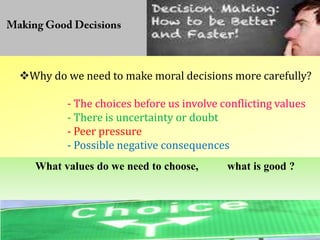
Why do we need to make moral decisions more carefully?

         - The choices before us involve conflicting values
         - There is uncertainty or doubt
         - Peer pressure
         - Possible negative consequences
   What values do we need to choose,      what is good ?
Making Good Decisions
  Different ways by which people make
             moral decisions

 “toss coin” decisions

 “bahala na”

 “ene-minie-mienimo”
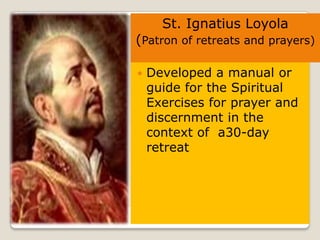
St. Ignatius Loyola
(Patron of retreats and prayers)

   Developed a manual or
    guide for the Spiritual
    Exercises for prayer and
    discernment in the
    context of a30-day
    retreat
Making Good Decisions

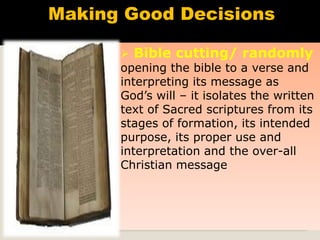
       Bible cutting/ randomly
      opening the bible to a verse and
      interpreting its message as
      God’s will – it isolates the written
      text of Sacred scriptures from its
      stages of formation, its intended
      purpose, its proper use and
      interpretation and the over-all
      Christian message
Making Good Decisions

1.Extreme individualities
        – only consider their self-centered
perspective without listening to the
wisdom of the moral norms, Church
teachings and others
       - danger of “rationalizing away”
(excusing) even clearly morally evil acts

      Ex. A student may rationalize
his resolve to cheat in the exam by
dwelling on his need to pass
Making Good
    Decisions

2. Passive conformist
     - leave the decision-making
to his/her barkada or other
authority figures , sometimes
disregarding the very prompting
of his/her own conscience.
How can we develop the
skill of making
HOLISTIC DECISIONS ?
How can our personal, loving
  knowledge of Jesus shape the way
     we make our everyday moral
                       decisions?
    Jesus’ life and teachings allow us to discern what is good
for us as well as for others


 1. Jn. 8:12
= “ i am the light of the world.
Whoever follow me will not
walk in darkness, but will have
the light of life.
2. Acts 2:1-4

  = “christ's spirit of love, the
  holy spirit, gives us the
  courage to choose the good.
  The same spirit empowered
  the fearful disciples at
  Pentecost
3. Acts 9: 1-19
     = instrumental in Paul's
             conversion
4. Lk 22: 39-46
    = “ christs’ own crossroads –
in the garden of gethsemane
where he confronted the
certainty of his suffering and
death with such agony”
5. Mt. 20:28
 = “jesus' prayed to the father,
   embraced what was good and
  lovingly entrusted himself to
   the father’s will so that his
     life may be offered as a
         ransom for many”
6. 1 Jn 3:1
      = “jesus is our model of
   fortitude and true freedom.
  Selflessly offering his life to
  fulfill the father's will that
 we may be called the children
                of god.
7. James 14:6
 = “ christ beckons us to follow
 him for he IS THE WAY, THE TRUTH
           and the life.”
Important Elements in
            Making Moral Decisions
A.Investigate the facts of the Moral Act

          3 Dimensions of every Moral Act:
1. The object or nature of the act
       - “What is the act involved ?”
Example:
a. The act involved in maligning the good reputation of
   a classmate by spreading gossip is lying, or SLANDER

b.A person who takes another person’s possession is
  guilty of STEALING

c. A married person who has intimate relations with
   someone other than one’s spouse commits ADULTERY
2. Intention of the act ( subjective aspect)
     – why are you doing it? Why did you commit the act?
   “ A good end does not justify a morally evil means”
Example:
  When a student lets a friend copy from his own paper
     during an exam, his goal is to help a friend pass the
                             subject.
3. Circumstances of the act

     - “What are the important factors involved
  in the act? “ It is necessary to understand the
  particulars of the moral act in order on facts
  rather than on whim mere sentimentally.
A.Inquire about the moral norms
  affecting your act

B.Imagine alternativeness and
  consequences

C.Introspect: Listen to your
  emotions

D.Implore God’s help in prayer
  - reading and praying using Bible
  - visiting the Blessed sacrament
  - Exercising the examine of
  consciousness
  - journalizing
GROWING IN VIRTUE,
         GROWING IN CHRIST
A.Cardinal Virtues

1.PRUDENCE
     - the virtue of good moral judgment or
   wisdom.
Example:
 A prudent person/teenager is someone who
  makes moral decisions carefully and
  intelligently, knows his/her priorities, and
  clearly distinguishes between what is good
  and true from what is evil and false
2. FORTITUDE
    - the virtue of moral strength or moral
courage, the capacity to resist temptation and
pursue what is good despite obstacles

Example:
      Someone who possesses the virtue of
fortitude has the ability to endure, overcome
difficulties and sacrifice to do what is good.
3. JUSTICE
 - the firm will to give persons their due

Example:
 A truly just person is one who genuinely
 respect all persons, acts compassionately
 towards all those in need, and has a firm
 sense of responsibility towards others and
 the whole community
4. TEMPERANCE
 - the virtue of moderation or self-mastery.

Example:
    A person who exemplifies temperance
 manager his/her emotions, drives, and
 impulses and expresses them appropriately
THEOLOGICAL VIRTUES

1. FAITH

2. HOPE

3.LOVE

Making Moral Decisions

  • 2.
    Making Good Decisions oWe are shaped by our choices o Every moral choice we make reveals the kind of person we are and forms the kind of person we become EX. 1. From the choice to throw our garbage properly in the trash can – our choice of vocation or career in life.
  • 3.
    Making Good Decisions Sometimes,good choice may seem so clear hat we pursue it without much deliberation Other times, good choice may not be so clear because there are important factors to consider: - circumstances of our decision-making - possible short-term or long-term consequences - other people’s guidance - our values formed with the guidance of moral norms
  • 4.
    Why do weneed to make moral decisions more carefully? - The choices before us involve conflicting values - There is uncertainty or doubt - Peer pressure - Possible negative consequences What values do we need to choose, what is good ?
  • 5.
    Making Good Decisions Different ways by which people make moral decisions  “toss coin” decisions  “bahala na”  “ene-minie-mienimo”
  • 6.
    St. Ignatius Loyola (Patronof retreats and prayers)  Developed a manual or guide for the Spiritual Exercises for prayer and discernment in the context of a30-day retreat
  • 7.
    Making Good Decisions  Bible cutting/ randomly opening the bible to a verse and interpreting its message as God’s will – it isolates the written text of Sacred scriptures from its stages of formation, its intended purpose, its proper use and interpretation and the over-all Christian message
  • 8.
    Making Good Decisions 1.Extremeindividualities – only consider their self-centered perspective without listening to the wisdom of the moral norms, Church teachings and others - danger of “rationalizing away” (excusing) even clearly morally evil acts Ex. A student may rationalize his resolve to cheat in the exam by dwelling on his need to pass
  • 9.
    Making Good Decisions 2. Passive conformist - leave the decision-making to his/her barkada or other authority figures , sometimes disregarding the very prompting of his/her own conscience.
  • 10.
    How can wedevelop the skill of making HOLISTIC DECISIONS ?
  • 11.
    How can ourpersonal, loving knowledge of Jesus shape the way we make our everyday moral decisions? Jesus’ life and teachings allow us to discern what is good for us as well as for others 1. Jn. 8:12 = “ i am the light of the world. Whoever follow me will not walk in darkness, but will have the light of life.
  • 12.
    2. Acts 2:1-4 = “christ's spirit of love, the holy spirit, gives us the courage to choose the good. The same spirit empowered the fearful disciples at Pentecost
  • 13.
    3. Acts 9:1-19 = instrumental in Paul's conversion 4. Lk 22: 39-46 = “ christs’ own crossroads – in the garden of gethsemane where he confronted the certainty of his suffering and death with such agony”
  • 14.
    5. Mt. 20:28 = “jesus' prayed to the father, embraced what was good and lovingly entrusted himself to the father’s will so that his life may be offered as a ransom for many”
  • 15.
    6. 1 Jn3:1 = “jesus is our model of fortitude and true freedom. Selflessly offering his life to fulfill the father's will that we may be called the children of god.
  • 16.
    7. James 14:6 = “ christ beckons us to follow him for he IS THE WAY, THE TRUTH and the life.”
  • 17.
    Important Elements in Making Moral Decisions A.Investigate the facts of the Moral Act 3 Dimensions of every Moral Act: 1. The object or nature of the act - “What is the act involved ?” Example: a. The act involved in maligning the good reputation of a classmate by spreading gossip is lying, or SLANDER b.A person who takes another person’s possession is guilty of STEALING c. A married person who has intimate relations with someone other than one’s spouse commits ADULTERY
  • 18.
    2. Intention ofthe act ( subjective aspect) – why are you doing it? Why did you commit the act? “ A good end does not justify a morally evil means” Example: When a student lets a friend copy from his own paper during an exam, his goal is to help a friend pass the subject. 3. Circumstances of the act - “What are the important factors involved in the act? “ It is necessary to understand the particulars of the moral act in order on facts rather than on whim mere sentimentally.
  • 19.
    A.Inquire about themoral norms affecting your act B.Imagine alternativeness and consequences C.Introspect: Listen to your emotions D.Implore God’s help in prayer - reading and praying using Bible - visiting the Blessed sacrament - Exercising the examine of consciousness - journalizing
  • 20.
    GROWING IN VIRTUE, GROWING IN CHRIST A.Cardinal Virtues 1.PRUDENCE - the virtue of good moral judgment or wisdom. Example: A prudent person/teenager is someone who makes moral decisions carefully and intelligently, knows his/her priorities, and clearly distinguishes between what is good and true from what is evil and false
  • 21.
    2. FORTITUDE - the virtue of moral strength or moral courage, the capacity to resist temptation and pursue what is good despite obstacles Example: Someone who possesses the virtue of fortitude has the ability to endure, overcome difficulties and sacrifice to do what is good.
  • 22.
    3. JUSTICE -the firm will to give persons their due Example: A truly just person is one who genuinely respect all persons, acts compassionately towards all those in need, and has a firm sense of responsibility towards others and the whole community
  • 23.
    4. TEMPERANCE -the virtue of moderation or self-mastery. Example: A person who exemplifies temperance manager his/her emotions, drives, and impulses and expresses them appropriately
  • 24.