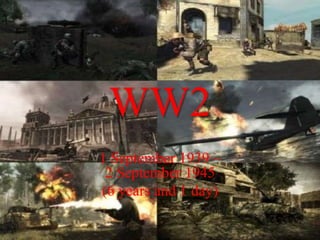
1 September 1939 –
2 September 1945
(6 years and 1 day)
WW2
Allies Axis
• The USSR
• The USA
• The British Empire
• Chinese Republic
• Free France*
• Third Reich(Nazi Germany)
• Japanese Empire
• Fascist Italy
Who was involved in the war?
Germany Italy
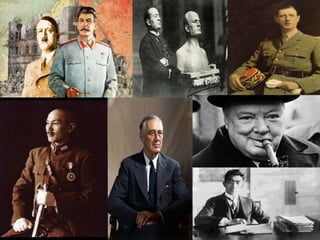
• Adolf Hitler (Führer), leader
of the Nazi Party
• Benito Mussolini (Il Duce),
the founder of Italian
Fascism
Leaders
Japan China
• Hirohito,
124th Emperor of Japan
• Chiang Kai-shek,
leader of the Republic of
China
Leaders
The USSR The USA
• Joseph Stalin, General
Secretary and Premier of
the Communist Party of the
Soviet Union
• Franklin Delano Roosevelt,
the 32nd president of the
United States
• Harry Trooman*
*after Roosevelt’s death
Leaders
British Empire Free France
• Sir Winston
Churchill, Prime Minister of
the United Kingdom
• the government-in-exile
• led by Charles de Gaulle,
army officer and statesman
Leaders
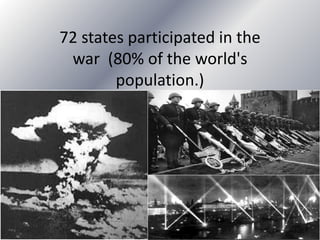
72 states participated in the
war (80% of the world's
population.)
Prerequisites for the Second World War
Economic: Capitalist contradictions (the crisis of
overproduction of goods, markets, etc.).
Political: Instability of the Versailles system. The creation of
non-viable government entities in the course of the Versailles
agreements. Territorial conflicts in Europe.
Ideological: “Aggressive” political regimes, nationalistic
ideologies, ideas of “Revanchism” and “Fair Order”, etc.
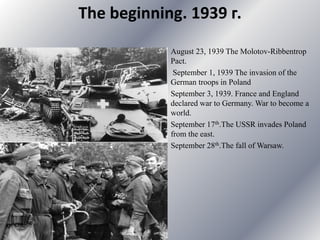
The beginning. 1939 г.
August 23, 1939 The Molotov-Ribbentrop
Pact.
September 1, 1939 The invasion of the
German troops in Poland
September 3, 1939. France and England
declared war to Germany. War to become a
world.
September 17th.The USSR invades Poland
from the east.
September 28th.The fall of Warsaw.
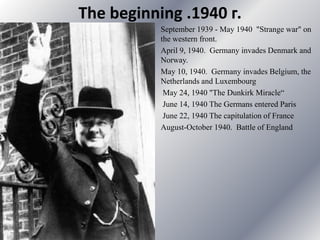
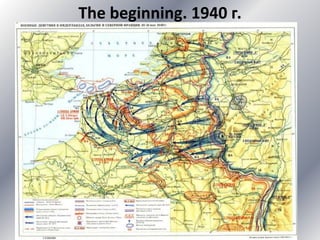
The beginning .1940 г.
September 1939 - May 1940 "Strange war" on
the western front.
April 9, 1940. Germany invades Denmark and
Norway.
May 10, 1940. Germany invades Belgium, the
Netherlands and Luxembourg
May 24, 1940 "The Dunkirk Miracle“
June 14, 1940 The Germans entered Paris
June 22, 1940 The capitulation of France
August-October 1940. Battle of England
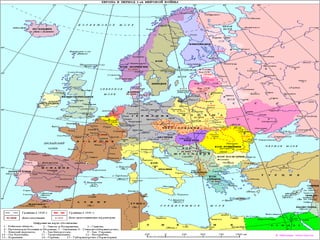
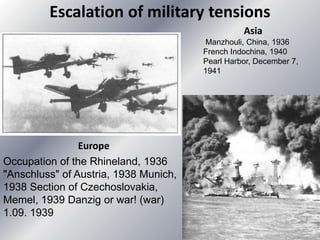
Escalation of military tensions
Europe
Occupation of the Rhineland, 1936
"Anschluss" of Austria, 1938 Munich,
1938 Section of Czechoslovakia,
Memel, 1939 Danzig or war! (war)
1.09. 1939
Asia
Manzhouli, China, 1936
French Indochina, 1940
Pearl Harbor, December 7,
1941
The beginning. 1940 г.
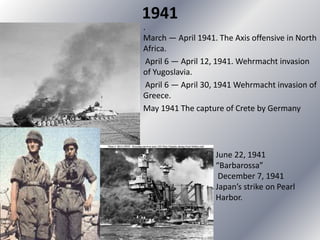
1941
.
March — April 1941. The Axis offensive in North
Africa.
April 6 — April 12, 1941. Wehrmacht invasion
of Yugoslavia.
April 6 — April 30, 1941 Wehrmacht invasion of
Greece.
May 1941 The capture of Crete by Germany
June 22, 1941
“Barbarossa”
December 7, 1941
Japan’s strike on Pearl
Harbor.
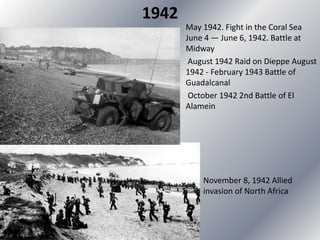
1942
May 1942. Fight in the Coral Sea
June 4 — June 6, 1942. Battle at
Midway
August 1942 Raid on Dieppe August
1942 - February 1943 Battle of
Guadalcanal
October 1942 2nd Battle of El
Alamein
November 8, 1942 Allied
invasion of North Africa
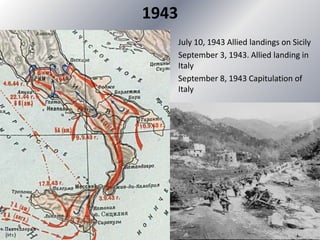
1943
July 10, 1943 Allied landings on Sicily
September 3, 1943. Allied landing in
Italy
September 8, 1943 Capitulation of
Italy
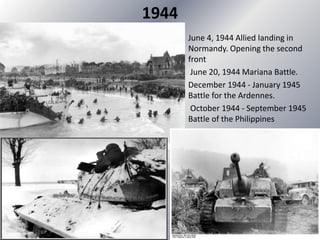
1944
June 4, 1944 Allied landing in
Normandy. Opening the second
front
June 20, 1944 Mariana Battle.
December 1944 - January 1945
Battle for the Ardennes.
October 1944 - September 1945
Battle of the Philippines
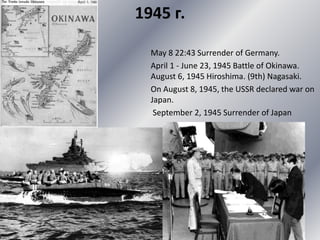
1945 г.
May 8 22:43 Surrender of Germany.
April 1 - June 23, 1945 Battle of Okinawa.
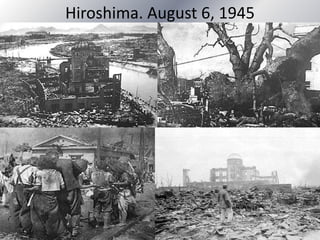
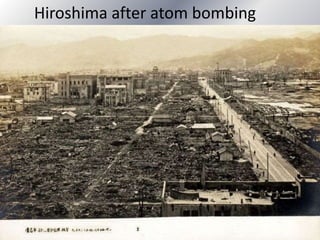
August 6, 1945 Hiroshima. (9th) Nagasaki.
On August 8, 1945, the USSR declared war on
Japan.
September 2, 1945 Surrender of Japan
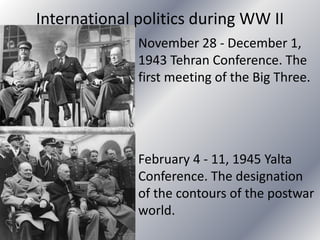
International politics during WW II
November 28 - December 1,
1943 Tehran Conference. The
first meeting of the Big Three.
February 4 - 11, 1945 Yalta
Conference. The designation
of the contours of the postwar
world.
The genocide of civilians
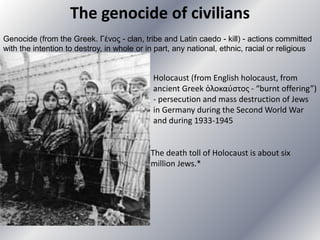
Holocaust (from English holocaust, from
ancient Greek ὁλοκαύστος - “burnt offering”)
- persecution and mass destruction of Jews
in Germany during the Second World War
and during 1933-1945
Genocide (from the Greek. Γένος - clan, tribe and Latin caedo - kill) - actions committed
with the intention to destroy, in whole or in part, any national, ethnic, racial or religious
group as such
The death toll of Holocaust is about six
million Jews.*
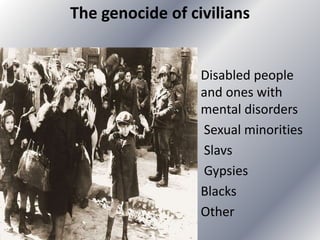
The genocide of civilians
Disabled people
and ones with
mental disorders
Sexual minorities
Slavs
Gypsies
Blacks
Other
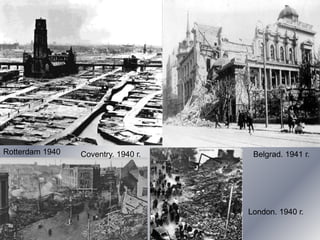
Rotterdam 1940 Belgrad. 1941 г.
London. 1940 г.
Coventry. 1940 г.
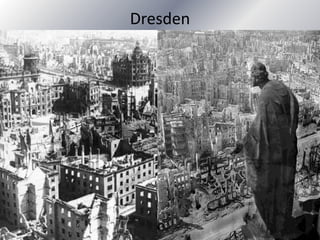
Dresden
Hiroshima. August 6, 1945
Hiroshima after atom bombing
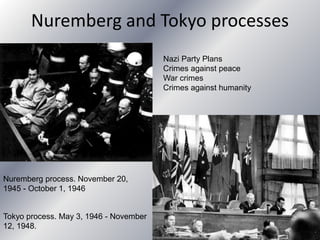
Nuremberg and Tokyo processes
Tokyo process. May 3, 1946 - November
12, 1948.
Nuremberg process. November 20,
1945 - October 1, 1946
Nazi Party Plans
Crimes against peace
War crimes
Crimes against humanity
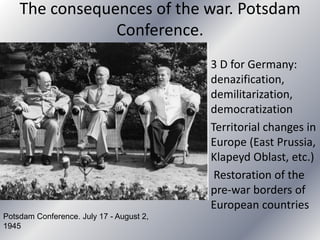
The consequences of the war. Potsdam
Conference.
3 D for Germany:
denazification,
demilitarization,
democratization
Territorial changes in
Europe (East Prussia,
Klapeyd Oblast, etc.)
Restoration of the
pre-war borders of
European countries
Potsdam Conference. July 17 - August 2,
1945
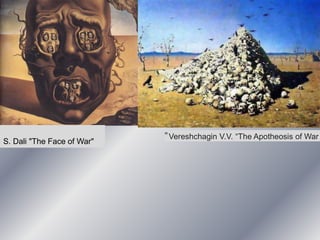
S. Dali "The Face of War"
”Vereshchagin V.V. “The Apotheosis of War

World War 2

  • 1.
    1 September 1939– 2 September 1945 (6 years and 1 day) WW2
  • 2.
    Allies Axis • TheUSSR • The USA • The British Empire • Chinese Republic • Free France* • Third Reich(Nazi Germany) • Japanese Empire • Fascist Italy Who was involved in the war?
  • 3.
    Germany Italy • AdolfHitler (Führer), leader of the Nazi Party • Benito Mussolini (Il Duce), the founder of Italian Fascism Leaders
  • 4.
    Japan China • Hirohito, 124thEmperor of Japan • Chiang Kai-shek, leader of the Republic of China Leaders
  • 5.
    The USSR TheUSA • Joseph Stalin, General Secretary and Premier of the Communist Party of the Soviet Union • Franklin Delano Roosevelt, the 32nd president of the United States • Harry Trooman* *after Roosevelt’s death Leaders
  • 6.
    British Empire FreeFrance • Sir Winston Churchill, Prime Minister of the United Kingdom • the government-in-exile • led by Charles de Gaulle, army officer and statesman Leaders
  • 9.
    72 states participatedin the war (80% of the world's population.)
  • 10.
    Prerequisites for theSecond World War Economic: Capitalist contradictions (the crisis of overproduction of goods, markets, etc.). Political: Instability of the Versailles system. The creation of non-viable government entities in the course of the Versailles agreements. Territorial conflicts in Europe. Ideological: “Aggressive” political regimes, nationalistic ideologies, ideas of “Revanchism” and “Fair Order”, etc.
  • 11.
    The beginning. 1939г. August 23, 1939 The Molotov-Ribbentrop Pact. September 1, 1939 The invasion of the German troops in Poland September 3, 1939. France and England declared war to Germany. War to become a world. September 17th.The USSR invades Poland from the east. September 28th.The fall of Warsaw.
  • 12.
    The beginning .1940г. September 1939 - May 1940 "Strange war" on the western front. April 9, 1940. Germany invades Denmark and Norway. May 10, 1940. Germany invades Belgium, the Netherlands and Luxembourg May 24, 1940 "The Dunkirk Miracle“ June 14, 1940 The Germans entered Paris June 22, 1940 The capitulation of France August-October 1940. Battle of England
  • 13.
    Escalation of militarytensions Europe Occupation of the Rhineland, 1936 "Anschluss" of Austria, 1938 Munich, 1938 Section of Czechoslovakia, Memel, 1939 Danzig or war! (war) 1.09. 1939 Asia Manzhouli, China, 1936 French Indochina, 1940 Pearl Harbor, December 7, 1941
  • 14.
  • 15.
    1941 . March — April1941. The Axis offensive in North Africa. April 6 — April 12, 1941. Wehrmacht invasion of Yugoslavia. April 6 — April 30, 1941 Wehrmacht invasion of Greece. May 1941 The capture of Crete by Germany June 22, 1941 “Barbarossa” December 7, 1941 Japan’s strike on Pearl Harbor.
  • 16.
    1942 May 1942. Fightin the Coral Sea June 4 — June 6, 1942. Battle at Midway August 1942 Raid on Dieppe August 1942 - February 1943 Battle of Guadalcanal October 1942 2nd Battle of El Alamein November 8, 1942 Allied invasion of North Africa
  • 17.
    1943 July 10, 1943Allied landings on Sicily September 3, 1943. Allied landing in Italy September 8, 1943 Capitulation of Italy
  • 18.
    1944 June 4, 1944Allied landing in Normandy. Opening the second front June 20, 1944 Mariana Battle. December 1944 - January 1945 Battle for the Ardennes. October 1944 - September 1945 Battle of the Philippines
  • 19.
    1945 г. May 822:43 Surrender of Germany. April 1 - June 23, 1945 Battle of Okinawa. August 6, 1945 Hiroshima. (9th) Nagasaki. On August 8, 1945, the USSR declared war on Japan. September 2, 1945 Surrender of Japan
  • 20.
    International politics duringWW II November 28 - December 1, 1943 Tehran Conference. The first meeting of the Big Three. February 4 - 11, 1945 Yalta Conference. The designation of the contours of the postwar world.
  • 21.
    The genocide ofcivilians Holocaust (from English holocaust, from ancient Greek ὁλοκαύστος - “burnt offering”) - persecution and mass destruction of Jews in Germany during the Second World War and during 1933-1945 Genocide (from the Greek. Γένος - clan, tribe and Latin caedo - kill) - actions committed with the intention to destroy, in whole or in part, any national, ethnic, racial or religious group as such The death toll of Holocaust is about six million Jews.*
  • 22.
    The genocide ofcivilians Disabled people and ones with mental disorders Sexual minorities Slavs Gypsies Blacks Other
  • 23.
    Rotterdam 1940 Belgrad.1941 г. London. 1940 г. Coventry. 1940 г.
  • 24.
  • 25.
  • 26.
  • 27.
    Nuremberg and Tokyoprocesses Tokyo process. May 3, 1946 - November 12, 1948. Nuremberg process. November 20, 1945 - October 1, 1946 Nazi Party Plans Crimes against peace War crimes Crimes against humanity
  • 28.
    The consequences ofthe war. Potsdam Conference. 3 D for Germany: denazification, demilitarization, democratization Territorial changes in Europe (East Prussia, Klapeyd Oblast, etc.) Restoration of the pre-war borders of European countries Potsdam Conference. July 17 - August 2, 1945
  • 29.
    S. Dali "TheFace of War" ”Vereshchagin V.V. “The Apotheosis of War