Ch. 20 WWII
         The Early Battles
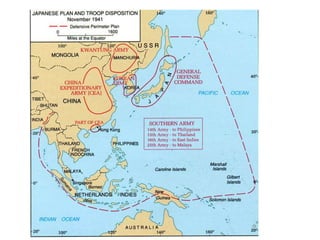
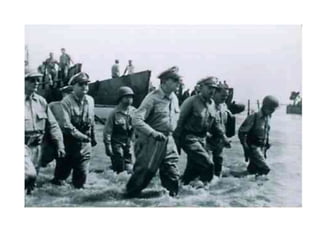
       The Fall of the Philippines
  Hours after the bombing of Pearl
  Harbor, the Japanese attacked the
Philippines. As the Japanese advanced
   toward the southern part of the
Philippines, US forces commanded by
 Douglas MacArthur retreated to the
          Bataan Peninsula.
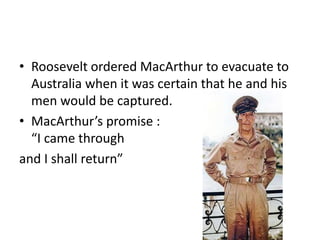
• Roosevelt ordered MacArthur to evacuate to
  Australia when it was certain that he and his
  men would be captured.
• MacArthur’s promise :
  “I came through
and I shall return”
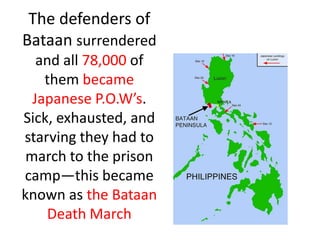
The defenders of
Bataan surrendered
   and all 78,000 of
    them became
  Japanese P.O.W’s.
Sick, exhausted, and
starving they had to
 march to the prison
camp—this became
known as the Bataan
    Death March
Bataan Death March
• http://youtu.be/OPlfhVEw-7U
The Doolittle Raids
• Roosevelt was searching for a way to raise the
  morale of the American people. He thought
  bombing Tokyo would do it. But there were no
  planes available that could reach to Tokyo
  without stopping. B-52 bombers were decided
  upon because they could take off from an air
  craft carrier but they could not land on one.
  They would land in China instead.
• The Doolittle raids were very successful—not
  that they did much damage, but it shocked
  the Japanese. The bombs could have killed the
  emperor.
• http://youtu.be/yHnwxRfzR2A
Midway
• The Commander of the Japanese naval forces
  was Admiral Yamamoto. He decided the
  planes came from Midway Island. So he
  decided to capture Midway Island.
• The Battle of Midway was a turning point in
  the war.
• The Japanese would never advance after
  losing that battle –they were on the defense
  and now the Allies were on the offense.
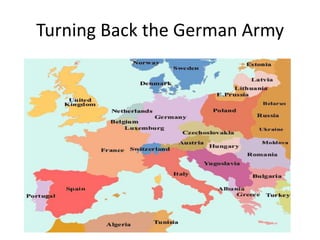
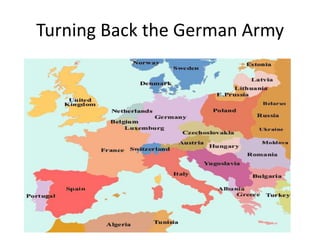
Turning Back the German Army
• Joseph Stalin wanted the US to send troops to the
  Eastern front—to help him fight off the Germans.
• Stalingrad: Hitler was convinced that the only way
  to defeat the Soviet Union was to destroy the city
  of Stalingrad— SU’s important strategic city.
• Epic battle—both sides were ordered to fight to
  last man. In the end the Soviets were victorious in
  pushing back the Germans.
• The Battle of Stalingrad was a turning point in the
  war—Germany on the Eastern front was now on
  the defense never to advance again.
Northern African and Southern Europe
• Roosevelt wanted to get the US forces into the
  war right away but Churchill was cautious.
  Instead he persuaded Roosevelt to send
  troops into the soft underbelly of Europe and
  North Africa. The Allied forces with the help of
  American soldiers had many victories—the
  Axis forces were now on the defense.
Strategic Bombing
• Both England and the US bombed important
  cities of Germany—destroying the railroad
  system and factories.
D-Day
• With the Germans retreating on the East and
  the South it was now time for the Allies to
  invade the North.
• To get the majority of the Allies forces on the
  continent of Europe the decision was made to
  enter thru France.
Turning Back the German Army
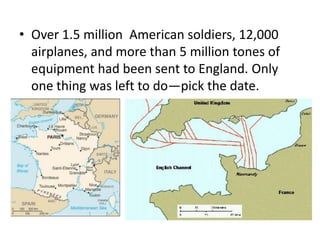
• Over 1.5 million American soldiers, 12,000
  airplanes, and more than 5 million tones of
  equipment had been sent to England. Only
  one thing was left to do—pick the date.
D-Day
•   Begin at night
•   Arrive at low tide
•   Low tide had to come at dawn
•   Weather had to be good
•   http://youtu.be/gZgKo46X8CI
• Liberation of Paris
• http://youtu.be/skGQ0fVx75o
The Battle of the Bulge
• As the Allies closed in on Germany, Hitler
  decided to stage one last desperate offensive.
• The battle lasted over 3 weeks but finally the
  Germans began to withdraw, after having
  suffered more than 100,000 casualties.
V-E Day: The War Ends in Europe
• As German defenses crumbled, American troops closed
  in on the West, and the Soviets closed in on the East.
• Adolf Hitler, knowing that the end was near, put a
  pistol in his mouth and pulled the trigger. Upon orders,
  his personal secretary carried his body outside, doused
  it in gasoline and set it on fire.
• On May 7, 1945 Germany surrendered unconditionally
• http://youtu.be/sHcJtU9dr6I-
• discovery of camp
• http://youtu.be/VcMk85ZsBh0
• German’s speech
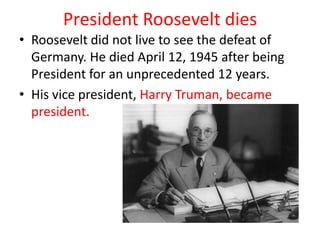
President Roosevelt dies
• Roosevelt did not live to see the defeat of
  Germany. He died April 12, 1945 after being
  President for an unprecedented 12 years.
• His vice president, Harry Truman, became
  president.
War in the Pacific—Island Hopping
• Iwo Jima—strategically an important island for
  the Allies—but with the formidable terrain—
  full of ash and rugged with rocky cliffs and
  dozens of caves where the Japanese were
  hiding for years.
• Marines took the Island in fierce fighting that
  took the life of over 6,800
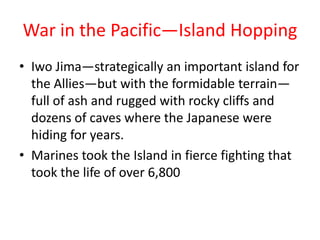
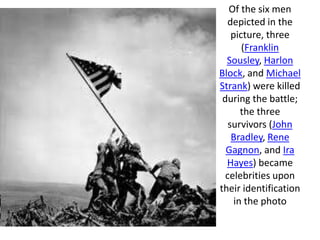
Of the six men
  depicted in the
    picture, three
       (Franklin
  Sousley, Harlon
Block, and Michael
Strank) were killed
 during the battle;
       the three
   survivors (John
    Bradley, Rene
  Gagnon, and Ira
  Hayes) became
  celebrities upon
their identification
     in the photo
Firebombing Japan
• As the Allies were Island hopping—taking over
  all the Islands that Japan had taken over-- on
  their way to Japan, the allies were fire
  bombing major cities in Japan killing over
  80,000 civilians and 250,000 buildings.
• After massive fire bombing there were no
  signs of Japan surrendering.
The Invasion of Okinawa
• With still no signs of surrendering, the Allies
  felt that the Japanese would not surrender
  unless Japan was invaded. To prepare for the
  invasion, the island of Okinawa would need to
  be invaded first.
• http://youtu.be/86QB_WXYcqE
• Code takers
The Manhattan Project
• The American program to build an atomic bomb
  was code-named the Manhattan Project.
• In 1939, top physicist, Leo Szilard suggested that
  splitting the atom might release enormous
  energy. He convinces Albert Einstein to help draft
  a letter to Roosevelt. Roosevelt responded by
  setting up a committee to study the issue.
• A secret laboratory was set up at Los
  Alamos, New Mexico under the direction of J.
  Robert Oppenheimer.
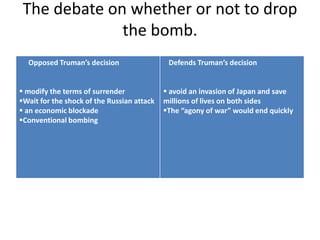
The debate on whether or not to drop
              the bomb.
  Opposed Truman’s decision                  Defends Truman’s decision


ď‚§ modify the terms of surrender             ď‚§ avoid an invasion of Japan and save
ď‚§Wait for the shock of the Russian attack   millions of lives on both sides
 an economic blockade                      The “agony of war” would end quickly
ď‚§Conventional bombing
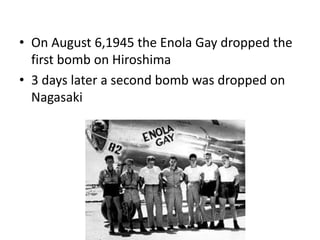
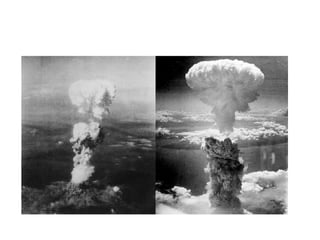
• On August 6,1945 the Enola Gay dropped the
  first bomb on Hiroshima
• 3 days later a second bomb was dropped on
  Nagasaki
Destruction
• Hiroshima-important industrial city
• 76,000 buildings destroyed –63%
• 80,000-120,000 died instantly and more died
  later from burns and radiation.
• Bombing stunned Japan—3 days later Soviet
  Union declared war on Japan and later that
  day a second bomb was dropped
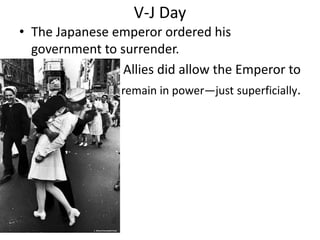
V-J Day
• The Japanese emperor ordered his
  government to surrender.
 • In the end, the Allies did allow the Emperor to
                  remain in power—just superficially.

Ch. 20 wwii

  • 1.
    Ch. 20 WWII The Early Battles The Fall of the Philippines Hours after the bombing of Pearl Harbor, the Japanese attacked the Philippines. As the Japanese advanced toward the southern part of the Philippines, US forces commanded by Douglas MacArthur retreated to the Bataan Peninsula.
  • 3.
    • Roosevelt orderedMacArthur to evacuate to Australia when it was certain that he and his men would be captured. • MacArthur’s promise : “I came through and I shall return”
  • 4.
    The defenders of Bataansurrendered and all 78,000 of them became Japanese P.O.W’s. Sick, exhausted, and starving they had to march to the prison camp—this became known as the Bataan Death March
  • 6.
    Bataan Death March •http://youtu.be/OPlfhVEw-7U
  • 7.
    The Doolittle Raids •Roosevelt was searching for a way to raise the morale of the American people. He thought bombing Tokyo would do it. But there were no planes available that could reach to Tokyo without stopping. B-52 bombers were decided upon because they could take off from an air craft carrier but they could not land on one. They would land in China instead.
  • 8.
    • The Doolittleraids were very successful—not that they did much damage, but it shocked the Japanese. The bombs could have killed the emperor. • http://youtu.be/yHnwxRfzR2A
  • 9.
    Midway • The Commanderof the Japanese naval forces was Admiral Yamamoto. He decided the planes came from Midway Island. So he decided to capture Midway Island. • The Battle of Midway was a turning point in the war. • The Japanese would never advance after losing that battle –they were on the defense and now the Allies were on the offense.
  • 10.
    Turning Back theGerman Army
  • 11.
    Turning Back theGerman Army • Joseph Stalin wanted the US to send troops to the Eastern front—to help him fight off the Germans. • Stalingrad: Hitler was convinced that the only way to defeat the Soviet Union was to destroy the city of Stalingrad— SU’s important strategic city. • Epic battle—both sides were ordered to fight to last man. In the end the Soviets were victorious in pushing back the Germans. • The Battle of Stalingrad was a turning point in the war—Germany on the Eastern front was now on the defense never to advance again.
  • 12.
    Northern African andSouthern Europe • Roosevelt wanted to get the US forces into the war right away but Churchill was cautious. Instead he persuaded Roosevelt to send troops into the soft underbelly of Europe and North Africa. The Allied forces with the help of American soldiers had many victories—the Axis forces were now on the defense.
  • 13.
    Strategic Bombing • BothEngland and the US bombed important cities of Germany—destroying the railroad system and factories.
  • 14.
    D-Day • With theGermans retreating on the East and the South it was now time for the Allies to invade the North. • To get the majority of the Allies forces on the continent of Europe the decision was made to enter thru France.
  • 15.
    Turning Back theGerman Army
  • 16.
    • Over 1.5million American soldiers, 12,000 airplanes, and more than 5 million tones of equipment had been sent to England. Only one thing was left to do—pick the date.
  • 17.
    D-Day • Begin at night • Arrive at low tide • Low tide had to come at dawn • Weather had to be good • http://youtu.be/gZgKo46X8CI
  • 18.
    • Liberation ofParis • http://youtu.be/skGQ0fVx75o
  • 19.
    The Battle ofthe Bulge • As the Allies closed in on Germany, Hitler decided to stage one last desperate offensive. • The battle lasted over 3 weeks but finally the Germans began to withdraw, after having suffered more than 100,000 casualties.
  • 20.
    V-E Day: TheWar Ends in Europe • As German defenses crumbled, American troops closed in on the West, and the Soviets closed in on the East. • Adolf Hitler, knowing that the end was near, put a pistol in his mouth and pulled the trigger. Upon orders, his personal secretary carried his body outside, doused it in gasoline and set it on fire. • On May 7, 1945 Germany surrendered unconditionally • http://youtu.be/sHcJtU9dr6I- • discovery of camp • http://youtu.be/VcMk85ZsBh0 • German’s speech
  • 21.
    President Roosevelt dies •Roosevelt did not live to see the defeat of Germany. He died April 12, 1945 after being President for an unprecedented 12 years. • His vice president, Harry Truman, became president.
  • 23.
    War in thePacific—Island Hopping • Iwo Jima—strategically an important island for the Allies—but with the formidable terrain— full of ash and rugged with rocky cliffs and dozens of caves where the Japanese were hiding for years. • Marines took the Island in fierce fighting that took the life of over 6,800
  • 24.
    Of the sixmen depicted in the picture, three (Franklin Sousley, Harlon Block, and Michael Strank) were killed during the battle; the three survivors (John Bradley, Rene Gagnon, and Ira Hayes) became celebrities upon their identification in the photo
  • 25.
    Firebombing Japan • Asthe Allies were Island hopping—taking over all the Islands that Japan had taken over-- on their way to Japan, the allies were fire bombing major cities in Japan killing over 80,000 civilians and 250,000 buildings. • After massive fire bombing there were no signs of Japan surrendering.
  • 26.
    The Invasion ofOkinawa • With still no signs of surrendering, the Allies felt that the Japanese would not surrender unless Japan was invaded. To prepare for the invasion, the island of Okinawa would need to be invaded first. • http://youtu.be/86QB_WXYcqE • Code takers
  • 27.
    The Manhattan Project •The American program to build an atomic bomb was code-named the Manhattan Project. • In 1939, top physicist, Leo Szilard suggested that splitting the atom might release enormous energy. He convinces Albert Einstein to help draft a letter to Roosevelt. Roosevelt responded by setting up a committee to study the issue. • A secret laboratory was set up at Los Alamos, New Mexico under the direction of J. Robert Oppenheimer.
  • 28.
    The debate onwhether or not to drop the bomb. Opposed Truman’s decision Defends Truman’s decision  modify the terms of surrender  avoid an invasion of Japan and save Wait for the shock of the Russian attack millions of lives on both sides  an economic blockade The “agony of war” would end quickly Conventional bombing
  • 29.
    • On August6,1945 the Enola Gay dropped the first bomb on Hiroshima • 3 days later a second bomb was dropped on Nagasaki
  • 31.
    Destruction • Hiroshima-important industrialcity • 76,000 buildings destroyed –63% • 80,000-120,000 died instantly and more died later from burns and radiation. • Bombing stunned Japan—3 days later Soviet Union declared war on Japan and later that day a second bomb was dropped
  • 32.
    V-J Day • TheJapanese emperor ordered his government to surrender. • In the end, the Allies did allow the Emperor to remain in power—just superficially.