WORKSHOP ASSIGNMENT
BY GROUP MEMBERS
DDP-SP13-BEC-053
DDP-SP13-BEC-027
DDP-SP13-BEC-051
DDP-SP13-BEC-101
DDP-SP13-BEC-91
• Fitting Shop
• In fitting shop various processes are performed on metals to give them desired shape and
size and fit them with mating part.
Types of metals
1) Ferrous metals:- contains iron as their essential constituent e.g. Steel, cast iron
2) Non-Ferrous metals: – does not contain iron as their essential constituent e.g. Brass,
bronze, aluminum etc.
Safety Precautions
Safety precautions should be taken when using hand tool and equipment.
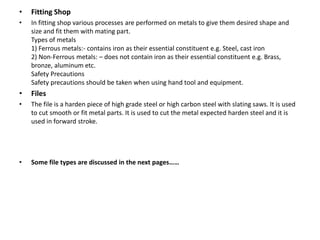
• Files
• The file is a harden piece of high grade steel or high carbon steel with slating saws. It is used
to cut smooth or fit metal parts. It is used to cut the metal expected harden steel and it is
used in forward stroke.
• Some file types are discussed in the next pages……
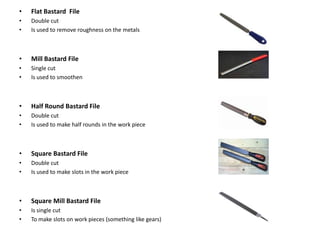
• Flat Bastard File
• Double cut
• Is used to remove roughness on the metals
• Mill Bastard File
• Single cut
• Is used to smoothen
• Half Round Bastard File
• Double cut
• Is used to make half rounds in the work piece
• Square Bastard File
• Double cut
• Is used to make slots in the work piece
• Square Mill Bastard File
• Is single cut
• To make slots on work pieces (something like gears)
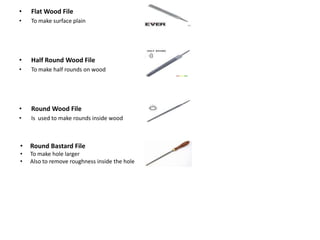
• Flat Wood File
• To make surface plain
• Half Round Wood File
• To make half rounds on wood
• Round Wood File
• Is used to make rounds inside wood
• Round Bastard File
• To make hole larger
• Also to remove roughness inside the hole
Some other apparatus of the fitting shop includes….
Fitting tools
The tools used in fitting shop may be classified into following groups.
Measuring: Steel Rule, Inside Caliper, Outside Caliper and Veneer
Holding: All types of vices
Cutting: Chisel, Hacksaw and Files
Striking: All types of Hammers
Drilling: Various types of Drills
Threading: Tap and Dies
Marking: Scriber, Divider and Center Punch
Fixing: Spanner, Wrenches, Keys and Screw Driver
Checking: All types of Gauges
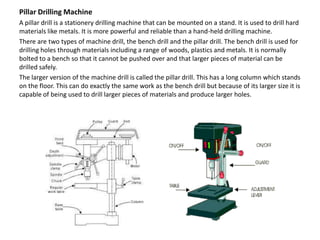
Pillar Drilling Machine
A pillar drill is a stationery drilling machine that can be mounted on a stand. It is used to drill hard
materials like metals. It is more powerful and reliable than a hand-held drilling machine.
There are two types of machine drill, the bench drill and the pillar drill. The bench drill is used for
drilling holes through materials including a range of woods, plastics and metals. It is normally
bolted to a bench so that it cannot be pushed over and that larger pieces of material can be
drilled safely.
The larger version of the machine drill is called the pillar drill. This has a long column which stands
on the floor. This can do exactly the same work as the bench drill but because of its larger size it is
capable of being used to drill larger pieces of materials and produce larger holes.
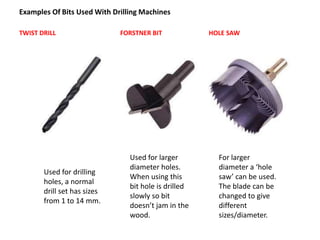
Examples Of Bits Used With Drilling Machines
TWIST DRILL FORSTNER BIT HOLE SAW
Used for drilling
holes, a normal
drill set has sizes
from 1 to 14 mm.
Used for larger
diameter holes.
When using this
bit hole is drilled
slowly so bit
doesn’t jam in the
wood.
For larger
diameter a ‘hole
saw’ can be used.
The blade can be
changed to give
different
sizes/diameter.
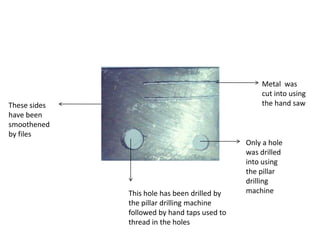
These sides
have been
smoothened
by files
This hole has been drilled by
the pillar drilling machine
followed by hand taps used to
thread in the holes
Only a hole
was drilled
into using
the pillar
drilling
machine
Metal was
cut into using
the hand saw
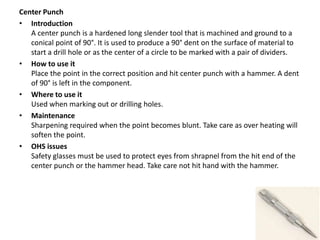
Center Punch
• Introduction
A center punch is a hardened long slender tool that is machined and ground to a
conical point of 90°. It is used to produce a 90° dent on the surface of material to
start a drill hole or as the center of a circle to be marked with a pair of dividers.
• How to use it
Place the point in the correct position and hit center punch with a hammer. A dent
of 90° is left in the component.
• Where to use it
Used when marking out or drilling holes.
• Maintenance
Sharpening required when the point becomes blunt. Take care as over heating will
soften the point.
• OHS issues
Safety glasses must be used to protect eyes from shrapnel from the hit end of the
center punch or the hammer head. Take care not hit hand with the hammer.

Workshop assignment

  • 1.
    WORKSHOP ASSIGNMENT BY GROUPMEMBERS DDP-SP13-BEC-053 DDP-SP13-BEC-027 DDP-SP13-BEC-051 DDP-SP13-BEC-101 DDP-SP13-BEC-91
  • 2.
    • Fitting Shop •In fitting shop various processes are performed on metals to give them desired shape and size and fit them with mating part. Types of metals 1) Ferrous metals:- contains iron as their essential constituent e.g. Steel, cast iron 2) Non-Ferrous metals: – does not contain iron as their essential constituent e.g. Brass, bronze, aluminum etc. Safety Precautions Safety precautions should be taken when using hand tool and equipment. • Files • The file is a harden piece of high grade steel or high carbon steel with slating saws. It is used to cut smooth or fit metal parts. It is used to cut the metal expected harden steel and it is used in forward stroke. • Some file types are discussed in the next pages……
  • 3.
    • Flat BastardFile • Double cut • Is used to remove roughness on the metals • Mill Bastard File • Single cut • Is used to smoothen • Half Round Bastard File • Double cut • Is used to make half rounds in the work piece • Square Bastard File • Double cut • Is used to make slots in the work piece • Square Mill Bastard File • Is single cut • To make slots on work pieces (something like gears)
  • 4.
    • Flat WoodFile • To make surface plain • Half Round Wood File • To make half rounds on wood • Round Wood File • Is used to make rounds inside wood • Round Bastard File • To make hole larger • Also to remove roughness inside the hole
  • 5.
    Some other apparatusof the fitting shop includes…. Fitting tools The tools used in fitting shop may be classified into following groups. Measuring: Steel Rule, Inside Caliper, Outside Caliper and Veneer Holding: All types of vices Cutting: Chisel, Hacksaw and Files Striking: All types of Hammers Drilling: Various types of Drills Threading: Tap and Dies Marking: Scriber, Divider and Center Punch Fixing: Spanner, Wrenches, Keys and Screw Driver Checking: All types of Gauges
  • 6.
    Pillar Drilling Machine Apillar drill is a stationery drilling machine that can be mounted on a stand. It is used to drill hard materials like metals. It is more powerful and reliable than a hand-held drilling machine. There are two types of machine drill, the bench drill and the pillar drill. The bench drill is used for drilling holes through materials including a range of woods, plastics and metals. It is normally bolted to a bench so that it cannot be pushed over and that larger pieces of material can be drilled safely. The larger version of the machine drill is called the pillar drill. This has a long column which stands on the floor. This can do exactly the same work as the bench drill but because of its larger size it is capable of being used to drill larger pieces of materials and produce larger holes.
  • 7.
    Examples Of BitsUsed With Drilling Machines TWIST DRILL FORSTNER BIT HOLE SAW Used for drilling holes, a normal drill set has sizes from 1 to 14 mm. Used for larger diameter holes. When using this bit hole is drilled slowly so bit doesn’t jam in the wood. For larger diameter a ‘hole saw’ can be used. The blade can be changed to give different sizes/diameter.
  • 8.
    These sides have been smoothened byfiles This hole has been drilled by the pillar drilling machine followed by hand taps used to thread in the holes Only a hole was drilled into using the pillar drilling machine Metal was cut into using the hand saw
  • 9.
    Center Punch • Introduction Acenter punch is a hardened long slender tool that is machined and ground to a conical point of 90°. It is used to produce a 90° dent on the surface of material to start a drill hole or as the center of a circle to be marked with a pair of dividers. • How to use it Place the point in the correct position and hit center punch with a hammer. A dent of 90° is left in the component. • Where to use it Used when marking out or drilling holes. • Maintenance Sharpening required when the point becomes blunt. Take care as over heating will soften the point. • OHS issues Safety glasses must be used to protect eyes from shrapnel from the hit end of the center punch or the hammer head. Take care not hit hand with the hammer.