
![Contact Dr Sharon Doherty COMPASS Team Unit 34, 60 Mollinsburn Street Glasgow G21 4SF 0141 6304985 [email_address]](https://image.slidesharecdn.com/workingwithinterpretersinhealthcaresettings-110307065519-phpapp02/85/Working-with-interpreters-in-healthcare-settings-23-320.jpg)

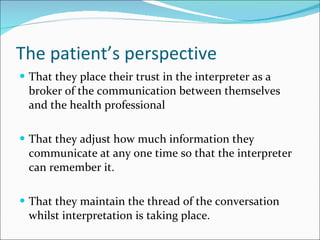
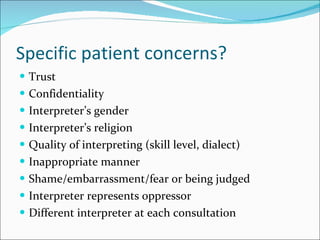
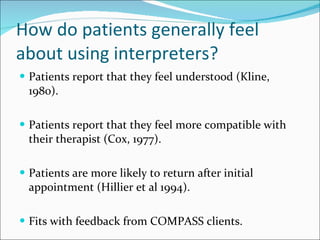
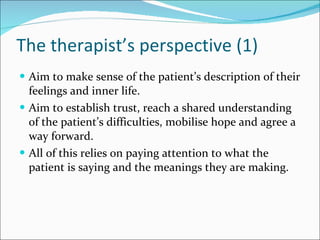
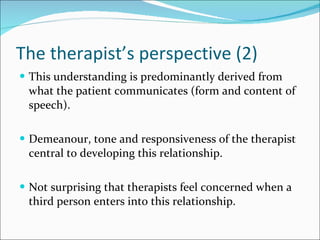
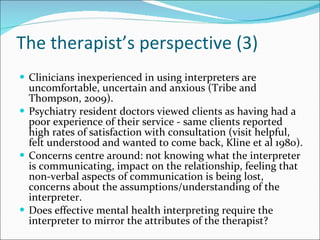
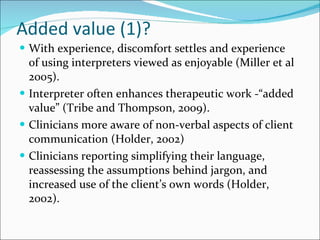
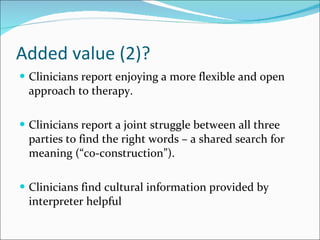
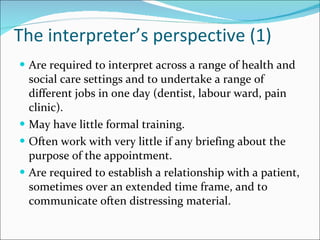
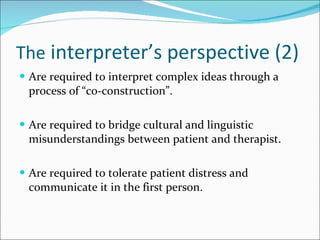
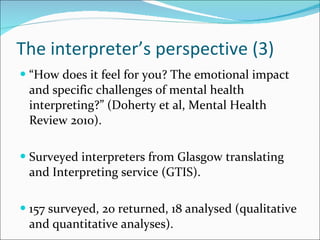
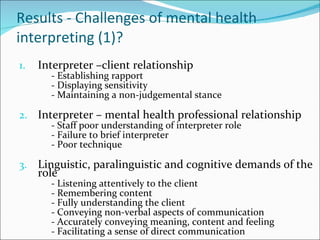
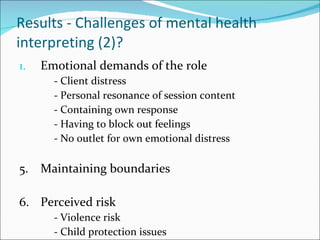
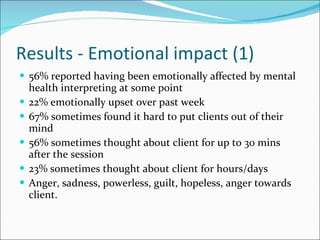
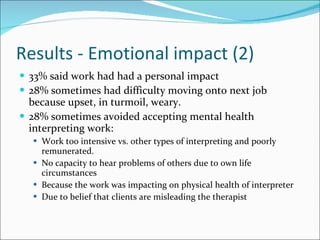
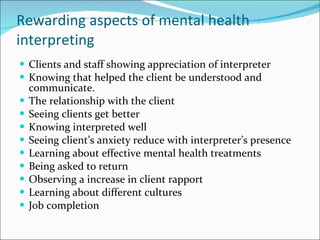
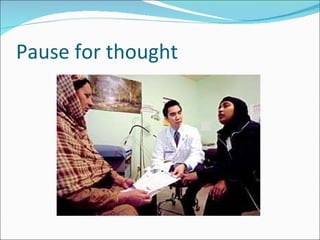
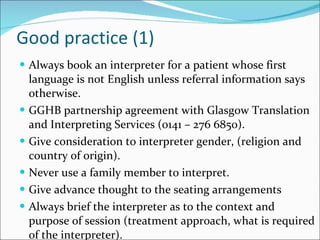
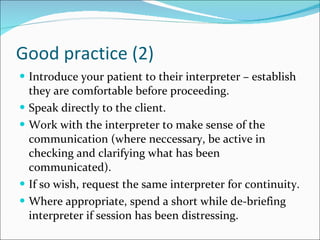
The document discusses the importance of using interpreters in healthcare, particularly for asylum seekers and refugees, to facilitate effective communication and equitable access to services. It presents perspectives of patients, therapists, and interpreters on their experiences and challenges, highlighting issues like trust, confidentiality, and emotional impact. Best practices for healthcare providers include always booking interpreters when necessary, establishing a comfortable environment, and communicating clearly with all parties involved.


![Behind the wall keynote a. nelson [2.18.25]](https://cdn.slidesharecdn.com/ss_thumbnails/behindthewallkeynotea-150218232847-conversion-gate02-thumbnail.jpg?width=640&height=640&fit=bounds)


![PERI-PROSTHETIC FRACTURE NAIL-PLATE CONSTRUCT [NPC].pptx](https://cdn.slidesharecdn.com/ss_thumbnails/drarunkumardrmohamedashrafperiprostheticfrasturenail-plateconstructnpc-260209164459-7e9d15a1-thumbnail.jpg?width=640&height=640&fit=bounds)