IJSRD - International Journal for Scientific Research & Development| Vol. 1, Issue 4, 2013 | ISSN (online): 2321-0613
All rights reserved by www.ijsrd.com 967
Wireless Telemetry System
Tanvi G.Badheka1
1
Department of Biomedical Engineering
1
Gujarat Technological University, Ahmedabad, India.
Abstract— In this stress filled life, so many people are
suffering from cardiac diseases. Patients of cardiac ailments
are required to admit in hospitals for cardiac treatment and
hence require close observation. In today‘s era telemedicine
has been proved boon for both doctors and patients. Now
invention in this area have changed the old and traditional
practices .Not even that but they can live at home instead of
hospital and can get treatment for their cardiac ailment in
case of emergency. In this thesis, I propose wireless
telemetry system in which doctor can real time visualizes
physiological parameters ECG and temperature of patient
via GPRS/WI-FI on mobile anywhere in globe. In critical
condition of the patient emergency call can be transmitted to
the doctor and doctor can guide care taker person via phone
for emergency treatment and can keep himself in touch
whenever needed. In this thesis we also develop and design
ECG application on the platform of Android.
Keywords: GSM/GPRS module, Microcontroller,
Temperature Sensor, ECG
I. INTRODUCTION
Telemedicine is a combination of telecommunications and
computer technology to deliver health care from one
location to another. In other words, telemetry involves the
use of modern information technology to deliver timely
health services to those in need by the electronic
transmission of the necessary expertise and information
among geographically dispersed parties, including
physicians and patients, to result in improved patient care
and management ,resource distribution efficiency and
potentially cost effectiveness.
In today’s era cardiac ailments have become
universal ailments .Many people of the world population are
suffering from cardiac disorders. This has become possible
because of some reasons i.e. stress, fast life style, imbalance
food, lack of exercise. Even a junk food and restless long
working hours and smoking habits are also responsible
elements. It has also come to the notice that even a small
children and new born children have become victims of
cerebrovascular diseases. Against this, science has also
made detailed research in subject of Cardiovascular.
Telemedicine is playing a very vital role between doctor and
patient. Some times in case of emergency situation and
strong heart attack emergency treatment to the patient is
unavoidable. Hence in such situation through telemedicine
doctor can get the case visualize on his mobile via opening
the application running on his phone and can monitor ECG
and temperature of the said patient instantly. Accordingly he
is guiding the car taker and in turn the care taker gives
medicine and act as per the valuable guidance of the doctor
received over the mobile/computer. It is even possible
through telemedicine from one corner of the world to
another corner of the world also wherever the patient is
situated. Such a emergency and timely guidance brings the
better improvement and miraculous change in patients
deteriorating condition. The patients can be saved from the
death of danger. So the latest invention of telemedicine has
proved as blessings for both patients and doctors. It has
become a helpful bridge between them whose significance
in science cannot be forgotten. In this project, strength of
GSM /GPRS network plays an important role. GSM/GPRS
module SIMCOM SIM 900 is used with microcontroller
8051c. Doctor is using mobile phone, so it will be
eliminating the use of the laptops and Pcs and mobile
phones are always on and require low maintenance. Using
GPRS as wireless network technology can speed up the
monitoring of the patient by speed up internet access... .
Doctor or nurse with a trouble-free approach to the patient’s
ECG/temperature signal. For patients in rural and regional
areas an ECG report could be sent to a doctor for
examination. Telemetry system using mobile phone which is
very versatile and convenient option .The elimination of the
laptop greatly simplifies the hardware requirement. . In this
thesis, we have also develop and design the prototype of
Android ECG application that runs with data coming from
the ECG circuitry and temperature sensor at patient side and
wireless communication with GPRS module.
II. SYSTEM CONCEPT
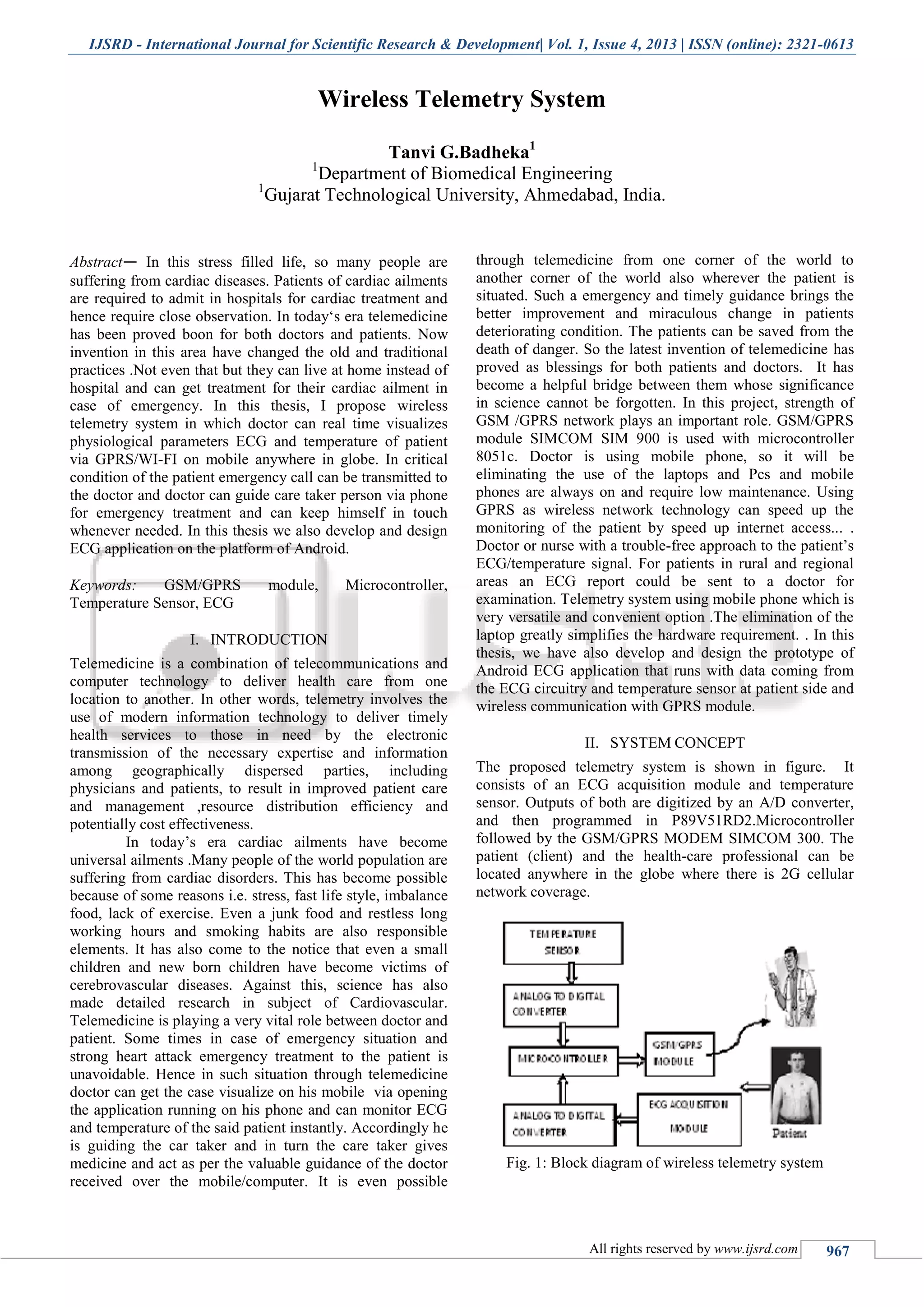
The proposed telemetry system is shown in figure. It
consists of an ECG acquisition module and temperature
sensor. Outputs of both are digitized by an A/D converter,
and then programmed in P89V51RD2.Microcontroller
followed by the GSM/GPRS MODEM SIMCOM 300. The
patient (client) and the health-care professional can be
located anywhere in the globe where there is 2G cellular
network coverage.
Fig. 1: Block diagram of wireless telemetry system
Wireless Telemetry System
(IJSRD/Vol. 1/Issue 4/2013/0037)
All rights reserved by www.ijsrd.com 968
The primary purpose is to monitor patient's cardiac
activity and temperature real time and continuous via GPRS
in Emergency situation. In any abnormalities in ECG of
Patient emergency call transmitted to the doctor.
Figure 1 shown reprints wireless telemetry system,
in this system at patient site continuous monitoring of
temperature and ECG of patient. If the any abnormality
found in temperature or ECG of the patient emergency call
will be transmitted to the doctor. Doctor will open just
application downloaded on his mobile and can observe the
ECG and temperature of the patient real time and via calling
to the hospital or health care service ,he can guide them
what treatment should give to the patient .
A. ADVANTAGES OFFERED BY GSM/GPRS
GPRS stands for general packet radio services and is a non-
voice service that provides wireless packet data access
within GSM -- Global System for Mobile communication –
networks. Although newer, faster mobile technologies such
as Edge; 3G (Third Generation); Universal Mobile
Telecommunication Service; and high-speed download
packet access, or HSDPA access have been developed for
mobile devices, GPRS is still supported by most mobile
networks.Using a small portable multi-communication
computing device is convenient, economical, practical and
personal.
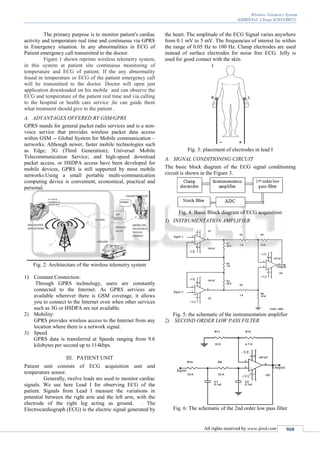
Fig. 2: Architecture of the wireless telemetry system
1) Constant Connection:
Through GPRS technology, users are constantly
connected to the Internet. As GPRS services are
available wherever there is GSM coverage, it allows
you to connect to the Internet even when other services
such as 3G or HSDPA are not available.
2) Mobility:
GPRS provides wireless access to the Internet from any
location where there is a network signal.
3) Speed
GPRS data is transferred at Speeds ranging from 9.6
kilobytes per second up to 114kbps.
III. PATIENT UNIT
Patient unit consists of ECG acquisition unit and
temperature sensor.
Generally, twelve leads are used to monitor cardiac
signals. We use here Lead I for observing ECG of the
patient. Signals from Lead I measure the variations in
potential between the right arm and the left arm, with the
electrode of the right leg acting as ground. . The
Electrocardiograph (ECG) is the electric signal generated by
the heart. The amplitude of the ECG Signal varies anywhere
from 0.1 mV to 5 mV. The frequencies of interest lie within
the range of 0.05 Hz to 100 Hz. Clamp electrodes are used
instead of surface electrodes for noise free ECG. Jelly is
used for good contact with the skin.
Fig. 3: placement of electrodes in lead I
A. SIGNAL CONDITIONING CIRCUIT
The basic block diagram of the ECG signal conditioning
circuit is shown in the Figure 3.
Fig. 4: Basic Block diagram of ECG acquisition
1) INSTRUMENTATION AMPLIFIER
Fig. 5: the schematic of the instrumentation amplifier
2) SECOND ORDER LOW PASS FILTER
Fig. 6: The schematic of the 2nd order low pass filter
Wireless Telemetry System
(IJSRD/Vol. 1/Issue 4/2013/0037)
All rights reserved by www.ijsrd.com 969
A low pass filter is a Butterworth filter with a cut-off
frequency of 150 Hz. Therefore, it rejects unwanted
frequencies above 150 Hz, reducing noise.
3) NOTCH FILTER
This filter is used to remove 60 Hz power line noise.
Fig. 7: The schematic of the notch filter
In abnormal condition of the patient QRS peak of ECG
wave exceed 1.2 mv magnitudes and emergency call
transmitted to the doctor’s mobile.
Fig. 8: The ECG circuitry mounted on PCB
B. . TEMPERATURE SENSOR
The LM35 series are precision integrated-circuit
temperature sensors, whose output voltage is linearly
proportional to the Celsius (Centigrade) temperature. We
use LM35 temperature sensor which are relatively very
cheap and accurate. The LM35 thus has a advantage over
linear temperature sensors calibrated in ° Kelvin, as the user
is not required to subtract a large constant voltage from its
output to obtain convenient Centigrade scaling. , it has very
low self-heating, less than 0.1°C in still air. The LM35 is
rated to operate over a −55° to +150°C. Temperature
range.of the normal person is 37 centigrade. So we set the
range 42 centigrade or above as critical condition of
patient. So above this range the alert message transmitted to
the doctor.
C. ANALOG TO DIGITAL CONVERTION
The MCP3201 12-bit Analog-to-Digital Converter (ADC)
combines high performance and low power consumption in
a small package, making it ideal for embedded control
applications. We use 12 bit ADC for digitalization of the
ECG waveform and temperature. The MCP3201 features a
successive approximation. The Microchip Technology Inc.
MCP3201 is a successive approximation 12-bit Analog-to-
Digital (A/D) Converter with on-board sample and hold
circuitry.
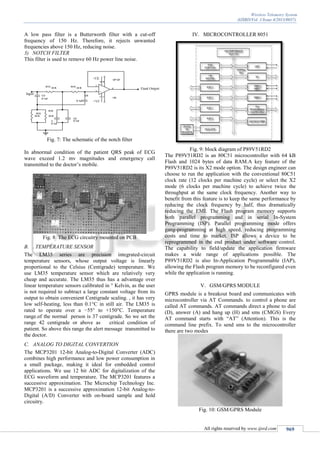
IV. MICROCONTROLLER 8051
Fig. 9: block diagram of P89V51RD2
The P89V51RD2 is an 80C51 microcontroller with 64 kB
Flash and 1024 bytes of data RAM.A key feature of the
P89V51RD2 is its X2 mode option. The design engineer can
choose to run the application with the conventional 80C51
clock rate (12 clocks per machine cycle) or select the X2
mode (6 clocks per machine cycle) to achieve twice the
throughput at the same clock frequency. Another way to
benefit from this feature is to keep the same performance by
reducing the clock frequency by half, thus dramatically
reducing the EMI. The Flash program memory supports
both parallel programming and in serial In-System
Programming (ISP). Parallel programming mode offers
gang-programming at high speed, reducing programming
costs and time to market. ISP allows a device to be
reprogrammed in the end product under software control.
The capability to field/update the application firmware
makes a wide range of applications possible. The
P89V51RD2 is also In-Application Programmable (IAP),
allowing the Flash program memory to be reconfigured even
while the application is running.
V. GSM/GPRS MODULE
GPRS module is a breakout board and communicates with
microcontroller via AT Commands. to control a phone are
called AT commands. AT commands direct a phone to dial
(D), answer (A) and hang up (H) and sms (CMGS) Every
AT command starts with “AT” (Attention). This is the
command line prefix. To send sms to the microcontroller
there are two modes
Fig. 10: GSM/GPRS Module
Wireless Telemetry System
(IJSRD/Vol. 1/Issue 4/2013/0037)
All rights reserved by www.ijsrd.com 970
1. SMS mode
2. PDU mode
For selection of the SMS mode “at+cmgf=1”and then
at+cmgs=”number” send to the Microcontroller. For
transmissition of real time parameters IP protocol is used.
Transmission Control Protocol/Internet Protocol (TCP/IP) is
a suite of standard protocols for connecting computers
across networks. TCP/IP enables Windows-based computers
to connect and share information with other Microsoft and
non-Microsoft systems. TCP/IP Internet Protocols are…
1. Well defined.
2. Widely accepted.
3. Free. No single company controls them.
IP is a connectionless protocol, which means that there is no
continuing connection between the end points that are
communicating.
VI. MOBILE APPLICATION DEVELOPMENT
For viewing ECG and the temperature of the patient, mobile
application is necessary. The mobile application developed
using Android operating system which is open source. One
of the most widely used mobile OS these days
is ANDROID. Android does a software bunch comprise not
only operating system but also middleware and key
applications. Google wanted android to be open and free;
hence, most of the android code was released under the open
source apache license, which means that anyone who wants
to use Android can do so by downloading the full Android
source code.
VII. CONCLUSION
A low cost telemetry system based on GSM /GPRS
communication has been proposed. This telemetry system
allows the doctor to observe ECG and temperature of the
patient on mobile phone via opening Application running on
his phone whenever required. After successful completions
of this project it can conclude that the microcontroller based
system can be effectively used as communication medium in
conjunction with GSM/GPRS. Work conducted for this
thesis has been successful in creating circuitry that can
obtain ECG, A/D conversion of the ECG and temperature
and also, transmission of ECG and temperature via GPRS,
ECG mobile application development using Android
platform.
REFERENCES
[1] Manjunath P.S, Surendra H.H, Dr. T.N. Sreenivasa,
GSM Based Medical Service Provider system: A
Periodic Model.
[2] FANG Zu-xiang and LAI Da-kun Department of
Electronic Engineering of Fudan University Shanghai,
China 200433 ” Uninterrupted ECG Mobile
Monitoring”. International Journal of
Bioelectromagnetism. Vol. 9 No. 1 2007
[3] R. Sukanesh, S. Palanivel Rajan, S. Vijayprasath, S.
Janardhana Prabhu, P. Subathra “GSM-based ECG
Tele-alert System” International Journal of Computer
Science and Application Issue 2010 ISSN 0974-0767
112 2010 [4] William Brims
Submitted thesis on” WIRELESS ECG volume I”,The
School of Information Technology & Electrical
Engineering, University of Queensland.
[5] Qiang Fang, Fahim Sufi and Irena Cosic “ A
Mobile Device Based ECG Analysis System", School
of Electrical and Computer Engineering,
RMITUniversity,Australia
[6] Patrick O. Bobbie,Chaudary Zeeshan Arif,Hema
Chaudhari,Sagar Pujari, ”Electrocardiogram (EKG)
Data Acquisition and Wireless Transmission”Southern
Polytechnic State University.
[7] Dhvani Parekh submitted thesis on
‘’Designing Heart Rate, Blood Pressure and Body
Temperature Sensors for Mobile On-Call
System’’0543318, April 22, 2010.
[8]Nisha singh ” Microcontroller Based Wireless
Transmission on Biomedical Signal and Simulation in
MATLAB”vol 02,pp 08-14(2012)
[9] sawsan sadek1, mohamad khalil2, sahar merheb2,
khaled houssein1,submitted ” real-time ecg
transmission from multi-patient toward multi-physician
using wireless communications
technologies”vol.25,no.2,2011
[10] A Wearable Mobile Electrocardiogram Measurement
Device with Novel Dry Polymer based Electrodes ,I-
Jan Wang1, Lun-De Liao2, Yu-Te Wang1, Chi-Yu
Chen1,tencon 2010.ieee.
[11] Live Streaming of Medical Data -The Fontane
Architecture for Remote Patient Monitoring and its
Experimental Evaluation, Alexander Schacht, Robert
Wierschke, Martin Wolf, Martin von L¨owis and
Andreas Polze.
[12] A Wireless PDA-based Electrocardiogram
Transmission System for Telemedicine, ZHU Qiang1,
WANG Mingshi2, Engineering in Medicine and
Biology 27th Annual Conference Shanghai, China,
September 1-4, 2005,IEEE
[13] Remote Monitoring System of ECG and Temperature
Signals using Bluetooth, Juan Pablo Tello P., Oscar
Manjarres and Mauricio Quijano, 2012 international
symposium on international technology in medicine and
education.IEEE.
[14] A Real-time Continuous ECG Transmitting Method
through GPRS with Low Power Consumption, Xin Ge,
Dakun Lai, Xiaomei Wu‡, and Zuxiang Fang, 2012
international symposium on international technology in
medicine and education.IEEE

Wireless Telemetry System

  • 1.
    IJSRD - InternationalJournal for Scientific Research & Development| Vol. 1, Issue 4, 2013 | ISSN (online): 2321-0613 All rights reserved by www.ijsrd.com 967 Wireless Telemetry System Tanvi G.Badheka1 1 Department of Biomedical Engineering 1 Gujarat Technological University, Ahmedabad, India. Abstract— In this stress filled life, so many people are suffering from cardiac diseases. Patients of cardiac ailments are required to admit in hospitals for cardiac treatment and hence require close observation. In today‘s era telemedicine has been proved boon for both doctors and patients. Now invention in this area have changed the old and traditional practices .Not even that but they can live at home instead of hospital and can get treatment for their cardiac ailment in case of emergency. In this thesis, I propose wireless telemetry system in which doctor can real time visualizes physiological parameters ECG and temperature of patient via GPRS/WI-FI on mobile anywhere in globe. In critical condition of the patient emergency call can be transmitted to the doctor and doctor can guide care taker person via phone for emergency treatment and can keep himself in touch whenever needed. In this thesis we also develop and design ECG application on the platform of Android. Keywords: GSM/GPRS module, Microcontroller, Temperature Sensor, ECG I. INTRODUCTION Telemedicine is a combination of telecommunications and computer technology to deliver health care from one location to another. In other words, telemetry involves the use of modern information technology to deliver timely health services to those in need by the electronic transmission of the necessary expertise and information among geographically dispersed parties, including physicians and patients, to result in improved patient care and management ,resource distribution efficiency and potentially cost effectiveness. In today’s era cardiac ailments have become universal ailments .Many people of the world population are suffering from cardiac disorders. This has become possible because of some reasons i.e. stress, fast life style, imbalance food, lack of exercise. Even a junk food and restless long working hours and smoking habits are also responsible elements. It has also come to the notice that even a small children and new born children have become victims of cerebrovascular diseases. Against this, science has also made detailed research in subject of Cardiovascular. Telemedicine is playing a very vital role between doctor and patient. Some times in case of emergency situation and strong heart attack emergency treatment to the patient is unavoidable. Hence in such situation through telemedicine doctor can get the case visualize on his mobile via opening the application running on his phone and can monitor ECG and temperature of the said patient instantly. Accordingly he is guiding the car taker and in turn the care taker gives medicine and act as per the valuable guidance of the doctor received over the mobile/computer. It is even possible through telemedicine from one corner of the world to another corner of the world also wherever the patient is situated. Such a emergency and timely guidance brings the better improvement and miraculous change in patients deteriorating condition. The patients can be saved from the death of danger. So the latest invention of telemedicine has proved as blessings for both patients and doctors. It has become a helpful bridge between them whose significance in science cannot be forgotten. In this project, strength of GSM /GPRS network plays an important role. GSM/GPRS module SIMCOM SIM 900 is used with microcontroller 8051c. Doctor is using mobile phone, so it will be eliminating the use of the laptops and Pcs and mobile phones are always on and require low maintenance. Using GPRS as wireless network technology can speed up the monitoring of the patient by speed up internet access... . Doctor or nurse with a trouble-free approach to the patient’s ECG/temperature signal. For patients in rural and regional areas an ECG report could be sent to a doctor for examination. Telemetry system using mobile phone which is very versatile and convenient option .The elimination of the laptop greatly simplifies the hardware requirement. . In this thesis, we have also develop and design the prototype of Android ECG application that runs with data coming from the ECG circuitry and temperature sensor at patient side and wireless communication with GPRS module. II. SYSTEM CONCEPT The proposed telemetry system is shown in figure. It consists of an ECG acquisition module and temperature sensor. Outputs of both are digitized by an A/D converter, and then programmed in P89V51RD2.Microcontroller followed by the GSM/GPRS MODEM SIMCOM 300. The patient (client) and the health-care professional can be located anywhere in the globe where there is 2G cellular network coverage. Fig. 1: Block diagram of wireless telemetry system
  • 2.
    Wireless Telemetry System (IJSRD/Vol.1/Issue 4/2013/0037) All rights reserved by www.ijsrd.com 968 The primary purpose is to monitor patient's cardiac activity and temperature real time and continuous via GPRS in Emergency situation. In any abnormalities in ECG of Patient emergency call transmitted to the doctor. Figure 1 shown reprints wireless telemetry system, in this system at patient site continuous monitoring of temperature and ECG of patient. If the any abnormality found in temperature or ECG of the patient emergency call will be transmitted to the doctor. Doctor will open just application downloaded on his mobile and can observe the ECG and temperature of the patient real time and via calling to the hospital or health care service ,he can guide them what treatment should give to the patient . A. ADVANTAGES OFFERED BY GSM/GPRS GPRS stands for general packet radio services and is a non- voice service that provides wireless packet data access within GSM -- Global System for Mobile communication – networks. Although newer, faster mobile technologies such as Edge; 3G (Third Generation); Universal Mobile Telecommunication Service; and high-speed download packet access, or HSDPA access have been developed for mobile devices, GPRS is still supported by most mobile networks.Using a small portable multi-communication computing device is convenient, economical, practical and personal. Fig. 2: Architecture of the wireless telemetry system 1) Constant Connection: Through GPRS technology, users are constantly connected to the Internet. As GPRS services are available wherever there is GSM coverage, it allows you to connect to the Internet even when other services such as 3G or HSDPA are not available. 2) Mobility: GPRS provides wireless access to the Internet from any location where there is a network signal. 3) Speed GPRS data is transferred at Speeds ranging from 9.6 kilobytes per second up to 114kbps. III. PATIENT UNIT Patient unit consists of ECG acquisition unit and temperature sensor. Generally, twelve leads are used to monitor cardiac signals. We use here Lead I for observing ECG of the patient. Signals from Lead I measure the variations in potential between the right arm and the left arm, with the electrode of the right leg acting as ground. . The Electrocardiograph (ECG) is the electric signal generated by the heart. The amplitude of the ECG Signal varies anywhere from 0.1 mV to 5 mV. The frequencies of interest lie within the range of 0.05 Hz to 100 Hz. Clamp electrodes are used instead of surface electrodes for noise free ECG. Jelly is used for good contact with the skin. Fig. 3: placement of electrodes in lead I A. SIGNAL CONDITIONING CIRCUIT The basic block diagram of the ECG signal conditioning circuit is shown in the Figure 3. Fig. 4: Basic Block diagram of ECG acquisition 1) INSTRUMENTATION AMPLIFIER Fig. 5: the schematic of the instrumentation amplifier 2) SECOND ORDER LOW PASS FILTER Fig. 6: The schematic of the 2nd order low pass filter
  • 3.
    Wireless Telemetry System (IJSRD/Vol.1/Issue 4/2013/0037) All rights reserved by www.ijsrd.com 969 A low pass filter is a Butterworth filter with a cut-off frequency of 150 Hz. Therefore, it rejects unwanted frequencies above 150 Hz, reducing noise. 3) NOTCH FILTER This filter is used to remove 60 Hz power line noise. Fig. 7: The schematic of the notch filter In abnormal condition of the patient QRS peak of ECG wave exceed 1.2 mv magnitudes and emergency call transmitted to the doctor’s mobile. Fig. 8: The ECG circuitry mounted on PCB B. . TEMPERATURE SENSOR The LM35 series are precision integrated-circuit temperature sensors, whose output voltage is linearly proportional to the Celsius (Centigrade) temperature. We use LM35 temperature sensor which are relatively very cheap and accurate. The LM35 thus has a advantage over linear temperature sensors calibrated in ° Kelvin, as the user is not required to subtract a large constant voltage from its output to obtain convenient Centigrade scaling. , it has very low self-heating, less than 0.1°C in still air. The LM35 is rated to operate over a −55° to +150°C. Temperature range.of the normal person is 37 centigrade. So we set the range 42 centigrade or above as critical condition of patient. So above this range the alert message transmitted to the doctor. C. ANALOG TO DIGITAL CONVERTION The MCP3201 12-bit Analog-to-Digital Converter (ADC) combines high performance and low power consumption in a small package, making it ideal for embedded control applications. We use 12 bit ADC for digitalization of the ECG waveform and temperature. The MCP3201 features a successive approximation. The Microchip Technology Inc. MCP3201 is a successive approximation 12-bit Analog-to- Digital (A/D) Converter with on-board sample and hold circuitry. IV. MICROCONTROLLER 8051 Fig. 9: block diagram of P89V51RD2 The P89V51RD2 is an 80C51 microcontroller with 64 kB Flash and 1024 bytes of data RAM.A key feature of the P89V51RD2 is its X2 mode option. The design engineer can choose to run the application with the conventional 80C51 clock rate (12 clocks per machine cycle) or select the X2 mode (6 clocks per machine cycle) to achieve twice the throughput at the same clock frequency. Another way to benefit from this feature is to keep the same performance by reducing the clock frequency by half, thus dramatically reducing the EMI. The Flash program memory supports both parallel programming and in serial In-System Programming (ISP). Parallel programming mode offers gang-programming at high speed, reducing programming costs and time to market. ISP allows a device to be reprogrammed in the end product under software control. The capability to field/update the application firmware makes a wide range of applications possible. The P89V51RD2 is also In-Application Programmable (IAP), allowing the Flash program memory to be reconfigured even while the application is running. V. GSM/GPRS MODULE GPRS module is a breakout board and communicates with microcontroller via AT Commands. to control a phone are called AT commands. AT commands direct a phone to dial (D), answer (A) and hang up (H) and sms (CMGS) Every AT command starts with “AT” (Attention). This is the command line prefix. To send sms to the microcontroller there are two modes Fig. 10: GSM/GPRS Module
  • 4.
    Wireless Telemetry System (IJSRD/Vol.1/Issue 4/2013/0037) All rights reserved by www.ijsrd.com 970 1. SMS mode 2. PDU mode For selection of the SMS mode “at+cmgf=1”and then at+cmgs=”number” send to the Microcontroller. For transmissition of real time parameters IP protocol is used. Transmission Control Protocol/Internet Protocol (TCP/IP) is a suite of standard protocols for connecting computers across networks. TCP/IP enables Windows-based computers to connect and share information with other Microsoft and non-Microsoft systems. TCP/IP Internet Protocols are… 1. Well defined. 2. Widely accepted. 3. Free. No single company controls them. IP is a connectionless protocol, which means that there is no continuing connection between the end points that are communicating. VI. MOBILE APPLICATION DEVELOPMENT For viewing ECG and the temperature of the patient, mobile application is necessary. The mobile application developed using Android operating system which is open source. One of the most widely used mobile OS these days is ANDROID. Android does a software bunch comprise not only operating system but also middleware and key applications. Google wanted android to be open and free; hence, most of the android code was released under the open source apache license, which means that anyone who wants to use Android can do so by downloading the full Android source code. VII. CONCLUSION A low cost telemetry system based on GSM /GPRS communication has been proposed. This telemetry system allows the doctor to observe ECG and temperature of the patient on mobile phone via opening Application running on his phone whenever required. After successful completions of this project it can conclude that the microcontroller based system can be effectively used as communication medium in conjunction with GSM/GPRS. Work conducted for this thesis has been successful in creating circuitry that can obtain ECG, A/D conversion of the ECG and temperature and also, transmission of ECG and temperature via GPRS, ECG mobile application development using Android platform. REFERENCES [1] Manjunath P.S, Surendra H.H, Dr. T.N. Sreenivasa, GSM Based Medical Service Provider system: A Periodic Model. [2] FANG Zu-xiang and LAI Da-kun Department of Electronic Engineering of Fudan University Shanghai, China 200433 ” Uninterrupted ECG Mobile Monitoring”. International Journal of Bioelectromagnetism. Vol. 9 No. 1 2007 [3] R. Sukanesh, S. Palanivel Rajan, S. Vijayprasath, S. Janardhana Prabhu, P. Subathra “GSM-based ECG Tele-alert System” International Journal of Computer Science and Application Issue 2010 ISSN 0974-0767 112 2010 [4] William Brims Submitted thesis on” WIRELESS ECG volume I”,The School of Information Technology & Electrical Engineering, University of Queensland. [5] Qiang Fang, Fahim Sufi and Irena Cosic “ A Mobile Device Based ECG Analysis System", School of Electrical and Computer Engineering, RMITUniversity,Australia [6] Patrick O. Bobbie,Chaudary Zeeshan Arif,Hema Chaudhari,Sagar Pujari, ”Electrocardiogram (EKG) Data Acquisition and Wireless Transmission”Southern Polytechnic State University. [7] Dhvani Parekh submitted thesis on ‘’Designing Heart Rate, Blood Pressure and Body Temperature Sensors for Mobile On-Call System’’0543318, April 22, 2010. [8]Nisha singh ” Microcontroller Based Wireless Transmission on Biomedical Signal and Simulation in MATLAB”vol 02,pp 08-14(2012) [9] sawsan sadek1, mohamad khalil2, sahar merheb2, khaled houssein1,submitted ” real-time ecg transmission from multi-patient toward multi-physician using wireless communications technologies”vol.25,no.2,2011 [10] A Wearable Mobile Electrocardiogram Measurement Device with Novel Dry Polymer based Electrodes ,I- Jan Wang1, Lun-De Liao2, Yu-Te Wang1, Chi-Yu Chen1,tencon 2010.ieee. [11] Live Streaming of Medical Data -The Fontane Architecture for Remote Patient Monitoring and its Experimental Evaluation, Alexander Schacht, Robert Wierschke, Martin Wolf, Martin von L¨owis and Andreas Polze. [12] A Wireless PDA-based Electrocardiogram Transmission System for Telemedicine, ZHU Qiang1, WANG Mingshi2, Engineering in Medicine and Biology 27th Annual Conference Shanghai, China, September 1-4, 2005,IEEE [13] Remote Monitoring System of ECG and Temperature Signals using Bluetooth, Juan Pablo Tello P., Oscar Manjarres and Mauricio Quijano, 2012 international symposium on international technology in medicine and education.IEEE. [14] A Real-time Continuous ECG Transmitting Method through GPRS with Low Power Consumption, Xin Ge, Dakun Lai, Xiaomei Wu‡, and Zuxiang Fang, 2012 international symposium on international technology in medicine and education.IEEE