Submitted by: 
Shuvo Saha Roy 
Dept: EEE,KUET 
Roll: 1003008 
Year:4th Term:1st 
Date:19-08-2014
Overview 
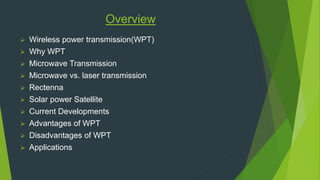
 Wireless power transmission(WPT) 
 Why WPT 
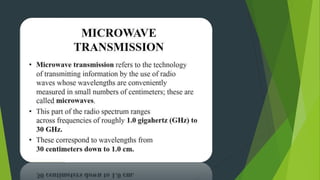
 Microwave Transmission 
 Microwave vs. laser transmission 
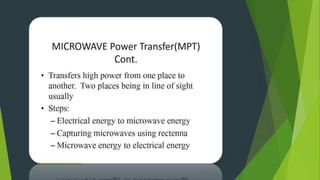
 Rectenna 
 Solar power Satellite 
 Current Developments 
 Advantages of WPT 
 Disadvantages of WPT 
 Applications
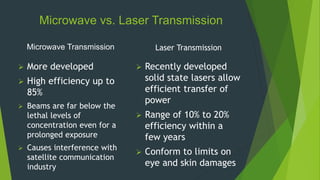
Microwave vs. Laser Transmission 
Microwave Transmission 
 More developed 
 High efficiency up to 
85% 
 Beams are far below the 
lethal levels of 
concentration even for a 
prolonged exposure 
 Causes interference with 
satellite communication 
industry 
Laser Transmission 
 Recently developed 
solid state lasers allow 
efficient transfer of 
power 
 Range of 10% to 20% 
efficiency within a 
few years 
 Conform to limits on 
eye and skin damages
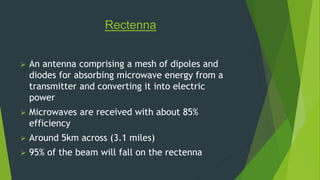
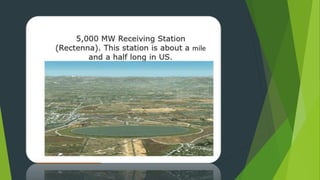
Rectenna 
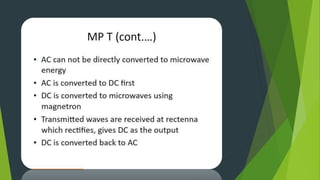
 An antenna comprising a mesh of dipoles and 
diodes for absorbing microwave energy from a 
transmitter and converting it into electric 
power 
 Microwaves are received with about 85% 
efficiency 
 Around 5km across (3.1 miles) 
 95% of the beam will fall on the rectenna
Solar power satellite(SPS) 
 1968’s idea for Solar power Satellites proposed by Peter 
Glaser 
 Would use microwaves to transmit power to earth from 
space 
 To efficiently make use of renewable energy i.e. solar 
energy 
 Solar powered satellites are placed in geostationary orbits 
 Solar power from the satellite is sent to earth using a 
microwave transmitter 
 Received at a “Rectenna” located on Earth
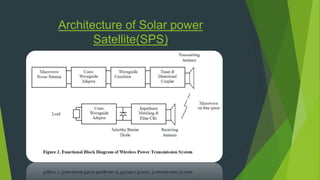
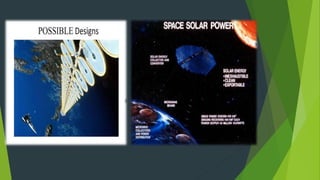
Architecture of Solar power 
Satellite(SPS)
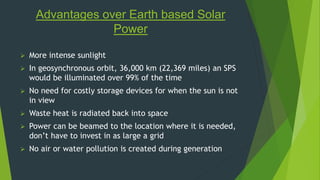
Advantages over Earth based Solar 
Power 
 More intense sunlight 
 In geosynchronous orbit, 36,000 km (22,369 miles) an SPS 
would be illuminated over 99% of the time 
 No need for costly storage devices for when the sun is not 
in view 
 Waste heat is radiated back into space 
 Power can be beamed to the location where it is needed, 
don’t have to invest in as large a grid 
 No air or water pollution is created during generation
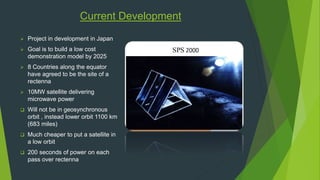
Current Development 
 Project in development in Japan 
 Goal is to build a low cost 
demonstration model by 2025 
 8 Countries along the equator 
have agreed to be the site of a 
rectenna 
 10MW satellite delivering 
microwave power 
 Will not be in geosynchronous 
orbit , instead lower orbit 1100 km 
(683 miles) 
 Much cheaper to put a satellite in 
a low orbit 
 200 seconds of power on each 
pass over rectenna
Advantages of WPT 
 Efficient 
 Easy 
 The power could be transmitted to the remote places where the wired 
transmission is not possible 
 Need for grid, high tension transmission lines, substations are eliminated 
 Low maintenance cost 
 Power theft would be not possible at all 
 The power failure due to short circuit and fault on cables would never 
exist in the transmission. 
 The cost of transmission and distribution would become less 
 The cost of electrical energy for the consumer would be reduced also 
 Wireless charging would also possible 
 Vehicles would be driven using WPT, no need of fuel.
Disadvantages of WPT 
 Cost for practical implementation of WPT seems 
to be very high. 
 The other disadvantage of the concept is 
interference of microwave with present 
communication systems.
Applications of WPT 
 Solar Power Satellites (SPS) 
 Moving targets such as fuel free airplanes, fuel 
free electric vehicles, moving robots and fuel free 
rockets 
 Ubiquitous Power Source (or) Wireless Power 
Source 
 Wireless sensors 
 RF Power Adaptive Rectifying Circuits (PARC)
Thank You All

WIRELESS POWER TRANSMISSION USING MICROWAVE

  • 1.
    Submitted by: ShuvoSaha Roy Dept: EEE,KUET Roll: 1003008 Year:4th Term:1st Date:19-08-2014
  • 2.
    Overview  Wirelesspower transmission(WPT)  Why WPT  Microwave Transmission  Microwave vs. laser transmission  Rectenna  Solar power Satellite  Current Developments  Advantages of WPT  Disadvantages of WPT  Applications
  • 8.
    Microwave vs. LaserTransmission Microwave Transmission  More developed  High efficiency up to 85%  Beams are far below the lethal levels of concentration even for a prolonged exposure  Causes interference with satellite communication industry Laser Transmission  Recently developed solid state lasers allow efficient transfer of power  Range of 10% to 20% efficiency within a few years  Conform to limits on eye and skin damages
  • 9.
    Rectenna  Anantenna comprising a mesh of dipoles and diodes for absorbing microwave energy from a transmitter and converting it into electric power  Microwaves are received with about 85% efficiency  Around 5km across (3.1 miles)  95% of the beam will fall on the rectenna
  • 11.
    Solar power satellite(SPS)  1968’s idea for Solar power Satellites proposed by Peter Glaser  Would use microwaves to transmit power to earth from space  To efficiently make use of renewable energy i.e. solar energy  Solar powered satellites are placed in geostationary orbits  Solar power from the satellite is sent to earth using a microwave transmitter  Received at a “Rectenna” located on Earth
  • 12.
    Architecture of Solarpower Satellite(SPS)
  • 14.
    Advantages over Earthbased Solar Power  More intense sunlight  In geosynchronous orbit, 36,000 km (22,369 miles) an SPS would be illuminated over 99% of the time  No need for costly storage devices for when the sun is not in view  Waste heat is radiated back into space  Power can be beamed to the location where it is needed, don’t have to invest in as large a grid  No air or water pollution is created during generation
  • 15.
    Current Development Project in development in Japan  Goal is to build a low cost demonstration model by 2025  8 Countries along the equator have agreed to be the site of a rectenna  10MW satellite delivering microwave power  Will not be in geosynchronous orbit , instead lower orbit 1100 km (683 miles)  Much cheaper to put a satellite in a low orbit  200 seconds of power on each pass over rectenna
  • 16.
    Advantages of WPT  Efficient  Easy  The power could be transmitted to the remote places where the wired transmission is not possible  Need for grid, high tension transmission lines, substations are eliminated  Low maintenance cost  Power theft would be not possible at all  The power failure due to short circuit and fault on cables would never exist in the transmission.  The cost of transmission and distribution would become less  The cost of electrical energy for the consumer would be reduced also  Wireless charging would also possible  Vehicles would be driven using WPT, no need of fuel.
  • 17.
    Disadvantages of WPT  Cost for practical implementation of WPT seems to be very high.  The other disadvantage of the concept is interference of microwave with present communication systems.
  • 18.
    Applications of WPT  Solar Power Satellites (SPS)  Moving targets such as fuel free airplanes, fuel free electric vehicles, moving robots and fuel free rockets  Ubiquitous Power Source (or) Wireless Power Source  Wireless sensors  RF Power Adaptive Rectifying Circuits (PARC)
  • 20.