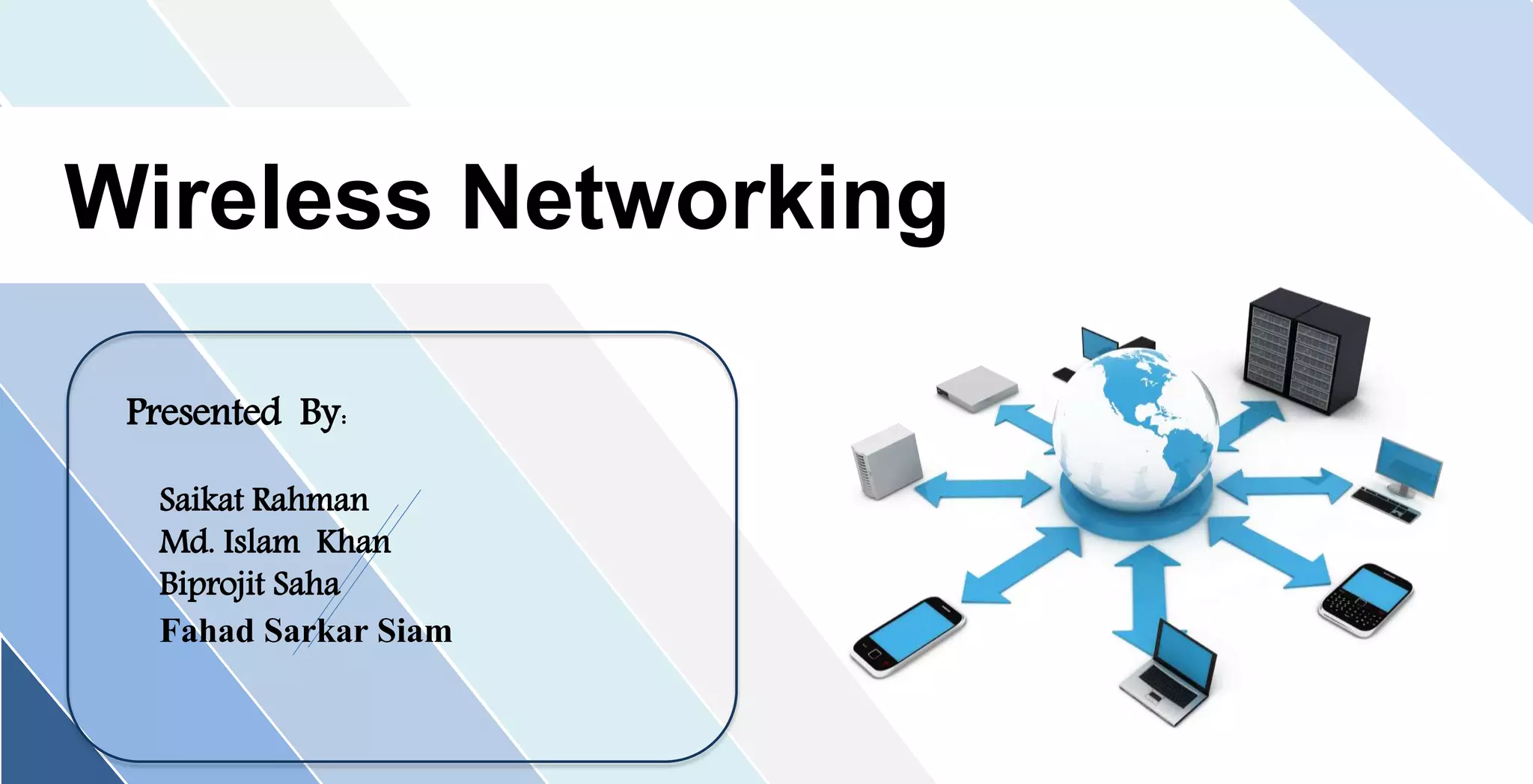
Wireless Networking
Presented By:
Saikat Rahman
Md. Islam Khan
Biprojit Saha
Fahad Sarkar Siam
What is Wireless Networking?
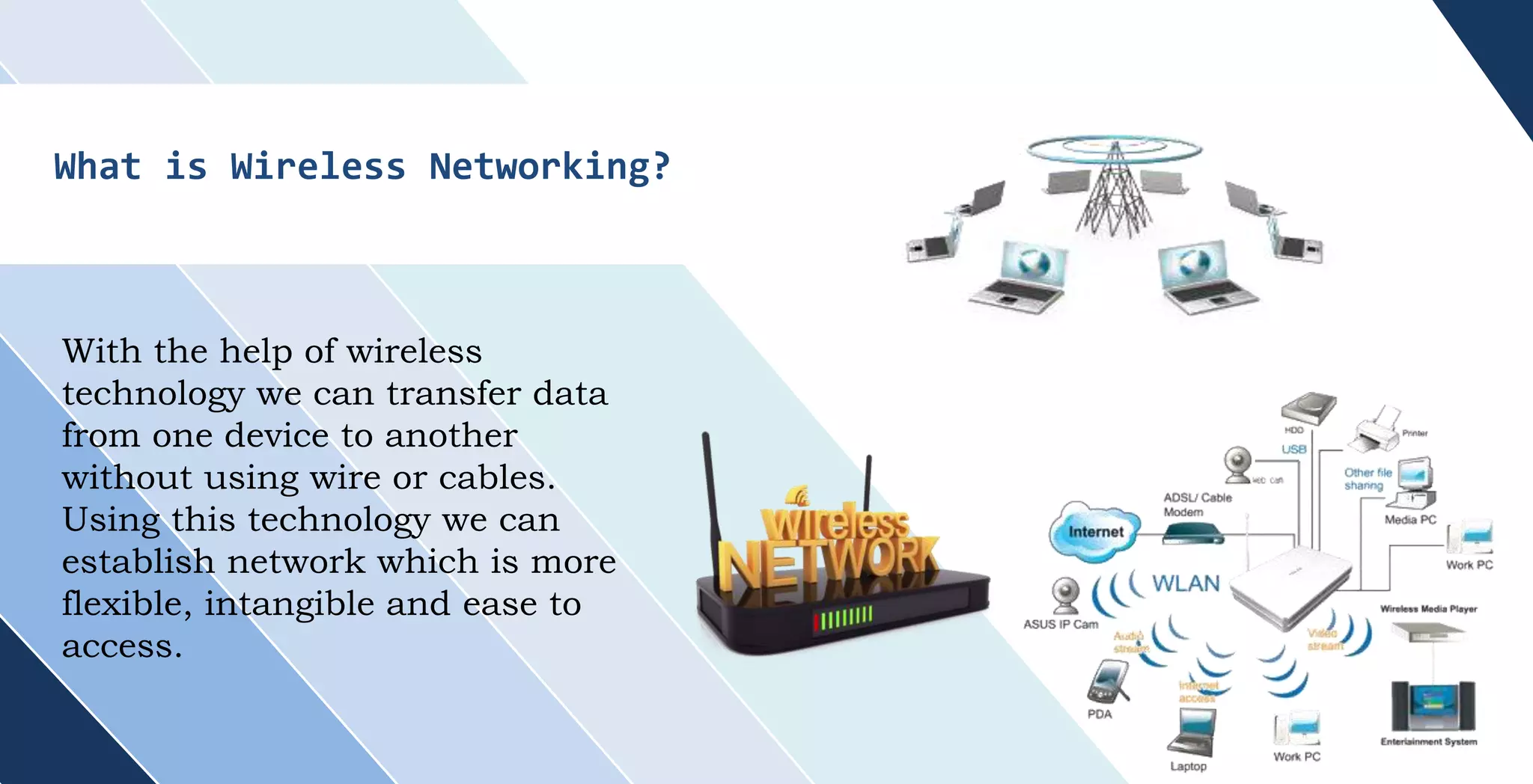
With the help of wireless
technology we can transfer data
from one device to another
without using wire or cables.
Using this technology we can
establish network which is more
flexible, intangible and ease to
access.
Wireless Networking Data
Transmission
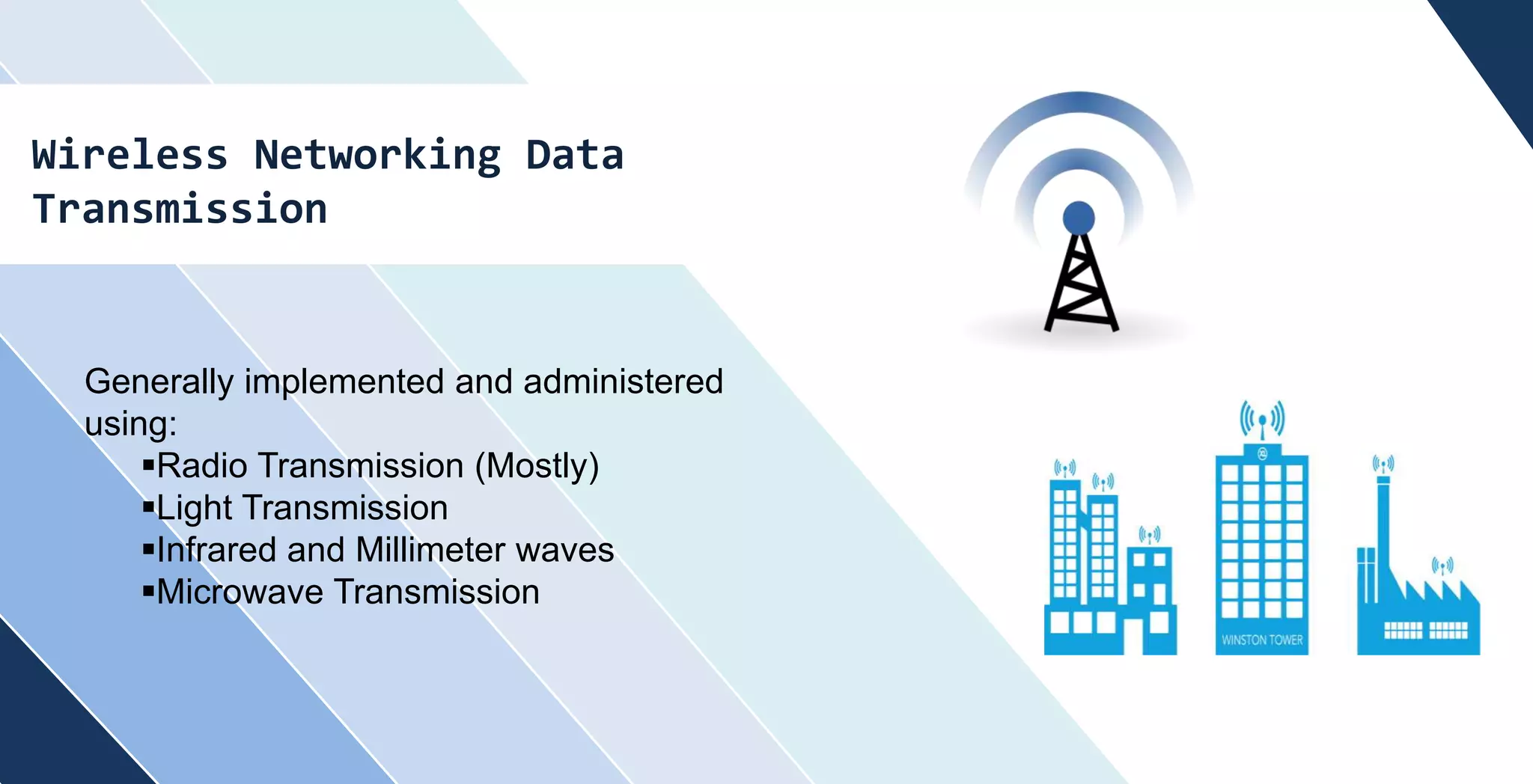
Generally implemented and administered
using:
Radio Transmission (Mostly)
Light Transmission
Infrared and Millimeter waves
Microwave Transmission
Components Requirements
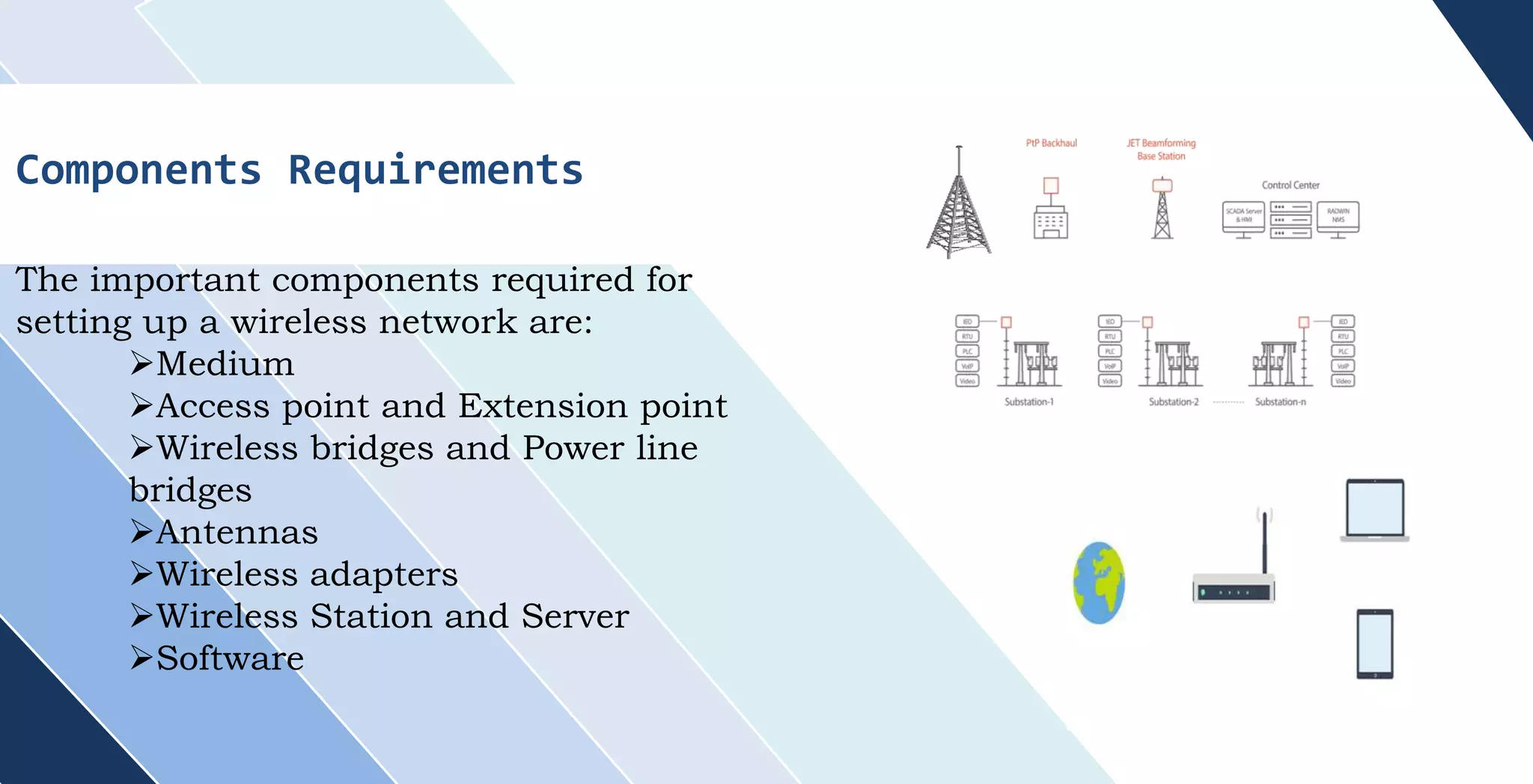
The important components required for
setting up a wireless network are:
Medium
Access point and Extension point
Wireless bridges and Power line
bridges
Antennas
Wireless adapters
Wireless Station and Server
Software
Md Islam Khan
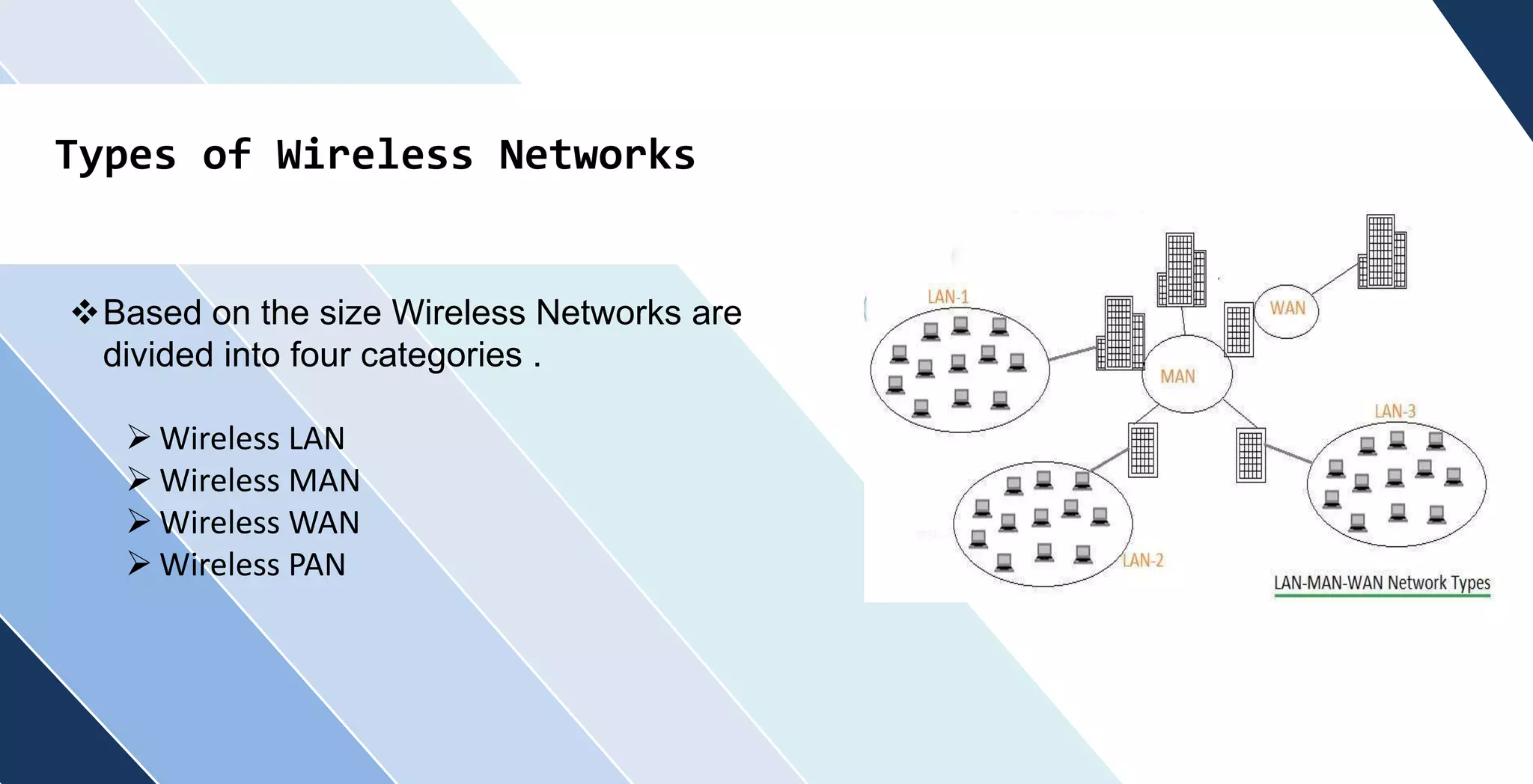
Types of Wireless Networks
Based on the size Wireless Networks are
divided into four categories .
 Wireless LAN
 Wireless MAN
 Wireless WAN
 Wireless PAN
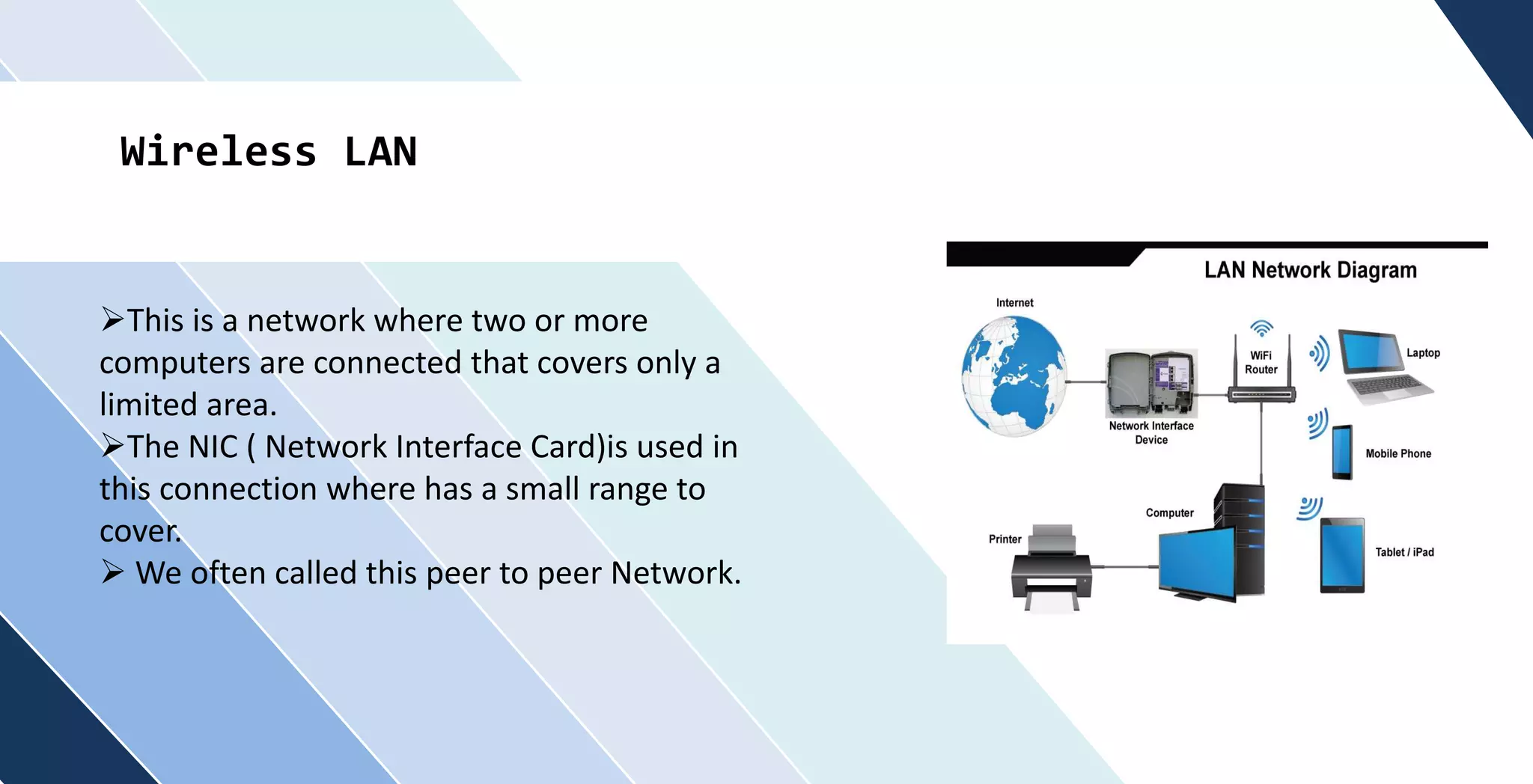
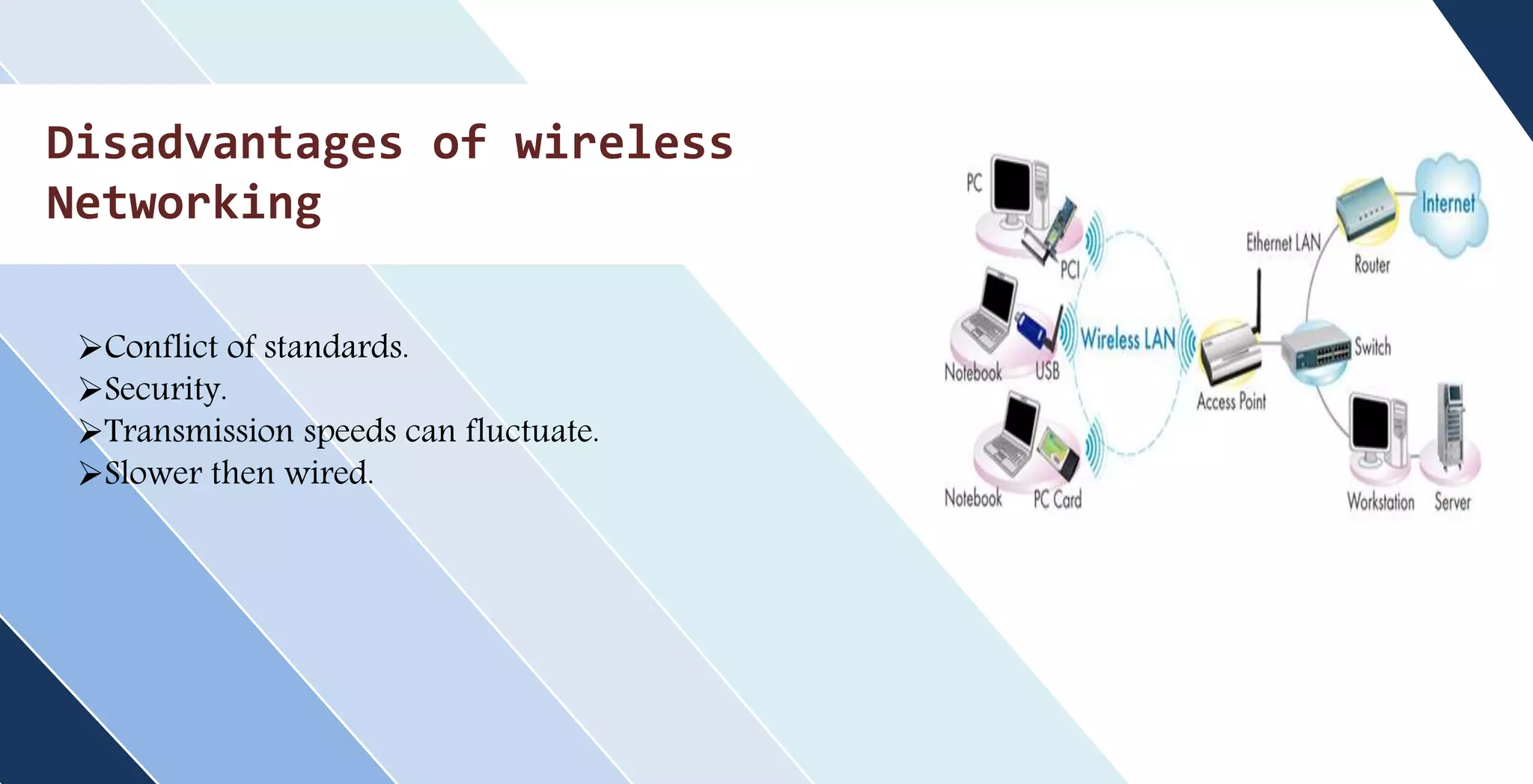
Wireless LAN
This is a network where two or more
computers are connected that covers only a
limited area.
The NIC ( Network Interface Card)is used in
this connection where has a small range to
cover.
 We often called this peer to peer Network.
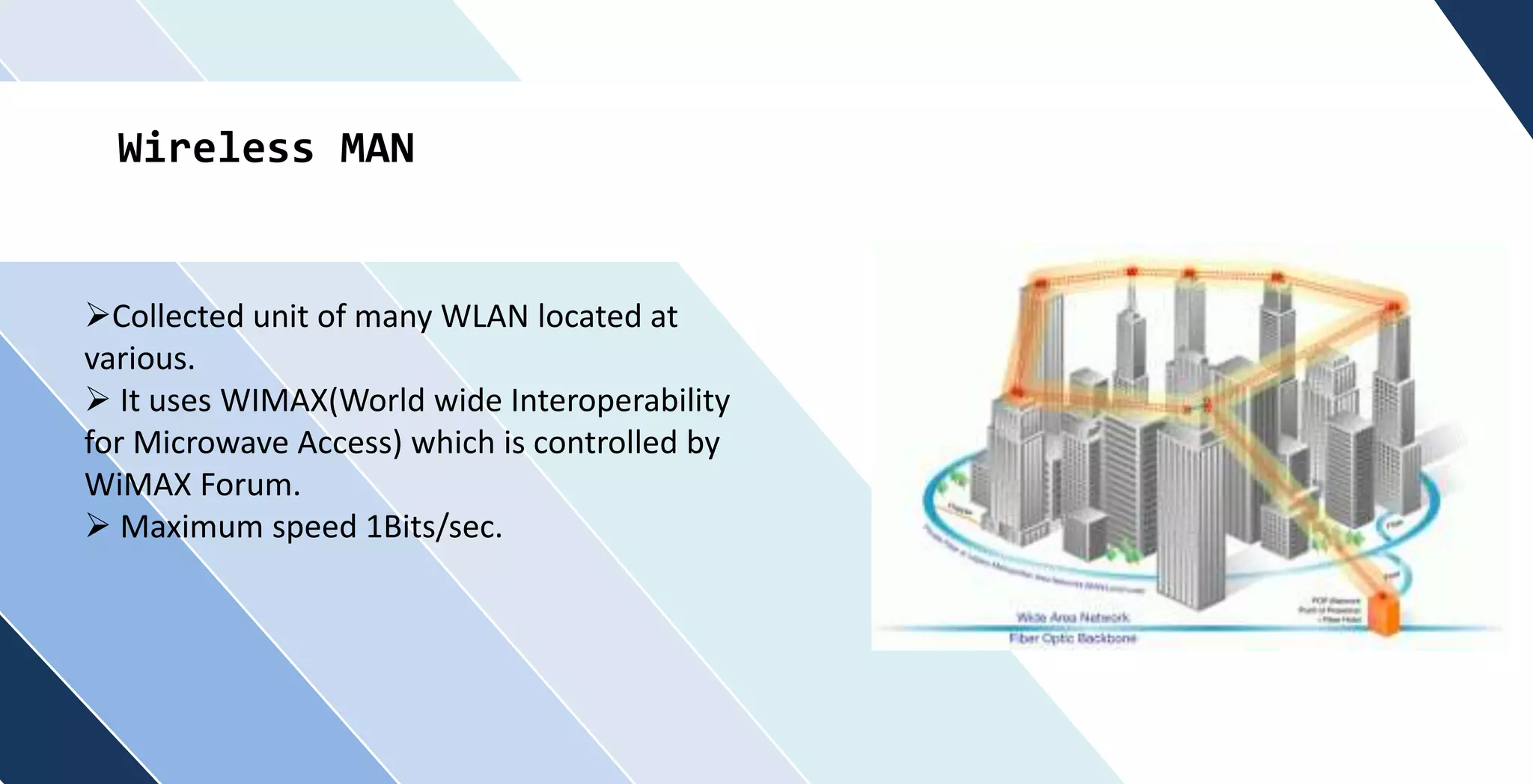
Wireless MAN
Collected unit of many WLAN located at
various.
 It uses WIMAX(World wide Interoperability
for Microwave Access) which is controlled by
WiMAX Forum.
 Maximum speed 1Bits/sec.
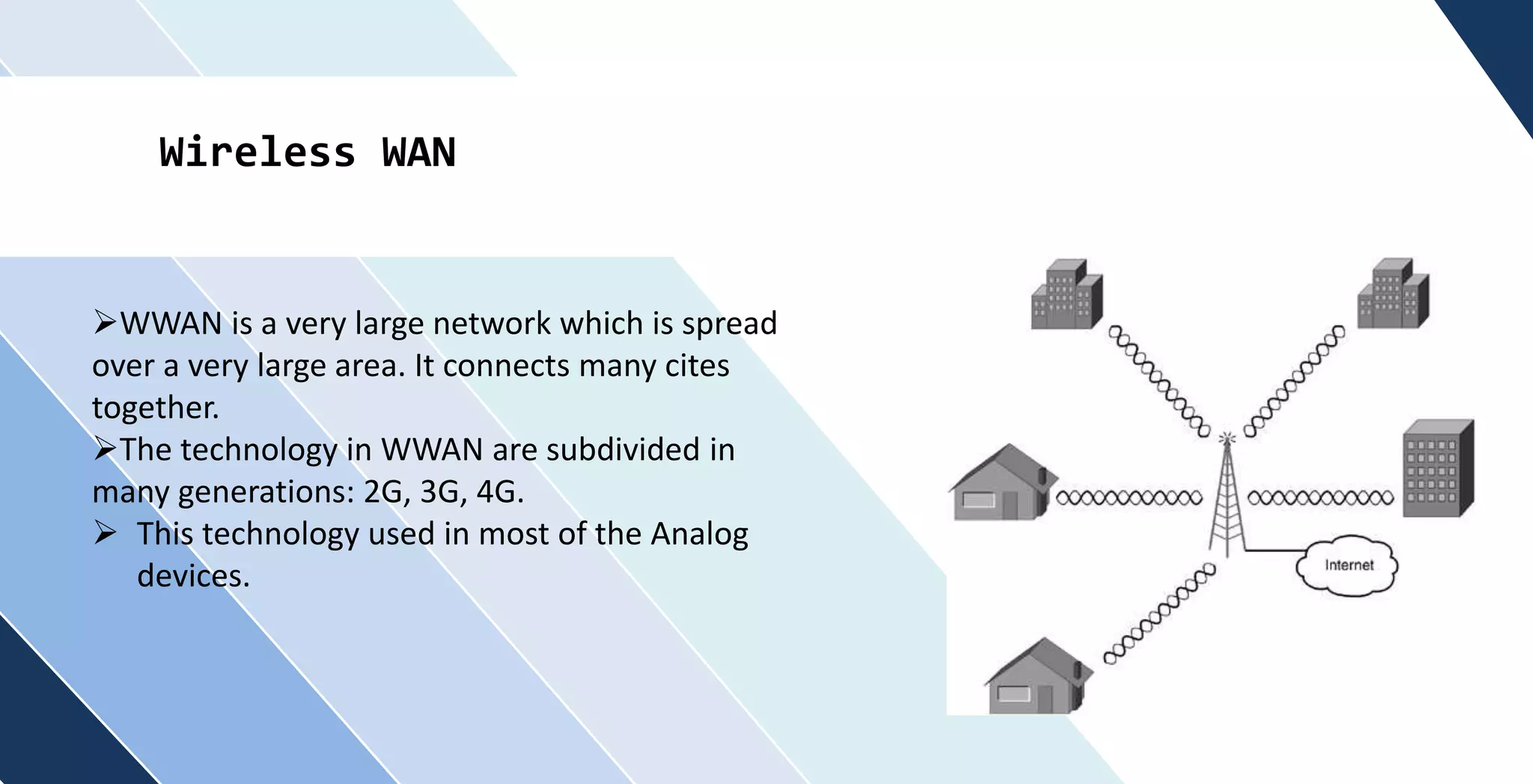
Wireless WAN
WWAN is a very large network which is spread
over a very large area. It connects many cites
together.
The technology in WWAN are subdivided in
many generations: 2G, 3G, 4G.
 This technology used in most of the Analog
devices.
Wireless PAN
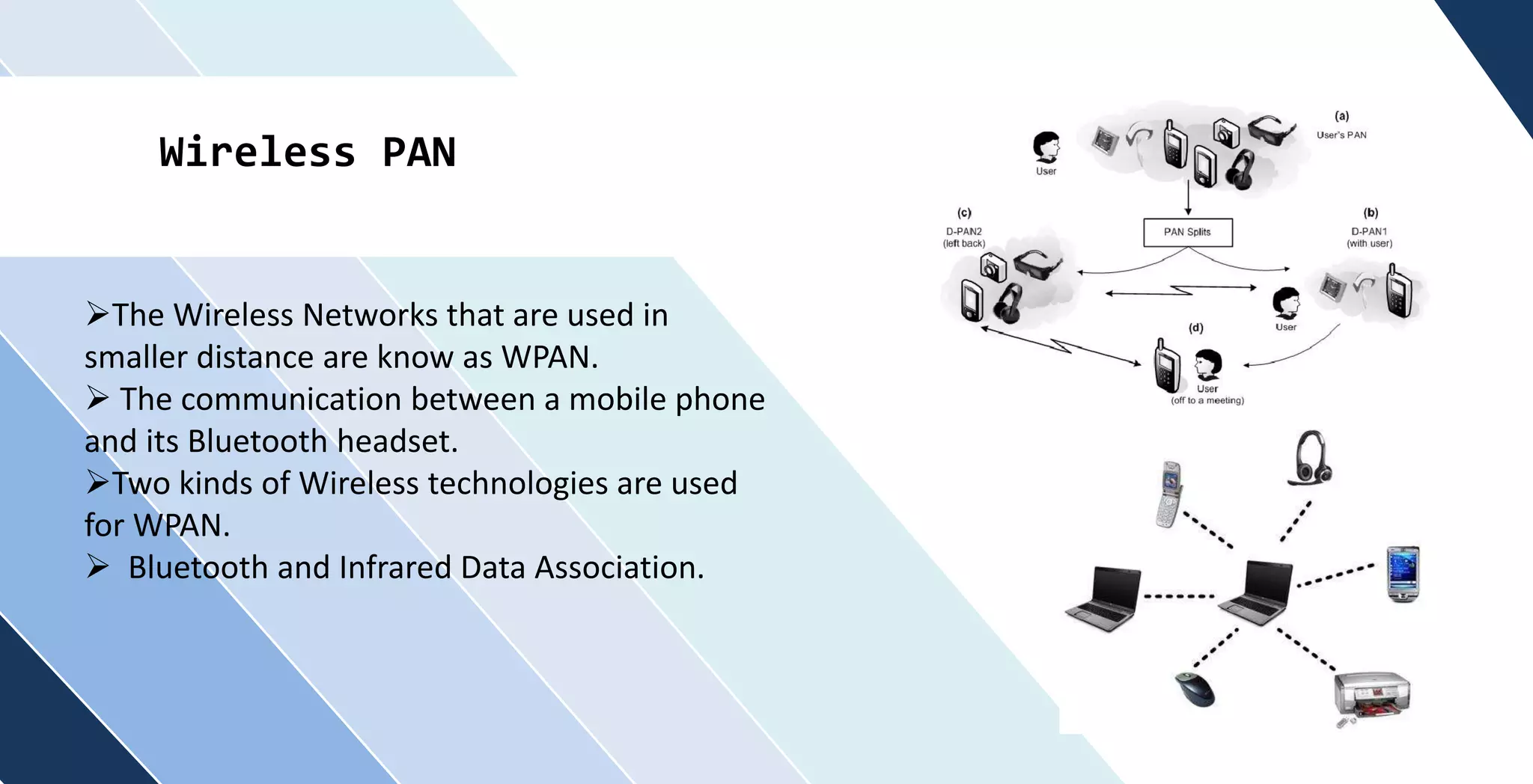
The Wireless Networks that are used in
smaller distance are know as WPAN.
 The communication between a mobile phone
and its Bluetooth headset.
Two kinds of Wireless technologies are used
for WPAN.
 Bluetooth and Infrared Data Association.
Biprojith Saha
Security Options in Wireless
Network
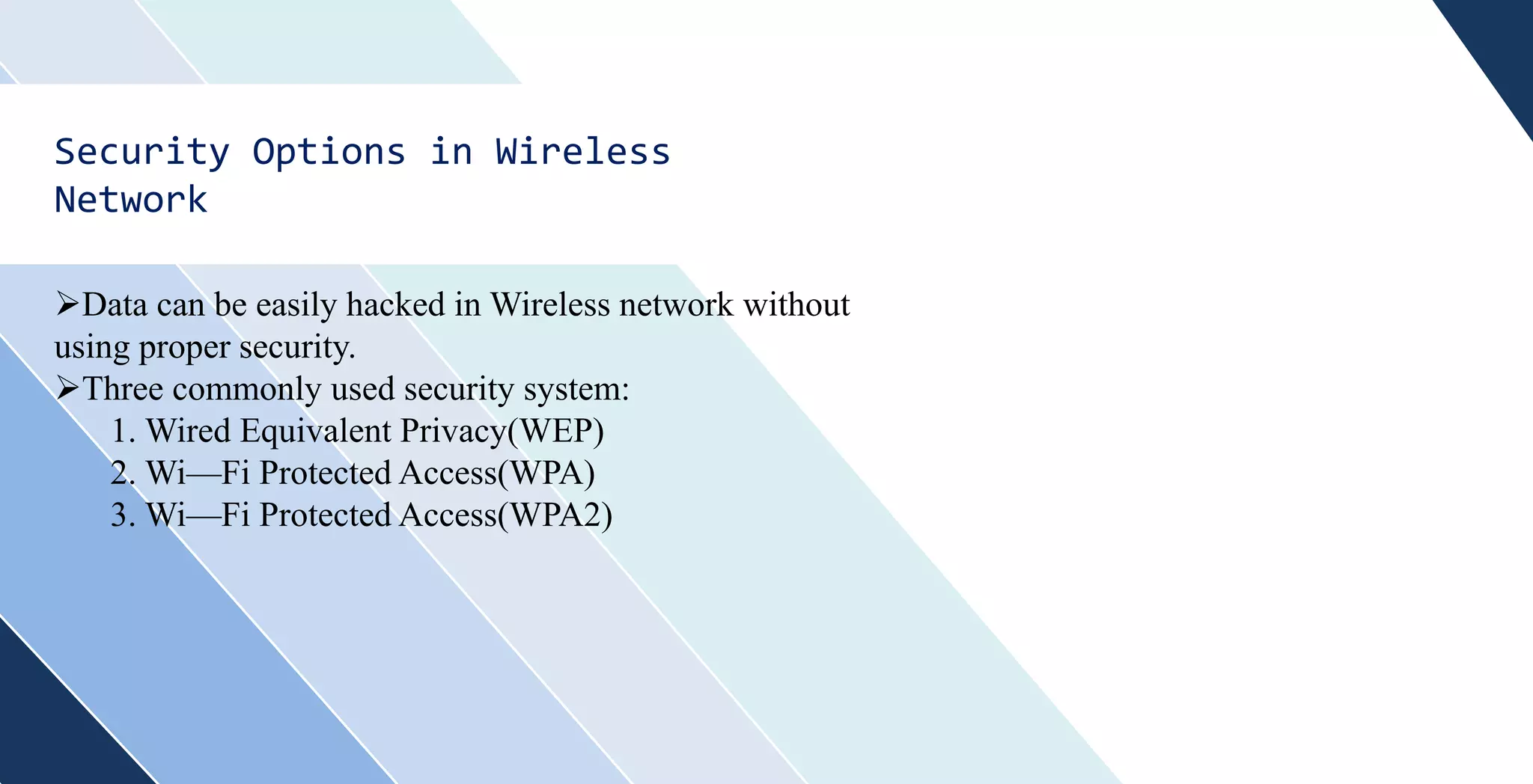
Data can be easily hacked in Wireless network without
using proper security.
Three commonly used security system:
1. Wired Equivalent Privacy(WEP)
2. Wi—Fi Protected Access(WPA)
3. Wi—Fi Protected Access(WPA2)
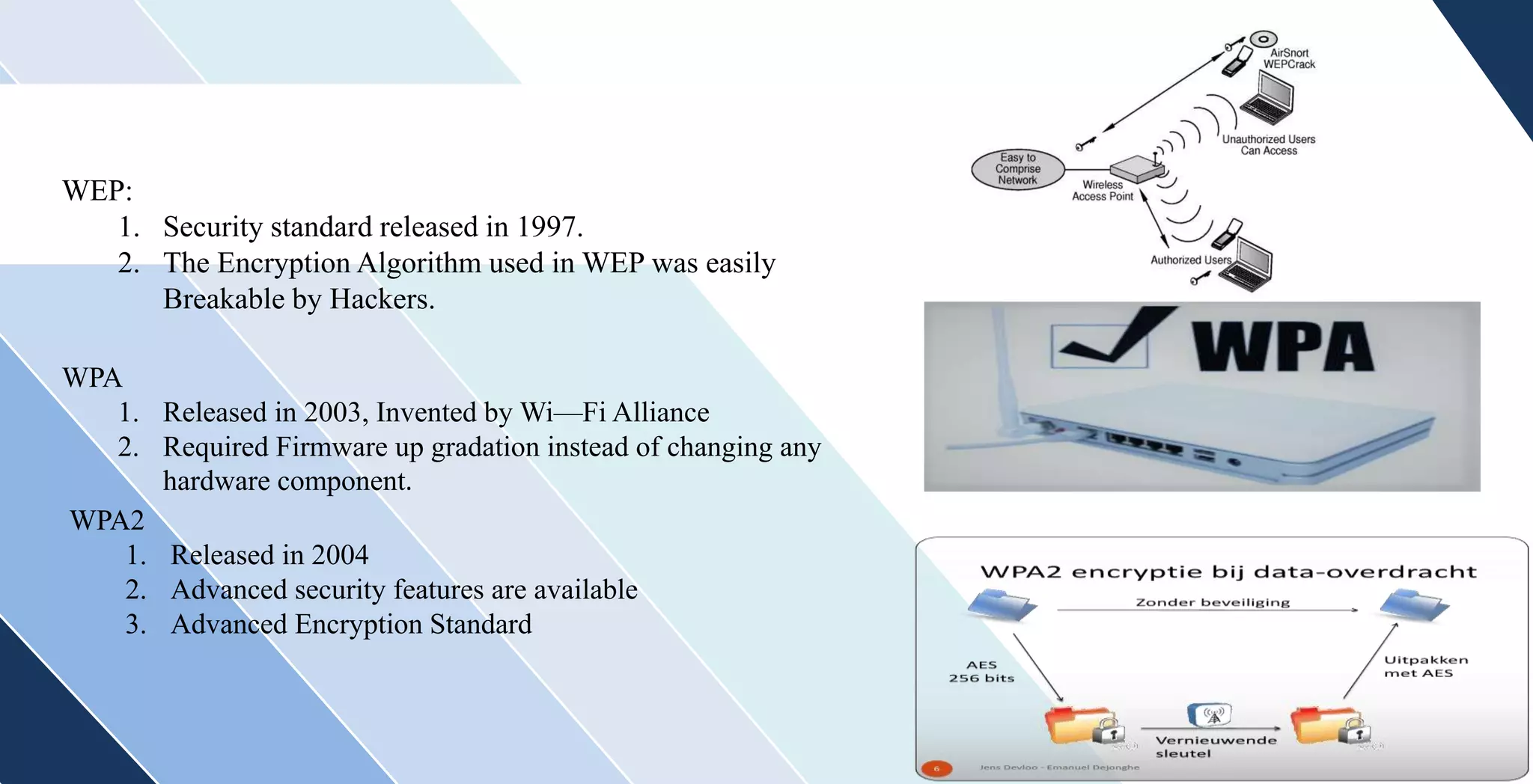
WEP:
1. Security standard released in 1997.
2. The Encryption Algorithm used in WEP was easily
Breakable by Hackers.
WPA
1. Released in 2003, Invented by Wi—Fi Alliance
2. Required Firmware up gradation instead of changing any
hardware component.
WPA2
1. Released in 2004
2. Advanced security features are available
3. Advanced Encryption Standard
Why we use wireless
Networking?
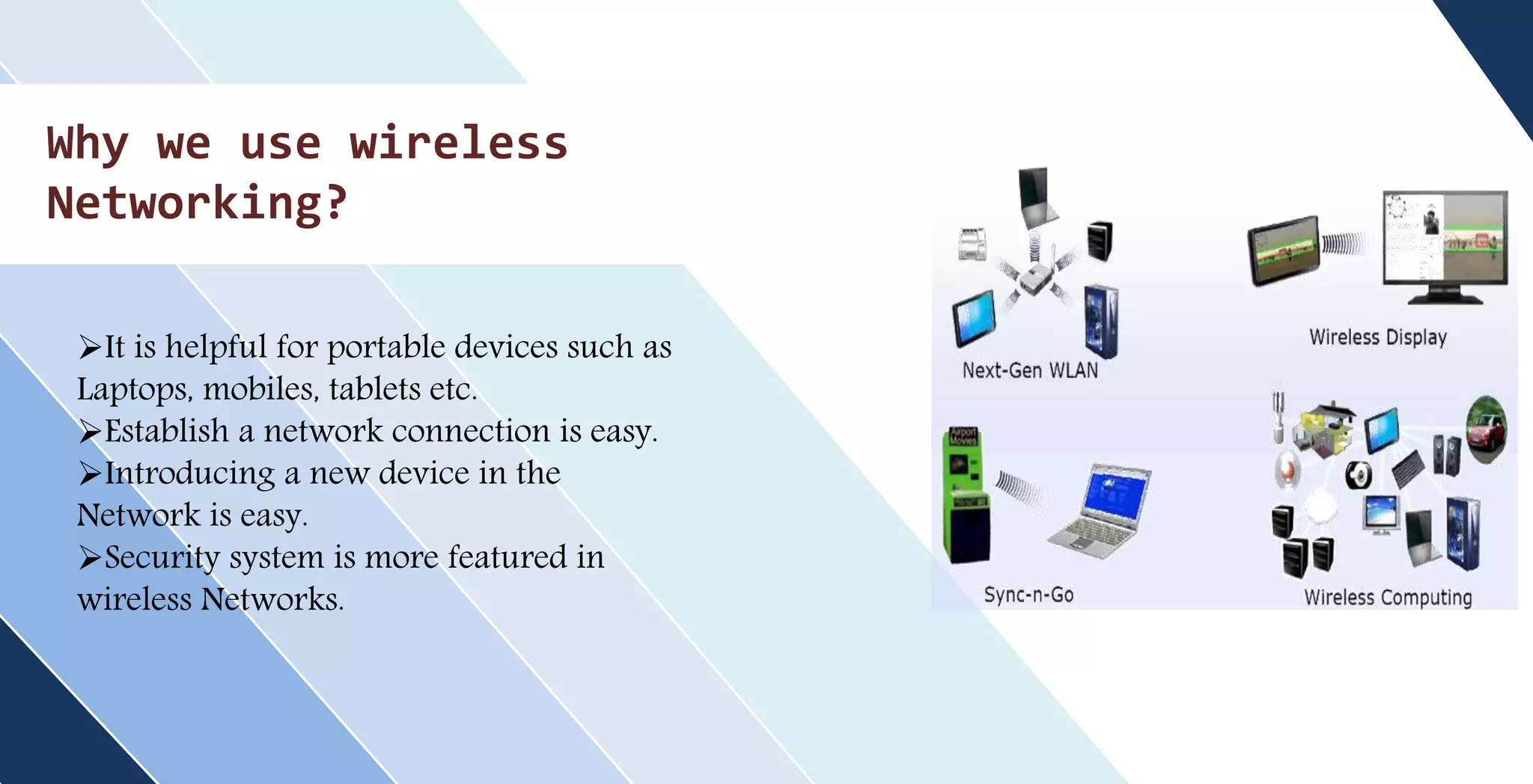
It is helpful for portable devices such as
Laptops, mobiles, tablets etc.
Establish a network connection is easy.
Introducing a new device in the
Network is easy.
Security system is more featured in
wireless Networks.
Fahad Sarkar Siam
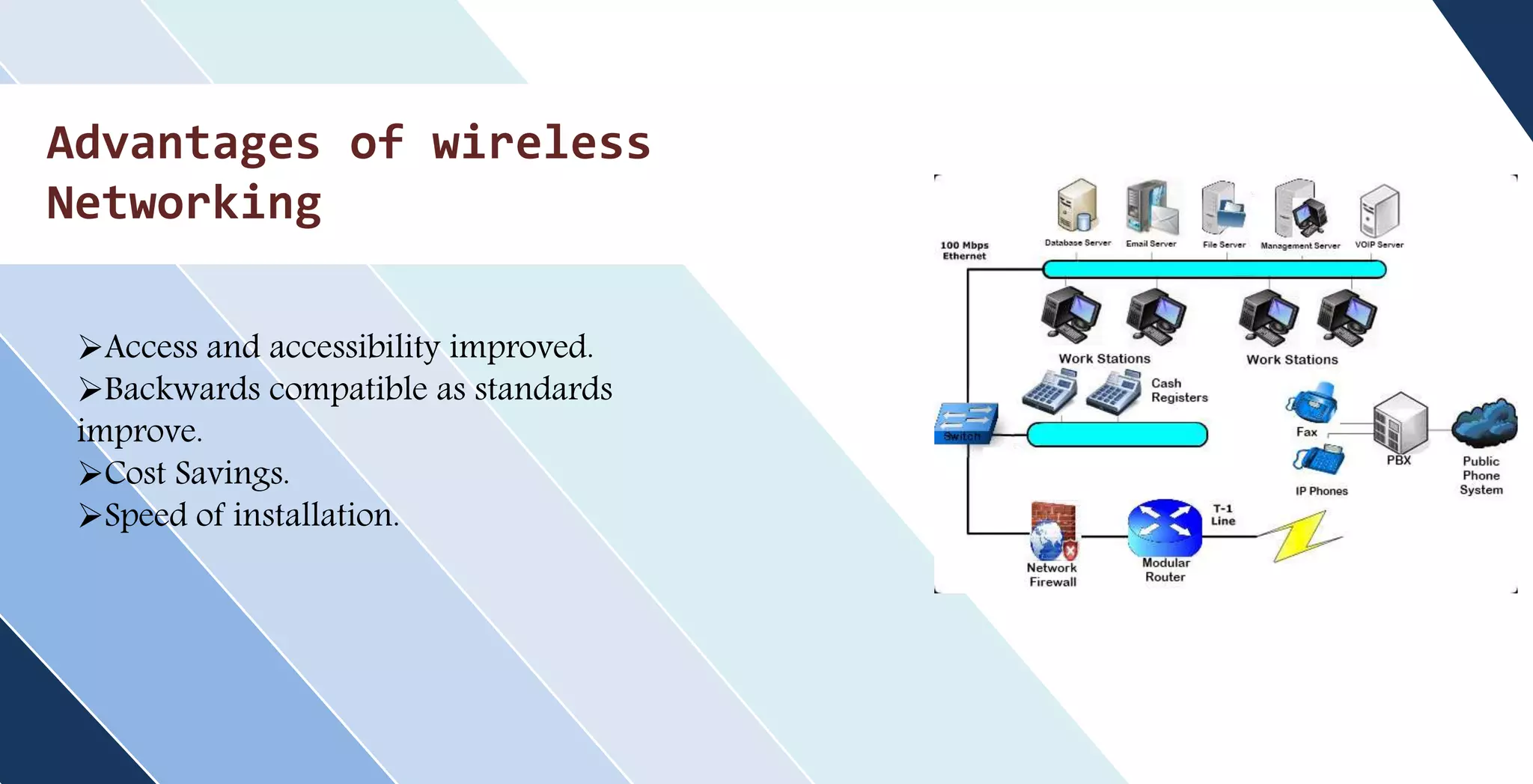
Advantages of wireless
Networking
Access and accessibility improved.
Backwards compatible as standards
improve.
Cost Savings.
Speed of installation.
Disadvantages of wireless
Networking
Conflict of standards.
Security.
Transmission speeds can fluctuate.
Slower then wired.
wireless networking

wireless networking

  • 1.
    Wireless Networking Presented By: SaikatRahman Md. Islam Khan Biprojit Saha Fahad Sarkar Siam
  • 2.
    What is WirelessNetworking? With the help of wireless technology we can transfer data from one device to another without using wire or cables. Using this technology we can establish network which is more flexible, intangible and ease to access.
  • 3.
    Wireless Networking Data Transmission Generallyimplemented and administered using: Radio Transmission (Mostly) Light Transmission Infrared and Millimeter waves Microwave Transmission
  • 4.
    Components Requirements The importantcomponents required for setting up a wireless network are: Medium Access point and Extension point Wireless bridges and Power line bridges Antennas Wireless adapters Wireless Station and Server Software
  • 5.
  • 6.
    Types of WirelessNetworks Based on the size Wireless Networks are divided into four categories .  Wireless LAN  Wireless MAN  Wireless WAN  Wireless PAN
  • 7.
    Wireless LAN This isa network where two or more computers are connected that covers only a limited area. The NIC ( Network Interface Card)is used in this connection where has a small range to cover.  We often called this peer to peer Network.
  • 8.
    Wireless MAN Collected unitof many WLAN located at various.  It uses WIMAX(World wide Interoperability for Microwave Access) which is controlled by WiMAX Forum.  Maximum speed 1Bits/sec.
  • 9.
    Wireless WAN WWAN isa very large network which is spread over a very large area. It connects many cites together. The technology in WWAN are subdivided in many generations: 2G, 3G, 4G.  This technology used in most of the Analog devices.
  • 10.
    Wireless PAN The WirelessNetworks that are used in smaller distance are know as WPAN.  The communication between a mobile phone and its Bluetooth headset. Two kinds of Wireless technologies are used for WPAN.  Bluetooth and Infrared Data Association.
  • 11.
  • 12.
    Security Options inWireless Network Data can be easily hacked in Wireless network without using proper security. Three commonly used security system: 1. Wired Equivalent Privacy(WEP) 2. Wi—Fi Protected Access(WPA) 3. Wi—Fi Protected Access(WPA2)
  • 13.
    WEP: 1. Security standardreleased in 1997. 2. The Encryption Algorithm used in WEP was easily Breakable by Hackers. WPA 1. Released in 2003, Invented by Wi—Fi Alliance 2. Required Firmware up gradation instead of changing any hardware component. WPA2 1. Released in 2004 2. Advanced security features are available 3. Advanced Encryption Standard
  • 14.
    Why we usewireless Networking? It is helpful for portable devices such as Laptops, mobiles, tablets etc. Establish a network connection is easy. Introducing a new device in the Network is easy. Security system is more featured in wireless Networks.
  • 15.
  • 16.
    Advantages of wireless Networking Accessand accessibility improved. Backwards compatible as standards improve. Cost Savings. Speed of installation.
  • 17.
    Disadvantages of wireless Networking Conflictof standards. Security. Transmission speeds can fluctuate. Slower then wired.