V-model
What is V-model ?
V- model means Verification and Validation model.
When to use the V-model ?
 Medium sized projects
 Ample technical resources
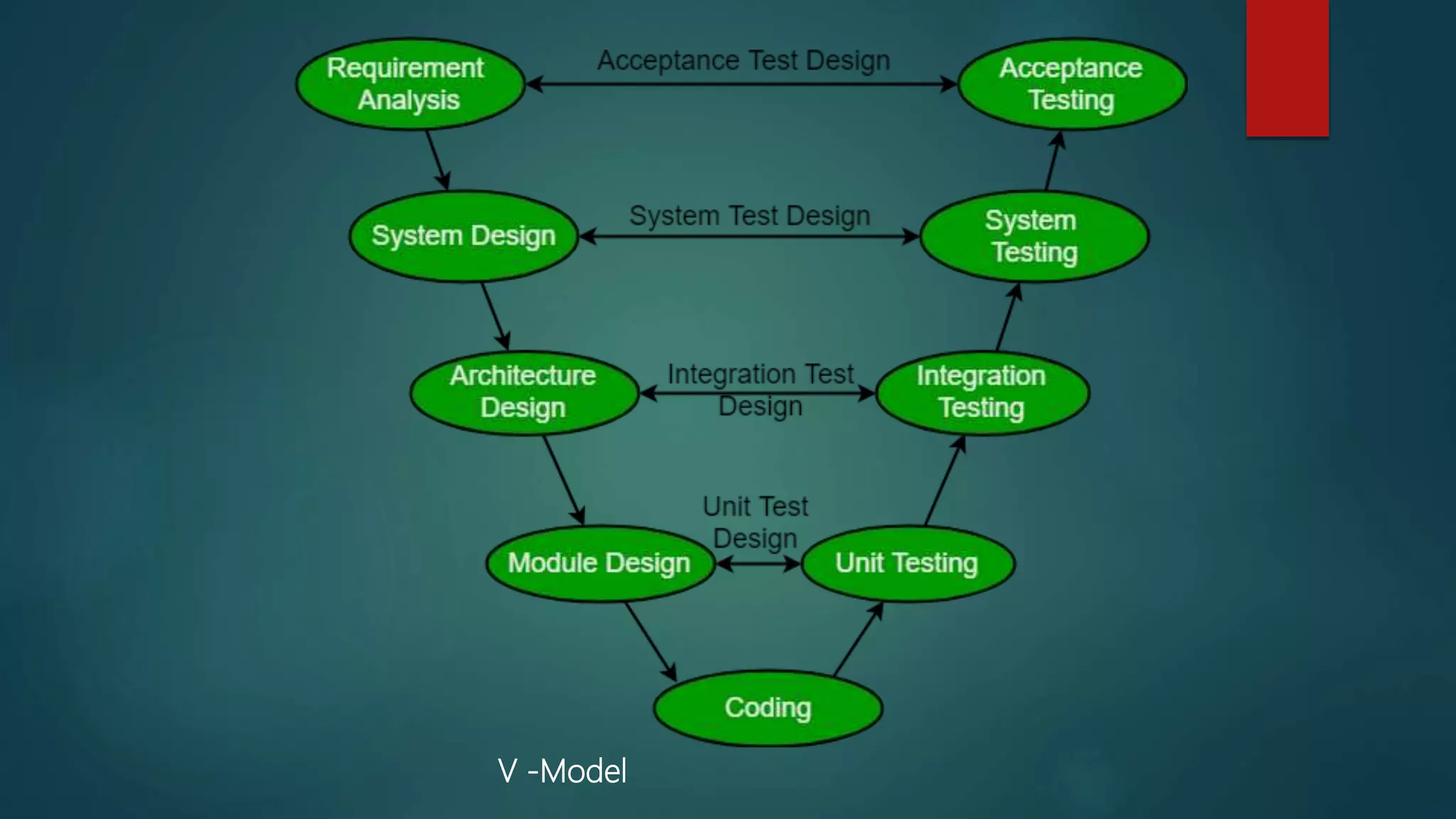
V -Model
The various phases of the V-model are
as follows:
 Requirements like BRS and SRS begin the life cycle model
just like the waterfall model. But, in this model before
development is started, a system test plan is created.
 The high-level design (HLD) phase focuses on system
architecture and design.
 The low-level design (LLD) phase is where the actual
software components are designed
 The implementation phase is, again, where all coding takes
place.
 Coding: This is at the bottom of the V-Shape model. Module
design is converted into code by developers.
Advantages of V-model:
 This is highly disciplined model and phase are completed
one at a time.
 Works well for smaller project where requirements are easily
understood.
 Avoids the downward flow of the defects.
 Simple and easy to understand and use.
Disadvantages of V-model:
 Very rigid and least flexible.
 Software is developed during the implementation phase
 Not a good model for complex and object oriented project.
 Poor model for long and ongoing projects.
THANK YOU

V model

  • 1.
  • 2.
    What is V-model? V- model means Verification and Validation model.
  • 3.
    When to usethe V-model ?  Medium sized projects  Ample technical resources
  • 4.
  • 5.
    The various phasesof the V-model are as follows:  Requirements like BRS and SRS begin the life cycle model just like the waterfall model. But, in this model before development is started, a system test plan is created.  The high-level design (HLD) phase focuses on system architecture and design.  The low-level design (LLD) phase is where the actual software components are designed
  • 6.
     The implementationphase is, again, where all coding takes place.  Coding: This is at the bottom of the V-Shape model. Module design is converted into code by developers.
  • 7.
    Advantages of V-model: This is highly disciplined model and phase are completed one at a time.  Works well for smaller project where requirements are easily understood.  Avoids the downward flow of the defects.  Simple and easy to understand and use.
  • 8.
    Disadvantages of V-model: Very rigid and least flexible.  Software is developed during the implementation phase  Not a good model for complex and object oriented project.  Poor model for long and ongoing projects.
  • 9.