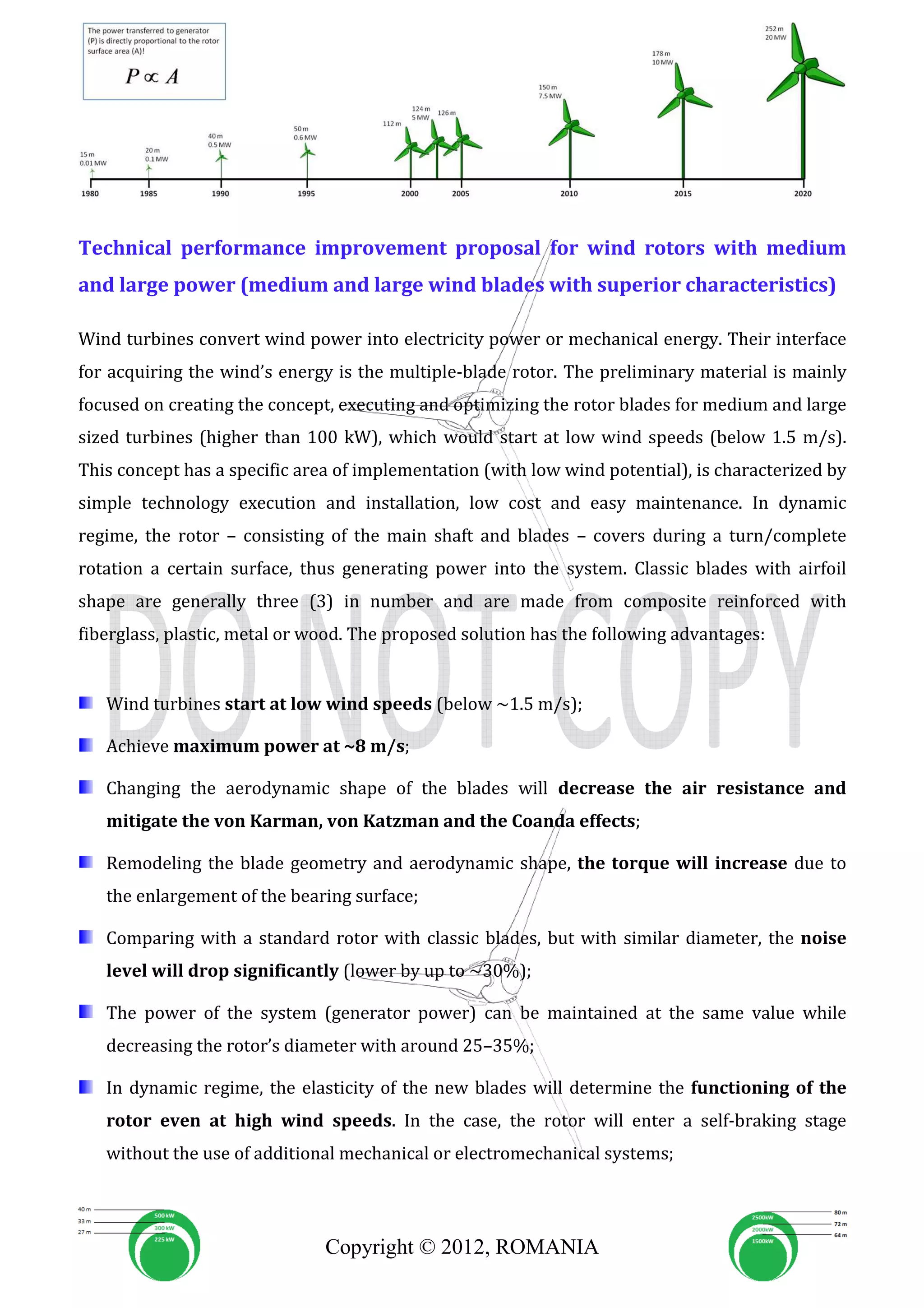
Technical performance improvement proposal for wind rotors with medium
and large power (medium and large wind blades with superior characteristics)

Wind turbines convert wind power into electricity power or mechanical energy. Their interface
for acquiring the wind’s energy is the multiple-blade rotor. The preliminary material is mainly
focused on creating the concept, executing and optimizing the rotor blades for medium and large
sized turbines (higher than 100 kW), which would start at low wind speeds (below 1.5 m/s).
This concept has a specific area of implementation (with low wind potential), is characterized by
simple technology execution and installation, low cost and easy maintenance. In dynamic
regime, the rotor – consisting of the main shaft and blades – covers during a turn/complete
rotation a certain surface, thus generating power into the system. Classic blades with airfoil
shape are generally three (3) in number and are made from composite reinforced with
fiberglass, plastic, metal or wood. The proposed solution has the following advantages:


   Wind turbines start at low wind speeds (below ~1.5 m/s);

   Achieve maximum power at ~8 m/s;

   Changing the aerodynamic shape of the blades will decrease the air resistance and
   mitigate the von Karman, von Katzman and the Coanda effects;

   Remodeling the blade geometry and aerodynamic shape, the torque will increase due to
   the enlargement of the bearing surface;

   Comparing with a standard rotor with classic blades, but with similar diameter, the noise
   level will drop significantly (lower by up to ~30%);

   The power of the system (generator power) can be maintained at the same value while
   decreasing the rotor’s diameter with around 25–35%;

   In dynamic regime, the elasticity of the new blades will determine the functioning of the
   rotor even at high wind speeds. In the case, the rotor will enter a self-braking stage
   without the use of additional mechanical or electromechanical systems;


                               Copyright © 2012, ROMANIA
While operating the rotor will behave like a balance wheel (flywheel), which gives it the
   advantage to keep its speed of rotations constant during wind speed variation (in a
   certain range of values);

   The rotor blades weight will significantly decrease compared to a classic rotor having the
   same diameter (about 20%, depending on the blade material);

   In order to obtain the same shaft torque with the new blades, the diameter of the rotor
   will be reduced with about 25%;

   Service will be easier and faster;

   It will be possible to obtain the rated power of the turbines at power heights.


To achieve these improvements in wind rotors technology (rotor already patented but secret for
now) collaboration is needed in terms of technical, economic, human resources and funds by the
parties to be involved. In order to optimize the results for this application towards large and
very large turbines, it will necessary to develop innovative experimental models of turbines
using at least two (2) medium power wind turbines (100–500 kW) for the execution and
operation of prototypes. We look forward to collaborate with a company that has financial
ability, logistics and necessary equipments and is willing to invest them for the achievement of
this objective.


Invention Promoter
On behalf of the Romanian R&D team
Technical support – Ec. Ionel Gherca
Public Relations – Eng. Paul Keisch
Email: paulke36@yahoo.com
Skype: keisch.paul
Cell: +40 720 692 025


                               Copyright © 2012, ROMANIA

Wind rotor blade - invention promotion

  • 1.
    Technical performance improvementproposal for wind rotors with medium and large power (medium and large wind blades with superior characteristics) Wind turbines convert wind power into electricity power or mechanical energy. Their interface for acquiring the wind’s energy is the multiple-blade rotor. The preliminary material is mainly focused on creating the concept, executing and optimizing the rotor blades for medium and large sized turbines (higher than 100 kW), which would start at low wind speeds (below 1.5 m/s). This concept has a specific area of implementation (with low wind potential), is characterized by simple technology execution and installation, low cost and easy maintenance. In dynamic regime, the rotor – consisting of the main shaft and blades – covers during a turn/complete rotation a certain surface, thus generating power into the system. Classic blades with airfoil shape are generally three (3) in number and are made from composite reinforced with fiberglass, plastic, metal or wood. The proposed solution has the following advantages: Wind turbines start at low wind speeds (below ~1.5 m/s); Achieve maximum power at ~8 m/s; Changing the aerodynamic shape of the blades will decrease the air resistance and mitigate the von Karman, von Katzman and the Coanda effects; Remodeling the blade geometry and aerodynamic shape, the torque will increase due to the enlargement of the bearing surface; Comparing with a standard rotor with classic blades, but with similar diameter, the noise level will drop significantly (lower by up to ~30%); The power of the system (generator power) can be maintained at the same value while decreasing the rotor’s diameter with around 25–35%; In dynamic regime, the elasticity of the new blades will determine the functioning of the rotor even at high wind speeds. In the case, the rotor will enter a self-braking stage without the use of additional mechanical or electromechanical systems; Copyright © 2012, ROMANIA
  • 2.
    While operating therotor will behave like a balance wheel (flywheel), which gives it the advantage to keep its speed of rotations constant during wind speed variation (in a certain range of values); The rotor blades weight will significantly decrease compared to a classic rotor having the same diameter (about 20%, depending on the blade material); In order to obtain the same shaft torque with the new blades, the diameter of the rotor will be reduced with about 25%; Service will be easier and faster; It will be possible to obtain the rated power of the turbines at power heights. To achieve these improvements in wind rotors technology (rotor already patented but secret for now) collaboration is needed in terms of technical, economic, human resources and funds by the parties to be involved. In order to optimize the results for this application towards large and very large turbines, it will necessary to develop innovative experimental models of turbines using at least two (2) medium power wind turbines (100–500 kW) for the execution and operation of prototypes. We look forward to collaborate with a company that has financial ability, logistics and necessary equipments and is willing to invest them for the achievement of this objective. Invention Promoter On behalf of the Romanian R&D team Technical support – Ec. Ionel Gherca Public Relations – Eng. Paul Keisch Email: paulke36@yahoo.com Skype: keisch.paul Cell: +40 720 692 025 Copyright © 2012, ROMANIA