Renewable energy
resource and smart
hybrid use.
Atul Kumar Sahay
Arnab Bhattacharjee
What is Renewable energy?
• Renewable energy, often referred to as clean energy, comes from natural
sources or processes that are constantly replenished. For example, sunlight or
wind etc.
1. Solar Energy
2. Wind Energy
3. Geothermal Energy
4. Bioenergy
5. Hydropower
6. Ocean Energy
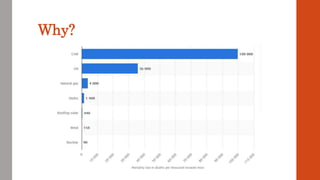
Why?
Advantage of Renewable energy
 It is sustainable and so will never run out.
 Renewable energy facilities generally require less maintenance than traditional
generators.
 Renewable energy technologies are clean sources of energy that have a much
lower environmental impact than conventional energy technologies
 Produces little or no waste products such as carbon dioxide or other chemical
pollutants.
 Cost effective.
Disadvantage of renewable energy
• Difficult to generate the quantities of electricity that are as large as those
produced by traditional fossil fuel generators.
• Renewable energy often relies on the weather for its source of power.
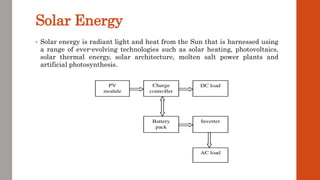
Solar Energy
• Solar energy is radiant light and heat from the Sun that is harnessed using
a range of ever-evolving technologies such as solar heating, photovoltaics,
solar thermal energy, solar architecture, molten salt power plants and
artificial photosynthesis.
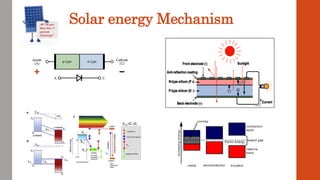
Solar energy Mechanism
Types of PV system
• Stand-Alone System.
• Grid-Connected System.
• Concentrator System.
• Fixed-Tilt System.
• Tracking System.
• Hybrid System.
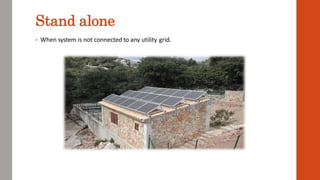
Stand alone
• When system is not connected to any utility grid.
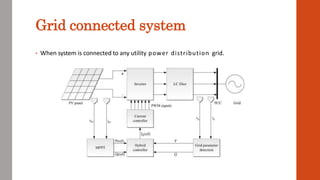
Grid connected system
• When system is connected to any utility power distribution grid.
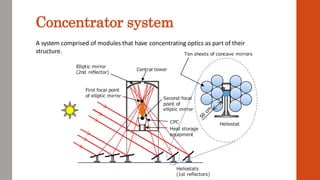
Concentrator system
A system comprised of modules that have concentrating optics as part of their
structure.
Fixed tilt system
• When a PV array with modules at a fixed tilt angle and orientation
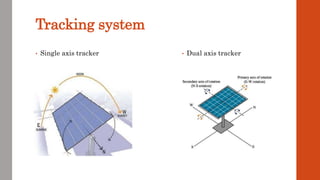
Tracking system
• Single axis tracker • Dual axis tracker
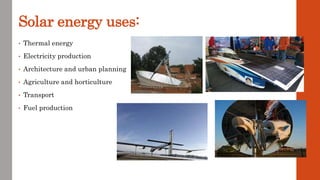
Solar energy uses:
• Thermal energy
• Electricity production
• Architecture and urban planning
• Agriculture and horticulture
• Transport
• Fuel production
Typical Components ofPV System
• Photovoltaic Array
• PV Array Disconnect
• Charge Controller
• Battery Bank
• System Meter
• Main Circuit Disconnect
• Inverter
• AC Panel and Disconnect
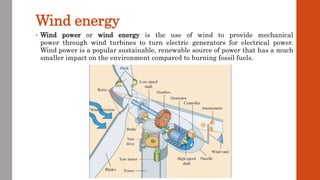
Wind energy
• Wind power or wind energy is the use of wind to provide mechanical
power through wind turbines to turn electric generators for electrical power.
Wind power is a popular sustainable, renewable source of power that has a much
smaller impact on the environment compared to burning fossil fuels.
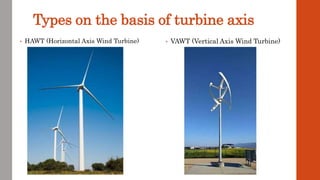
Types on the basis of turbine axis
• HAWT (Horizontal Axis Wind Turbine) • VAWT (Vertical Axis Wind Turbine)
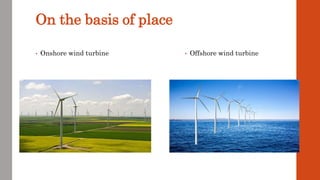
On the basis of place
• Onshore wind turbine • Offshore wind turbine
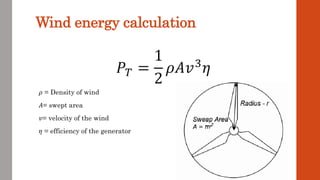
Wind energy calculation
𝑃𝑇 =
1
2
𝜌𝐴𝑣3
𝜂
𝜌 = Density of wind
𝐴= swept area
𝑣= velocity of the wind
𝜂 = efficiency of the generator
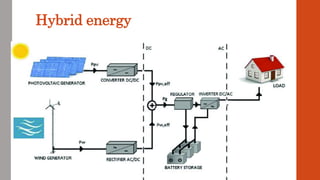
Hybrid energy
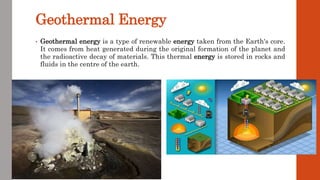
Geothermal Energy
• Geothermal energy is a type of renewable energy taken from the Earth's core.
It comes from heat generated during the original formation of the planet and
the radioactive decay of materials. This thermal energy is stored in rocks and
fluids in the centre of the earth.
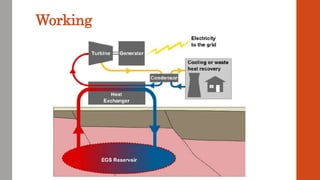
Working
Disadvantage
• Environmental Concerns about Greenhouse Emissions.
• Possibility of Depletion of Geothermal Sources.
• High Investment Costs for Geothermal System.
• Land Requirements for Geothermal System to Be Installed.
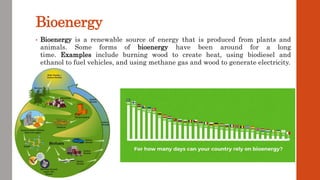
Bioenergy
• Bioenergy is a renewable source of energy that is produced from plants and
animals. Some forms of bioenergy have been around for a long
time. Examples include burning wood to create heat, using biodiesel and
ethanol to fuel vehicles, and using methane gas and wood to generate electricity.
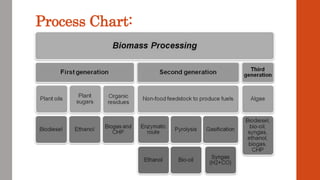
Process Chart:
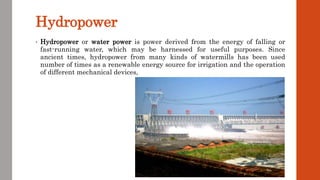
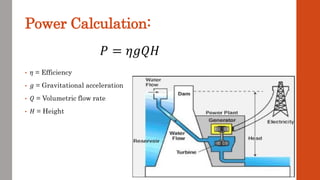
Hydropower
• Hydropower or water power is power derived from the energy of falling or
fast-running water, which may be harnessed for useful purposes. Since
ancient times, hydropower from many kinds of watermills has been used
number of times as a renewable energy source for irrigation and the operation
of different mechanical devices,
Power Calculation:
• 𝜂 = Efficiency
• 𝑔 = Gravitational acceleration
• 𝑄 = Volumetric flow rate
• 𝐻 = Height
𝑃 = 𝜂𝑔𝑄𝐻
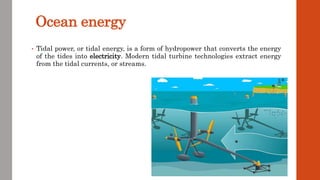
Ocean energy
• Tidal power, or tidal energy, is a form of hydropower that converts the energy
of the tides into electricity. Modern tidal turbine technologies extract energy
from the tidal currents, or streams.
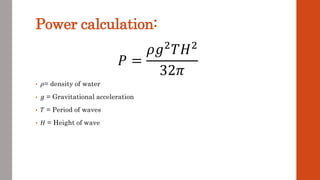
Power calculation:
𝑃 =
𝜌𝑔2𝑇𝐻2
32𝜋
• 𝜌= density of water
• 𝑔 = Gravitational acceleration
• 𝑇 = Period of waves
• 𝐻 = Height of wave

Renewable energy

  • 1.
    Renewable energy resource andsmart hybrid use. Atul Kumar Sahay Arnab Bhattacharjee
  • 2.
    What is Renewableenergy? • Renewable energy, often referred to as clean energy, comes from natural sources or processes that are constantly replenished. For example, sunlight or wind etc. 1. Solar Energy 2. Wind Energy 3. Geothermal Energy 4. Bioenergy 5. Hydropower 6. Ocean Energy
  • 3.
  • 4.
    Advantage of Renewableenergy  It is sustainable and so will never run out.  Renewable energy facilities generally require less maintenance than traditional generators.  Renewable energy technologies are clean sources of energy that have a much lower environmental impact than conventional energy technologies  Produces little or no waste products such as carbon dioxide or other chemical pollutants.  Cost effective.
  • 5.
    Disadvantage of renewableenergy • Difficult to generate the quantities of electricity that are as large as those produced by traditional fossil fuel generators. • Renewable energy often relies on the weather for its source of power.
  • 6.
    Solar Energy • Solarenergy is radiant light and heat from the Sun that is harnessed using a range of ever-evolving technologies such as solar heating, photovoltaics, solar thermal energy, solar architecture, molten salt power plants and artificial photosynthesis.
  • 7.
  • 8.
    Types of PVsystem • Stand-Alone System. • Grid-Connected System. • Concentrator System. • Fixed-Tilt System. • Tracking System. • Hybrid System.
  • 9.
    Stand alone • Whensystem is not connected to any utility grid.
  • 10.
    Grid connected system •When system is connected to any utility power distribution grid.
  • 11.
    Concentrator system A systemcomprised of modules that have concentrating optics as part of their structure.
  • 12.
    Fixed tilt system •When a PV array with modules at a fixed tilt angle and orientation
  • 13.
    Tracking system • Singleaxis tracker • Dual axis tracker
  • 14.
    Solar energy uses: •Thermal energy • Electricity production • Architecture and urban planning • Agriculture and horticulture • Transport • Fuel production
  • 15.
    Typical Components ofPVSystem • Photovoltaic Array • PV Array Disconnect • Charge Controller • Battery Bank • System Meter • Main Circuit Disconnect • Inverter • AC Panel and Disconnect
  • 16.
    Wind energy • Windpower or wind energy is the use of wind to provide mechanical power through wind turbines to turn electric generators for electrical power. Wind power is a popular sustainable, renewable source of power that has a much smaller impact on the environment compared to burning fossil fuels.
  • 17.
    Types on thebasis of turbine axis • HAWT (Horizontal Axis Wind Turbine) • VAWT (Vertical Axis Wind Turbine)
  • 18.
    On the basisof place • Onshore wind turbine • Offshore wind turbine
  • 19.
    Wind energy calculation 𝑃𝑇= 1 2 𝜌𝐴𝑣3 𝜂 𝜌 = Density of wind 𝐴= swept area 𝑣= velocity of the wind 𝜂 = efficiency of the generator
  • 20.
  • 21.
    Geothermal Energy • Geothermalenergy is a type of renewable energy taken from the Earth's core. It comes from heat generated during the original formation of the planet and the radioactive decay of materials. This thermal energy is stored in rocks and fluids in the centre of the earth.
  • 22.
  • 23.
    Disadvantage • Environmental Concernsabout Greenhouse Emissions. • Possibility of Depletion of Geothermal Sources. • High Investment Costs for Geothermal System. • Land Requirements for Geothermal System to Be Installed.
  • 24.
    Bioenergy • Bioenergy isa renewable source of energy that is produced from plants and animals. Some forms of bioenergy have been around for a long time. Examples include burning wood to create heat, using biodiesel and ethanol to fuel vehicles, and using methane gas and wood to generate electricity.
  • 25.
  • 26.
    Hydropower • Hydropower orwater power is power derived from the energy of falling or fast-running water, which may be harnessed for useful purposes. Since ancient times, hydropower from many kinds of watermills has been used number of times as a renewable energy source for irrigation and the operation of different mechanical devices,
  • 27.
    Power Calculation: • 𝜂= Efficiency • 𝑔 = Gravitational acceleration • 𝑄 = Volumetric flow rate • 𝐻 = Height 𝑃 = 𝜂𝑔𝑄𝐻
  • 28.
    Ocean energy • Tidalpower, or tidal energy, is a form of hydropower that converts the energy of the tides into electricity. Modern tidal turbine technologies extract energy from the tidal currents, or streams.
  • 29.
    Power calculation: 𝑃 = 𝜌𝑔2𝑇𝐻2 32𝜋 •𝜌= density of water • 𝑔 = Gravitational acceleration • 𝑇 = Period of waves • 𝐻 = Height of wave

Editor's Notes

  • #8 Fig 4 Conductor, Semi conductor, Insulator (Source: wikibooks.org) Fig 3 - https://www.sciencedirect.com/science/article/pii/S2542435118301351
  • #15 Fig 2 Winner of the 2013 World Solar Challenge in Australia Fig 3 Solar electric aircraft circumnavigating the globe in 2015
  • #23 Enhanced Geothermal Systems 
  • #25 Fig 2 : Italy celebrates national Bioenergy Day 2018
  • #26 Source : https://www.researchgate.net/figure/Biomass-conversion-technologies_fig4_294873874
  • #27 The Three Gorges Dam in China; the hydroelectric dam is the world's largest power station by installed capacity.