1. Researchers developed an integrated wheelchair controlled by human brainwaves using a brain-computer interface system. An electroencephalography device called Mindwave Mobile Plus was used to obtain attention values, eye blink detection, and eyebrow movement to control the wheelchair's movement and modes.
2. Statistical analysis found that the threshold attention values for controlling the wheelchair differed according to users' gender and age. For example, the threshold was higher for male adults than female children.
3. Testing showed the system could reliably detect users' attention levels, eye blinks, and eyebrow movements to move the wheelchair forward, backward, left, and right or stop through brainwave signals alone. This provided a new assistive technology option
![Bulletin of Electr Eng & Inf ISSN: 2302-9285
Wheelchair controlled by human brainwave using brain-computer interface … (Norasyimah Sahat)
3033
continuously when using only human attention value as an input. Therefore, the efficiency of the brainwave
controlled wheelchair can be improved using human brainwave in terms of attention value, blink detection
and eyebrow movement. Besides that, the reduction in cost also can be done when using modification of the
manual wheelchair into the electric wheelchair and using the cheapest brainwave sensor which consist only
single electrode. Thus, it is possible to help the physically disabled person to move. Analysis on human
attention for different gender and age are crucial in ensuring the efficiency of the integrated wheelchair could
be optimized and improved.
Literature review; BCI system is a system that can bypass conventional channels of communication
(ie., muscles and thoughts) to provide direct communication and command between the human mind and
physical devices by translating different patterns of brain activity into output commands in actual time
[1]-[3]. This can be done by positioning the electrode around the head to notice the signal or more precisely
producing the brainwaves and then transporting the information to the computer for analysis [4].
Electroencephalography (EEG) is the process of recording electrical impulses occurring at the scalp.
These impulses occur due to the ionic flow of current within neurons [5]. This is done by reading
measurements detected by electrodes placed over the scalp [6]. The use of EEG is usually associated with
diagnosing certain neurological abnormalities such as dementia and epilepsy [7]. EEG comprises a set of
signals which may be classified according to their frequency [8]. Several types of waves can be classified as
alpha (∝), delta (δ), theta (θ), beta (β) and gamma (γ) based on their frequency range [9]. It is possible to
configure the mental states and condition of the individual by deciding the form of brainwave that is being
generated [10].
An EEG device called mindwave mobile plus (MW+) (refer Figure 1) has been used in this research
to acquire data of brainwave signals in term of attention level, blink detection and eyebrow movement to
control the integrated wheelchair’s movement by human brainwave using the BCI system for helping a
paralyzed patient. The analog human brainwave has been converted to produce the digital value of attention
level (range 0-100), eye blink detection (0-255) and signal quality value (0-200) [11]. The attention level has
been converted using an EEG technique while eye blink detection has been acquired using Electromyography
(EMG) technique [12]. Mindwave mobile has been compared with a wet electrode EEG system named
Biopac, which is used in medical and research applications. The results show that differences between
measurements are very small and acceptable [13], [14].
Figure 1. Mindwave mobile [15], [16]
eSense attention meter shows the concentration and focus of mindwave mobile users.
Disturbances, drifting thoughts, less focus or anxiety can lower the level of the person's attention [17]. The
attention level was categorized into five levels, which were “poor attention” (1-19), “less attention” (20-39),
“neutral” (40-59), “good attention” (60-79) and “great attention” (80-100). People with “great attention”
level which range between 80 and 100 have very high concentration level at that time [18].
MW+ uses the EMG technique which will detect the muscle contractions that occurs while
blinking the eye and this contraction will generate a unique signal [19]. A blink detection algorithm signals
blink from a user. A higher number indicates a “stronger” blink, while a smaller number indicates a “lighter”
or “weaker” blink. Eye blinks are identical to a regular binary on/off binary system and are thus useful for
controls needing definitive responses. For example, one blink implies no in communication applications, two
implies yes-giving individuals with special needs a simple way of communicating [20].
The signal quality values between 0 to 200 and 0 are the best while 200 is the most defective. As an
added safety precaution in this project, a stop command will be committed to the integrated wheelchair when
the signal quality value is not respectable to prevent any unwanted movement [21]. It can be performed by](https://image.slidesharecdn.com/123200-220128011248/85/Wheelchair-controlled-by-human-brainwave-using-brain-computer-interface-system-for-paralyzed-patient-2-320.jpg)
![ ISSN: 2302-9285
Bulletin of Electr Eng & Inf, Vol. 10, No. 6, December 2021 : 3032 – 3041
3034
lifting up the eyebrow to get non-zero value of signal quality when the signal quality is equal to 26 or 51 is
produced. Once the signal quality value turns into good which is zero value, the microcontroller begins
listening for any incoming force blink data from the MW+ [22].
These values were used to control the brainwave integrated wheelchair in terms of movement
(attention level), mode (eye blink) and stop for emergency alert (eyebrow movement) [23]. Based on the
analysis, the threshold value for the human attention value was set differently according to the gender and
age category of the user, the mode of the wheelchair changed in the sequence of forward (F), to the right (R),
backward (B) and to the left (L) when the eye blink is detected. Eyebrow movement has been used to execute
the stop mode as an added precaution when using human attention level to move the wheelchair.
Limitation of previous projects; Table 1 shows some limitations of the former works in developing
brainwave integrated wheelchair or analyzing the human brainwave signals using BCI technique. Based on
the limitations occur in the previous works, there are some solutions that has been done in this research to
overcome the disadvantage which can be shown as follows;
a. The project uses a mind wave headset instead of traditional EEG to acquire brain signals, thereby
reducing the set-up time. The upgrade edition of the neurosky mindwave mobile headset was used which
is mindwave mobile plus which does not need to take pairing mode and can link to the bluetooth low
energy (BLE) bluetooth. Besides that, portable EEG device was used in this project. The advantage of
using a portable EEG brainwave headset is that it uses a dry active sensor technology to read brain
electric activity.
b. Advantageously, the invention presents a technical feature such that these EEG artifacts characterized as
facial muscle movements such as eye blinks and eyebrow movements are being utilized to generate an
instruction defining the movement of the wheelchair and is further configured to execute a “STOP”
instruction upon exceeding a predetermined threshold EEG signal value.
c. Analysis of the human attention value based on the age category and gender differences has been done as
these factors can affect the human attention level produced by the humans. The threshold value of the
brainwave integrated wheelchair has been set according to the gender and age category of the user.
d. Non-invasive technique of BCI was used which does not need to implant electrode inside the skull (non-
dangerous).
e. The reduction in cost by making the design as a conversion kit for a regular wheelchair; the project
doesn’t reinvent the wheel; it instead builds on top of an existing framework and brings together the best
of things. The mechanical modifications are narrowed down to a point where it can be reproduced easily
and invested on other manual wheelchairs. Besides that, the cheapest brainwave sensor consists of single
electrode is applied.
f. MDDS30A motor driver was used to control the speed and direction of wheelchair which is easy to use
and has simple algorithm.
g. The eyebrow movement of the user is used for stop emergency alert when applying the attention value of
the user for moving the wheelchair.
h. LED and LCD were added to enable the user to recognize the instruction mode and the attention value of
the user in real time.
Table 1. Previous work and its limitations
Limitations of Previous Projects References
1. Brainwave analysis Using traditional EEG which require a long time to acquire the brain signals. Having
complex sensors and processing.
[24]-[26]
2. Bluetooth connection It sometimes takes a long time to connect which is about 2-3 minutes. Need to take
pairing mode when using previous Mindwave Mobile.
[23], [27],
[28]
3. Display Does not have a good display to know the mode of the wheelchair and the brainwave
signals need to be analyzed in analog form.
[29], [30],
[31]
4. Wheelchair movement Not being stable when using human brainwave as an input for the wheelchair. The
wheelchair continue to move continuously when the human attention value is higher
and difficult to control.
[3], [32]
5. Emergency alert Doesn’t have any safety and emergency alert which is very risky and not compatible
for the disabled people
[2], [11]
6. Brainwave analysis on
the real subject
Focus only on hardware and not being implemented into the real subject. [3], [33]
2. RESEARCH METHOD
2.1. Block diagram of the brainwave detection system
Figure 2 shows the block diagram of the brainwave detection system for wheelchair. A system for
controlling the movement of the wheelchair comprising a brainwave sensor which is MW+ was attached onto](https://image.slidesharecdn.com/123200-220128011248/85/Wheelchair-controlled-by-human-brainwave-using-brain-computer-interface-system-for-paralyzed-patient-3-320.jpg)
![Bulletin of Electr Eng & Inf ISSN: 2302-9285
Wheelchair controlled by human brainwave using brain-computer interface … (Norasyimah Sahat)
3035
a user’s skin for detecting their brainwaves and facial movement using EEG and EMG technique. A brain
signal which has been generated from detected brainwaves will be processed and converted into digital value
and classified according to attention value (0-100), signal quality value (0-200) and blink strength value
(0-255) and transmitted to the Arduino microcontroller via HC-05 bluetooth module.
There were two Arduino that has been used in this project, as indicated in Figure 2. First Arduino,
which is Arduino MEGA (Arduino 1) was for attention value and signal quality value while the second
Arduino UNO (Arduino 2) was for the eye blink detection. These values act as an input and Arduino send
instructions to the power window motor for controlling the wheelchair via MDDS30A motor driver. At the
same time, LED and LCD was used to display the attention value and the command mode of the wheelchair.
In Arduino 2, the eye blink detection occurs when the blink strength value is higher than 110 and below 250
which change the mode of the wheelchair in sequence (forward, right, backward, left). This output will sent
to the Arduino 1 for controlling the direction of the wheelchair. The threshold value of the wheelchair
movement was set according to the gender and age category of the user. Arduino 1 will send the instructions
to the power window motor based on the input attention value, signal quality and eye blink detection. The
wheelchair will move in selected mode when the attention value of the user is higher than the threshold value
and signal quality value is good which is zero value. To stop the wheelchair after being moved because of the
higher attention level, eyebrow movement is used as the signal quality of certain value is produced.
Figure 2. Block diagram of the brainwave detection system
2.2. Analysis method
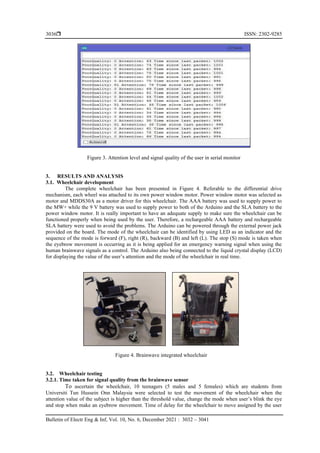
Figure 3 shows the output results in the serial monitor of Arduino. An Arduino IDE software was
used to obtain brainwave signals of the human based on the attention, signal quality value and blink detection
in digital form. The range of the attention value is from 0 to 100 while the signal quality value ranging
between 0 to 200.
Statistical analysis was carried out in order to study the effect of gender (male, female) and age
category (children, teenager, adult) on the attention value produced by the human for improving the
development of the brainwave integrated wheelchair [34]. Thirty (30) subjects were selected for the analysis
of the human’s attention value. There were 10 children, 10 teenagers and 10 adults. Statistical analysis was
performed using SPSS version.](https://image.slidesharecdn.com/123200-220128011248/85/Wheelchair-controlled-by-human-brainwave-using-brain-computer-interface-system-for-paralyzed-patient-4-320.jpg)
![ ISSN: 2302-9285
Bulletin of Electr Eng & Inf, Vol. 10, No. 6, December 2021 : 3032 – 3041
3038
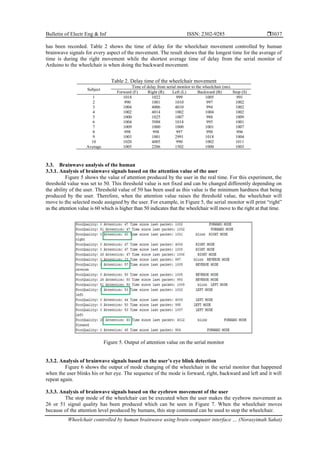
Figure 6. Output for the mode changing in the serial monitor
Figure 7. Output for the signal quality from the serial monitor
3.4. Analysis of human’s attention value in gender and age category
3.4.1. Effect of gender on the attention value of the human
An independent-samples t-test was conducted to compare attention value for every aspect of
movement between males and females with the level significance, α=0.05. The assumption of normality and
homogeneity of variances has been made before conducting the independent sample t test. The data were
analyzed by using SPSS. Since the sample size is small, n=15, Shapiro Wilk test is used to test the normality
of the sample. If the p value is higher than level of significance, the distribution of the sample is normal [35].
Attention level for each level of gender were normally distributed, as assessed by Shapiro-Wilk test (p >. 05).
Results in Table 3 shows the Levene’s and t test for independent sample t test. Levene’s test checks
the null hypothesis that the variances of the two groups are equal. If the significant value for Levene’s test is
higher than significant level of 0.05 (p > .05), the assumption of equal variance is met and t value at the top
row of the output table is chosen. In table for forward movement for example, its p value is 0.034 which is
less than significant level, so the assumption of equal variances is violated so the bottom row of the output
table is chosen. Based on the results in SPSS, homogeneity of variance as accessed by the Levene’s test is not
met only for forward movement. Therefore, the data results associated with the “Equal variances not
assumed” is used for the forward movement.
Null hypothesis for the independent sample t test is that there is no difference in mean attention
value between male and female while the alternative hypothesis is that there is a difference in mean attention
value between male and female. The null hypothesis is rejected if the p value is less than the level of](https://image.slidesharecdn.com/123200-220128011248/85/Wheelchair-controlled-by-human-brainwave-using-brain-computer-interface-system-for-paralyzed-patient-7-320.jpg)
![Bulletin of Electr Eng & Inf ISSN: 2302-9285
Wheelchair controlled by human brainwave using brain-computer interface … (Norasyimah Sahat)
3039
significance which alpha 0.05 is used in this data analysis. The value of the t statistic for the forward
movement is 2.142 and the p-value is displayed 0.043. This means that there is a very small probability of
this results occurring by chance under the null hypothesis of no difference between the two groups.
Table 3. Comparison between male and female participants on attention
Dependent
variable
Levene’s test for equality of variances t-test for equality of means
F Sig. t df Sig. (2-tailed) Mean Difference
Forward (F) Equal variances assumed 4.956 0.034 2.142 28 0.041 12.67
Equal variances not assumed 2.142 22.734 0.043*
Right (R) Equal variances assumed 1.152 0.292 0.687 28 0.498 4.40
Equal variances not assumed 0.687 25.422 0.498
Left (L) Equal variances assumed 2.370 0.135 -0.556 28 0.583 -3.00
Equal variances not assumed -0.556 26.523 0.583
Backward (B) Equal variances assumed 0.634 0.432 -0.066 28 0.947 -0.40
Equal variances not assumed -0.066 27.787 0.947
Stop (S) Equal variances assumed 0.063 0.804 0.358 28 0.723 2.20
Equal variances not assumed 0.358 27.947 0.723
Note: *significant at p < .05
The null hypothesis is formally rejected with 95% confidence since p < .05. In this case, the
attention value of male and female is different when doing the forward movement in the mean attention value
of male, approximately 12.67 higher than female [forward score: male=88.47, female=75.80]. However,
there were no significant differences between male and female participants for another four aspects of the
movement.
3.4.2. Effect of age category on the attention value of the human
The data in Table 4 reveal differences between the three categories of age across the five types of
thought movement for the attention value. Shapiro-Wilk test was used to test the assumption of normality and
Levene’s test for the assumption of homogeneity of variance. Based on the result in SPSS, the data were
normally distributed as the p of the Shapiro-Wilk test is higher than alpha level. For the homogeneity of
variance, result shows that the F value of Levene’s test for the forward, left and backward mode are 0.71,
0.10 and 2.07 with a sig. (p) value of .50, .91 and .15 concluded that the assumption of homogeneity of
variance is met. Whereas, for the other two movements, the sig. value is less than the alpha level concludes
that, significant difference is shown between the group’s variance. Using an alpha level of 0.05, one-way
ANOVA test was used to determine if there is a significant difference in the attention value of participant
among age categories which are children, teenager and adult. The result shows that there was no significant
difference between age categories on the attention value for every mode.
Table 4. Effect of age category on attention value
Dependent variable
Homogeneity of variance ANOVA
Levene statistic Sig. F Sig.
Forward (F) 0.71 0.50 0.94 0.40
Right (R) 5.84 0.01 0.38 0.69
Left (L) 0.10 0.91 0.80 0.46
Backward (B) 2.07 0.15 0.10 0.91
Stop (S) 3.95 0.03 0.66 0.53
3.4.3. Threshold value for brainwave integrated wheelchair
Based on the results on the analysis of human attention value in different type of gender and age
category, the threshold value to move the brainwave integrated wheelchair can be set differently according to
the gender and age specification of the user (refer Table 5). The average threshold value of attention level at all
movements is stop mode for each gender and age category. After the user changed the mode of the wheelchair
using eye blink detection, the integrated wheelchair will move when the signal quality is good which is 0 value
and user’s attention level is higher than the threshold value. Stop mode can be done when the user lifts up the
eyebrow as the signal quality of 26 or 51 is produced which also reducing the human attention value.
Table 5. Threshold value for brainwave integrated wheelchair
Male Female
Children 60 50
Teenager 70 50
Adult 40 30](https://image.slidesharecdn.com/123200-220128011248/85/Wheelchair-controlled-by-human-brainwave-using-brain-computer-interface-system-for-paralyzed-patient-8-320.jpg)
![ ISSN: 2302-9285
Bulletin of Electr Eng & Inf, Vol. 10, No. 6, December 2021 : 3032 – 3041
3040
4. CONCLUSION
In conclusion, wheelchair controlled by human brainwave using a BCI system for helping a
paralyzed patient has been developed. In this research, the efficiency of the brainwave integrated wheelchair
is improved using human attention value, eye blink detection and eyebrow movement for controlling the
wheelchair. Analysis on the human attention value in different gender and age category also has been done to
improve the accuracy of the brainwave integrated wheelchair. Based on the findings obtained through the
experiment carried out revealed that the gender and age categories could affect the attention level produced
by humans. Male is easier to focus compared to the female for every aspect of the movement except for the
left and backward movement. The teenager has the highest attention value when making the right and
backward movement. While for the forward and stop mode, children's category has the highest attention
value and the adult has the lowest attention value of all aspects of the movement.
Since the attention value for every aspect of the movement varies according to age and sex
differences, the threshold value of the integrated wheelchair movement controlled by MW+ is set differently
based on the gender and age categories of the user. The threshold value for male children is 60, male teenager
(70), male adult (40) while for the female children is 50, female teenager (50) and female adult (30). The
mode of the wheelchair is changed in sequence of forward (F), to the right (R), backward (B) and to the left
(L) when the blink strength value is above 110 and below 250 is detected. As an added safety precaution
when using human attention level to move the wheelchair, eyebrow movement is used to execute the stop
mode as the signal quality value of 26 or 51 is produced.
This research will open up a whole new possibility for impaired people, they may be able to control
a wheelchair using only the power of the mind. With proper control this product could greatly benefit to
those with limited to, various disabilities, in conditions of a multifunctional companion robot, or even as a
control for driving or for any locomotive device. Therefore, further work towards this project would cause a
greater long-term effect in advancing a better quality of life for all people.
ACKNOWLEDGEMENTS
The author is grateful to Universiti Tun Hussein Onn Malaysia and Universiti Malaysia Sabah for
providing relevant resources in conducting this study. This work was funded under Tier 1 (HO66) and GPPS
(HO53) Research Grants by the Research Management Centre, Universiti Tun Hussein Onn Malaysia.
Communication of this research is made possible through monetary assistance by Universiti Tun Hussein
Onn Malaysia and the UTHM Publisher’s Office via Publication Fund E15216.
REFERENCES
[1] P. A. Abhang, B. W. Gawali and S. Mehrotha, “Brain Computer Interface System and their applications,”
Introduction to EEG and Speech Based Emotion Recognition, pp. 165-177, 2016, doi: 10.1016/B978-0-12-804490-
2.00008-7.
[2] D. Dumic and J. Kevric, “BCIs for Electric Wheelchair,” International Symposium on Innovative and
Interdisciplinary Applications of Advanced Technologies, pp. 833-847, 2018.
[3] U. Sinha and M. Kanthi, “Mind controlled wheelchair,” International Journal of Control Theory and Applications,
vol. 9, no. 39, pp. 19-28, 2016.
[4] N. Sahat, A. Alias and M. D. F. Yassin, “Brainwave analysis for robot movement depending on age and sex
differences,” International Journal of Engineering and Technology, vol. 7, no. 4.30, pp. 276-280, 2018.
[5] C. H. Cheng, S. Li and S. Kadry, “Mind-Wave Controlled Robot: An Arduino Robot Simulating the Wheelchair for
Paralyzed Patients,” International Journal of Robotics and Control, vol. 1, no. 1, pp. 6-19, 2018, doi:
10.5430/ijrc.v1n1p6.
[6] A. Bhujade, N. Q. Sheikh, K. R. Kalamlar, R. A. Sangole, S, D. Lute and S. N. Giradkar, “Brain Controlled Wheel
Chair,” International Journal of Scientific Research in Science and Technology IJSRST, vol. 4, no. 7, pp. 44-46,
2018.
[7] D. M. Brandman, “Rapid calibration of an intracortical brain-computer interface for people with tetrap legia,”
Journal of neural engineering, vol. 15, no. 2, 2018.
[8] C. N. Yalung, S. A. Majeed and J. Karam, “Analysis and Interpretation of Brain Wave Signals,” ICC '16:
Proceedings of the International Conference on Internet of things and Cloud Computing, 2016, no. 67, pp. 1-8,
2016, doi: 10.1145/2896387.2900319.
[9] L. F. N. Alonso and J. G. Gill, “Brain Computer Interfaces, a Review,” Sensors, vol. 12, no. 2, pp. 1211-1279,
2012, doi: 10.3390/s120201211.
[10] W. O. A. S. W. Ismail, M. Hanif and N. Hamzah, “Human emotion detection via brain waves study by using
electroencephalogram (EEG),” International Journal on Advanced Science, Engineering and Information
Technology, vol. 6, no. 6, pp. 1005-1011, 2016.](https://image.slidesharecdn.com/123200-220128011248/85/Wheelchair-controlled-by-human-brainwave-using-brain-computer-interface-system-for-paralyzed-patient-9-320.jpg)
![Bulletin of Electr Eng & Inf ISSN: 2302-9285
Wheelchair controlled by human brainwave using brain-computer interface … (Norasyimah Sahat)
3041
[11] N. K. Jadhav and B. F. Momin, “An Approach Towards Brain Controlled System Using EEG Headband and Eye
Blink Pattern,” 3rd International Conference for Convergence in Technology I2CT, 2018, pp. 1-5, doi:
10.1109/I2CT.2018.8529587.
[12] M. Anousouya Devi, R. Sharmila and V. Saranya, “Hybrid brain computer interface in wheelchair using voice
recognition sensors,” International Conference on Computer Communication and Informatics, 2014, pp. 1-5, doi:
10.1109/ICCCI.2014.6921754.
[13] K. Dobosz and P. Wittchen, “Brain-Computer Interface for Mobile Devices,” Journal of Medical Informatics &
Technologies, vol. 24, pp. 215-222, 2015.
[14] Robbins and M. Stonehill, “Investigating the Neurosky MindWave EEG Headset,” Transport Research
Foundation, vol. 1, no. 8, pp. 14-20, 2014.
[15] J. W. Matiko, S. Beeby and J. Tudor, “Real time eye blink noise removal from EEG signals using morphological
component analysis,” Conference proceedings: Annual International Conference of the IEEE Engineering in
Medicine and Biology Society, 2013, pp. 13-16, doi: 10.1109/EMBC.2013.6609425.
[16] W. Z. Hao, Hendrick, K. Y. Fan, C. C. Te, L. S. Hao and J. G. Jia, “Controlling DC motor using eye blink signals
based on LabVIEW,” 5th International Conference on Electrical, Electronics and Information Engineering
ICEEIE, 2017, pp. 61-65, doi: 10.1109/ICEEIE.2017.8328763.
[17] P. K. Charles, M. Krishna, P. K. GV and L. D. Prasad, “EEG-Controlled Wheelchair Movement: Using Wireless
Network,” Journal Biosensors & Bioelectronics, vol. 9, no. 1, pp. 1-4, 2018, doi: 10.4172/2155-6210.1000252.
[18] D. P. X. Kan, V. W. W. Lim and P. F. Lee, “Signal conversion from attention signals to light emitting diodes as an
attention level indicator,” 1st Global Conference on Biomedical Engineering & 9th Asian-Pacific Conference on
Medical and Biological Engineering, 2015, pp. 251-255.
[19] M. K. Shahin, A. Tharwat, T. Gaber and A. E. Hassanien, “A wheelchair control system using human-machine
interaction: Single-modal and multimodal approaches,” Journal of Intelligent Systems, vol. 28, no. 1, pp. 115-132,
2017, doi: 10.1515/jisys-2017-0085.
[20] A. M. Choudhari, P. Porwal, V. Jonnalagedda, F. Meriaudeau, “An electrooculography based Human Machine
Interface for wheelchair control,” Biocybernetics and Biomedical Engineering, vol. 39, no. 3, pp. 673-685, 2019,
doi: 10.1016/j.bbe.2019.04.002.
[21] D. Paul and M. Mukherjee, “Automation of wheelchair using brain computer interface (BCI) technique,” AIP
Conference Proceedings. 2019.
[22] S. Bharali, S. Chandra, P. Dash and B. Chavan, “A Simplified Approach to Assist Severely Disabled Patients to
Make a Self-Governing Movement Utilizing EEG and EOG Technique,” Second International Conference on
Electronics, Communication and Aerospace Technology (ICECA), 2018, pp. 216-220, doi:
10.1109/ICECA.2018.8474712.
[23] M. D. F. Yassin, D. Apin, A. B. Abd. Rahman and A. Alias, “Multi-mode Brainwave Controller,” Advanced
Science Letters, vol. 23. No. 11, pp. 11508-11511, 2017, doi: 10.1166/asl.2017.10317.
[24] B. Rebsamen et al., “Controlling a Wheelchair Indoors Using Thought,” IEEE Intelligent Systems, vol. 22, no. 2,
pp. 18-24, March-April 2007, doi: 10.1109/MIS.2007.26.
[25] J. R. Millan, F. Renkens, J. Mourino and W. Gerstner, “Noninvasive brain-actuated control of a mobile robot by
human EEG,” IEEE Transactions on Biomedical Engineering, vol. 51, no. 6, pp. 1026-1033, June 2004, doi:
10.1109/TBME.2004.827086.
[26] P. R. Kennedy and R. Bakay, “Restoration of neural output from a paralyzed patient by a direct brain connection,”
Neuroreport, vol. 9, no. 8, pp. 1707-1711, 1998.
[27] K. R. Mohan, H. S. Lohit, M. M. Ranjan and A. M. Basheer, “Design of Multipurpose wheel chair for physically
challenged elder people,” SASTECH, vol. 11, no. 1, pp. 107-117, 2012.
[28] R. Ramesh, M. G. Krishna and M. Nakirekanti, “Brain Computer Interface System for Mind Controlled Robot
using Bluetooth,” International Journal of Computer Applications, vol. 104, no. 15, pp. 20-23, 2014.
[29] R. Achkar, G. A. Haidar, H. Dourgham, D. Semaan and H. Araji, “Mobile Controlled Wheelchair,” IEEE European
Modelling Symposium EMS, 2015, pp. 429-434, doi: 10.1109/EMS.2015.68.
[30] W. T. Lee, H. Nisar, A. S. Malik and K. H. Yeap, "A brain computer interface for smart home control," 2013 IEEE
International Symposium on Consumer Electronics (ISCE), 2013, pp. 35-36, doi: 10.1109/ISCE.2013.6570240.
[31] I. A. Mirza et al., “Mind-controlled wheelchair using an EEG headset and arduino microcontroller,” International
Conference on Technologies for Sustainable Development ICTSD, 2015, pp. 1-5, doi:
10.1109/ICTSD.2015.7095887.
[32] S. I. Shawon, M. M. H. Bhuiyan and T. P. Plateau, “An Innovative Construction of Wheelchair for Handicapped
Persons,” International Journal of Science and Qualitative Analysis, vol. 4, no. 1, pp. 13-19, 2018, doi:
10.11648/j.ijsqa.20180401.13.
[33] S. K. Swee, L. Z. You and K. T. Kiang, “Brainwave controlled electrical wheelchair,” MATEC Web of
Conferences, vol 54. pp. 1-4, 2016, doi: 10.1051/matecconf/2016.5403005.
[34] M. D. F. Yassin, N. Sahat, S. N. Chin and A. Alias, “The brainwave analysis for robot movement by using one
electrode,” Academic Journal of Science AJS, vol. 8, no. 1, pp. 15-22, 2018.
[35] R. Tomari, R. R. A. Hasan, W. N. W. Zakaria and R. Ngadengon, “Analysis of Optimal Brainwave Concentration
Model for Wheelchair Input Interface,” Procedia Computer Science, vol. 76, pp. 336-341, 2015, doi:
10.1016/j.procs.2015.12.304.](https://image.slidesharecdn.com/123200-220128011248/85/Wheelchair-controlled-by-human-brainwave-using-brain-computer-interface-system-for-paralyzed-patient-10-320.jpg)


![[IJET-V1I5P6] Authors:M. Newlin Rajkumar, M. Lavanya](https://cdn.slidesharecdn.com/ss_thumbnails/ijet-v1i5p6-151022011423-lva1-app6891-thumbnail.jpg?width=640&height=640&fit=bounds)


