WHAT IS
MLCS?
IMAGINE
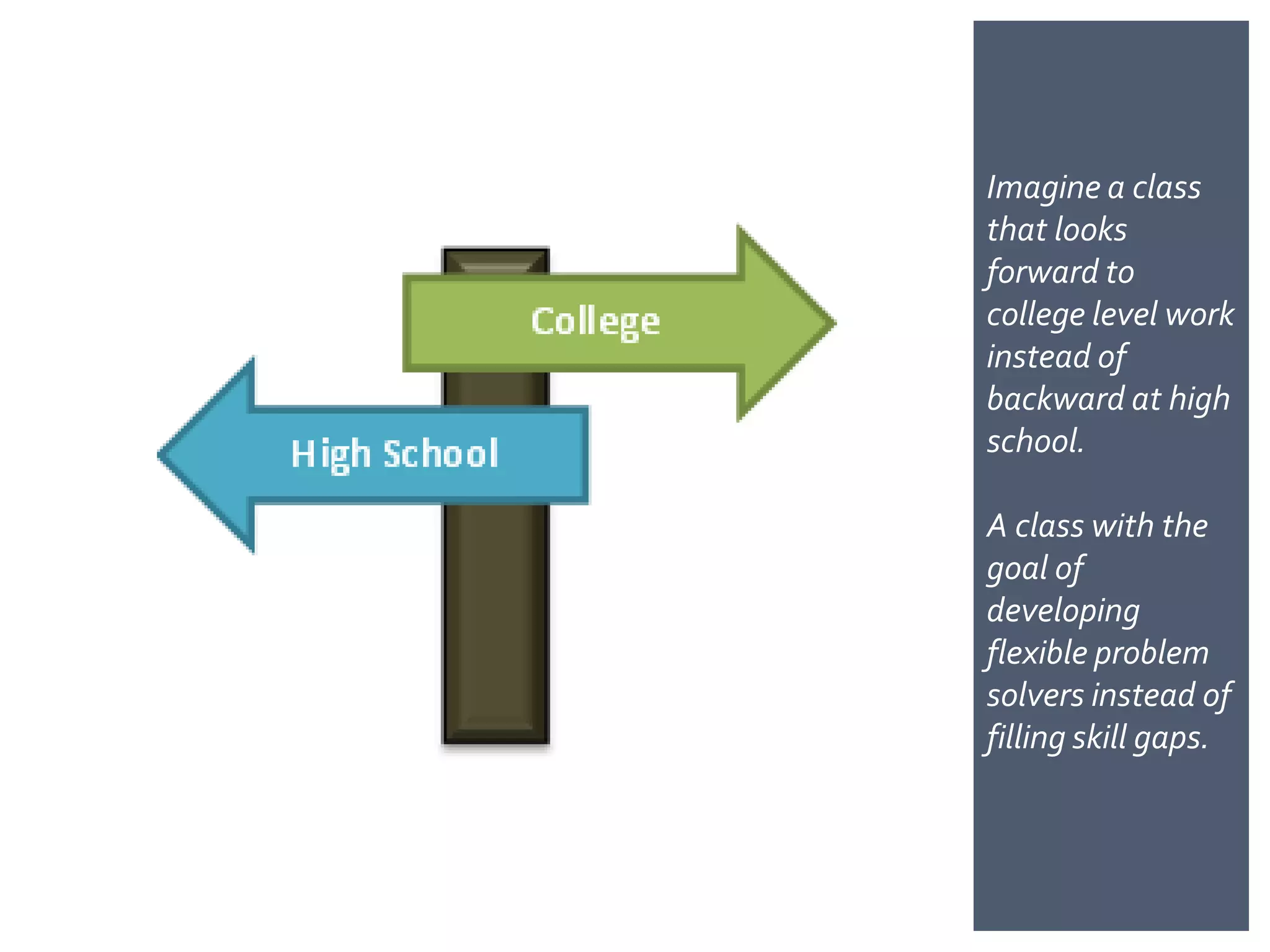
Imagine a class
that looks
forward to
college level work
instead of
backward at high
school.

A class with the
goal of
developing
flexible problem
solvers instead of
filling skill gaps.
Imagine a class
that only takes
one semester and
allows students
to get ready for
liberal arts
math, statistics,
or intermediate
algebra.

A class that gives
students options
in case they
change their
majors.
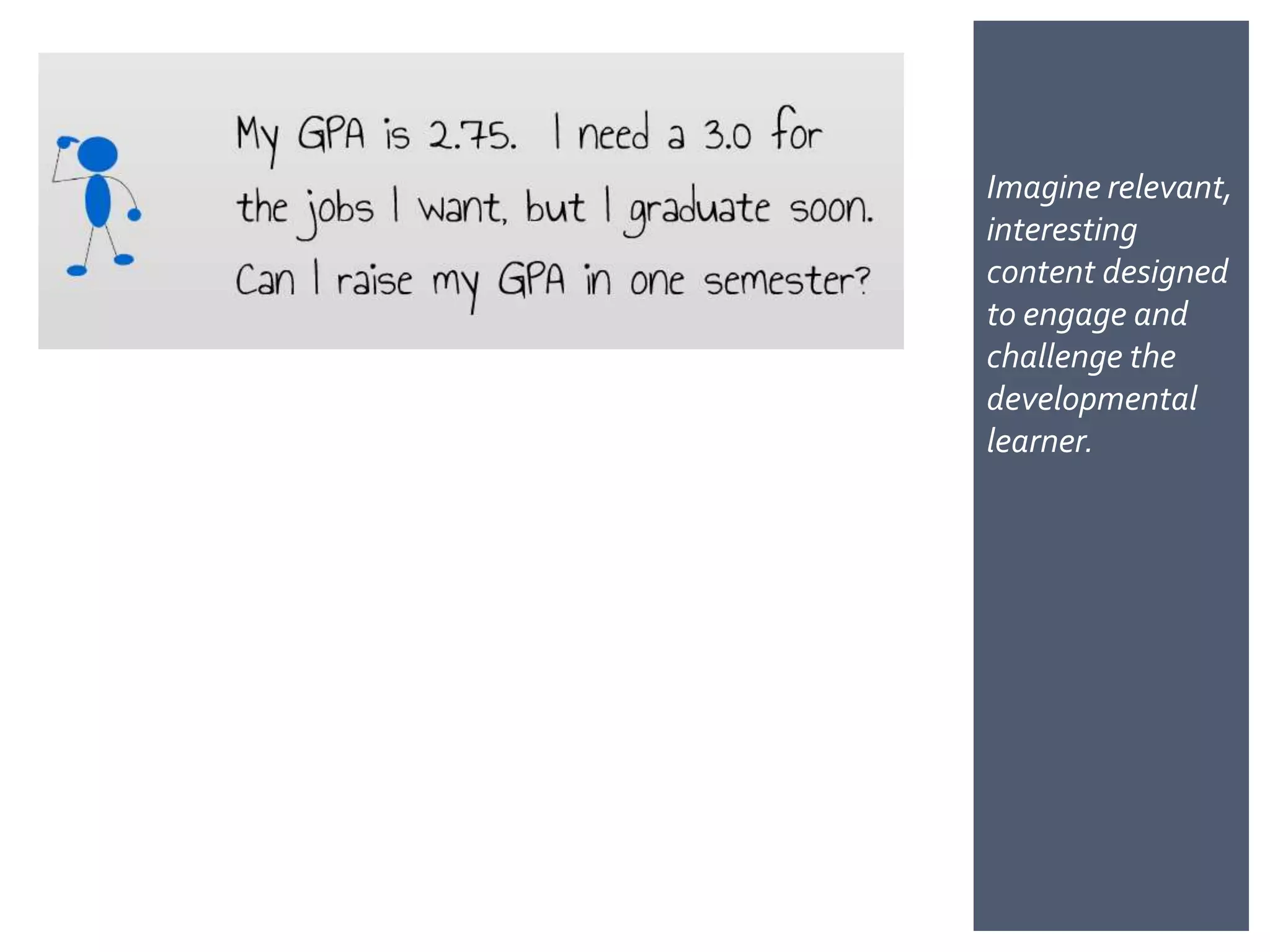
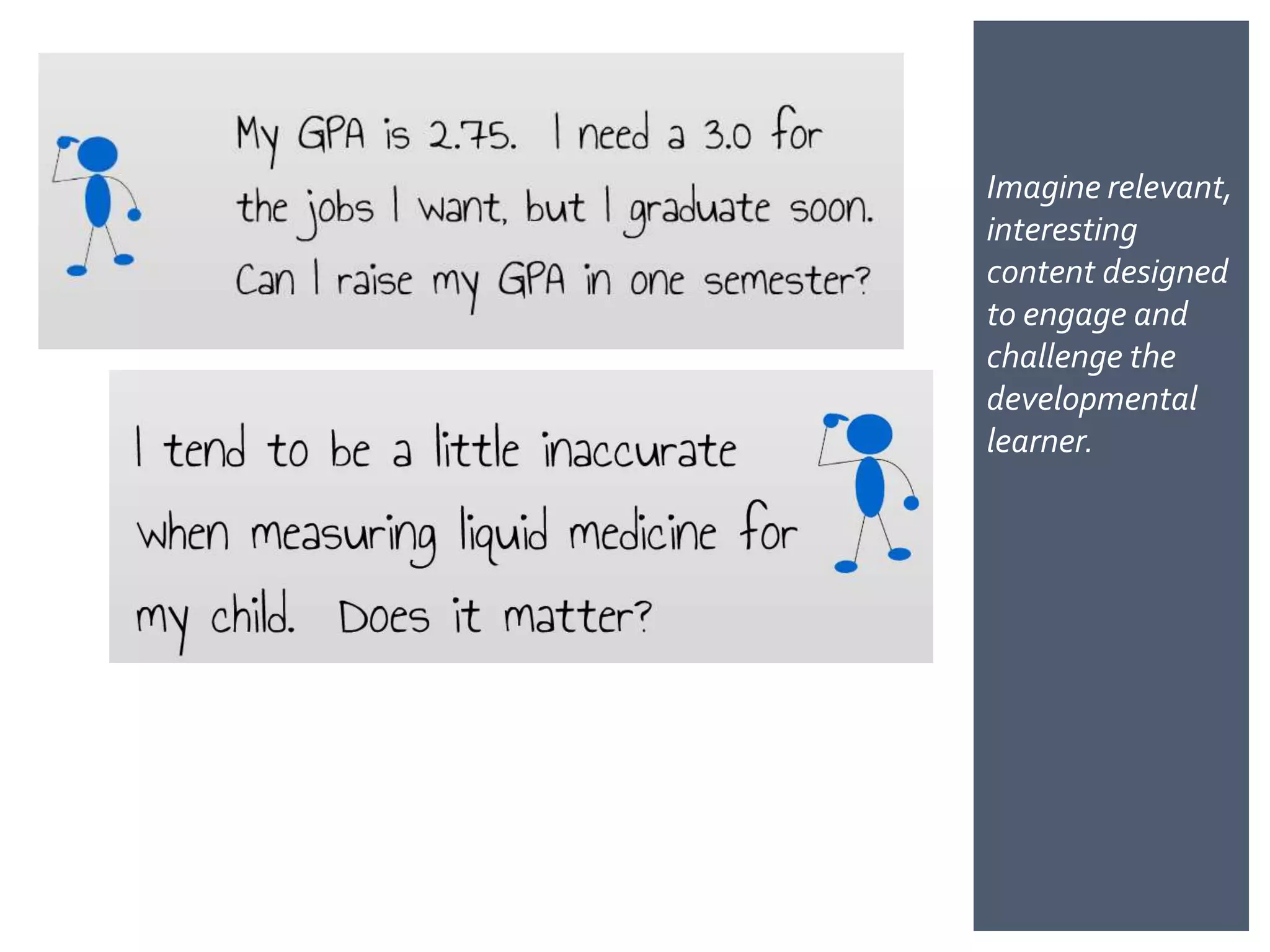
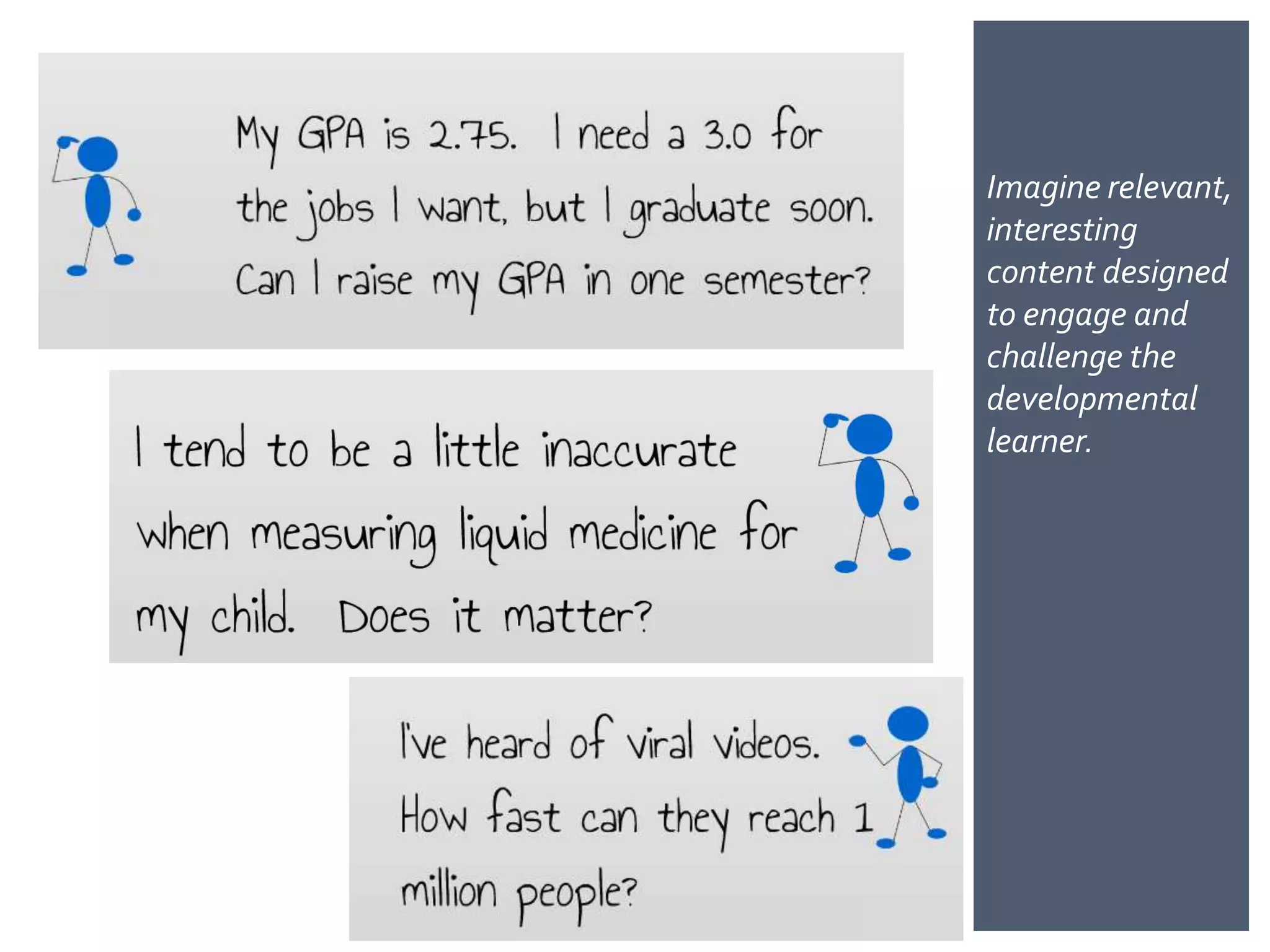
Imagine relevant,
interesting
content designed
to engage and
challenge the
developmental
learner.
Imagine relevant,
interesting
content designed
to engage and
challenge the
developmental
learner.
Imagine relevant,
interesting
content designed
to engage and
challenge the
developmental
learner.
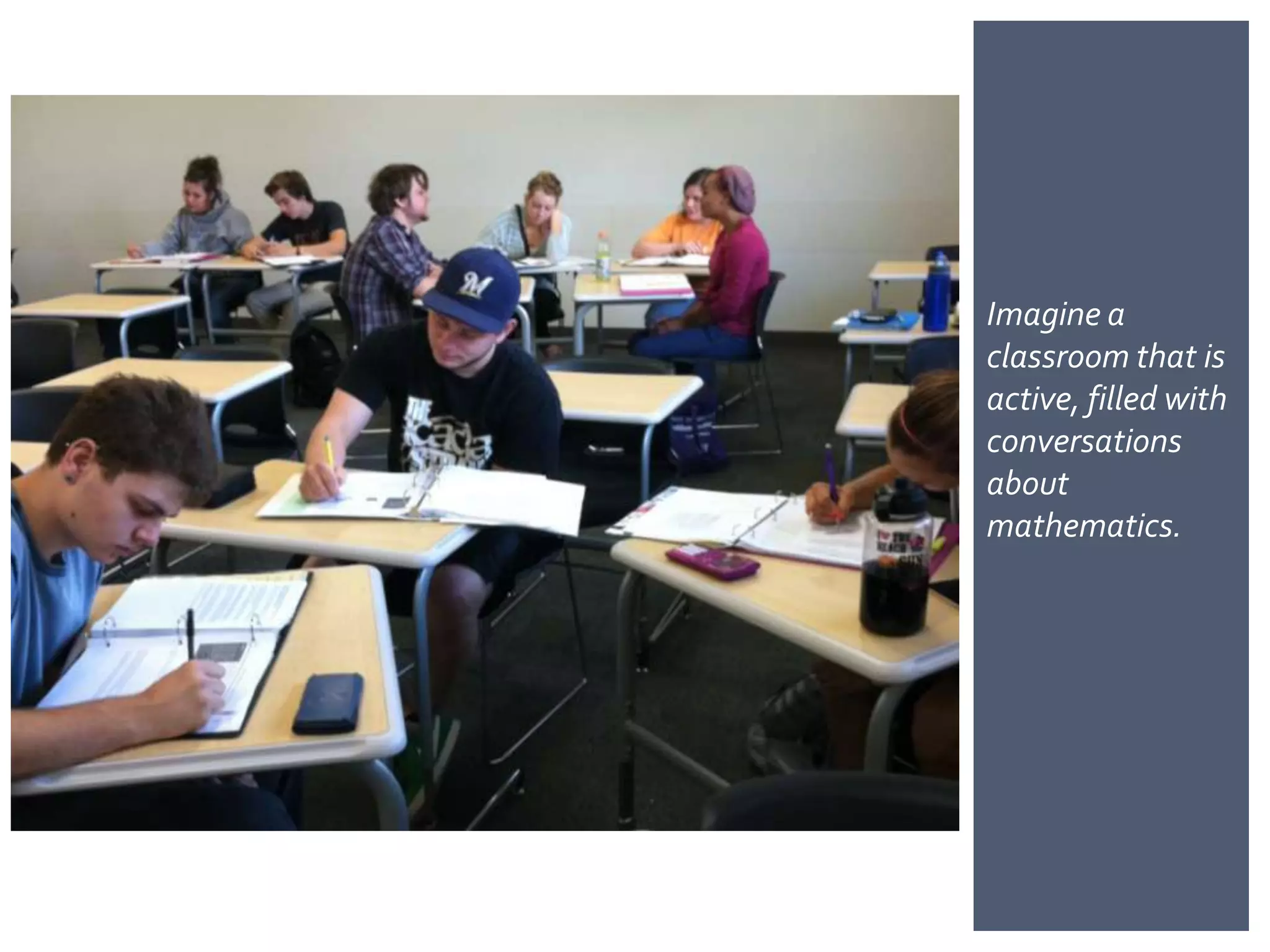
Imagine a
classroom that is
active, filled with
conversations
about
mathematics.
A class where
students work on
a variety of
problems
including open-
ended problems
that take time to
solve.
Imagine a math
class where
students see
algebra as a
useful
tool, instead of a
set of procedures
to mimic.
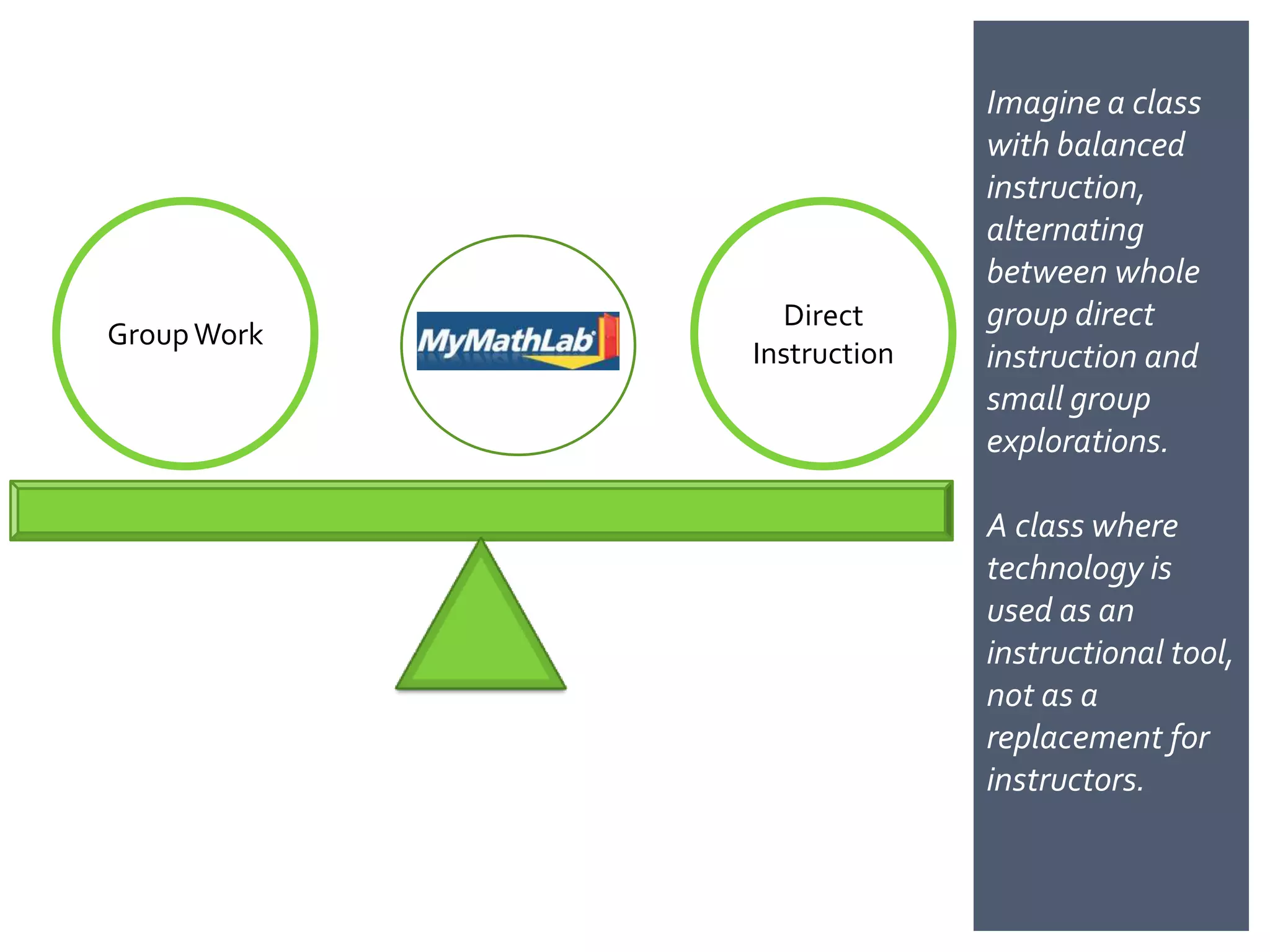
Imagine a class
                           with balanced
                           instruction,
                           alternating
                           between whole
               Direct      group direct
Group Work
             Instruction   instruction and
                           small group
                           explorations.

                           A class where
                           technology is
                           used as an
                           instructional
                           tool, not as a
                           replacement for
                           instructors.
Is this just a
lofty dream or is
this possible?
MLCS
       Mathematical
       Literacy for
       College
       Students, or
       MLCS, is such a
       course.
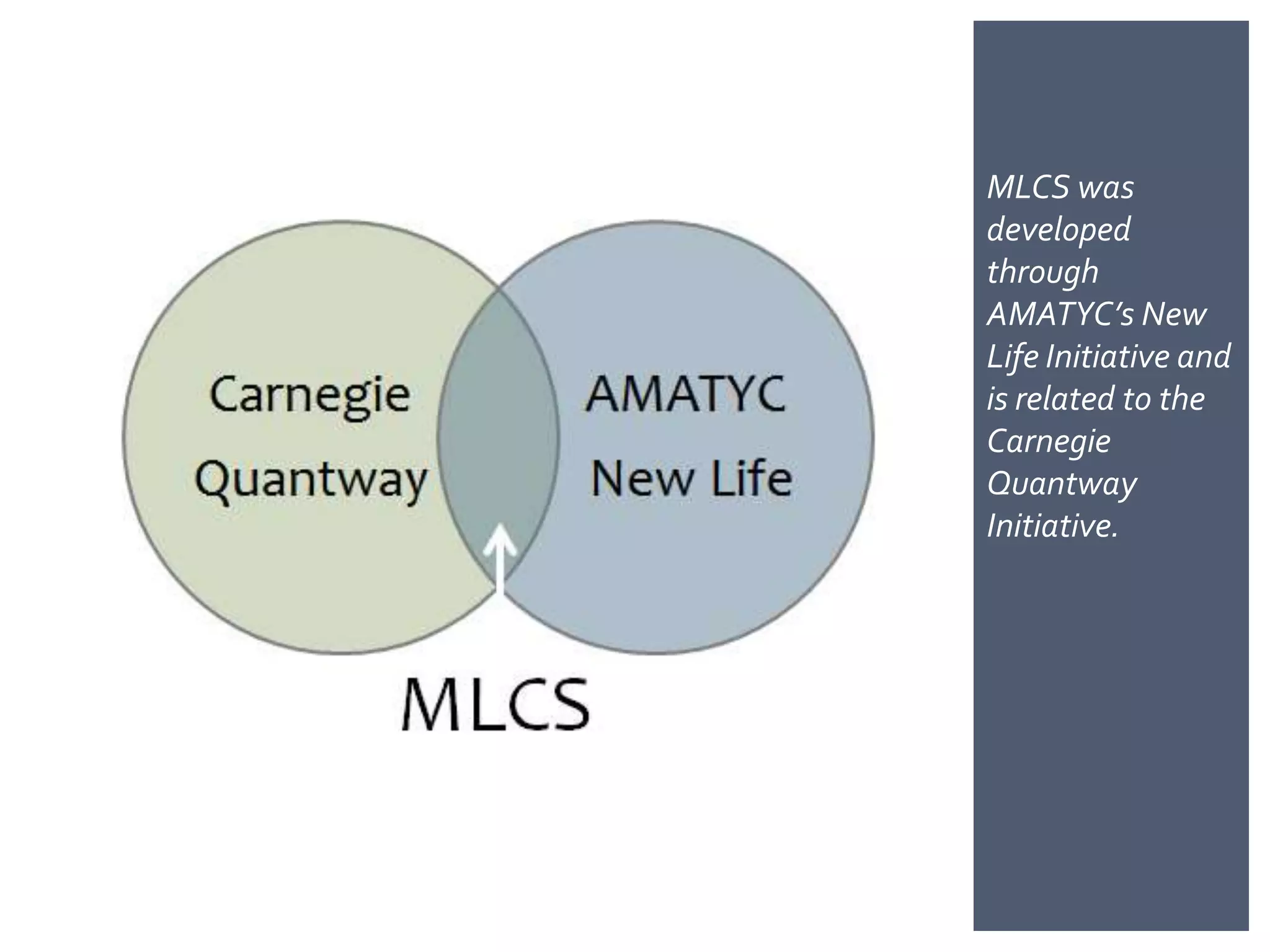
MLCS was
developed
through
AMATYC’s New
Life Initiative and
is related to the
Carnegie
Quantway
Initiative.
We have been
                developing a
                version of this
                course since
                2010. Our work

Kathleen Almy   is based on the
                work Kathleen
                did with the

Heather Foes    AMATYC and
                Carnegie
                Initiatives.

                Pilots began at
                our school in fall
                2011.
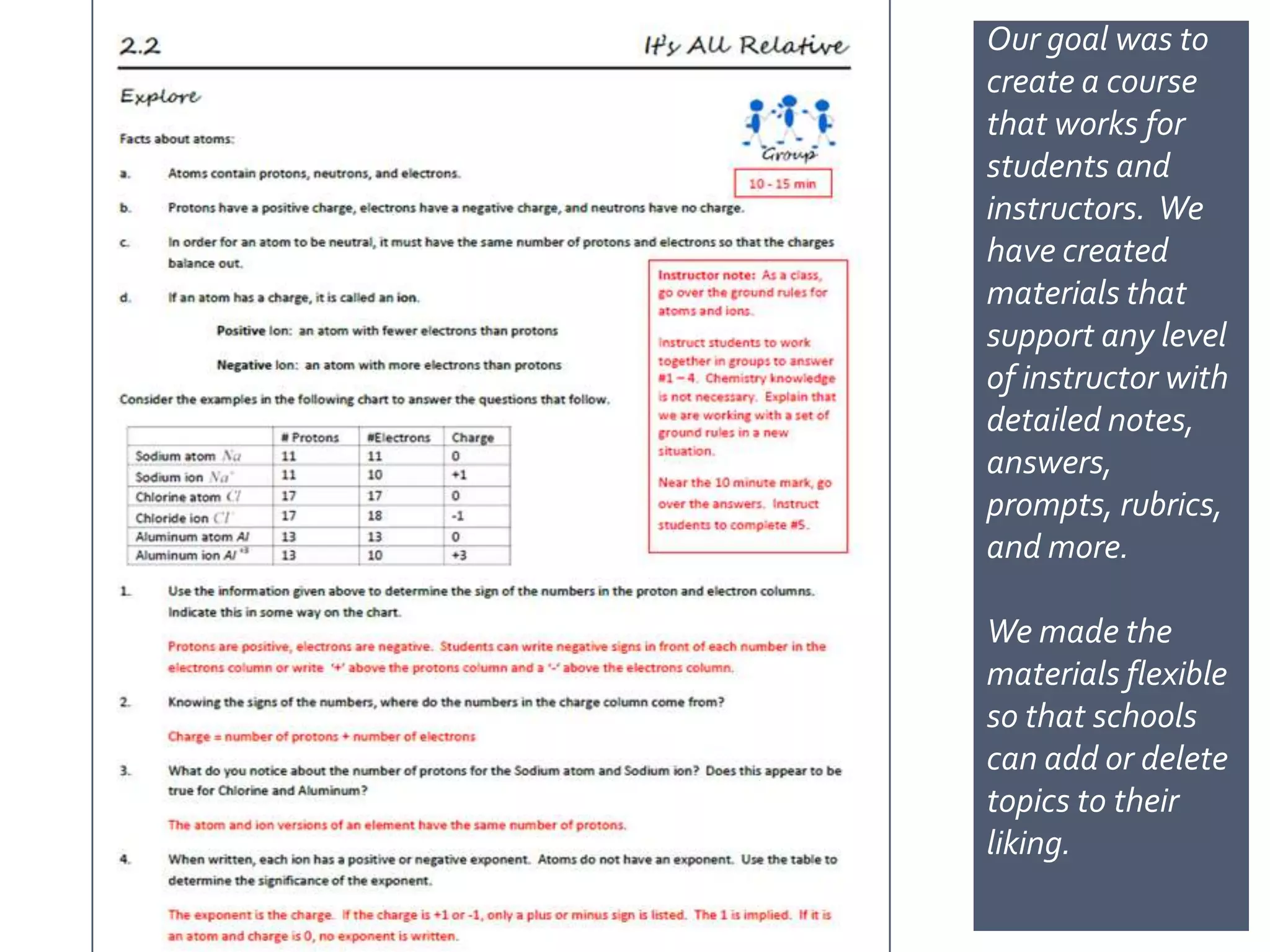
Our goal was to
create a course
that works for
students and
instructors. We
have created
materials that
support any level
of instructor with
detailed
notes, answers,
prompts, rubrics,
and more.

We made the
materials flexible
so that schools
can add or delete
topics to their
liking.
These materials
will be available
through Pearson
Education and
will be titled
Math Lit.

The text uses a
broad range of
problems and
contexts to
engage the
developmental
learner. It is a
living
textbook, where
students write on
the pages that
include
theory, exercises,
and problems.
Student success
is built into the
course in its
design,
development, les
sons, and
assessments. All
lessons that
address student
success also
include a
mathematical
objective.
Students are
                taught to be

 Flexibility
                flexible problem
                solvers who
                persist when

 Persistence   challenged. They
                learn multiple
                ways at looking

 Agility       at problems.

                They read
 Literacy      articles,
                developing
                literacy as well as
                mathematical
                literacy.
Student also
    learn algebraic
    skills along the
    way and use


+
    MyMathLab to
    develop mastery
    with them.

    Paper conceptual
    homework
    accompanies
    most
    assignments to
    connect and
    apply the ideas
    learned.
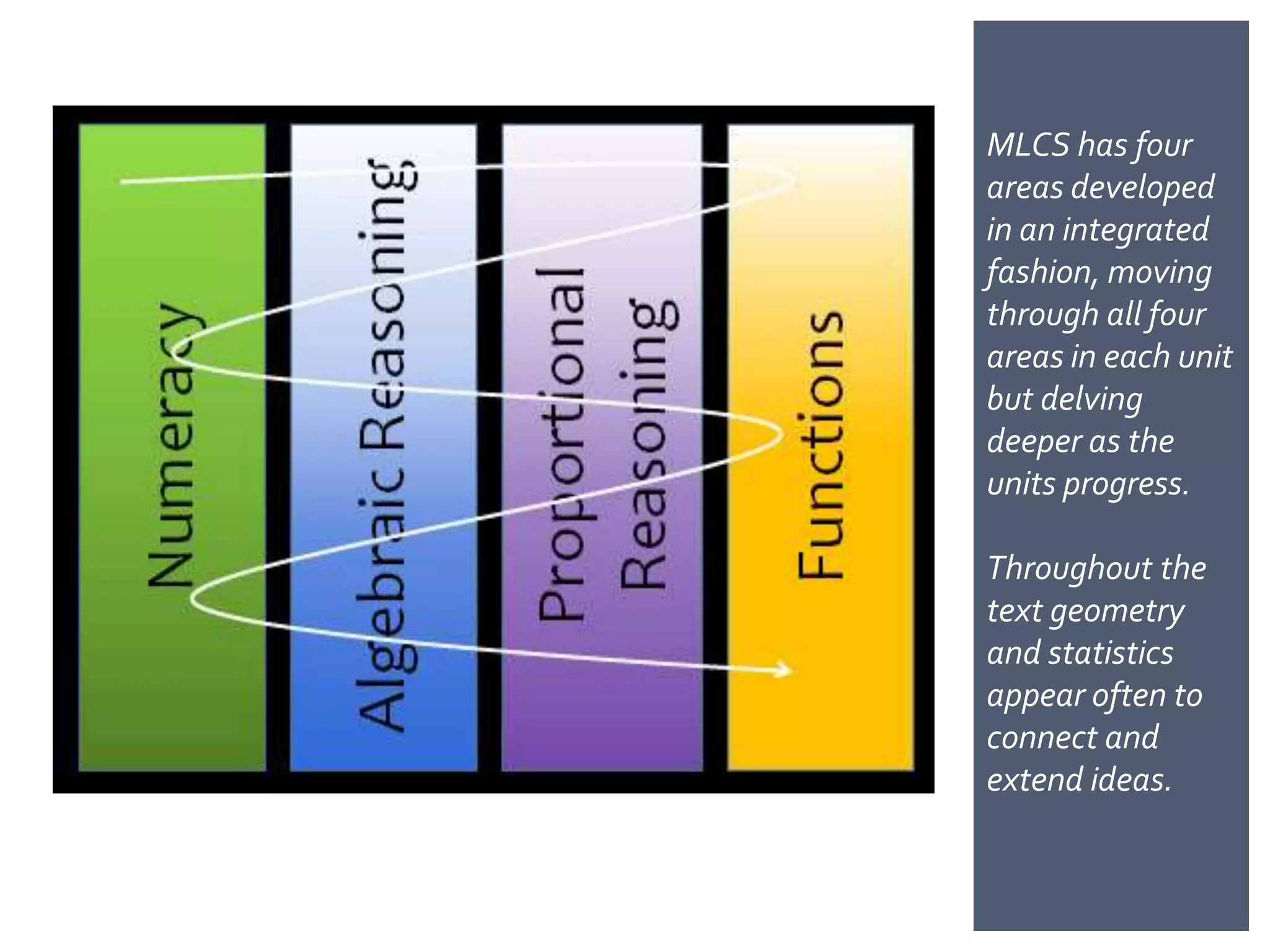
MLCS has four
areas developed
in an integrated
fashion, moving
through all four
areas in each unit
but delving
deeper as the
units progress.

Throughout the
text geometry
and statistics
appear often to
connect and
extend ideas.
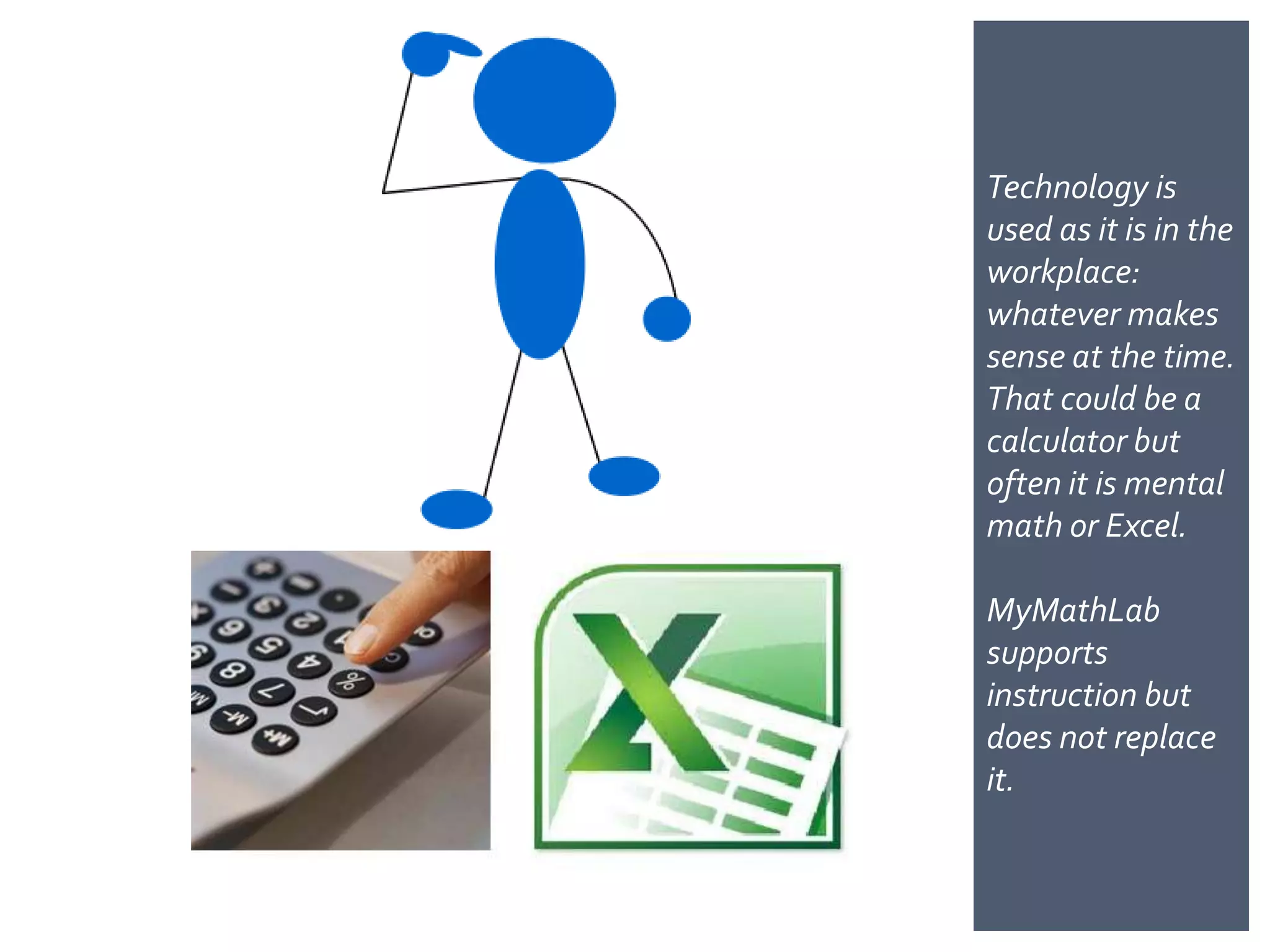
Technology is
used as it is in the
workplace:
whatever makes
sense at the time.
That could be a
calculator but
often it is mental
math or Excel.

MyMathLab
supports
instruction but
does not replace
it.
Together, these
               aspects combine

 Engagement   to form a rich
               course that is
               engaging for all.

 Standards    More than
               that, it provides

 Rigor        appropriate
               preparation for
               non-STEM
               courses while
               maintaining
               standards and
               rigor.
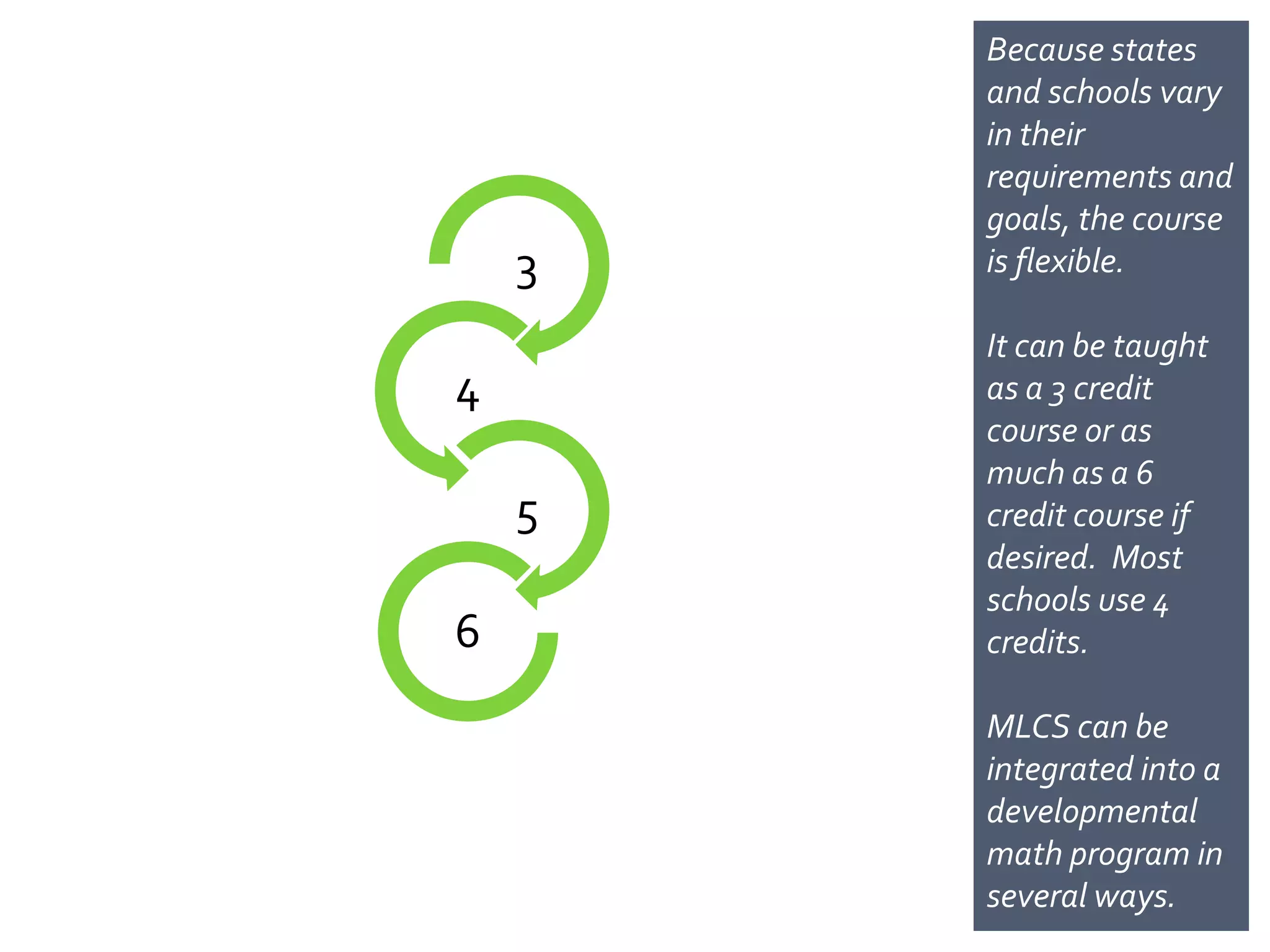
Because states
        and schools vary
        in their
        requirements and
        goals, the course
    3   is flexible.

        It can be taught
4       as a 3 credit
        course or as
        much as a 6
    5   credit course if
        desired. Most
        schools use 4
6       credits.

        MLCS can be
        integrated into a
        developmental
        math program in
        several ways.
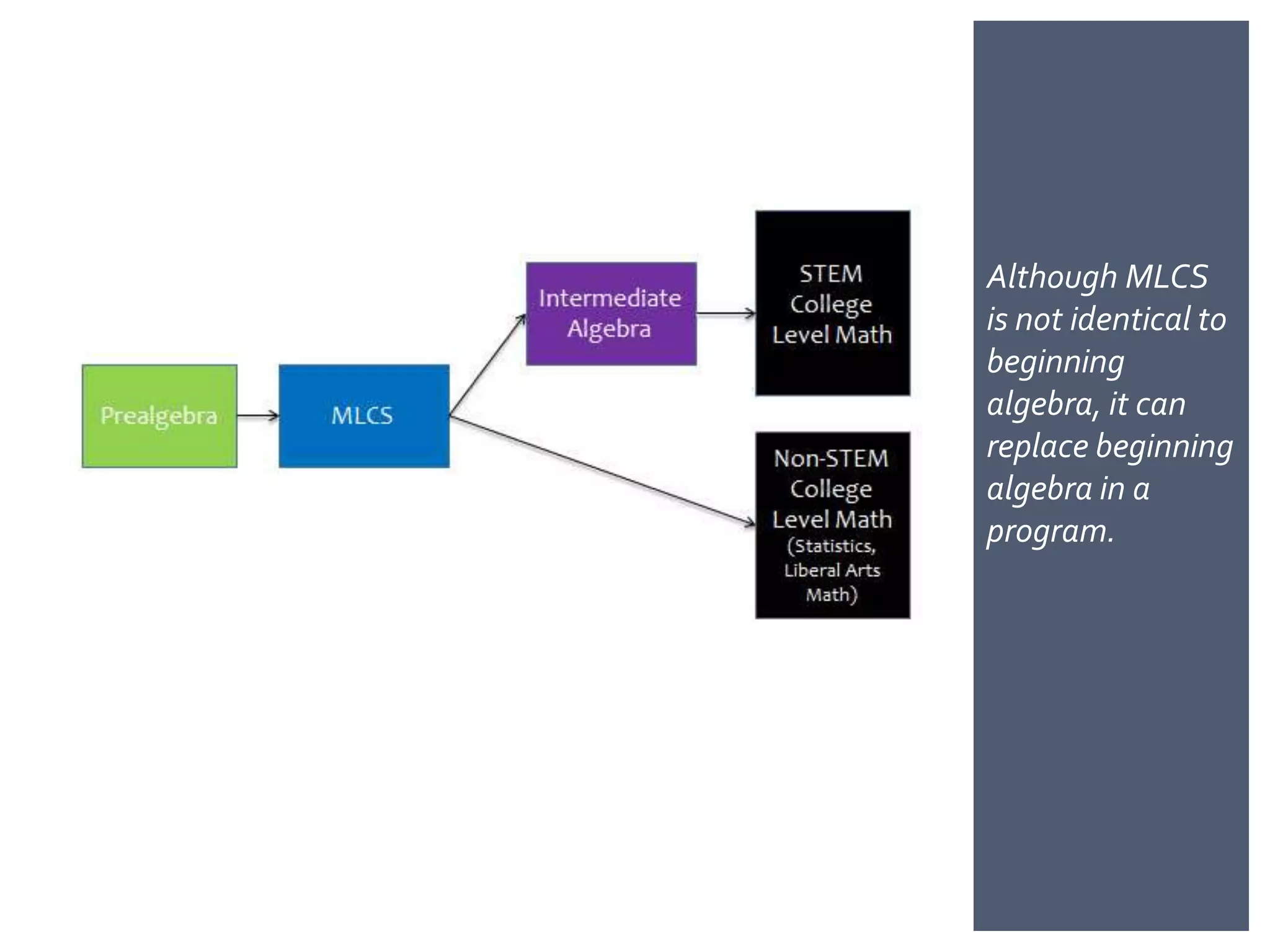
Although MLCS
is not identical to
beginning
algebra, it can
replace beginning
algebra in a
program.
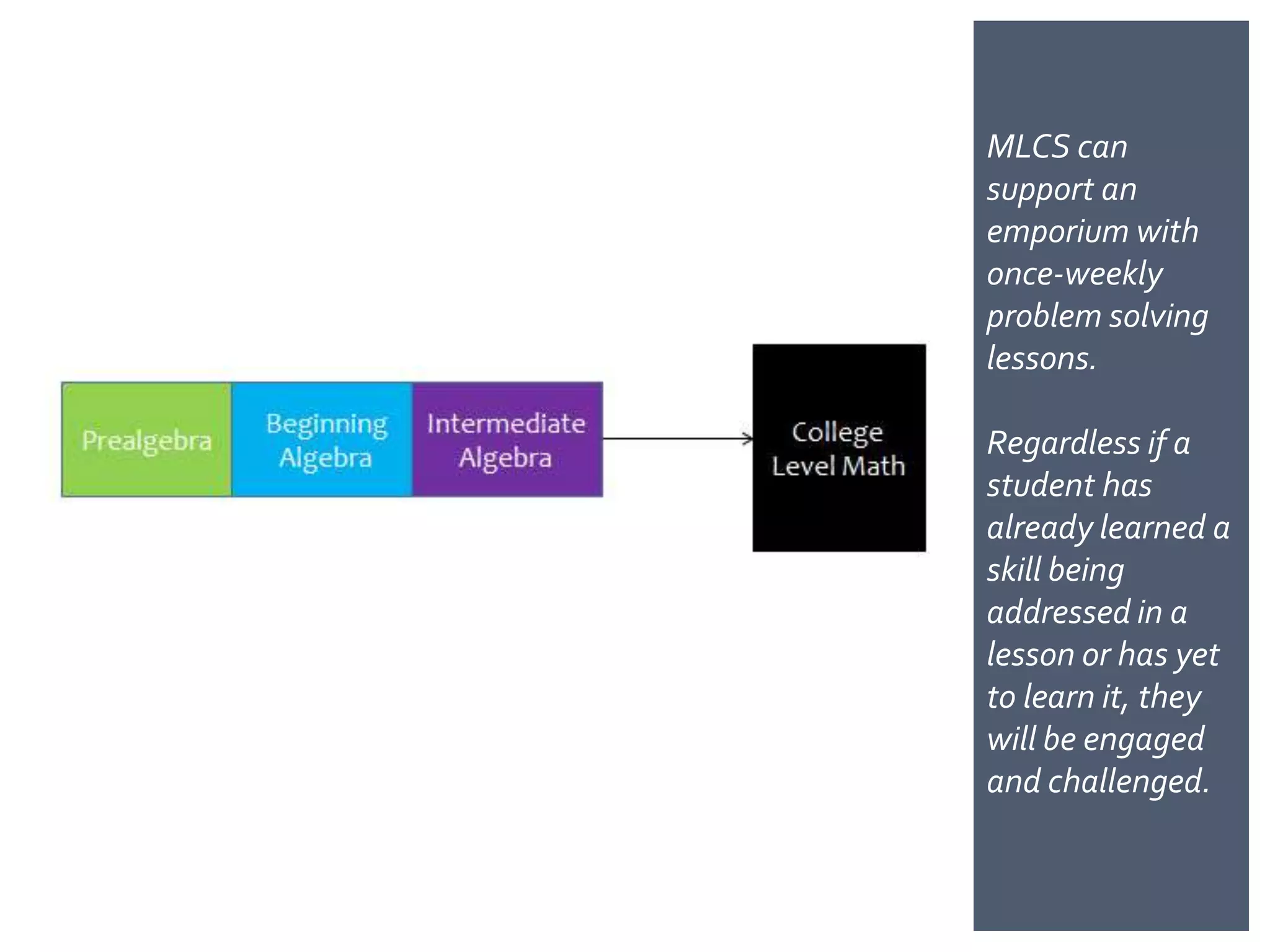
MLCS can
support an
emporium with
once-weekly
problem solving
lessons.

Regardless if a
student has
already learned a
skill being
addressed in a
lesson or has yet
to learn it, they
will be engaged
and challenged.
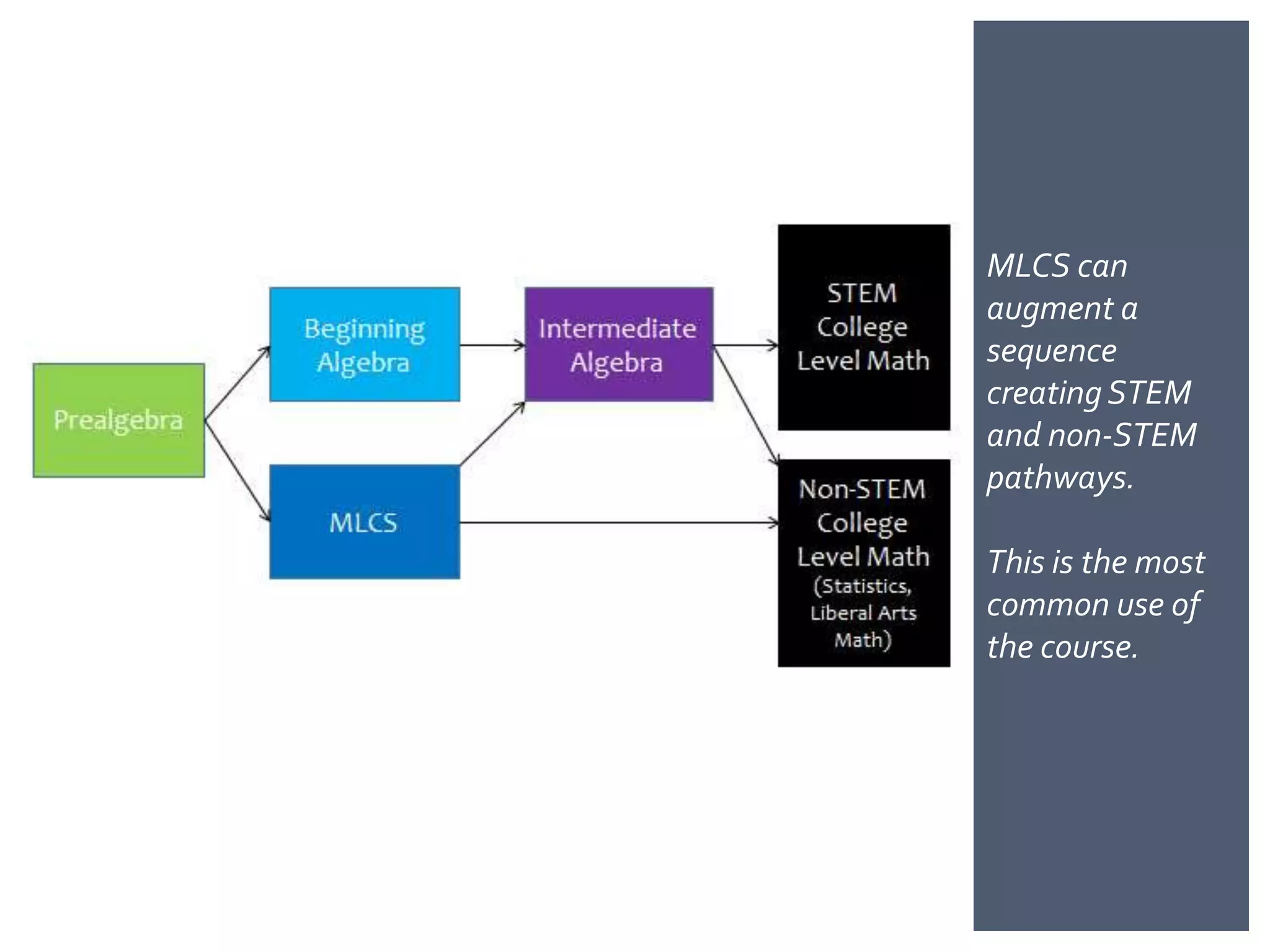
MLCS can
augment a
sequence
creating STEM
and non-STEM
pathways.

This is the most
common use of
the course.
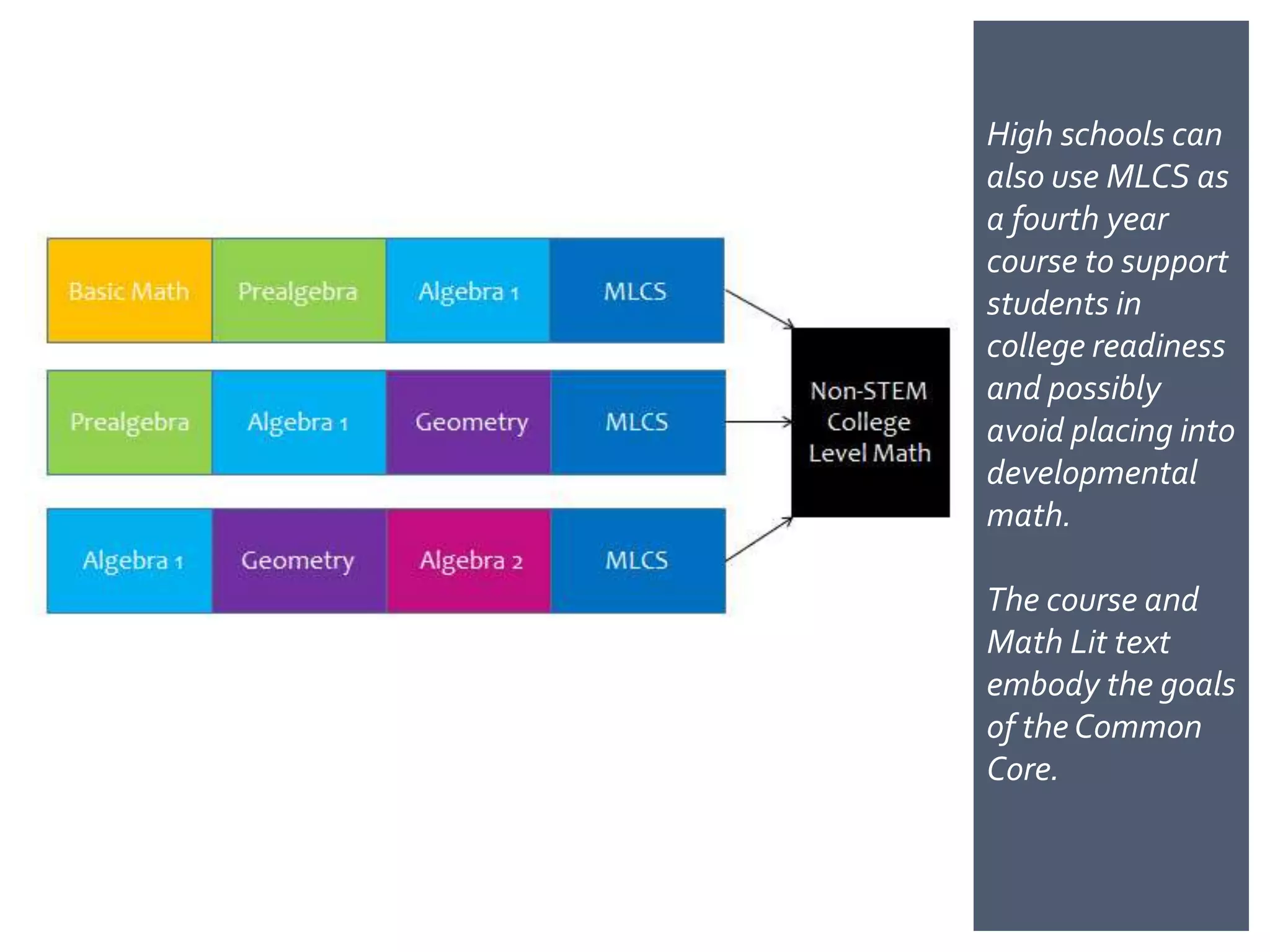
High schools can
also use MLCS as
a fourth year
course to support
students in
college readiness
and possibly
avoid placing into
developmental
math.

The course and
Math Lit text
embody the goals
of the Common
Core.
Interested?

                         We will help you
                         develop the
                         course on your
                         terms, for your
                         school and state.
EMAIL:                   Workshops are
                         also available to
                         train faculty.
KATHLEENALMY@GMAIL.COM
                         Materials are
                         currently
                         available for
                         class testing and
                         use. Contact
                         your Pearson rep
                         for a sampler of
                         the Math Lit
                         book.
IMAGINE

What is MLCS?

  • 1.
  • 2.
  • 3.
    Imagine a class thatlooks forward to college level work instead of backward at high school. A class with the goal of developing flexible problem solvers instead of filling skill gaps.
  • 4.
    Imagine a class thatonly takes one semester and allows students to get ready for liberal arts math, statistics, or intermediate algebra. A class that gives students options in case they change their majors.
  • 5.
    Imagine relevant, interesting content designed toengage and challenge the developmental learner.
  • 6.
    Imagine relevant, interesting content designed toengage and challenge the developmental learner.
  • 7.
    Imagine relevant, interesting content designed toengage and challenge the developmental learner.
  • 8.
    Imagine a classroom thatis active, filled with conversations about mathematics.
  • 9.
    A class where studentswork on a variety of problems including open- ended problems that take time to solve.
  • 10.
    Imagine a math classwhere students see algebra as a useful tool, instead of a set of procedures to mimic.
  • 11.
    Imagine a class with balanced instruction, alternating between whole Direct group direct Group Work Instruction instruction and small group explorations. A class where technology is used as an instructional tool, not as a replacement for instructors.
  • 12.
    Is this justa lofty dream or is this possible?
  • 13.
    MLCS Mathematical Literacy for College Students, or MLCS, is such a course.
  • 14.
    MLCS was developed through AMATYC’s New LifeInitiative and is related to the Carnegie Quantway Initiative.
  • 15.
    We have been developing a version of this course since 2010. Our work Kathleen Almy is based on the work Kathleen did with the Heather Foes AMATYC and Carnegie Initiatives. Pilots began at our school in fall 2011.
  • 16.
    Our goal wasto create a course that works for students and instructors. We have created materials that support any level of instructor with detailed notes, answers, prompts, rubrics, and more. We made the materials flexible so that schools can add or delete topics to their liking.
  • 17.
    These materials will beavailable through Pearson Education and will be titled Math Lit. The text uses a broad range of problems and contexts to engage the developmental learner. It is a living textbook, where students write on the pages that include theory, exercises, and problems.
  • 18.
    Student success is builtinto the course in its design, development, les sons, and assessments. All lessons that address student success also include a mathematical objective.
  • 19.
    Students are taught to be  Flexibility flexible problem solvers who persist when  Persistence challenged. They learn multiple ways at looking  Agility at problems. They read  Literacy articles, developing literacy as well as mathematical literacy.
  • 20.
    Student also learn algebraic skills along the way and use + MyMathLab to develop mastery with them. Paper conceptual homework accompanies most assignments to connect and apply the ideas learned.
  • 21.
    MLCS has four areasdeveloped in an integrated fashion, moving through all four areas in each unit but delving deeper as the units progress. Throughout the text geometry and statistics appear often to connect and extend ideas.
  • 22.
    Technology is used asit is in the workplace: whatever makes sense at the time. That could be a calculator but often it is mental math or Excel. MyMathLab supports instruction but does not replace it.
  • 23.
    Together, these aspects combine  Engagement to form a rich course that is engaging for all.  Standards More than that, it provides  Rigor appropriate preparation for non-STEM courses while maintaining standards and rigor.
  • 24.
    Because states and schools vary in their requirements and goals, the course 3 is flexible. It can be taught 4 as a 3 credit course or as much as a 6 5 credit course if desired. Most schools use 4 6 credits. MLCS can be integrated into a developmental math program in several ways.
  • 25.
    Although MLCS is notidentical to beginning algebra, it can replace beginning algebra in a program.
  • 26.
    MLCS can support an emporiumwith once-weekly problem solving lessons. Regardless if a student has already learned a skill being addressed in a lesson or has yet to learn it, they will be engaged and challenged.
  • 27.
    MLCS can augment a sequence creatingSTEM and non-STEM pathways. This is the most common use of the course.
  • 28.
    High schools can alsouse MLCS as a fourth year course to support students in college readiness and possibly avoid placing into developmental math. The course and Math Lit text embody the goals of the Common Core.
  • 29.
    Interested? We will help you develop the course on your terms, for your school and state. EMAIL: Workshops are also available to train faculty. KATHLEENALMY@GMAIL.COM Materials are currently available for class testing and use. Contact your Pearson rep for a sampler of the Math Lit book.
  • 30.