GUIDED MATH K-5
Ways to achieve a
differentiated Math
classroom
What would you like to learn
more about to be able to
implement Guided Math more
effectively in your classroom?
1. To 17474443548
2. Text the number 633138 and
your message
What is Guided Math?
Let’s ask the doctor!
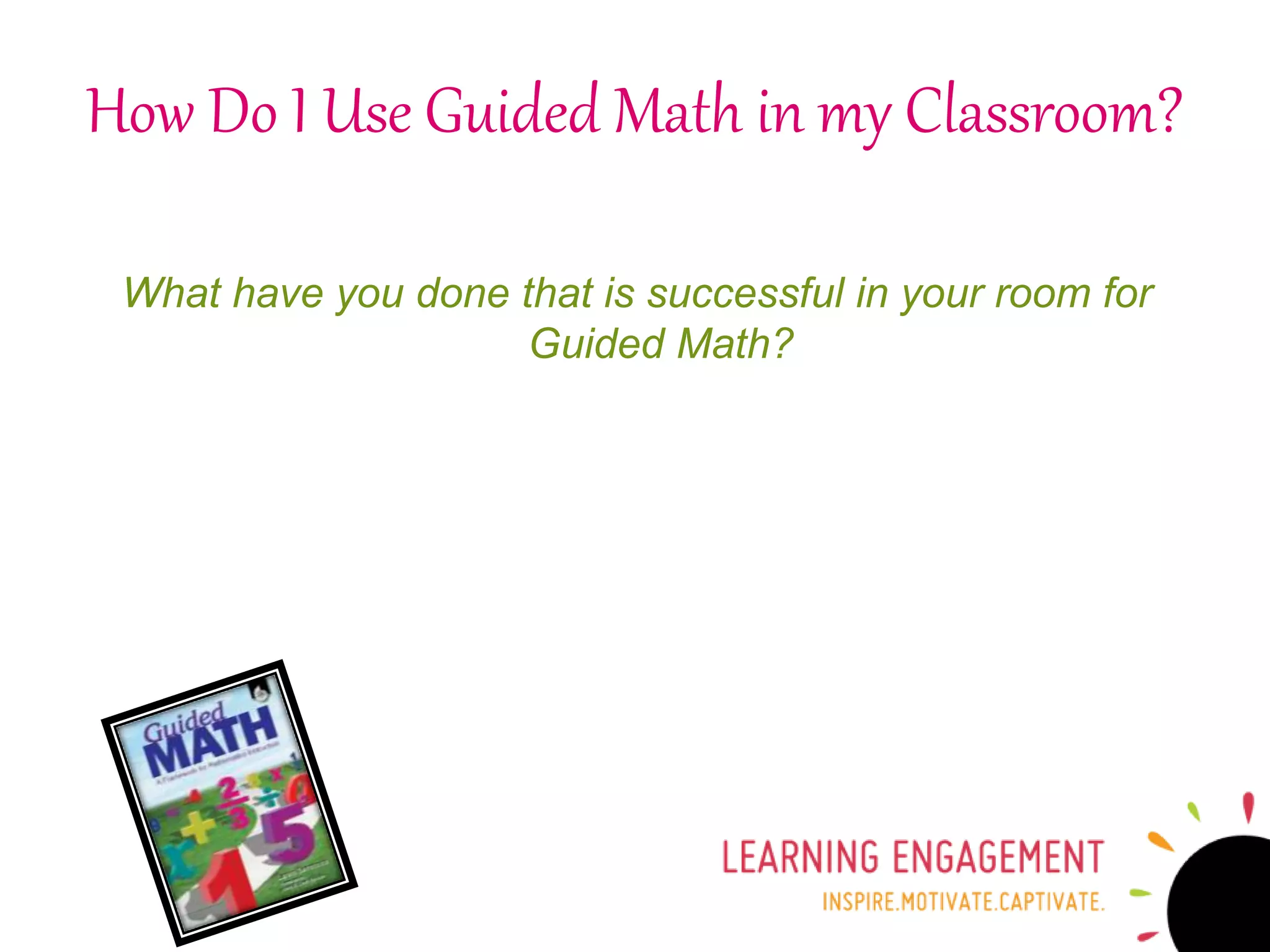
How Do I Use Guided Math in my Classroom?
What have you done that is successful in your room for
Guided Math?
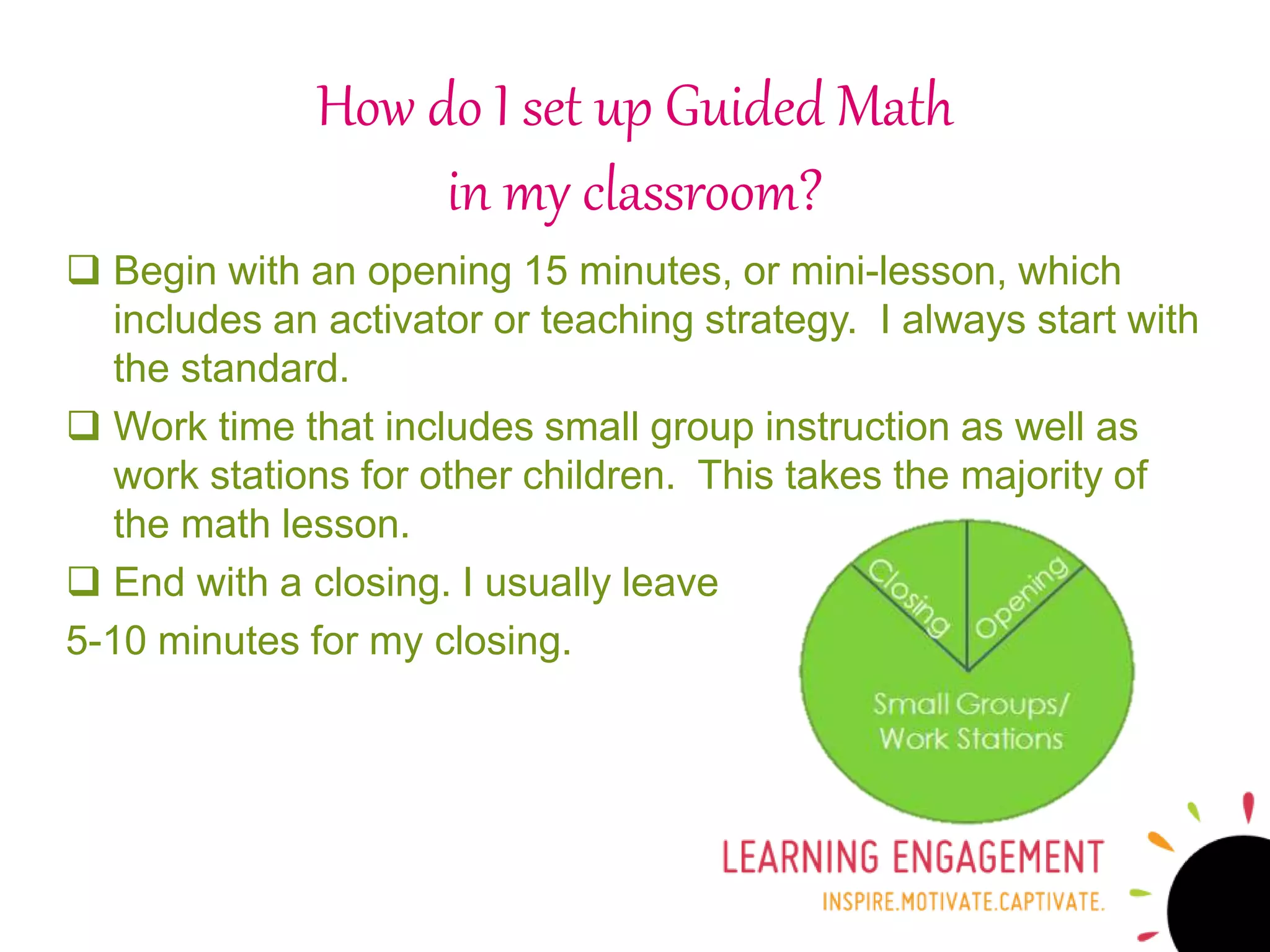
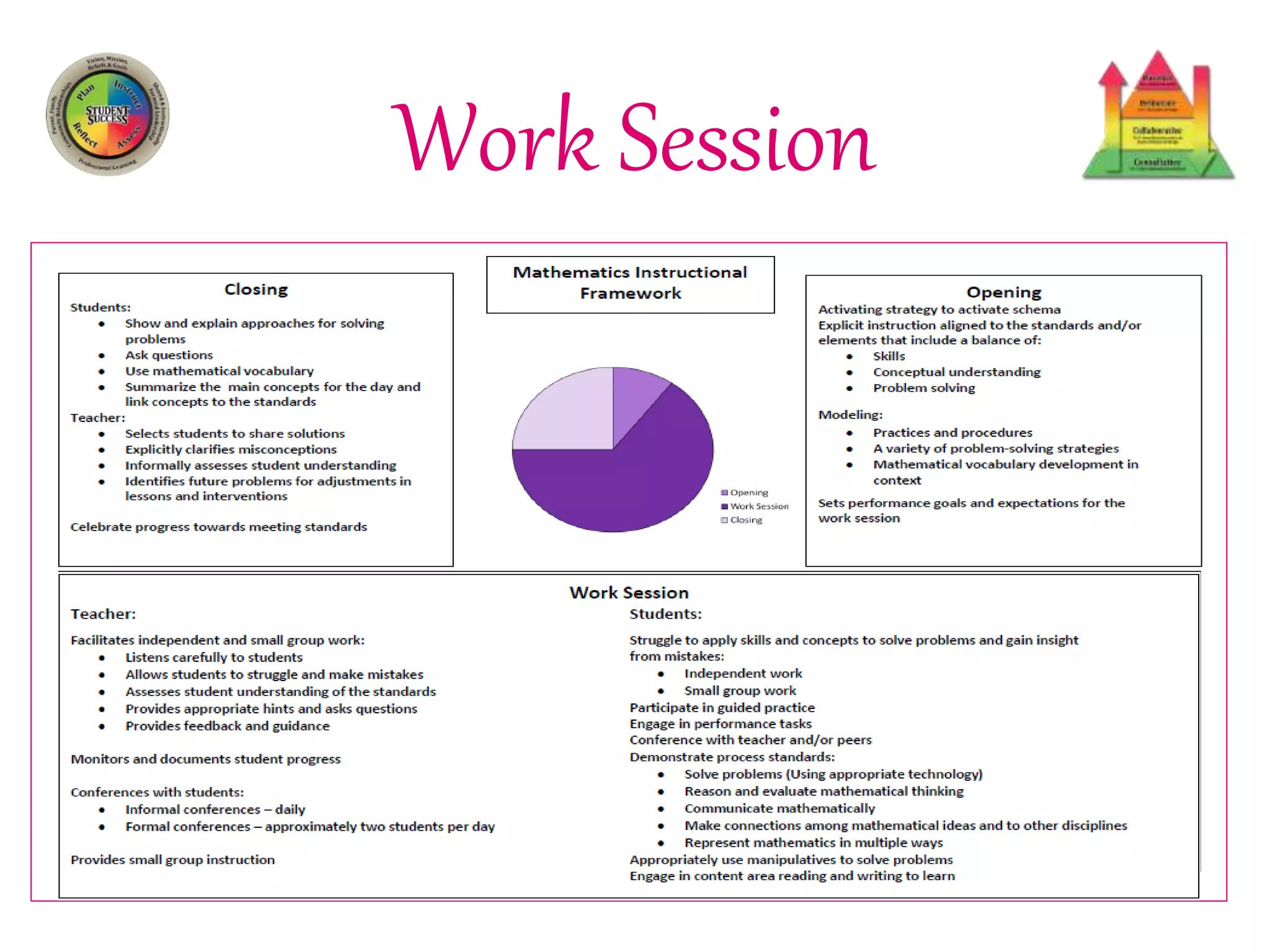
 Begin with an opening 15 minutes, or mini-lesson, which
includes an activator or teaching strategy. I always start with
the standard.
 Work time that includes small group instruction as well as
work stations for other children. This takes the majority of
the math lesson.
 End with a closing. I usually leave
5-10 minutes for my closing.
How do I set up Guided Math
in my classroom?
Openings
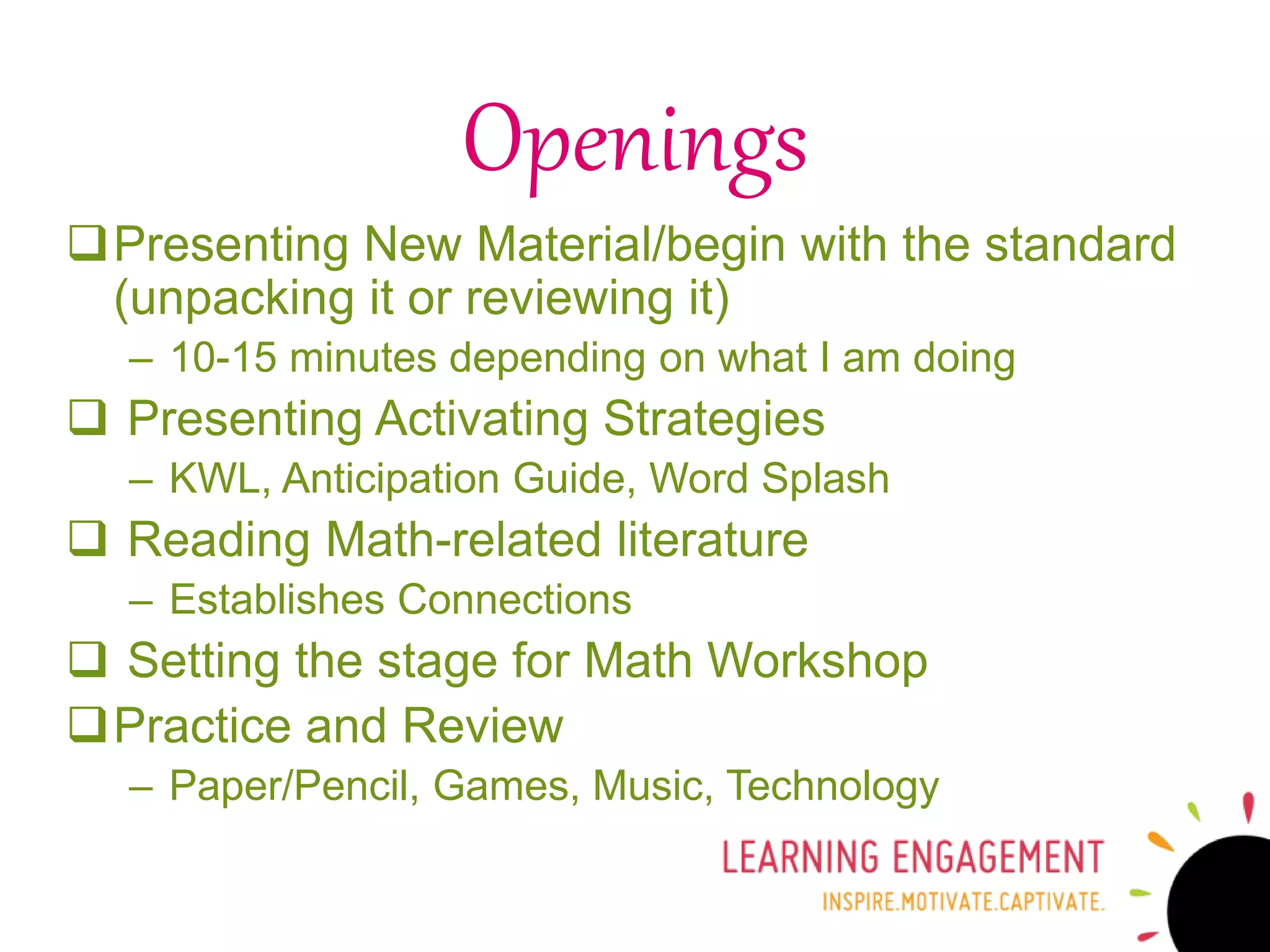
Presenting New Material/begin with the standard
(unpacking it or reviewing it)
– 10-15 minutes depending on what I am doing
 Presenting Activating Strategies
– KWL, Anticipation Guide, Word Splash
 Reading Math-related literature
– Establishes Connections
 Setting the stage for Math Workshop
Practice and Review
– Paper/Pencil, Games, Music, Technology
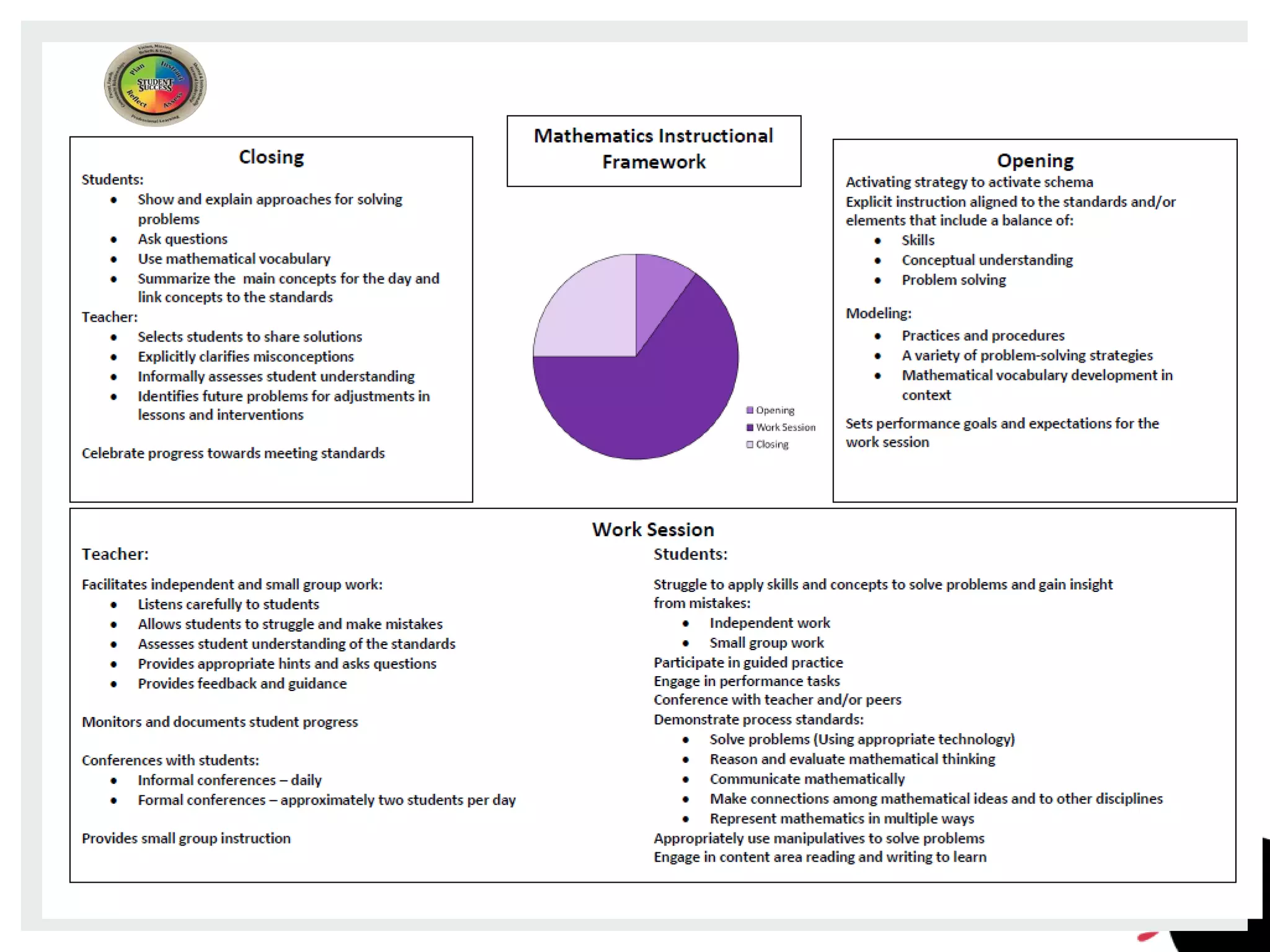
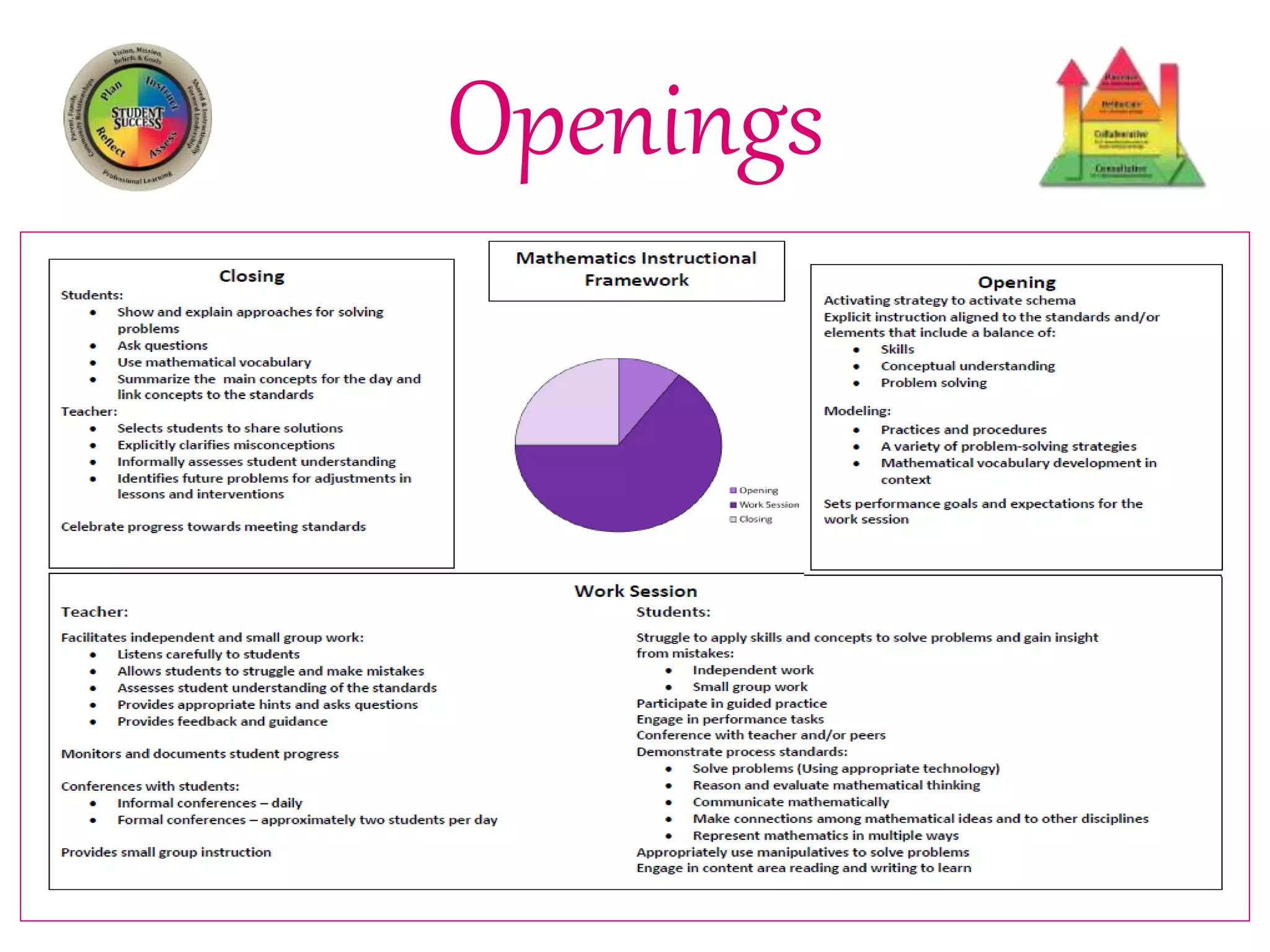
Openings
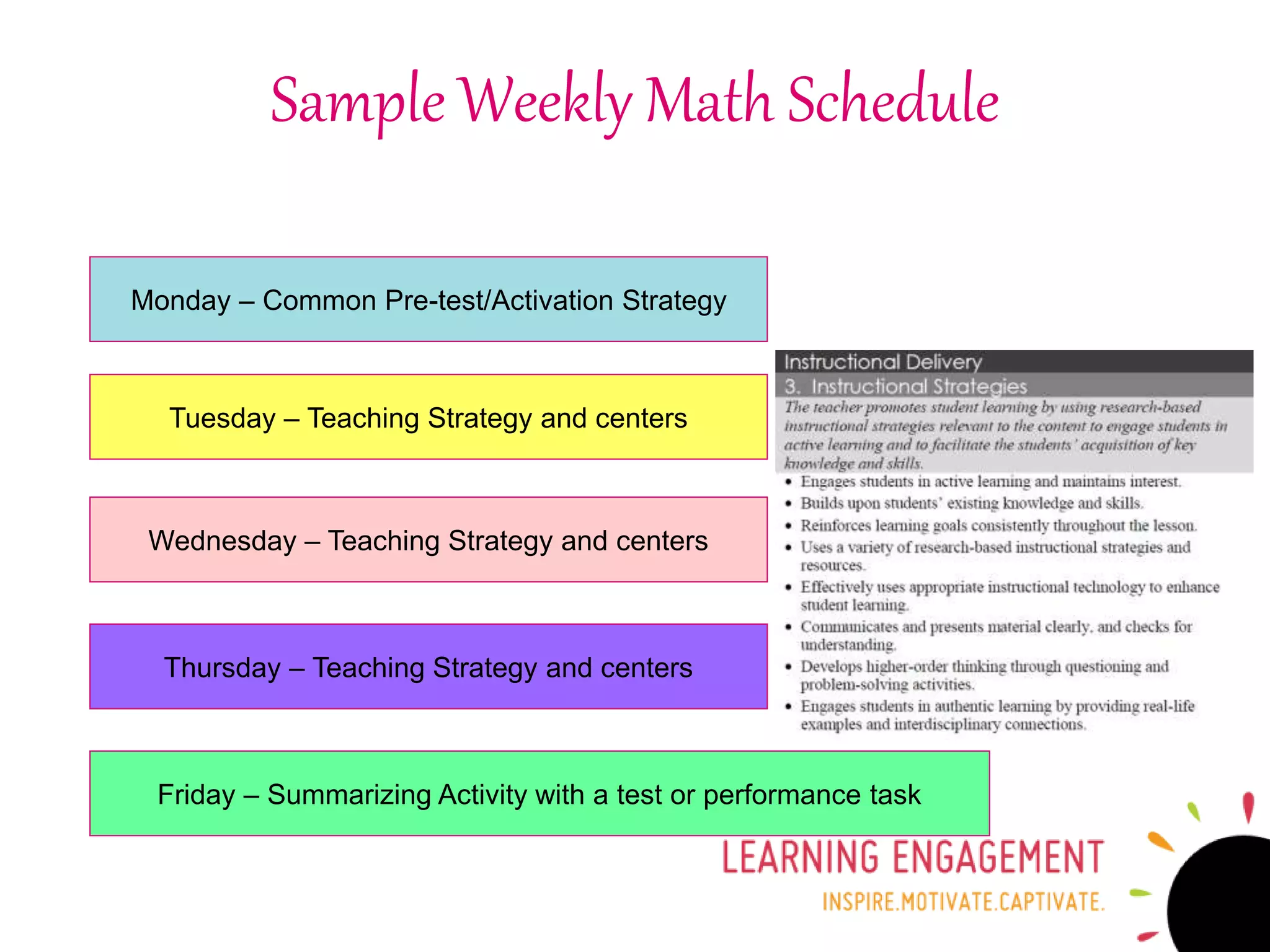
Sample Weekly Math Schedule
Monday – Common Pre-test/Activation Strategy
Tuesday – Teaching Strategy and centers
Wednesday – Teaching Strategy and centers
Thursday – Teaching Strategy and centers
Friday – Summarizing Activity with a test or performance task
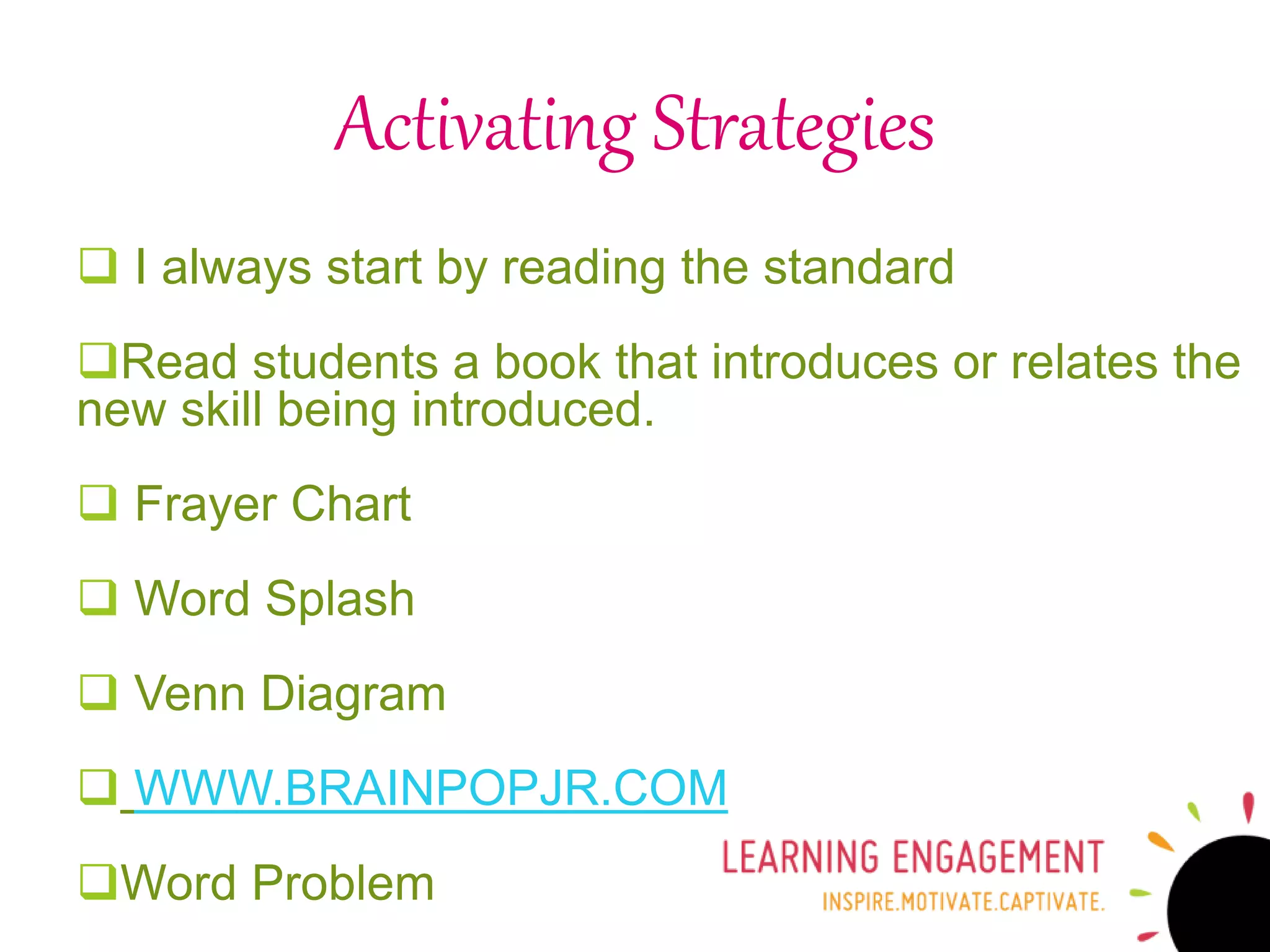
Activating Strategies
 I always start by reading the standard
Read students a book that introduces or relates the
new skill being introduced.
 Frayer Chart
 Word Splash
 Venn Diagram
 WWW.BRAINPOPJR.COM
Word Problem
11
Work Session
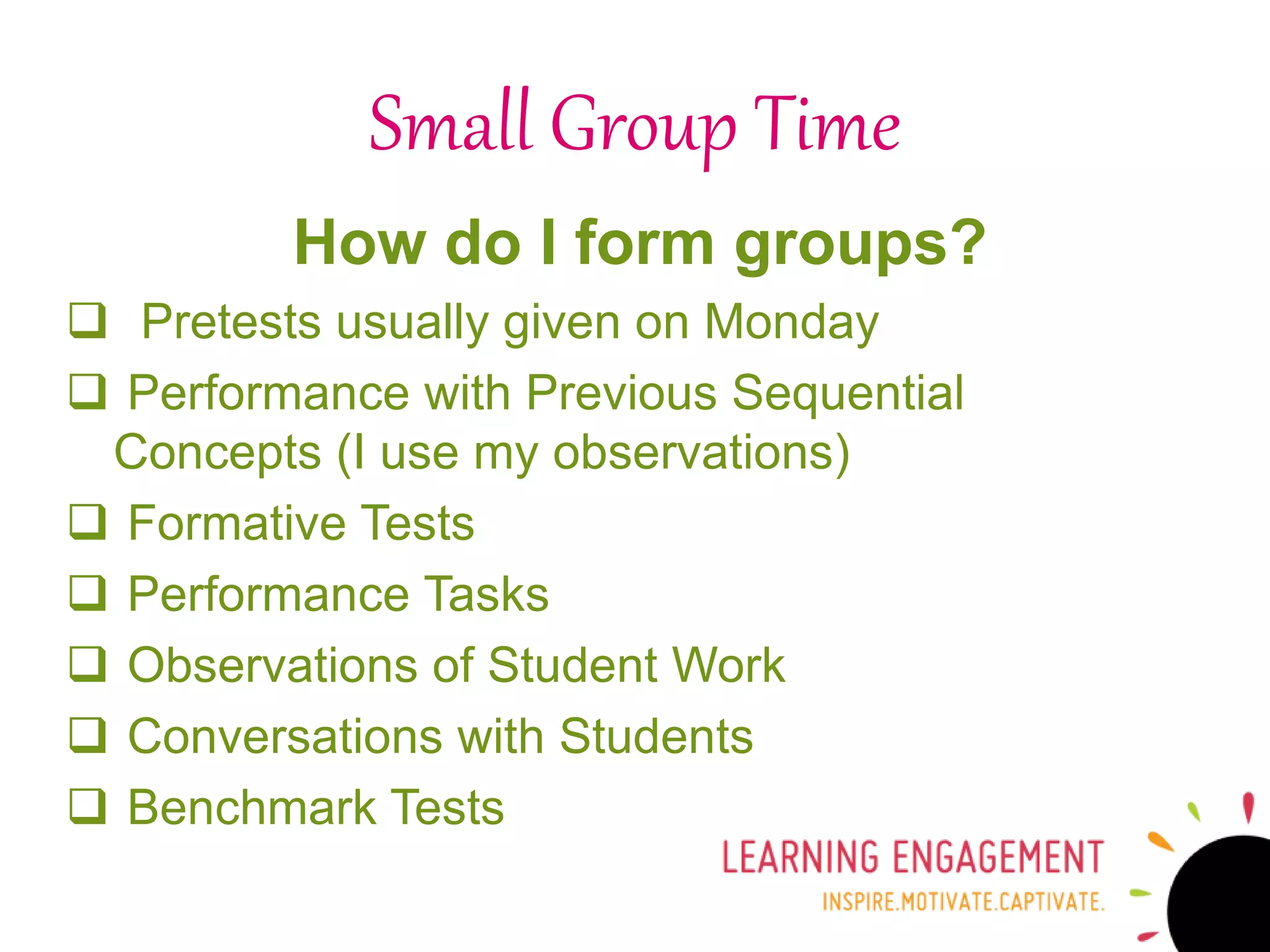
How do I form groups?
 Pretests usually given on Monday
 Performance with Previous Sequential
Concepts (I use my observations)
 Formative Tests
 Performance Tasks
 Observations of Student Work
 Conversations with Students
 Benchmark Tests
Small Group Time
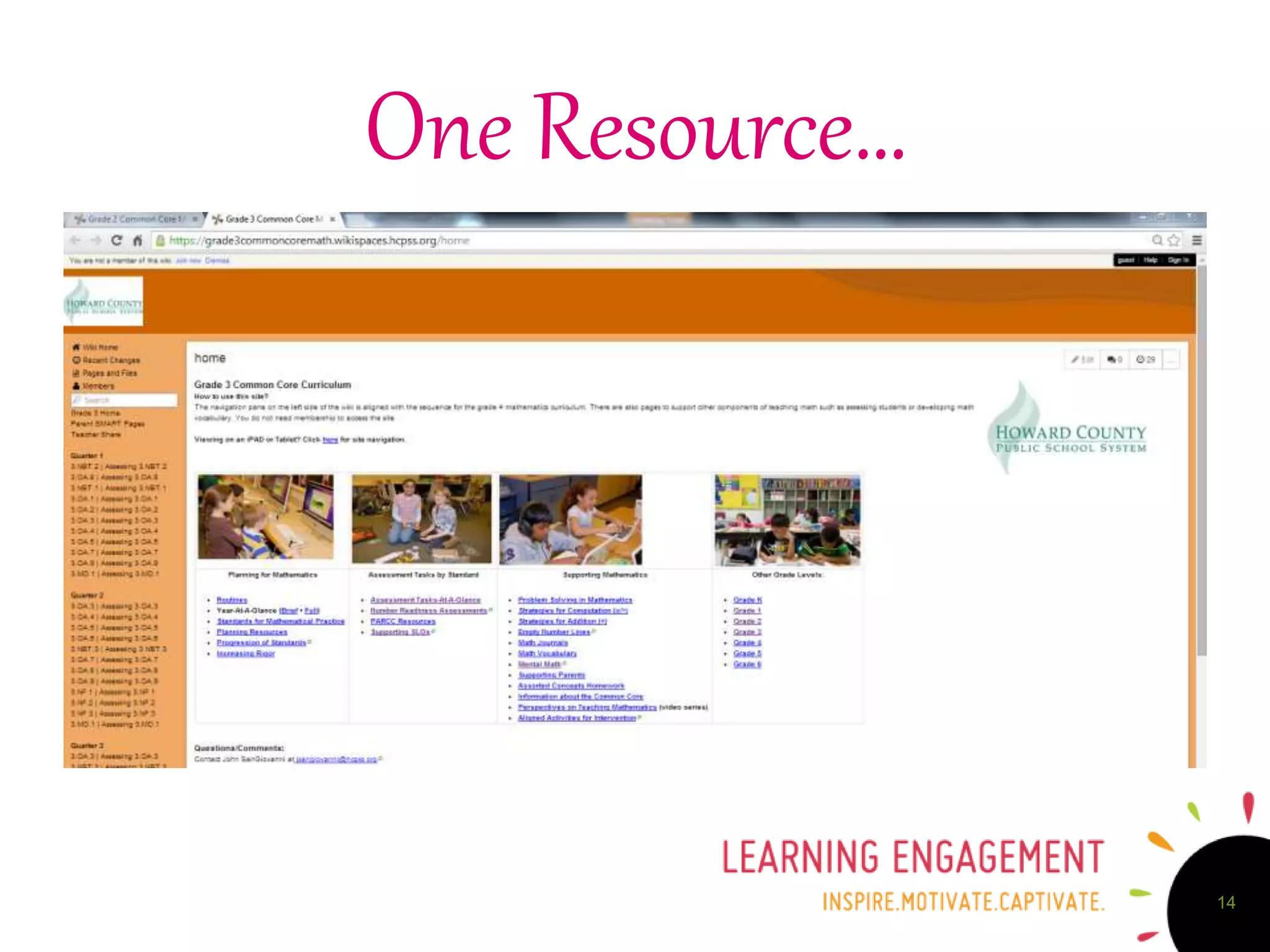
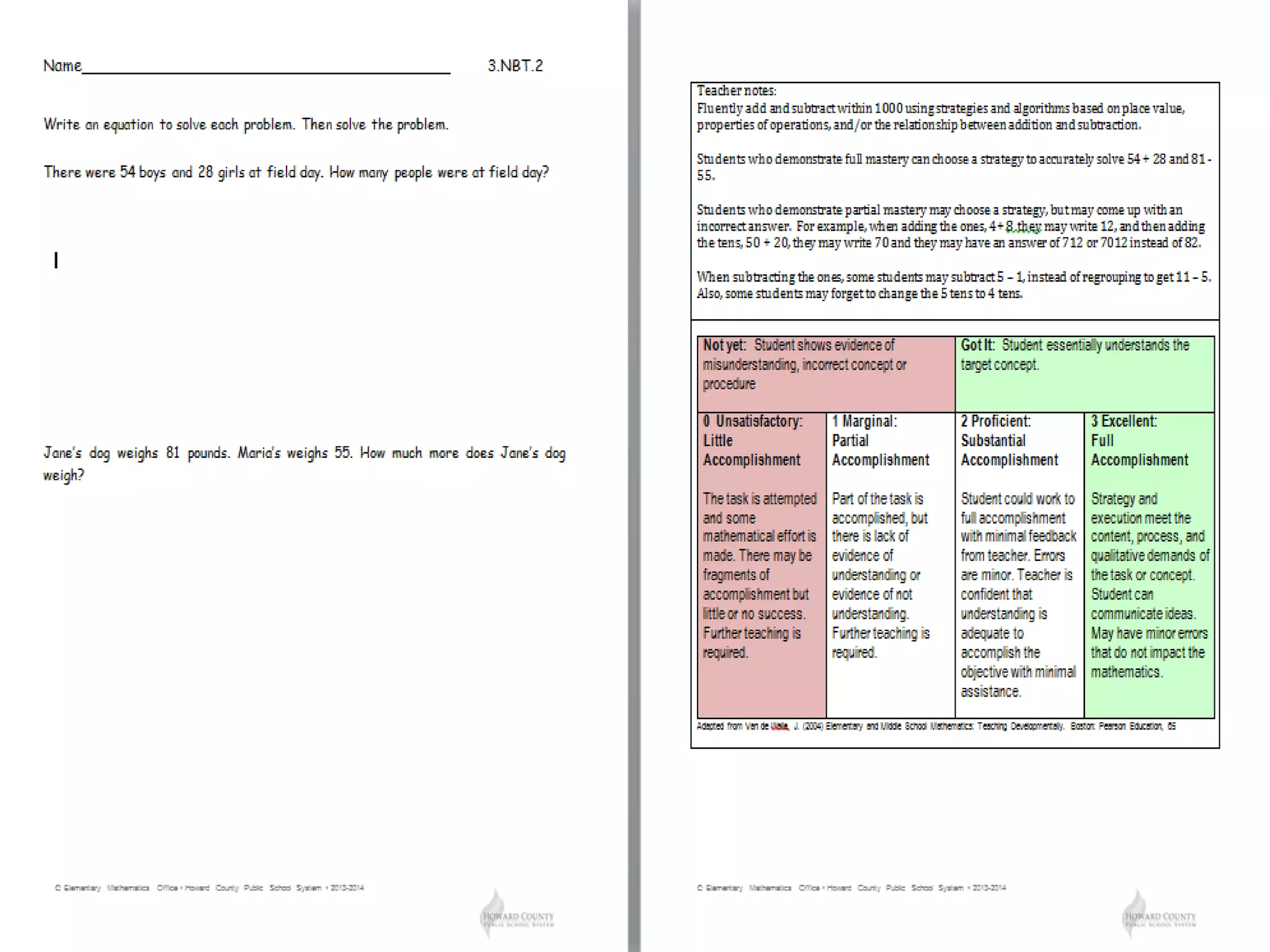
One Resource…
14
15
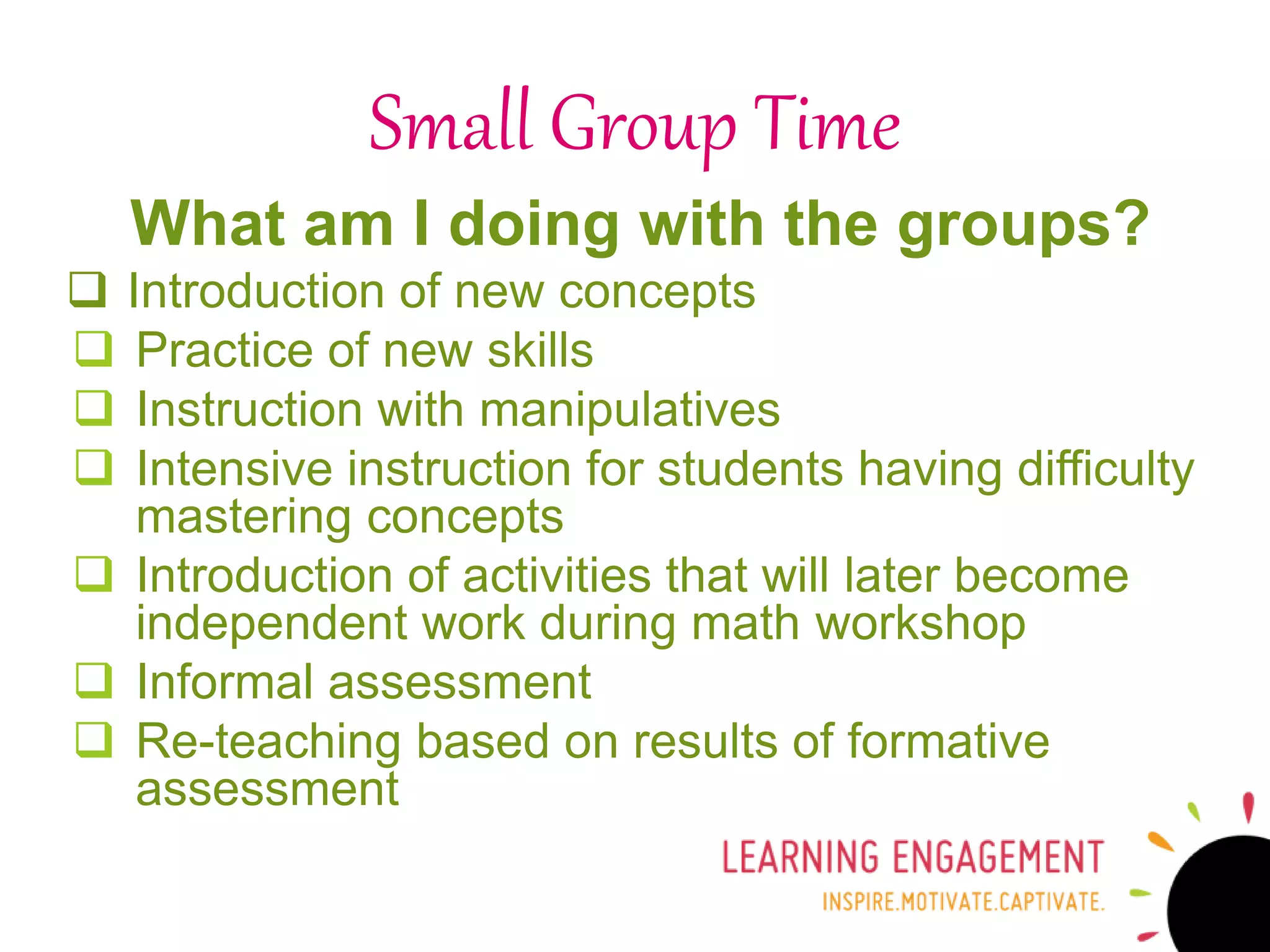
What am I doing with the groups?
 Introduction of new concepts
 Practice of new skills
 Instruction with manipulatives
 Intensive instruction for students having difficulty
mastering concepts
 Introduction of activities that will later become
independent work during math workshop
 Informal assessment
 Re-teaching based on results of formative
assessment
Small Group Time
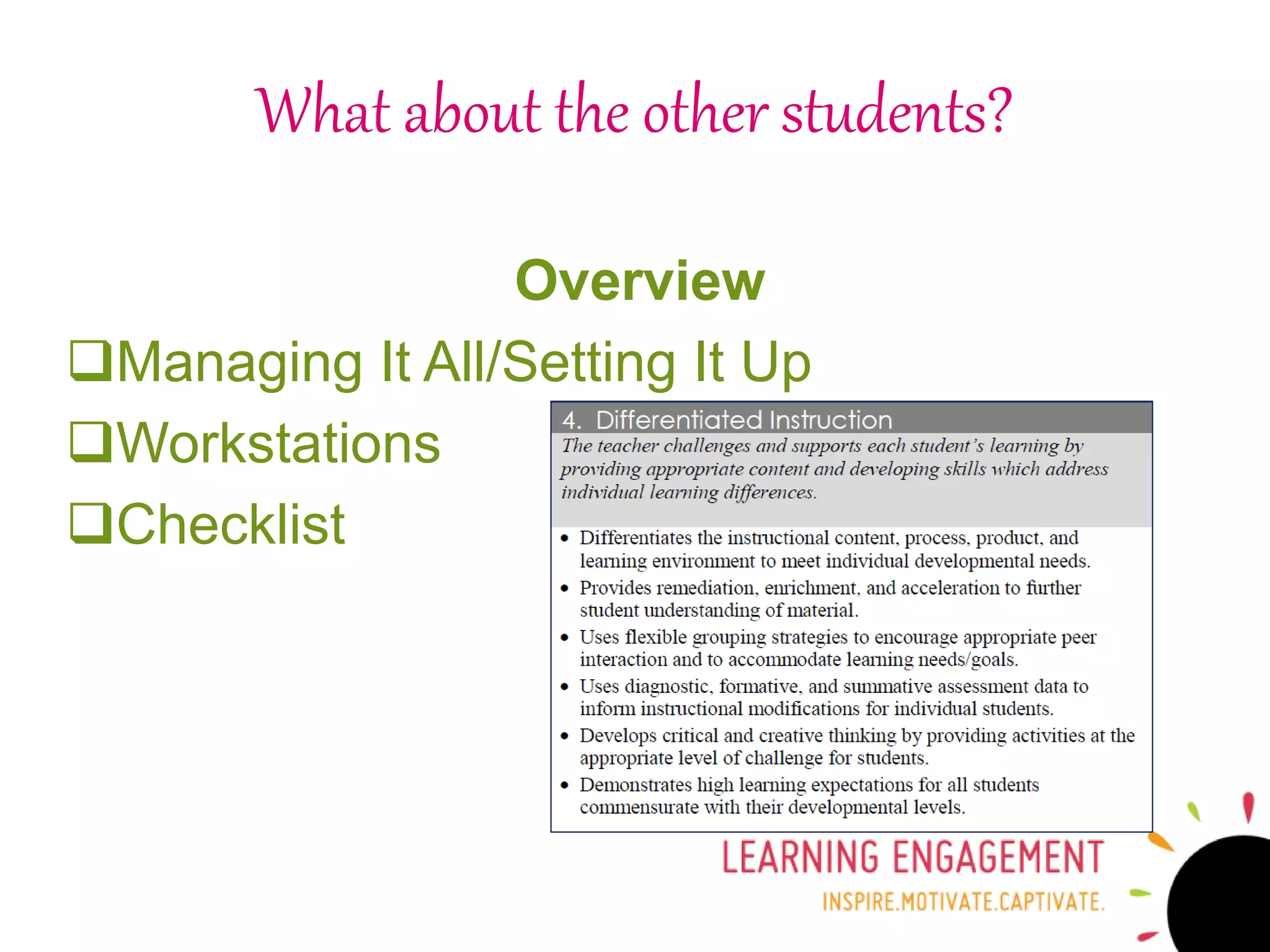
Overview
Managing It All/Setting It Up
Workstations
Checklist
What about the other students?
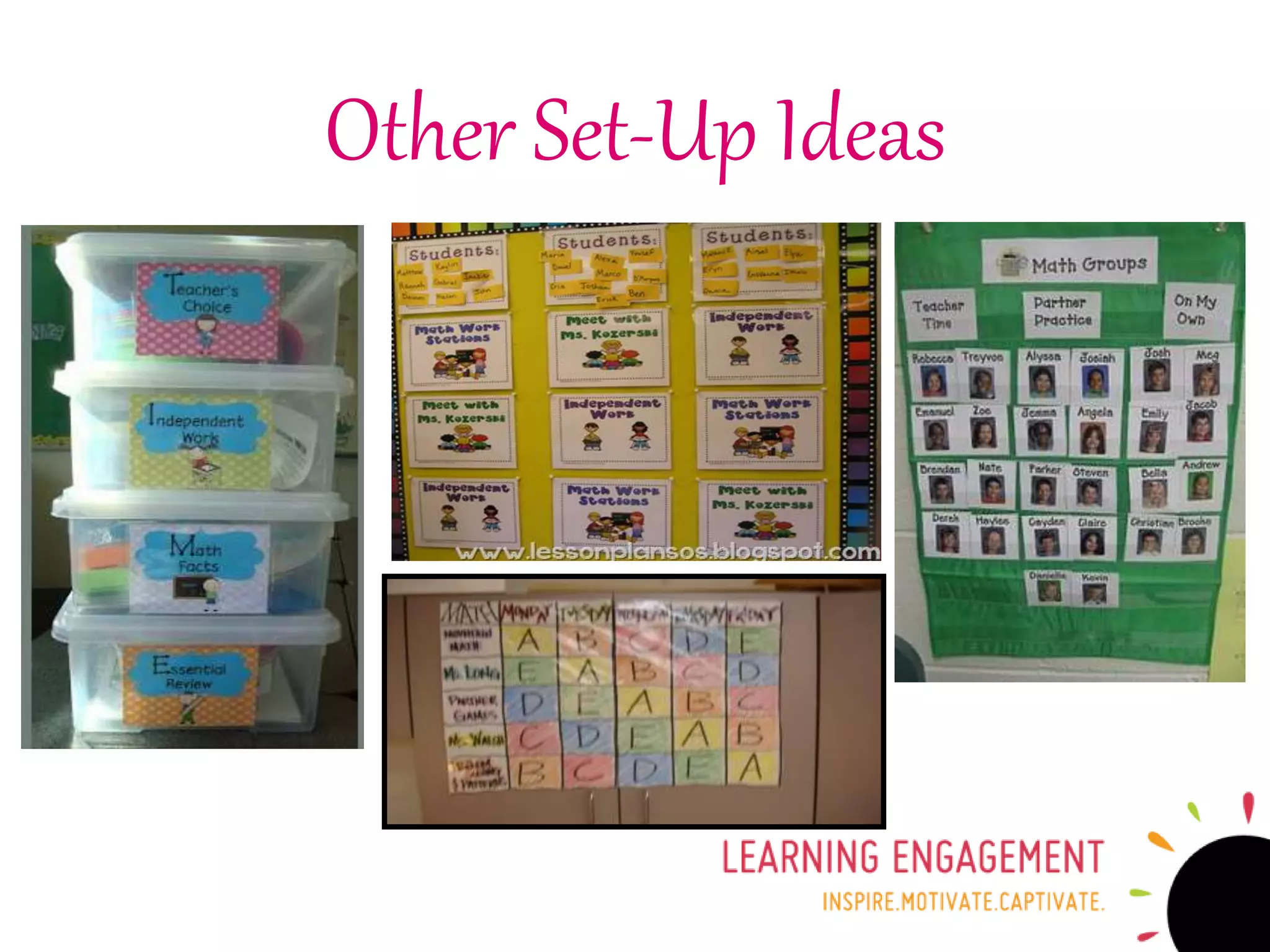
Other Set-Up Ideas
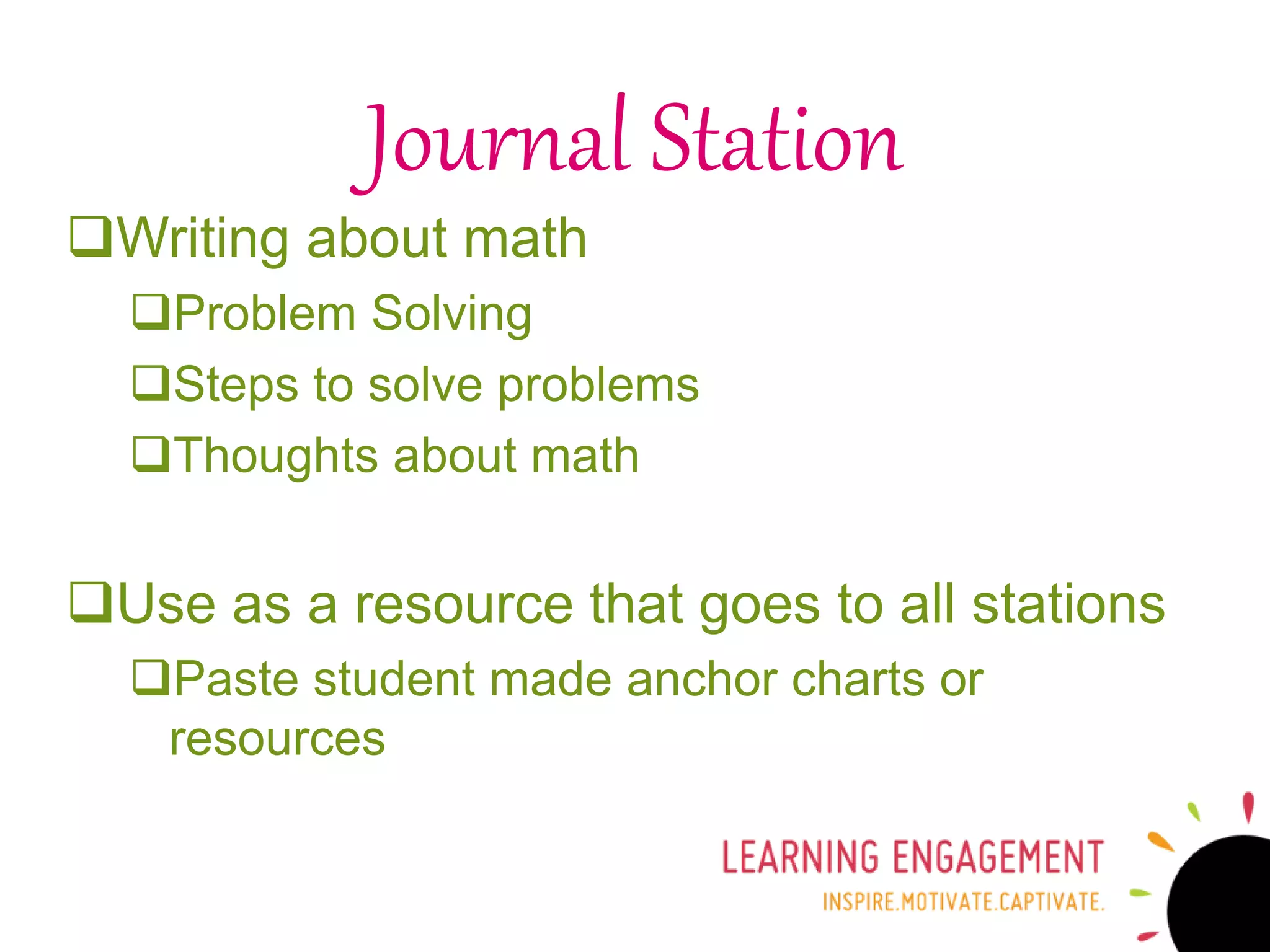
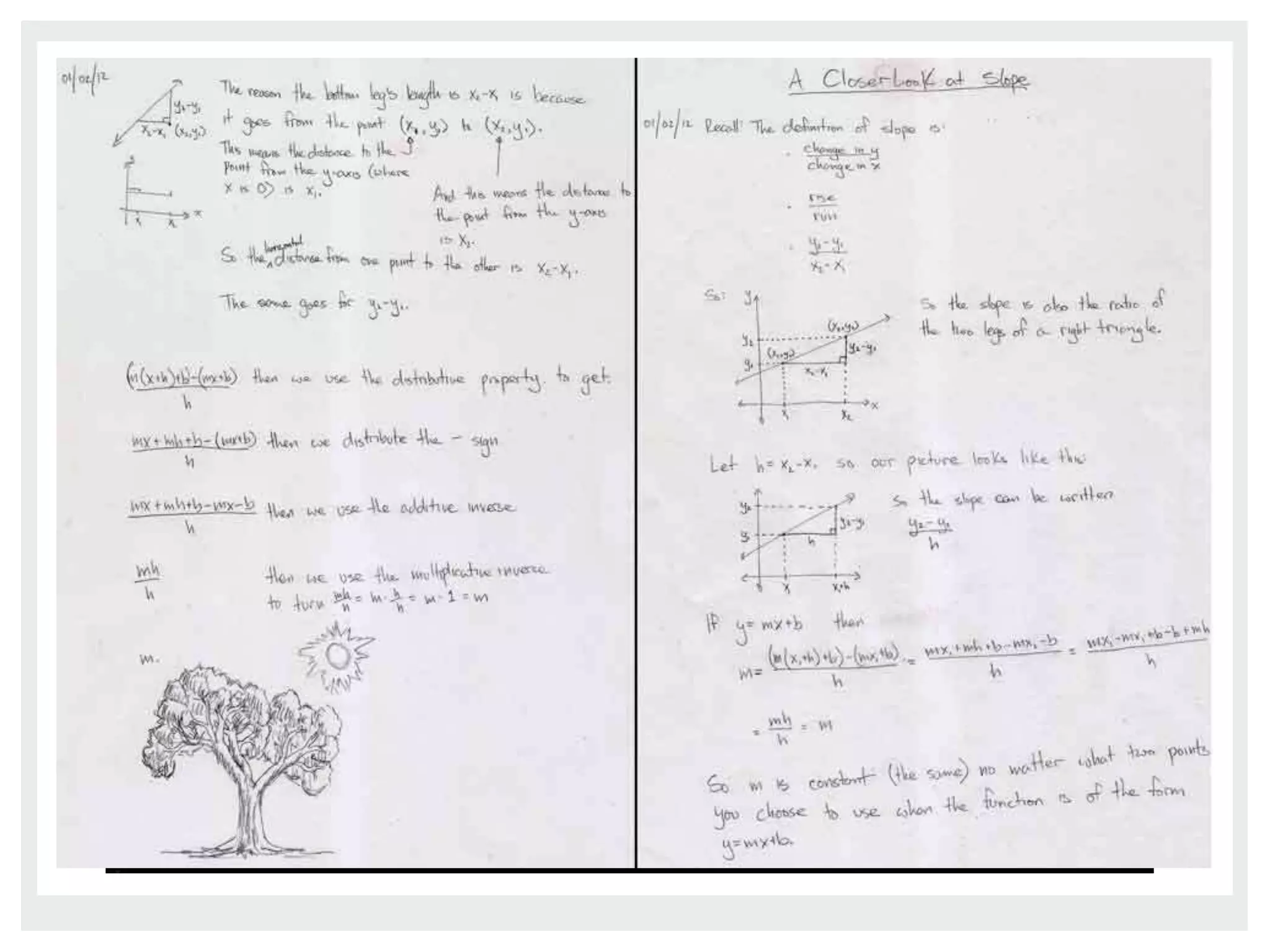
Writing about math
Problem Solving
Steps to solve problems
Thoughts about math
Use as a resource that goes to all stations
Paste student made anchor charts or
resources
Journal Station
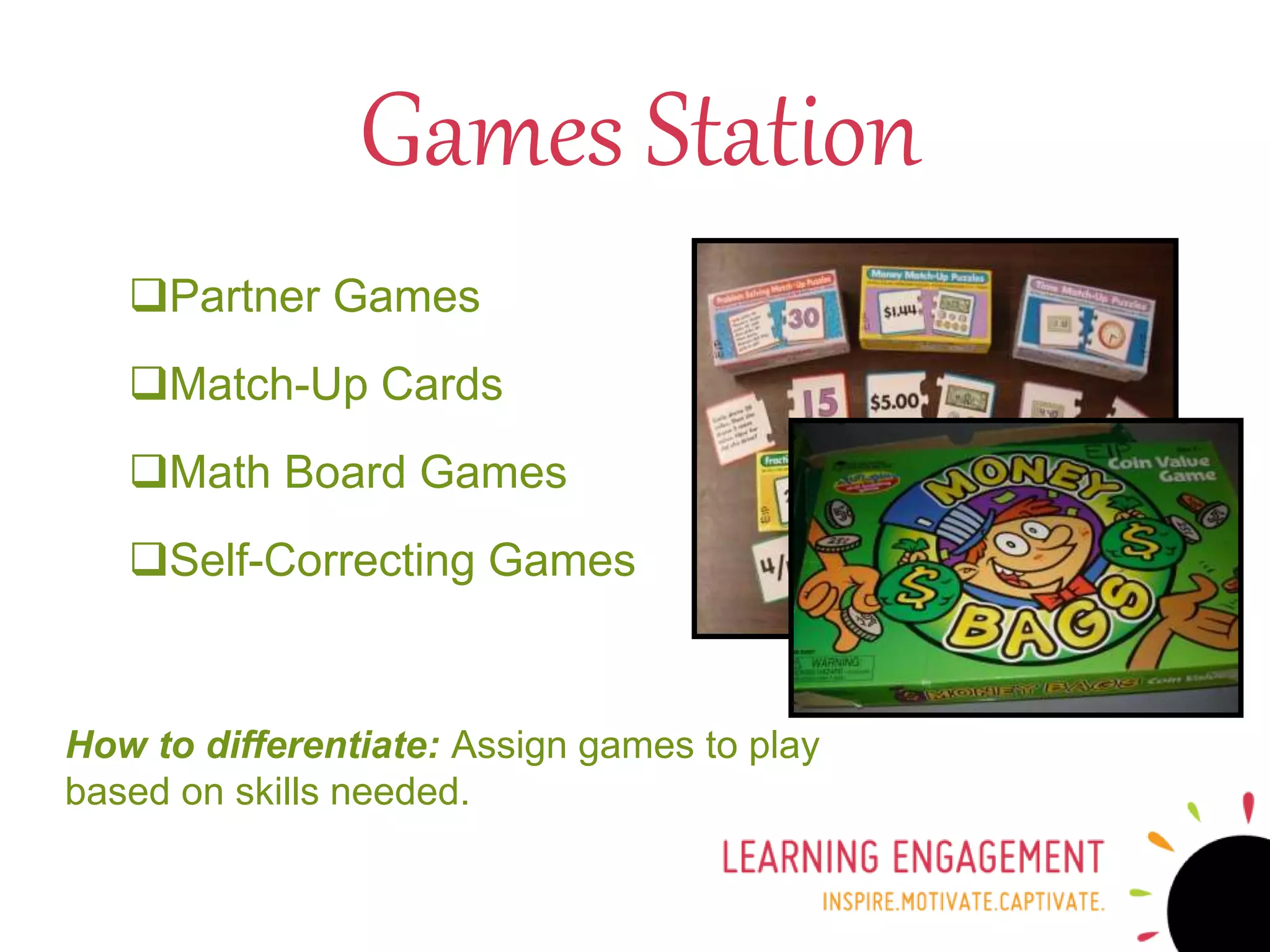
Partner Games
Match-Up Cards
Math Board Games
Self-Correcting Games
How to differentiate: Assign games to play
based on skills needed.
Games Station
 Add and subtract within 1000 using
strategies based on place value,
properties of operations,
and/or the relationship between
addition and subtraction.
 Use place value understanding to
round whole numbers to the nearest
10 or 100.
23
24
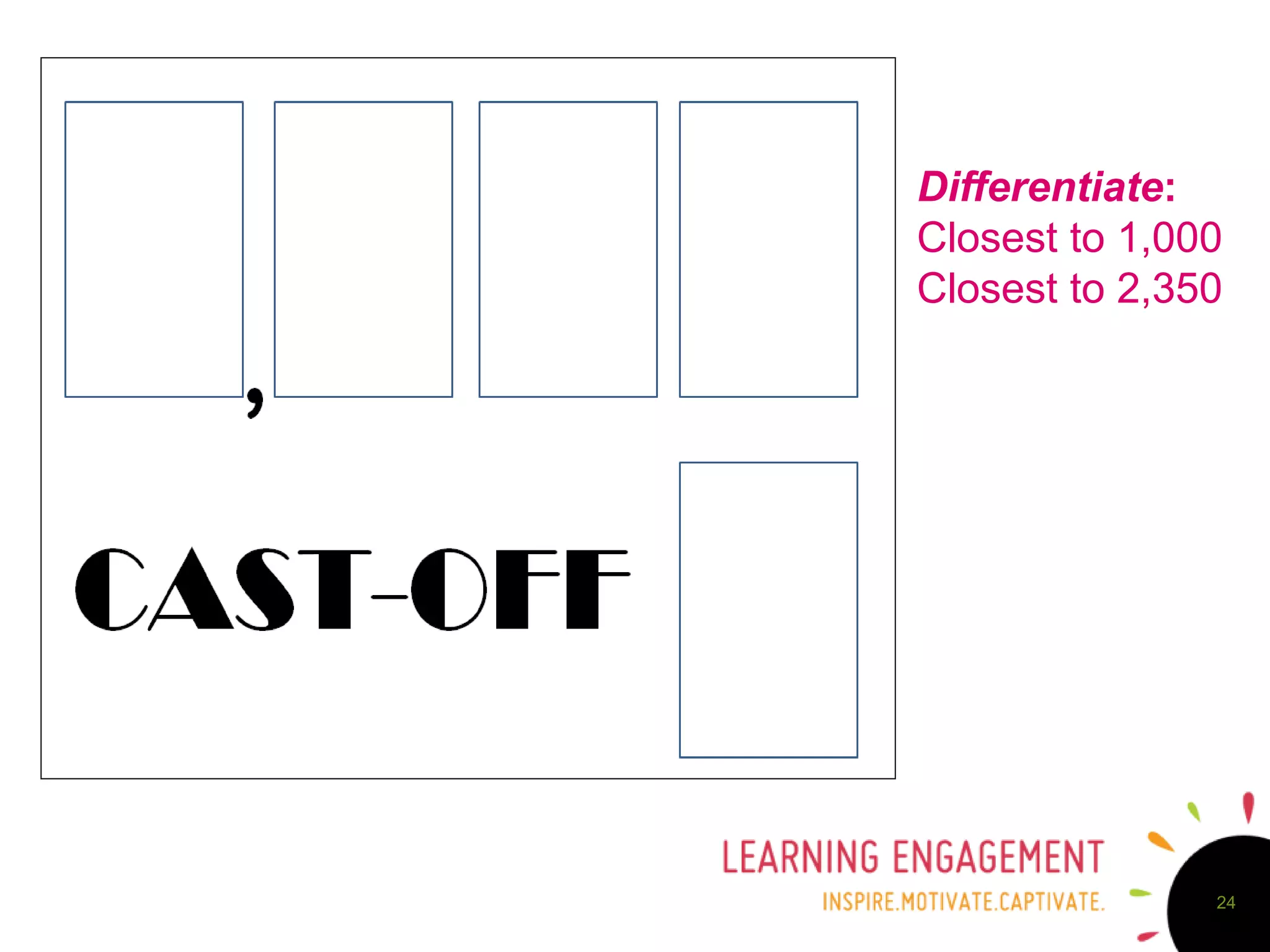
Differentiate:
Closest to 1,000
Closest to 2,350
25
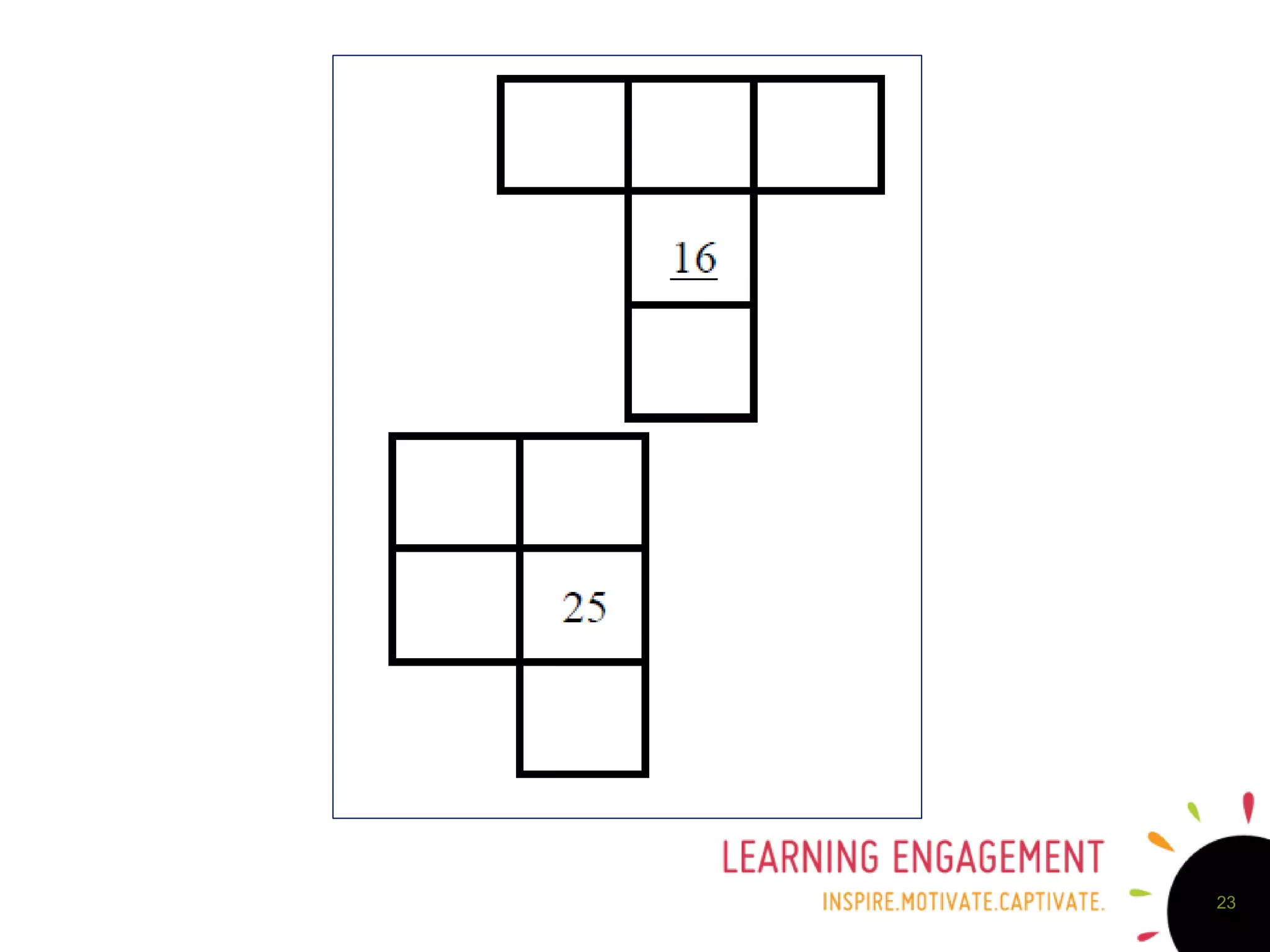
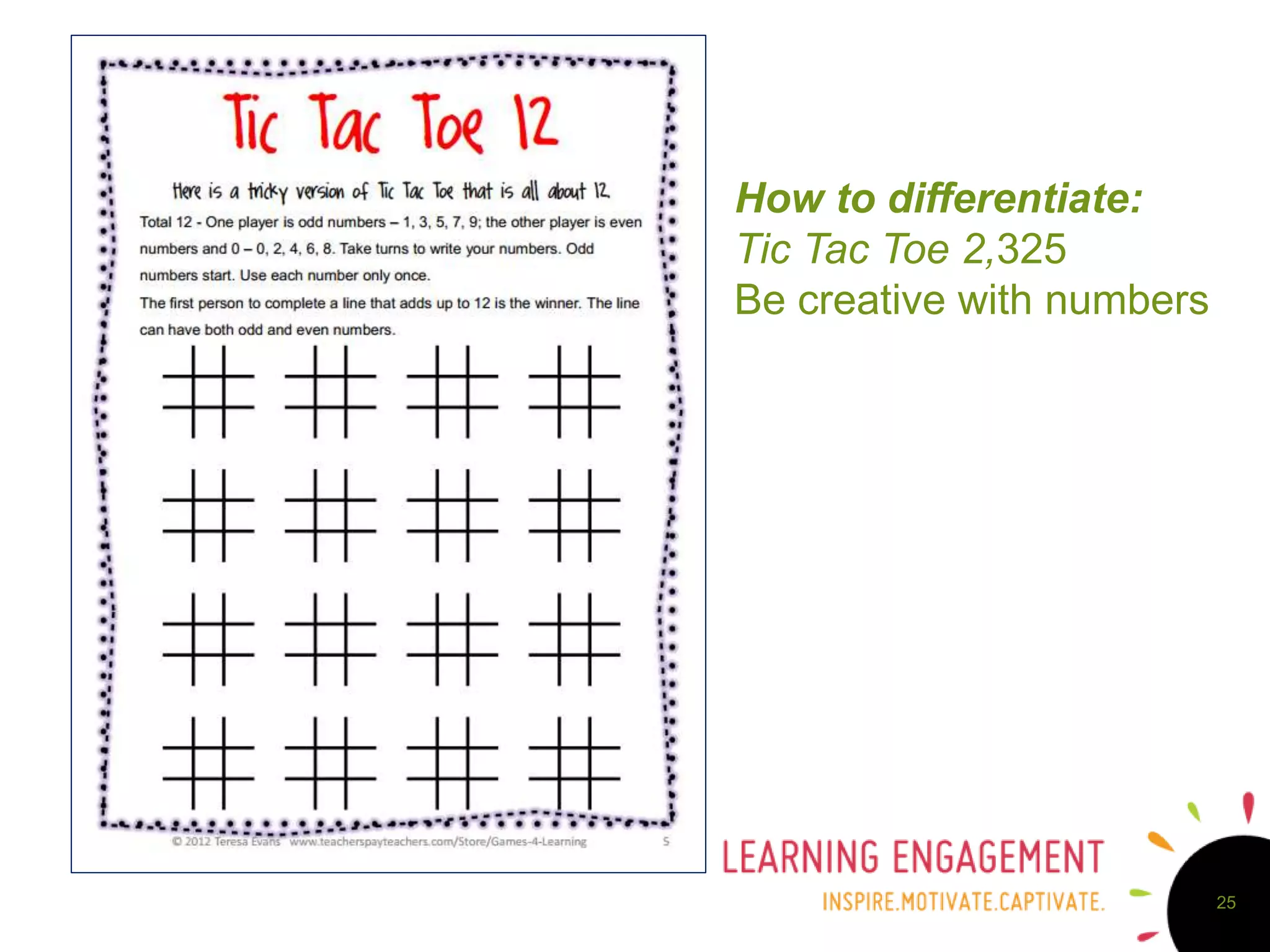
How to differentiate:
Tic Tac Toe 2,325
Be creative with numbers
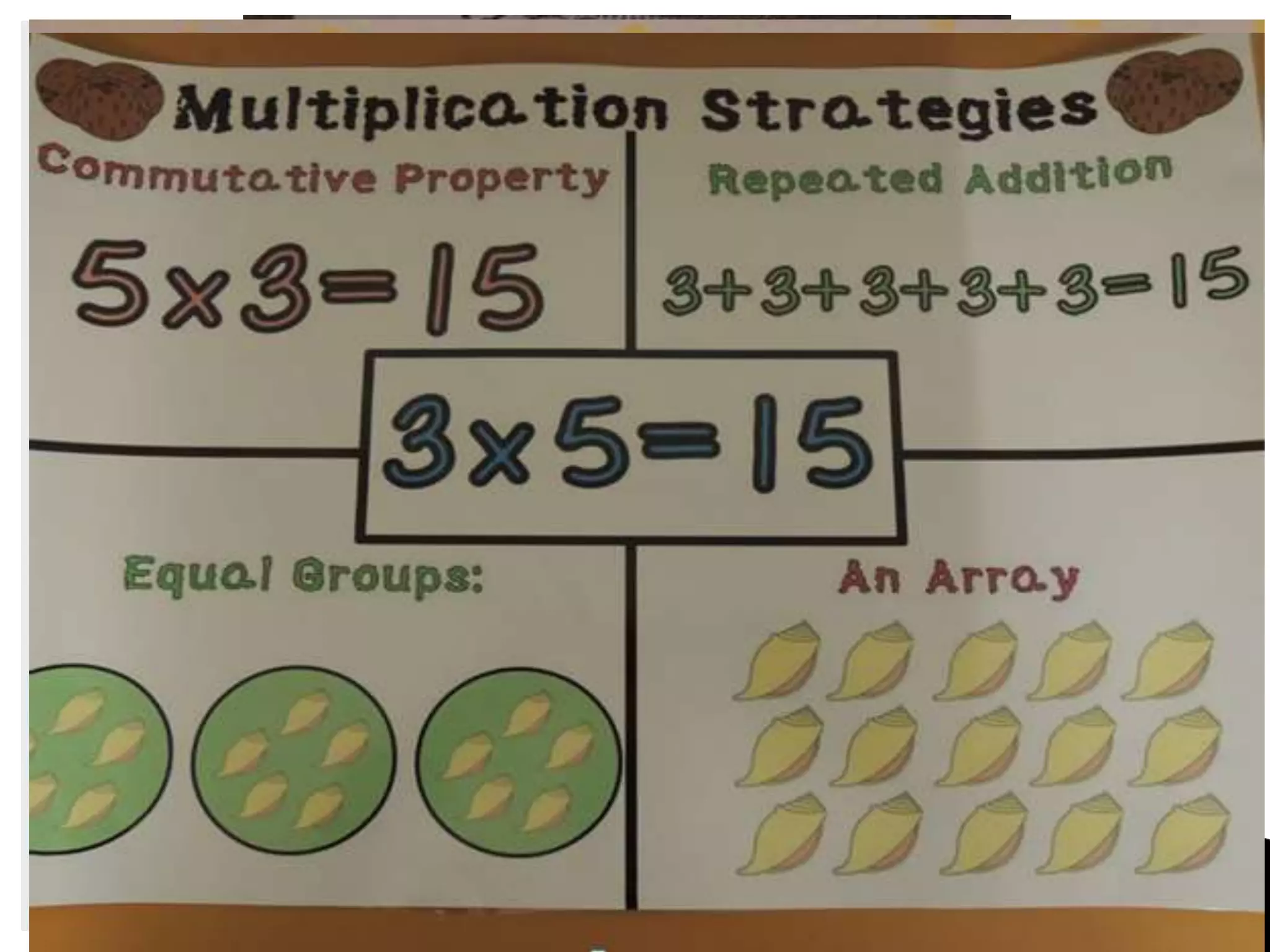
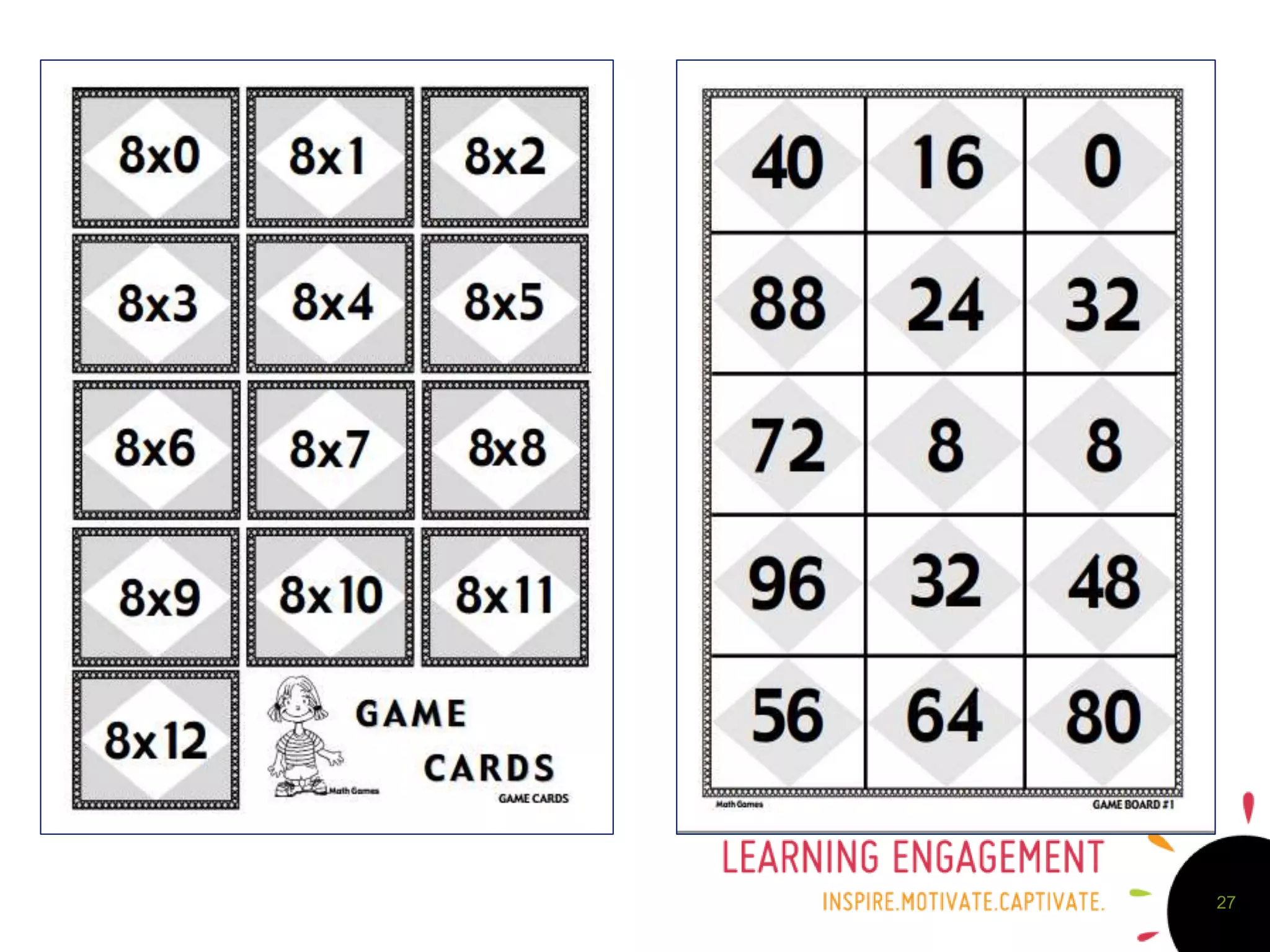
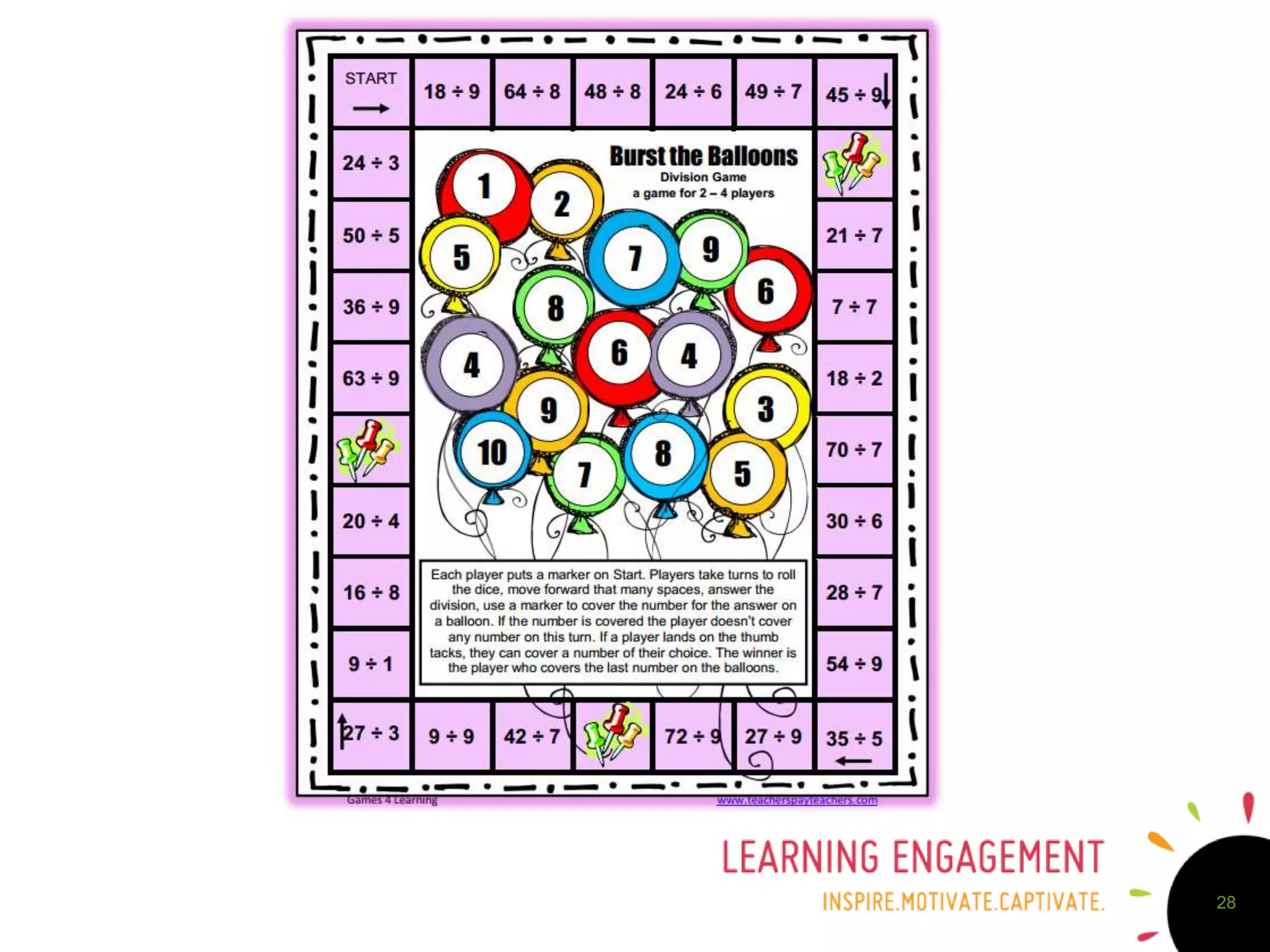
 Multiply and divide within 100,
using strategies such as the
relationship between
multiplication and division
 Understand division as an
unknown-factor problem.
27
28
29
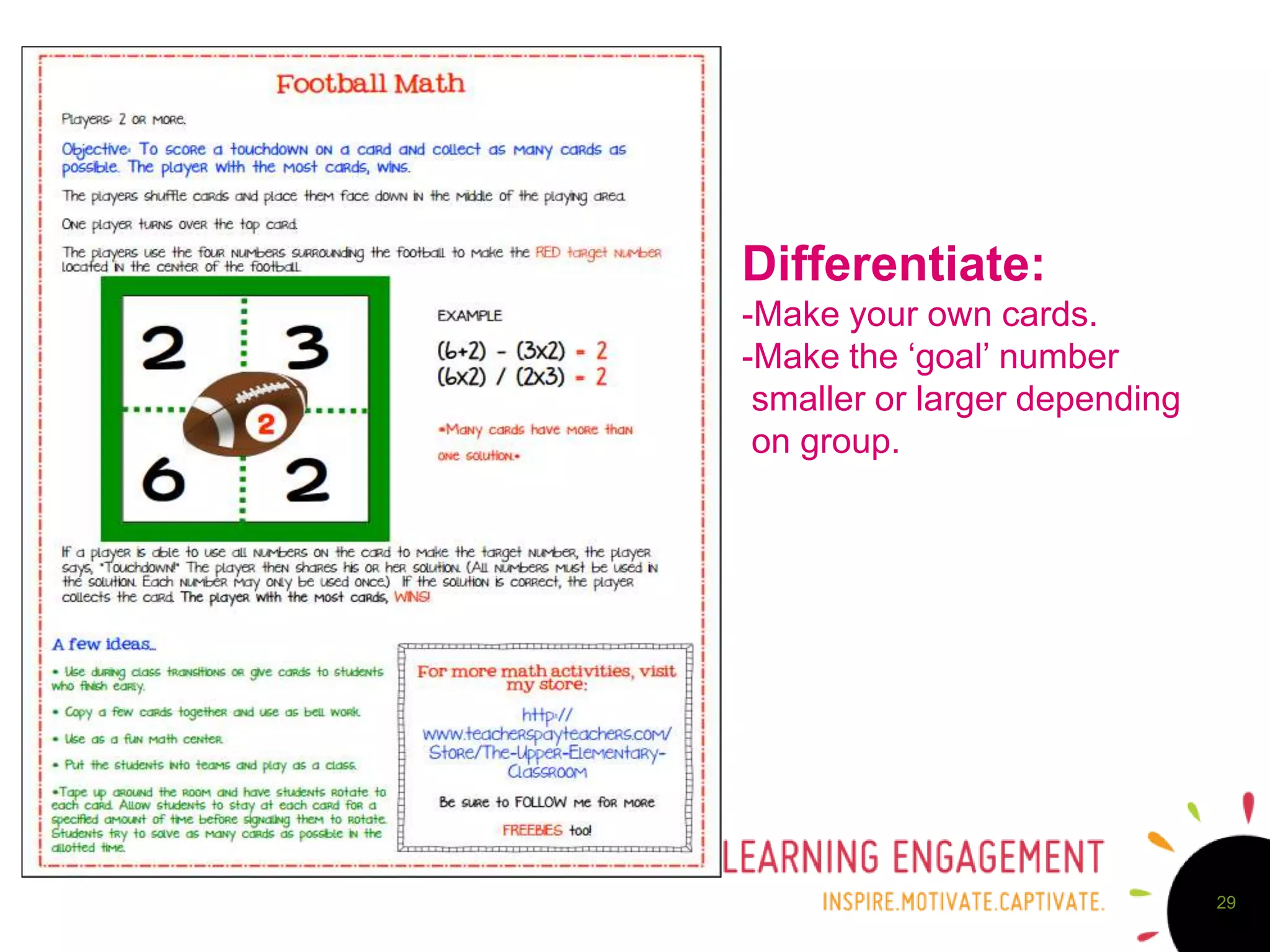
Differentiate:
-Make your own cards.
-Make the ‘goal’ number
smaller or larger depending
on group.
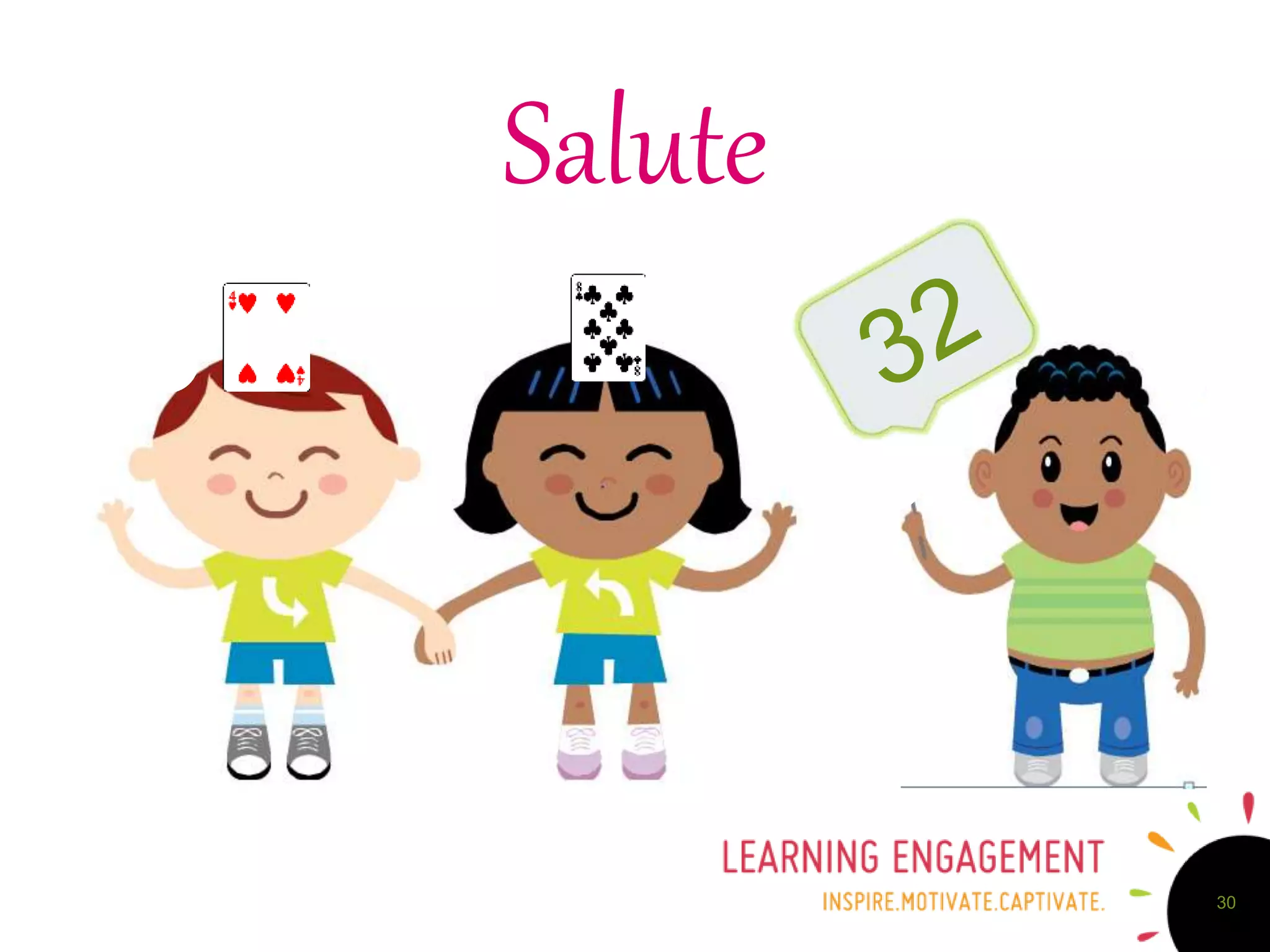
Salute
30
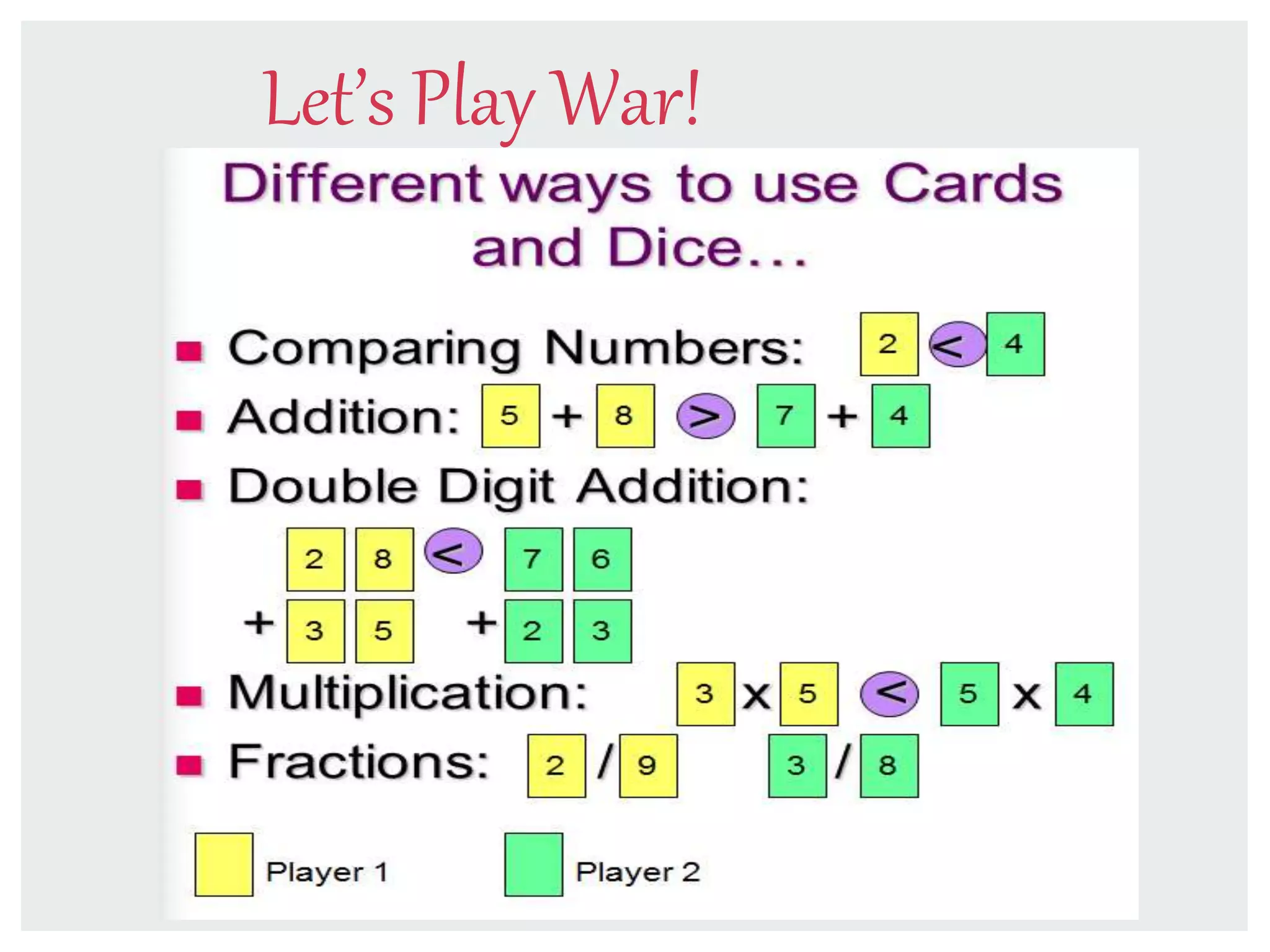
Cards & Dice Station
Cards and dice can be used to reinforce
any of the basic math skills: Addition,
subtraction, multiplication, division, and
number sense.
The cards and dice center is a great center,
because you always have the materials on
hand and there is no preparation needed.
• How to Differentiate: You can have students use more or less cards, or use
higher or lower numbers on dice.
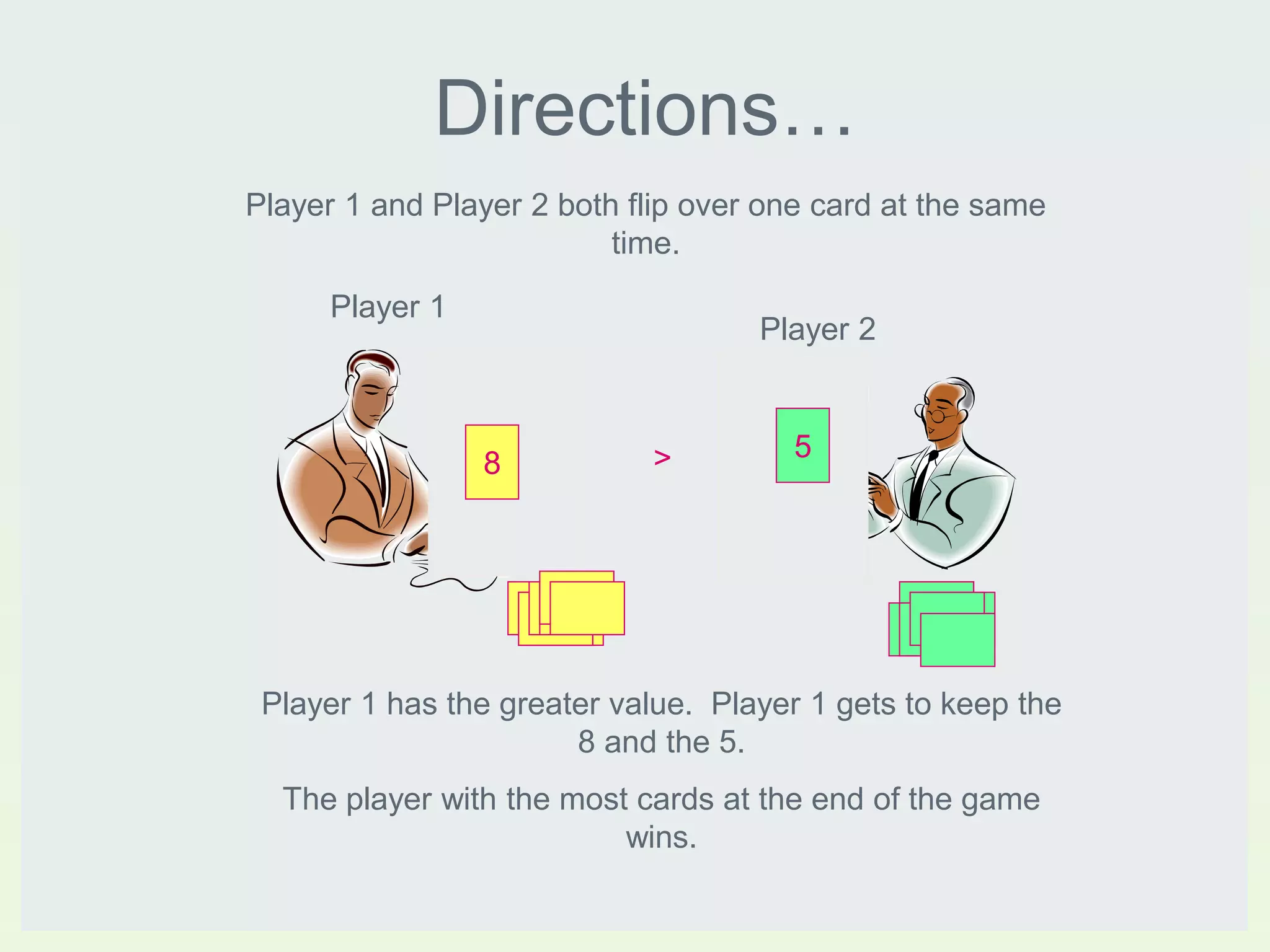
Directions…
8
5>
Player 1
Player 2
Player 1 and Player 2 both flip over one card at the same
time.
Player 1 has the greater value. Player 1 gets to keep the
8 and the 5.
The player with the most cards at the end of the game
wins.
Let’s Play War!
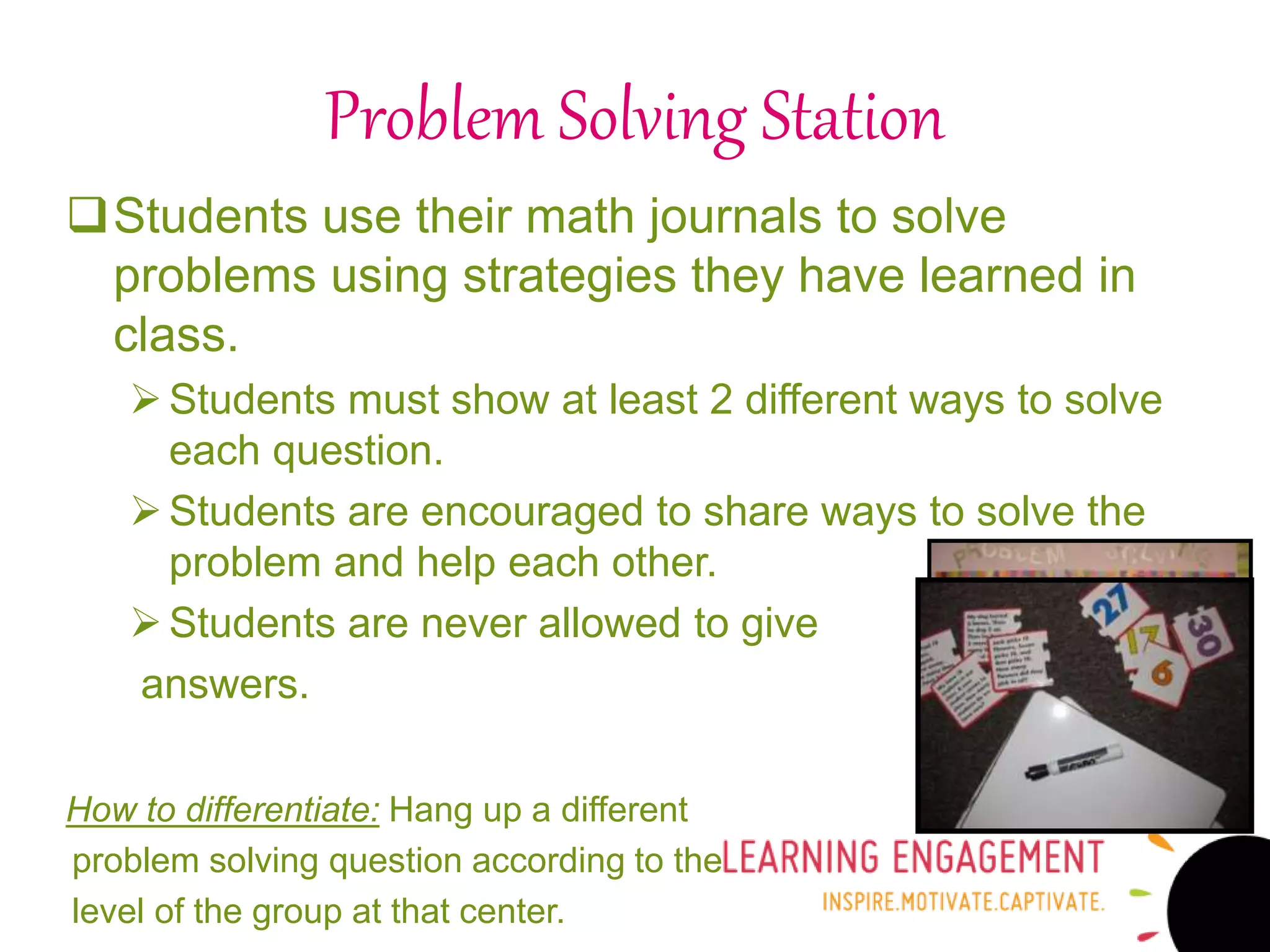
Problem Solving Station
Students use their math journals to solve
problems using strategies they have learned in
class.
Students must show at least 2 different ways to solve
each question.
Students are encouraged to share ways to solve the
problem and help each other.
Students are never allowed to give
answers.
How to differentiate: Hang up a different
problem solving question according to the
level of the group at that center.
Exemplars
You need to practice the piano 2 hours every
week before your lesson on Friday afternoon.
Your teacher says not to work more than 20
minutes at a time. Show what your practice
schedule might look like.
*Every Cobb County school should have a copy of these in your
school.
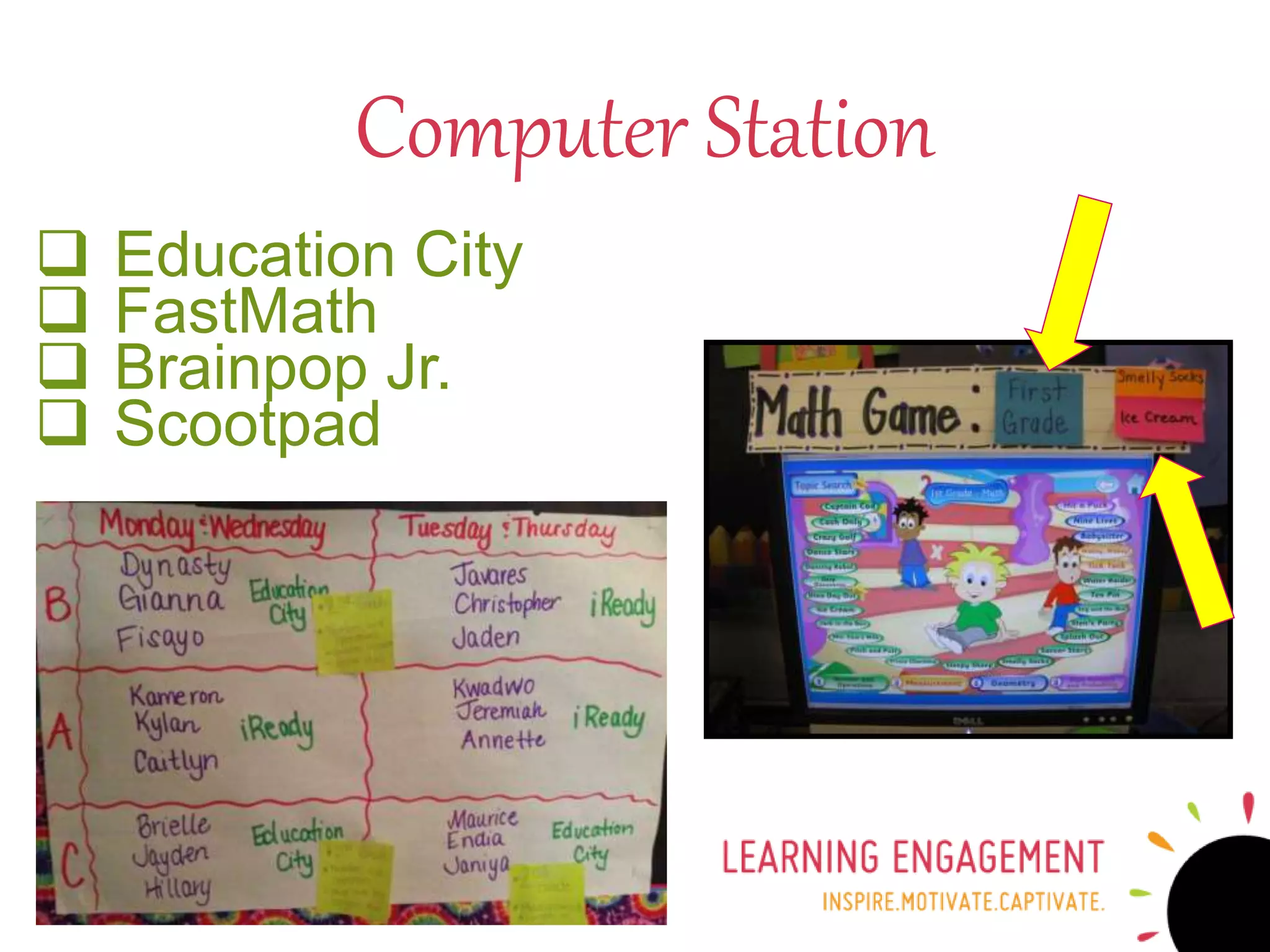
 Education City
 FastMath
 Brainpop Jr.
 Scootpad
Computer Station
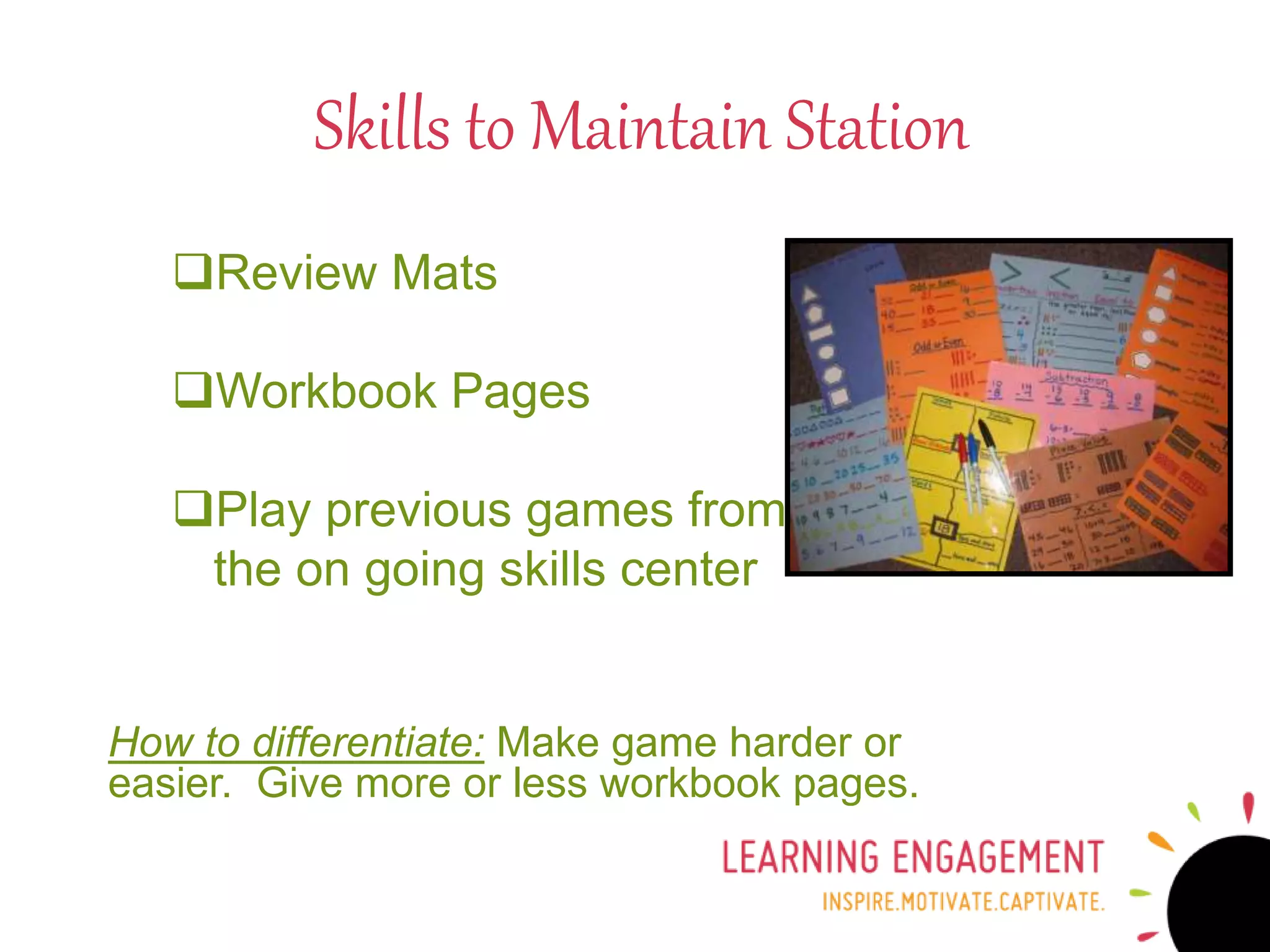
Review Mats
Workbook Pages
Play previous games from
the on going skills center
How to differentiate: Make game harder or
easier. Give more or less workbook pages.
Skills to Maintain Station
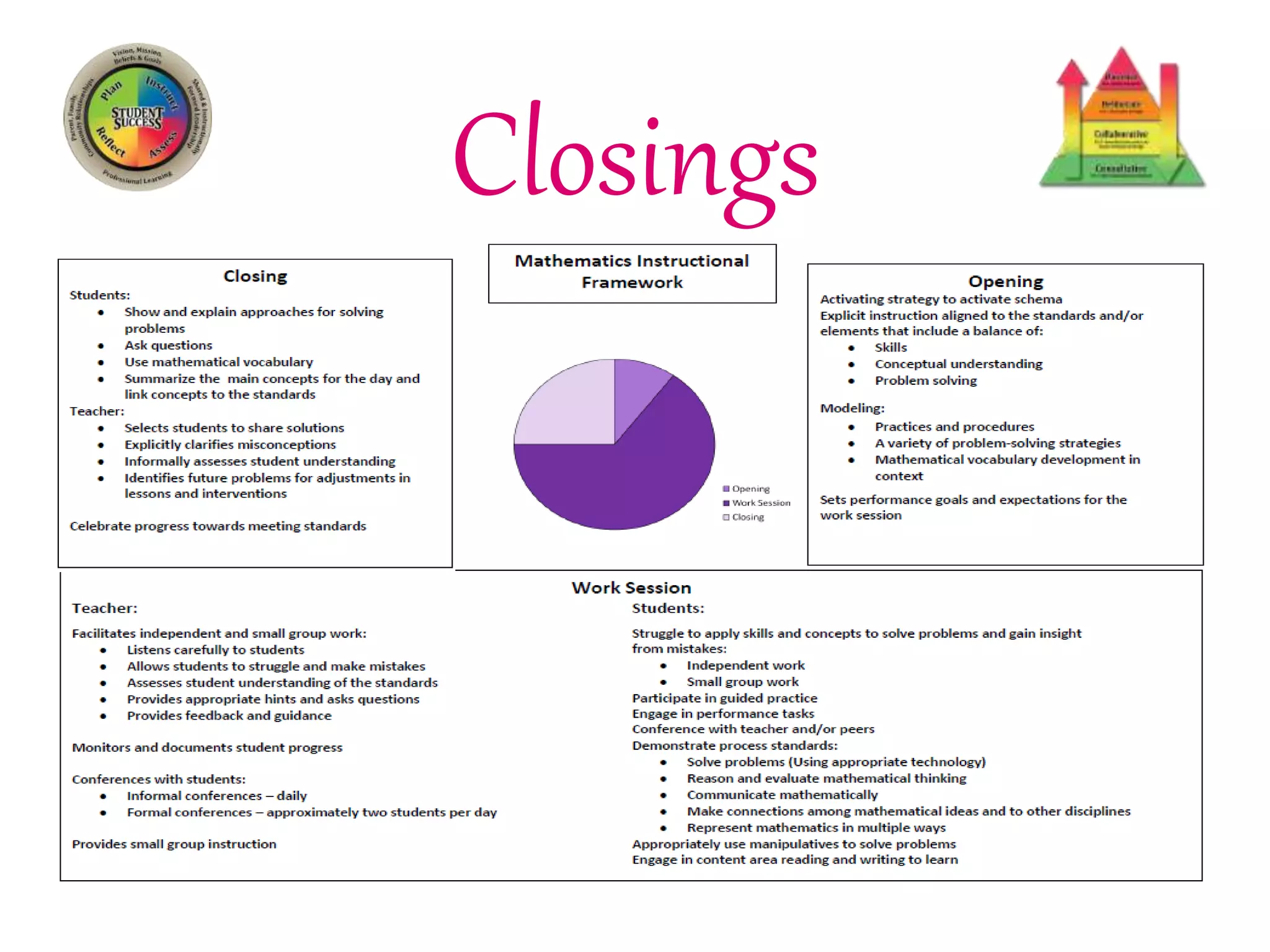
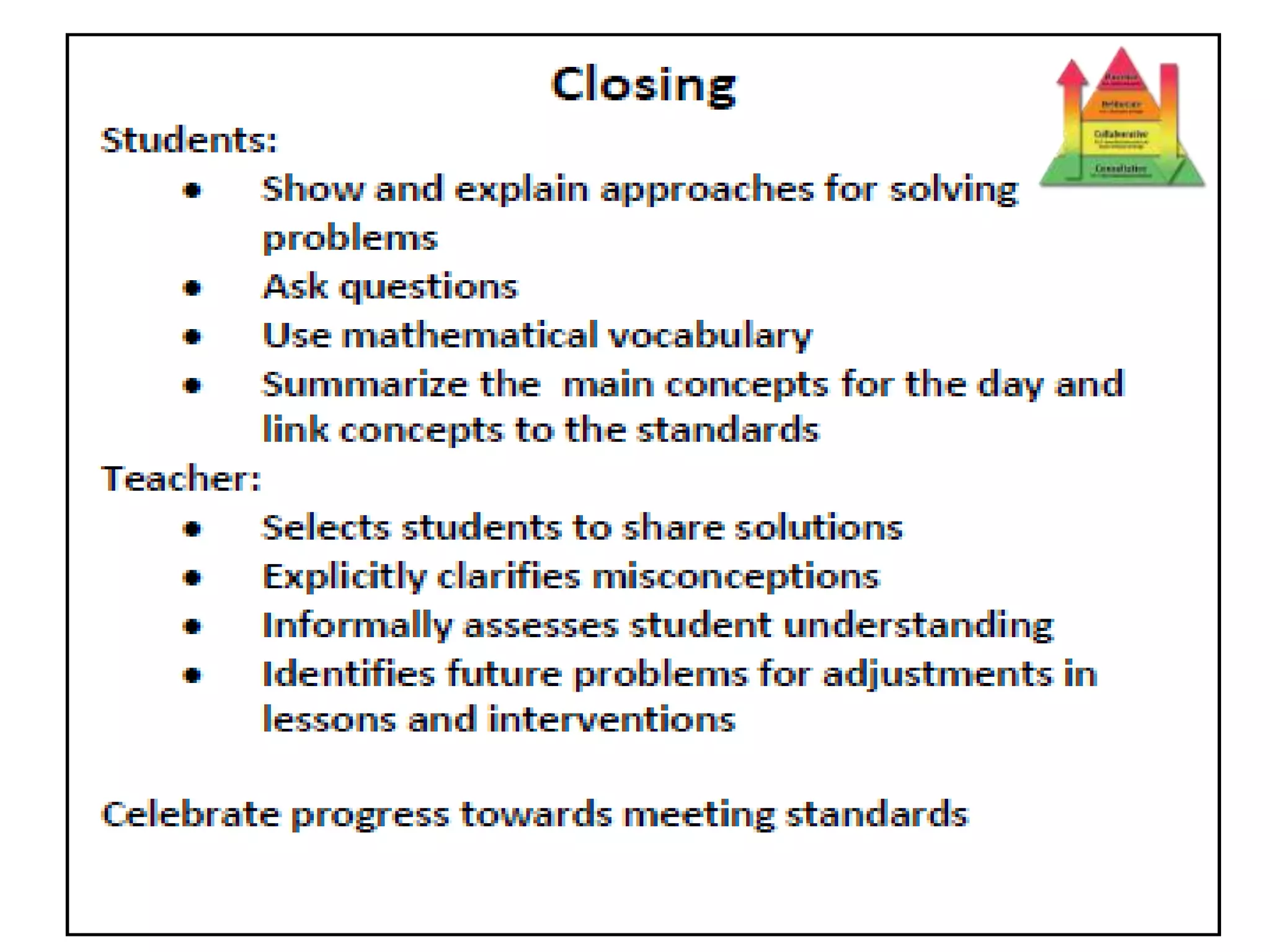
Closings
Closings
 Teachers are bringing the lesson to a close and setting
the stage for the next day’s mini-lesson.
– Adding to an anchor chart
– Clearing up misconceptions
– Informally assessing student
• Observations or ticket out the door
 Students are sharing work and providing meaning math
feedback to peers.
– Problem solving strategies
– Math Journals
– Work Station Products
Closings
Top 5 things I love about Guided Math:
• 5. Touches on all areas of multiple intelligences.
• 4. I am able to get to know each individual
student’s math needs better and teach
accordingly.
• 3. Very easy to differentiate instruction among all
students.
• 2. Gives students more hands-on time and more
use of manipulatives.
• 1. The kids love it!!
42
Questions or
Comments?

Guided Math Implementation

  • 1.
    GUIDED MATH K-5 Waysto achieve a differentiated Math classroom
  • 2.
    What would youlike to learn more about to be able to implement Guided Math more effectively in your classroom? 1. To 17474443548 2. Text the number 633138 and your message
  • 3.
    What is GuidedMath? Let’s ask the doctor!
  • 4.
    How Do IUse Guided Math in my Classroom? What have you done that is successful in your room for Guided Math?
  • 5.
     Begin withan opening 15 minutes, or mini-lesson, which includes an activator or teaching strategy. I always start with the standard.  Work time that includes small group instruction as well as work stations for other children. This takes the majority of the math lesson.  End with a closing. I usually leave 5-10 minutes for my closing. How do I set up Guided Math in my classroom?
  • 7.
  • 8.
    Presenting New Material/beginwith the standard (unpacking it or reviewing it) – 10-15 minutes depending on what I am doing  Presenting Activating Strategies – KWL, Anticipation Guide, Word Splash  Reading Math-related literature – Establishes Connections  Setting the stage for Math Workshop Practice and Review – Paper/Pencil, Games, Music, Technology Openings
  • 9.
    Sample Weekly MathSchedule Monday – Common Pre-test/Activation Strategy Tuesday – Teaching Strategy and centers Wednesday – Teaching Strategy and centers Thursday – Teaching Strategy and centers Friday – Summarizing Activity with a test or performance task
  • 10.
    Activating Strategies  Ialways start by reading the standard Read students a book that introduces or relates the new skill being introduced.  Frayer Chart  Word Splash  Venn Diagram  WWW.BRAINPOPJR.COM Word Problem
  • 11.
  • 12.
  • 13.
    How do Iform groups?  Pretests usually given on Monday  Performance with Previous Sequential Concepts (I use my observations)  Formative Tests  Performance Tasks  Observations of Student Work  Conversations with Students  Benchmark Tests Small Group Time
  • 14.
  • 15.
  • 16.
    What am Idoing with the groups?  Introduction of new concepts  Practice of new skills  Instruction with manipulatives  Intensive instruction for students having difficulty mastering concepts  Introduction of activities that will later become independent work during math workshop  Informal assessment  Re-teaching based on results of formative assessment Small Group Time
  • 17.
    Overview Managing It All/SettingIt Up Workstations Checklist What about the other students?
  • 18.
  • 19.
    Writing about math ProblemSolving Steps to solve problems Thoughts about math Use as a resource that goes to all stations Paste student made anchor charts or resources Journal Station
  • 21.
    Partner Games Match-Up Cards MathBoard Games Self-Correcting Games How to differentiate: Assign games to play based on skills needed. Games Station
  • 22.
     Add andsubtract within 1000 using strategies based on place value, properties of operations, and/or the relationship between addition and subtraction.  Use place value understanding to round whole numbers to the nearest 10 or 100.
  • 23.
  • 24.
  • 25.
    25 How to differentiate: TicTac Toe 2,325 Be creative with numbers
  • 26.
     Multiply anddivide within 100, using strategies such as the relationship between multiplication and division  Understand division as an unknown-factor problem.
  • 27.
  • 28.
  • 29.
    29 Differentiate: -Make your owncards. -Make the ‘goal’ number smaller or larger depending on group.
  • 30.
  • 31.
    Cards & DiceStation Cards and dice can be used to reinforce any of the basic math skills: Addition, subtraction, multiplication, division, and number sense. The cards and dice center is a great center, because you always have the materials on hand and there is no preparation needed. • How to Differentiate: You can have students use more or less cards, or use higher or lower numbers on dice.
  • 32.
    Directions… 8 5> Player 1 Player 2 Player1 and Player 2 both flip over one card at the same time. Player 1 has the greater value. Player 1 gets to keep the 8 and the 5. The player with the most cards at the end of the game wins.
  • 33.
  • 34.
    Problem Solving Station Studentsuse their math journals to solve problems using strategies they have learned in class. Students must show at least 2 different ways to solve each question. Students are encouraged to share ways to solve the problem and help each other. Students are never allowed to give answers. How to differentiate: Hang up a different problem solving question according to the level of the group at that center.
  • 35.
    Exemplars You need topractice the piano 2 hours every week before your lesson on Friday afternoon. Your teacher says not to work more than 20 minutes at a time. Show what your practice schedule might look like. *Every Cobb County school should have a copy of these in your school.
  • 36.
     Education City FastMath  Brainpop Jr.  Scootpad Computer Station
  • 37.
    Review Mats Workbook Pages Playprevious games from the on going skills center How to differentiate: Make game harder or easier. Give more or less workbook pages. Skills to Maintain Station
  • 38.
  • 39.
  • 40.
     Teachers arebringing the lesson to a close and setting the stage for the next day’s mini-lesson. – Adding to an anchor chart – Clearing up misconceptions – Informally assessing student • Observations or ticket out the door  Students are sharing work and providing meaning math feedback to peers. – Problem solving strategies – Math Journals – Work Station Products Closings
  • 41.
    Top 5 thingsI love about Guided Math: • 5. Touches on all areas of multiple intelligences. • 4. I am able to get to know each individual student’s math needs better and teach accordingly. • 3. Very easy to differentiate instruction among all students. • 2. Gives students more hands-on time and more use of manipulatives. • 1. The kids love it!!
  • 42.

Editor's Notes

  • #4 Dr Nicki has an Ed.M. and an Ed.D.  from  the Department of Curriculum and Teaching at Teachers College, Columbia University specializing in Teacher Education and Curriculum Development.  She uses her strong understanding of curriculum to address the differentiated needs of all students in her work with teachers and administrators. Dr. Nicki builds upon current curriculum research and theory to provide practical, realistic 21st century strategies in today’s classrooms.  Dr. Newton is greatly interested in teaching and learning practices around the world and has researched education in Denmark, Guatemala and India.