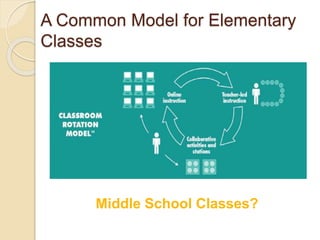
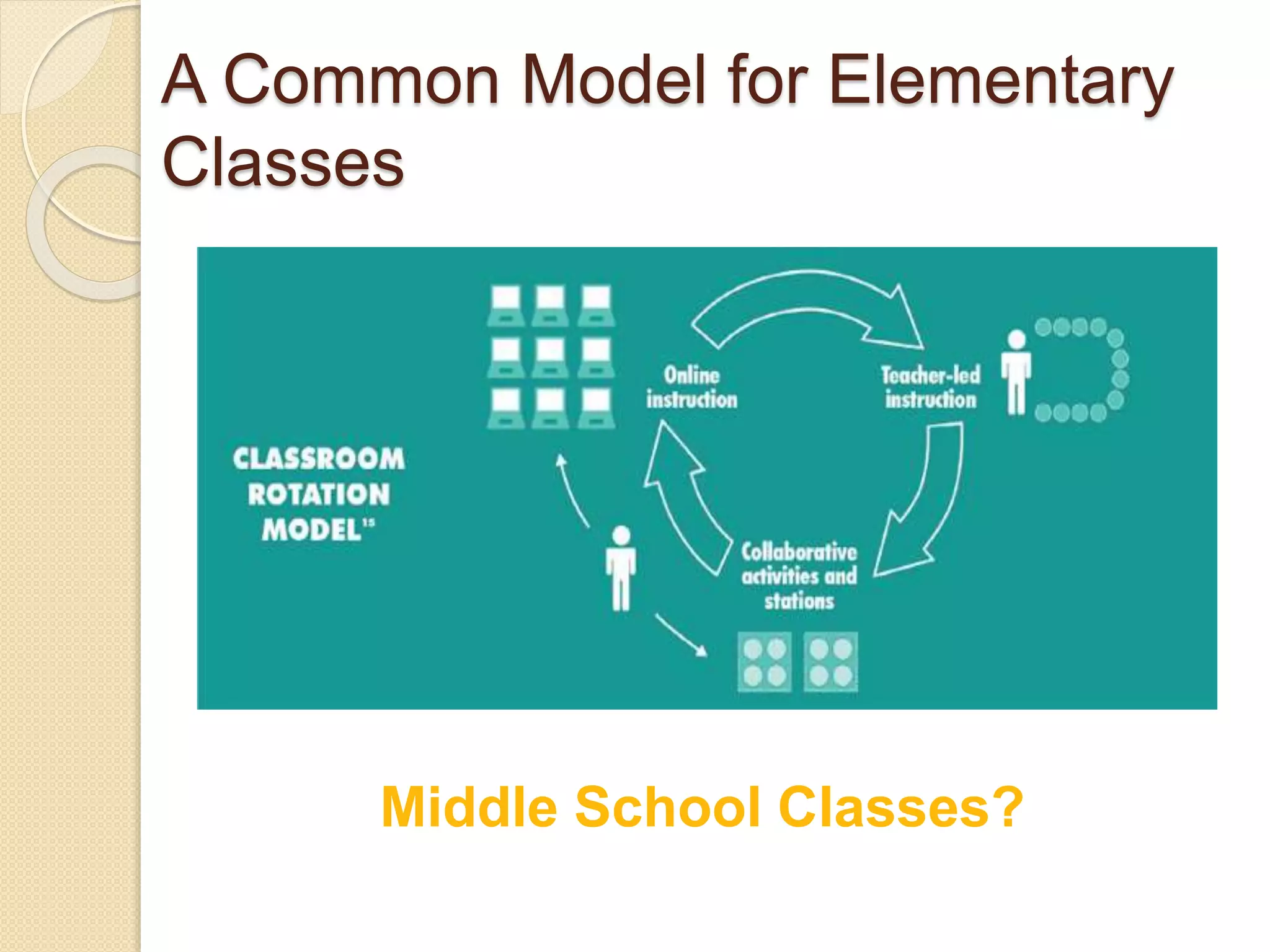
A Common Model for Elementary 
Classes 
Middle School Classes?
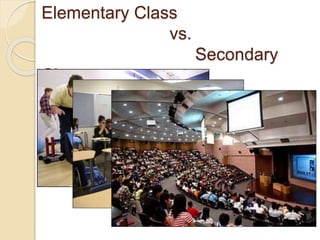
Elementary Class 
vs. 
Secondary 
Class
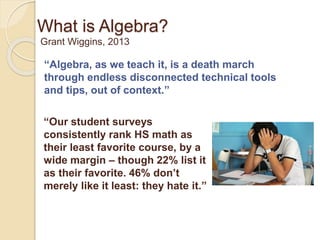
What is Algebra? 
Grant Wiggins, 2013 
“Algebra, as we teach it, is a death march 
through endless disconnected technical tools 
and tips, out of context.” 
“Our student surveys 
consistently rank HS math as 
their least favorite course, by a 
wide margin – though 22% list it 
as their favorite. 46% don’t 
merely like it least: they hate it.”
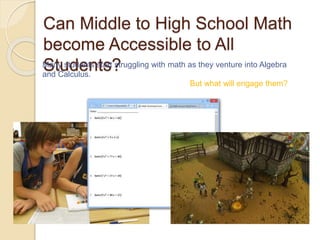
Can Middle to High School Math 
become Accessible to All 
MSantyu stdudeentns sttasrt? struggling with math as they venture into Algebra 
and Calculus. 
But what will engage them?
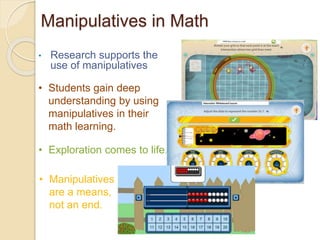
Manipulatives in Math 
• Research supports the 
use of manipulatives 
• Students gain deep 
understanding by using 
manipulatives in their 
math learning. 
• Exploration comes to life. 
• Manipulatives 
are a means, 
not an end.
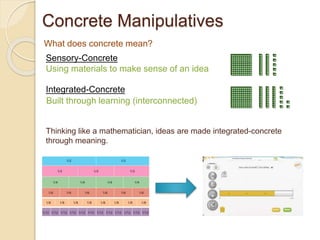
Concrete Manipulatives 
What does concrete mean? 
Sensory-Concrete 
Using materials to make sense of an idea 
Integrated-Concrete 
Built through learning (interconnected) 
Thinking like a mathematician, ideas are made integrated-concrete 
through meaning.
The Power of Digital Manipulatives 
Digital materials can be just as meaningful as real objects! 
Concrete and Symbolic 
Link the concrete and symbolic with 
feedback and representations 
Cleaner 
No management of physical tools. 
More Flexible 
No restriction of physical objects, limits of size, scale, material. 
Thoughtful Assessment and Reporting 
Specific and fast communication to teacher and student 
Cleverly Restrictive 
Restrictions CAN be set for targeted learning
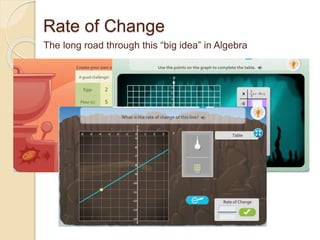
Rate of Change 
The long road through this “big idea” in Algebra
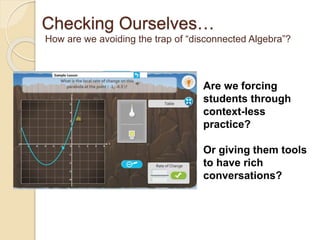
Checking Ourselves… 
How are we avoiding the trap of “disconnected Algebra”? 
Are we forcing 
students through 
context-less 
practice? 
Or giving them tools 
to have rich 
conversations?
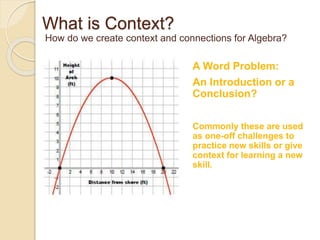
How do we create context and connections for Algebra? 
A Word Problem: 
An Introduction or a 
Conclusion? 
What is Context? 
Commonly these are used 
as one-off challenges to 
practice new skills or give 
context for learning a new 
skill.
What is Context? 
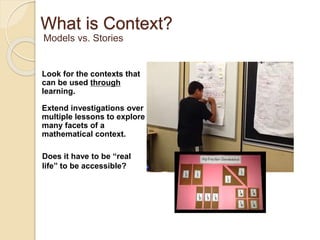
Models vs. Stories 
Look for the contexts that 
can be used through 
learning. 
Extend investigations over 
multiple lessons to explore 
many facets of a 
mathematical context. 
Does it have to be “real 
life” to be accessible?
What is Context? 
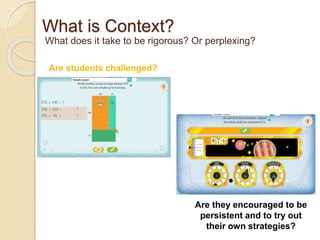
What does it take to be rigorous? Or perplexing? 
Are students challenged? 
Are they encouraged to be 
persistent and to try out 
their own strategies?
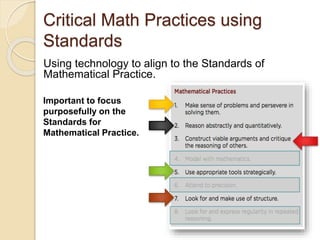
Critical Math Practices using 
Standards 
Using technology to align to the Standards of 
Mathematical Practice. 
Important to focus 
purposefully on the 
Standards for 
Mathematical Practice.
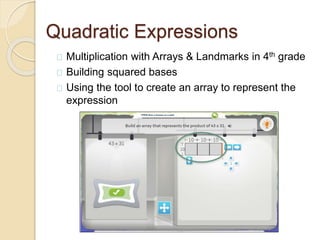
Quadratic Expressions 
Multiplication with Arrays & Landmarks in 4th grade 
Building squared bases 
Using the tool to create an array to represent the 
expression
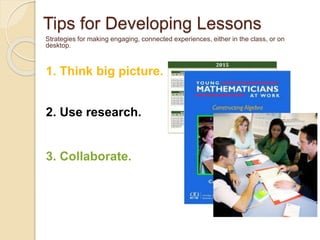
Tips for Developing Lessons 
Strategies for making engaging, connected experiences, either in the class, or on 
desktop. 
1. Think big picture. 
2. Use research. 
3. Collaborate.
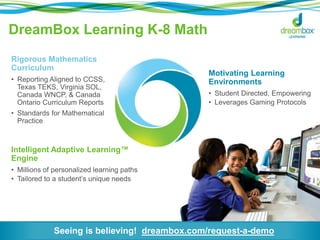
DreamBox Learning K-8 Math 
Intelligent Adaptive Learning™ 
Engine 
• Millions of personalized learning paths 
• Tailored to a student’s unique needs 
Motivating Learning 
Environments 
• Student Directed, Empowering 
• Leverages Gaming Protocols 
Rigorous Mathematics 
Curriculum 
• Reporting Aligned to CCSS, 
Texas TEKS, Virginia SOL, 
Canada WNCP, & Canada 
Ontario Curriculum Reports 
• Standards for Mathematical 
Practice 
Seeing is believing! dreambox.com/request-a-demo
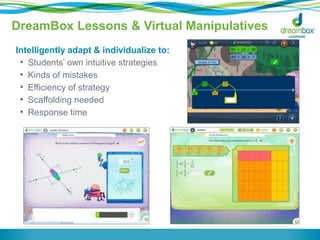
DreamBox Lessons & Virtual Manipulatives 
Intelligently adapt & individualize to: 
• Students’ own intuitive strategies 
• Kinds of mistakes 
• Efficiency of strategy 
• Scaffolding needed 
• Response time
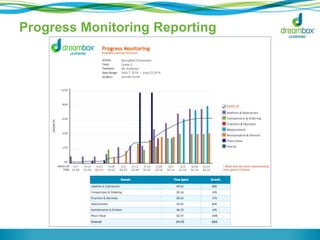
Progress Monitoring Reporting
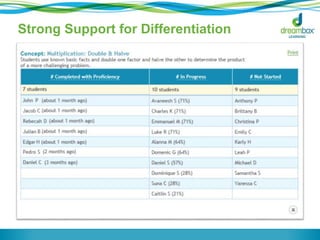
Strong Support for Differentiation
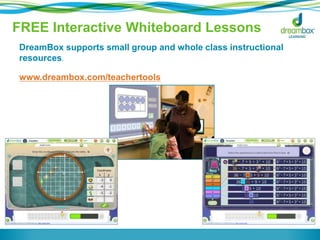
FREE Interactive Whiteboard Lessons 
DreamBox supports small group and whole class instructional 
resources. 
www.dreambox.com/teachertools
We value your feedback, compliments, 
suggestions, and complaints! 
Let us know how we’re doing: 
https://www.surveymonkey.com/s/MD8J6Z7 
Also, join us for a 15 minute Tweet-Up Session 
immediately following this webinar: #edwebchat

Concrete to Abstract: Preparing Students for Formal Algebra

  • 1.
    A Common Modelfor Elementary Classes Middle School Classes?
  • 2.
    Elementary Class vs. Secondary Class
  • 3.
    What is Algebra? Grant Wiggins, 2013 “Algebra, as we teach it, is a death march through endless disconnected technical tools and tips, out of context.” “Our student surveys consistently rank HS math as their least favorite course, by a wide margin – though 22% list it as their favorite. 46% don’t merely like it least: they hate it.”
  • 4.
    Can Middle toHigh School Math become Accessible to All MSantyu stdudeentns sttasrt? struggling with math as they venture into Algebra and Calculus. But what will engage them?
  • 5.
    Manipulatives in Math • Research supports the use of manipulatives • Students gain deep understanding by using manipulatives in their math learning. • Exploration comes to life. • Manipulatives are a means, not an end.
  • 6.
    Concrete Manipulatives Whatdoes concrete mean? Sensory-Concrete Using materials to make sense of an idea Integrated-Concrete Built through learning (interconnected) Thinking like a mathematician, ideas are made integrated-concrete through meaning.
  • 7.
    The Power ofDigital Manipulatives Digital materials can be just as meaningful as real objects! Concrete and Symbolic Link the concrete and symbolic with feedback and representations Cleaner No management of physical tools. More Flexible No restriction of physical objects, limits of size, scale, material. Thoughtful Assessment and Reporting Specific and fast communication to teacher and student Cleverly Restrictive Restrictions CAN be set for targeted learning
  • 8.
    Rate of Change The long road through this “big idea” in Algebra
  • 9.
    Checking Ourselves… Howare we avoiding the trap of “disconnected Algebra”? Are we forcing students through context-less practice? Or giving them tools to have rich conversations?
  • 10.
    How do wecreate context and connections for Algebra? A Word Problem: An Introduction or a Conclusion? What is Context? Commonly these are used as one-off challenges to practice new skills or give context for learning a new skill.
  • 11.
    What is Context? Models vs. Stories Look for the contexts that can be used through learning. Extend investigations over multiple lessons to explore many facets of a mathematical context. Does it have to be “real life” to be accessible?
  • 12.
    What is Context? What does it take to be rigorous? Or perplexing? Are students challenged? Are they encouraged to be persistent and to try out their own strategies?
  • 13.
    Critical Math Practicesusing Standards Using technology to align to the Standards of Mathematical Practice. Important to focus purposefully on the Standards for Mathematical Practice.
  • 14.
    Quadratic Expressions Multiplicationwith Arrays & Landmarks in 4th grade Building squared bases Using the tool to create an array to represent the expression
  • 15.
    Tips for DevelopingLessons Strategies for making engaging, connected experiences, either in the class, or on desktop. 1. Think big picture. 2. Use research. 3. Collaborate.
  • 16.
    DreamBox Learning K-8Math Intelligent Adaptive Learning™ Engine • Millions of personalized learning paths • Tailored to a student’s unique needs Motivating Learning Environments • Student Directed, Empowering • Leverages Gaming Protocols Rigorous Mathematics Curriculum • Reporting Aligned to CCSS, Texas TEKS, Virginia SOL, Canada WNCP, & Canada Ontario Curriculum Reports • Standards for Mathematical Practice Seeing is believing! dreambox.com/request-a-demo
  • 17.
    DreamBox Lessons &Virtual Manipulatives Intelligently adapt & individualize to: • Students’ own intuitive strategies • Kinds of mistakes • Efficiency of strategy • Scaffolding needed • Response time
  • 18.
  • 19.
    Strong Support forDifferentiation
  • 20.
    FREE Interactive WhiteboardLessons DreamBox supports small group and whole class instructional resources. www.dreambox.com/teachertools
  • 21.
    We value yourfeedback, compliments, suggestions, and complaints! Let us know how we’re doing: https://www.surveymonkey.com/s/MD8J6Z7 Also, join us for a 15 minute Tweet-Up Session immediately following this webinar: #edwebchat

Editor's Notes

  • #6 Research suggests to start with concrete manipulatives Manipulatives do not encompass the mathematical idea, however students gain deep understanding by using manipulatives in their math learning. Are a means, not an end.
  • #8 Digital materials can be just as meaningful as real objects. Manageable, clean manipulatives Flexibility Extensible Link the concrete and symbolic with feedback, can link multiple representations Build scaffolding Encourage problem solving and conjectures Focus and motivation
  • #9 Rate of Change: Answer_LevelFive Answer_LevelSix Answer_LevelNine Locate_LevelTwo
  • #17 DreamBox Learning provides a new class of intelligent adaptive learning technology is the true game changer in education. Combines 3 essential elements 1) Rigorous K-8 Mathematics – DreamBox uses virtual manipulatives that enable students to build conceptual understanding and procedural fluency. Provided standards-based reporting. 2) Motivating Learning Environments that are age-appropriate and motives learners to persist and progress. 3) Powerful Intelligent Adaptive Learning engine providing millions of personalized, student-driven learning paths—each one—tailored to a student’s unique needs.