Math Lit & Pathways
5 Years Later
Kathleen Almy & Heather Foes
Rock Valley College
 Pathways overview
 National update
 Data
 Lessons learned
Pathway
Developmental math: a course other than traditional
algebra that is designed to prepare students for
non-STEM college mathematics
Examples include Math Lit, Statway, Path to Stats,
Quantway, and the New Mathways Project
Pathways: Ahead of their time
 In 2009, we didn't know developmental math landscape
was going to be turned upside down in coming years.
 Pathways are a sound way to accelerate developmental
education while actually doing something different.
 Pathways complement co-requisites.
 Pathways for lower students
 Co-requisites for bubble students
 Pathways are less expensive unlike emporiums redesigns.
 See CCSSE report
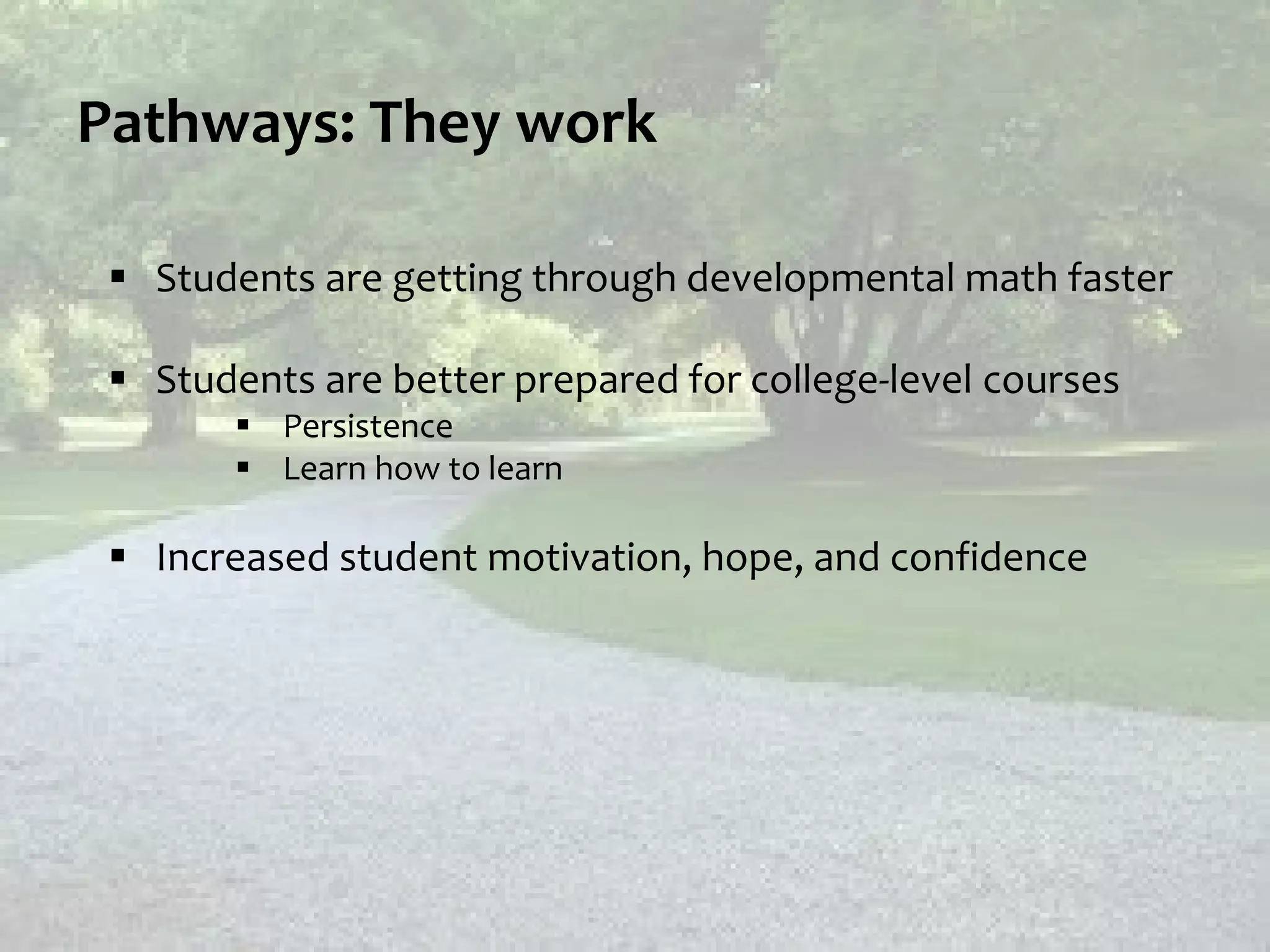
Pathways: They work
 Students are getting through developmental math faster
 Students are better prepared for college-level courses
 Persistence
 Learn how to learn
 Increased student motivation, hope, and confidence
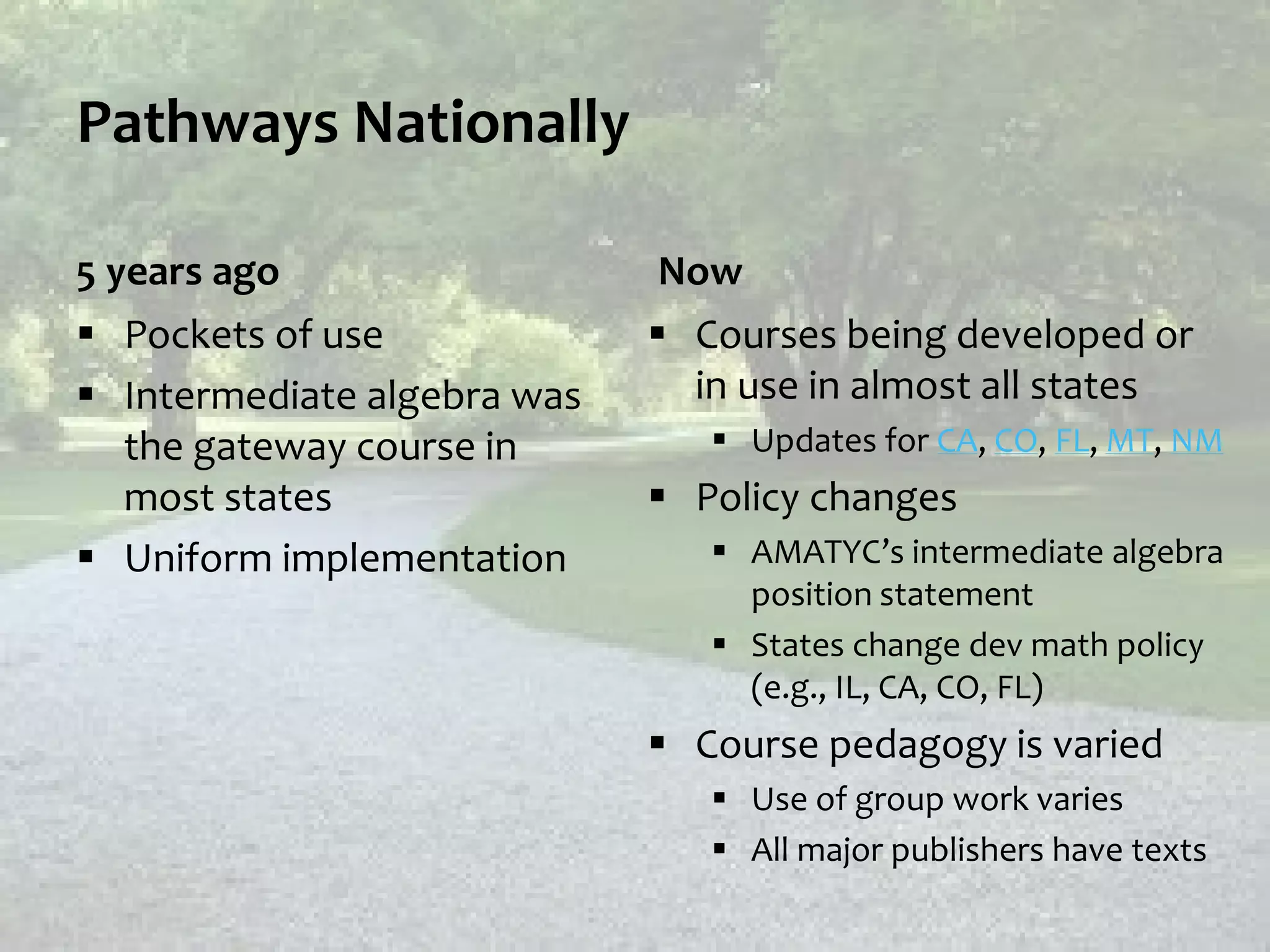
Pathways Nationally
5 years ago
 Pockets of use
 Intermediate algebra was
the gateway course in
most states
 Uniform implementation
Now
 Courses being developed or
in use in almost all states
 Updates for CA, CO, FL, MT, NM
 Policy changes
 AMATYC’s intermediate algebra
position statement
 States change dev math policy
(e.g., IL, CA, CO, FL)
 Course pedagogy is varied
 Use of group work varies
 All major publishers have texts
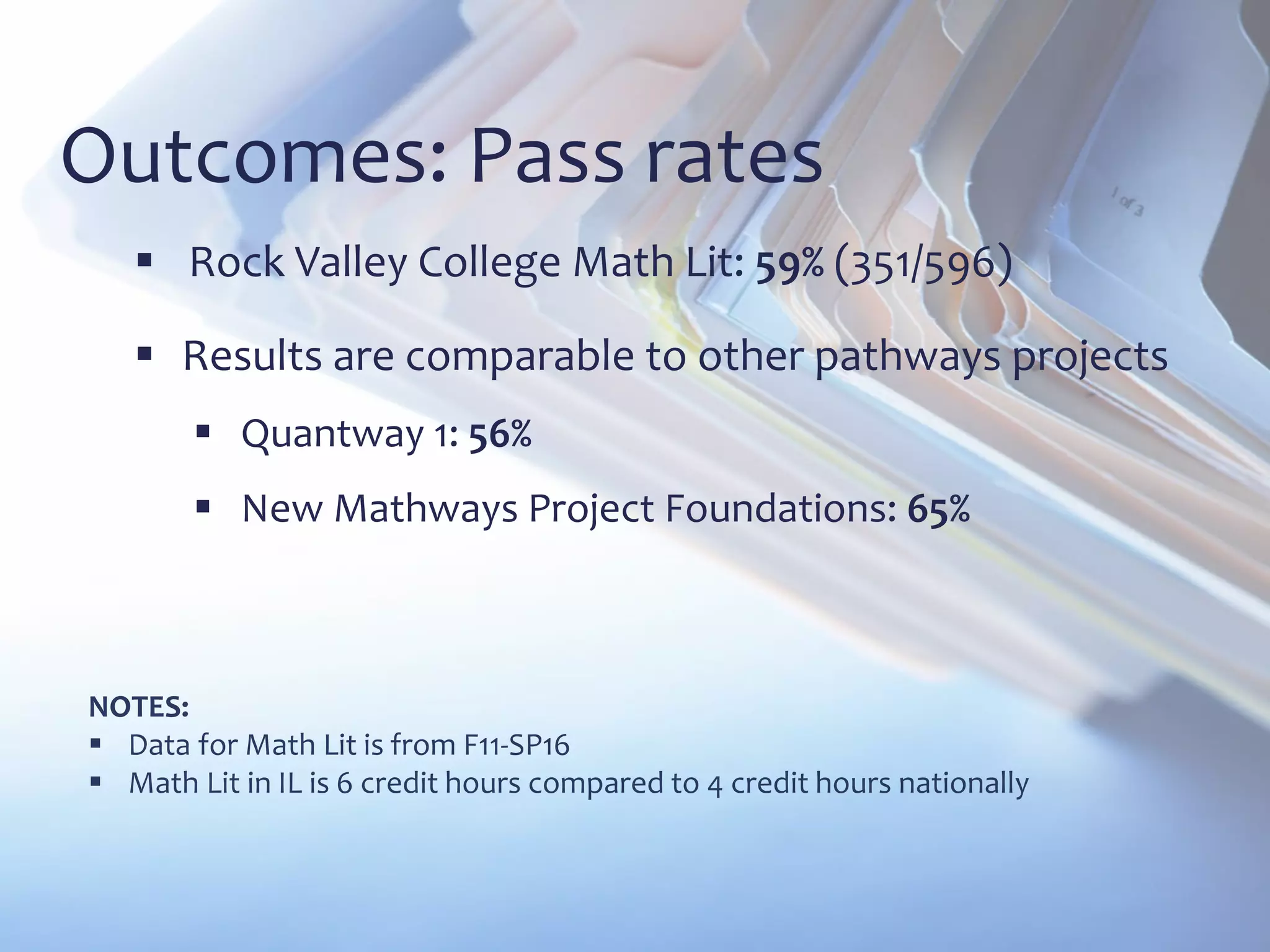
Outcomes: Pass rates
 Rock Valley College Math Lit: 59% (351/596)
 Results are comparable to other pathways projects
 Quantway 1: 56%
 New Mathways Project Foundations: 65%
NOTES:
 Data for Math Lit is from F11-SP16
 Math Lit in IL is 6 credit hours compared to 4 credit hours nationally
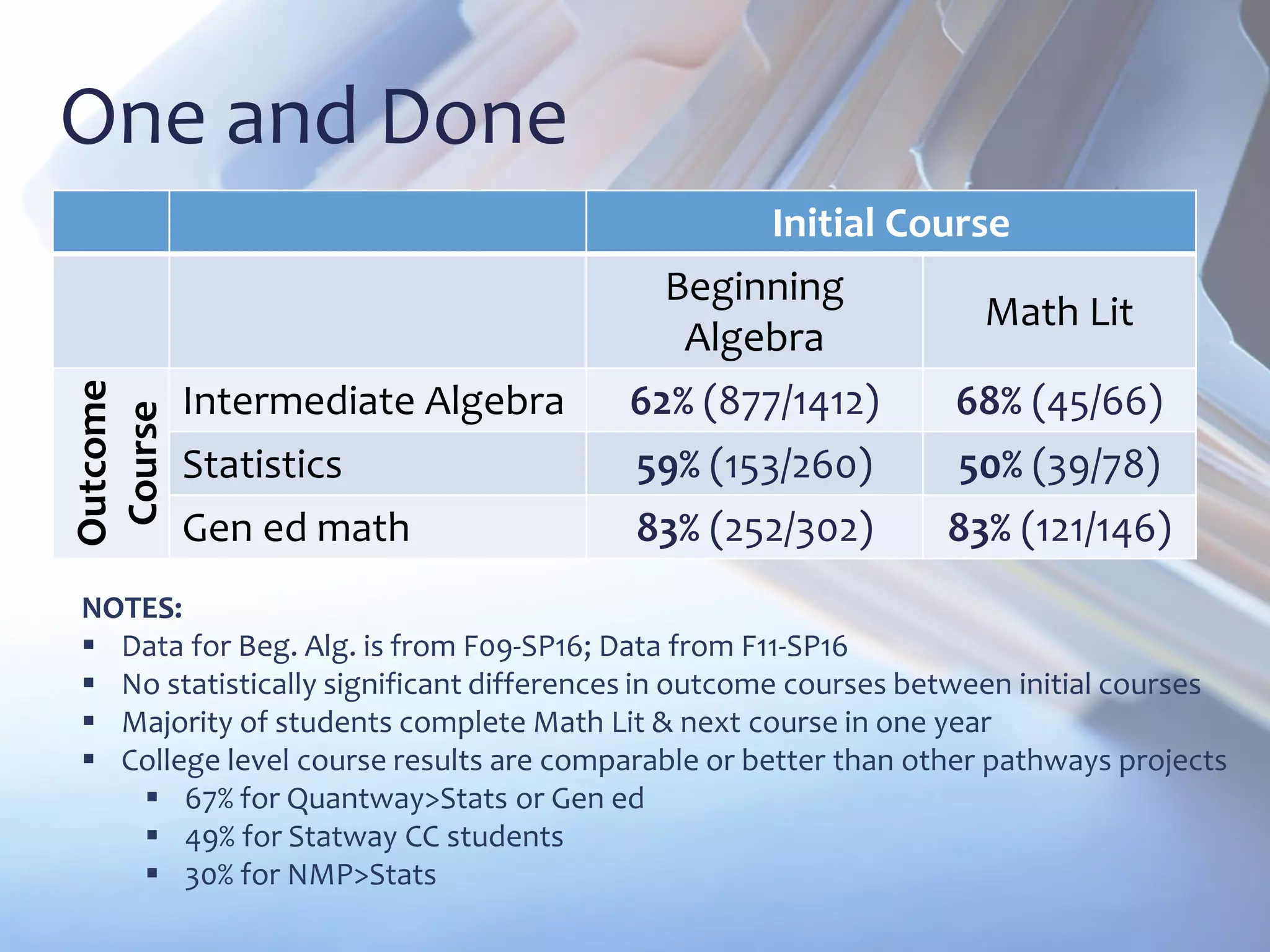
One and Done
NOTES:
 Data for Beg. Alg. is from F09-SP16; Data from F11-SP16
 No statistically significant differences in outcome courses between initial courses
 Majority of students complete Math Lit & next course in one year
 College level course results are comparable or better than other pathways projects
 67% for Quantway>Stats or Gen ed
 49% for Statway CC students
 30% for NMP>Stats
Initial Course
Beginning
Algebra
Math Lit
Outcome
Course
Intermediate Algebra 62% (877/1412) 68% (45/66)
Statistics 59% (153/260) 50% (39/78)
Gen ed math 83% (252/302) 83% (121/146)
Lessons Learned
from
Teaching Pathways
for 5 Years
Experience is simply the name we give
our mistakes.
-Oscar Wilde
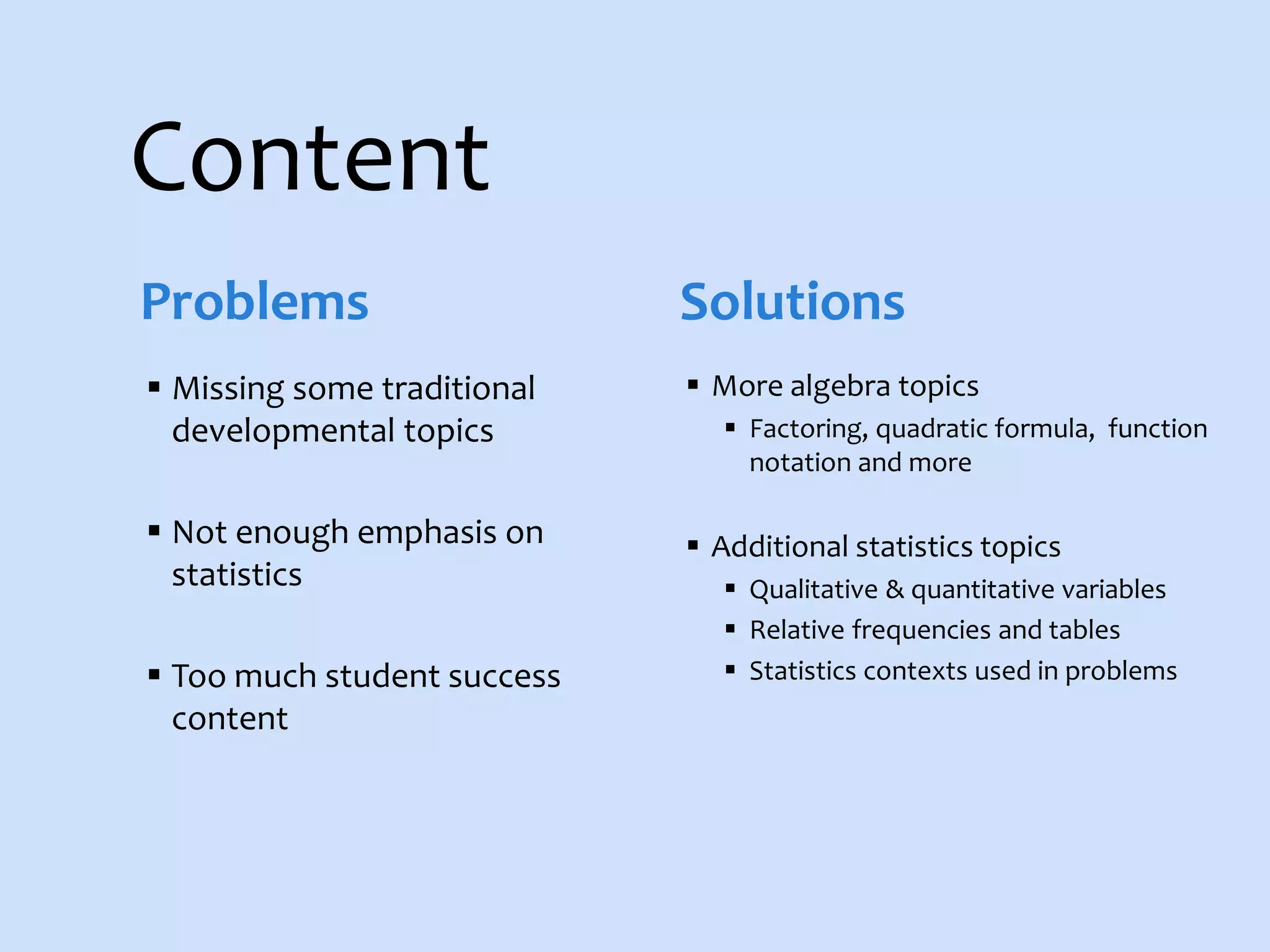
Content
Problems Solutions
 Missing some traditional
developmental topics
 Not enough emphasis on
statistics
 Too much student success
content
 More algebra topics
 Factoring, quadratic formula, function
notation and more
 Additional statistics topics
 Qualitative & quantitative variables
 Relative frequencies and tables
 Statistics contexts used in problems
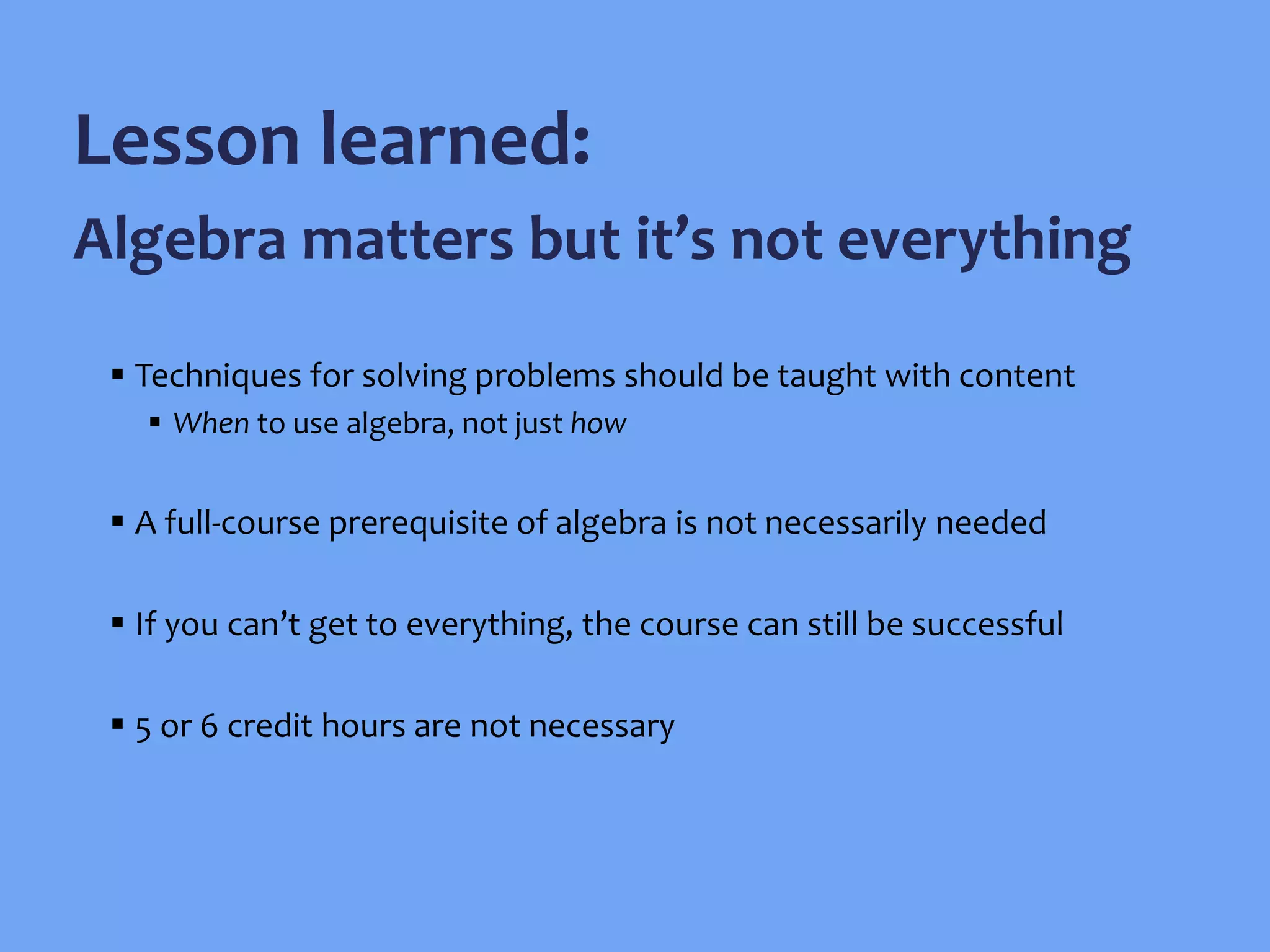
 Techniques for solving problems should be taught with content
 When to use algebra, not just how
 A full-course prerequisite of algebra is not necessarily needed
 If you can’t get to everything, the course can still be successful
 5 or 6 credit hours are not necessary
Lesson learned:
Algebra matters but it’s not everything
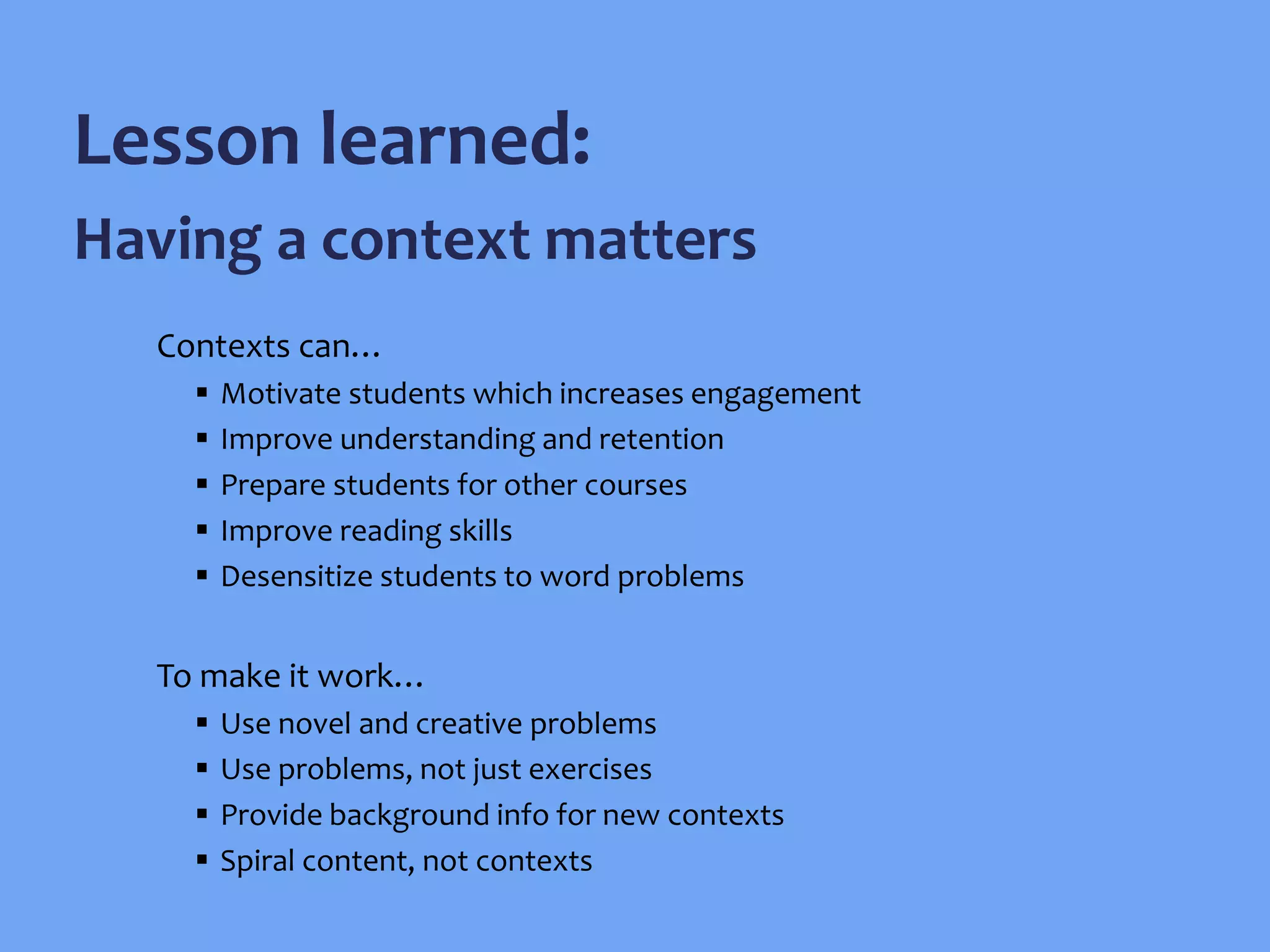
Contexts can…
 Motivate students which increases engagement
 Improve understanding and retention
 Prepare students for other courses
 Improve reading skills
 Desensitize students to word problems
To make it work…
 Use novel and creative problems
 Use problems, not just exercises
 Provide background info for new contexts
 Spiral content, not contexts
Lesson learned:
Having a context matters
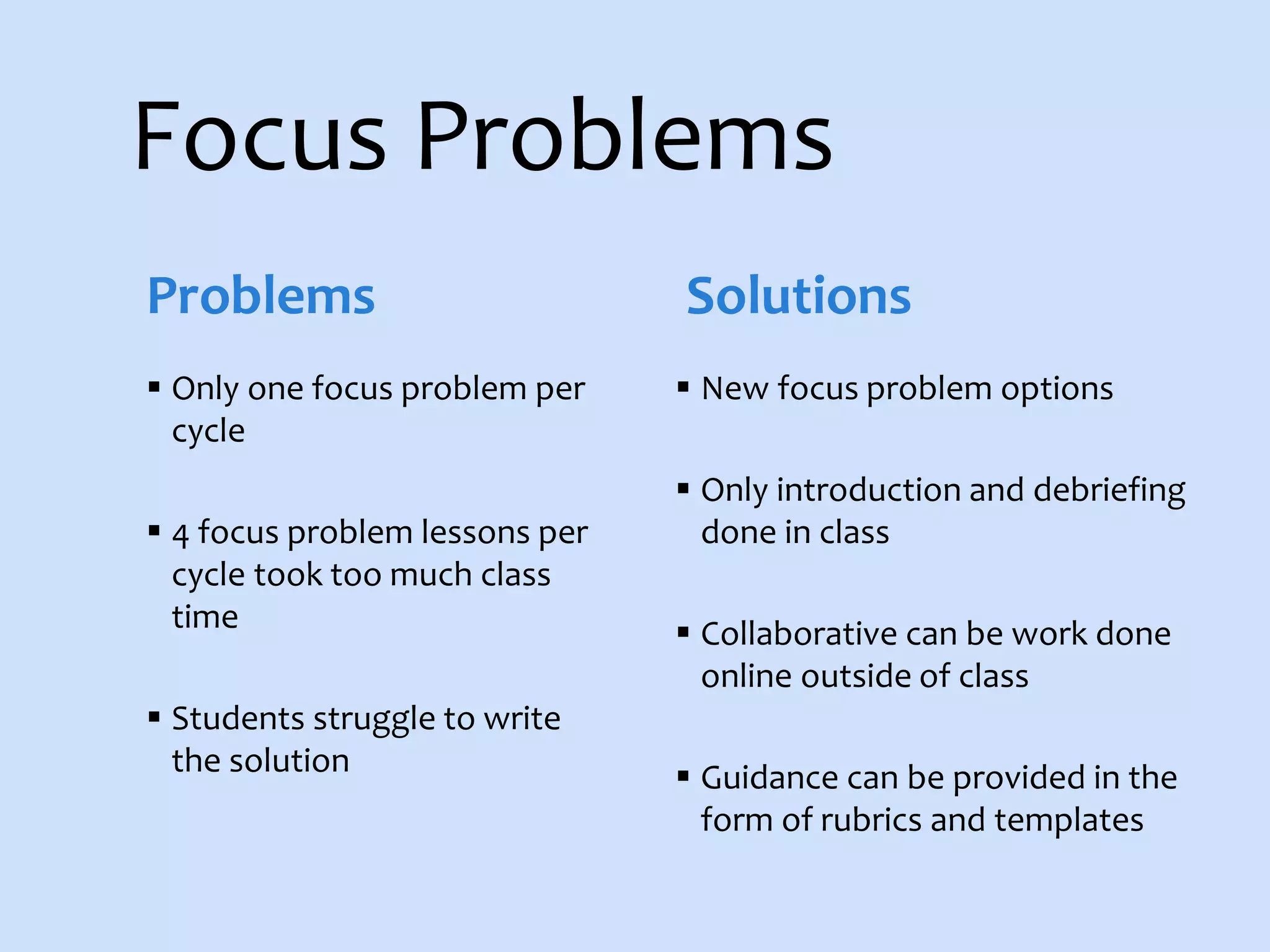
Focus Problems
 Only one focus problem per
cycle
 4 focus problem lessons per
cycle took too much class
time
 Students struggle to write
the solution
 New focus problem options
 Only introduction and debriefing
done in class
 Collaborative can be work done
online outside of class
 Guidance can be provided in the
form of rubrics and templates
Problems Solutions
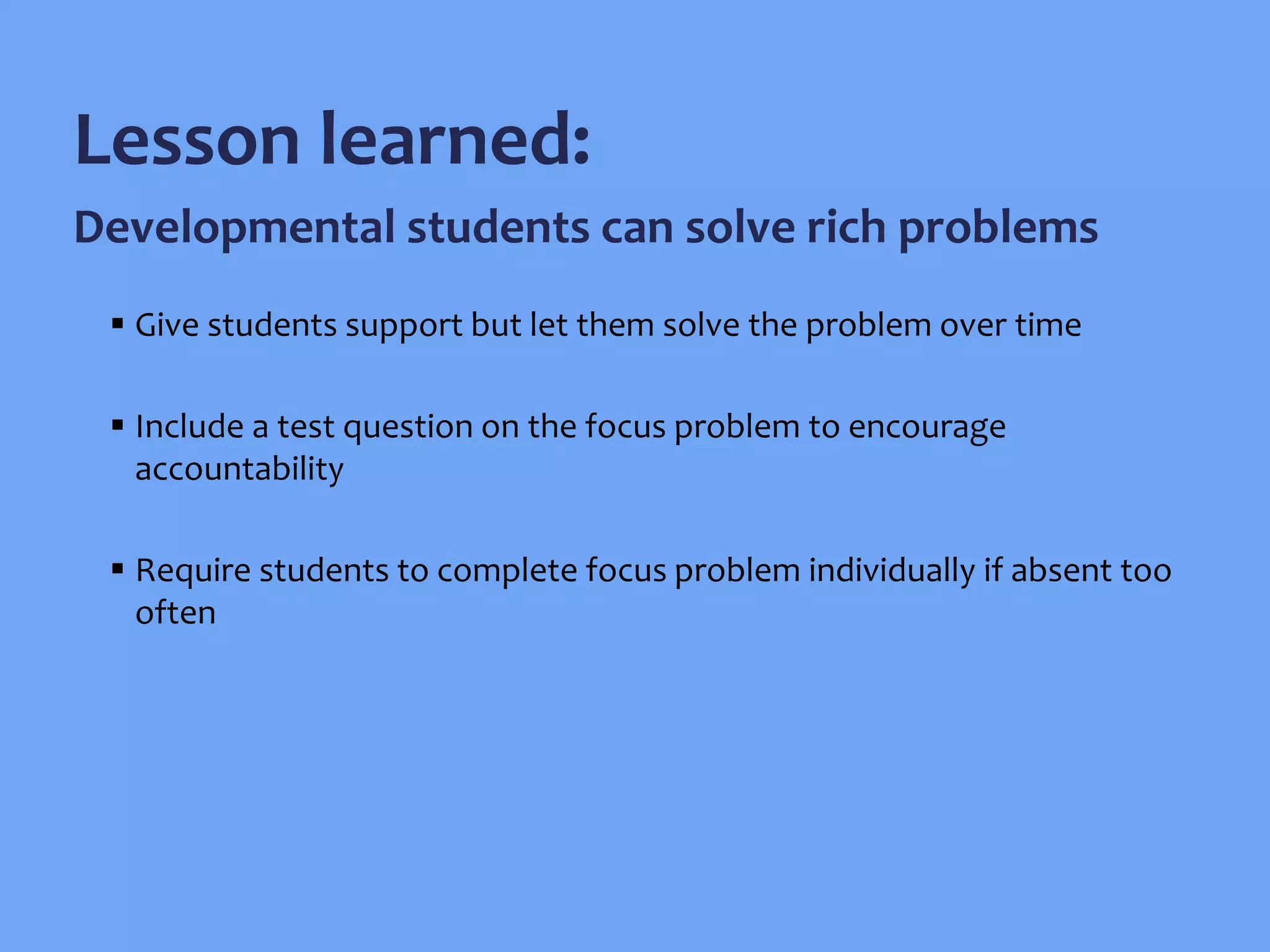
 Give students support but let them solve the problem over time
 Include a test question on the focus problem to encourage
accountability
 Require students to complete focus problem individually if absent too
often
Lesson learned:
Developmental students can solve rich problems
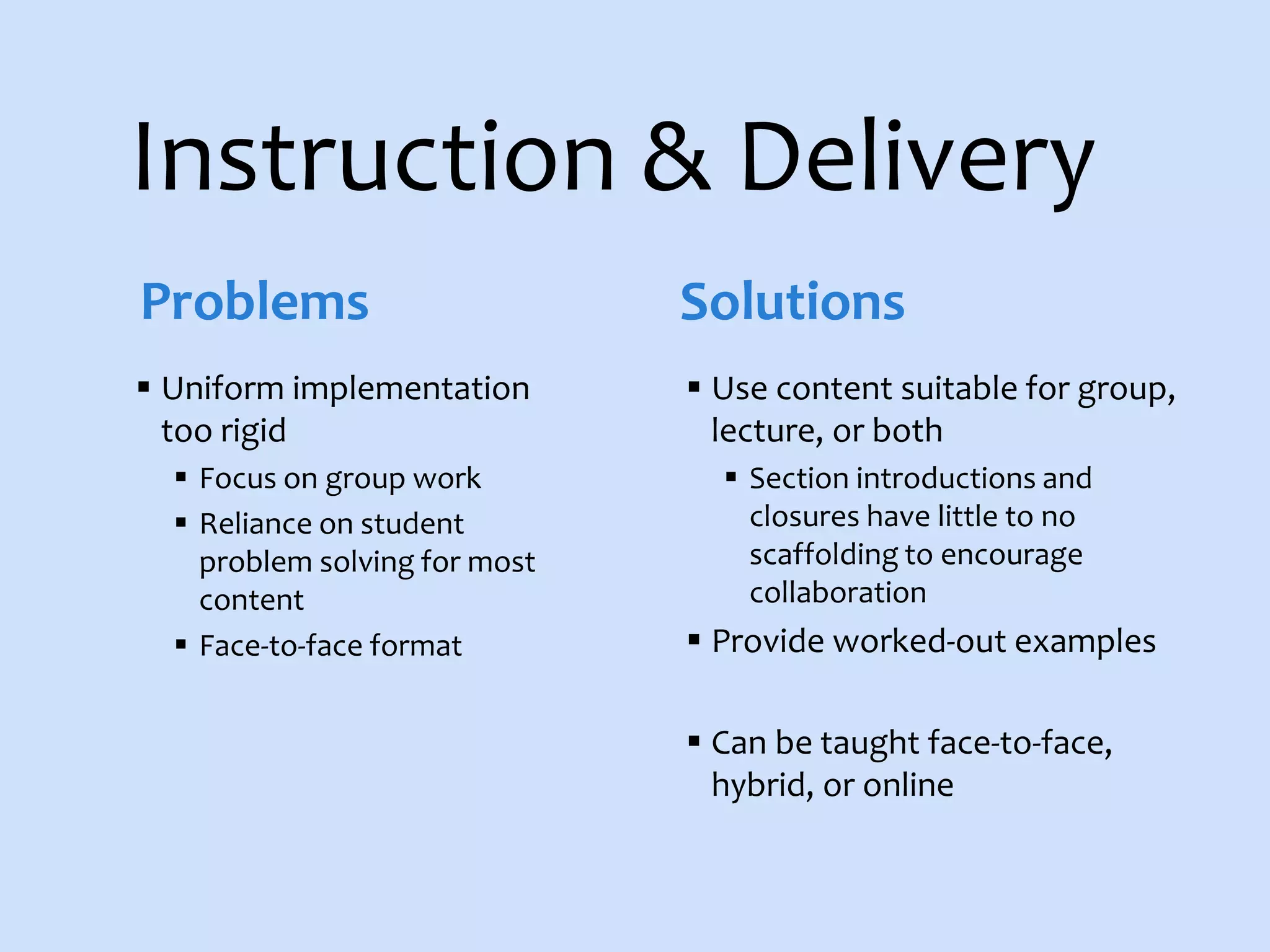
Instruction & Delivery
 Uniform implementation
too rigid
 Focus on group work
 Reliance on student
problem solving for most
content
 Face-to-face format
 Use content suitable for group,
lecture, or both
 Section introductions and
closures have little to no
scaffolding to encourage
collaboration
 Provide worked-out examples
 Can be taught face-to-face,
hybrid, or online
Problems Solutions
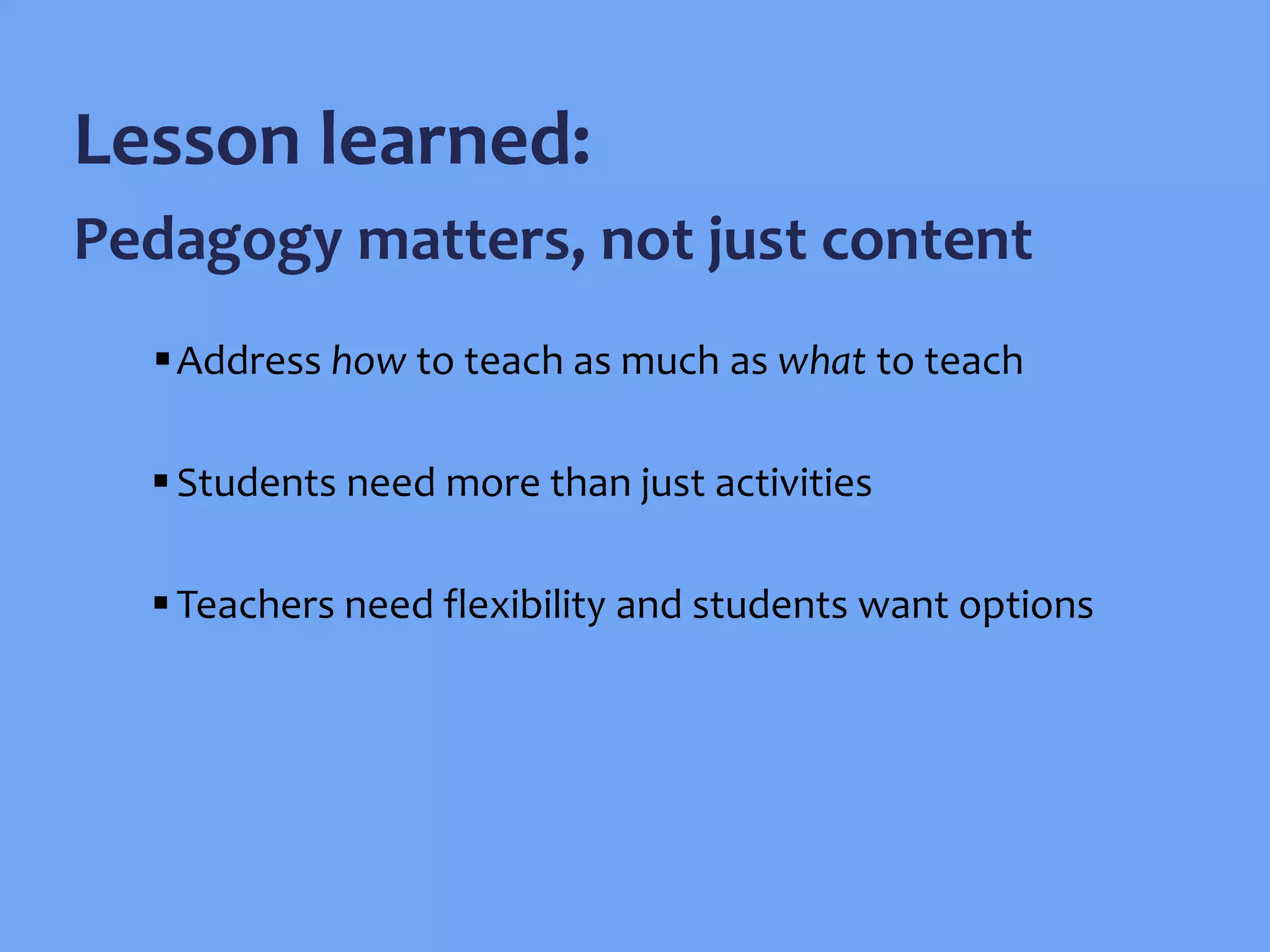
Address how to teach as much as what to teach
Students need more than just activities
Teachers need flexibility and students want options
Lesson learned:
Pedagogy matters, not just content
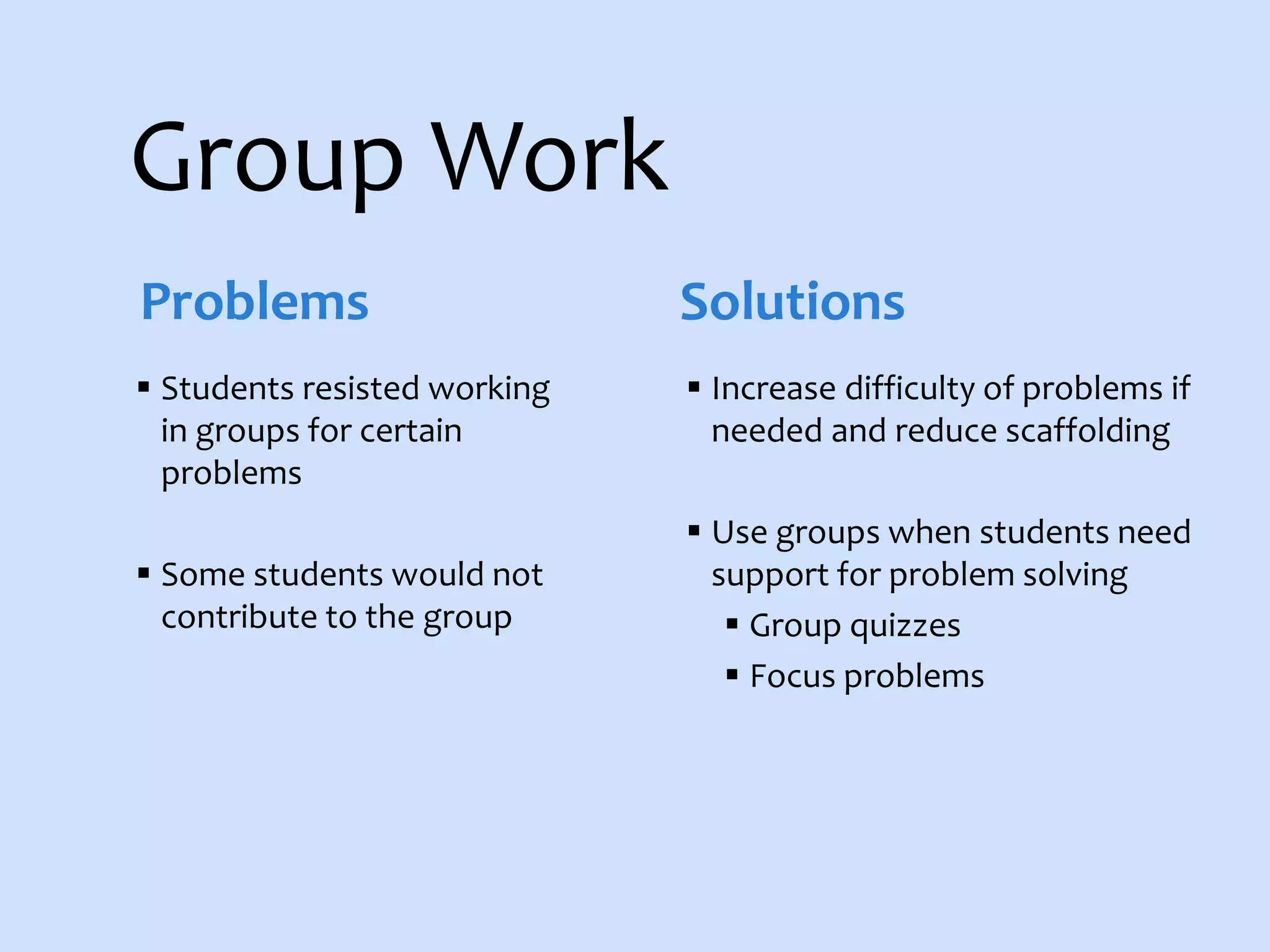
Group Work
 Students resisted working
in groups for certain
problems
 Some students would not
contribute to the group
 Increase difficulty of problems if
needed and reduce scaffolding
 Use groups when students need
support for problem solving
 Group quizzes
 Focus problems
Problems Solutions
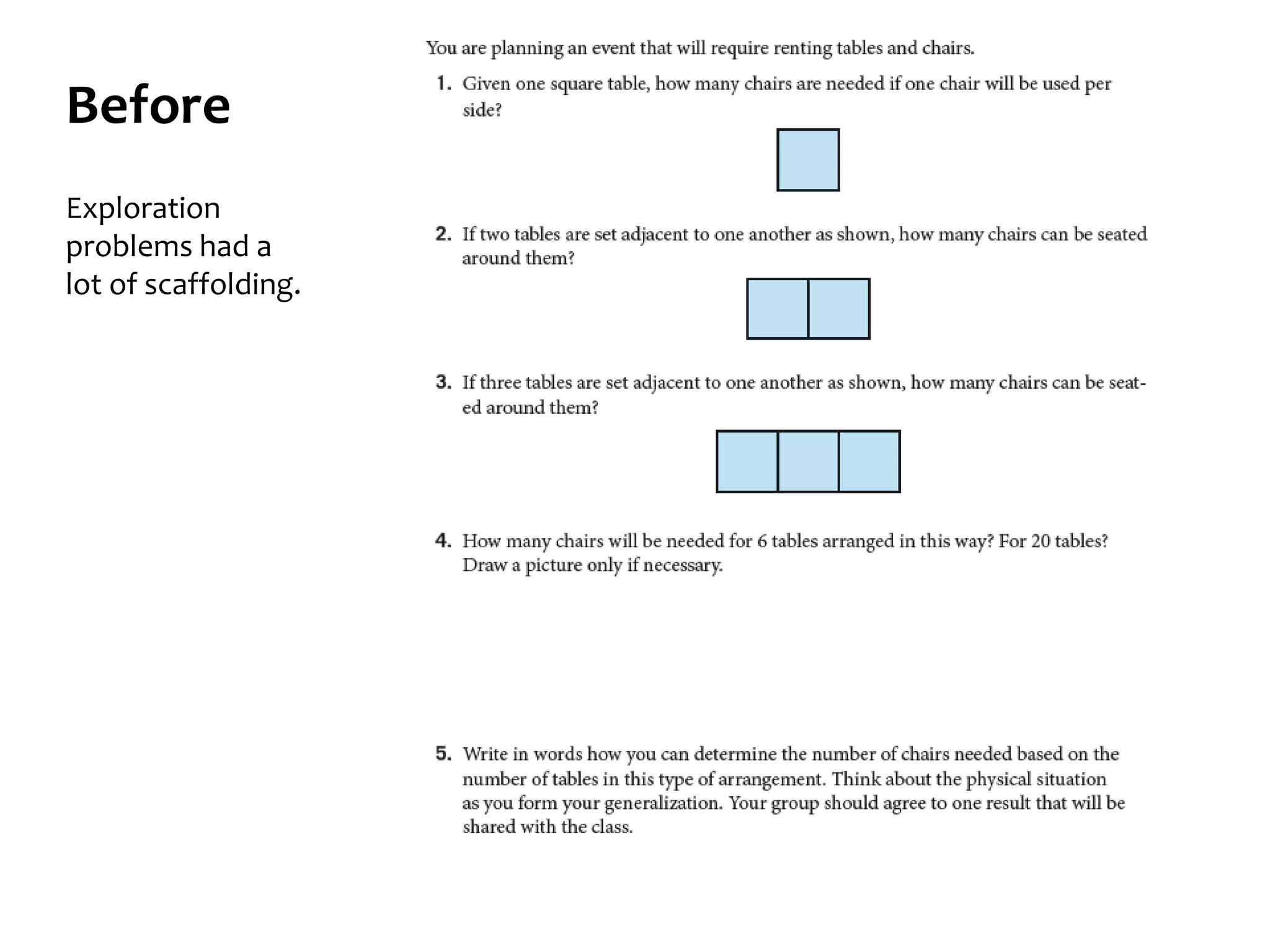
Before
Exploration
problems had a
lot of scaffolding.
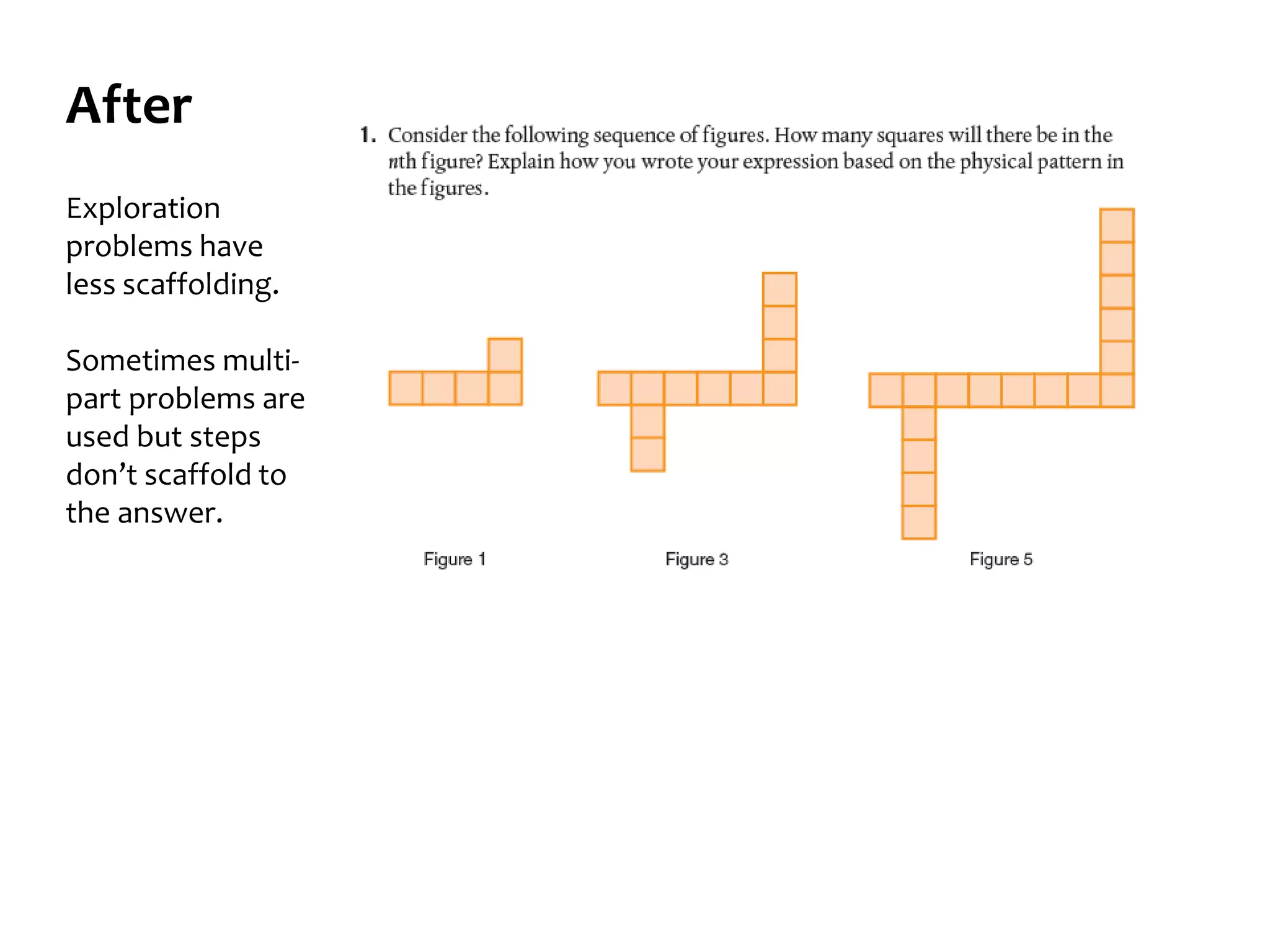
After
Exploration
problems have
less scaffolding.
Sometimes multi-
part problems are
used but steps
don’t scaffold to
the answer.
Hold students accountable
 Include a participation and/or attendance grade
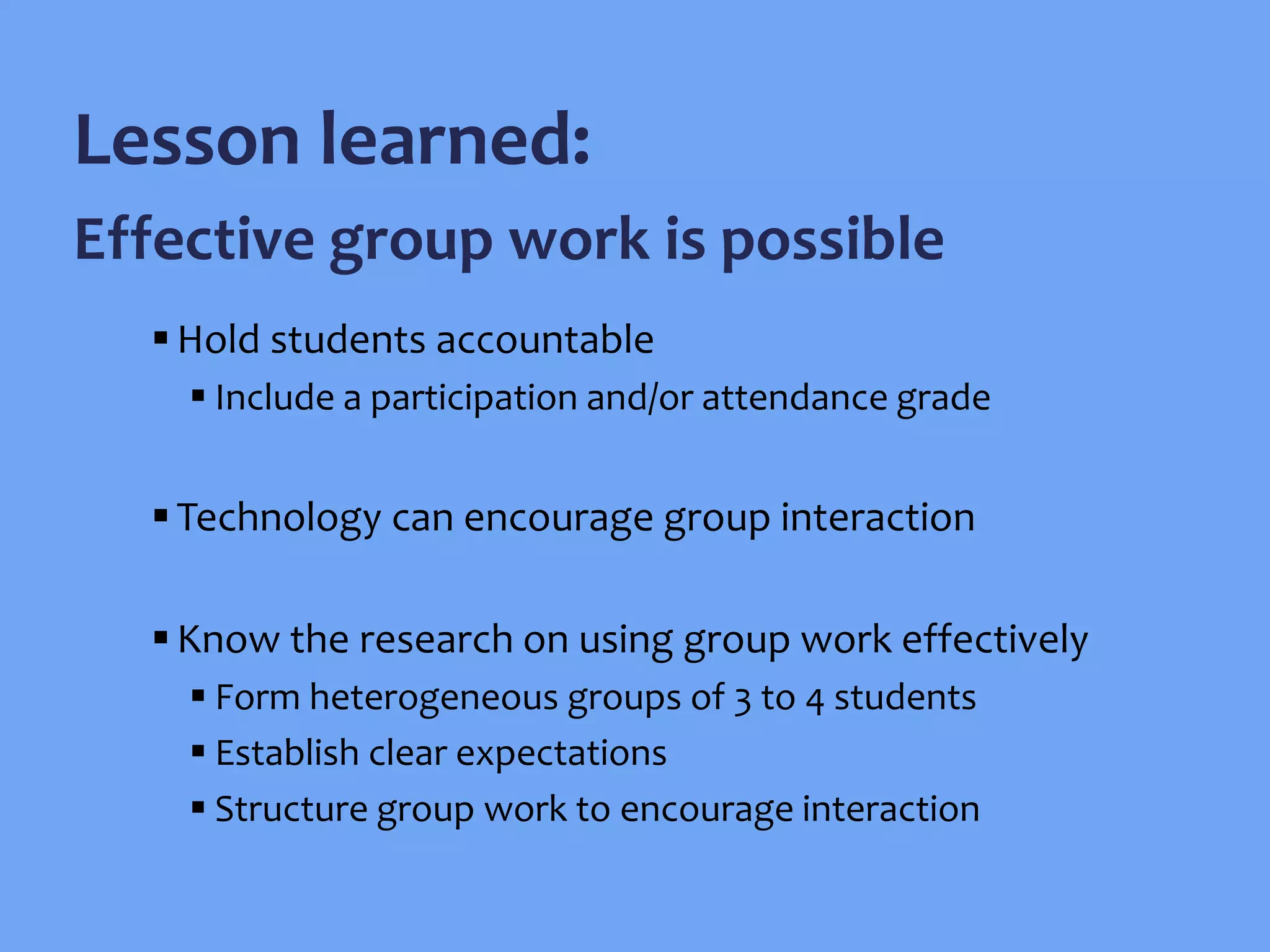
Technology can encourage group interaction
Know the research on using group work effectively
 Form heterogeneous groups of 3 to 4 students
 Establish clear expectations
 Structure group work to encourage interaction
Lesson learned:
Effective group work is possible
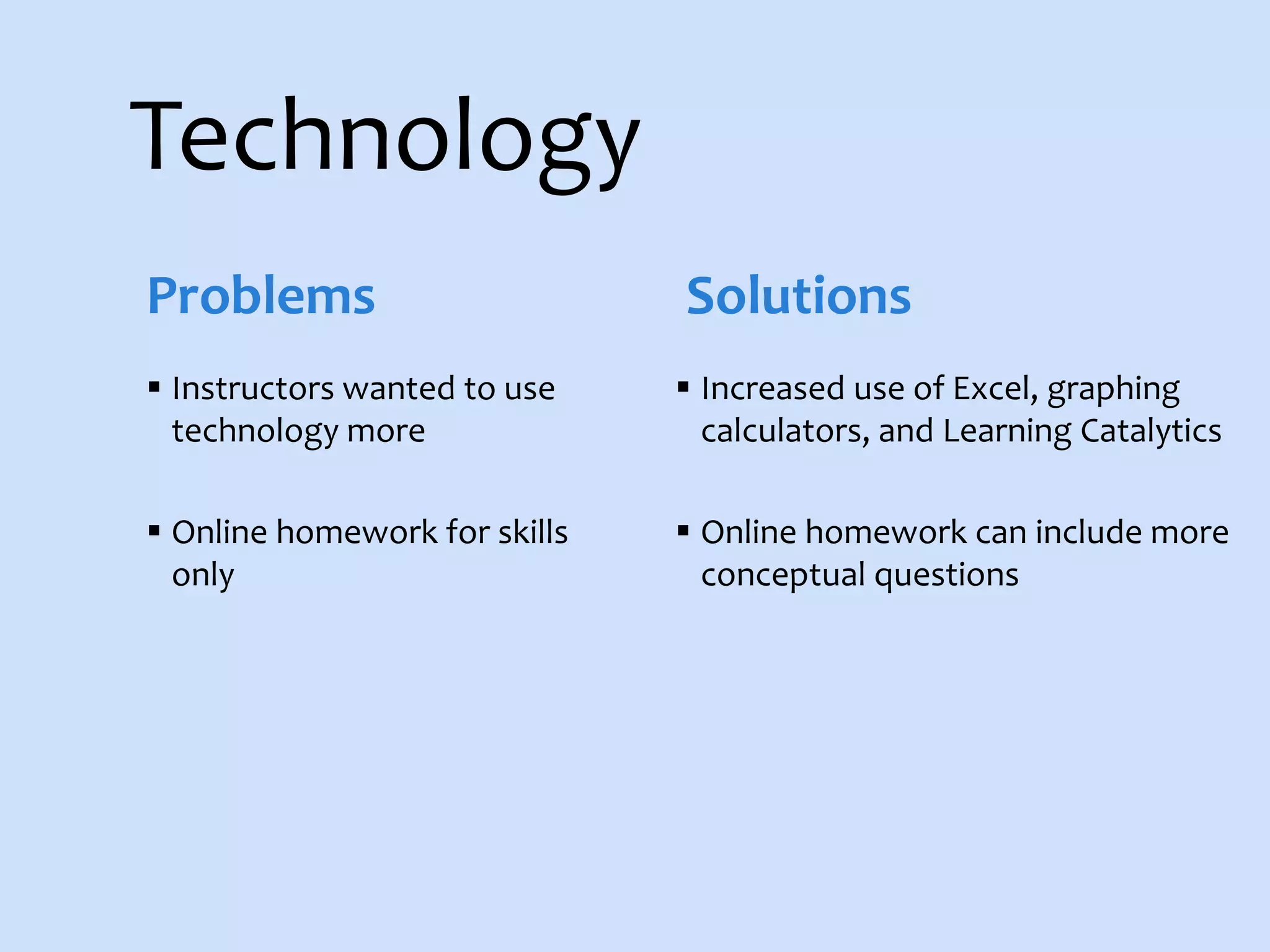
Technology
 Instructors wanted to use
technology more
 Online homework for skills
only
 Increased use of Excel, graphing
calculators, and Learning Catalytics
 Online homework can include more
conceptual questions
Problems Solutions
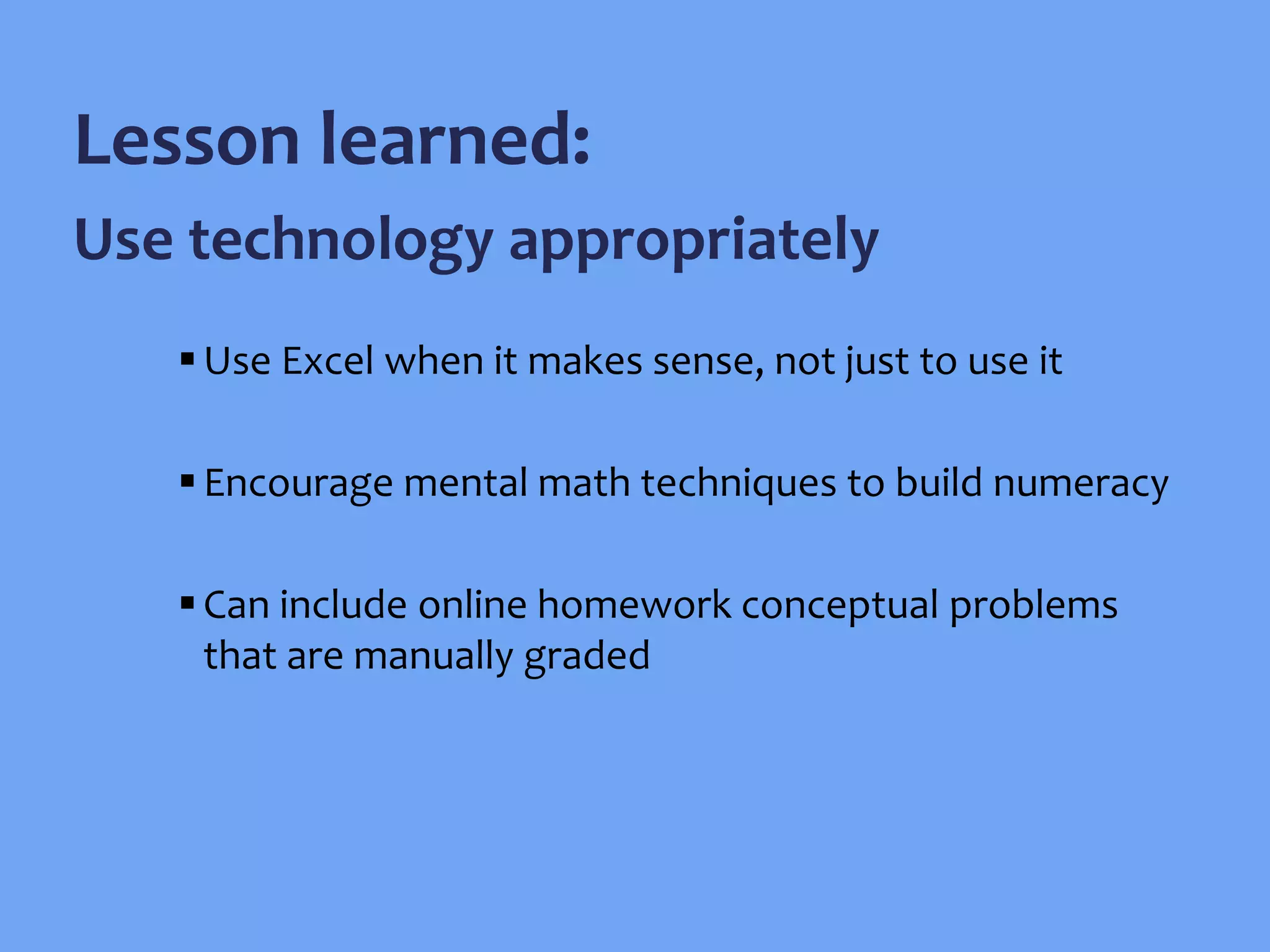
Use Excel when it makes sense, not just to use it
Encourage mental math techniques to build numeracy
Can include online homework conceptual problems
that are manually graded
Lesson learned:
Use technology appropriately
Lesson learned:
Vary assessments
Traditional quizzes and tests are helpful and useful
Unusual grading schemes are unnecessary
Back up your philosophy with your grading
Must grade homework to get students to do it
 Advising, advertising, course number, number of credit hours, and
number of sections matter
 Choose teachers who buy in to teach the course
 Teachers can sabotage it if they don't buy in
 Plan for data collection
 May need to give in on some traditional topics to get pilots going
 Lots of training isn't needed
 Faculty need to understand philosophy and new approach and be
provided support as they work
 Must commit to the approach in the course – not just here and there
Lesson learned:
Plan ahead for implementation
Final thoughts on pathways
 Impacted other courses
 Re-energized teaching
 See growth in all students no matter their final grade
 Developmental students can do more than one might think
kathleenalmy@gmail.com
heather.foes@gmail.com
http://almydoesmath.blogspot.com
NEW: Math Lit instructor forum
For More
Information

Math Lit and Pathways 5 Years Later AMATYC 2016

  • 1.
    Math Lit &Pathways 5 Years Later Kathleen Almy & Heather Foes Rock Valley College
  • 2.
     Pathways overview National update  Data  Lessons learned
  • 3.
    Pathway Developmental math: acourse other than traditional algebra that is designed to prepare students for non-STEM college mathematics Examples include Math Lit, Statway, Path to Stats, Quantway, and the New Mathways Project
  • 4.
    Pathways: Ahead oftheir time  In 2009, we didn't know developmental math landscape was going to be turned upside down in coming years.  Pathways are a sound way to accelerate developmental education while actually doing something different.  Pathways complement co-requisites.  Pathways for lower students  Co-requisites for bubble students  Pathways are less expensive unlike emporiums redesigns.  See CCSSE report
  • 5.
    Pathways: They work Students are getting through developmental math faster  Students are better prepared for college-level courses  Persistence  Learn how to learn  Increased student motivation, hope, and confidence
  • 6.
    Pathways Nationally 5 yearsago  Pockets of use  Intermediate algebra was the gateway course in most states  Uniform implementation Now  Courses being developed or in use in almost all states  Updates for CA, CO, FL, MT, NM  Policy changes  AMATYC’s intermediate algebra position statement  States change dev math policy (e.g., IL, CA, CO, FL)  Course pedagogy is varied  Use of group work varies  All major publishers have texts
  • 7.
    Outcomes: Pass rates Rock Valley College Math Lit: 59% (351/596)  Results are comparable to other pathways projects  Quantway 1: 56%  New Mathways Project Foundations: 65% NOTES:  Data for Math Lit is from F11-SP16  Math Lit in IL is 6 credit hours compared to 4 credit hours nationally
  • 8.
    One and Done NOTES: Data for Beg. Alg. is from F09-SP16; Data from F11-SP16  No statistically significant differences in outcome courses between initial courses  Majority of students complete Math Lit & next course in one year  College level course results are comparable or better than other pathways projects  67% for Quantway>Stats or Gen ed  49% for Statway CC students  30% for NMP>Stats Initial Course Beginning Algebra Math Lit Outcome Course Intermediate Algebra 62% (877/1412) 68% (45/66) Statistics 59% (153/260) 50% (39/78) Gen ed math 83% (252/302) 83% (121/146)
  • 9.
  • 10.
    Experience is simplythe name we give our mistakes. -Oscar Wilde
  • 11.
    Content Problems Solutions  Missingsome traditional developmental topics  Not enough emphasis on statistics  Too much student success content  More algebra topics  Factoring, quadratic formula, function notation and more  Additional statistics topics  Qualitative & quantitative variables  Relative frequencies and tables  Statistics contexts used in problems
  • 12.
     Techniques forsolving problems should be taught with content  When to use algebra, not just how  A full-course prerequisite of algebra is not necessarily needed  If you can’t get to everything, the course can still be successful  5 or 6 credit hours are not necessary Lesson learned: Algebra matters but it’s not everything
  • 13.
    Contexts can…  Motivatestudents which increases engagement  Improve understanding and retention  Prepare students for other courses  Improve reading skills  Desensitize students to word problems To make it work…  Use novel and creative problems  Use problems, not just exercises  Provide background info for new contexts  Spiral content, not contexts Lesson learned: Having a context matters
  • 14.
    Focus Problems  Onlyone focus problem per cycle  4 focus problem lessons per cycle took too much class time  Students struggle to write the solution  New focus problem options  Only introduction and debriefing done in class  Collaborative can be work done online outside of class  Guidance can be provided in the form of rubrics and templates Problems Solutions
  • 15.
     Give studentssupport but let them solve the problem over time  Include a test question on the focus problem to encourage accountability  Require students to complete focus problem individually if absent too often Lesson learned: Developmental students can solve rich problems
  • 16.
    Instruction & Delivery Uniform implementation too rigid  Focus on group work  Reliance on student problem solving for most content  Face-to-face format  Use content suitable for group, lecture, or both  Section introductions and closures have little to no scaffolding to encourage collaboration  Provide worked-out examples  Can be taught face-to-face, hybrid, or online Problems Solutions
  • 17.
    Address how toteach as much as what to teach Students need more than just activities Teachers need flexibility and students want options Lesson learned: Pedagogy matters, not just content
  • 18.
    Group Work  Studentsresisted working in groups for certain problems  Some students would not contribute to the group  Increase difficulty of problems if needed and reduce scaffolding  Use groups when students need support for problem solving  Group quizzes  Focus problems Problems Solutions
  • 19.
  • 20.
    After Exploration problems have less scaffolding. Sometimesmulti- part problems are used but steps don’t scaffold to the answer.
  • 21.
    Hold students accountable Include a participation and/or attendance grade Technology can encourage group interaction Know the research on using group work effectively  Form heterogeneous groups of 3 to 4 students  Establish clear expectations  Structure group work to encourage interaction Lesson learned: Effective group work is possible
  • 22.
    Technology  Instructors wantedto use technology more  Online homework for skills only  Increased use of Excel, graphing calculators, and Learning Catalytics  Online homework can include more conceptual questions Problems Solutions
  • 23.
    Use Excel whenit makes sense, not just to use it Encourage mental math techniques to build numeracy Can include online homework conceptual problems that are manually graded Lesson learned: Use technology appropriately
  • 25.
    Lesson learned: Vary assessments Traditionalquizzes and tests are helpful and useful Unusual grading schemes are unnecessary Back up your philosophy with your grading Must grade homework to get students to do it
  • 26.
     Advising, advertising,course number, number of credit hours, and number of sections matter  Choose teachers who buy in to teach the course  Teachers can sabotage it if they don't buy in  Plan for data collection  May need to give in on some traditional topics to get pilots going  Lots of training isn't needed  Faculty need to understand philosophy and new approach and be provided support as they work  Must commit to the approach in the course – not just here and there Lesson learned: Plan ahead for implementation
  • 27.
    Final thoughts onpathways  Impacted other courses  Re-energized teaching  See growth in all students no matter their final grade  Developmental students can do more than one might think
  • 28.