Math Literacy
for College
Students
Kathleen Almy
Rock Valley College
 History
 Content
 Technology
 Course Development
Developmental
Pathways …
 include Math Literacy for College Students,
Quantway, Statway, and the New Mathways
Project.
 create alternative routes to or through college-level
math courses, especially non-STEM courses.
 look forward to college needs instead of backward
to high school deficiencies.
 emphasize critical thinking and problem solving.

 use authentic problems and contextualized
learning.
History
2009-10
Carnegie Foundation, UT Dana Center, & AMATYC’s New Life create pathways.
Different approaches are used regarding algebra and outcome courses.
2011-13
First pilots of pathways courses begin nationally, including RVC.
Interest in pathways grows at the national level.
2013-14
Policies change in several states regarding intermediate algebra.
Pathways begin to scale.
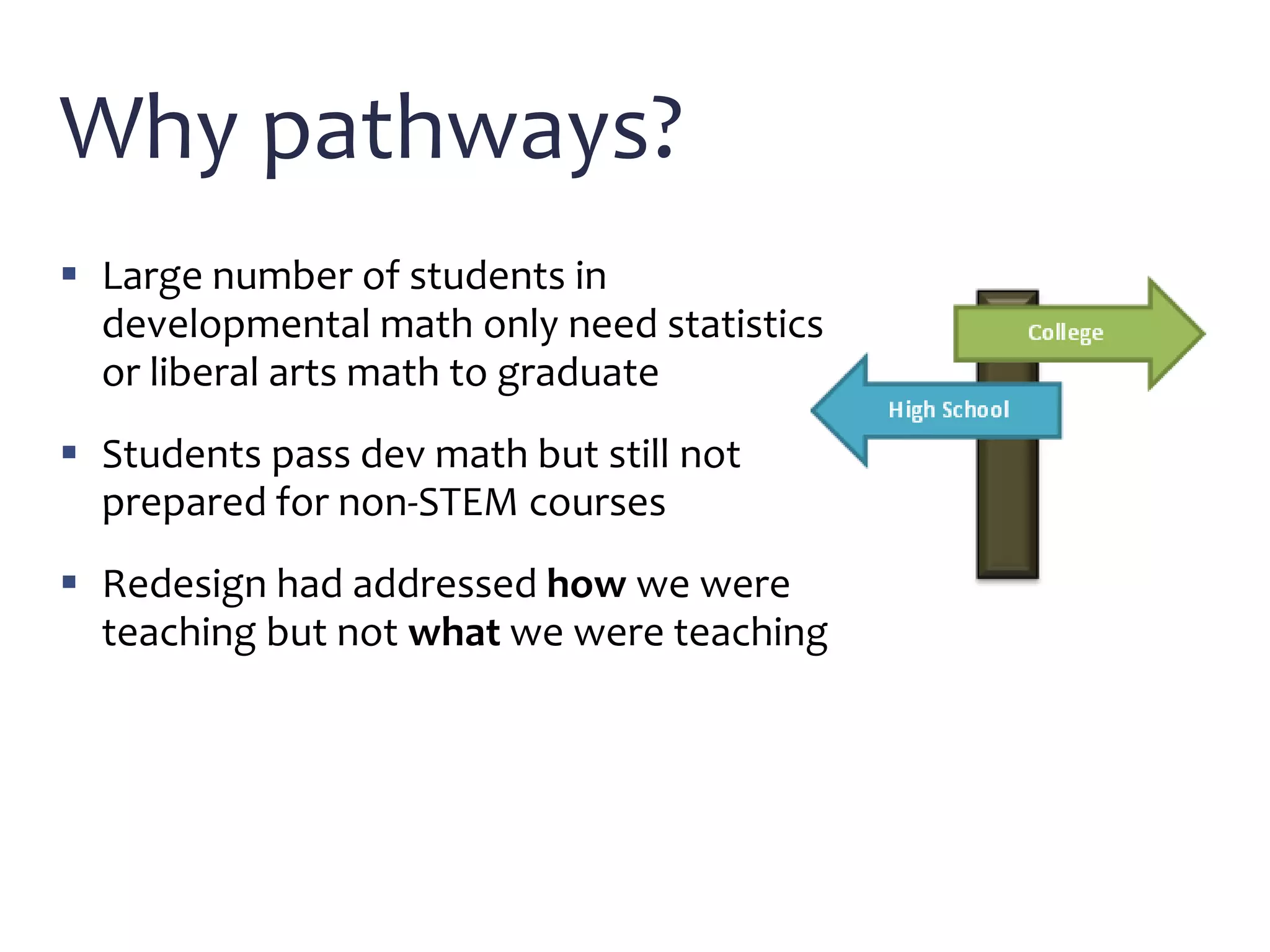
Why pathways?
 Large number of students in
developmental math only need statistics
or liberal arts math to graduate
 Students pass dev math but still not
prepared for non-STEM courses
 Redesign had addressed how we were
teaching but not what we were teaching
A New Pathways Option
In one semester (3 – 6 credits), Mathematical
Literacy for College Students gives a student at the
beginning algebra level the mathematical maturity
to be successful in statistics, liberal arts math, or
intermediate algebra.
Goals
Prepare students for
non-STEM courses
Update content
Balance instruction
Build college readiness
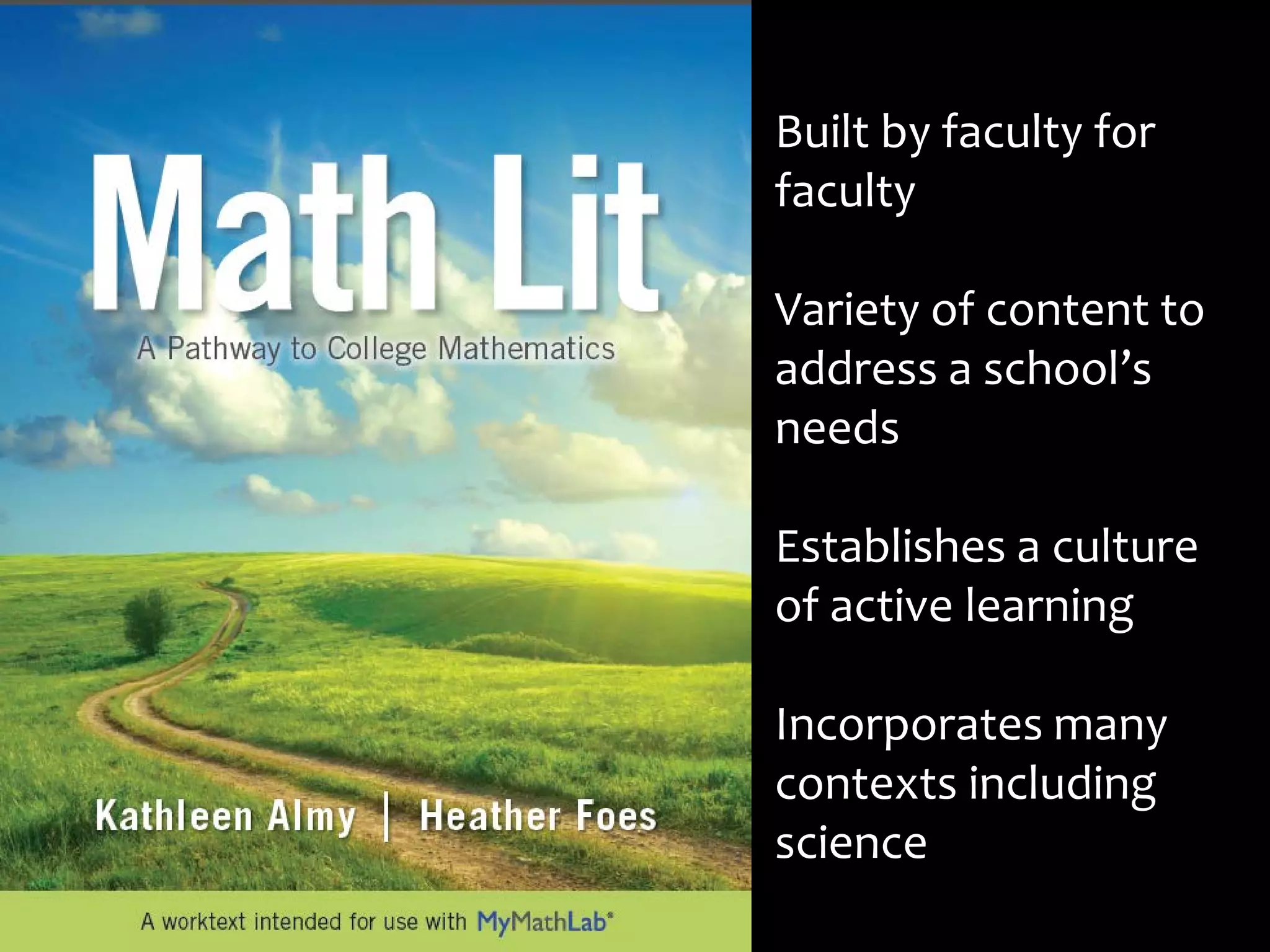
Built by faculty for
faculty
Variety of content to
address a school’s
needs
Establishes a culture
of active learning
Incorporates many
contexts including
science
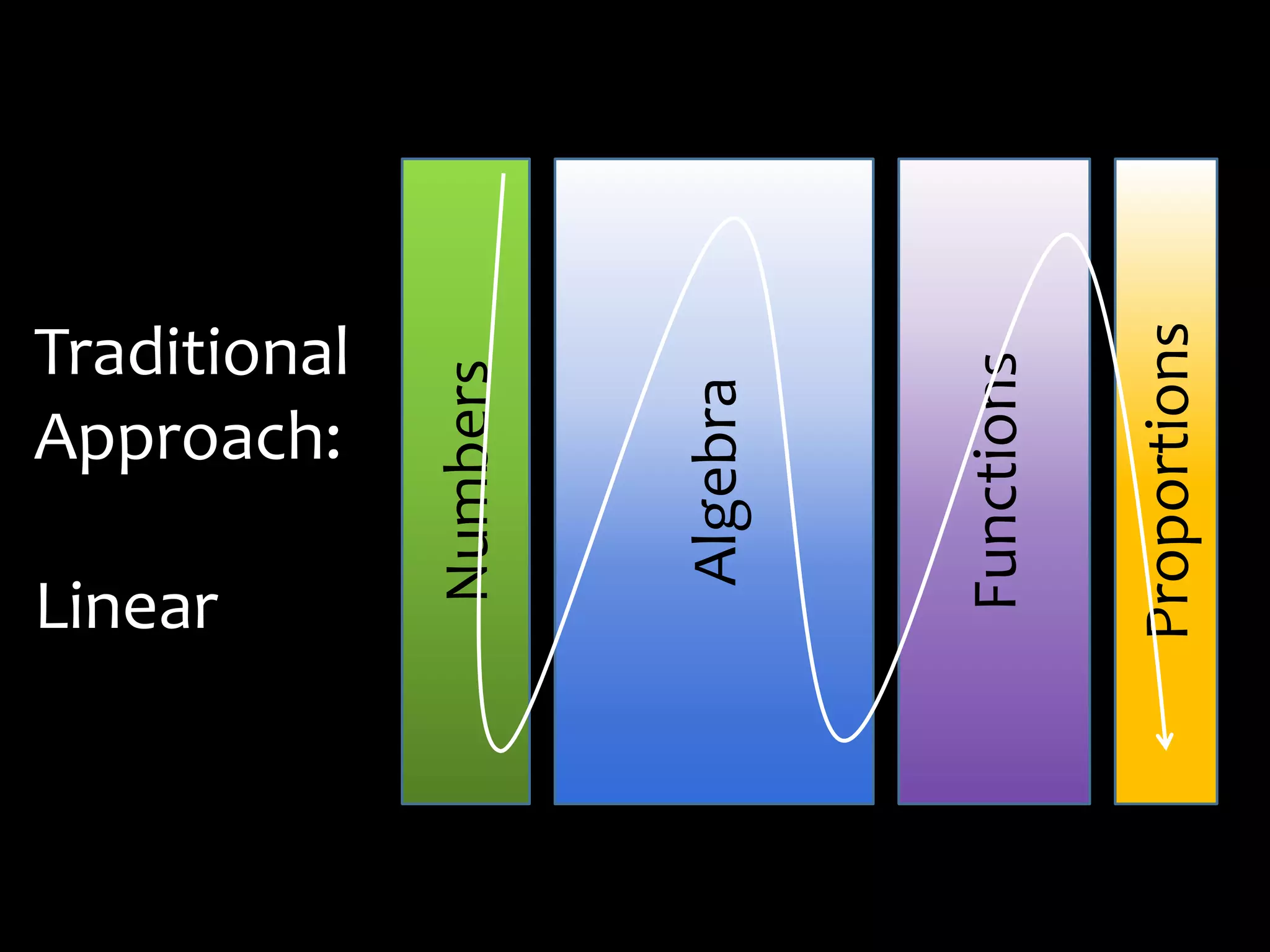
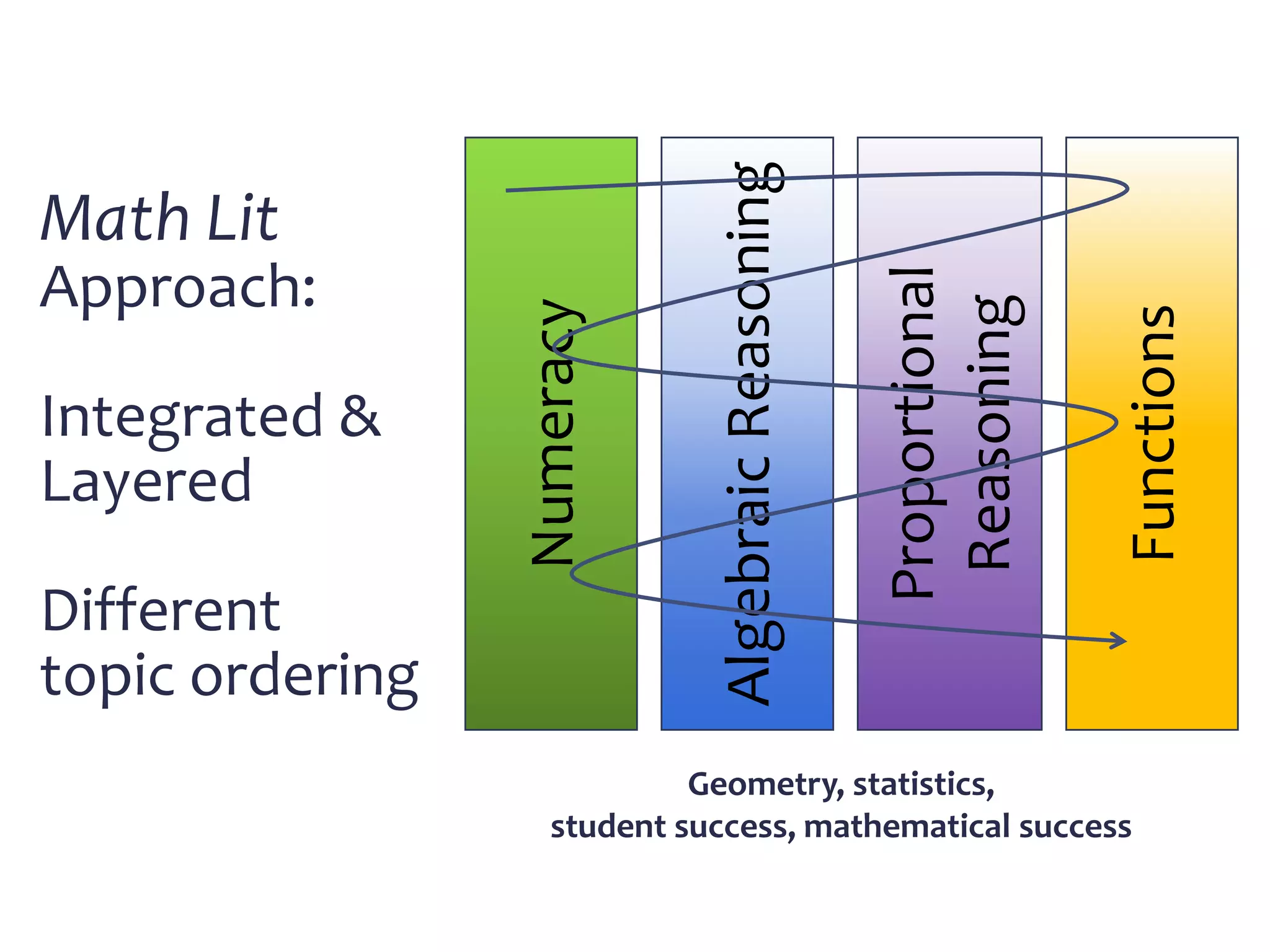
Traditional
Approach:
Linear
Numbers
Algebra
Functions
Proportions
Math Lit
Approach:
Integrated &
Layered
Different
topic ordering
Geometry, statistics,
student success, mathematical success
Numeracy
AlgebraicReasoning
Proportional
Reasoning
Functions
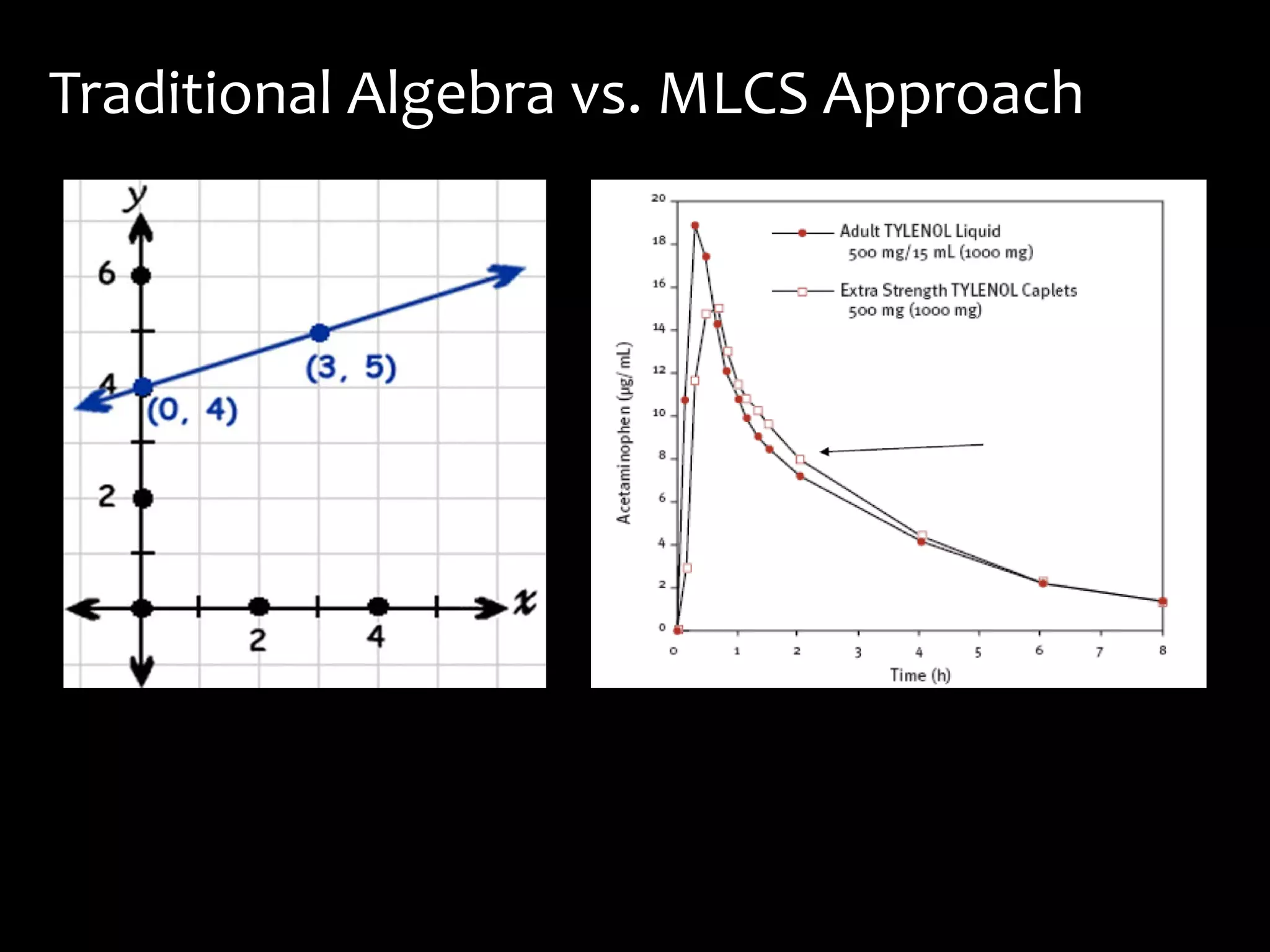
Traditional Algebra vs. MLCS Approach
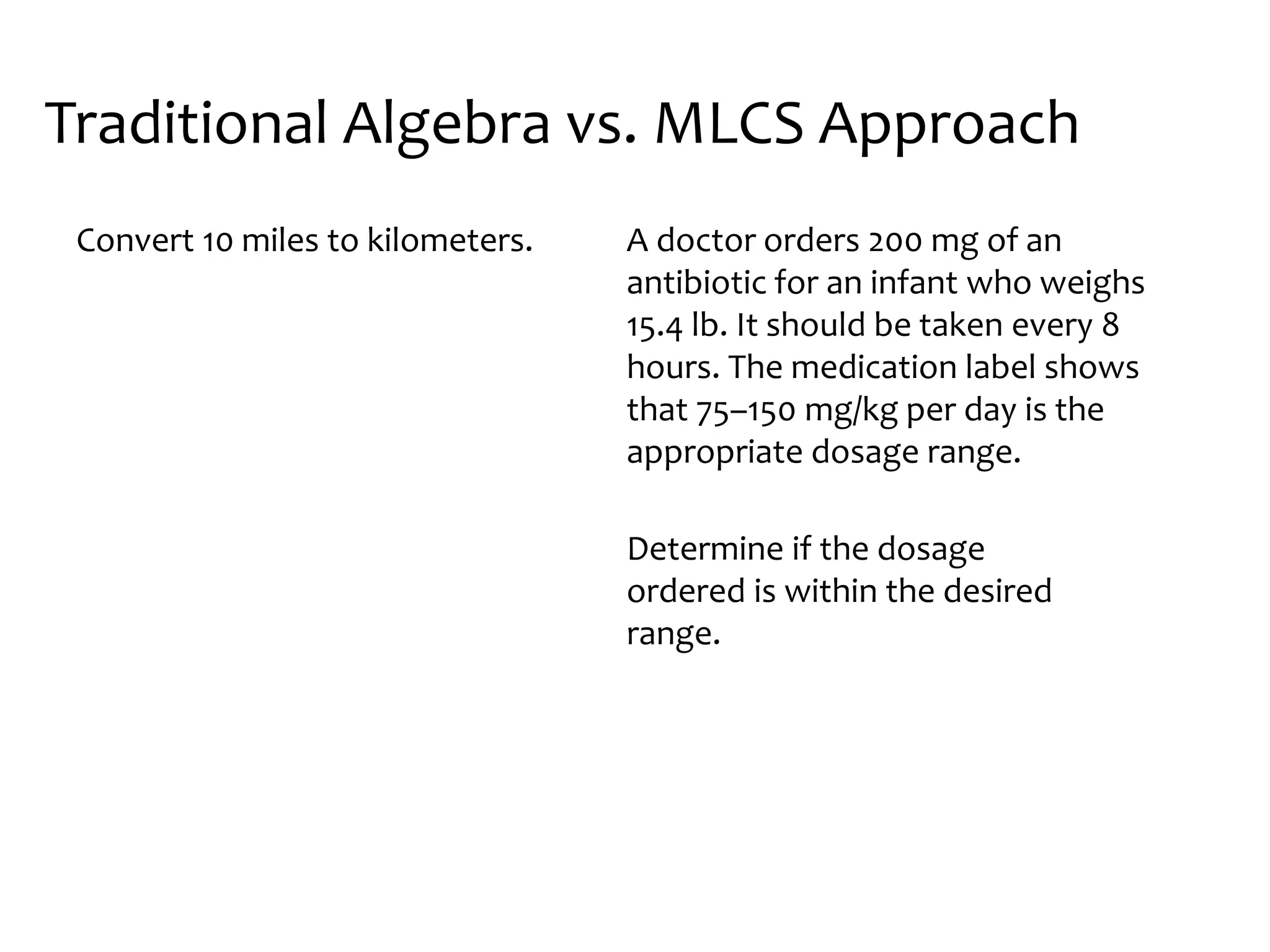
A doctor orders 200 mg of an
antibiotic for an infant who weighs
15.4 lb. It should be taken every 8
hours. The medication label shows
that 75–150 mg/kg per day is the
appropriate dosage range.
Determine if the dosage
ordered is within the desired
range.
Traditional Algebra vs. MLCS Approach
Convert 10 miles to kilometers.
It’s not just…
“Can you do it?”
It’s…
“Do you understand it well
enough to use it?”
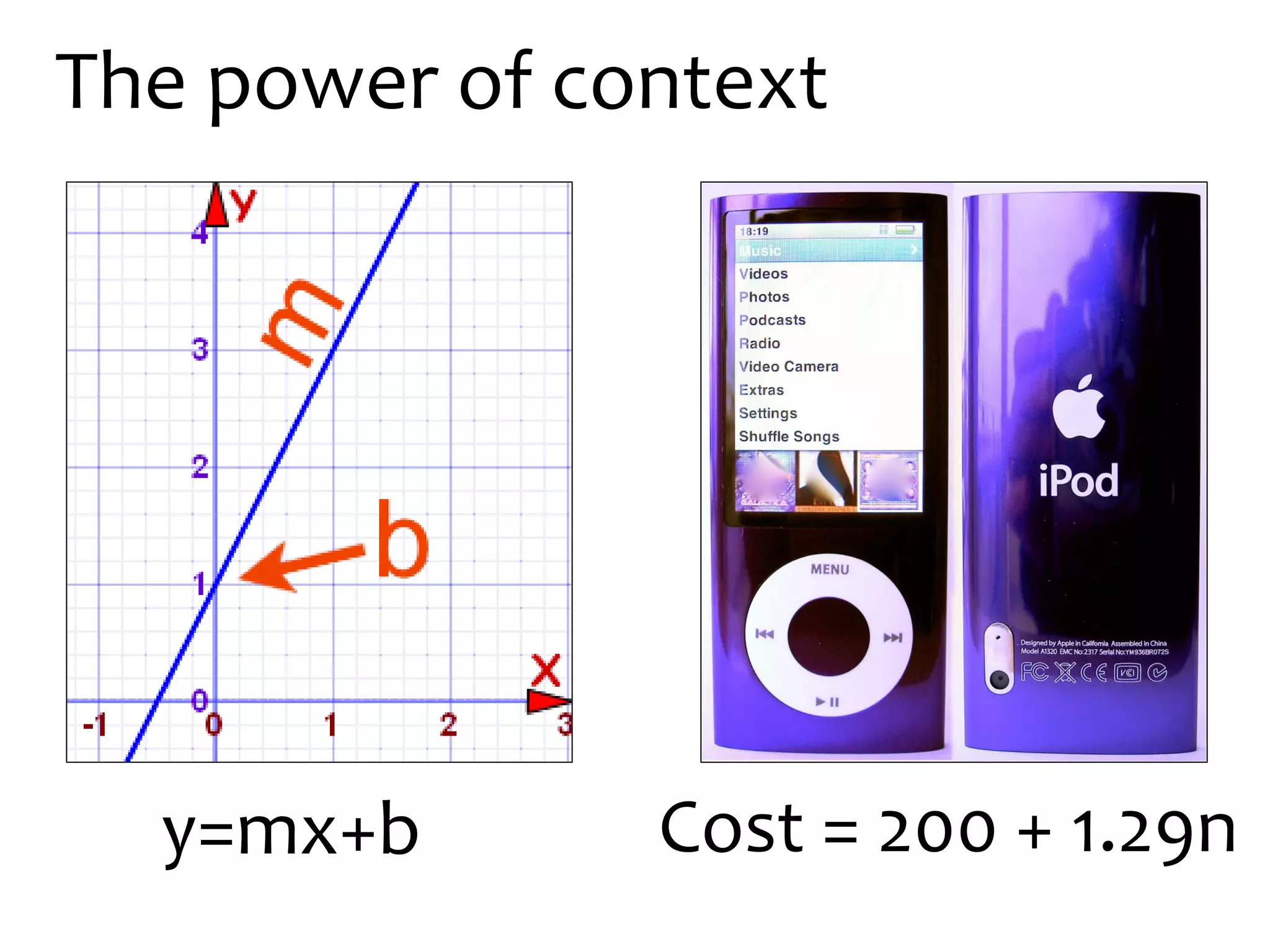
The power of context
Cost = 200 + 1.29ny=mx+b
Problems vs. Exercises
Problems require original approaches
and non-routine application and connection of skills.
A method is not necessarily clear at first glance.
Exercises require choosing and applying
an algorithm.
They develop a student’s ability to
perform skills.
Skills can be developed through problems
but the reverse is not always true.
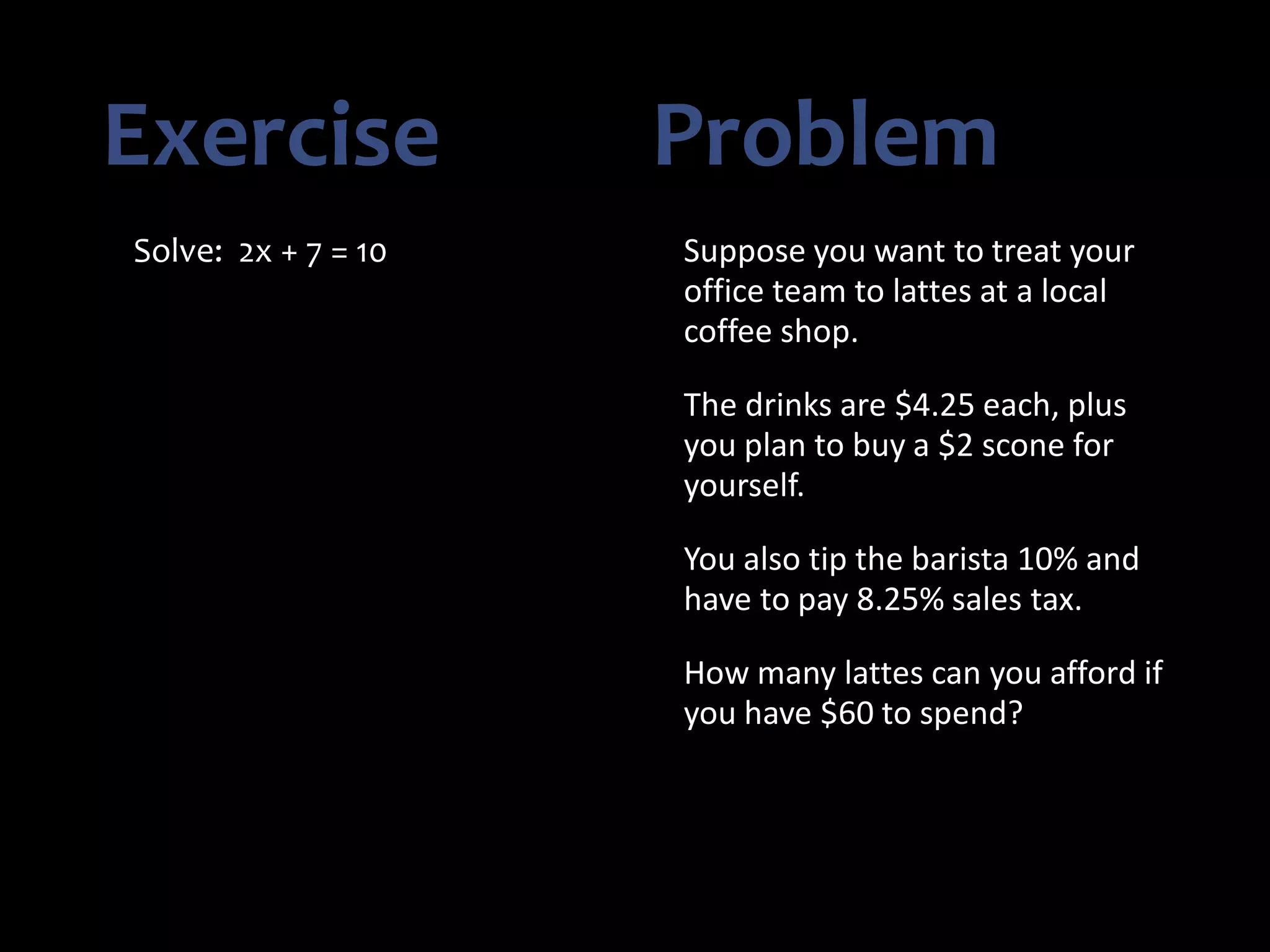
Exercise Problem
Solve: 2x + 7 = 10 Suppose you want to treat your
office team to lattes at a local
coffee shop.
The drinks are $4.25 each, plus
you plan to buy a $2 scone for
yourself.
You also tip the barista 10% and
have to pay 8.25% sales tax.
How many lattes can you afford if
you have $60 to spend?
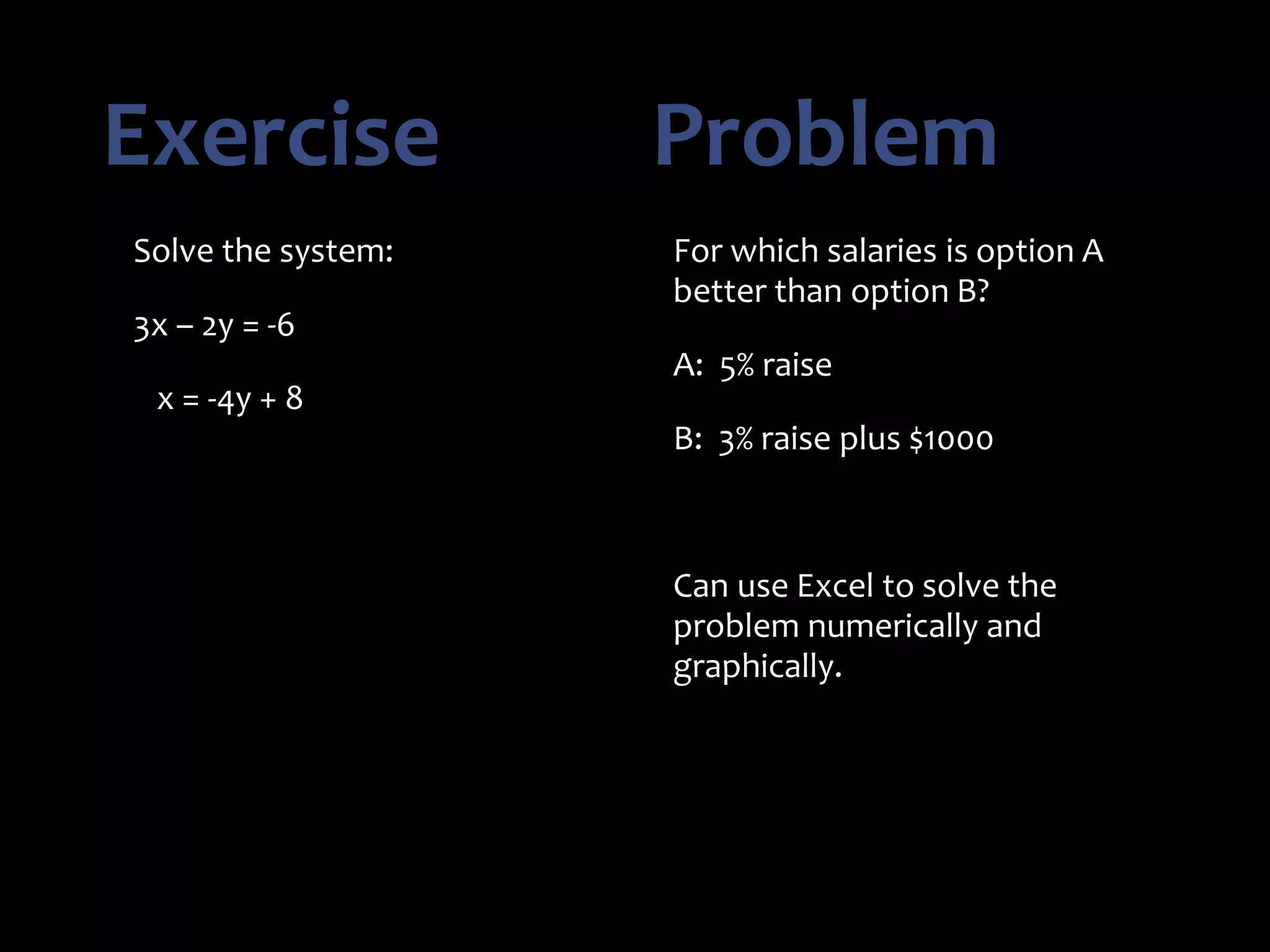
For which salaries is option A
better than option B?
A: 5% raise
B: 3% raise plus $1000
Can use Excel to solve the
problem numerically and
graphically.
Solve the system:
3x – 2y = -6
x = -4y + 8
Exercise Problem
Content Effects
New topics and approaches require the
removal of some familiar topics.
Difficulty level and expectations increase.
Focus shifts from “what has to be
covered?” to “what has been learned?”
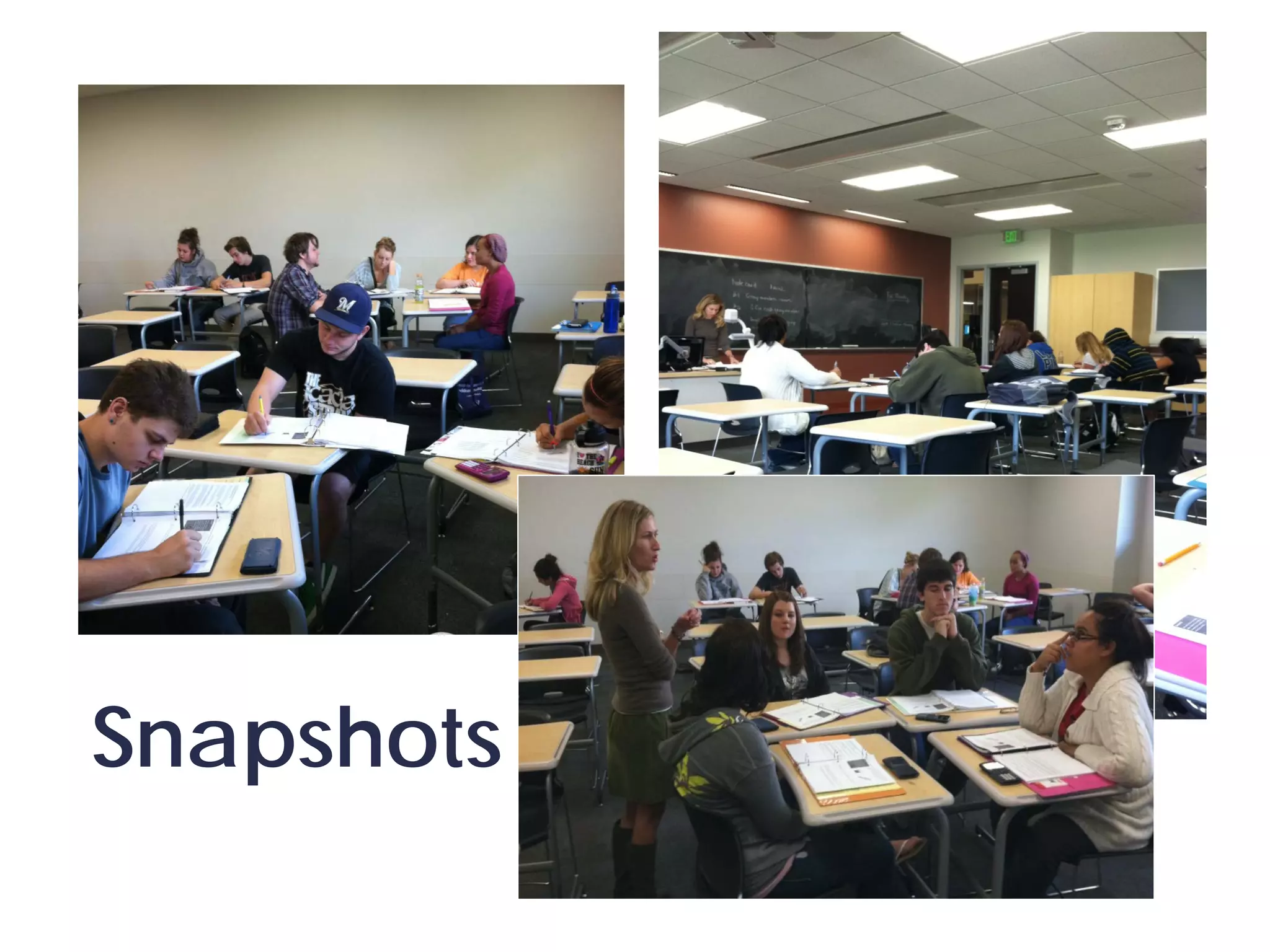
Snapshots
New student
experience
• Engagement
• Connections
• Different objectives
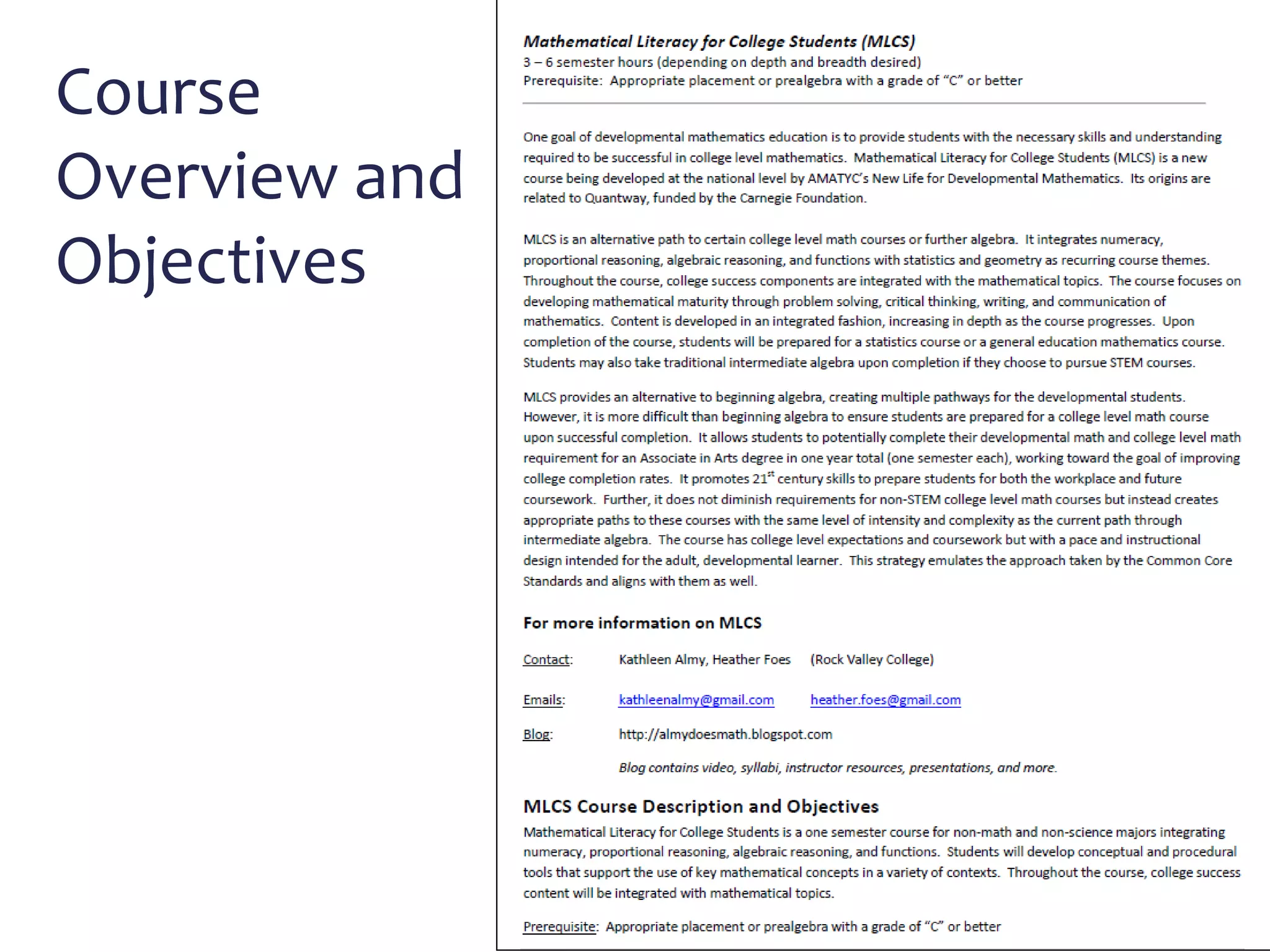
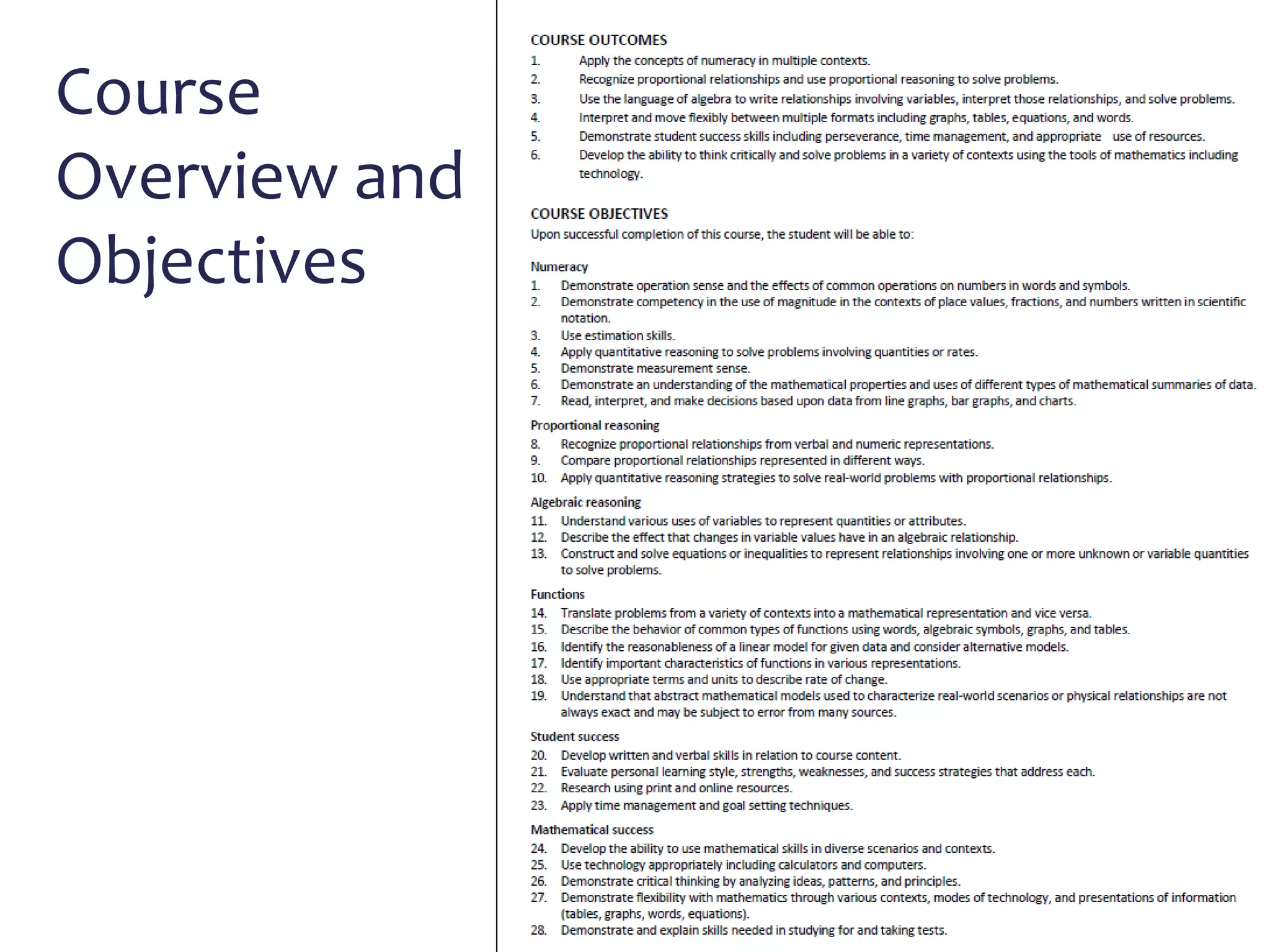
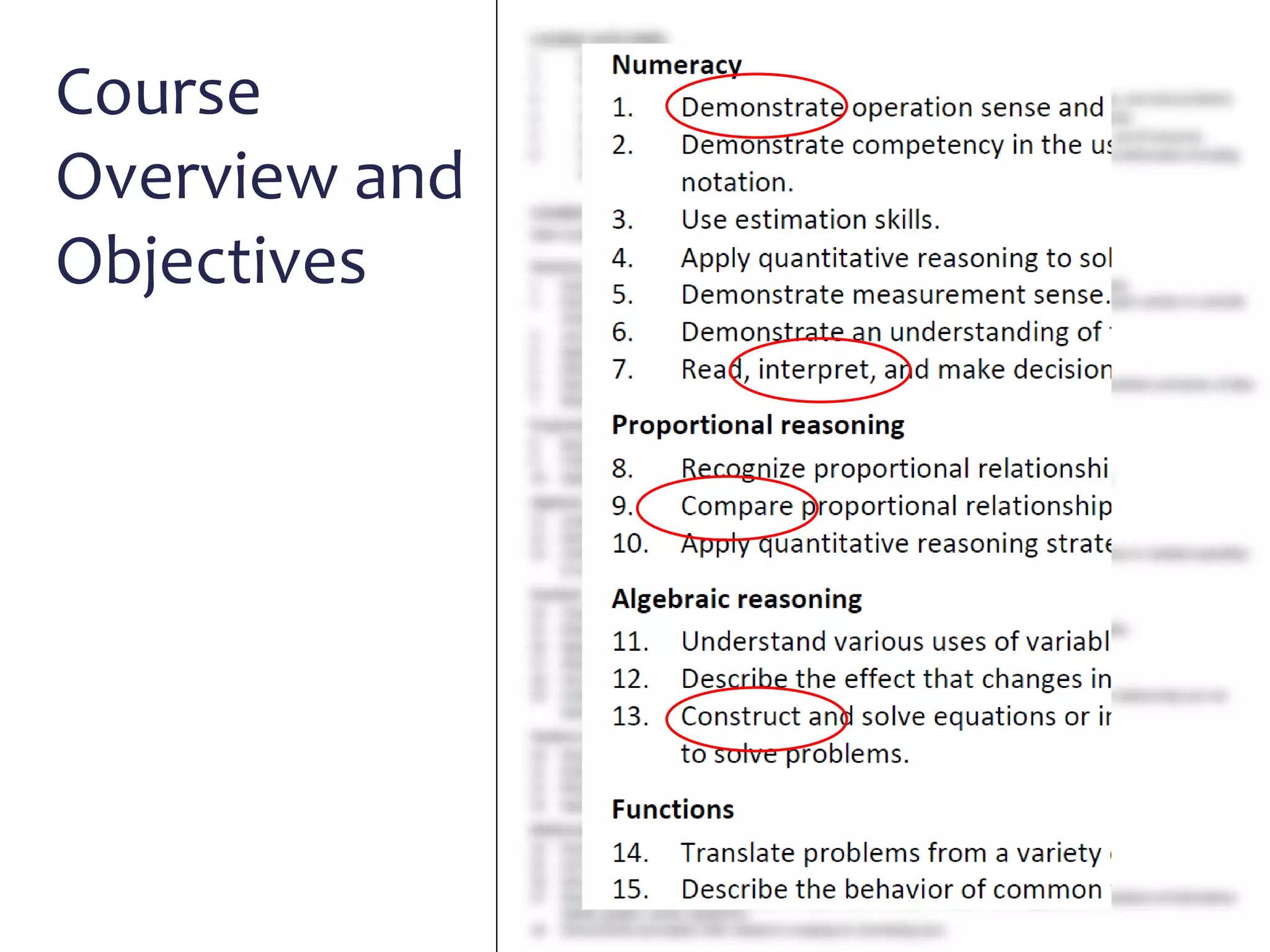
Course
Overview and
Objectives
Course
Overview and
Objectives
Course
Overview and
Objectives
Course
Overview and
Objectives
New student
experience
• Engagement
• Connections
• Different objectives (see blog)
• Deliberate practice
MyMathLab
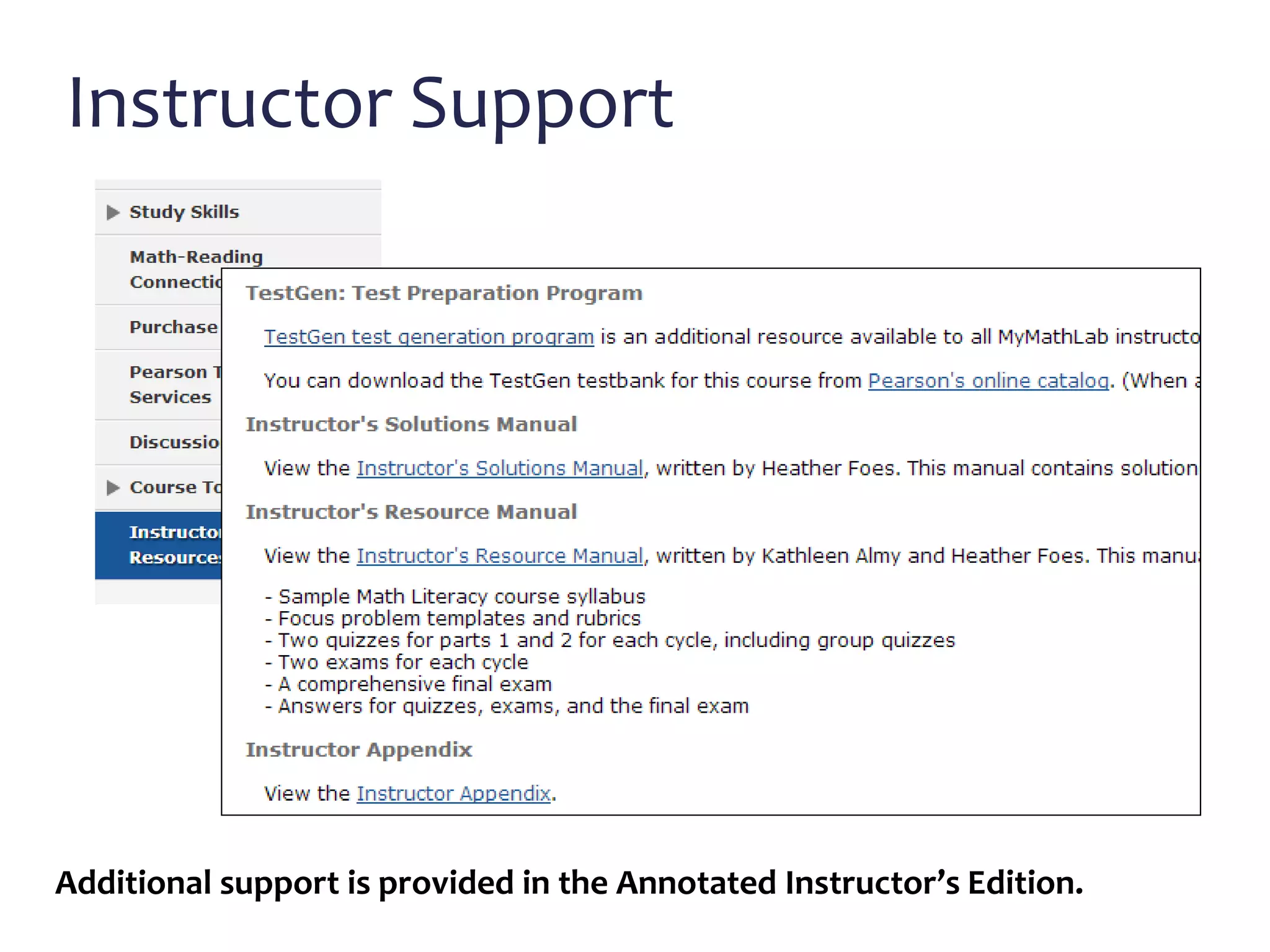
 Skill homework only on MML
 ebook
 Videos
 Instructor support
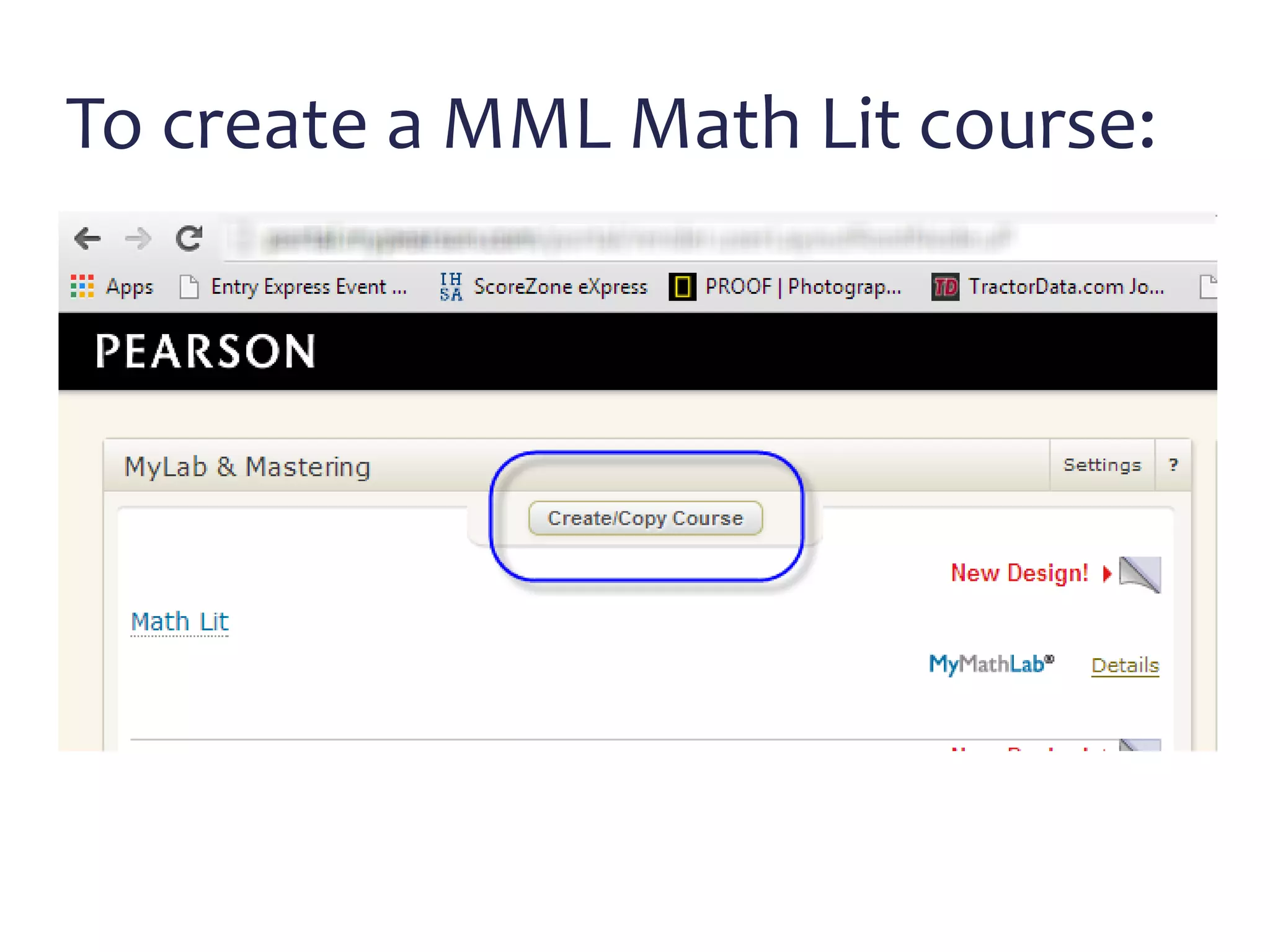
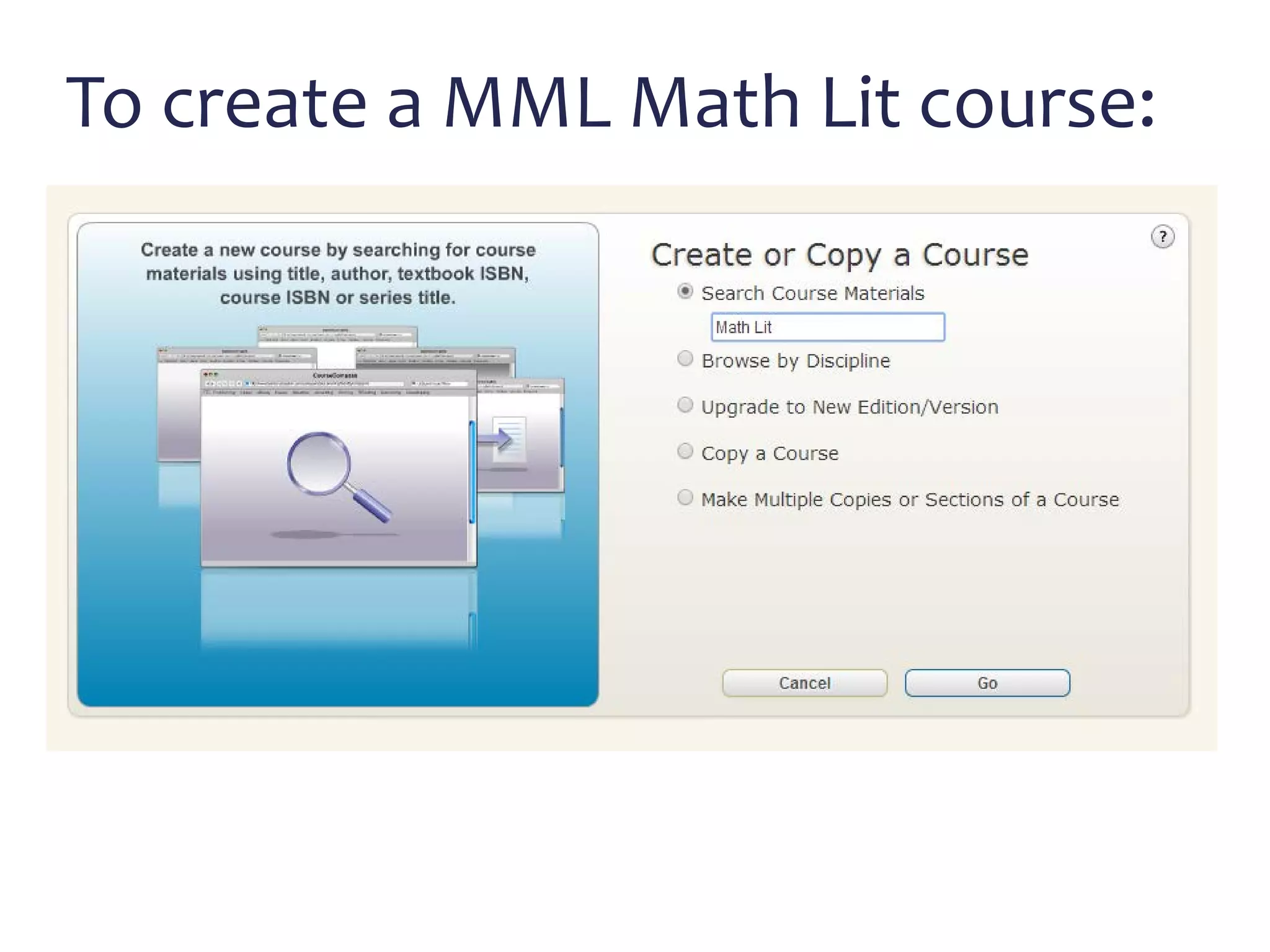
To create a MML Math Lit course:
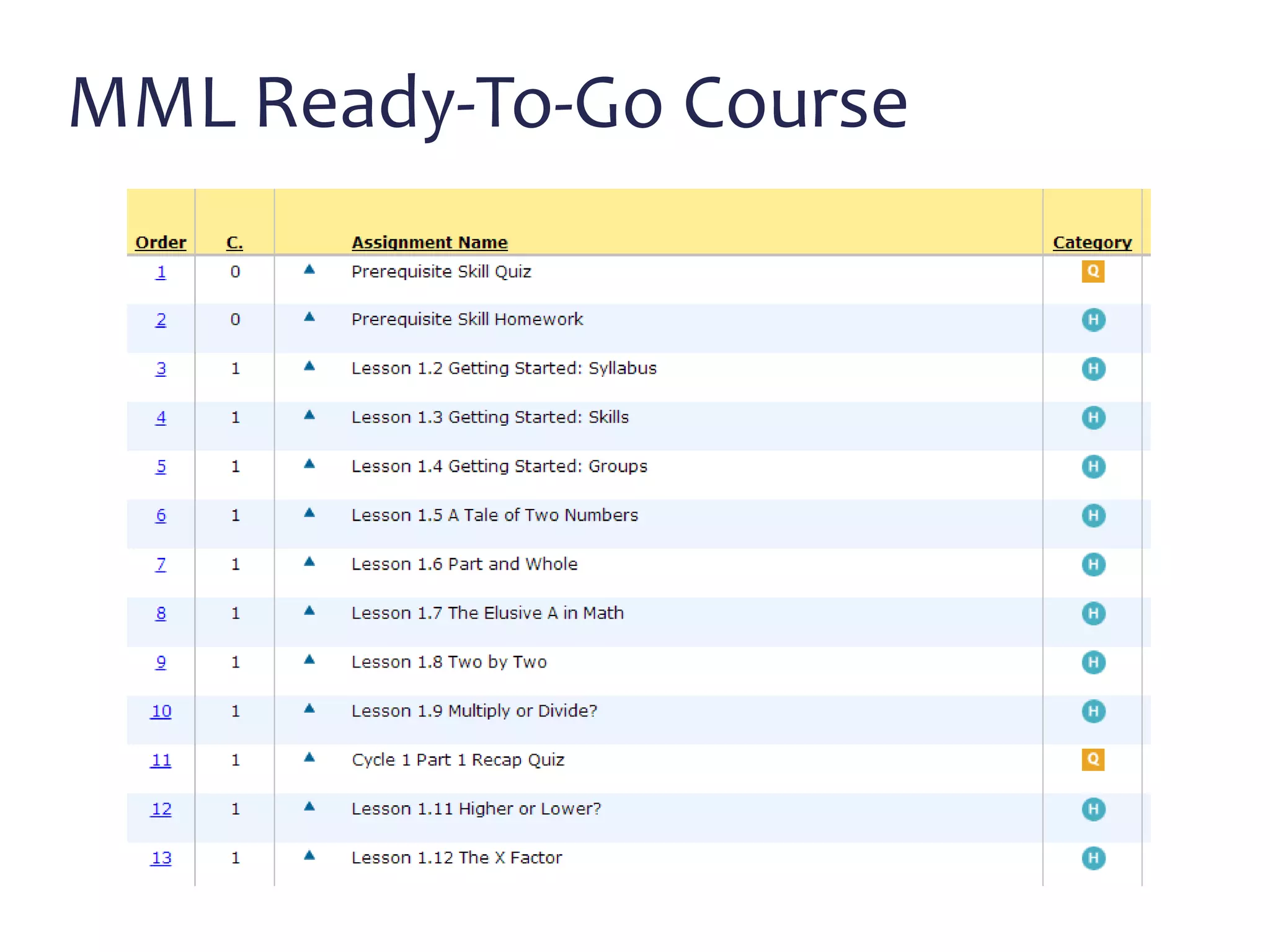
MML Ready-To-Go Course
Instructor Support
Additional support is provided in the Annotated Instructor’s Edition.
Challenges to
implementation
State policies
Campus effects
Adjuncts/training
Challenges to the
classroom
Different expectations
Strong knowledge of
content
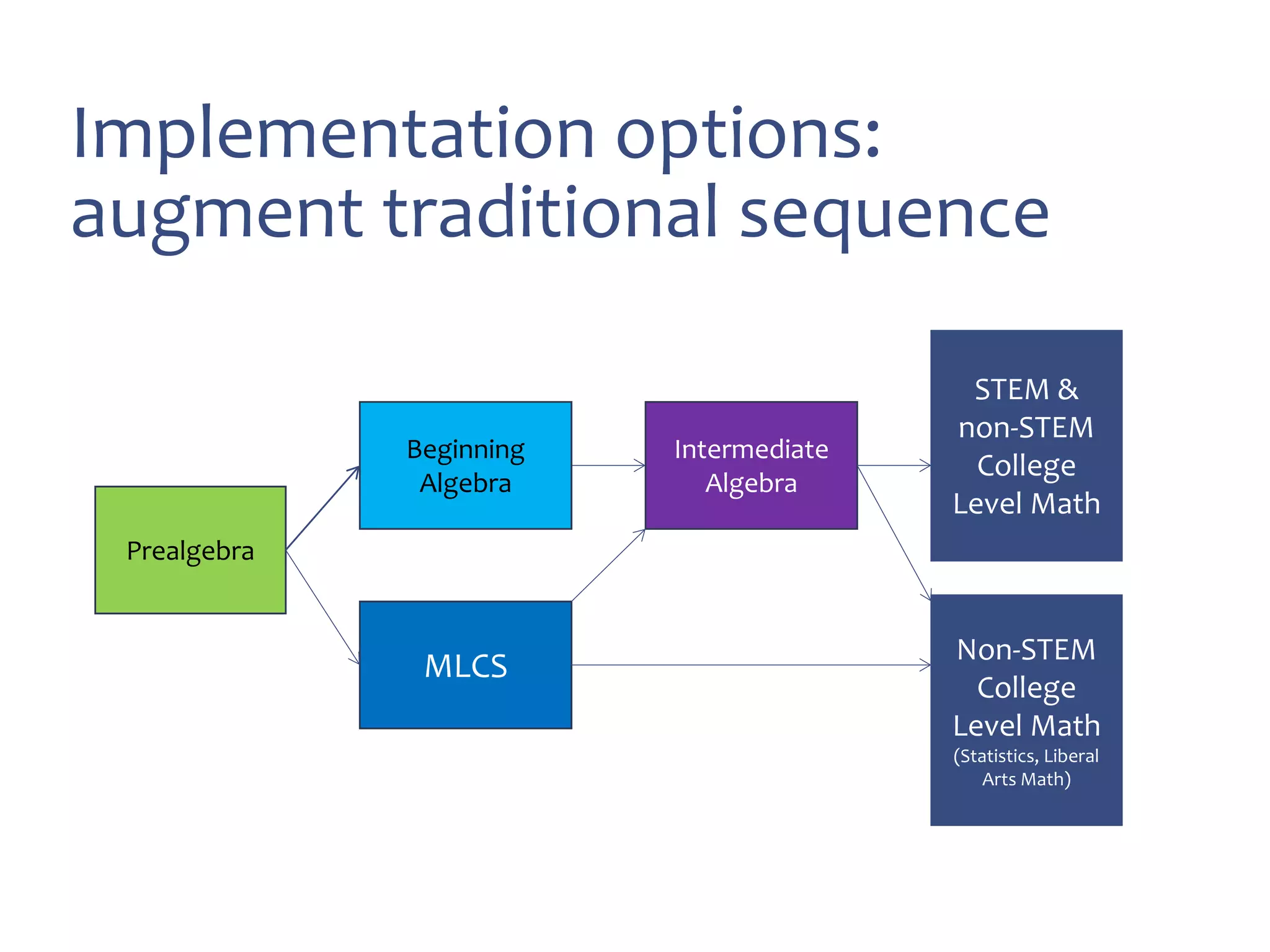
Prealgebra MLCS
Intermediate
Algebra
STEM &
non-STEM
College
Level
Math
Non-STEM
College
Level Math
(Statistics, Liberal
Arts Math)
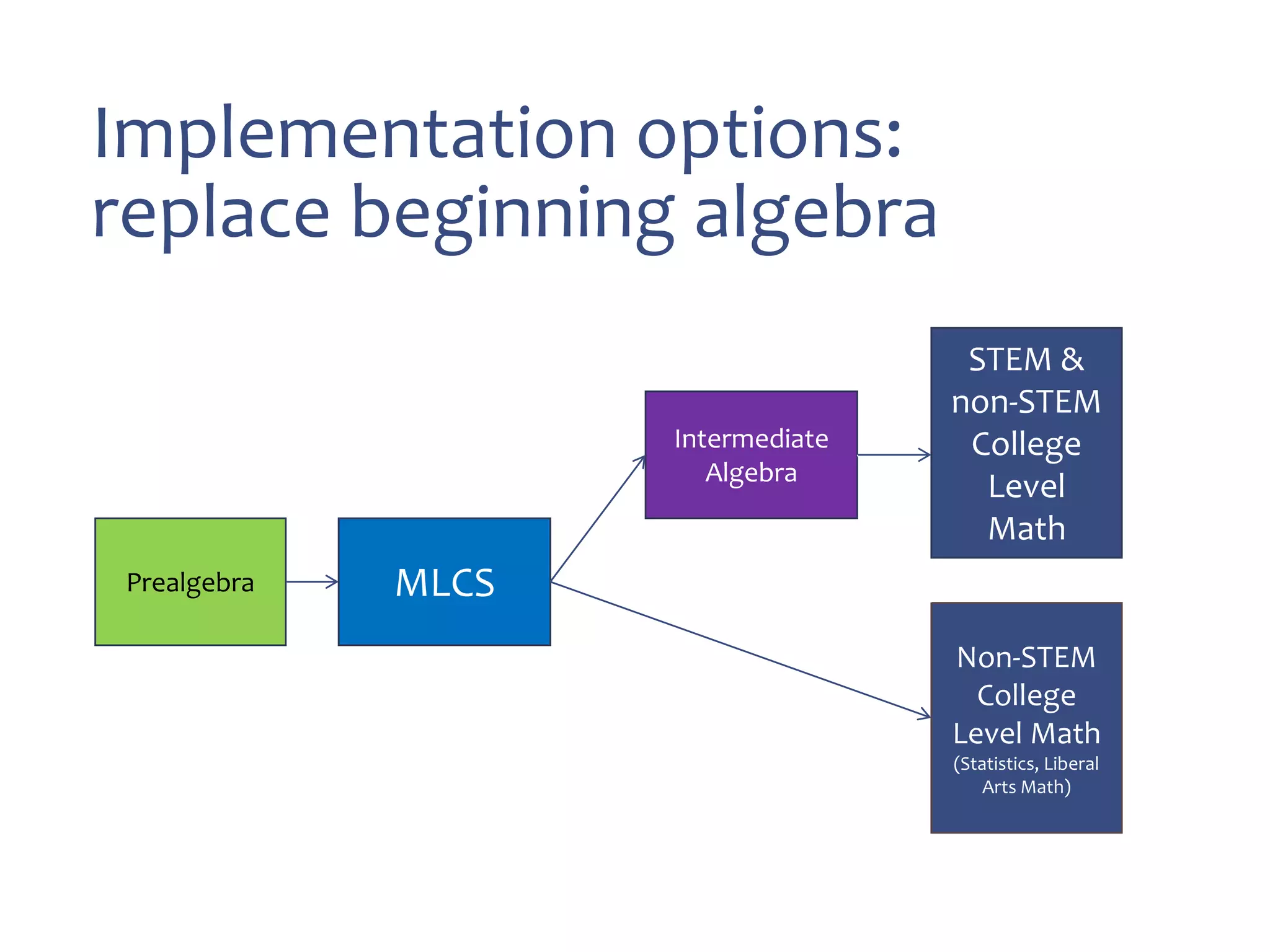
Implementation options:
replace beginning algebra
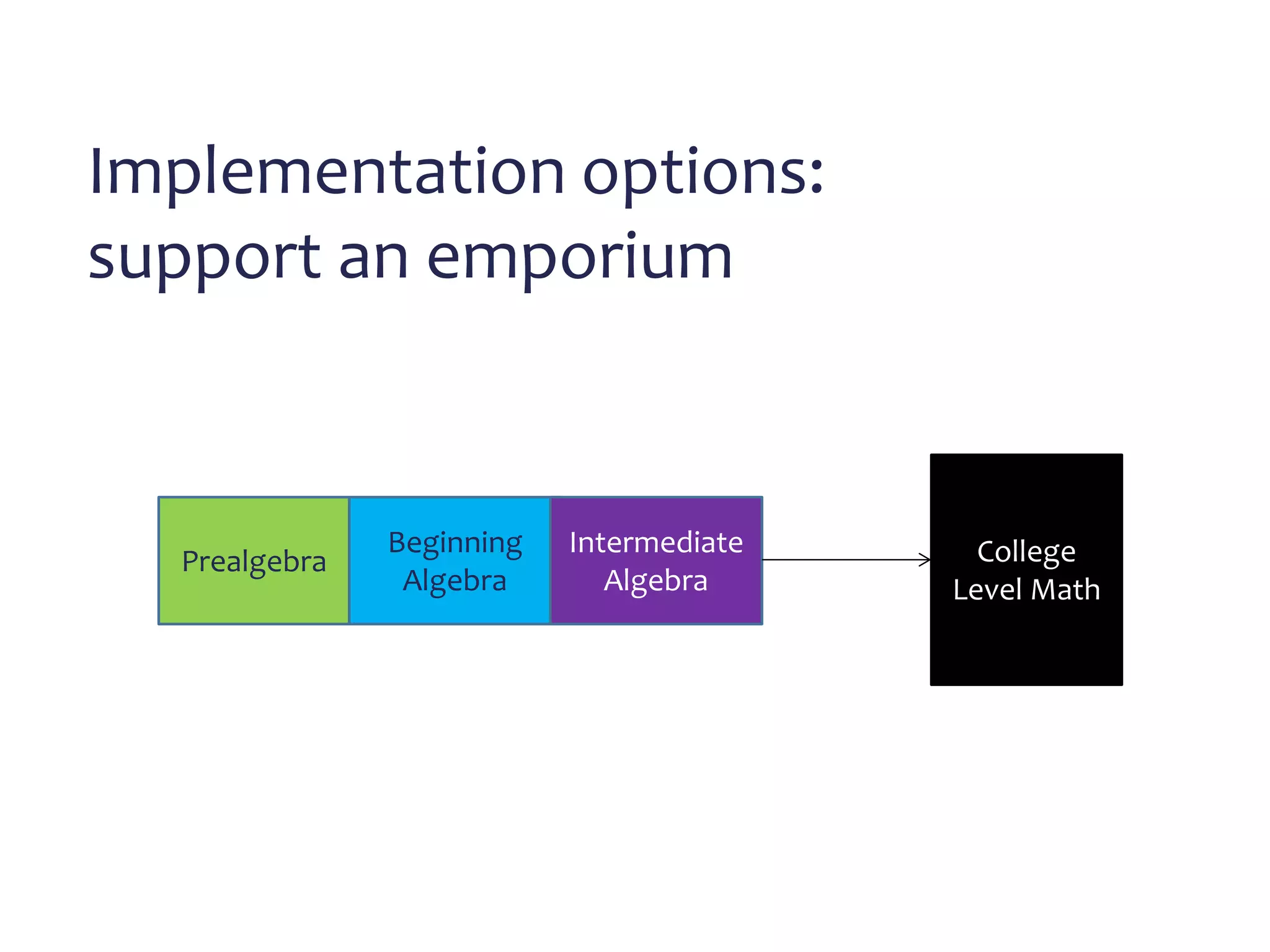
Implementation options:
support an emporium
Prealgebra
Beginning
Algebra
Intermediate
Algebra
College
Level Math
Prealgebra
MLCS
Intermediate
Algebra
STEM &
non-STEM
College
Level Math
Non-STEM
College
Level Math
(Statistics, Liberal
Arts Math)
Beginning
Algebra
Implementation options:
augment traditional sequence
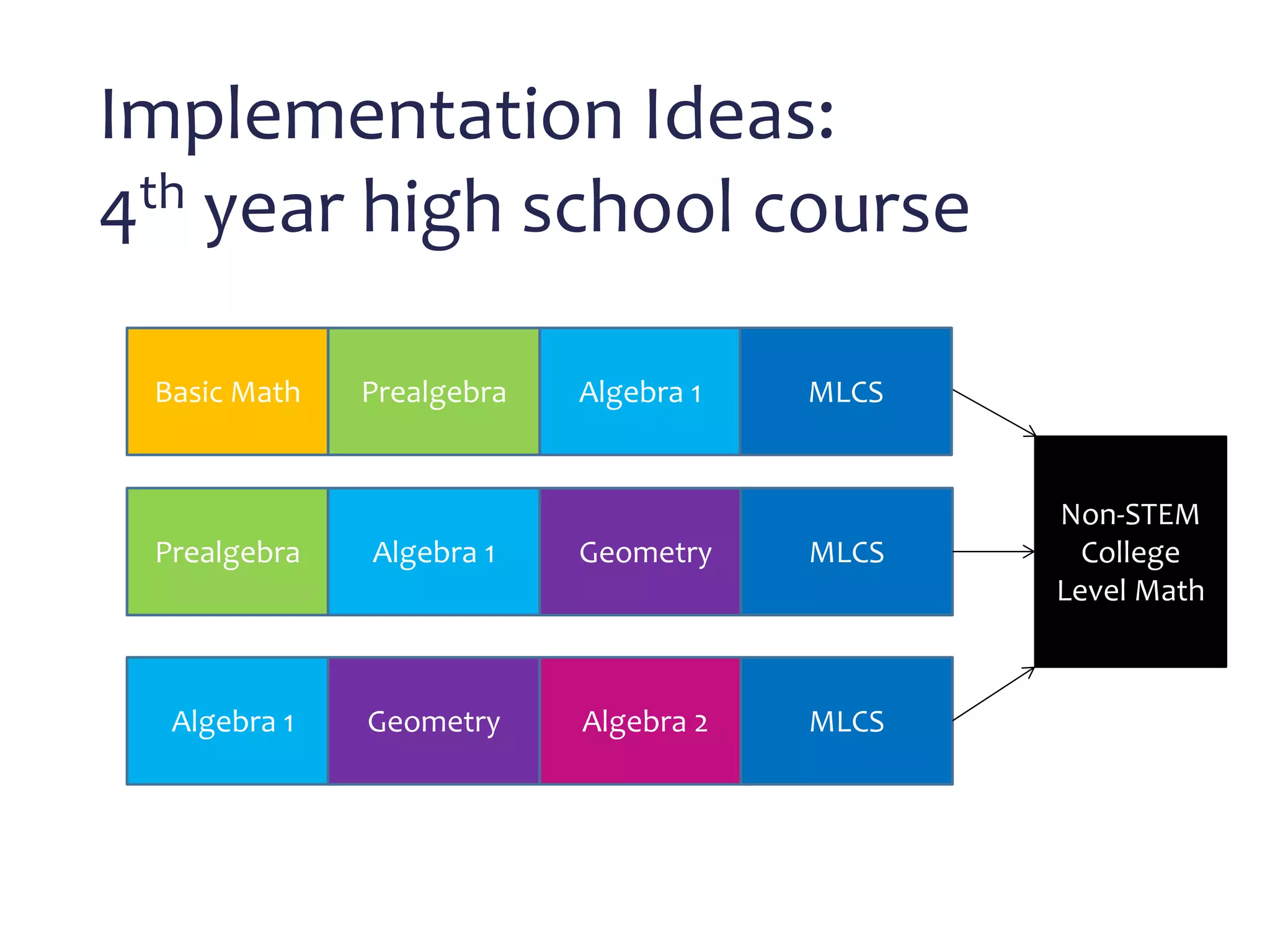
Implementation Ideas:
4th year high school course
Non-STEM
College
Level Math
Algebra 1 Geometry Algebra 2 MLCS
Prealgebra Algebra 1Basic Math
Prealgebra Algebra 1 Geometry MLCS
MLCS
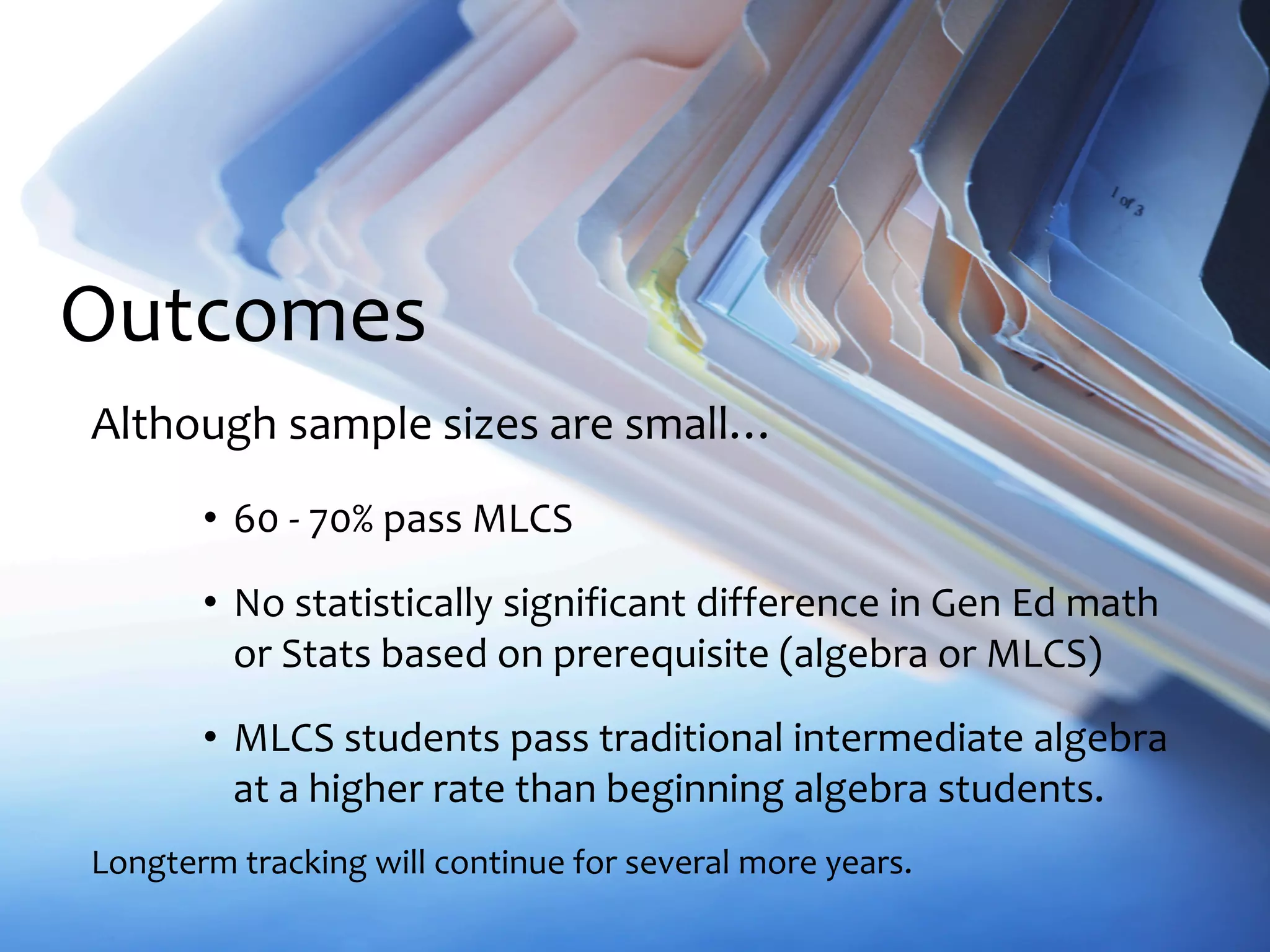
Outcomes
Although sample sizes are small…
• 60 - 70% pass MLCS
• No statistically significant difference in Gen Ed math
or Stats based on prerequisite (algebra or MLCS)
• MLCS students pass traditional intermediate algebra
at a higher rate than beginning algebra students.
Longterm tracking will continue for several more years.
Questions
kathleenalmy@gmail.com
http://almydoesmath.blogspot.com
For More
Information

MLCS Pearson March 2014