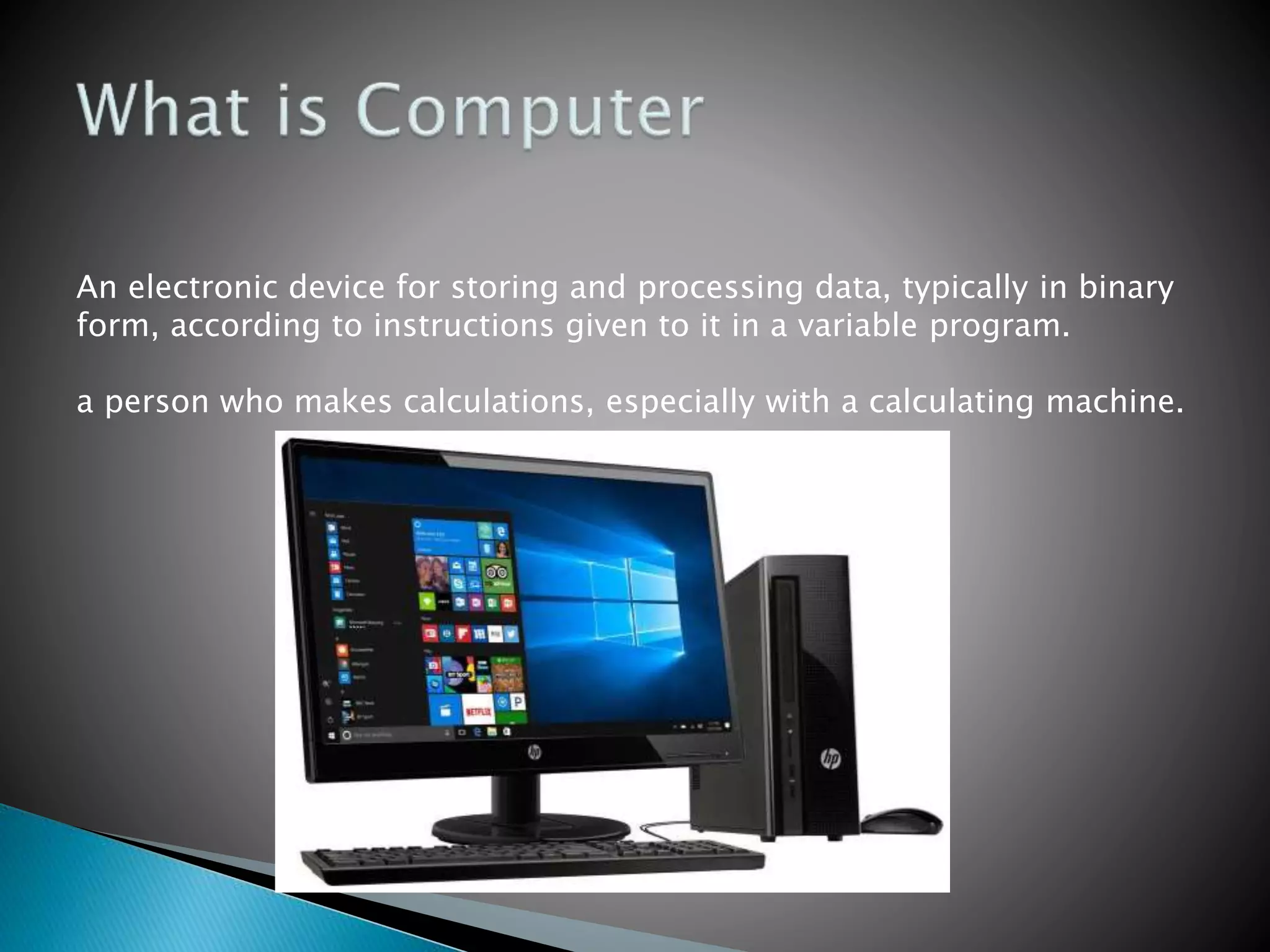
An electronic device for storing and processing data, typically in binary
form, according to instructions given to it in a variable program.
a person who makes calculations, especially with a calculating machine.
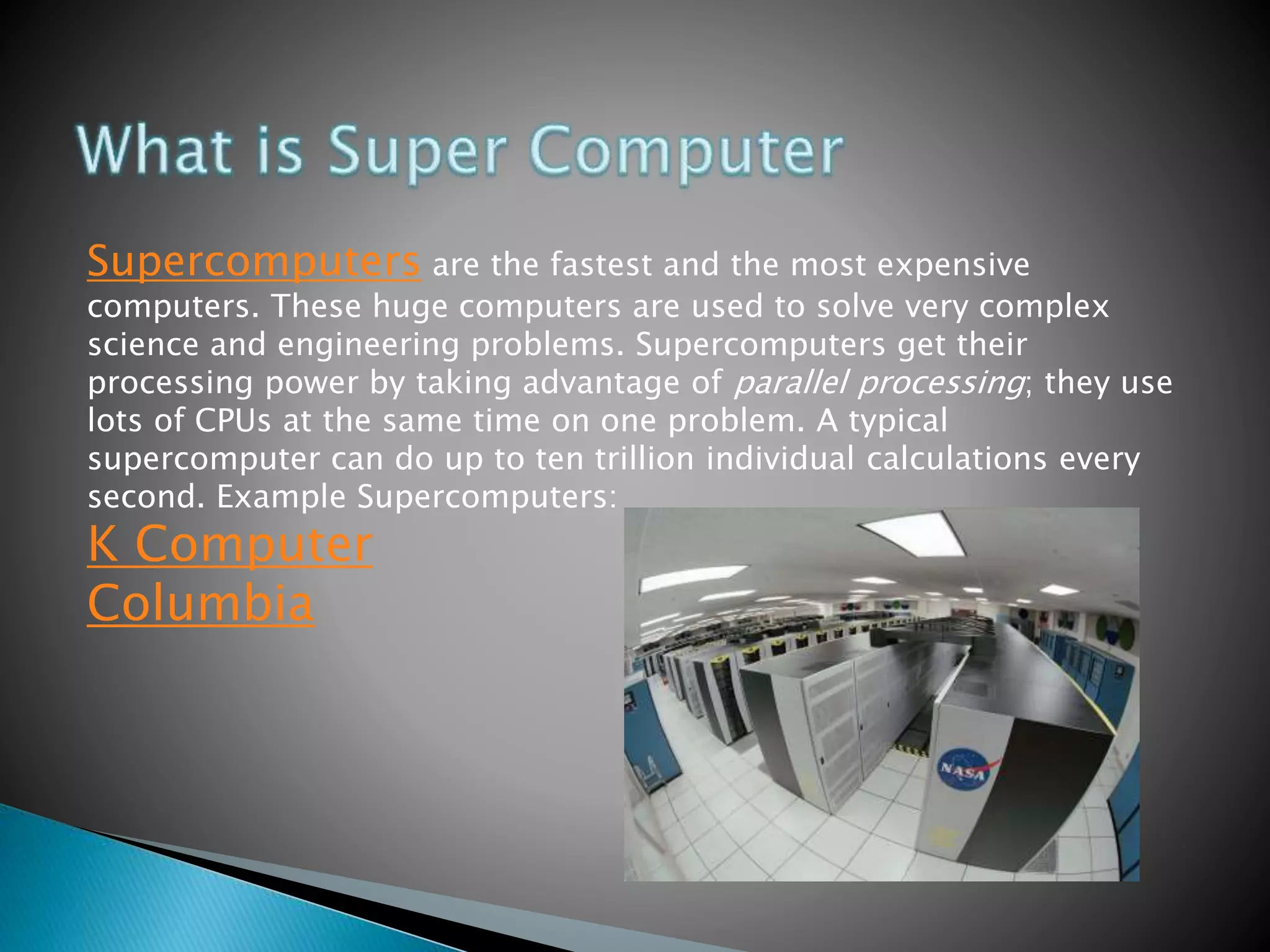
Supercomputers are the fastest and the most expensive
computers. These huge computers are used to solve very complex
science and engineering problems. Supercomputers get their
processing power by taking advantage of parallel processing; they use
lots of CPUs at the same time on one problem. A typical
supercomputer can do up to ten trillion individual calculations every
second. Example Supercomputers:
K Computer
Columbia
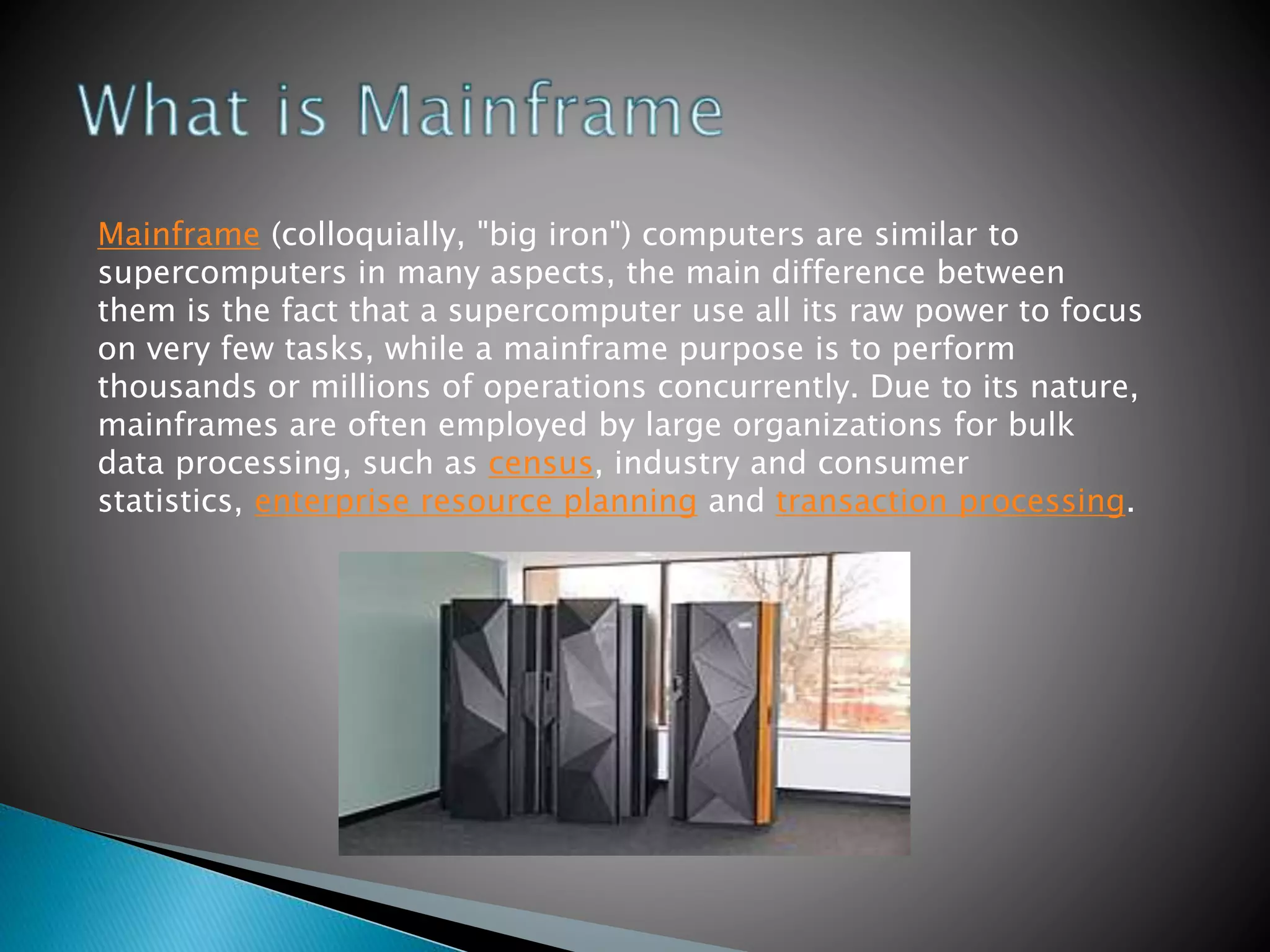
Mainframe (colloquially, "big iron") computers are similar to
supercomputers in many aspects, the main difference between
them is the fact that a supercomputer use all its raw power to focus
on very few tasks, while a mainframe purpose is to perform
thousands or millions of operations concurrently. Due to its nature,
mainframes are often employed by large organizations for bulk
data processing, such as census, industry and consumer
statistics, enterprise resource planning and transaction processing.
A server is a central computer that contains collections of data and
programs. Also called a network server, this system allows all
connected users to share and store electronic data and applications.
Two important types of servers are file servers and application servers.
Servers are a step under supercomputers, because they don't focus on
trying to solve one very complex problem, but try to solve many many
similar smaller ones. An example of servers would be the computers
that Wikipedia stores its encyclopedia on. Those computers have to go
and find the page you're looking for and send it to you.
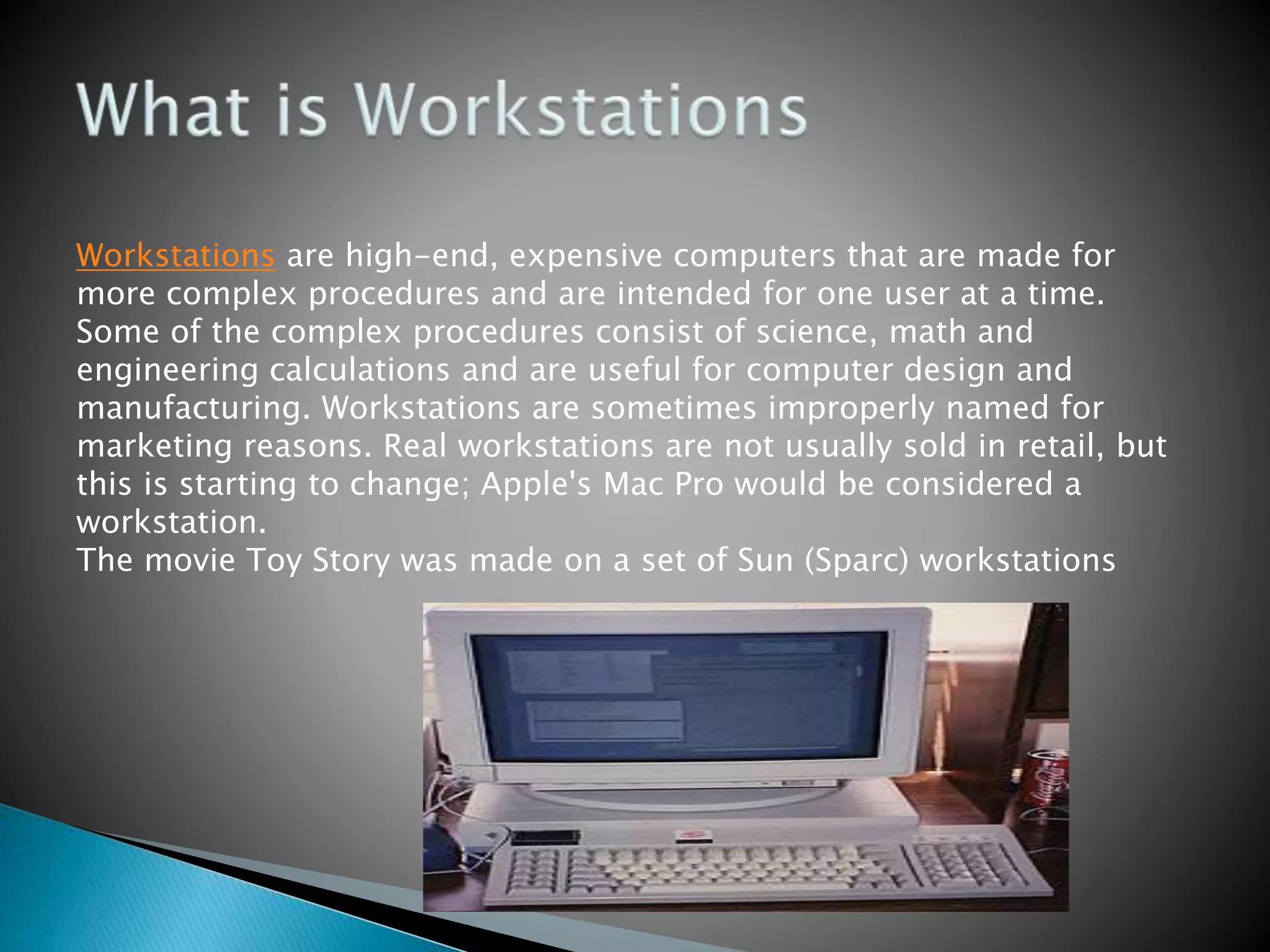
Workstations are high-end, expensive computers that are made for
more complex procedures and are intended for one user at a time.
Some of the complex procedures consist of science, math and
engineering calculations and are useful for computer design and
manufacturing. Workstations are sometimes improperly named for
marketing reasons. Real workstations are not usually sold in retail, but
this is starting to change; Apple's Mac Pro would be considered a
workstation.
The movie Toy Story was made on a set of Sun (Sparc) workstations
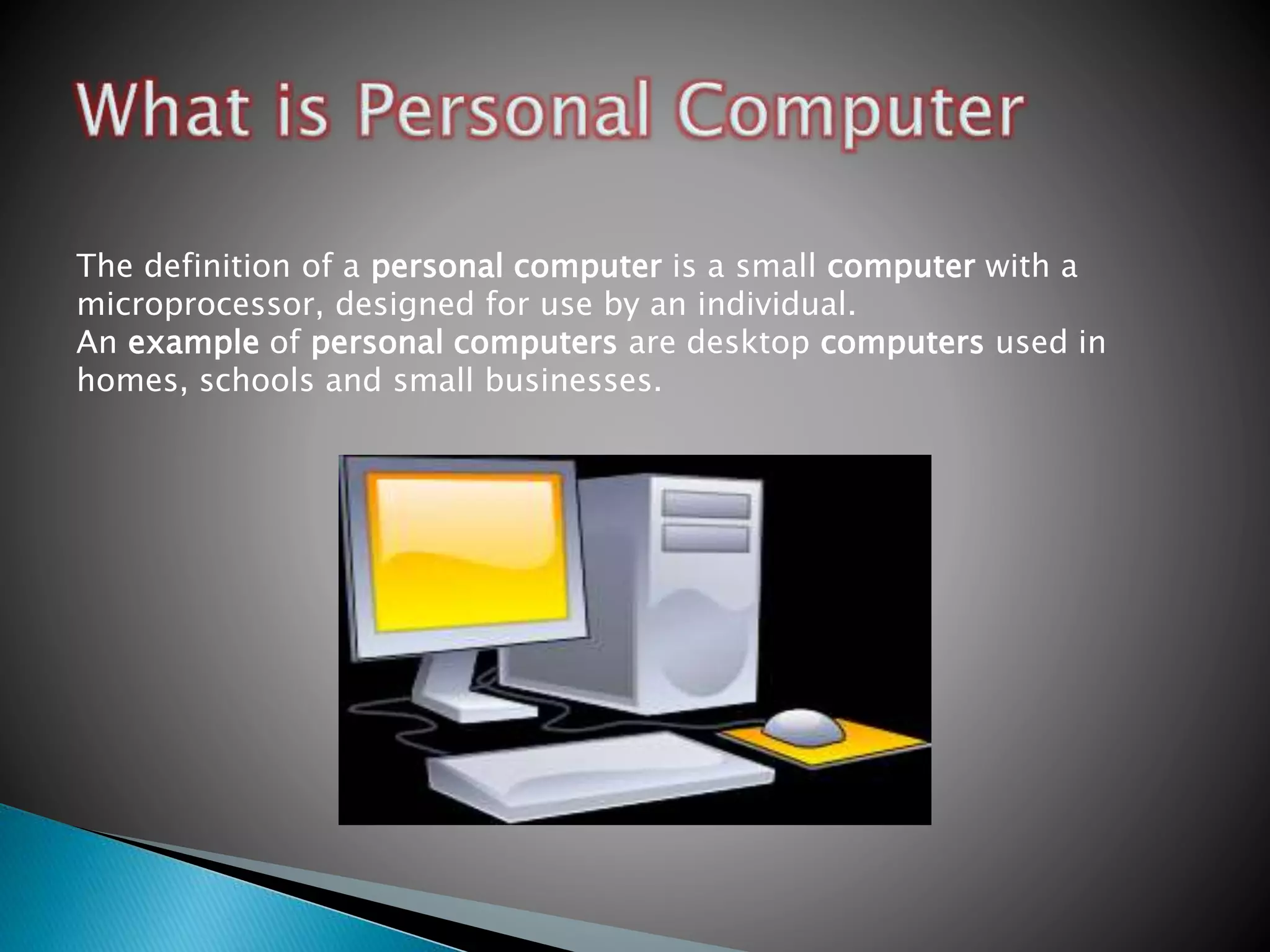
The definition of a personal computer is a small computer with a
microprocessor, designed for use by an individual.
An example of personal computers are desktop computers used in
homes, schools and small businesses.
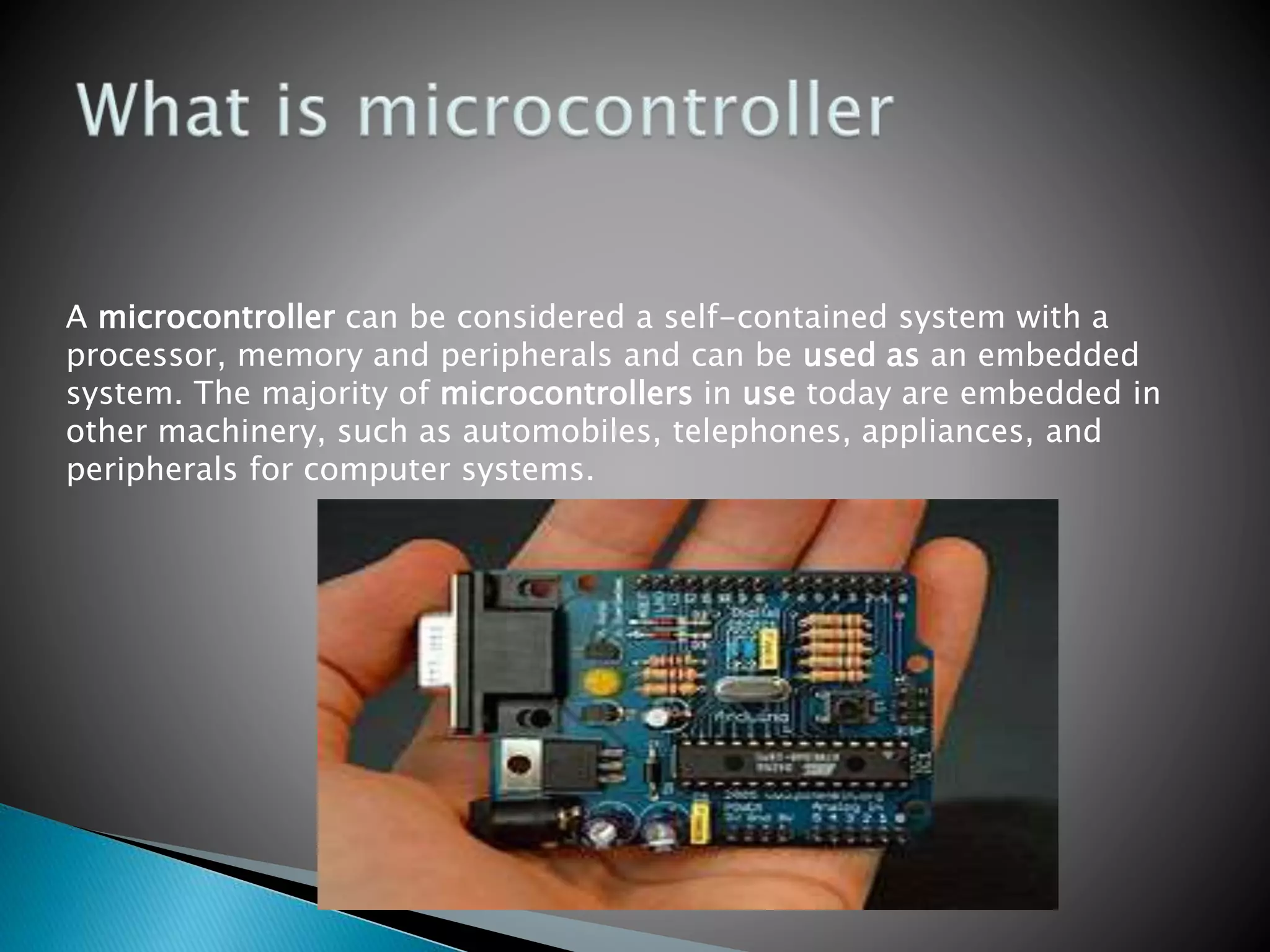
A microcontroller can be considered a self-contained system with a
processor, memory and peripherals and can be used as an embedded
system. The majority of microcontrollers in use today are embedded in
other machinery, such as automobiles, telephones, appliances, and
peripherals for computer systems.
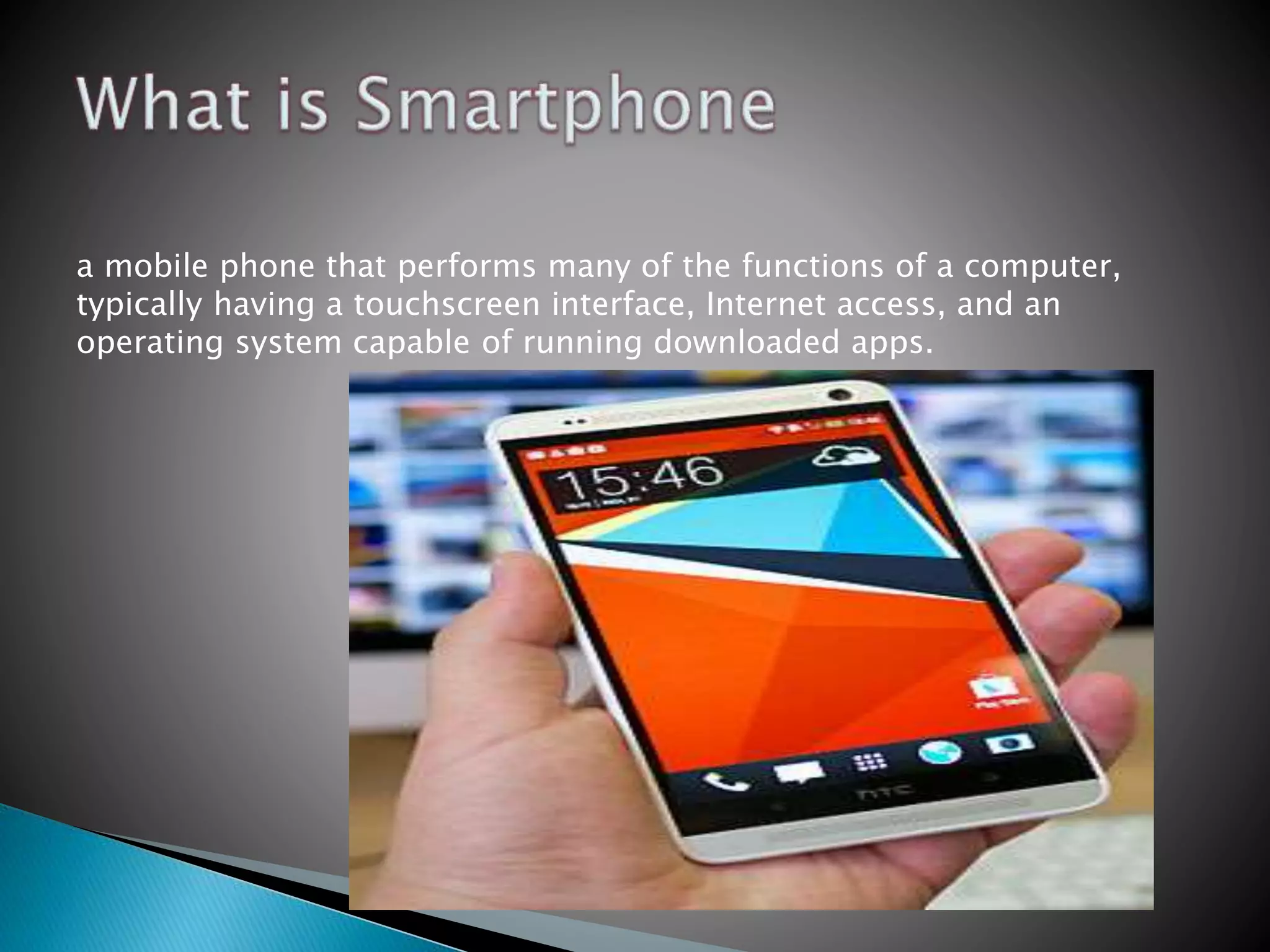
a mobile phone that performs many of the functions of a computer,
typically having a touchscreen interface, Internet access, and an
operating system capable of running downloaded apps.
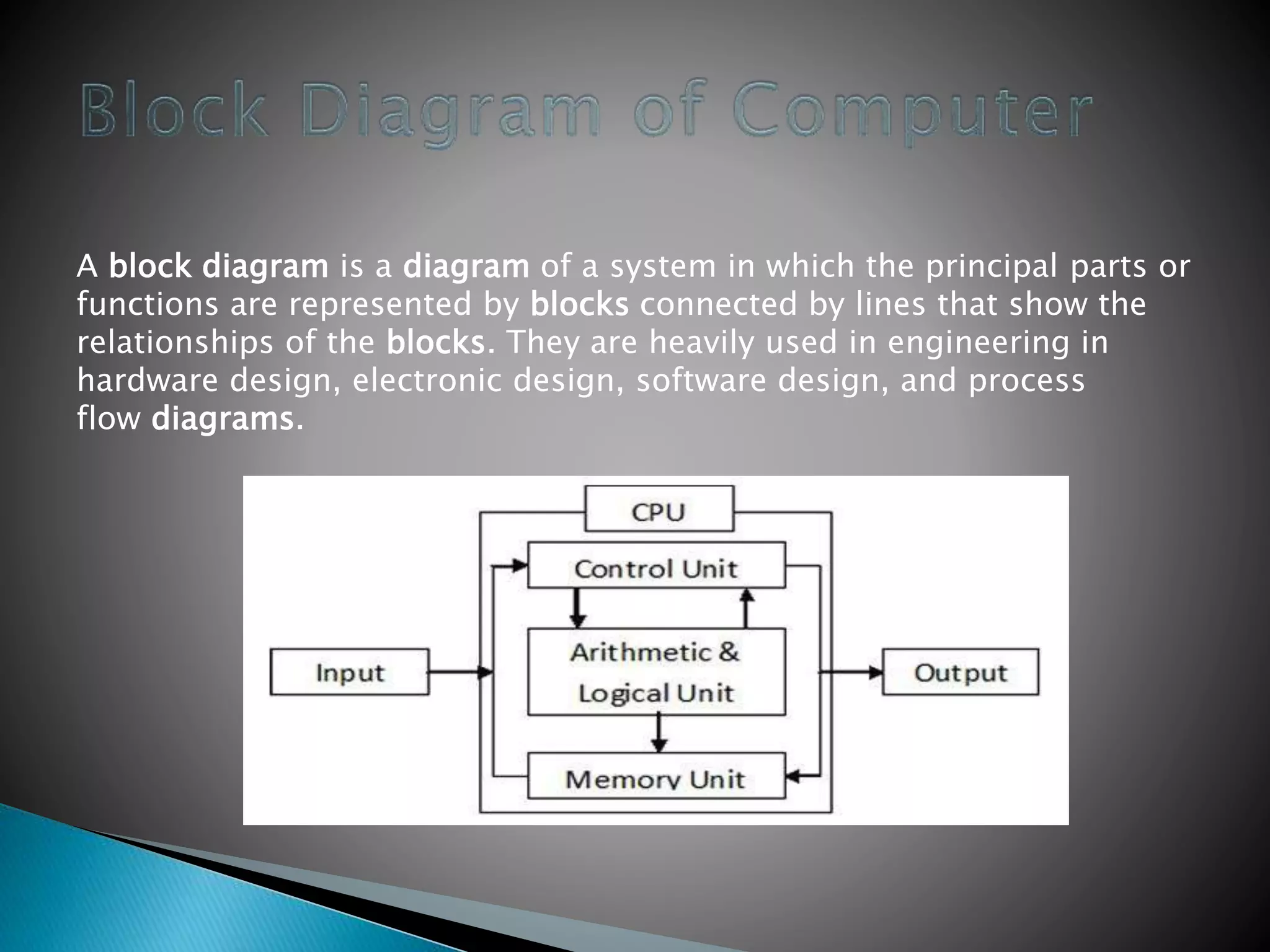
A block diagram is a diagram of a system in which the principal parts or
functions are represented by blocks connected by lines that show the
relationships of the blocks. They are heavily used in engineering in
hardware design, electronic design, software design, and process
flow diagrams.
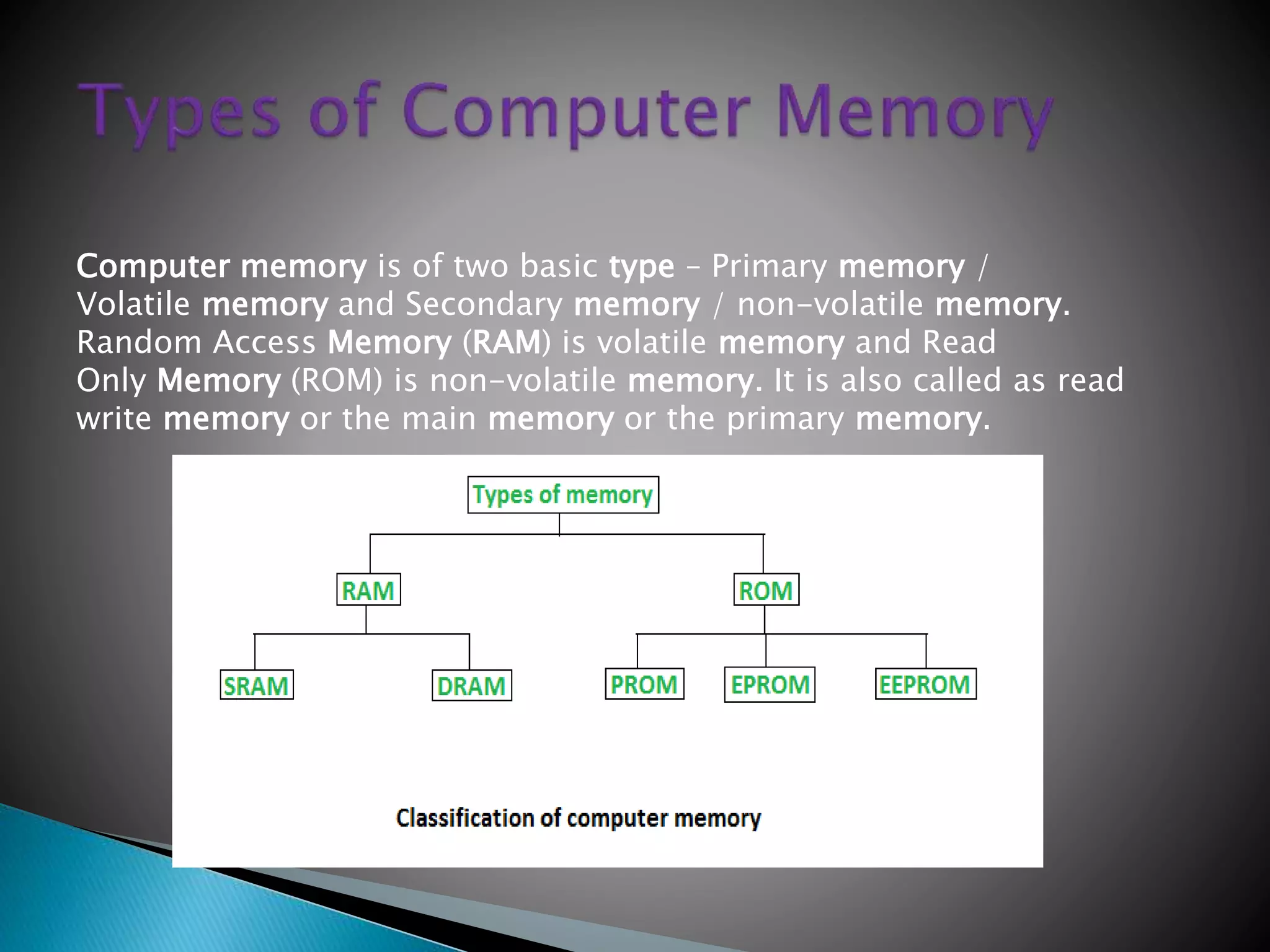
Computer memory is of two basic type – Primary memory /
Volatile memory and Secondary memory / non-volatile memory.
Random Access Memory (RAM) is volatile memory and Read
Only Memory (ROM) is non-volatile memory. It is also called as read
write memory or the main memory or the primary memory.
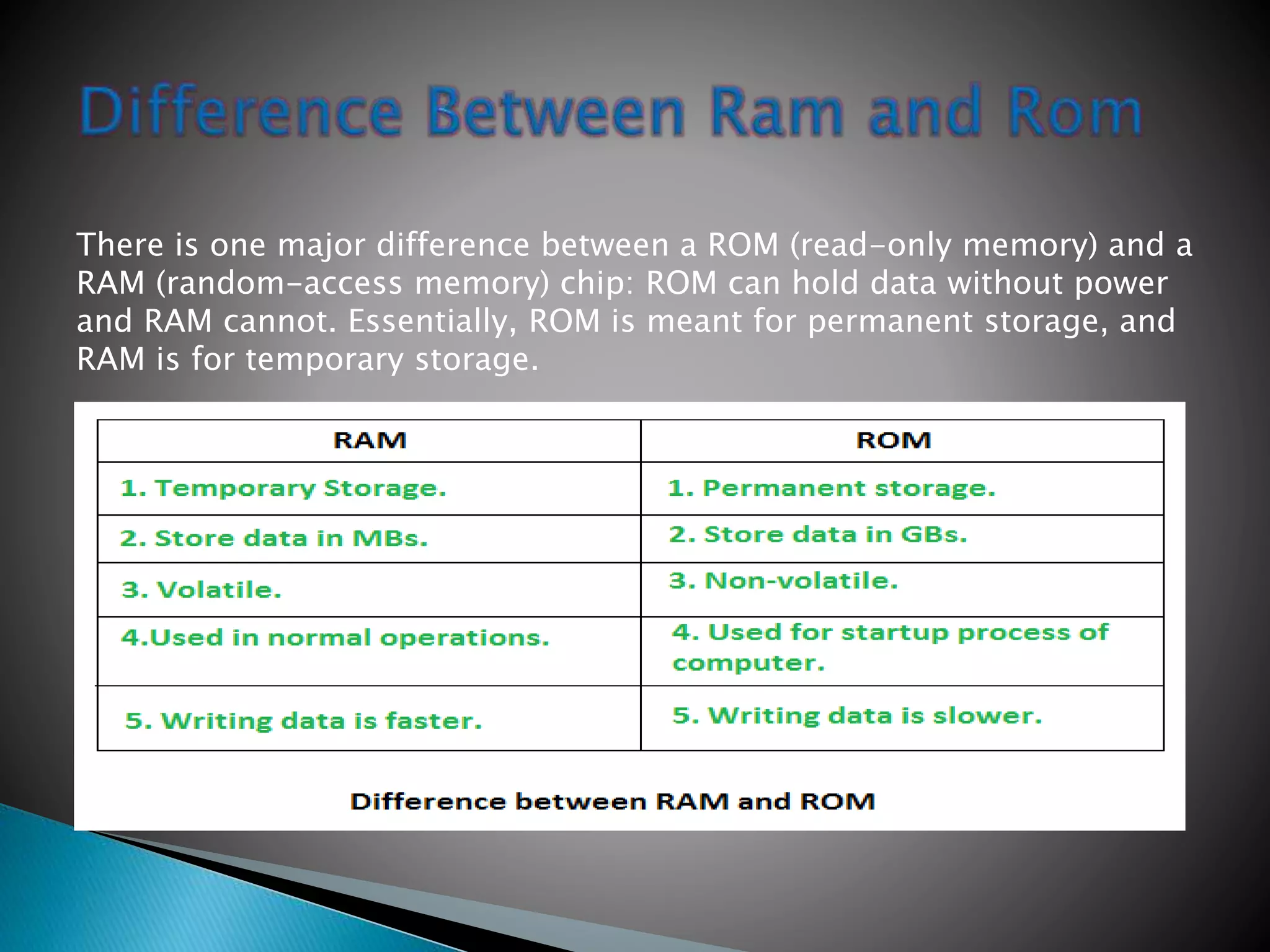
There is one major difference between a ROM (read-only memory) and a
RAM (random-access memory) chip: ROM can hold data without power
and RAM cannot. Essentially, ROM is meant for permanent storage, and
RAM is for temporary storage.
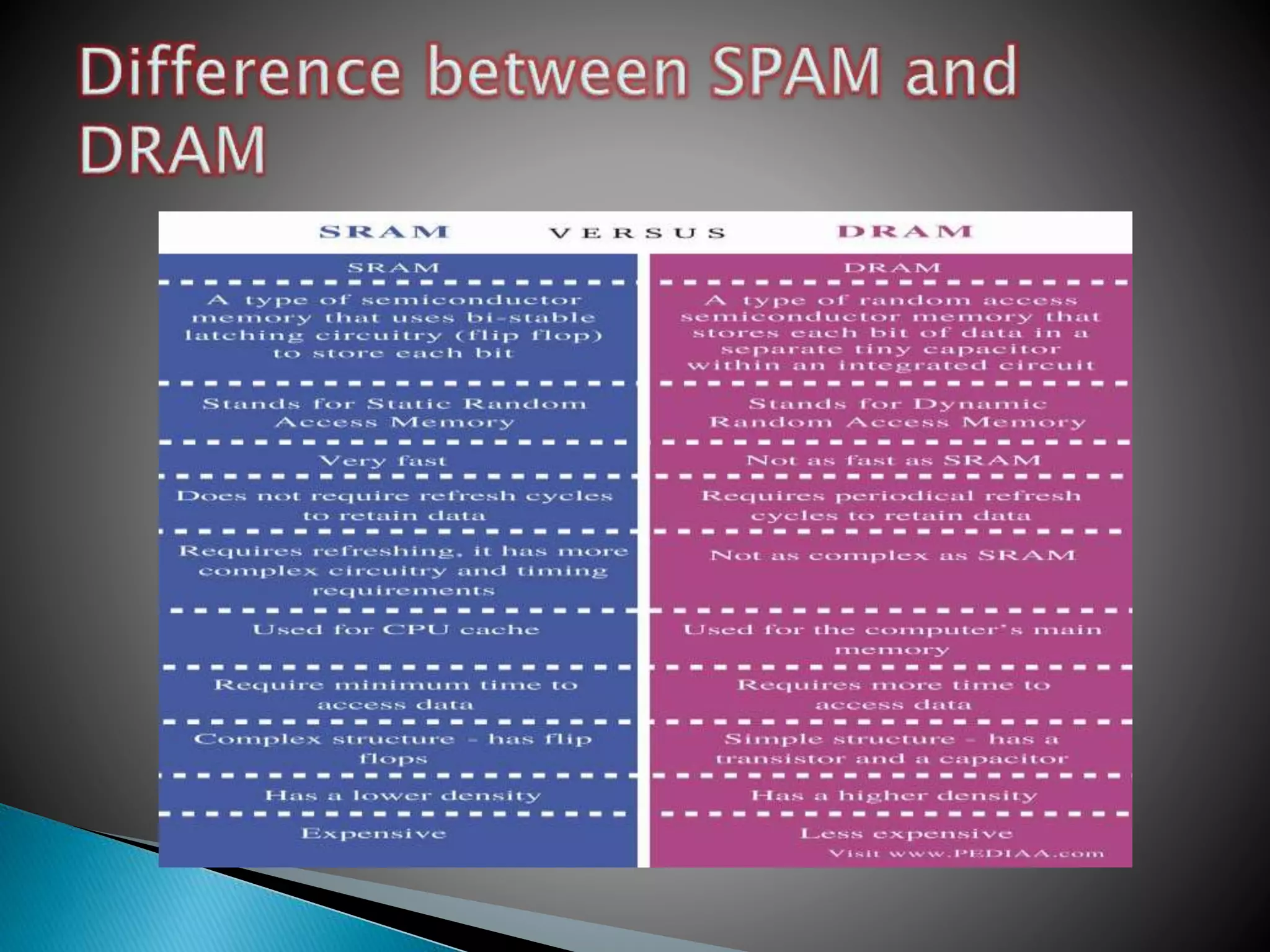
SRAM is an on-chip memory whose access time is small while DRAM is
an off-chip memory which has a large access time. Therefore SRAM is
faster than DRAM. ... In SRAM a single block of memory requires six
transistors whereas DRAM needs just one transistor for a single block of
memory.
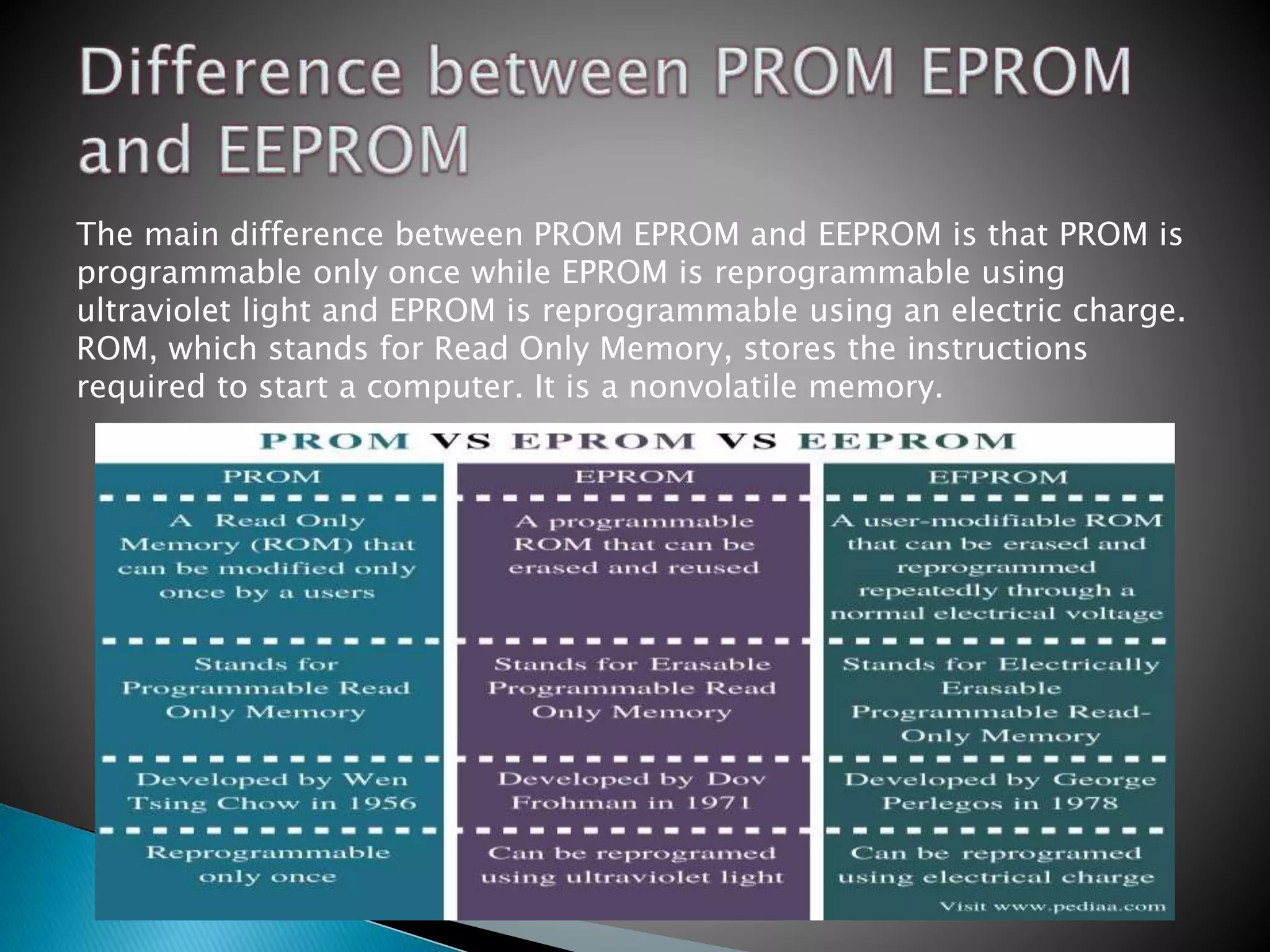
The main difference between PROM EPROM and EEPROM is that PROM is
programmable only once while EPROM is reprogrammable using
ultraviolet light and EPROM is reprogrammable using an electric charge.
ROM, which stands for Read Only Memory, stores the instructions
required to start a computer. It is a nonvolatile memory.

What is computer

  • 1.
    An electronic devicefor storing and processing data, typically in binary form, according to instructions given to it in a variable program. a person who makes calculations, especially with a calculating machine.
  • 3.
    Supercomputers are thefastest and the most expensive computers. These huge computers are used to solve very complex science and engineering problems. Supercomputers get their processing power by taking advantage of parallel processing; they use lots of CPUs at the same time on one problem. A typical supercomputer can do up to ten trillion individual calculations every second. Example Supercomputers: K Computer Columbia
  • 4.
    Mainframe (colloquially, "bigiron") computers are similar to supercomputers in many aspects, the main difference between them is the fact that a supercomputer use all its raw power to focus on very few tasks, while a mainframe purpose is to perform thousands or millions of operations concurrently. Due to its nature, mainframes are often employed by large organizations for bulk data processing, such as census, industry and consumer statistics, enterprise resource planning and transaction processing.
  • 5.
    A server isa central computer that contains collections of data and programs. Also called a network server, this system allows all connected users to share and store electronic data and applications. Two important types of servers are file servers and application servers. Servers are a step under supercomputers, because they don't focus on trying to solve one very complex problem, but try to solve many many similar smaller ones. An example of servers would be the computers that Wikipedia stores its encyclopedia on. Those computers have to go and find the page you're looking for and send it to you.
  • 6.
    Workstations are high-end,expensive computers that are made for more complex procedures and are intended for one user at a time. Some of the complex procedures consist of science, math and engineering calculations and are useful for computer design and manufacturing. Workstations are sometimes improperly named for marketing reasons. Real workstations are not usually sold in retail, but this is starting to change; Apple's Mac Pro would be considered a workstation. The movie Toy Story was made on a set of Sun (Sparc) workstations
  • 7.
    The definition ofa personal computer is a small computer with a microprocessor, designed for use by an individual. An example of personal computers are desktop computers used in homes, schools and small businesses.
  • 8.
    A microcontroller canbe considered a self-contained system with a processor, memory and peripherals and can be used as an embedded system. The majority of microcontrollers in use today are embedded in other machinery, such as automobiles, telephones, appliances, and peripherals for computer systems.
  • 9.
    a mobile phonethat performs many of the functions of a computer, typically having a touchscreen interface, Internet access, and an operating system capable of running downloaded apps.
  • 10.
    A block diagramis a diagram of a system in which the principal parts or functions are represented by blocks connected by lines that show the relationships of the blocks. They are heavily used in engineering in hardware design, electronic design, software design, and process flow diagrams.
  • 11.
    Computer memory isof two basic type – Primary memory / Volatile memory and Secondary memory / non-volatile memory. Random Access Memory (RAM) is volatile memory and Read Only Memory (ROM) is non-volatile memory. It is also called as read write memory or the main memory or the primary memory.
  • 12.
    There is onemajor difference between a ROM (read-only memory) and a RAM (random-access memory) chip: ROM can hold data without power and RAM cannot. Essentially, ROM is meant for permanent storage, and RAM is for temporary storage.
  • 13.
    SRAM is anon-chip memory whose access time is small while DRAM is an off-chip memory which has a large access time. Therefore SRAM is faster than DRAM. ... In SRAM a single block of memory requires six transistors whereas DRAM needs just one transistor for a single block of memory.
  • 15.
    The main differencebetween PROM EPROM and EEPROM is that PROM is programmable only once while EPROM is reprogrammable using ultraviolet light and EPROM is reprogrammable using an electric charge. ROM, which stands for Read Only Memory, stores the instructions required to start a computer. It is a nonvolatile memory.