Oliver Asks for More
by Charles Dickens
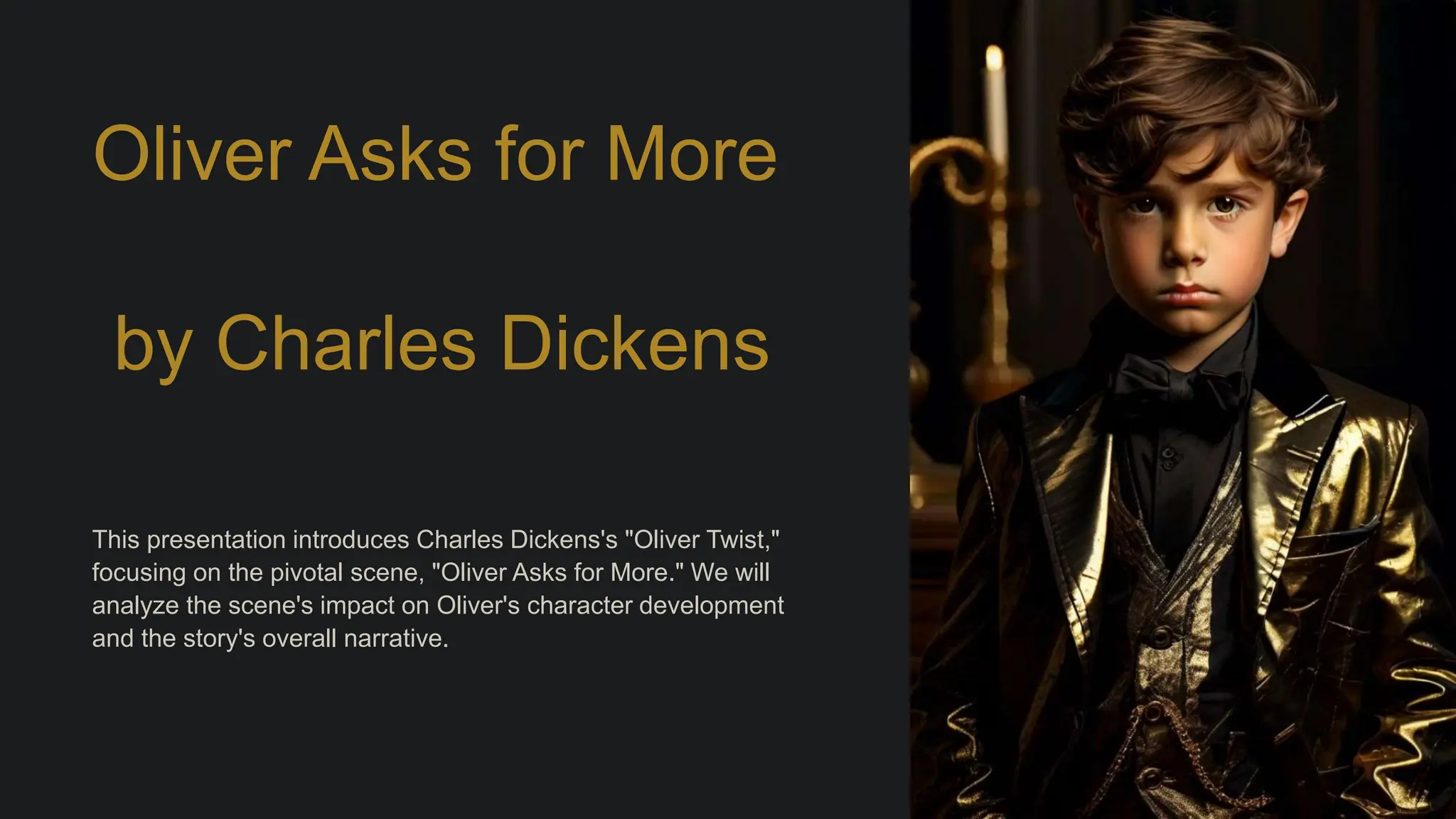
This presentation introduces Charles Dickens's "Oliver Twist,"
focusing on the pivotal scene, "Oliver Asks for More." We will
analyze the scene's impact on Oliver's character development
and the story's overall narrative.
Key Themes and Narrative Elements
Poverty and
Social Inequality
The novel exposes
the harsh realities of
Victorian England's
underclass. Oliver's
journey through
poverty and
deprivation
highlights the deep
social inequalities of
the era.
Childhood
Innocence and
Corruption
Oliver's innocence
and vulnerability are
contrasted with the
corrupting
influences he
encounters, such as
the workhouse and
the criminal
underworld.
The Search for
Identity
Oliver's journey is a
search for belonging
and a sense of self.
He struggles to find
his place in a
society that often
rejects and
marginalizes him.
The Power of
Compassion
and Kindness
Despite the
bleakness of his
surroundings, Oliver
encounters acts of
kindness and
compassion that
offer him hope and
support.
Characterization of Oliver Twist
Innocence and Vulnerability
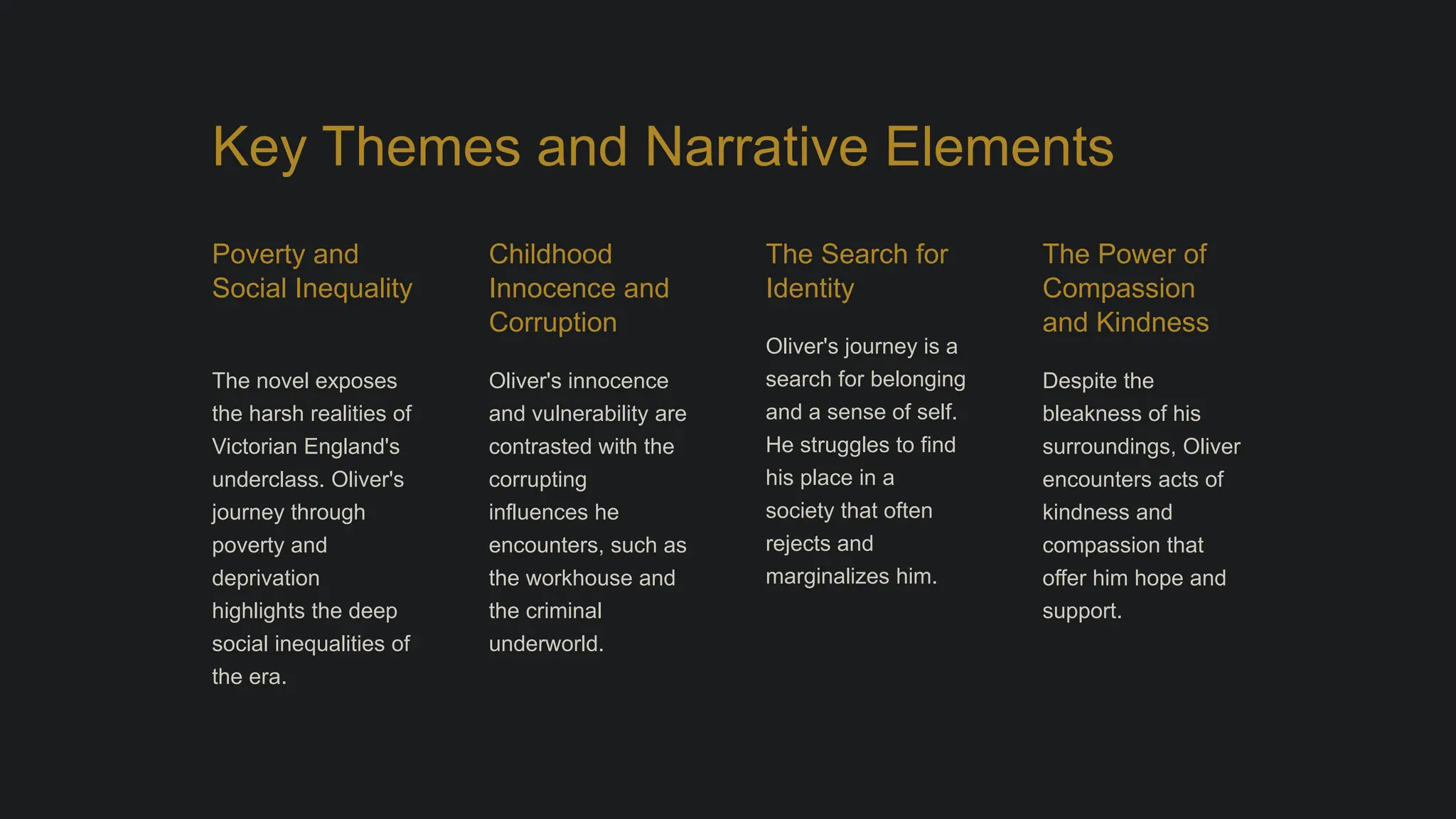
Oliver is portrayed as a young,
innocent child, vulnerable to the harsh
realities of poverty and neglect.
Yearning for Kindness
He longs for compassion and love, a
stark contrast to the cruel environment
he inhabits.
Resilience and Determination
Despite facing adversity, Oliver exhibits a remarkable resilience and determination to
survive.
Dickens' Use of Descriptive Language
Immersive Setting
Dickens skillfully uses vivid
descriptions to create a sense
of place, immersing readers in
the bleak reality of Victorian
London.
Character Depiction
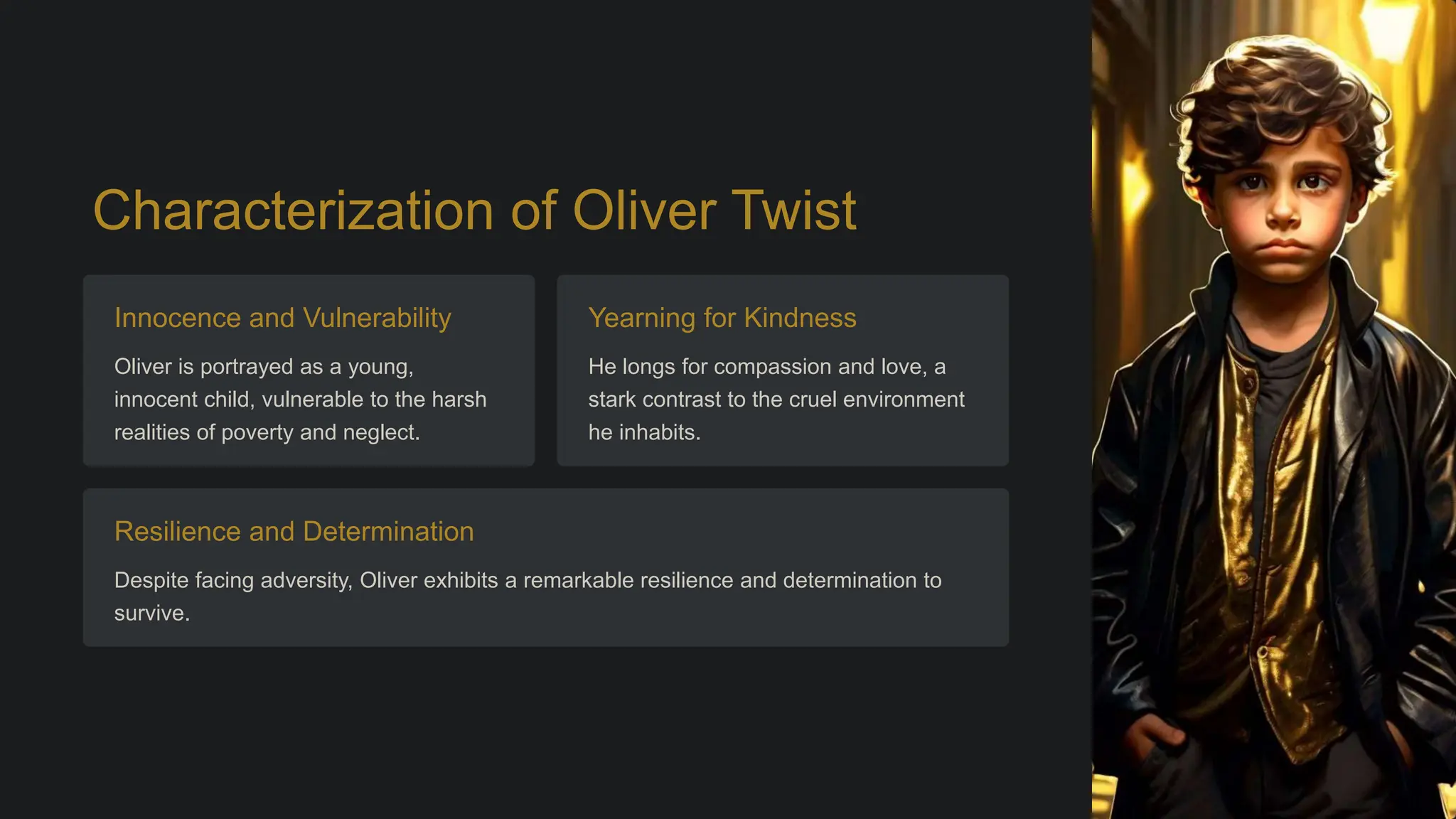
Through evocative details,
Dickens portrays Oliver's
innocence, vulnerability, and
the harshness of his situation,
captivating the reader's
empathy.
Sensory Details
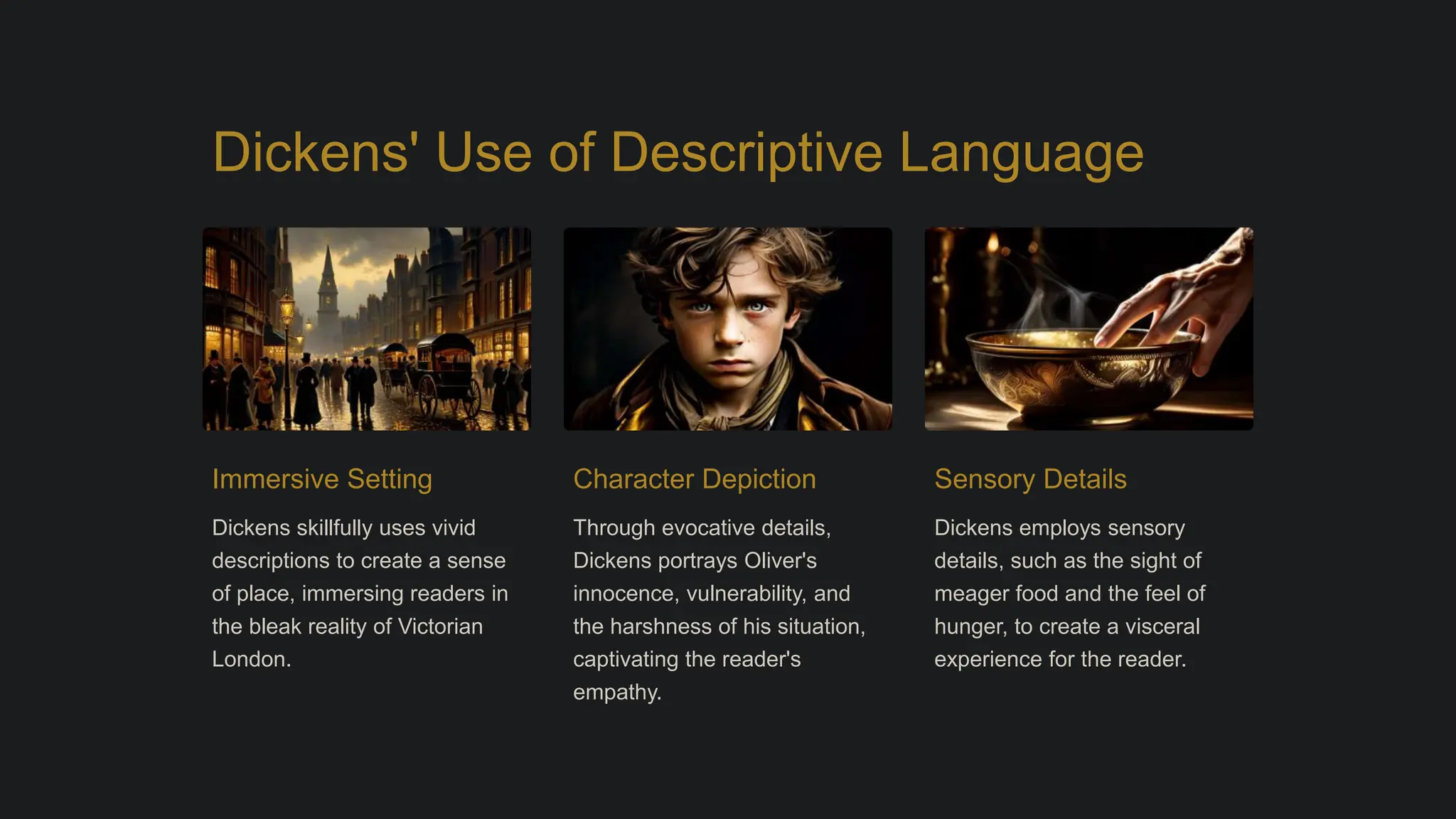
Dickens employs sensory
details, such as the sight of
meager food and the feel of
hunger, to create a visceral
experience for the reader.
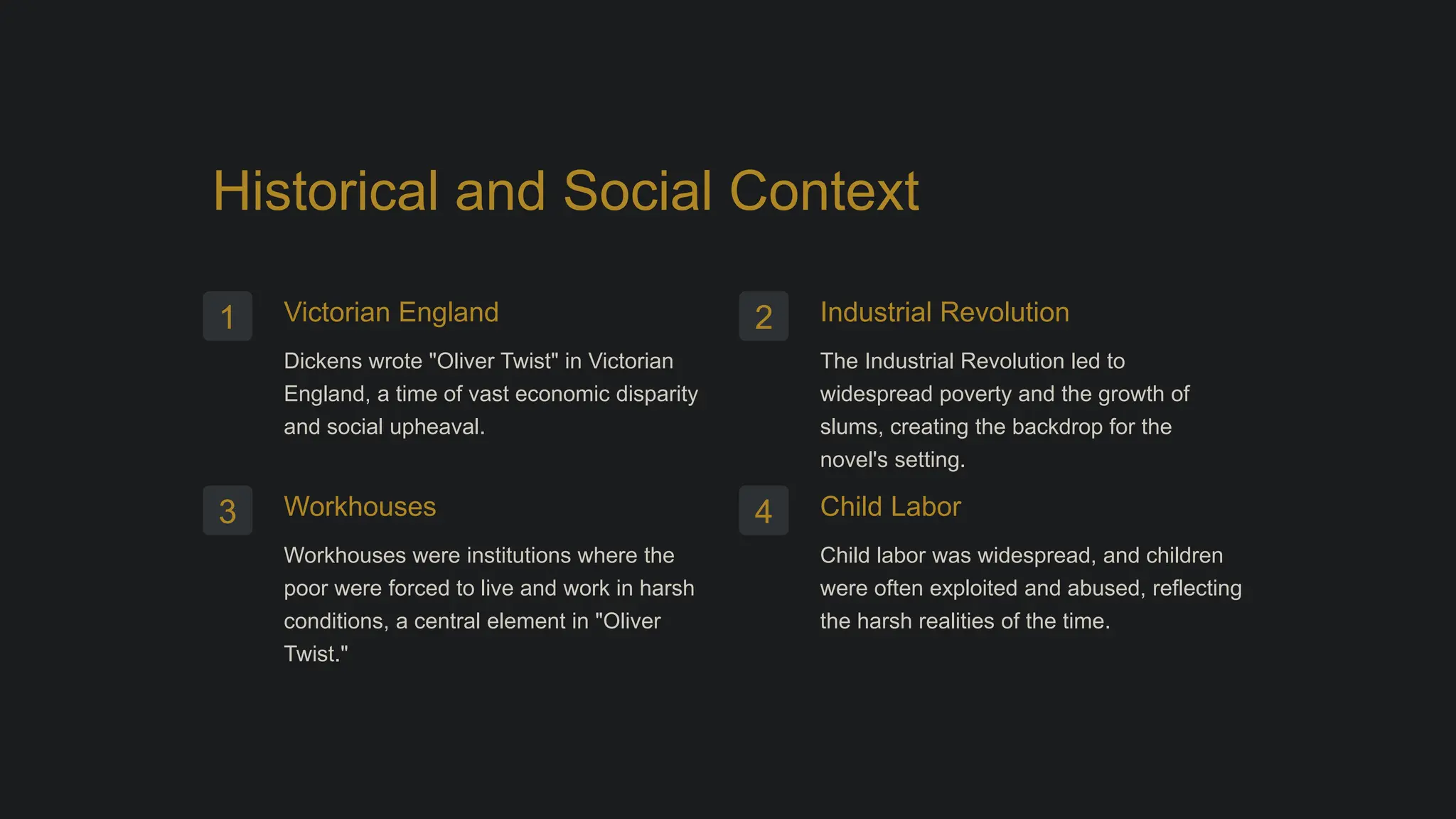
Historical and Social Context
1 Victorian England
Dickens wrote "Oliver Twist" in Victorian
England, a time of vast economic disparity
and social upheaval.
2 Industrial Revolution
The Industrial Revolution led to
widespread poverty and the growth of
slums, creating the backdrop for the
novel's setting.
3 Workhouses
Workhouses were institutions where the
poor were forced to live and work in harsh
conditions, a central element in "Oliver
Twist."
4 Child Labor
Child labor was widespread, and children
were often exploited and abused, reflecting
the harsh realities of the time.
Analyzing the Prose Structure
Sentence Structure
Dickens uses varied sentence
lengths, creating rhythmic
prose. This emphasizes the
dramatic impact and emotional
depth of the passage.
Paragraph Length
The paragraph structure is
carefully crafted, highlighting
key moments in the narrative
and amplifying the story's
impact.
Figurative Language
The use of metaphors and
similes allows Dickens to
vividly describe Oliver's
emotional state and the harsh
realities of his environment.
Class Activity: Rewrite a Scene from
Oliver's Perspective
1 Choose a Scene
Students select a passage from "Oliver Asks for More," focusing on a moment of
significant interaction or emotional tension.
2 Rewrite from Oliver's View
Students rewrite the selected scene from Oliver's perspective, capturing his
thoughts, feelings, and motivations.
3 Share and Discuss
Students share their rewritten scenes, exploring how Oliver's perspective
shapes the narrative, and discussing the challenges of writing in another
character's voice.
Symbolism and Imagery in the Passage
Oliver's Hunger
The empty bowl
symbolizes Oliver's
constant hunger and
poverty. It is a visual
representation of his
deprivation and the
harsh realities of his
life.
Escape and Hope
The doorway, a
symbol of transition
and opportunity,
represents Oliver's
desire to escape his
oppressive
environment. It
represents the
potential for a better
life.
Oppression and
Restriction
The lock and key, a
symbol of
confinement and
control, represent the
oppressive nature of
the workhouse
system. They
illustrate Oliver's lack
of freedom and
choice.
Mr. Bumble's
Authority
Mr. Bumble's
presence embodies
the oppressive
authority of the
workhouse. His
presence casts a
shadow over Oliver,
highlighting the power
imbalances.
Connections to Modern Society
Poverty and
Inequality
Oliver Twist's experiences
of poverty and hardship
continue to resonate today,
highlighting the ongoing
challenges of inequality
and social injustice.
Dickens' work serves as a
stark reminder of the need
for social reform and the
importance of addressing
systemic issues that
perpetuate poverty.
Child Labor
The novel exposes the
exploitation of children in
the Victorian era through
forced labor and harsh
working conditions, a grim
reality that sadly persists in
some parts of the world
today. This serves as a call
to action to protect child
rights and combat
exploitation in all its forms.
Social Commentary
Dickens' social
commentary on the flaws of
the workhouse system and
the corrupt nature of
authority figures remains
relevant today. His critique
of societal structures and
the inequalities they
perpetuate continues to
spark important
conversations about social
justice and the need for
reform.
Conclusion and Key
Takeaways
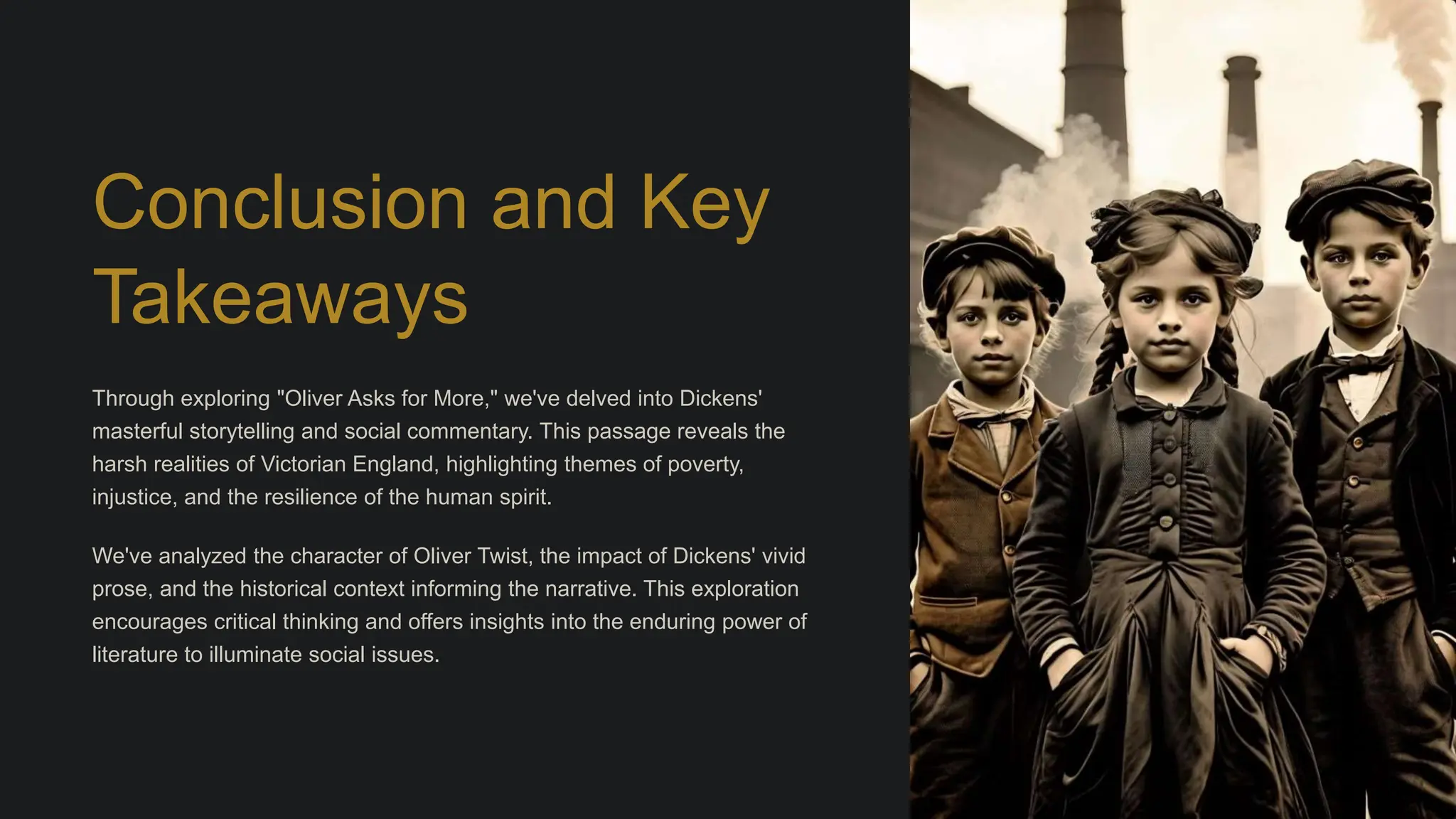
Through exploring "Oliver Asks for More," we've delved into Dickens'
masterful storytelling and social commentary. This passage reveals the
harsh realities of Victorian England, highlighting themes of poverty,
injustice, and the resilience of the human spirit.
We've analyzed the character of Oliver Twist, the impact of Dickens' vivid
prose, and the historical context informing the narrative. This exploration
encourages critical thinking and offers insights into the enduring power of
literature to illuminate social issues.

Oliver Asks for More by Charles Dickens (9)

  • 1.
    Oliver Asks forMore by Charles Dickens This presentation introduces Charles Dickens's "Oliver Twist," focusing on the pivotal scene, "Oliver Asks for More." We will analyze the scene's impact on Oliver's character development and the story's overall narrative.
  • 2.
    Key Themes andNarrative Elements Poverty and Social Inequality The novel exposes the harsh realities of Victorian England's underclass. Oliver's journey through poverty and deprivation highlights the deep social inequalities of the era. Childhood Innocence and Corruption Oliver's innocence and vulnerability are contrasted with the corrupting influences he encounters, such as the workhouse and the criminal underworld. The Search for Identity Oliver's journey is a search for belonging and a sense of self. He struggles to find his place in a society that often rejects and marginalizes him. The Power of Compassion and Kindness Despite the bleakness of his surroundings, Oliver encounters acts of kindness and compassion that offer him hope and support.
  • 3.
    Characterization of OliverTwist Innocence and Vulnerability Oliver is portrayed as a young, innocent child, vulnerable to the harsh realities of poverty and neglect. Yearning for Kindness He longs for compassion and love, a stark contrast to the cruel environment he inhabits. Resilience and Determination Despite facing adversity, Oliver exhibits a remarkable resilience and determination to survive.
  • 4.
    Dickens' Use ofDescriptive Language Immersive Setting Dickens skillfully uses vivid descriptions to create a sense of place, immersing readers in the bleak reality of Victorian London. Character Depiction Through evocative details, Dickens portrays Oliver's innocence, vulnerability, and the harshness of his situation, captivating the reader's empathy. Sensory Details Dickens employs sensory details, such as the sight of meager food and the feel of hunger, to create a visceral experience for the reader.
  • 5.
    Historical and SocialContext 1 Victorian England Dickens wrote "Oliver Twist" in Victorian England, a time of vast economic disparity and social upheaval. 2 Industrial Revolution The Industrial Revolution led to widespread poverty and the growth of slums, creating the backdrop for the novel's setting. 3 Workhouses Workhouses were institutions where the poor were forced to live and work in harsh conditions, a central element in "Oliver Twist." 4 Child Labor Child labor was widespread, and children were often exploited and abused, reflecting the harsh realities of the time.
  • 6.
    Analyzing the ProseStructure Sentence Structure Dickens uses varied sentence lengths, creating rhythmic prose. This emphasizes the dramatic impact and emotional depth of the passage. Paragraph Length The paragraph structure is carefully crafted, highlighting key moments in the narrative and amplifying the story's impact. Figurative Language The use of metaphors and similes allows Dickens to vividly describe Oliver's emotional state and the harsh realities of his environment.
  • 7.
    Class Activity: Rewritea Scene from Oliver's Perspective 1 Choose a Scene Students select a passage from "Oliver Asks for More," focusing on a moment of significant interaction or emotional tension. 2 Rewrite from Oliver's View Students rewrite the selected scene from Oliver's perspective, capturing his thoughts, feelings, and motivations. 3 Share and Discuss Students share their rewritten scenes, exploring how Oliver's perspective shapes the narrative, and discussing the challenges of writing in another character's voice.
  • 8.
    Symbolism and Imageryin the Passage Oliver's Hunger The empty bowl symbolizes Oliver's constant hunger and poverty. It is a visual representation of his deprivation and the harsh realities of his life. Escape and Hope The doorway, a symbol of transition and opportunity, represents Oliver's desire to escape his oppressive environment. It represents the potential for a better life. Oppression and Restriction The lock and key, a symbol of confinement and control, represent the oppressive nature of the workhouse system. They illustrate Oliver's lack of freedom and choice. Mr. Bumble's Authority Mr. Bumble's presence embodies the oppressive authority of the workhouse. His presence casts a shadow over Oliver, highlighting the power imbalances.
  • 9.
    Connections to ModernSociety Poverty and Inequality Oliver Twist's experiences of poverty and hardship continue to resonate today, highlighting the ongoing challenges of inequality and social injustice. Dickens' work serves as a stark reminder of the need for social reform and the importance of addressing systemic issues that perpetuate poverty. Child Labor The novel exposes the exploitation of children in the Victorian era through forced labor and harsh working conditions, a grim reality that sadly persists in some parts of the world today. This serves as a call to action to protect child rights and combat exploitation in all its forms. Social Commentary Dickens' social commentary on the flaws of the workhouse system and the corrupt nature of authority figures remains relevant today. His critique of societal structures and the inequalities they perpetuate continues to spark important conversations about social justice and the need for reform.
  • 10.
    Conclusion and Key Takeaways Throughexploring "Oliver Asks for More," we've delved into Dickens' masterful storytelling and social commentary. This passage reveals the harsh realities of Victorian England, highlighting themes of poverty, injustice, and the resilience of the human spirit. We've analyzed the character of Oliver Twist, the impact of Dickens' vivid prose, and the historical context informing the narrative. This exploration encourages critical thinking and offers insights into the enduring power of literature to illuminate social issues.