What is Character? Part I J. Santoy
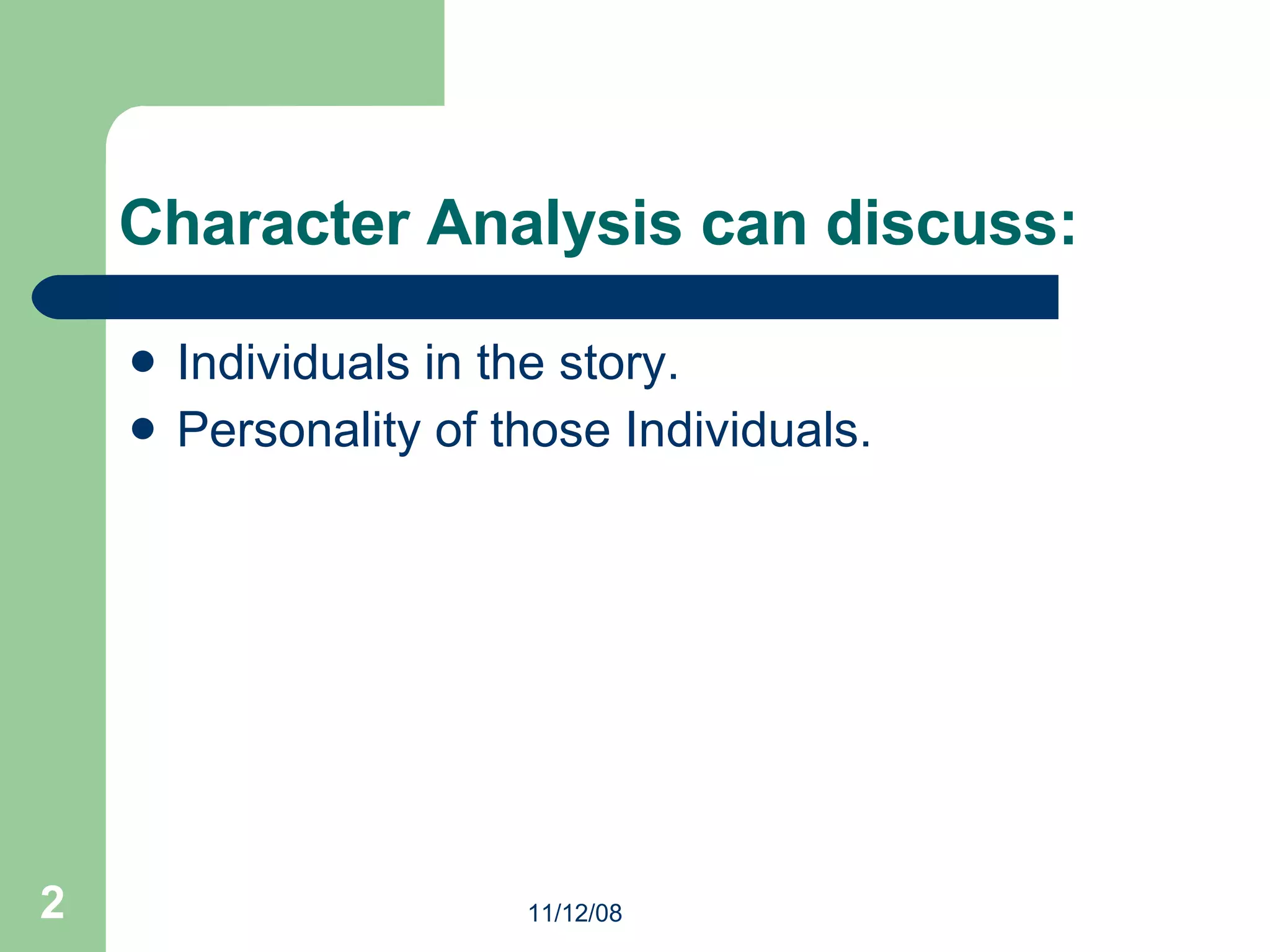
Character Analysis can discuss: Individuals in the story. Personality of those Individuals.
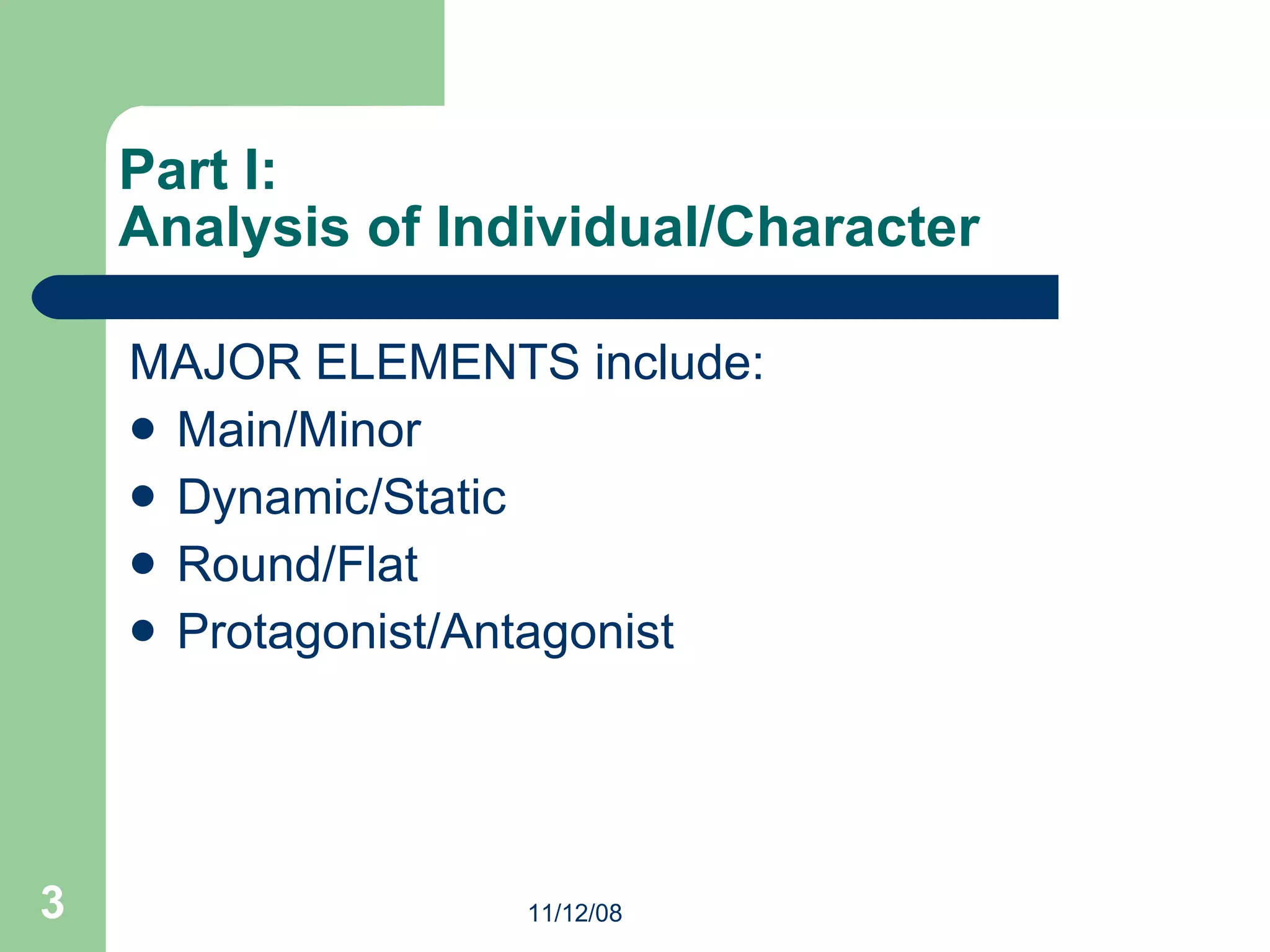
Part I: Analysis of Individual/Character MAJOR ELEMENTS include: Main/Minor Dynamic/Static Round/Flat Protagonist/Antagonist
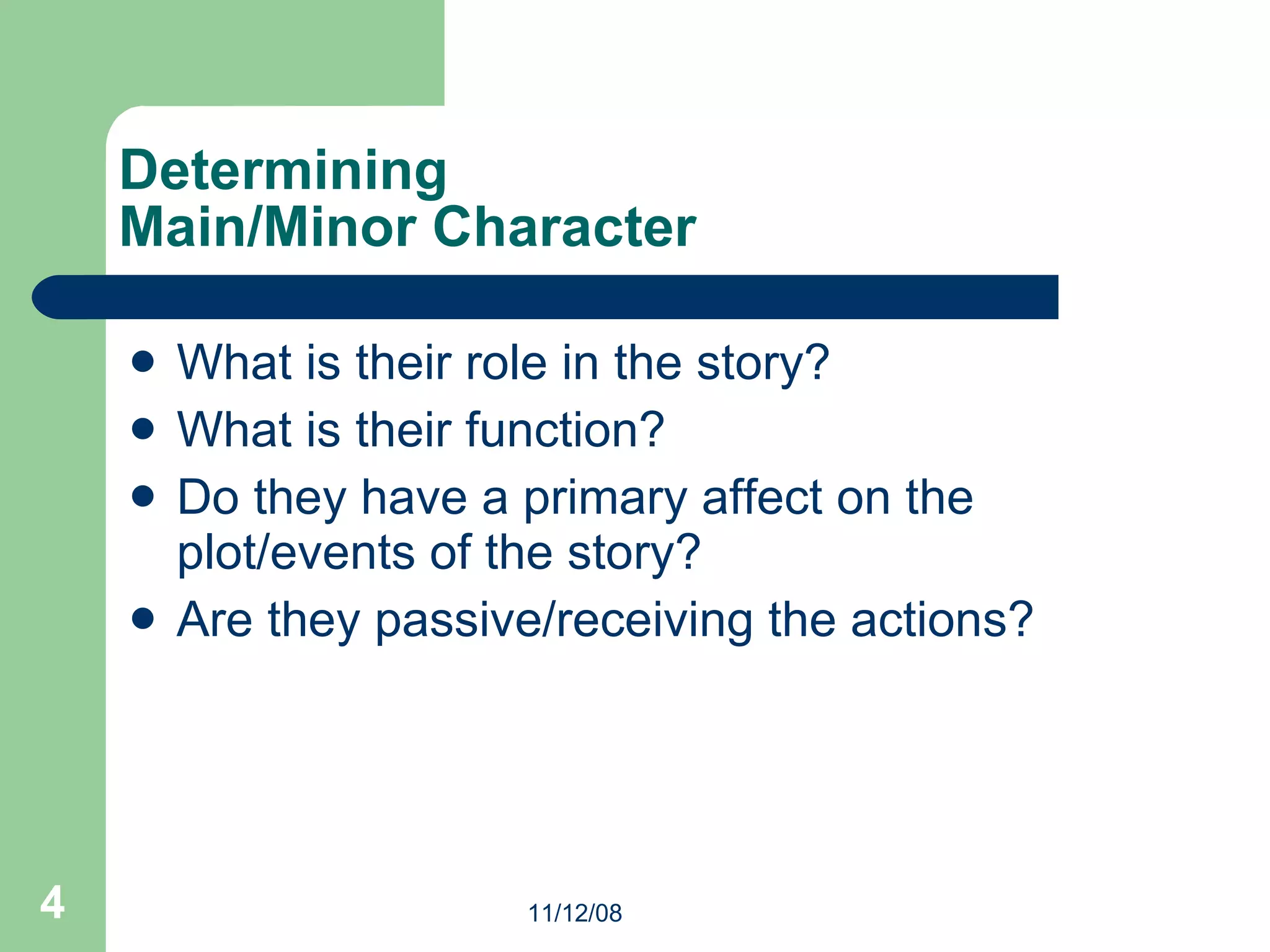
Determining  Main/Minor Character What is their role in the story? What is their function? Do they have a primary affect on the plot/events of the story? Are they passive/receiving the actions?
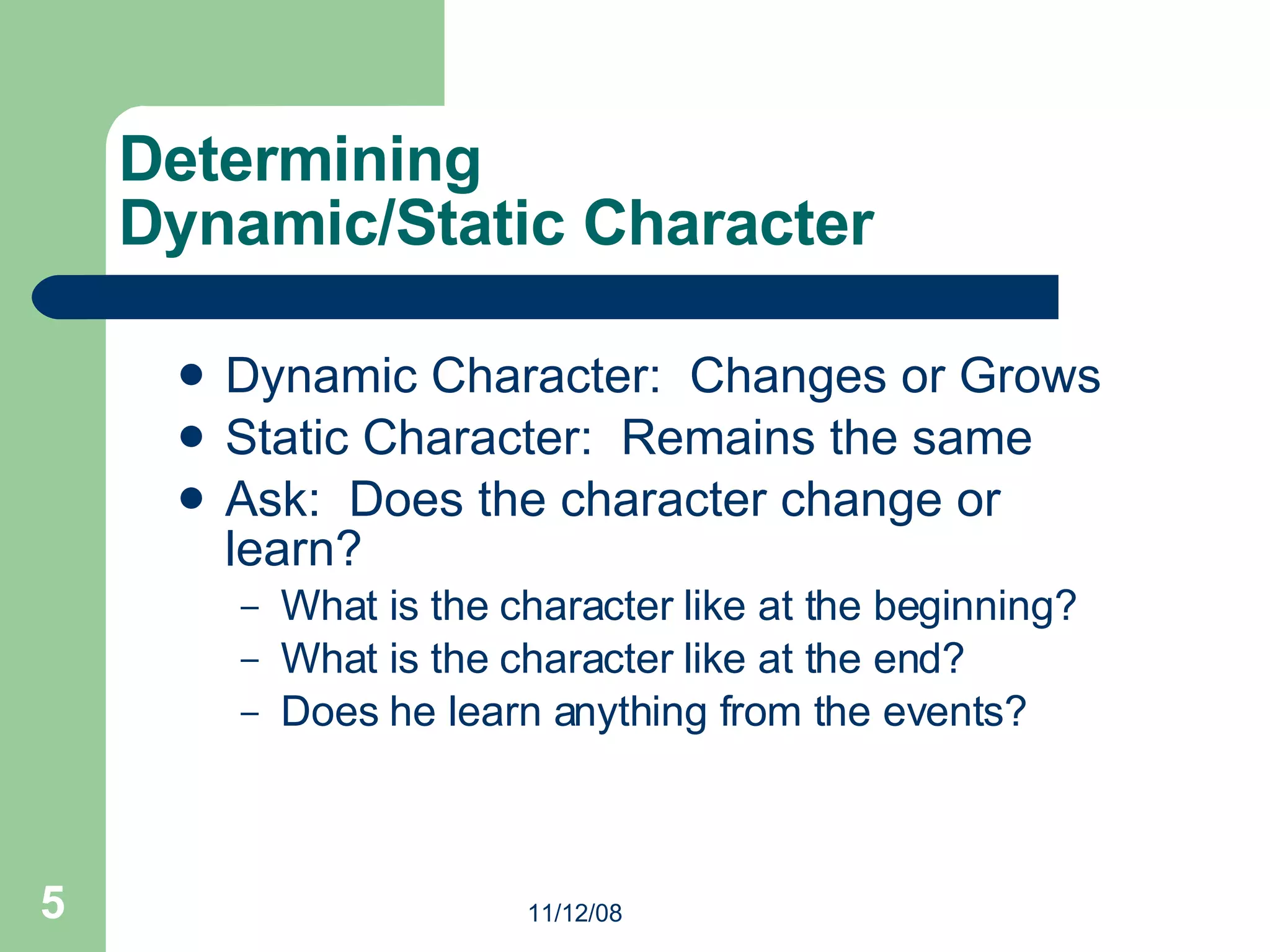
Determining  Dynamic/Static Character Dynamic Character:  Changes or Grows  Static Character:  Remains the same Ask:  Does the character change or learn? What is the character like at the beginning? What is the character like at the end? Does he learn anything from the events?
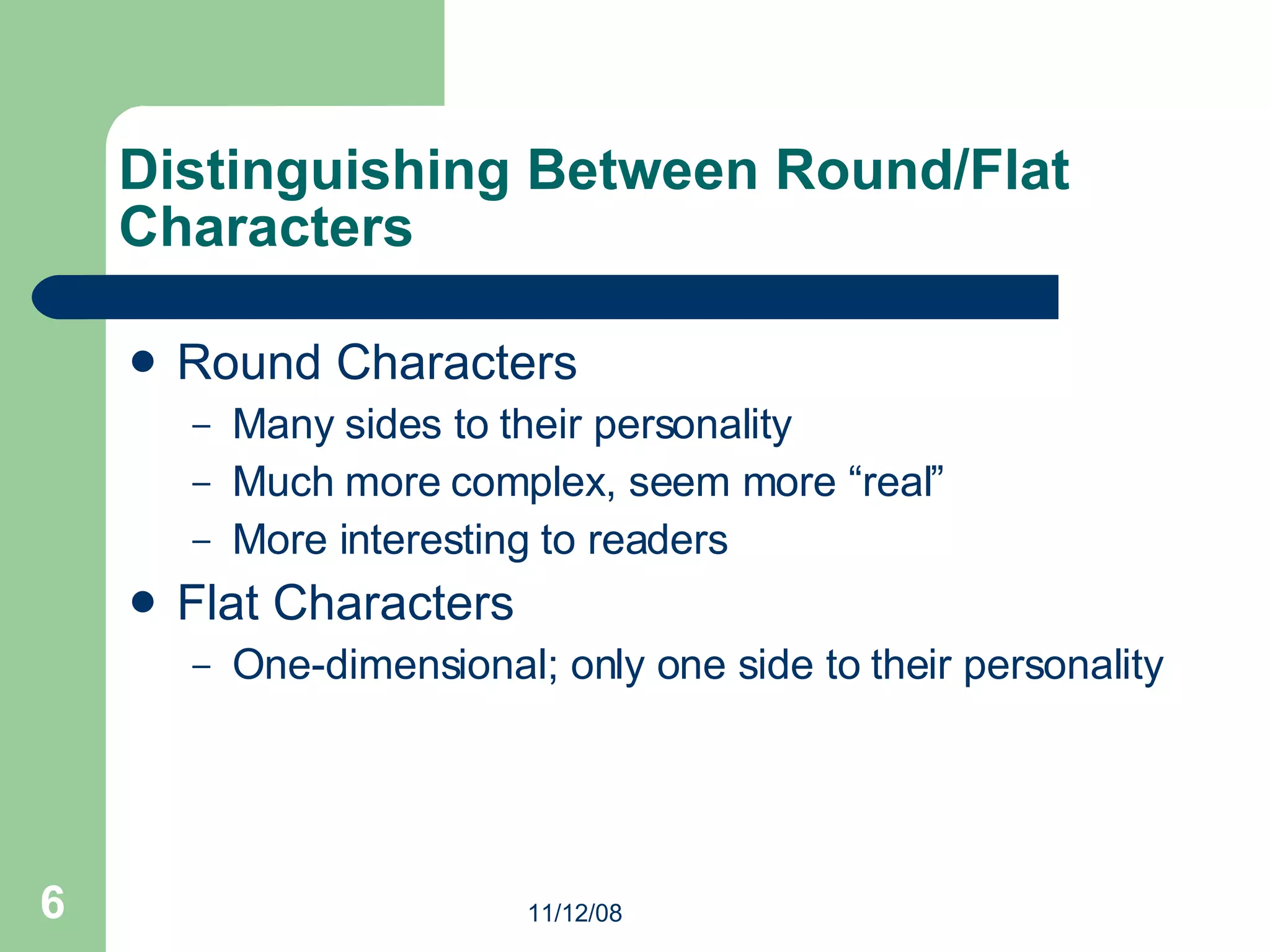
Distinguishing Between Round/Flat Characters Round Characters Many sides to their personality Much more complex, seem more “real” More interesting to readers Flat Characters One-dimensional; only one side to their personality
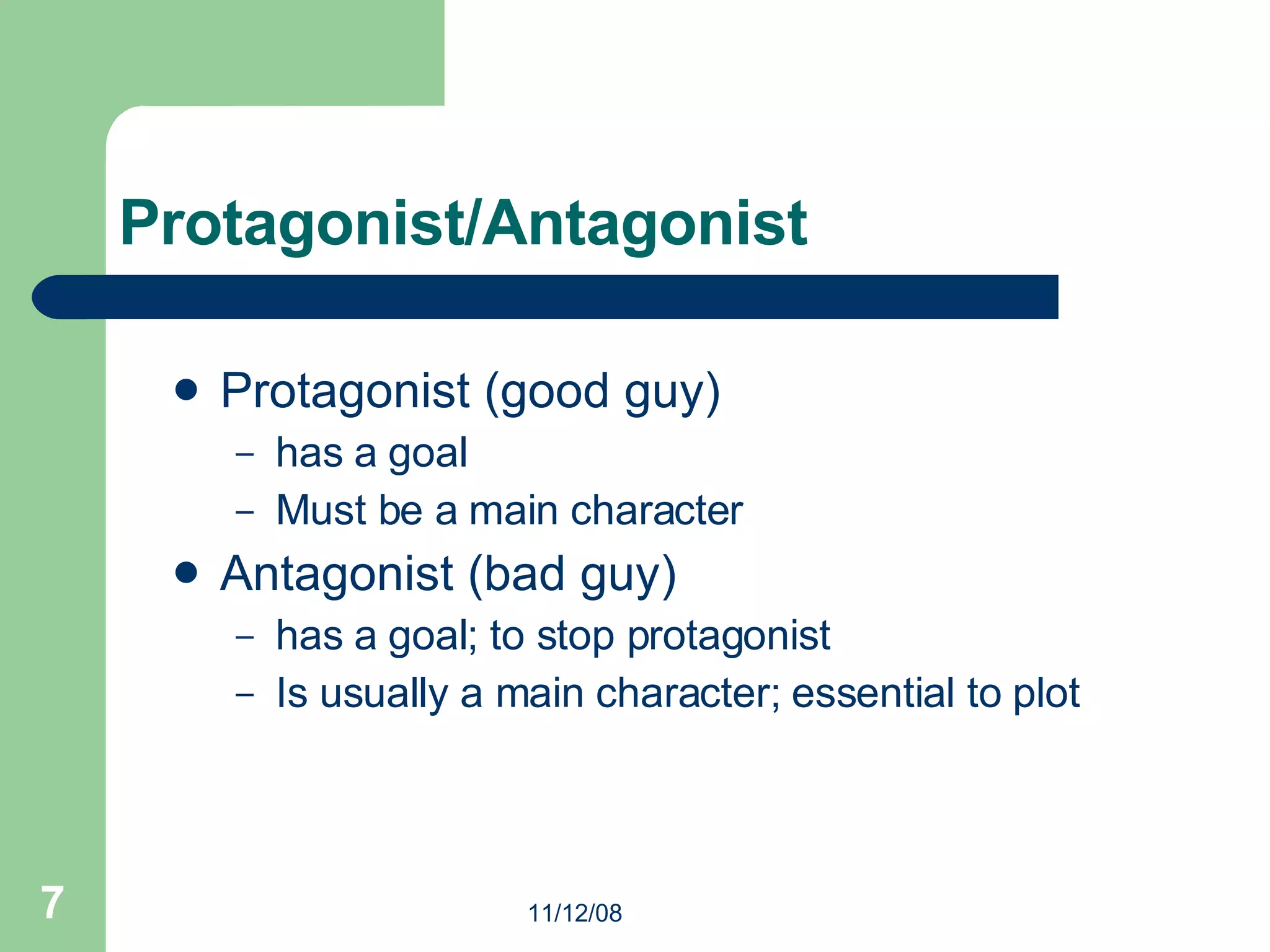
Protagonist/Antagonist Protagonist (good guy) has a goal Must be a main character Antagonist (bad guy) has a goal; to stop protagonist Is usually a main character; essential to plot
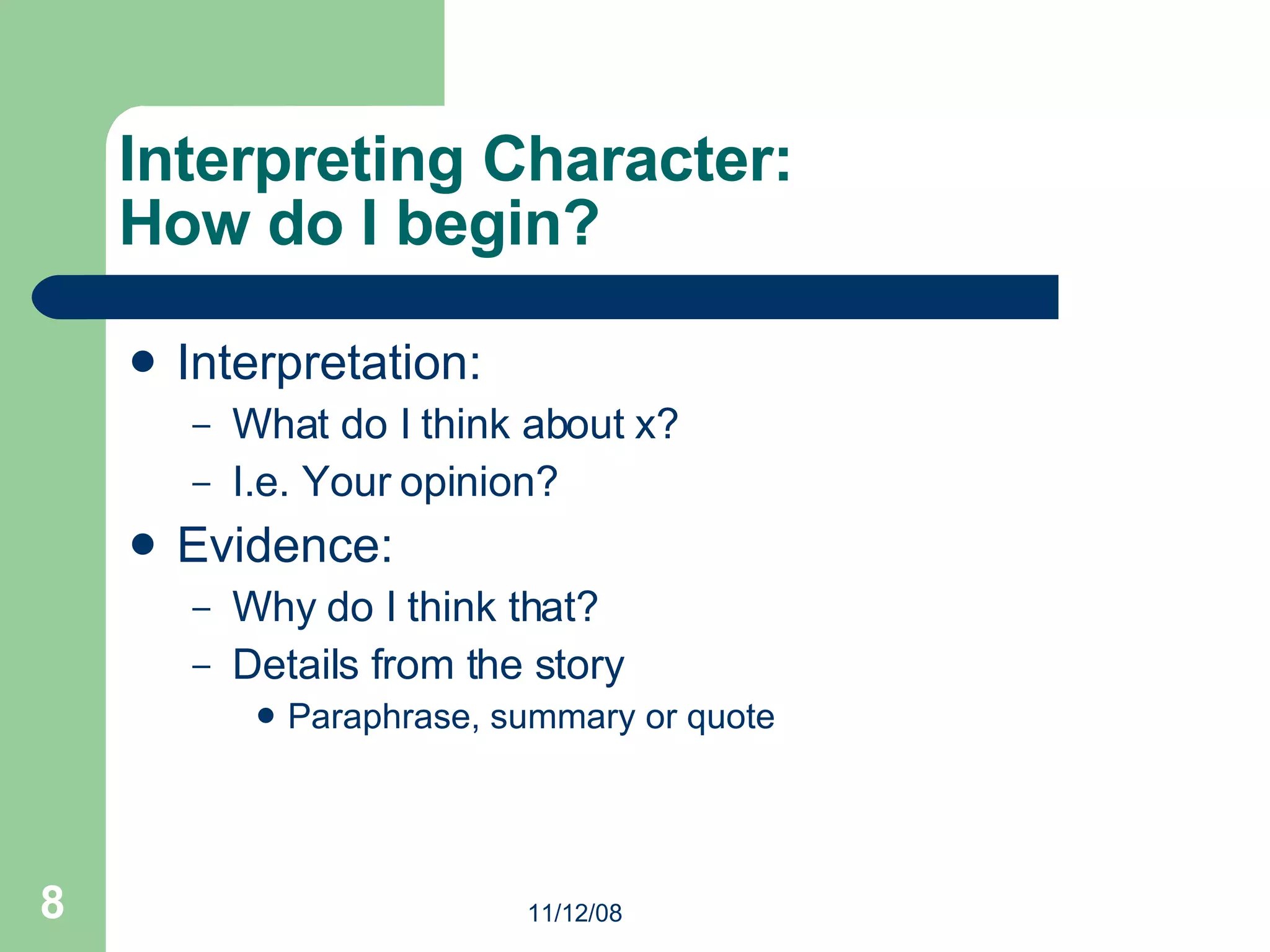
Interpreting Character: How do I begin? Interpretation:  What do I think about x?  I.e. Your opinion? Evidence: Why do I think that? Details from the story Paraphrase, summary or quote
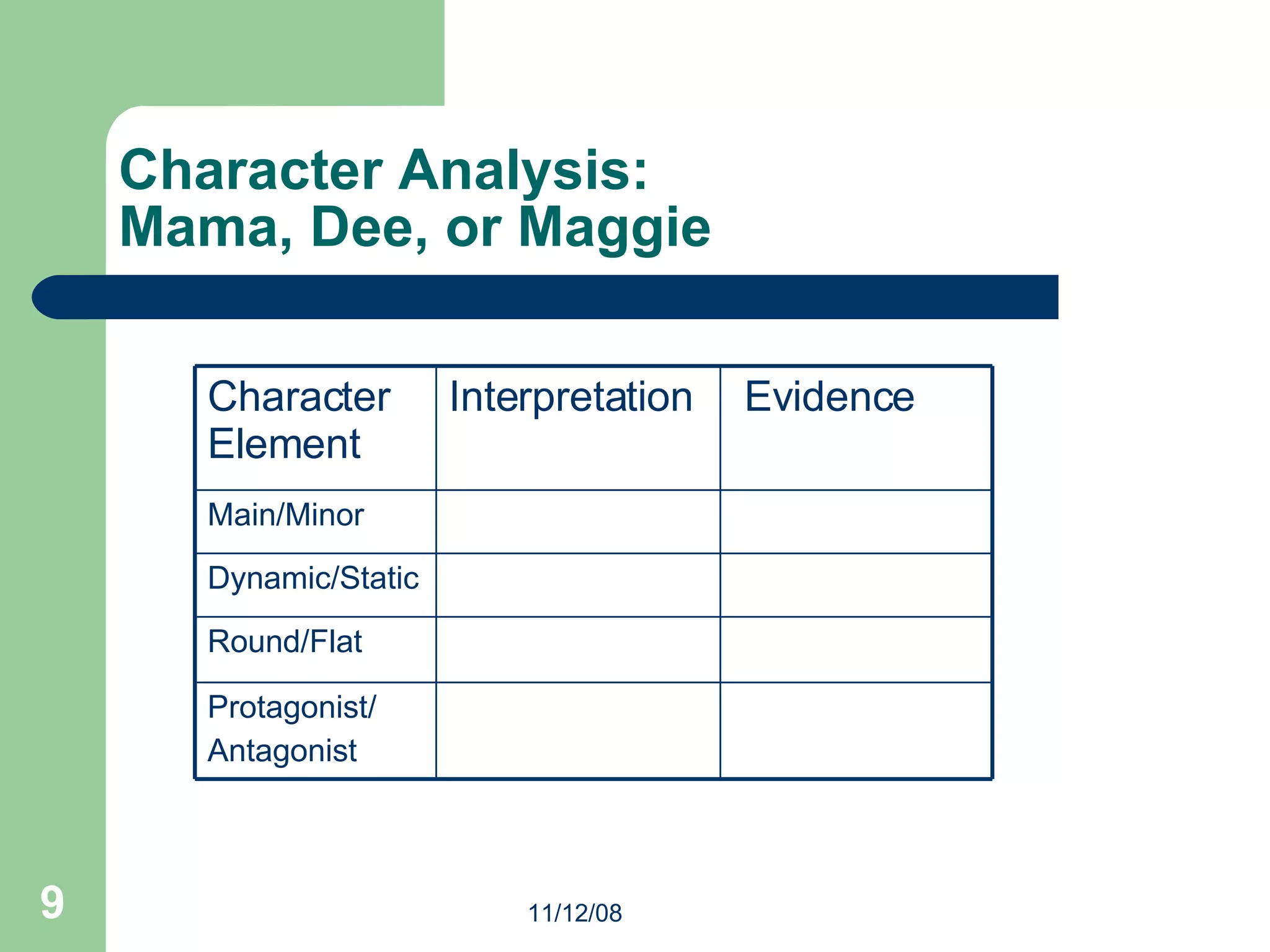
Character Analysis: Mama, Dee, or Maggie Protagonist/ Antagonist Round/Flat Dynamic/Static Interpretation Main/Minor Evidence Character Element
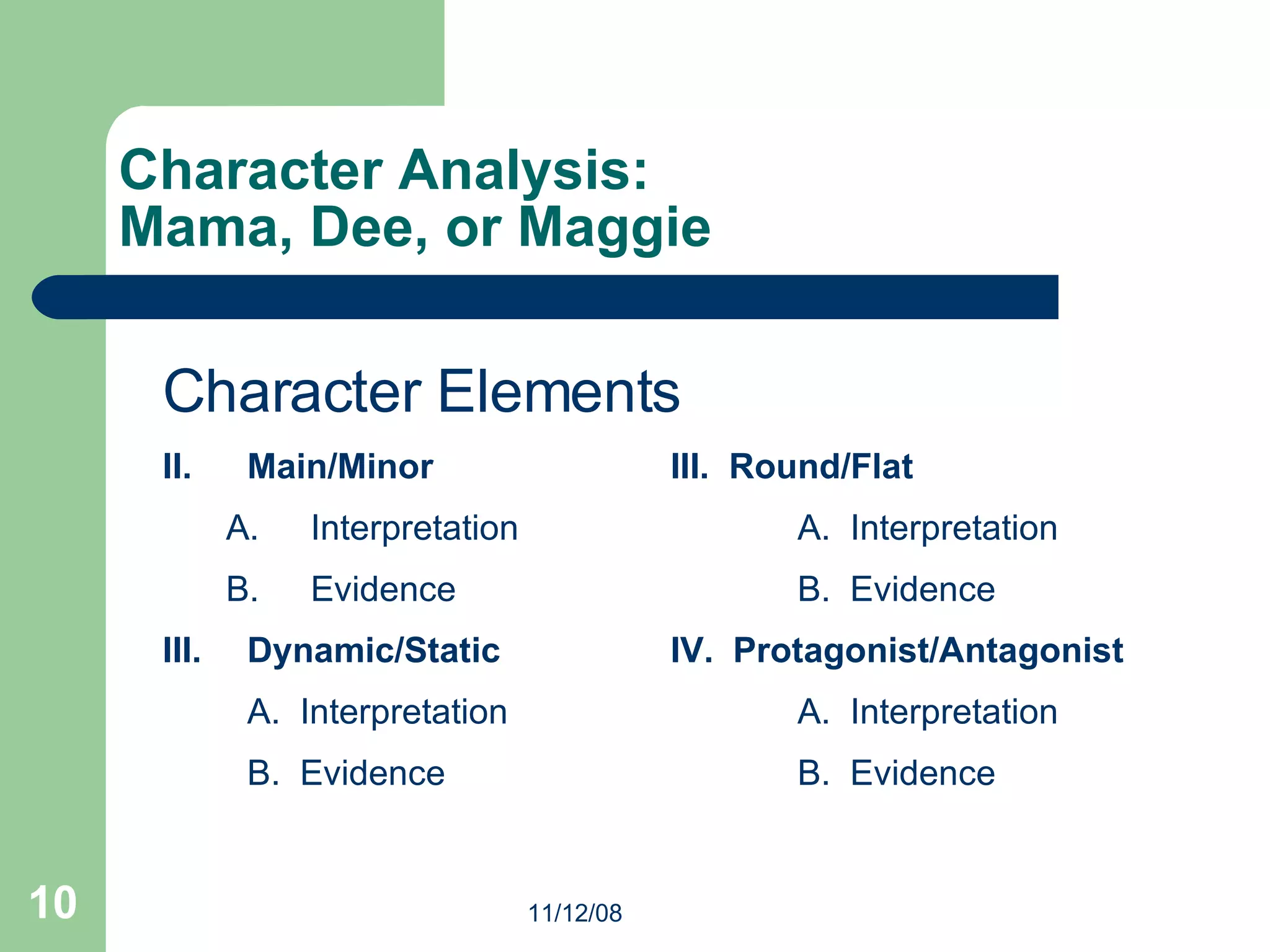
Character Analysis: Mama, Dee, or Maggie Character Elements Main/Minor III.  Round/Flat Interpretation A.  Interpretation Evidence B.  Evidence Dynamic/Static IV.  Protagonist/Antagonist A.  Interpretation A.  Interpretation B.  Evidence B.  Evidence
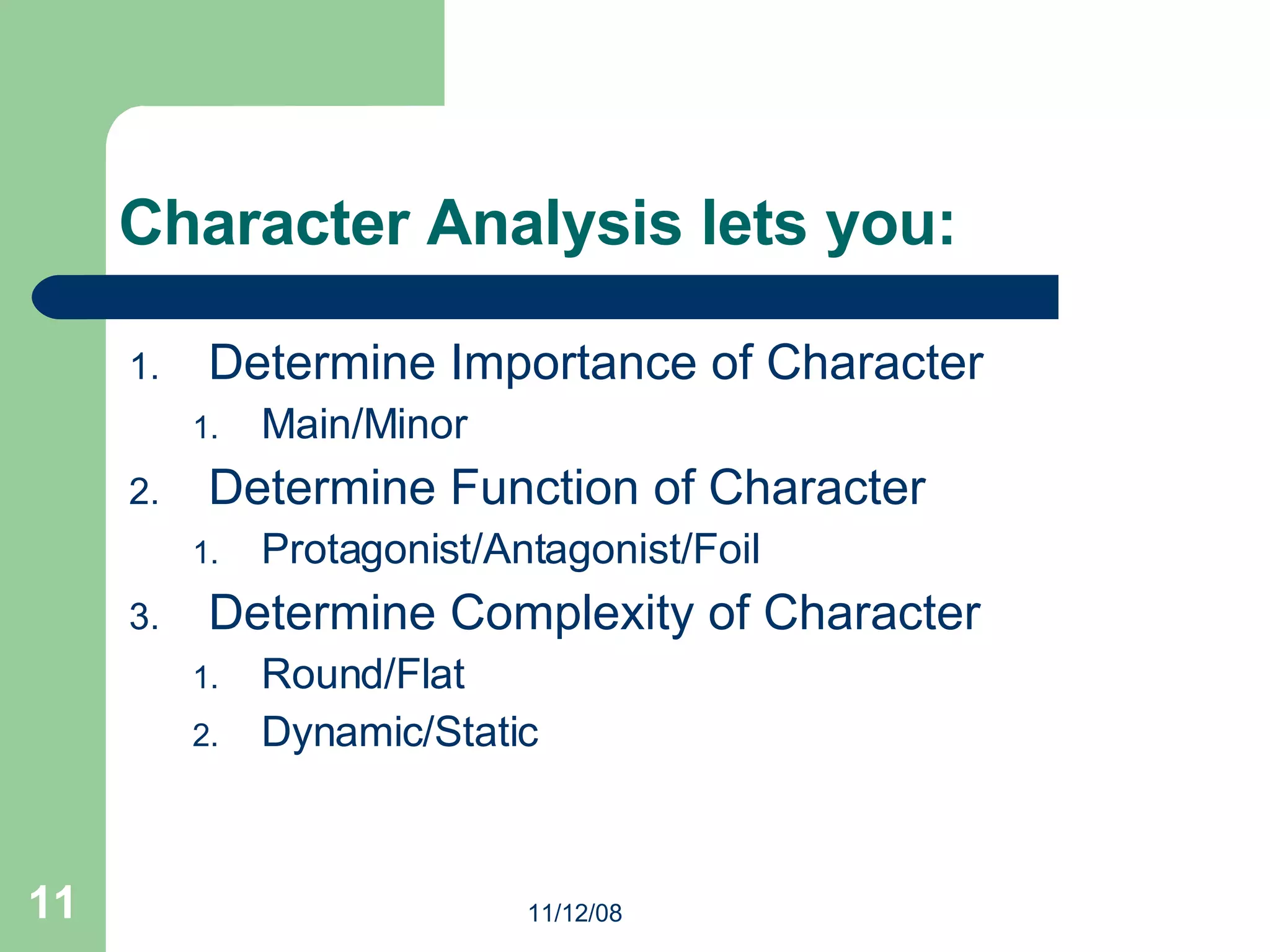
Character Analysis lets you: Determine Importance of Character Main/Minor Determine Function of Character Protagonist/Antagonist/Foil Determine Complexity of Character Round/Flat Dynamic/Static

What Is Character

  • 1.
    What is Character?Part I J. Santoy
  • 2.
    Character Analysis candiscuss: Individuals in the story. Personality of those Individuals.
  • 3.
    Part I: Analysisof Individual/Character MAJOR ELEMENTS include: Main/Minor Dynamic/Static Round/Flat Protagonist/Antagonist
  • 4.
    Determining Main/MinorCharacter What is their role in the story? What is their function? Do they have a primary affect on the plot/events of the story? Are they passive/receiving the actions?
  • 5.
    Determining Dynamic/StaticCharacter Dynamic Character: Changes or Grows Static Character: Remains the same Ask: Does the character change or learn? What is the character like at the beginning? What is the character like at the end? Does he learn anything from the events?
  • 6.
    Distinguishing Between Round/FlatCharacters Round Characters Many sides to their personality Much more complex, seem more “real” More interesting to readers Flat Characters One-dimensional; only one side to their personality
  • 7.
    Protagonist/Antagonist Protagonist (goodguy) has a goal Must be a main character Antagonist (bad guy) has a goal; to stop protagonist Is usually a main character; essential to plot
  • 8.
    Interpreting Character: Howdo I begin? Interpretation: What do I think about x? I.e. Your opinion? Evidence: Why do I think that? Details from the story Paraphrase, summary or quote
  • 9.
    Character Analysis: Mama,Dee, or Maggie Protagonist/ Antagonist Round/Flat Dynamic/Static Interpretation Main/Minor Evidence Character Element
  • 10.
    Character Analysis: Mama,Dee, or Maggie Character Elements Main/Minor III. Round/Flat Interpretation A. Interpretation Evidence B. Evidence Dynamic/Static IV. Protagonist/Antagonist A. Interpretation A. Interpretation B. Evidence B. Evidence
  • 11.
    Character Analysis letsyou: Determine Importance of Character Main/Minor Determine Function of Character Protagonist/Antagonist/Foil Determine Complexity of Character Round/Flat Dynamic/Static