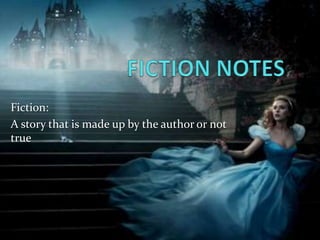
Fiction:
A story that is made up by the author or not
true
CHARACTER
 The people or animals
 that take part in the
 story.

 MAIN CHARACTER:
 who the story is mainly
 about

 MINOR CHARACTER:
 the less important
 characters in the story
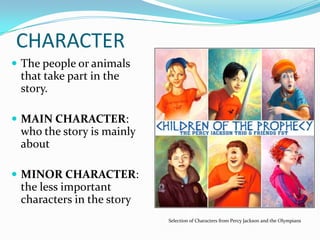
                           Selection of Characters from Percy Jackson and the Olympians
PROTAGONIST

                   The HERO of the story
                   who is faced with a
                   conflict (usually the
                   main character).


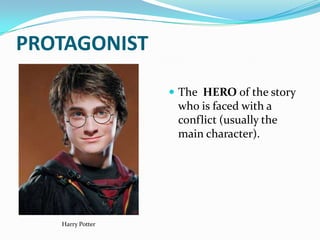
   Harry Potter
ANTAGONIST

 Usually the villain in the
  story (the
  person, animal, or
  creature who creates
  conflict for the main
  character).


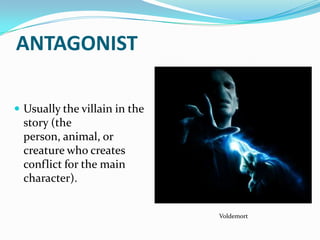
                               Voldemort
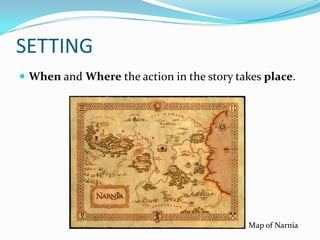
SETTING
 When and Where the action in the story takes place.


                                           Map of Narnia
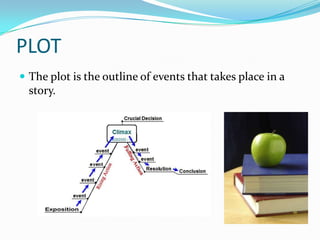
PLOT
 The plot is the outline of events that takes place in a
  story.
CONFLICT
A fight or difference in
   opinion.
1. INTERNAL CONFLICT
 Takes place within a
   character’s mind.

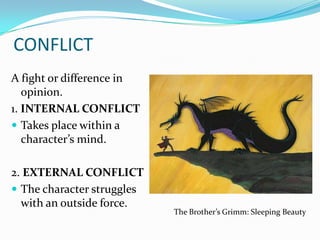
2. EXTERNAL CONFLICT
 The character struggles
  with an outside force.
                            The Brother’s Grimm: Sleeping Beauty
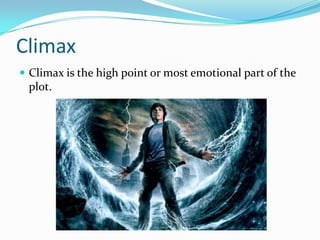
Climax
 Climax is the high point or most emotional part of the
 plot.
Resolution
              Resolution is the
              conclusion of the story.

              The reader finds out how
              the conflict has been
              resolved and what
              happens with the
              characters.
WHAT IS THEME?????
 The THEME is the idea
  about life that is
  revealed in the story.
POINT OF VIEW
The vantage point from which a story is told.

1st person
 the writer uses first-person pronouns (I or me) to tell
   the story.
3rd person
 narrator describes the events, but does not take part in
   them.
3rd person omniscient
 the narrator knows everything; encompassing.
Foreshadowing
 A writers way of hinting at what will come in the story.


 A reader can make predictions based on the
  information given.
Author’s Purpose
 Authors have a purpose in mind when writing:
 entertain, debate, analyze, persuade, inform, etc.

 They consider their audience when deciding on a
 subject, purpose for writing, and the tone and style in
 which to write.
Dialogue
 The words that characters speak aloud
Tone
 Shows the writer’s attitude toward his or her subject
 (humorous, serious, impatient, sad, etc.)
Symbolism
 Something concrete—such as a person, place, or
 object—that signifies something more than just
 itself, something abstract, such as a concept or an idea.
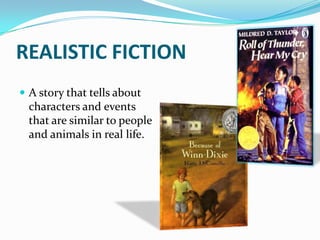
REALISTIC FICTION
 A story that tells about
  characters and events
  that are similar to people
  and animals in real life.
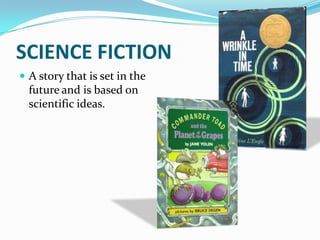
SCIENCE FICTION
 A story that is set in the
  future and is based on
  scientific ideas.
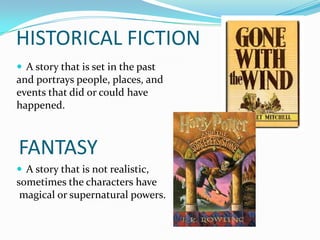
HISTORICAL FICTION
 A story that is set in the past
and portrays people, places, and
events that did or could have
happened.


FANTASY
 A story that is not realistic,
sometimes the characters have
 magical or supernatural powers.

Fiction power point

  • 1.
    Fiction: A story thatis made up by the author or not true
  • 2.
    CHARACTER  The peopleor animals that take part in the story.  MAIN CHARACTER: who the story is mainly about  MINOR CHARACTER: the less important characters in the story Selection of Characters from Percy Jackson and the Olympians
  • 3.
    PROTAGONIST  The HERO of the story who is faced with a conflict (usually the main character). Harry Potter
  • 4.
    ANTAGONIST  Usually thevillain in the story (the person, animal, or creature who creates conflict for the main character). Voldemort
  • 5.
    SETTING  When andWhere the action in the story takes place. Map of Narnia
  • 6.
    PLOT  The plotis the outline of events that takes place in a story.
  • 7.
    CONFLICT A fight ordifference in opinion. 1. INTERNAL CONFLICT  Takes place within a character’s mind. 2. EXTERNAL CONFLICT  The character struggles with an outside force. The Brother’s Grimm: Sleeping Beauty
  • 8.
    Climax  Climax isthe high point or most emotional part of the plot.
  • 9.
    Resolution  Resolution is the conclusion of the story.  The reader finds out how the conflict has been resolved and what happens with the characters.
  • 10.
    WHAT IS THEME????? The THEME is the idea about life that is revealed in the story.
  • 11.
    POINT OF VIEW Thevantage point from which a story is told. 1st person  the writer uses first-person pronouns (I or me) to tell the story. 3rd person  narrator describes the events, but does not take part in them. 3rd person omniscient  the narrator knows everything; encompassing.
  • 12.
    Foreshadowing  A writersway of hinting at what will come in the story.  A reader can make predictions based on the information given.
  • 13.
    Author’s Purpose  Authorshave a purpose in mind when writing: entertain, debate, analyze, persuade, inform, etc.  They consider their audience when deciding on a subject, purpose for writing, and the tone and style in which to write.
  • 14.
    Dialogue  The wordsthat characters speak aloud
  • 15.
    Tone  Shows thewriter’s attitude toward his or her subject (humorous, serious, impatient, sad, etc.)
  • 16.
    Symbolism  Something concrete—suchas a person, place, or object—that signifies something more than just itself, something abstract, such as a concept or an idea.
  • 17.
    REALISTIC FICTION  Astory that tells about characters and events that are similar to people and animals in real life.
  • 18.
    SCIENCE FICTION  Astory that is set in the future and is based on scientific ideas.
  • 19.
    HISTORICAL FICTION  Astory that is set in the past and portrays people, places, and events that did or could have happened. FANTASY  A story that is not realistic, sometimes the characters have magical or supernatural powers.