z
PLOT IN LITERATURE
z
PLOT
 a literary term used to describe the basic action within a
work of fiction. • In a strongly plotted story, the events
usually follow this pattern: a conflict or problem is
established; complications arise from the conflict; a main
character takes decisive action, or the situation itself
brings about a climax; the conflict is resolved. • Modern
short stories and novels, however, frequently deviate
from this outline. One of the most common is a non-
plotted character sketch.
z
TERMS USED TO DESCRIBE THE PLOT
• CONFLICT • describes some problem or trouble within the
story. It frequently falls into one of the following categories: •
man vs. man • man vs. himself • man vs. nature • man vs.
society • man vs. supernatural
• RISING ACTION •describes the introduction of the conflict
and the resulting complications.
• CLIMAX •designates the moment of highest tension in the
story. It represents the moment when the outcome is
decided.
• FALLING ACTION •describes the falling off of intensity
within the story.
• DENOUEMENT •is a French word used to describe the final
resolution of details within the story. It is everything that
occurs after the climax.
z COMMON PLOT DEVELOPMENT STRUCTURE
z
COMMON LITERARY TECHNIQUES
z
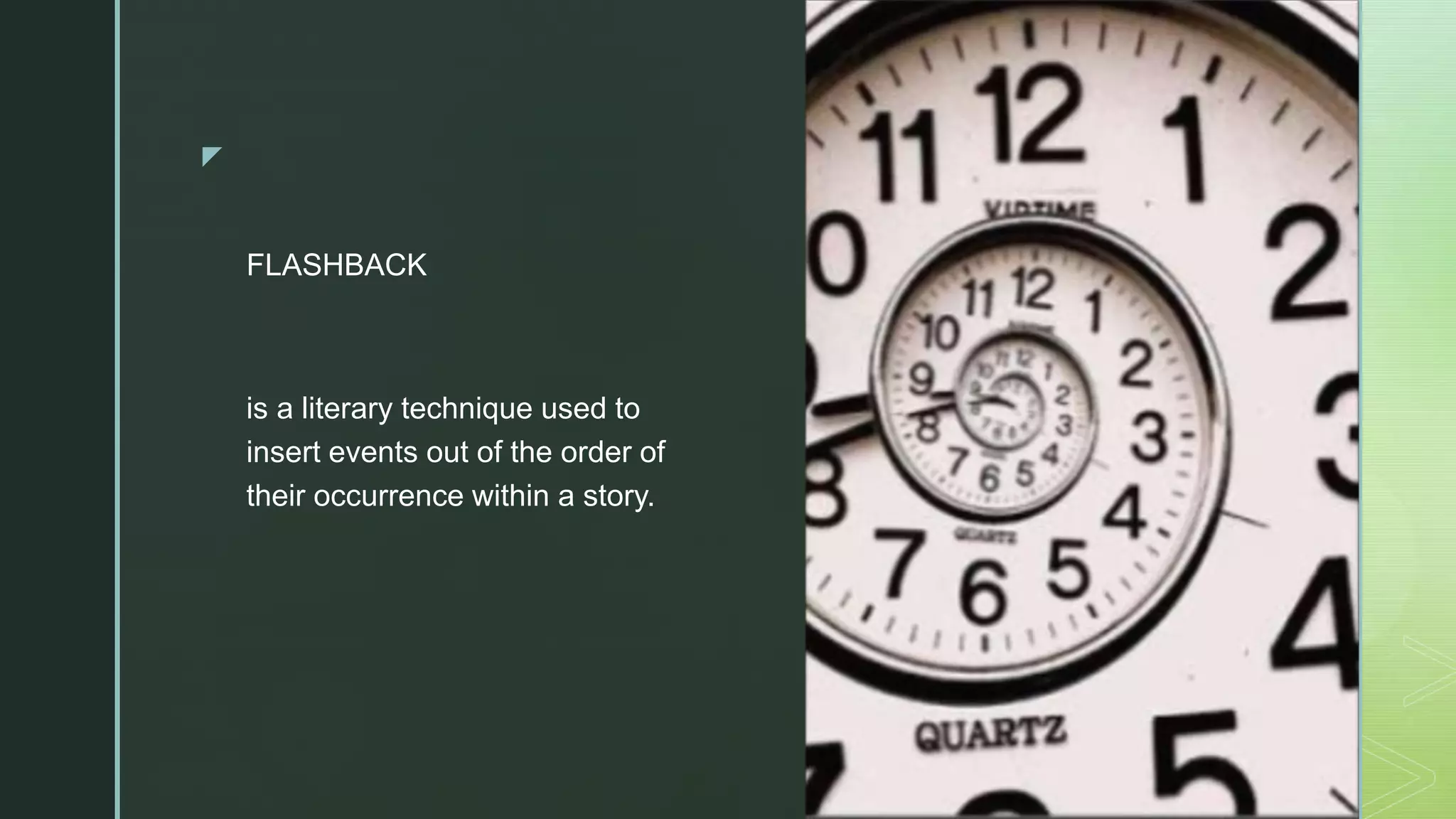
FLASHBACK
is a literary technique used to
insert events out of the order of
their occurrence within a story.
z
FORESHADOWING
is a method used to hint of
events to come. It may be blatant
or merely implied.
z
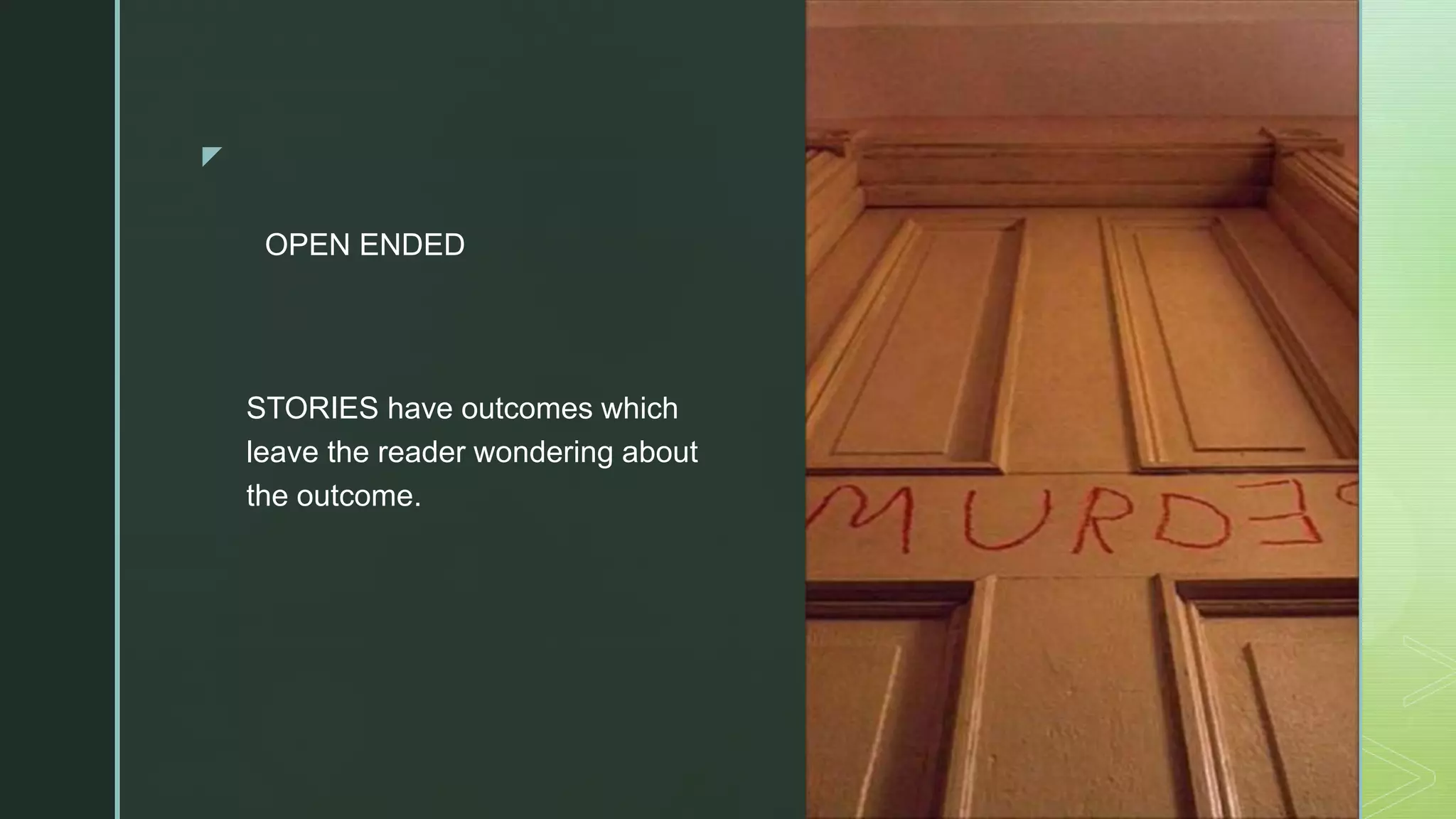
OPEN ENDED
STORIES have outcomes which
leave the reader wondering about
the outcome.
z
STREAM OF CONSCIOUSNESS
a technique used to tell the story
as it might actually be heard
within a character's mind. It is
frequently rambling and
disjointed.

Plot in Literature

  • 1.
  • 2.
    z PLOT  a literaryterm used to describe the basic action within a work of fiction. • In a strongly plotted story, the events usually follow this pattern: a conflict or problem is established; complications arise from the conflict; a main character takes decisive action, or the situation itself brings about a climax; the conflict is resolved. • Modern short stories and novels, however, frequently deviate from this outline. One of the most common is a non- plotted character sketch.
  • 3.
    z TERMS USED TODESCRIBE THE PLOT • CONFLICT • describes some problem or trouble within the story. It frequently falls into one of the following categories: • man vs. man • man vs. himself • man vs. nature • man vs. society • man vs. supernatural • RISING ACTION •describes the introduction of the conflict and the resulting complications. • CLIMAX •designates the moment of highest tension in the story. It represents the moment when the outcome is decided. • FALLING ACTION •describes the falling off of intensity within the story. • DENOUEMENT •is a French word used to describe the final resolution of details within the story. It is everything that occurs after the climax.
  • 4.
    z COMMON PLOTDEVELOPMENT STRUCTURE
  • 5.
  • 6.
    z FLASHBACK is a literarytechnique used to insert events out of the order of their occurrence within a story.
  • 7.
    z FORESHADOWING is a methodused to hint of events to come. It may be blatant or merely implied.
  • 8.
    z OPEN ENDED STORIES haveoutcomes which leave the reader wondering about the outcome.
  • 9.
    z STREAM OF CONSCIOUSNESS atechnique used to tell the story as it might actually be heard within a character's mind. It is frequently rambling and disjointed.