
EDUC 354: APPLIED INQUIRY II
UNIVERSITY OF THE PACIFIC
Delores E. McNair, Ed.D.
Theoretical Framework2
Learning Objectives
By the end of the session, students will be able
to:
 Identify the purpose of a theoretical
framework
 Distinguish between a theoretical
perspective, theoretical framework, and
conceptual framework
 Identify additional resources to explore this
topic
3
Vocabulary* - Qualitative Research
 Epistemology
 Ontology
 Theoretical Perspective
 Theoretical Framework
 Conceptual Framework
 Feminist Theory
 Critical Theory/Critical
Race Theory
 Queer Theory
 Worldviews
 Multiple Truths
 Participants
 Trustworthiness
 Postmodern
 Postpositivist
*Some, not all
4
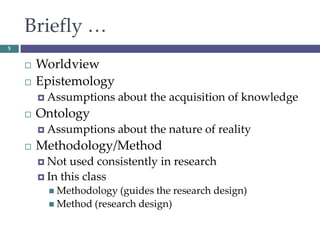
Briefly …
 Worldview
 Epistemology
 Assumptions about the acquisition of knowledge
 Ontology
 Assumptions about the nature of reality
 Methodology/Method
 Not used consistently in research
 In this class
 Methodology (guides the research design)
 Method (research design)
5
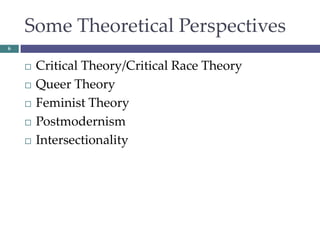
Some Theoretical Perspectives
6
 Critical Theory/Critical Race Theory
 Queer Theory
 Feminist Theory
 Postmodernism
 Intersectionality
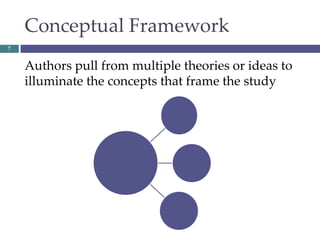
Conceptual Framework
7
Authors pull from multiple theories or ideas to
illuminate the concepts that frame the study
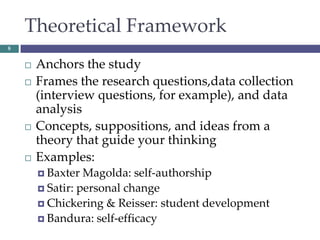
Theoretical Framework
8
 Anchors the study
 Frames the research questions,data collection
(interview questions, for example), and data
analysis
 Concepts, suppositions, and ideas from a
theory that guide your thinking
 Examples:
 Baxter Magolda: self-authorship
 Satir: personal change
 Chickering & Reisser: student development
 Bandura: self-efficacy
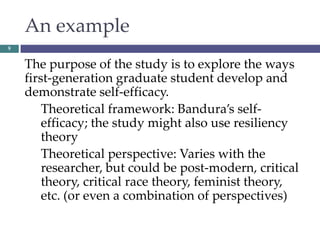
An example
9
The purpose of the study is to explore the ways
first-generation graduate student develop and
demonstrate self-efficacy.
Theoretical framework: Bandura’s self-
efficacy; the study might also use resiliency
theory
Theoretical perspective: Varies with the
researcher, but could be post-modern, critical
theory, critical race theory, feminist theory,
etc. (or even a combination of perspectives)
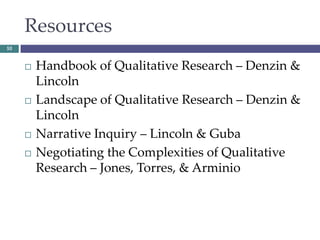
Resources
10
 Handbook of Qualitative Research – Denzin &
Lincoln
 Landscape of Qualitative Research – Denzin &
Lincoln
 Narrative Inquiry – Lincoln & Guba
 Negotiating the Complexities of Qualitative
Research – Jones, Torres, & Arminio
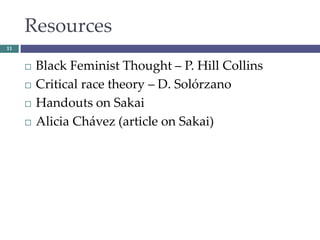
Resources
11
 Black Feminist Thought – P. Hill Collins
 Critical race theory – D. Solórzano
 Handouts on Sakai
 Alicia Chávez (article on Sakai)

Theoretical Frameworks

  • 1.
    EDUC 354: APPLIEDINQUIRY II UNIVERSITY OF THE PACIFIC Delores E. McNair, Ed.D.
  • 2.
  • 3.
    Learning Objectives By theend of the session, students will be able to:  Identify the purpose of a theoretical framework  Distinguish between a theoretical perspective, theoretical framework, and conceptual framework  Identify additional resources to explore this topic 3
  • 4.
    Vocabulary* - QualitativeResearch  Epistemology  Ontology  Theoretical Perspective  Theoretical Framework  Conceptual Framework  Feminist Theory  Critical Theory/Critical Race Theory  Queer Theory  Worldviews  Multiple Truths  Participants  Trustworthiness  Postmodern  Postpositivist *Some, not all 4
  • 5.
    Briefly …  Worldview Epistemology  Assumptions about the acquisition of knowledge  Ontology  Assumptions about the nature of reality  Methodology/Method  Not used consistently in research  In this class  Methodology (guides the research design)  Method (research design) 5
  • 6.
    Some Theoretical Perspectives 6 Critical Theory/Critical Race Theory  Queer Theory  Feminist Theory  Postmodernism  Intersectionality
  • 7.
    Conceptual Framework 7 Authors pullfrom multiple theories or ideas to illuminate the concepts that frame the study
  • 8.
    Theoretical Framework 8  Anchorsthe study  Frames the research questions,data collection (interview questions, for example), and data analysis  Concepts, suppositions, and ideas from a theory that guide your thinking  Examples:  Baxter Magolda: self-authorship  Satir: personal change  Chickering & Reisser: student development  Bandura: self-efficacy
  • 9.
    An example 9 The purposeof the study is to explore the ways first-generation graduate student develop and demonstrate self-efficacy. Theoretical framework: Bandura’s self- efficacy; the study might also use resiliency theory Theoretical perspective: Varies with the researcher, but could be post-modern, critical theory, critical race theory, feminist theory, etc. (or even a combination of perspectives)
  • 10.
    Resources 10  Handbook ofQualitative Research – Denzin & Lincoln  Landscape of Qualitative Research – Denzin & Lincoln  Narrative Inquiry – Lincoln & Guba  Negotiating the Complexities of Qualitative Research – Jones, Torres, & Arminio
  • 11.
    Resources 11  Black FeministThought – P. Hill Collins  Critical race theory – D. Solórzano  Handouts on Sakai  Alicia Chávez (article on Sakai)