


WEEK 4 –
PRESENTATION 3
 MOHD FIRDAUS BIN MOHD YUSOF
 MOHAMAD SHARIZAL BIN DRAHMAN BUJANG
 WAN MUHAMMAD SYARIFUDDIN WAN AB HALIM
DISCUSSION:
Identifying conceptual and
theoretical framework.
By the end of the presentation, you
should be able to:
1. Define conceptual framework and theoretical
framework.
2. Explain the importance of conceptual framework and
theoretical framework.
3. Distinguish conceptual framework and theoretical
framework.
4. Identify variables in a framework.
DEFINISI
 Secara amnya, kerangka bermaksud asas bertindak sebagai panduan dan
struktur yang menyokong kajian kita.
 Boleh dianggap sebagai sumber rujukan kerana ia merujuk kepada perkara
yang akan dan tidak akan dikaji.
 Ia memandu semua aspek kajian,termasuk proses mengenal pasti
metodologi yang akan digunakan dalam kajian (reka bentuk kajian),
pemilihan subjek kajian (pensampelan), jenis maklumat yang akan
dikumpulkan dan cara mengumpul maklumat tersebut (pengumpulan data),
cara mentafsirkan maklumat(analisis data), dan cara melaporkan hasil
kajian (laporan kajian).
 Kerangka kajian juga membolehkan penyelidik menghubungkaitkan hasil
kajian dengan himpunan pengetahuan yang sudah mantap.
 Kerangka kajian boleh berbentuk teori atau konsep.
DEFINISI
Persamaan dan perbezaan kerangka teori dan kerangka konsep.
3 perkara asas yang perlu dilakukan sebelum membina kerangka
kerja :
Bermula dengan membaca jurnal/ artikel,
Bertanya soalan-soalan asas,
Menerangkan, memberi definisi dan meramal hubungan yang
mungkin ada antara faktor yang berkaitan.
CONCEPTUAL FRAMEWORK
A visual or written product that explains either
graphically or in narrative form of a study (Miles
Huberman, 1994)
Involves the following keypoints:
1.key factors
2.concepts or variables
3.relationship between concepts or variables
WHY DO YOU NEED A CONCEPTUAL
FRAMEWORK?
1. Justify your research.
2. Assess an define your goals
3. Select appropriate methods
4. Identify potential validity threats to your
conclusions.
5. Develop realistic and relevant research
questions.
EXAMPLES:
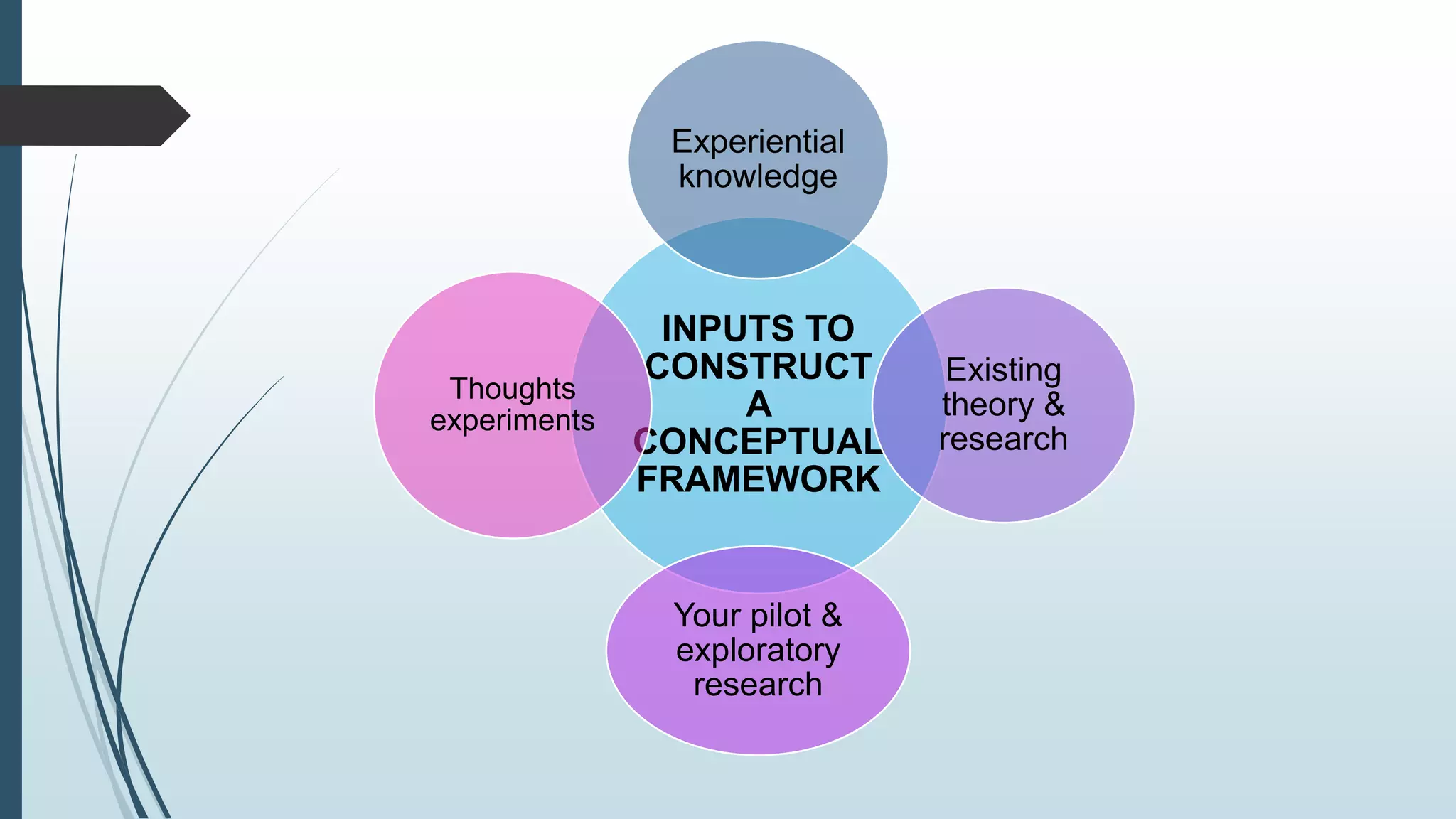
INPUTS TO
CONSTRUCT
A
CONCEPTUAL
FRAMEWORK
Experiential
knowledge
Existing
theory &
research
Your pilot &
exploratory
research
Thoughts
experiments
THEORETICAL FRAMEWORK
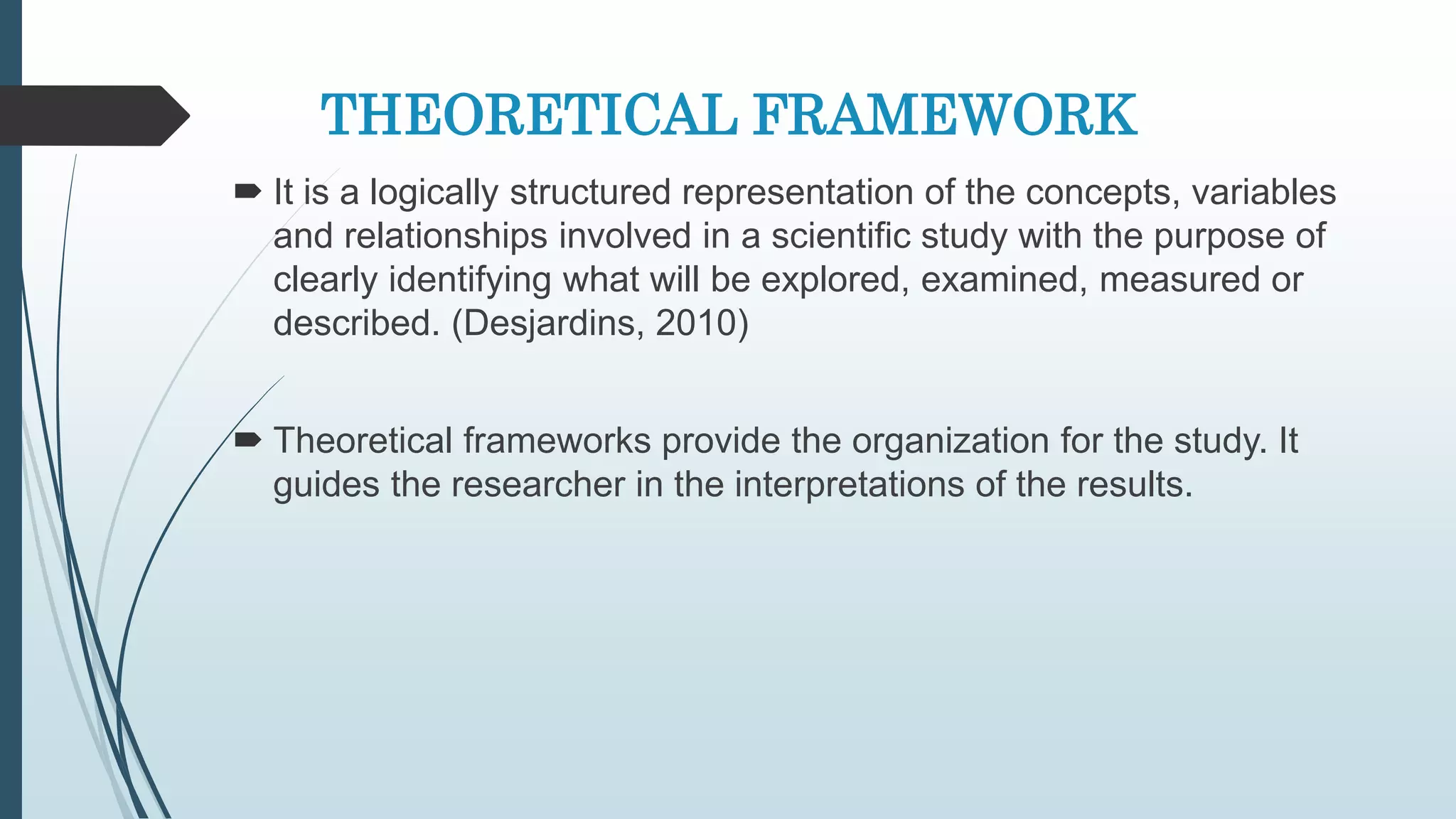
 It is a logically structured representation of the concepts, variables
and relationships involved in a scientific study with the purpose of
clearly identifying what will be explored, examined, measured or
described. (Desjardins, 2010)
 Theoretical frameworks provide the organization for the study. It
guides the researcher in the interpretations of the results.
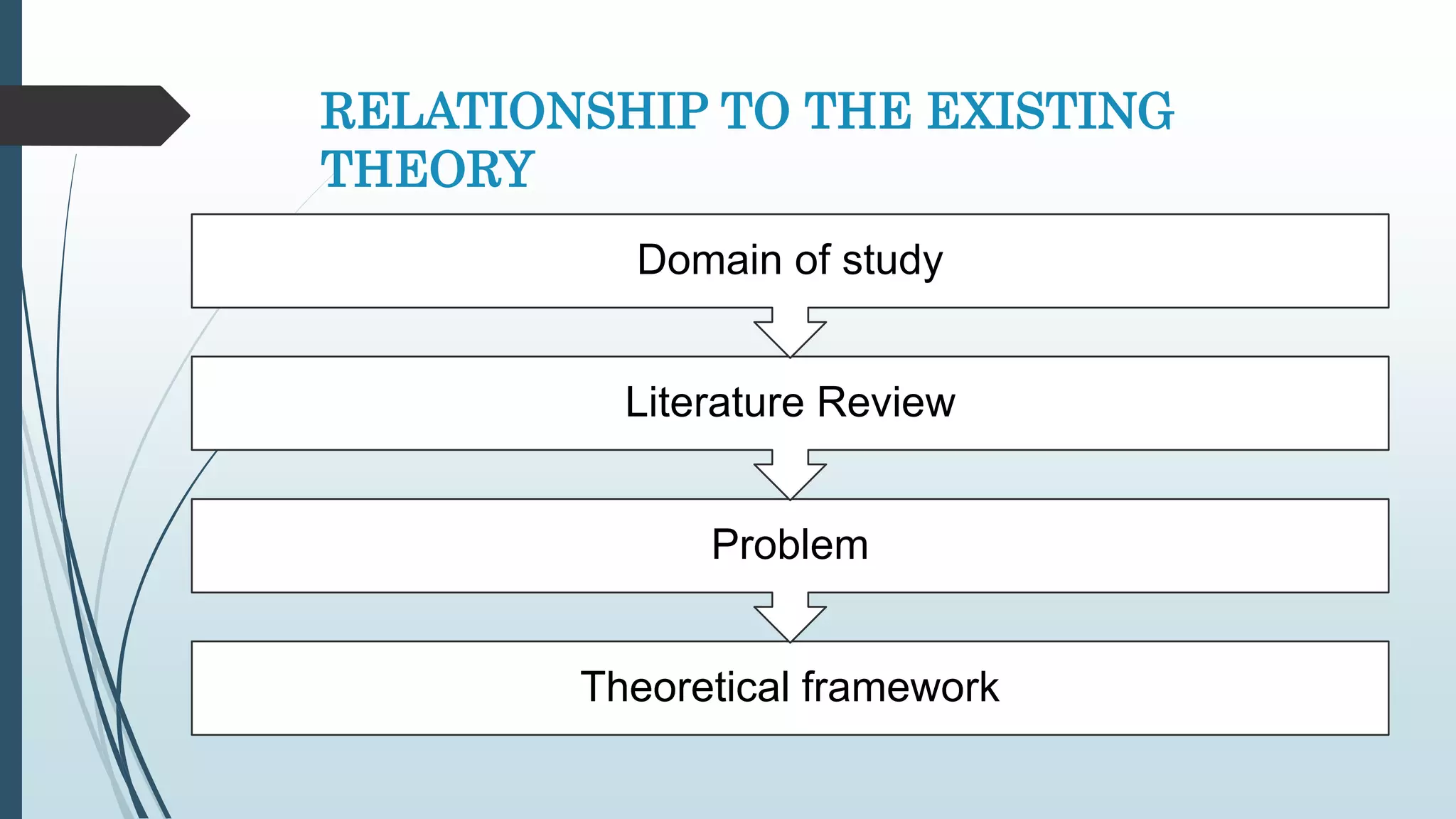
RELATIONSHIP TO THE EXISTING
THEORY
Theoretical framework
Problem
Literature Review
Domain of study
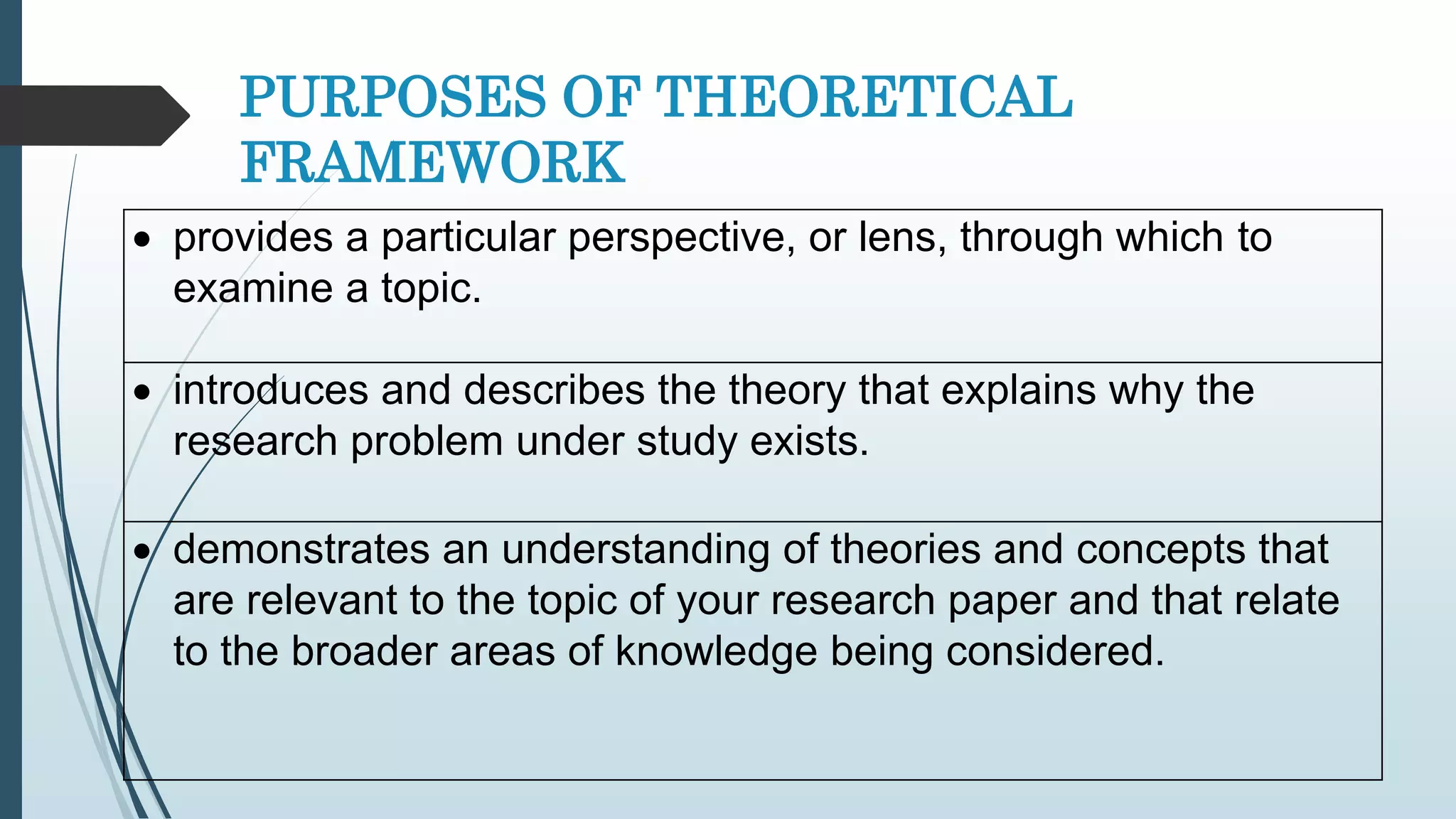
PURPOSES OF THEORETICAL
FRAMEWORK
 provides a particular perspective, or lens, through which to
examine a topic.
 introduces and describes the theory that explains why the
research problem under study exists.
 demonstrates an understanding of theories and concepts that
are relevant to the topic of your research paper and that relate
to the broader areas of knowledge being considered.
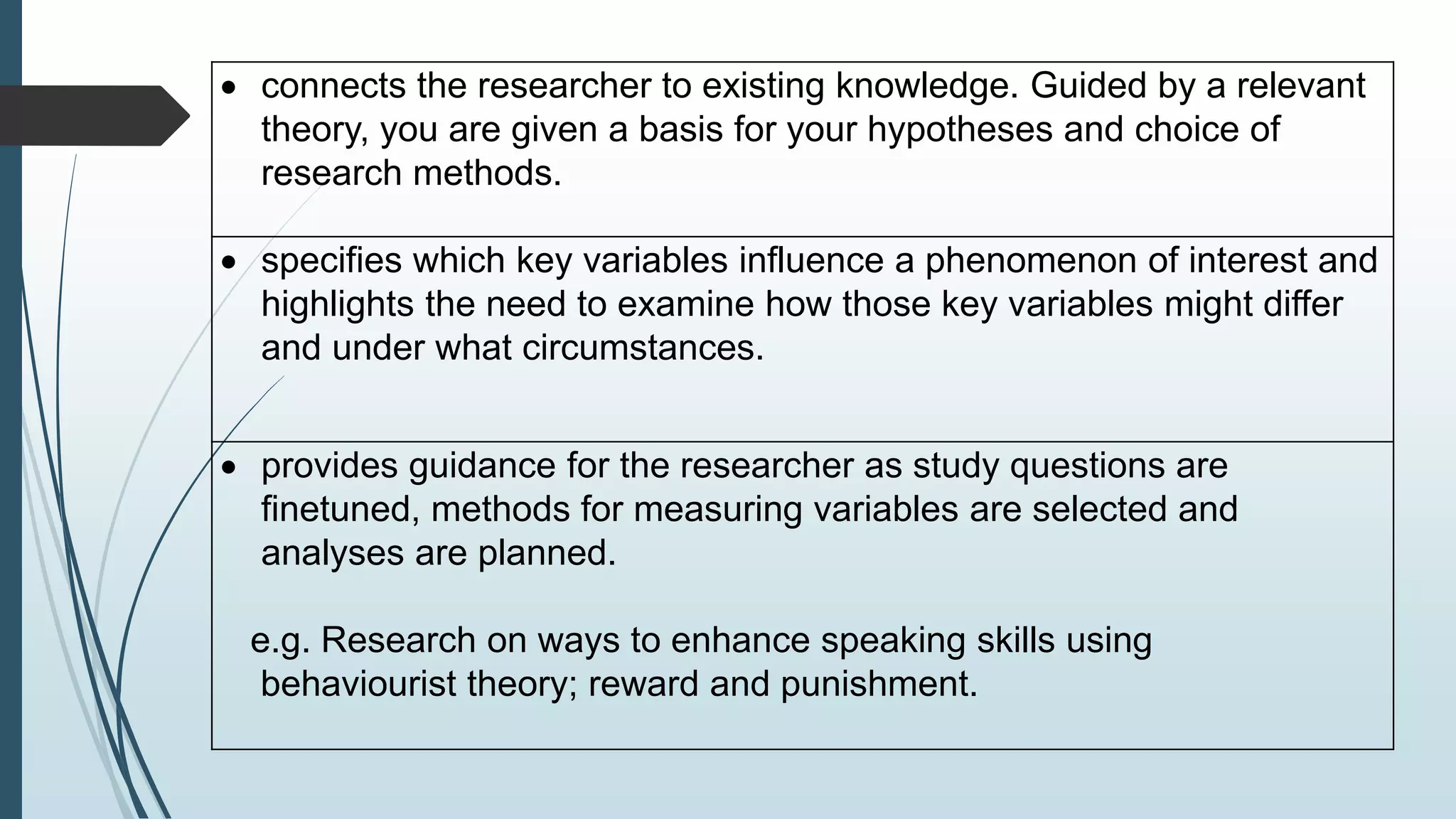
 connects the researcher to existing knowledge. Guided by a relevant
theory, you are given a basis for your hypotheses and choice of
research methods.
 specifies which key variables influence a phenomenon of interest and
highlights the need to examine how those key variables might differ
and under what circumstances.
 provides guidance for the researcher as study questions are
finetuned, methods for measuring variables are selected and
analyses are planned.
e.g. Research on ways to enhance speaking skills using
behaviourist theory; reward and punishment.
TO UNDERSTAND THE NATURE AND
FUNCTION OF A THEORETICAL FRAMEWORK
BY ANSWERING 2 QUESTIONS:
1. What is your problem?
2. Why is your approach a feasible
solution?
THANK YOU

Research framework week_4

  • 1.
    WEEK 4 – PRESENTATION3  MOHD FIRDAUS BIN MOHD YUSOF  MOHAMAD SHARIZAL BIN DRAHMAN BUJANG  WAN MUHAMMAD SYARIFUDDIN WAN AB HALIM
  • 2.
  • 3.
    By the endof the presentation, you should be able to: 1. Define conceptual framework and theoretical framework. 2. Explain the importance of conceptual framework and theoretical framework. 3. Distinguish conceptual framework and theoretical framework. 4. Identify variables in a framework.
  • 4.
    DEFINISI  Secara amnya,kerangka bermaksud asas bertindak sebagai panduan dan struktur yang menyokong kajian kita.  Boleh dianggap sebagai sumber rujukan kerana ia merujuk kepada perkara yang akan dan tidak akan dikaji.  Ia memandu semua aspek kajian,termasuk proses mengenal pasti metodologi yang akan digunakan dalam kajian (reka bentuk kajian), pemilihan subjek kajian (pensampelan), jenis maklumat yang akan dikumpulkan dan cara mengumpul maklumat tersebut (pengumpulan data), cara mentafsirkan maklumat(analisis data), dan cara melaporkan hasil kajian (laporan kajian).
  • 5.
     Kerangka kajianjuga membolehkan penyelidik menghubungkaitkan hasil kajian dengan himpunan pengetahuan yang sudah mantap.  Kerangka kajian boleh berbentuk teori atau konsep.
  • 6.
    DEFINISI Persamaan dan perbezaankerangka teori dan kerangka konsep. 3 perkara asas yang perlu dilakukan sebelum membina kerangka kerja : Bermula dengan membaca jurnal/ artikel, Bertanya soalan-soalan asas, Menerangkan, memberi definisi dan meramal hubungan yang mungkin ada antara faktor yang berkaitan.
  • 7.
    CONCEPTUAL FRAMEWORK A visualor written product that explains either graphically or in narrative form of a study (Miles Huberman, 1994) Involves the following keypoints: 1.key factors 2.concepts or variables 3.relationship between concepts or variables
  • 8.
    WHY DO YOUNEED A CONCEPTUAL FRAMEWORK? 1. Justify your research. 2. Assess an define your goals 3. Select appropriate methods 4. Identify potential validity threats to your conclusions. 5. Develop realistic and relevant research questions.
  • 9.
  • 10.
  • 11.
    THEORETICAL FRAMEWORK  Itis a logically structured representation of the concepts, variables and relationships involved in a scientific study with the purpose of clearly identifying what will be explored, examined, measured or described. (Desjardins, 2010)  Theoretical frameworks provide the organization for the study. It guides the researcher in the interpretations of the results.
  • 12.
    RELATIONSHIP TO THEEXISTING THEORY Theoretical framework Problem Literature Review Domain of study
  • 13.
    PURPOSES OF THEORETICAL FRAMEWORK provides a particular perspective, or lens, through which to examine a topic.  introduces and describes the theory that explains why the research problem under study exists.  demonstrates an understanding of theories and concepts that are relevant to the topic of your research paper and that relate to the broader areas of knowledge being considered.
  • 14.
     connects theresearcher to existing knowledge. Guided by a relevant theory, you are given a basis for your hypotheses and choice of research methods.  specifies which key variables influence a phenomenon of interest and highlights the need to examine how those key variables might differ and under what circumstances.  provides guidance for the researcher as study questions are finetuned, methods for measuring variables are selected and analyses are planned. e.g. Research on ways to enhance speaking skills using behaviourist theory; reward and punishment.
  • 15.
    TO UNDERSTAND THENATURE AND FUNCTION OF A THEORETICAL FRAMEWORK BY ANSWERING 2 QUESTIONS: 1. What is your problem? 2. Why is your approach a feasible solution?
  • 16.