Theoretical & Conceptual
Frame-work
-Theoretical Frame-work
-Conceptual Frame-work
Theory
Theories are constructed in order to explain, predict
and master phenomena (e.g. relationships, events,
or the behavior). In many instances we are
constructing models of reality.
A theory makes generalizations about
observations and consists of an interrelated,
coherent set of ideas and models.
A theoretical framework is analogous to
the frame of the house.
Just as the foundation supports a house, a
theoretical framework provides a
rationale for predictions about the
relationships among variables of a
research study
Prof. RS Mehta
Theory
Theories are generated by using inductive processes
A deductive approach is used to evaluate and modify
existing theory by testing predictions about relationships
between observed phenomena
Prof. RS Mehta
Theoretical Framework
It provides a context for examining a problem i.e.
theoretical rationale for:
Developing hypotheses
A frame of reference/base for
 Observations
 Definitions of concepts
 Research designs
 Interpretations
 Generalizations
Serves as a guide to systematically identify logical,
precisely defined relationships among variables
Prof. RS Mehta
The Use of a Theoretical Framework as a
Guide in a Research Study
The theoretical framework plays an important role in
guiding the entire process of the research study
 Theories are constructed in order to explain, predict
and master phenomena (e.g. relationships, events, or
the behavior). In many instances we are constructing
models of reality.
 A theory makes generalizations about observations and
consists of an interrelated, coherent set of ideas and
models.
Prof. RS Mehta
The Use of a Theoretical Framework as a Guide in a
Research Study
If the framework is logically sound and
substantiated by previous research studies, there is
a strong possibility that the predictions or
hypotheses evolving from that framework will be
supported
In some cases, a theoretical rationale in
inappropriately used. e.g. a theory is designed to
explain a particular behavior in infants may not be
appropriate for the study of those behaviors in
adults
Prof. RS Mehta
Formulating the Theoretical Framework
Purpose:
• It helps the researcher see clearly the variables
of the study;
• It can provide him with a general framework for
data analysis;
• It is essential in preparing a research proposal
using descriptive and experimental methods.
Prof. RS Mehta
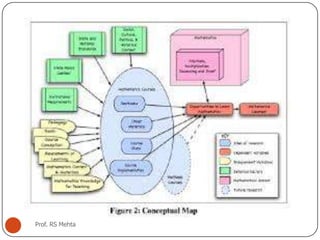
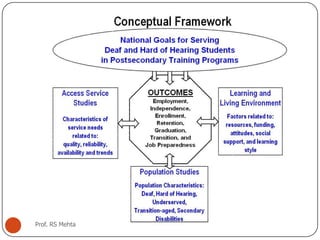
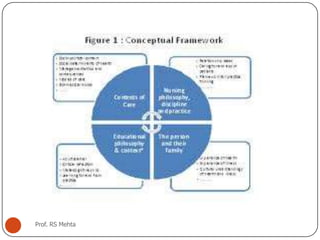
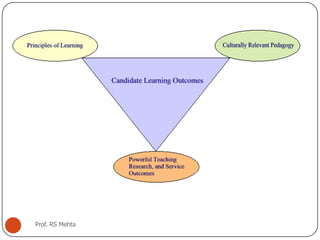
conceptual framework
 A conceptual framework is used in research to
outline possible courses of action or to present a
preferred approach to an idea or thought.
Prof. RS Mehta
How to Develop a Theoretical Framework or
conceptual framework
1. Select concepts
a concept is an image or symbolic representation of an
abstract idea. e.g. health, pain, intelligence …
2. Identify the interrelationships among concepts
Prof. RS Mehta
How to Develop a Theoretical Framework
3.Formulating definitions: to develop a theoretical
framework that can generate and test hypotheses, concepts
must be clearly defined
A. Conceptual definition … conveys the general meaning of the
concept
B. Operational definition … adds another dimension to the conceptual
definition by delineating the procedures or operations required to
measure the concept
Some concepts are easily defined in operational terms,
e.g. pulse, other concepts are more difficult to define
operationally, e.g. coping
Prof. RS Mehta
4. Formulating the theoretical rationale
 Through the literature review, an investigator
becomes aware of or confirms identified
theoretical connections between variables
 In evaluating the formulation of the theoretical
rationale, the internal structures, such as
concepts and their definitions, should have clarity
and continuity, and the approach to
understanding phenomena, whether inductive or
deductive, should be logical
Prof. RS Mehta
Types of Theories & Types of Research
Theories may describe a particular phenomenon,
explain relationships between or among
phenomena, or predict how one phenomenon
affects another
Descriptive theories “describe or classify specific
dimensions or characteristics of individuals, groups,
situations, or events by summarizing the
commonalities found in discrete observations
To test descriptive theories, researchers conduct
descriptive research studies
Prof. RS Mehta
Types of Theories & Types of Research
Explanatory theories “specify relations
among the dimensions or
characteristics of individuals,
groups, situations, or events
Explanatory theories are tested by
using correlational research
Prof. RS Mehta
Predictive theories are intended to predict
“precise relationships between the dimensions or
characteristics of a phenomenon or differences
between groups”
Predictive theories are tested through
Experimental or quasi-experimental research
designs
Prof. RS Mehta
Contribution of Nursing Theories or
Frameworks to Research
When developing a theoretical framework for nursing
research studies, knowledge is acquired through:
Disciplines other than nursing and borrowed for the
purpose of answering nursing questions
Identifying and asking questions about phenomena that
are unique to nursing
Prof. RS Mehta
Contribution of Nursing Theories or
Frameworks to Research
Theories unique to nursing help nursing define how it
is different from other disciplines
The central phenomena of interest to nursing are
persons, environment, health & nursing
Prof. RS Mehta
Critiquing the theoretical framework
1. Is the theoretical framework clearly identified?
2. Is the theoretical framework consistent with
what is being studied?
3. Are the concepts clearly and operationally
defined? Do they reflect the area of
investigation?
4. Was sufficient literature reviewed to support
the proposed relationships?
5. Is the theoretical basis for hypothesis
formulation clearly articulated? Is it logical?
Prof. RS Mehta
Critiquing the theoretical framework
6. Are the relationships among propositions clearly
defined?
7. If the theory is borrowed from a discipline other
than nursing, are the data related specifically to
nursing?
8. Does the instrument used to measure the
variables, consistent with the theoretical
framework?
9. Are the study findings related to the theoretical
rationale?
Prof. RS Mehta
Examples:
Prof. RS Mehta
Prof. RS Mehta
Prof. RS Mehta
Prof. RS Mehta
Prof. RS Mehta
Thank You
Prof. RS Mehta

2. theoretical framework

  • 1.
    Theoretical & Conceptual Frame-work -TheoreticalFrame-work -Conceptual Frame-work
  • 2.
    Theory Theories are constructedin order to explain, predict and master phenomena (e.g. relationships, events, or the behavior). In many instances we are constructing models of reality. A theory makes generalizations about observations and consists of an interrelated, coherent set of ideas and models.
  • 3.
    A theoretical frameworkis analogous to the frame of the house. Just as the foundation supports a house, a theoretical framework provides a rationale for predictions about the relationships among variables of a research study Prof. RS Mehta
  • 4.
    Theory Theories are generatedby using inductive processes A deductive approach is used to evaluate and modify existing theory by testing predictions about relationships between observed phenomena Prof. RS Mehta
  • 5.
    Theoretical Framework It providesa context for examining a problem i.e. theoretical rationale for: Developing hypotheses A frame of reference/base for  Observations  Definitions of concepts  Research designs  Interpretations  Generalizations Serves as a guide to systematically identify logical, precisely defined relationships among variables Prof. RS Mehta
  • 6.
    The Use ofa Theoretical Framework as a Guide in a Research Study The theoretical framework plays an important role in guiding the entire process of the research study  Theories are constructed in order to explain, predict and master phenomena (e.g. relationships, events, or the behavior). In many instances we are constructing models of reality.  A theory makes generalizations about observations and consists of an interrelated, coherent set of ideas and models. Prof. RS Mehta
  • 7.
    The Use ofa Theoretical Framework as a Guide in a Research Study If the framework is logically sound and substantiated by previous research studies, there is a strong possibility that the predictions or hypotheses evolving from that framework will be supported In some cases, a theoretical rationale in inappropriately used. e.g. a theory is designed to explain a particular behavior in infants may not be appropriate for the study of those behaviors in adults Prof. RS Mehta
  • 8.
    Formulating the TheoreticalFramework Purpose: • It helps the researcher see clearly the variables of the study; • It can provide him with a general framework for data analysis; • It is essential in preparing a research proposal using descriptive and experimental methods. Prof. RS Mehta
  • 9.
    conceptual framework  Aconceptual framework is used in research to outline possible courses of action or to present a preferred approach to an idea or thought. Prof. RS Mehta
  • 10.
    How to Developa Theoretical Framework or conceptual framework 1. Select concepts a concept is an image or symbolic representation of an abstract idea. e.g. health, pain, intelligence … 2. Identify the interrelationships among concepts Prof. RS Mehta
  • 11.
    How to Developa Theoretical Framework 3.Formulating definitions: to develop a theoretical framework that can generate and test hypotheses, concepts must be clearly defined A. Conceptual definition … conveys the general meaning of the concept B. Operational definition … adds another dimension to the conceptual definition by delineating the procedures or operations required to measure the concept Some concepts are easily defined in operational terms, e.g. pulse, other concepts are more difficult to define operationally, e.g. coping Prof. RS Mehta
  • 12.
    4. Formulating thetheoretical rationale  Through the literature review, an investigator becomes aware of or confirms identified theoretical connections between variables  In evaluating the formulation of the theoretical rationale, the internal structures, such as concepts and their definitions, should have clarity and continuity, and the approach to understanding phenomena, whether inductive or deductive, should be logical Prof. RS Mehta
  • 13.
    Types of Theories& Types of Research Theories may describe a particular phenomenon, explain relationships between or among phenomena, or predict how one phenomenon affects another Descriptive theories “describe or classify specific dimensions or characteristics of individuals, groups, situations, or events by summarizing the commonalities found in discrete observations To test descriptive theories, researchers conduct descriptive research studies Prof. RS Mehta
  • 14.
    Types of Theories& Types of Research Explanatory theories “specify relations among the dimensions or characteristics of individuals, groups, situations, or events Explanatory theories are tested by using correlational research Prof. RS Mehta
  • 15.
    Predictive theories areintended to predict “precise relationships between the dimensions or characteristics of a phenomenon or differences between groups” Predictive theories are tested through Experimental or quasi-experimental research designs Prof. RS Mehta
  • 16.
    Contribution of NursingTheories or Frameworks to Research When developing a theoretical framework for nursing research studies, knowledge is acquired through: Disciplines other than nursing and borrowed for the purpose of answering nursing questions Identifying and asking questions about phenomena that are unique to nursing Prof. RS Mehta
  • 17.
    Contribution of NursingTheories or Frameworks to Research Theories unique to nursing help nursing define how it is different from other disciplines The central phenomena of interest to nursing are persons, environment, health & nursing Prof. RS Mehta
  • 18.
    Critiquing the theoreticalframework 1. Is the theoretical framework clearly identified? 2. Is the theoretical framework consistent with what is being studied? 3. Are the concepts clearly and operationally defined? Do they reflect the area of investigation? 4. Was sufficient literature reviewed to support the proposed relationships? 5. Is the theoretical basis for hypothesis formulation clearly articulated? Is it logical? Prof. RS Mehta
  • 19.
    Critiquing the theoreticalframework 6. Are the relationships among propositions clearly defined? 7. If the theory is borrowed from a discipline other than nursing, are the data related specifically to nursing? 8. Does the instrument used to measure the variables, consistent with the theoretical framework? 9. Are the study findings related to the theoretical rationale? Prof. RS Mehta
  • 20.
  • 21.
  • 22.
  • 23.
  • 24.
  • 25.