Warm Up-

In your science notebook, list what you
remember about scientific method.
What is scientific method?
It is a process that is used to find answers to questions
about the world around us.
Scientific Method Review









Title
Problem
Hypothesis
Procedure
Materials
Performing the experiment
Data/ Results
Conclusion
Scientific Method Vocab Words
 On the paper provided, write down what you think the

vocabulary words mean.
Scientific Method Vocabulary
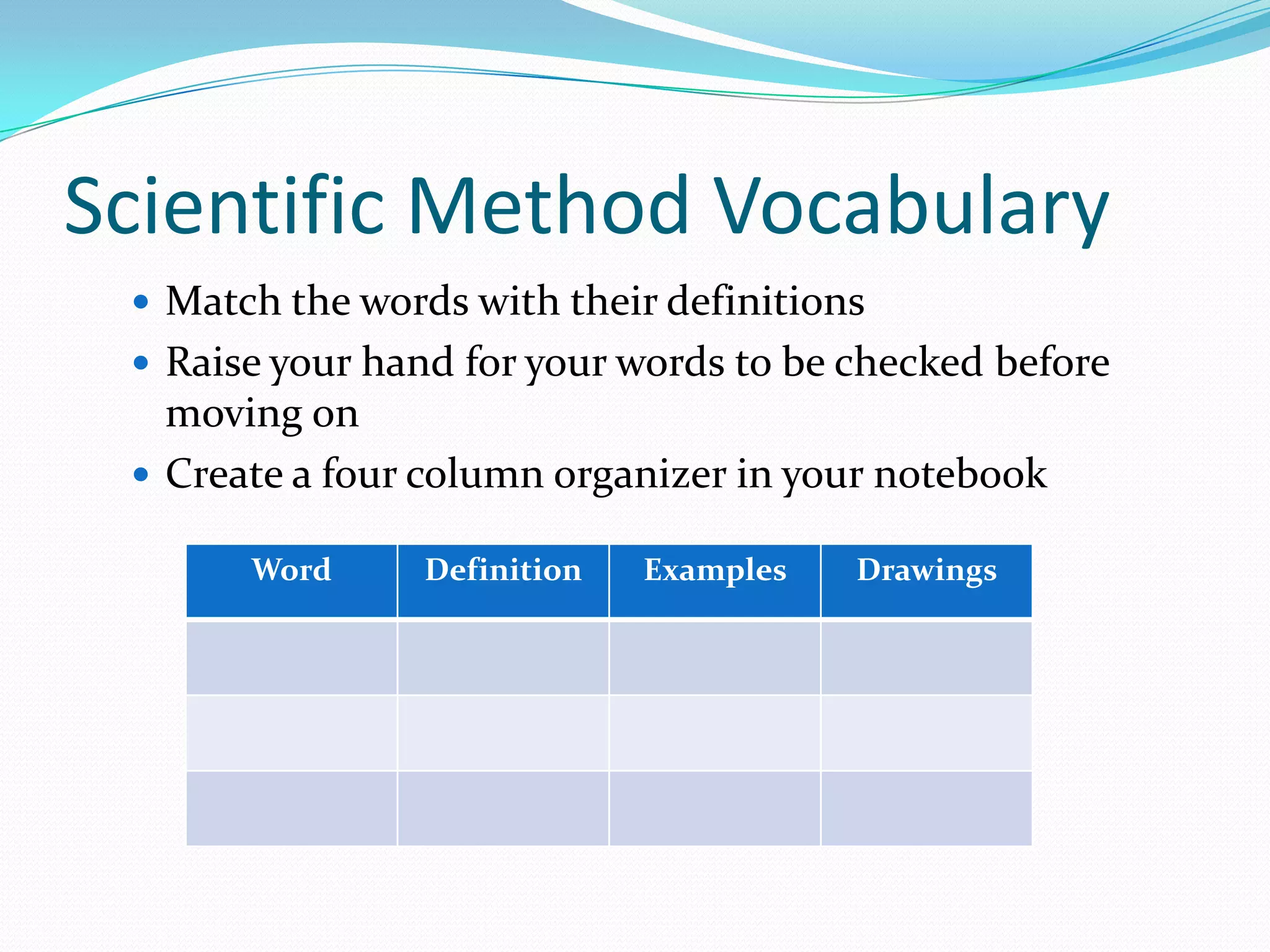
 Match the words with their definitions
 Raise your hand for your words to be checked before

moving on
 Create a four column organizer in your notebook
Word

Definition

Examples

Drawings
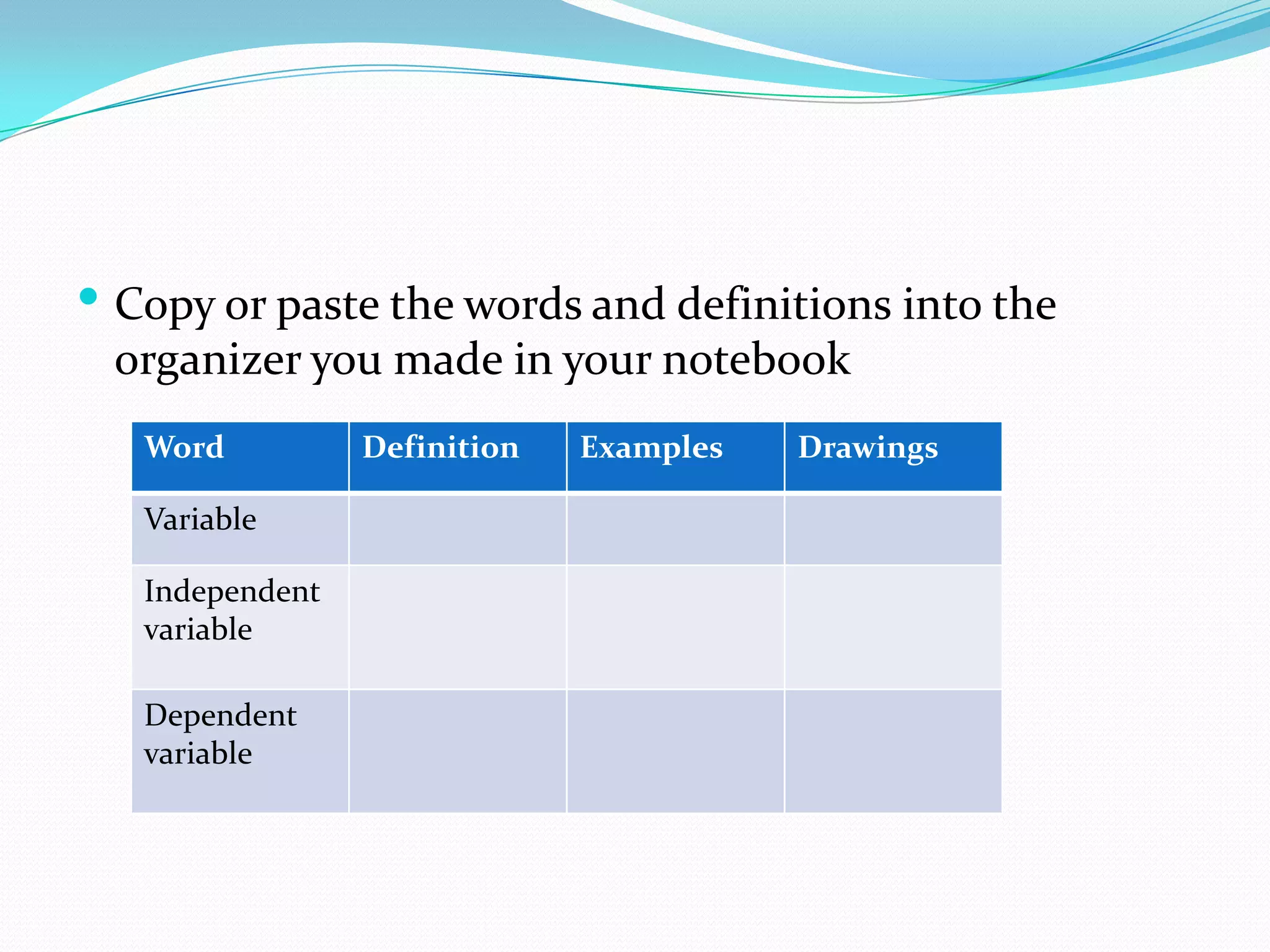
 Copy or paste the words and definitions into the

organizer you made in your notebook
Word
Variable

Independent
variable
Dependent
variable

Definition

Examples

Drawings
Scientific Method Vocabulary
 Examples of each word
 Come up with two examples for each vocabulary word
 Drawings for each word
 Draw a picture for each vocabulary word
Wrap Up
 Share your examples of each word with a partner
Homework
 Lisa Simpson Problem
Homeroom
 Make sure you have a SSR book
 Get yourself organized for the day
 Then, read silently
Warm Up-

Write in your notebook..
A scientist studies the impact of a drug on cancer.
What would be an independent variable and dependent
variable?
A scientist studies the impact of a
drug on cancer.
The independent variable is the
administration of the drug.
The dependent variable is the
impact the drug has on cancer.
Lisa Simpson Homework Problem
 Go over
 Control- one using fake hair care product
 Independent- one using the Rogooti hair care
 Dependent- amount of hair growth

 Problem (question)-Does using the Rogooti hair care

affect the amount of hair growth?
 Hypothesis (educated guess)-If the Rogooti hair care
affects the amount of hair growth then,
 Questions??
Scientific Method Vocabulary
 Examples of each word
 Come up with two examples for each vocabulary word
 Drawings for each word
 Draw a picture for each vocabulary word
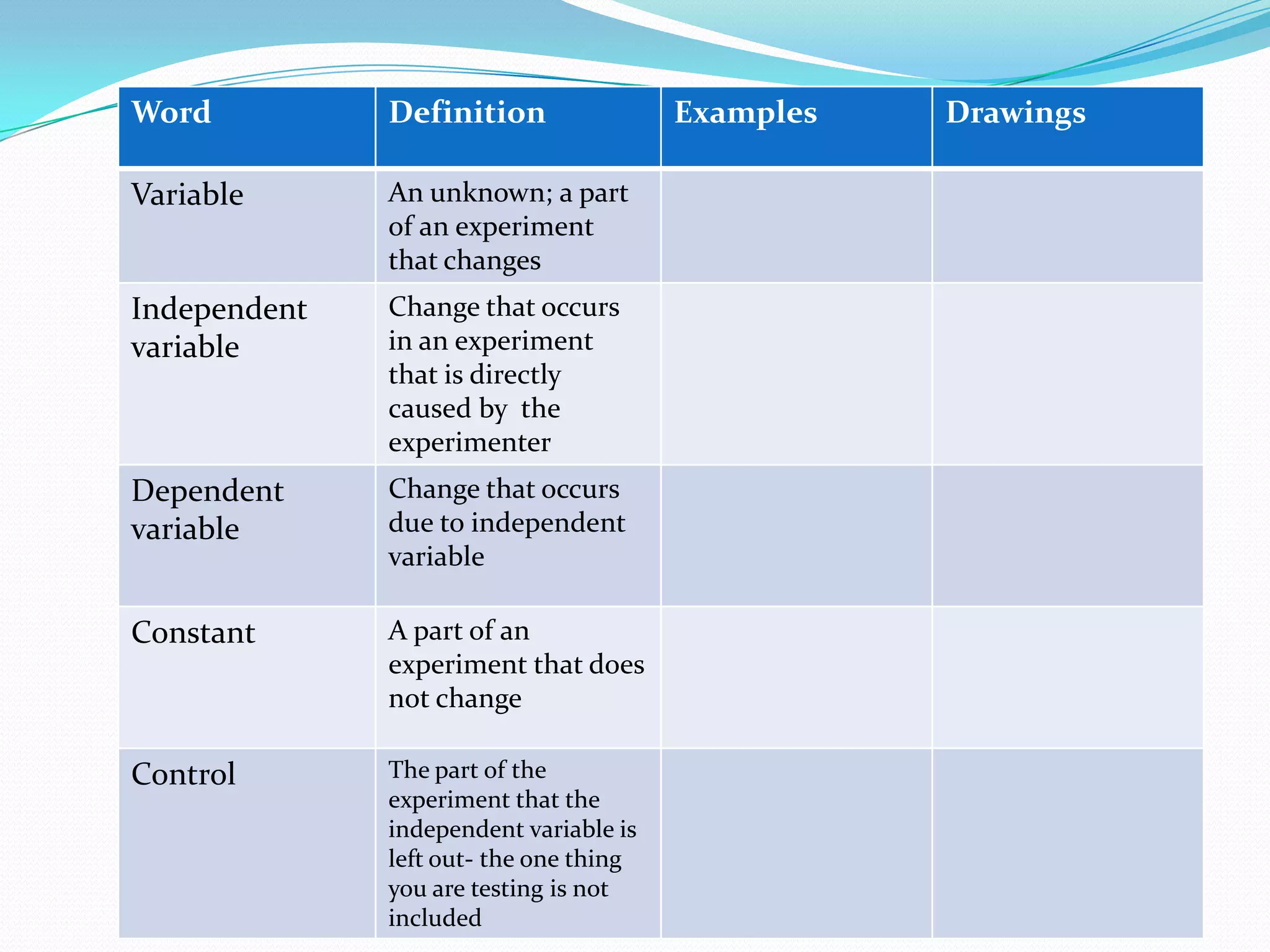
Word

Definition

Variable

An unknown; a part
of an experiment
that changes

Independent
variable

Change that occurs
in an experiment
that is directly
caused by the
experimenter

Dependent
variable

Change that occurs
due to independent
variable

Constant

A part of an
experiment that does
not change

Control

The part of the
experiment that the
independent variable is
left out- the one thing
you are testing is not
included

Examples

Drawings
Scientific Method Review
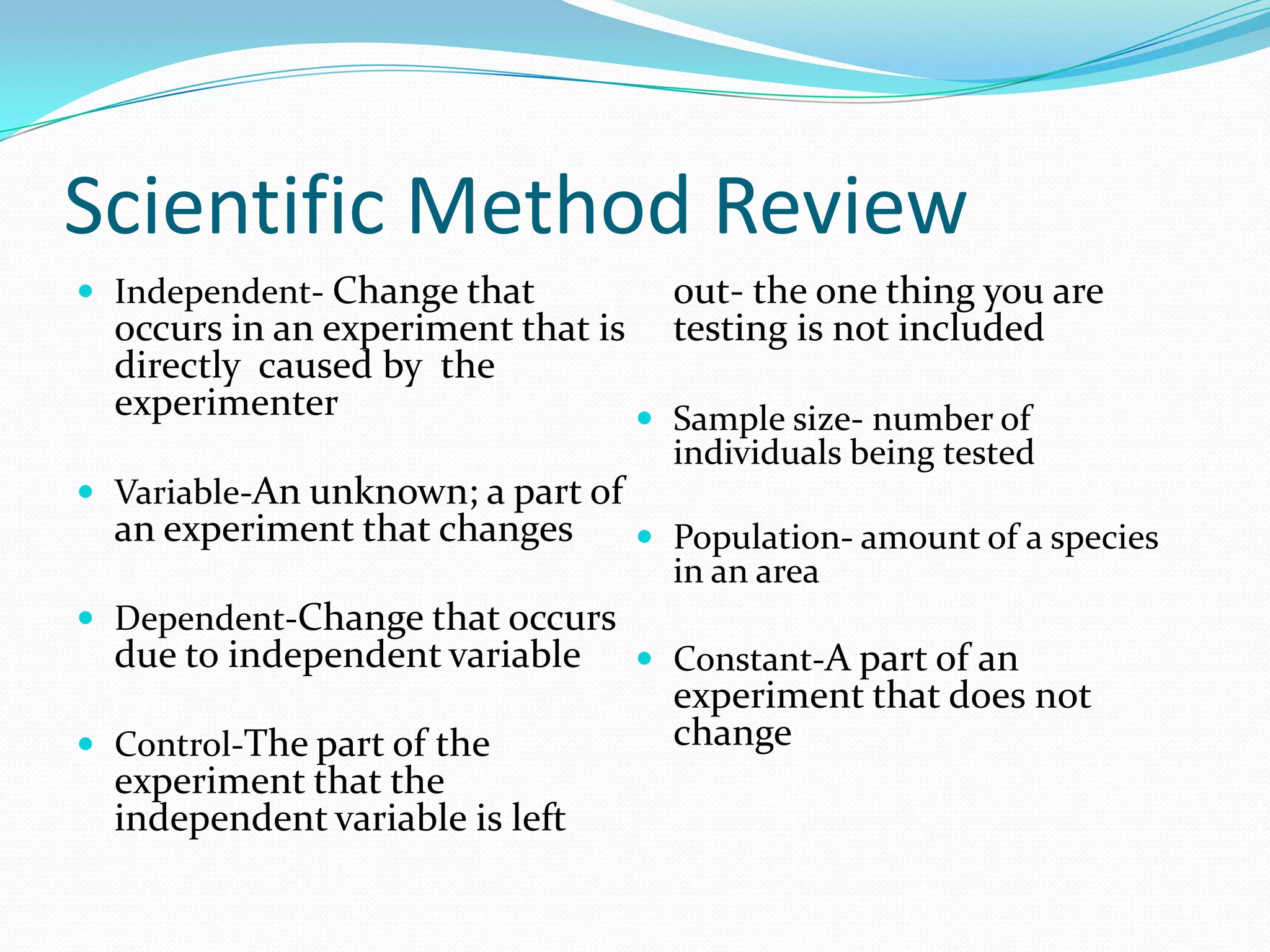
 Independent- Change that

out- the one thing you are
testing is not included

occurs in an experiment that is
directly caused by the
experimenter
 Sample size- number of

individuals being tested

 Variable-An unknown; a part of

an experiment that changes

 Population- amount of a species

in an area

 Dependent-Change that occurs

due to independent variable

 Control-The part of the

experiment that the
independent variable is left

 Constant-A part of an

experiment that does not
change
Controls and Variable
 Read each scenario and decide what are the controls

and the variables in the problems
 Answer each question carefully
 You may use a separate sheet of paper to answer these
questions
Wrap Up
 Each group will share their answers from the Identify

controls and variables sheet
Homework
 Patty Power Problem
 Bring in poster paper by Friday 9/13/13
Warm UpAnswer in your notebook..
What is the difference between an
independent variable and a dependent
variable?
Independent vs. Dependent Variable
 Change that occurs in
an experiment that is

directly caused by the
experimenter

 What do I change?

 May be part of the test or

research
 Change that occurs due
to independent variables

 What do I observe?
Scientific Method Review
 Independent- Change that

out- the one thing you are
testing is not included

occurs in an experiment that is
directly caused by the
experimenter
 Sample size- number of

individuals being tested

 Variable-An unknown; a part of

an experiment that changes

 Population- amount of a species

in an area

 Dependent-Change that occurs

due to independent variable

 Control-The part of the

experiment that the
independent variable is left

 Constant-A part of an

experiment that does not
change
Controls and Variable
 Read each scenario and decide what are the controls

and the variables in the problems
 Answer each question carefully
 You may use a separate sheet of paper to answer these
questions
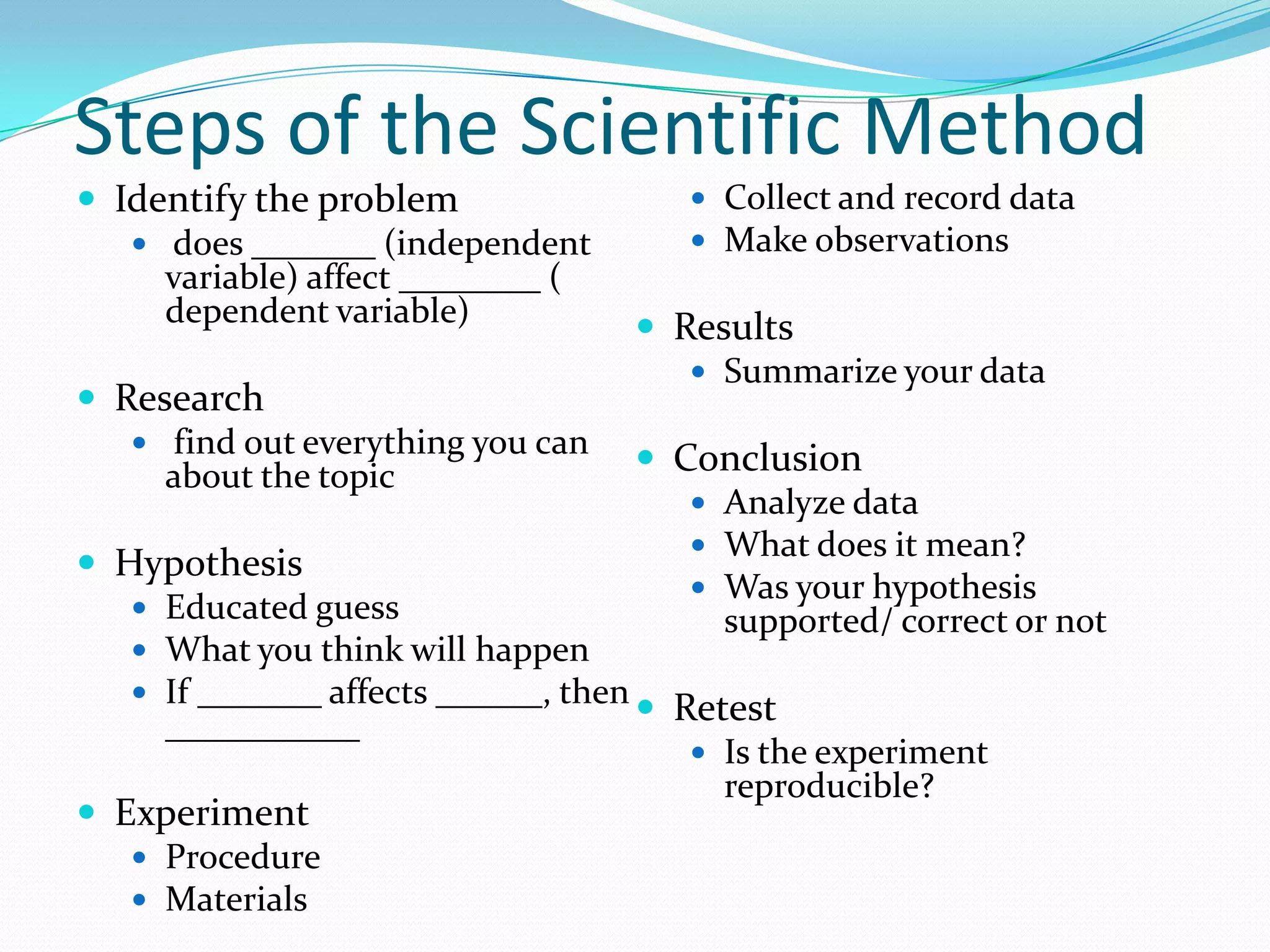
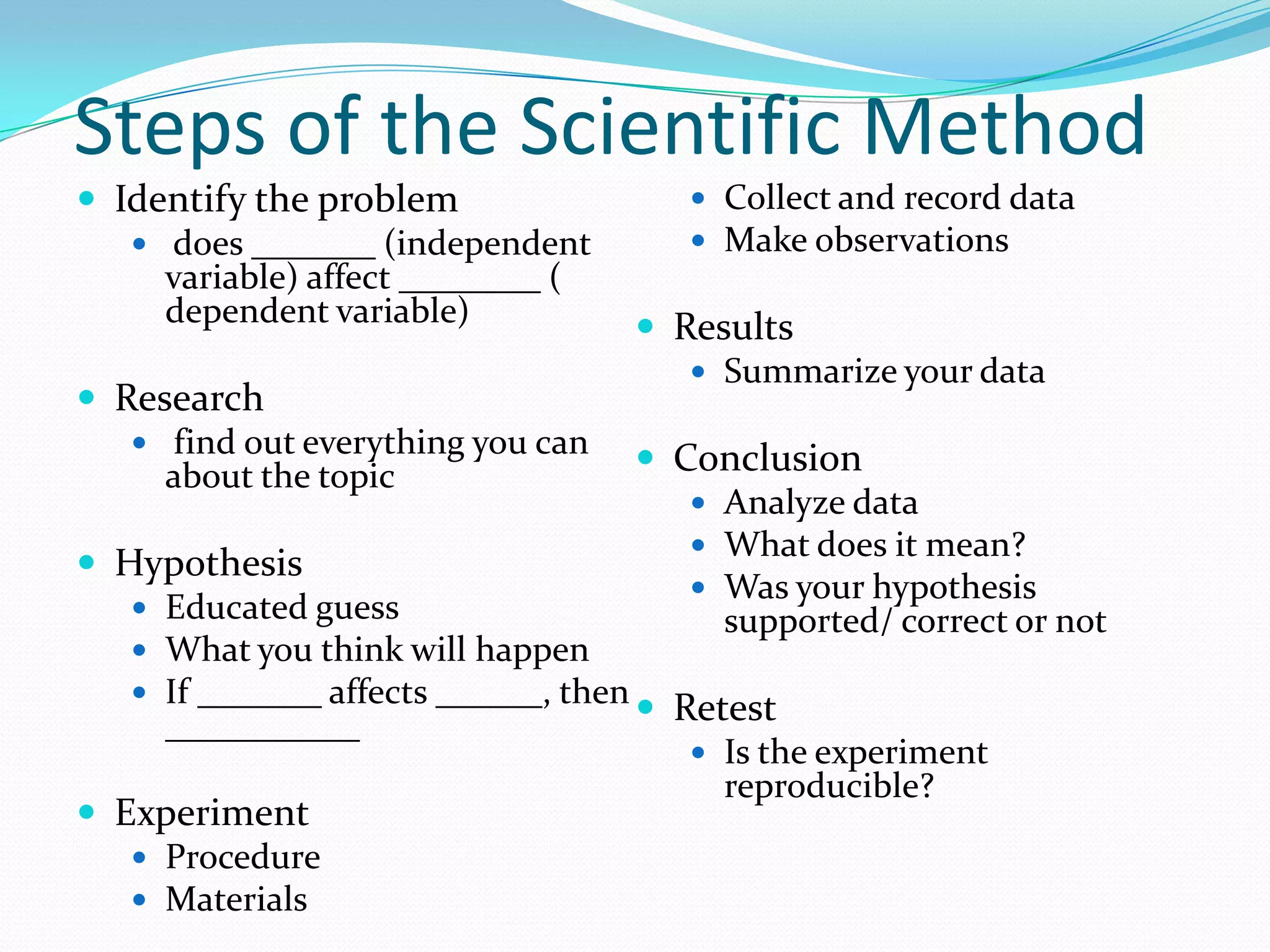
Steps of the Scientific Method
 Identify the problem
 does _______ (independent
variable) affect ________ (
dependent variable)
 Research
 find out everything you can
about the topic

 Collect and record data
 Make observations

 Results
 Summarize your data
 Conclusion
 Analyze data
 What does it mean?
 Was your hypothesis
supported/ correct or not

 Hypothesis
 Educated guess
 What you think will happen
 If _______ affects ______, then
 Retest
___________
 Is the experiment
reproducible?
 Experiment
 Procedure
 Materials
Wrap Up
 Sharing your problems and hypotheses
Homework
 Slimotosis Problem
 Bring in Poster Paper by Friday 9/13/13
Warm Up—
Answer in your notebook
What is a control group? What is the point of
having it?
Slimotosis
 Go over
 Questions??
Steps of the Scientific Method
 Identify the problem
 does _______ (independent
variable) affect ________ (
dependent variable)
 Research
 find out everything you can
about the topic

 Collect and record data
 Make observations

 Results
 Summarize your data
 Conclusion
 Analyze data
 What does it mean?
 Was your hypothesis
supported/ correct or not

 Hypothesis
 Educated guess
 What you think will happen
 If _______ affects ______, then
 Retest
___________
 Is the experiment
reproducible?
 Experiment
 Procedure
 Materials
Writing a Problem
 Does ____________ ( independent variable) affect

__________ (dependent variable)?
Writing a Hypothesis
 If _________________ ( independent variable) affects

_____________ ( dependent variable) then,
____________________
Review
 Problem
 Hypothesis
 Independent variable
 Dependent variable

 Control
 constant
Bikini Bottoms Experiments
 In a group of two to three, complete the Bikini

Bottoms Experiments
Wrap Up
 Go over Bikini Bottoms Experiments
Homework
 Marshmallow Muscles Problem
 Bring in Poster Paper for tomorrow!!!
Warm UpAnswer the questions on Flower Power and
Super Snails.
Homework
 Go over
 Questions?!!
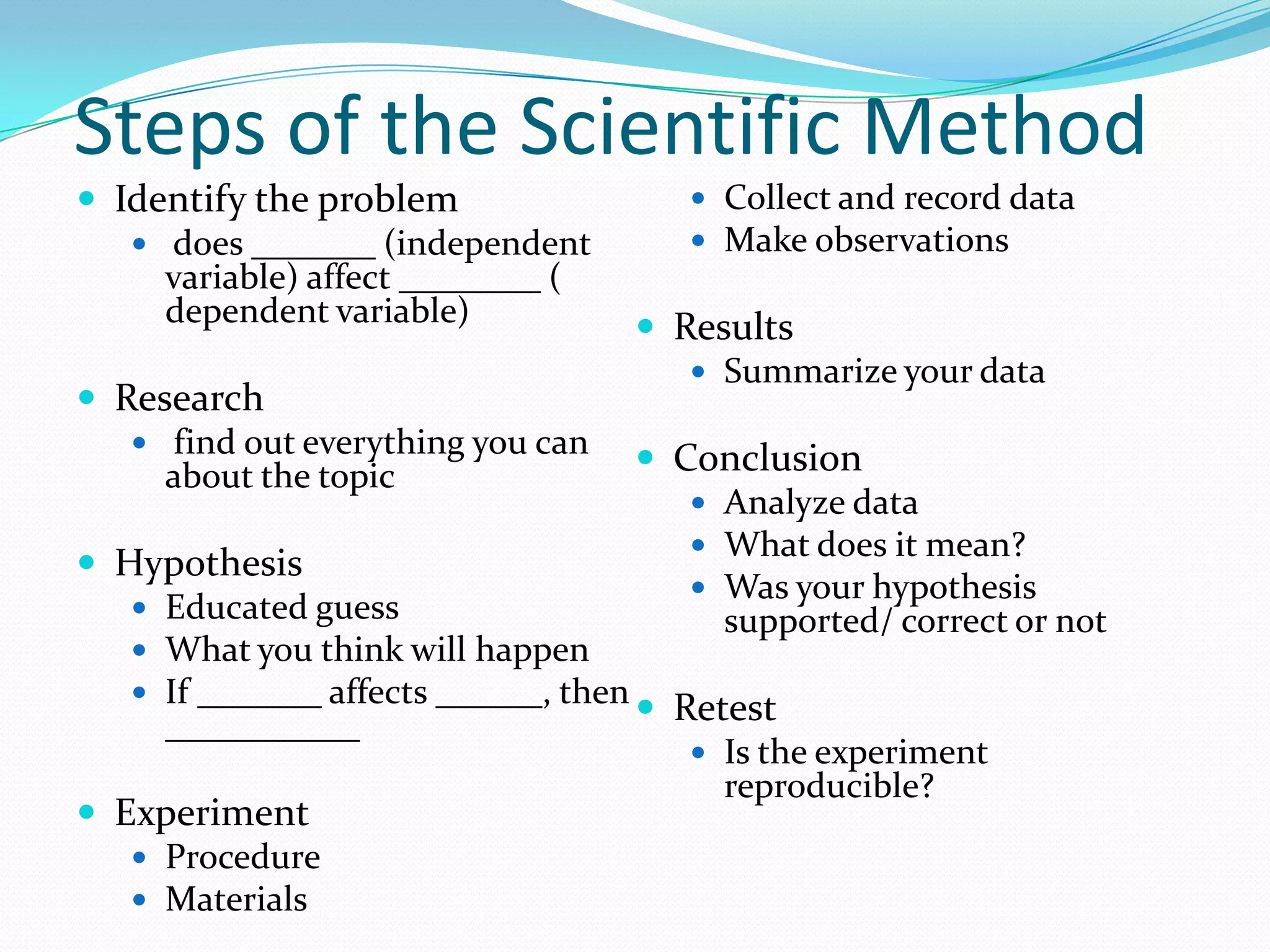
Steps of the Scientific Method
 Identify the problem
 does _______ (independent
variable) affect ________ (
dependent variable)
 Research
 find out everything you can
about the topic

 Collect and record data
 Make observations

 Results
 Summarize your data
 Conclusion
 Analyze data
 What does it mean?
 Was your hypothesis
supported/ correct or not

 Hypothesis
 Educated guess
 What you think will happen
 If _______ affects ______, then
 Retest
___________
 Is the experiment
reproducible?
 Experiment
 Procedure
 Materials
Scientific Method Posters
 Use the “Bubble Time” scenario
 Steps of the Scientific Method
 What do you do in each of these steps?
 Key Terms that are used

 Use Pictures!!
Wrap Up
 Questions??
 We will finish projects on Monday September 16
 Have a wonderful weekend!!

Monday September 9, 2013

  • 1.
    Warm Up- In yourscience notebook, list what you remember about scientific method.
  • 2.
    What is scientificmethod? It is a process that is used to find answers to questions about the world around us.
  • 3.
  • 4.
    Scientific Method VocabWords  On the paper provided, write down what you think the vocabulary words mean.
  • 5.
    Scientific Method Vocabulary Match the words with their definitions  Raise your hand for your words to be checked before moving on  Create a four column organizer in your notebook Word Definition Examples Drawings
  • 6.
     Copy orpaste the words and definitions into the organizer you made in your notebook Word Variable Independent variable Dependent variable Definition Examples Drawings
  • 7.
    Scientific Method Vocabulary Examples of each word  Come up with two examples for each vocabulary word  Drawings for each word  Draw a picture for each vocabulary word
  • 8.
    Wrap Up  Shareyour examples of each word with a partner
  • 9.
  • 10.
    Homeroom  Make sureyou have a SSR book  Get yourself organized for the day  Then, read silently
  • 11.
    Warm Up- Write inyour notebook.. A scientist studies the impact of a drug on cancer. What would be an independent variable and dependent variable?
  • 12.
    A scientist studiesthe impact of a drug on cancer. The independent variable is the administration of the drug. The dependent variable is the impact the drug has on cancer.
  • 13.
    Lisa Simpson HomeworkProblem  Go over  Control- one using fake hair care product  Independent- one using the Rogooti hair care  Dependent- amount of hair growth  Problem (question)-Does using the Rogooti hair care affect the amount of hair growth?  Hypothesis (educated guess)-If the Rogooti hair care affects the amount of hair growth then,  Questions??
  • 14.
    Scientific Method Vocabulary Examples of each word  Come up with two examples for each vocabulary word  Drawings for each word  Draw a picture for each vocabulary word
  • 15.
    Word Definition Variable An unknown; apart of an experiment that changes Independent variable Change that occurs in an experiment that is directly caused by the experimenter Dependent variable Change that occurs due to independent variable Constant A part of an experiment that does not change Control The part of the experiment that the independent variable is left out- the one thing you are testing is not included Examples Drawings
  • 16.
    Scientific Method Review Independent- Change that out- the one thing you are testing is not included occurs in an experiment that is directly caused by the experimenter  Sample size- number of individuals being tested  Variable-An unknown; a part of an experiment that changes  Population- amount of a species in an area  Dependent-Change that occurs due to independent variable  Control-The part of the experiment that the independent variable is left  Constant-A part of an experiment that does not change
  • 17.
    Controls and Variable Read each scenario and decide what are the controls and the variables in the problems  Answer each question carefully  You may use a separate sheet of paper to answer these questions
  • 18.
    Wrap Up  Eachgroup will share their answers from the Identify controls and variables sheet
  • 19.
    Homework  Patty PowerProblem  Bring in poster paper by Friday 9/13/13
  • 20.
    Warm UpAnswer inyour notebook.. What is the difference between an independent variable and a dependent variable?
  • 21.
    Independent vs. DependentVariable  Change that occurs in an experiment that is directly caused by the experimenter  What do I change?  May be part of the test or research  Change that occurs due to independent variables  What do I observe?
  • 22.
    Scientific Method Review Independent- Change that out- the one thing you are testing is not included occurs in an experiment that is directly caused by the experimenter  Sample size- number of individuals being tested  Variable-An unknown; a part of an experiment that changes  Population- amount of a species in an area  Dependent-Change that occurs due to independent variable  Control-The part of the experiment that the independent variable is left  Constant-A part of an experiment that does not change
  • 23.
    Controls and Variable Read each scenario and decide what are the controls and the variables in the problems  Answer each question carefully  You may use a separate sheet of paper to answer these questions
  • 24.
    Steps of theScientific Method  Identify the problem  does _______ (independent variable) affect ________ ( dependent variable)  Research  find out everything you can about the topic  Collect and record data  Make observations  Results  Summarize your data  Conclusion  Analyze data  What does it mean?  Was your hypothesis supported/ correct or not  Hypothesis  Educated guess  What you think will happen  If _______ affects ______, then  Retest ___________  Is the experiment reproducible?  Experiment  Procedure  Materials
  • 25.
    Wrap Up  Sharingyour problems and hypotheses
  • 26.
    Homework  Slimotosis Problem Bring in Poster Paper by Friday 9/13/13
  • 27.
    Warm Up— Answer inyour notebook What is a control group? What is the point of having it?
  • 28.
  • 29.
    Steps of theScientific Method  Identify the problem  does _______ (independent variable) affect ________ ( dependent variable)  Research  find out everything you can about the topic  Collect and record data  Make observations  Results  Summarize your data  Conclusion  Analyze data  What does it mean?  Was your hypothesis supported/ correct or not  Hypothesis  Educated guess  What you think will happen  If _______ affects ______, then  Retest ___________  Is the experiment reproducible?  Experiment  Procedure  Materials
  • 30.
    Writing a Problem Does ____________ ( independent variable) affect __________ (dependent variable)?
  • 31.
    Writing a Hypothesis If _________________ ( independent variable) affects _____________ ( dependent variable) then, ____________________
  • 32.
    Review  Problem  Hypothesis Independent variable  Dependent variable  Control  constant
  • 33.
    Bikini Bottoms Experiments In a group of two to three, complete the Bikini Bottoms Experiments
  • 34.
    Wrap Up  Goover Bikini Bottoms Experiments
  • 35.
    Homework  Marshmallow MusclesProblem  Bring in Poster Paper for tomorrow!!!
  • 36.
    Warm UpAnswer thequestions on Flower Power and Super Snails.
  • 37.
  • 38.
    Steps of theScientific Method  Identify the problem  does _______ (independent variable) affect ________ ( dependent variable)  Research  find out everything you can about the topic  Collect and record data  Make observations  Results  Summarize your data  Conclusion  Analyze data  What does it mean?  Was your hypothesis supported/ correct or not  Hypothesis  Educated guess  What you think will happen  If _______ affects ______, then  Retest ___________  Is the experiment reproducible?  Experiment  Procedure  Materials
  • 39.
    Scientific Method Posters Use the “Bubble Time” scenario  Steps of the Scientific Method  What do you do in each of these steps?  Key Terms that are used  Use Pictures!!
  • 40.
    Wrap Up  Questions?? We will finish projects on Monday September 16  Have a wonderful weekend!!