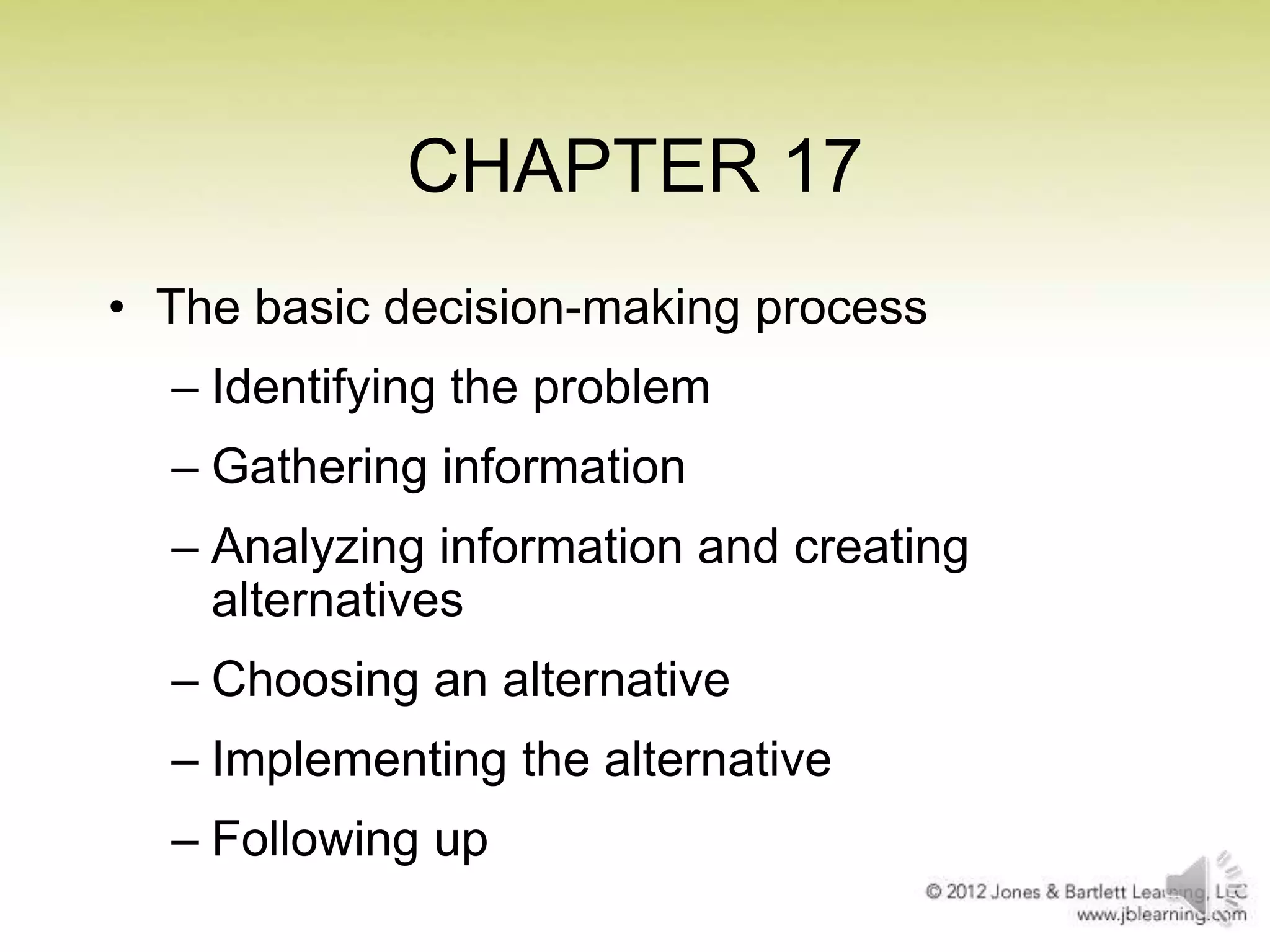
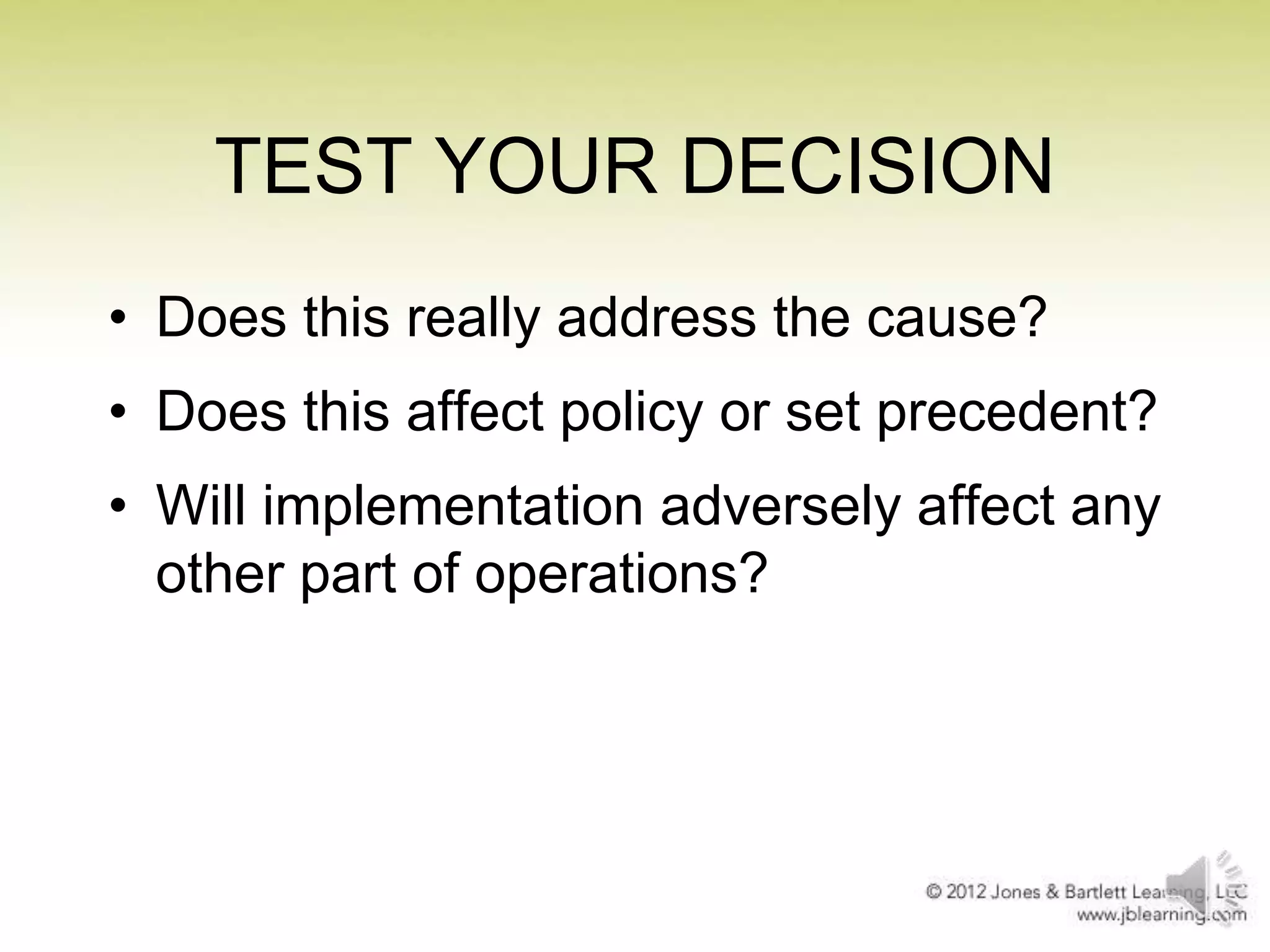
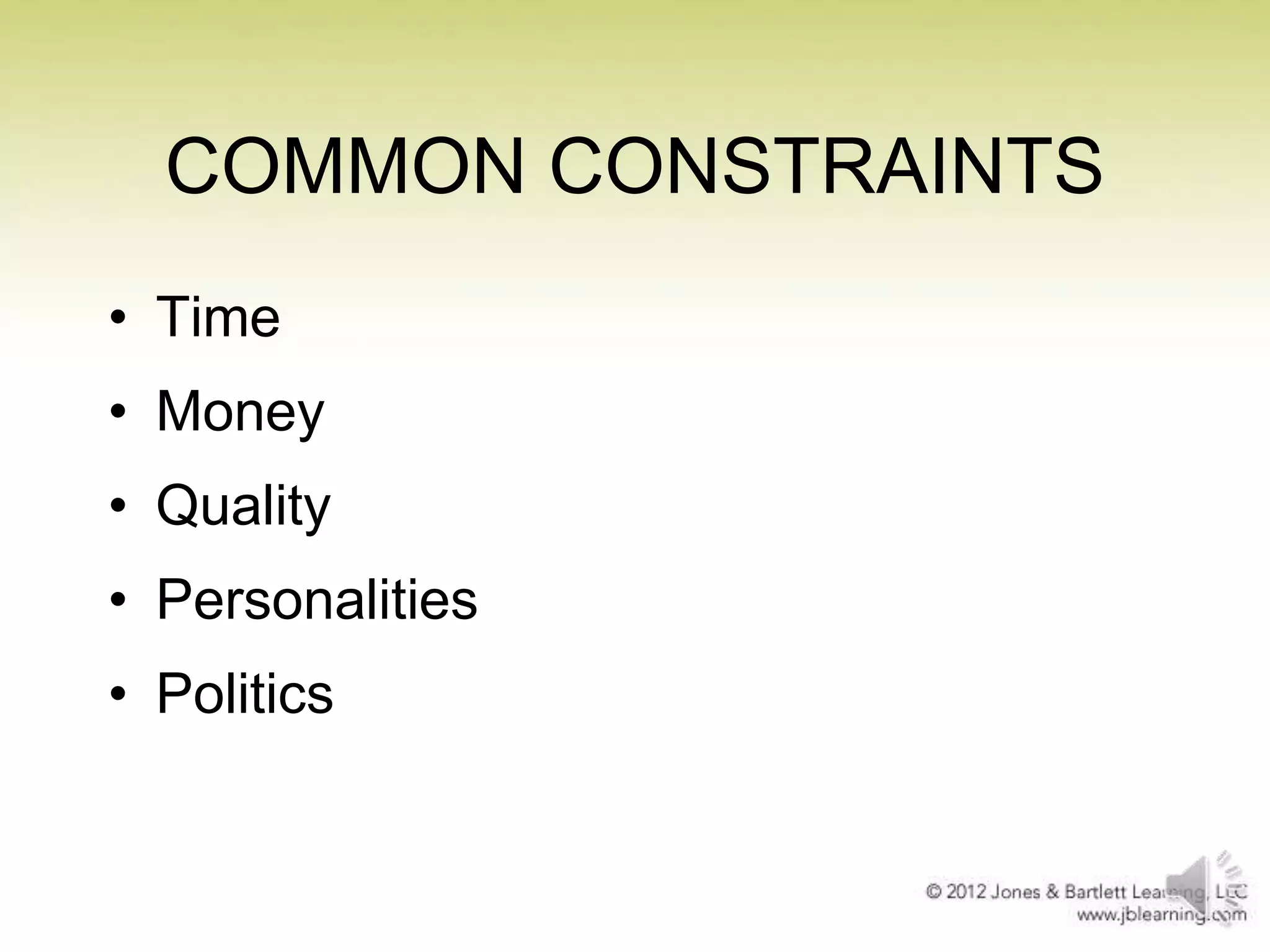
This document outlines the basic decision-making process which includes identifying the problem, gathering information, analyzing alternatives, choosing an alternative, implementing it, and following up. It notes that the amount of information gathered should depend on the potential consequences. When making a decision, it's important to consider if it addresses the underlying cause, may set precedent, and could adversely affect other operations. Every decision involves some risk and uncertainty, so analyzing alternatives aims to reduce that. The "no-decision option" of consciously deciding not to decide or ignoring the situation can have major consequences. Any decisions must fall within one's scope of authority.