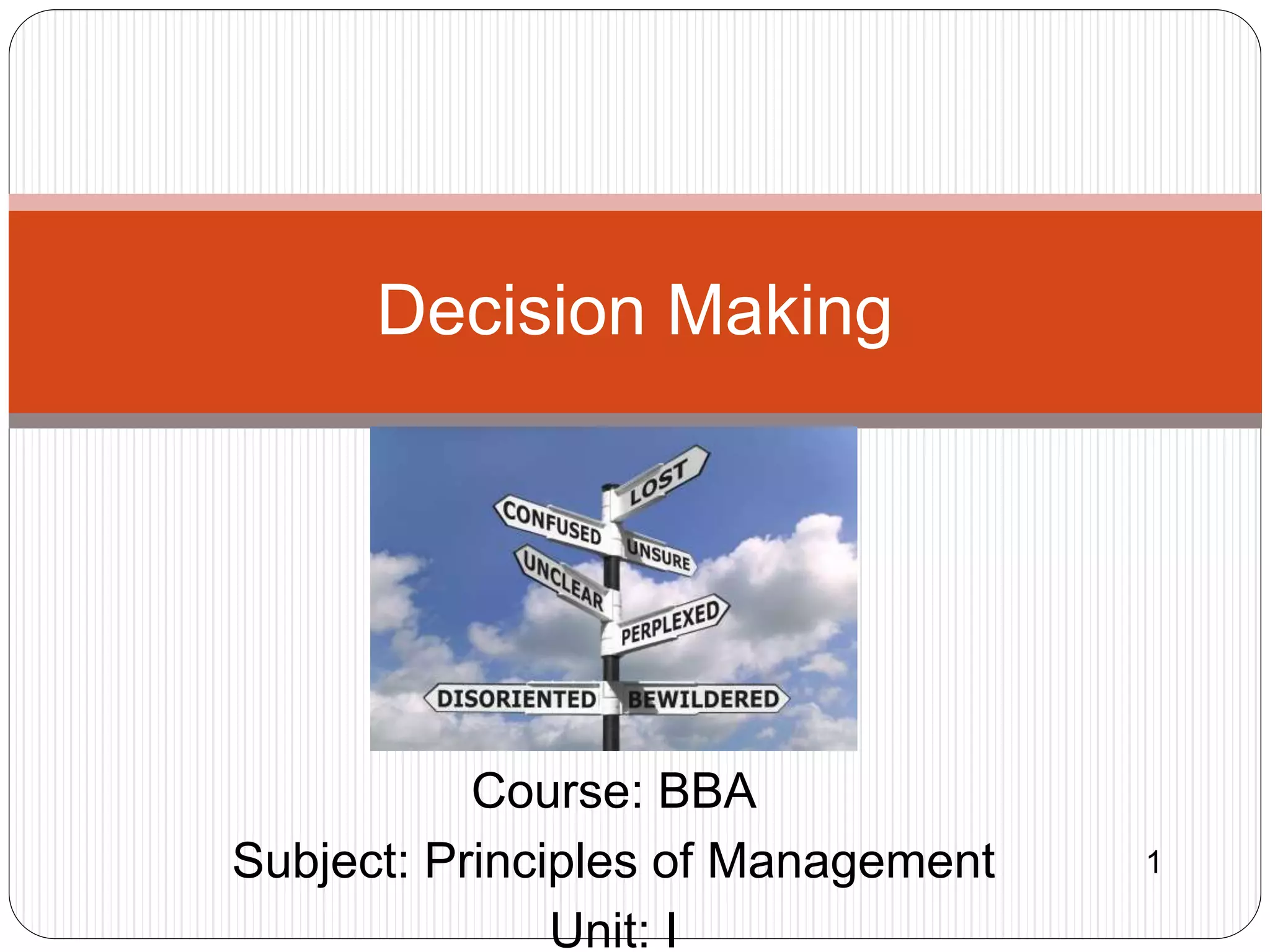

Decision Making
Course: BBA
Subject: Principles of Management
Unit: I
1
Objectives
mgt
 Decision Making
 Types of decisions
 Impediments in sound decision making
 Steps in decision making process
Decision before business starting
 What type of business is to be done?
 What should be the form of bus. Org?
 How much capital should be raised? How?
 On what scale it should be carried?
Small/Medium?
mgt
Decisions regarding production
 How much raw material? From where and when?
 Should spare parts to be made or bought?
 Machinery bought or on lease?
mgt
Decisions regarding production
 How much raw material? From where and when?
 Should spare parts to be made or bought?
 Machinery bought or on lease?
Financial decisions:
 How much dividend should be paid?
 Should bonus shares be issued?
 How to raise capital?
H.R.decisions:
S.& D./marketing decisions:
mgt
Definition
 Acc. To Koontz ‘D.M. is the actual selection from
among alternatives of a course of action. It is the
core of planning’
 Acc. To Earnest Dale, ‘to make decision always
means choice from among the alternatives.
Decision making is not required when alternatives
are not available.’
mgt
Types of decision making
mgt
 Programmed and non programmed decisions
 Strategic and tactical decisions
mgt
1. Programmed decision:
- Routine and repetitive
- Within organizational policies and rules
- Ex. Promotion of employee
2. Non- Programmed decision:
- For unusual problems
- Readymade solutions are not available
- Alternatives/solutions can’t be decided in
advance
- Ex. Accident
Types of decision making
mgt
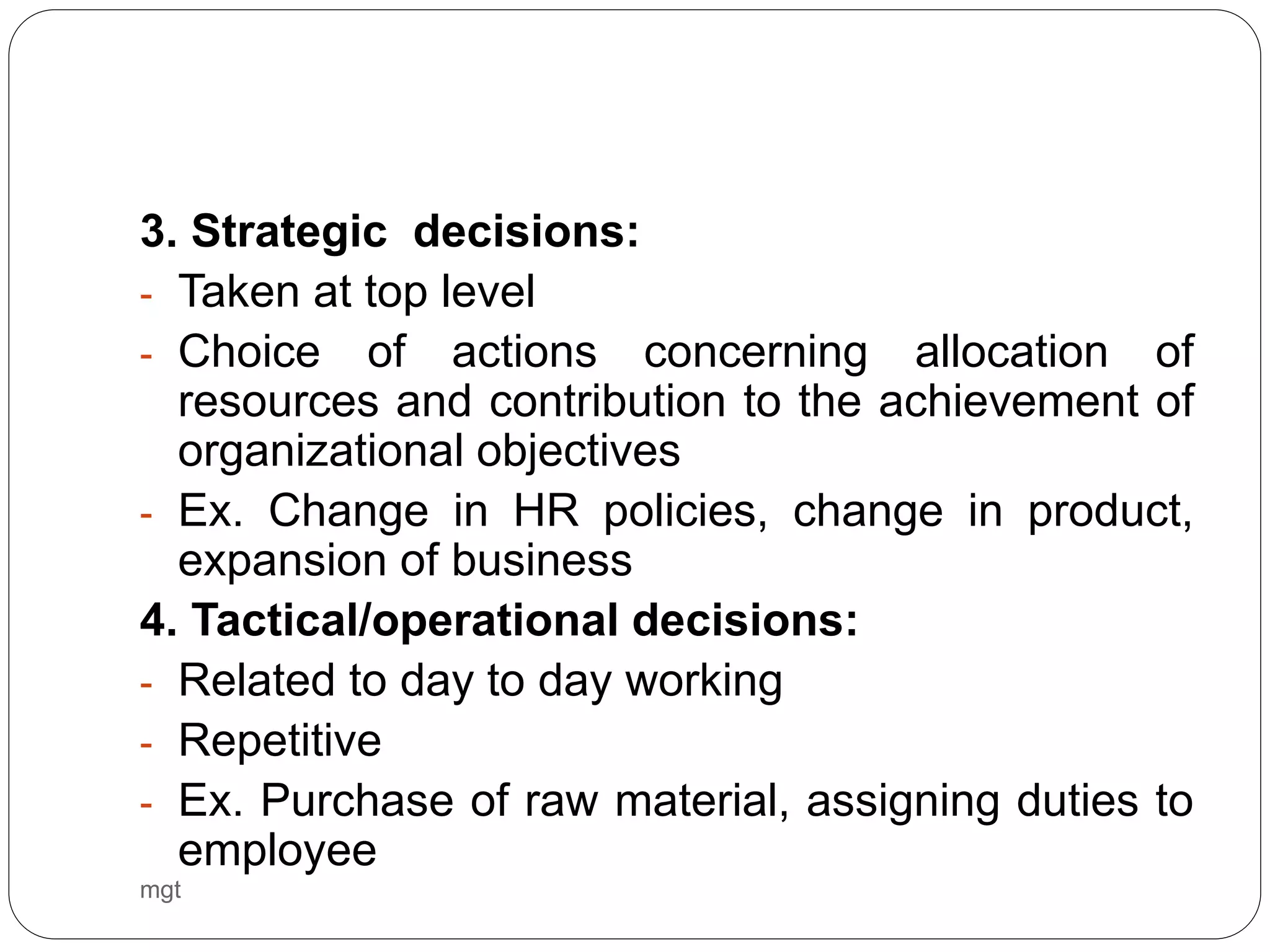
3. Strategic decisions:
- Taken at top level
- Choice of actions concerning allocation of
resources and contribution to the achievement of
organizational objectives
- Ex. Change in HR policies, change in product,
expansion of business
4. Tactical/operational decisions:
- Related to day to day working
- Repetitive
- Ex. Purchase of raw material, assigning duties to
employee
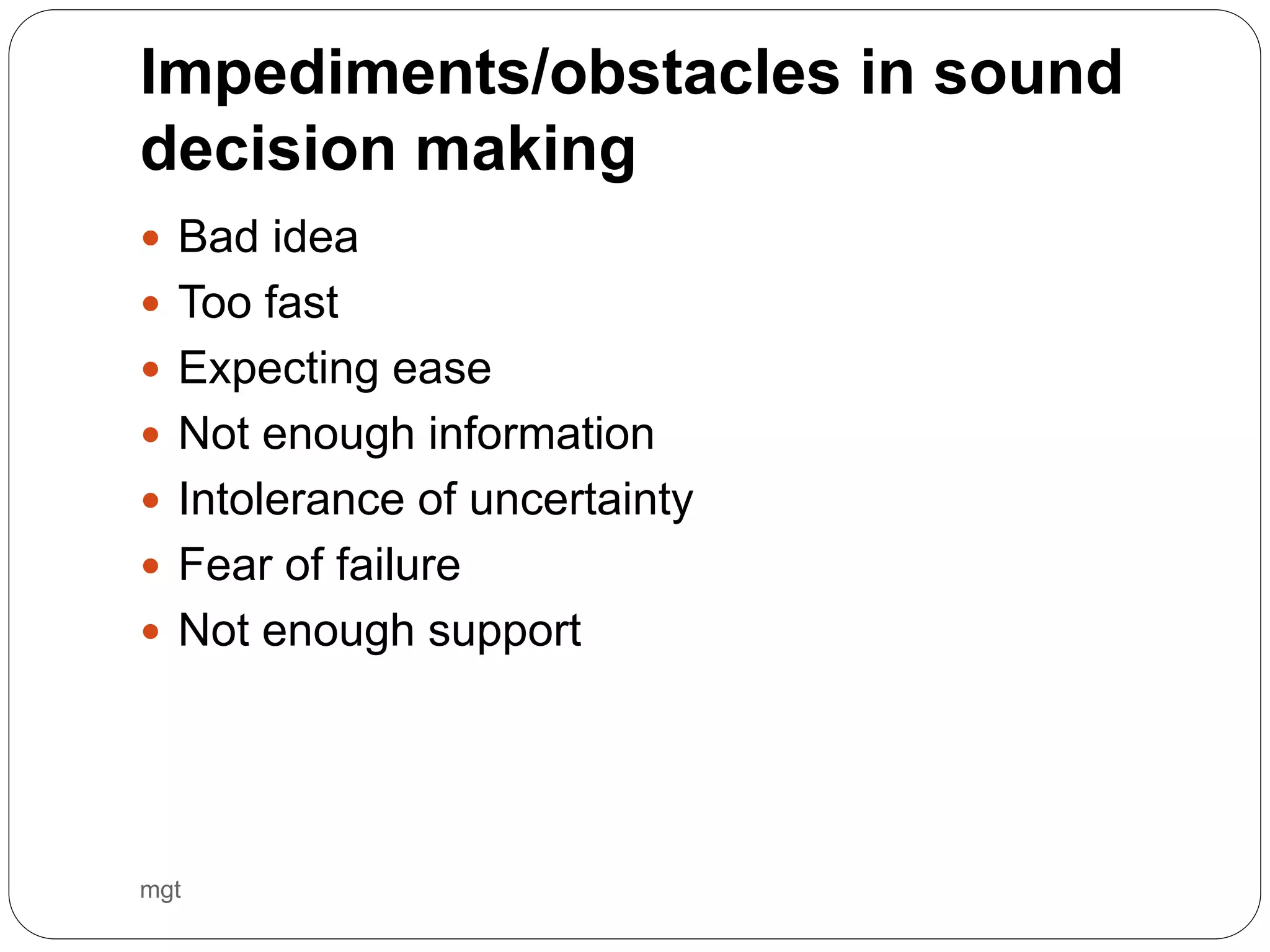
Impediments/obstacles in sound
decision making
mgt
 Bad idea
 Too fast
 Expecting ease
 Not enough information
 Intolerance of uncertainty
 Fear of failure
 Not enough support
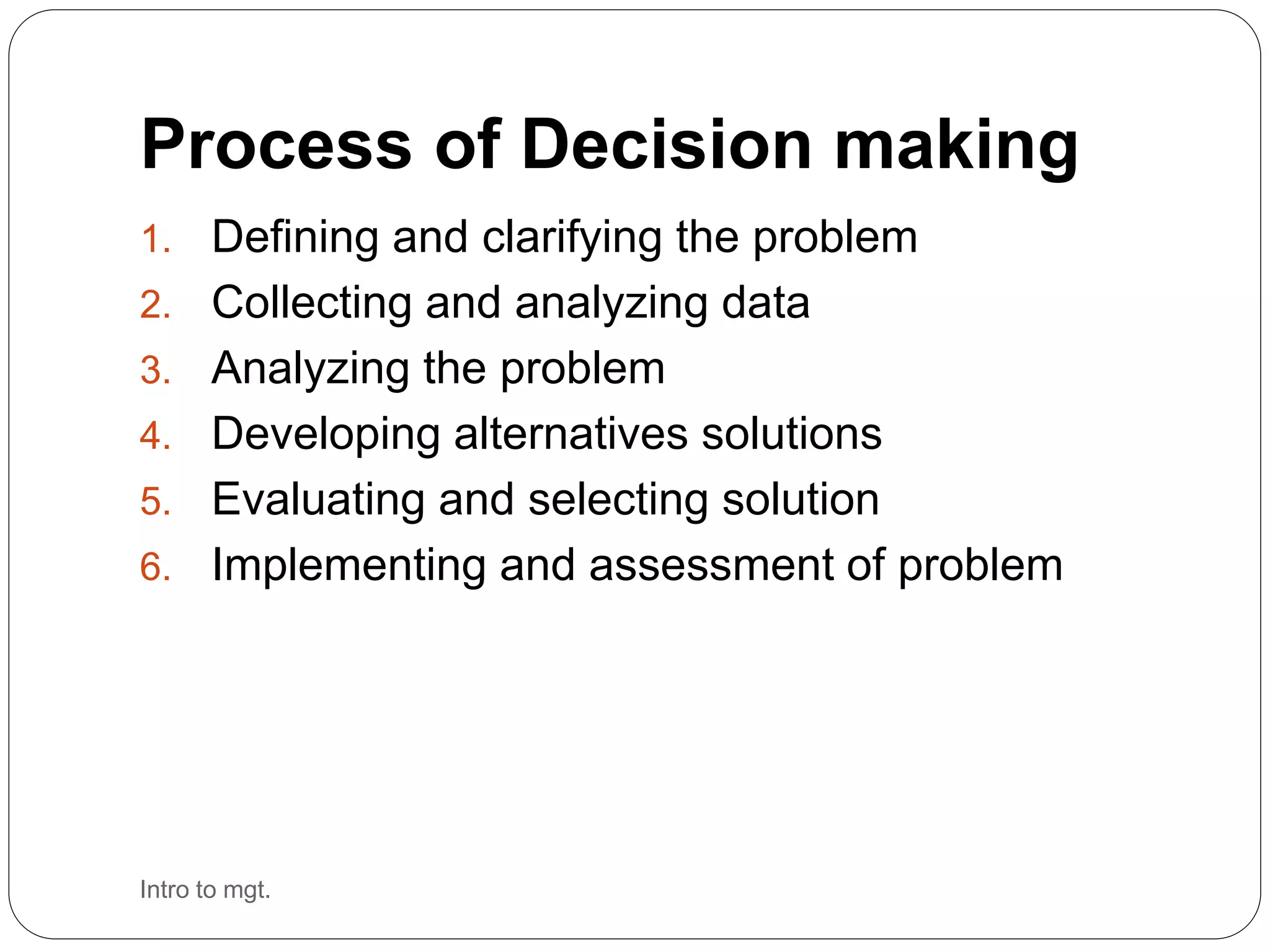
Process of Decision making
1. Defining and clarifying the problem
2. Collecting and analyzing data
3. Analyzing the problem
4. Developing alternatives solutions
5. Evaluating and selecting solution
6. Implementing and assessment of problem
Intro to mgt.
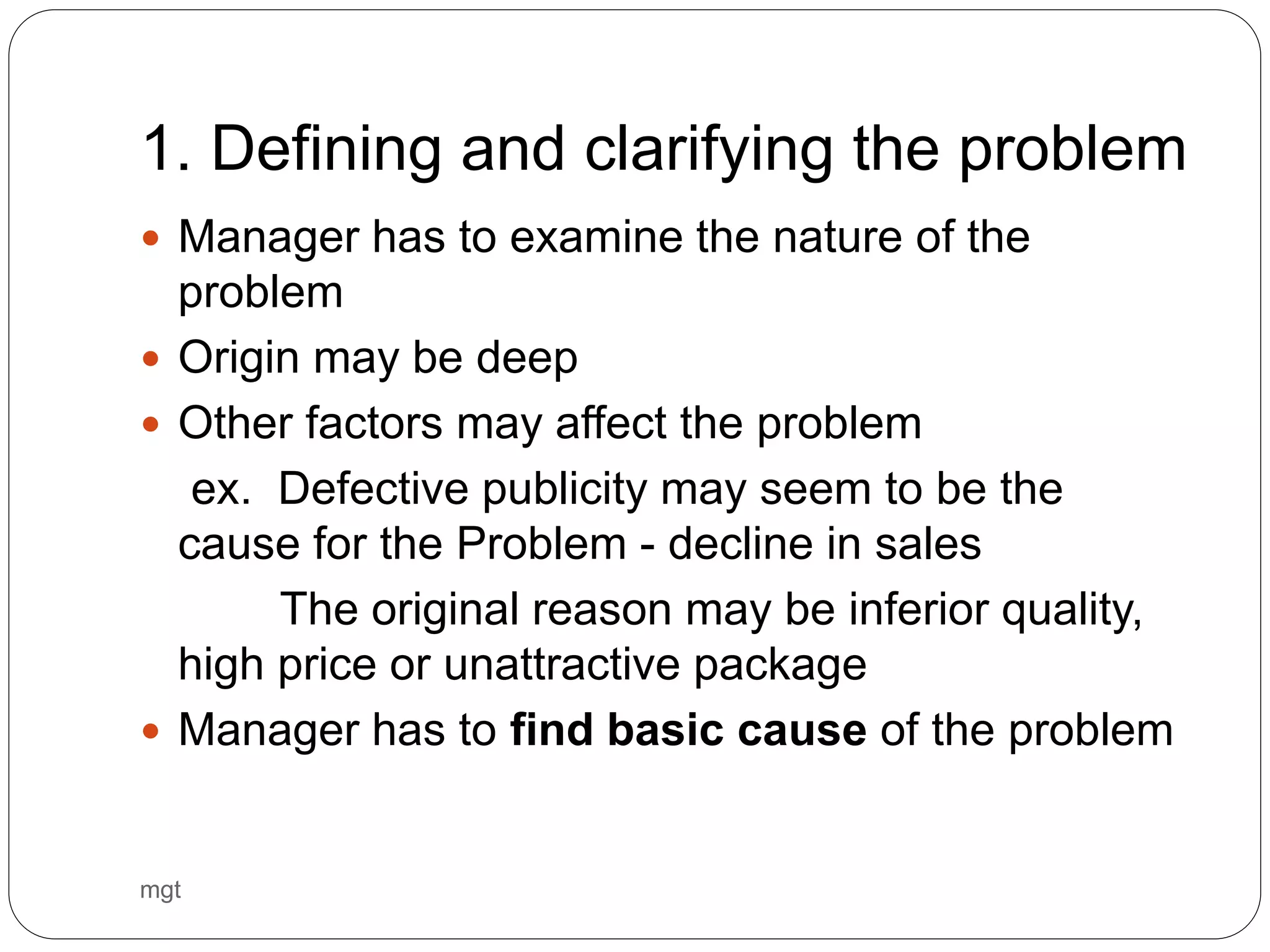
1. Defining and clarifying the problem
 Manager has to examine the nature of the
problem
 Origin may be deep
 Other factors may affect the problem
ex. Defective publicity may seem to be the
cause for the Problem - decline in sales
The original reason may be inferior quality,
high price or unattractive package
 Manager has to find basic cause of the problem
mgt
2.Collecting and analyzing the
data
 Data related to problem must be collected
 Types of data
-internal
-external
 Data may be presented in various forms such as
tables, diagrams and formulas
 Ex. Defective publicity is the problem, data
related to media, add., cost of add., feedback of
cust.
mgt
3.Analyzing the problem
 Analysis of problem is helpful in D.M. in following
respects:
(1) Clarifies future of decision, decision is valid or
not?
Changed when necessary?
(2) What will be effect on other departments?
(3) Decision is concerning some routine matter or
related to special issue?
(4) How much imp. To economic, social and
political forces for analyzing the problem
mgt
4. Developing alternative solution
 Seminars , G.D., brain storming for
alternatives
 Ex. for Sources of finance, alternatives
are:
- equity capital
- preference share capital
- debentures
- public deposit
- bank loan
- govt. help
mgt
5.Evaluating and selecting solutions
 Comparative study
 Cost- benefit analysis
 Risk element
 Time factor
 Economy- more result with less effort
 Limitations of resources
mgt
6. Implementing and assessment of
decision
 Instructions, meetings, circulars
 Solution should be practicable
 Regular feedback and review
mgt
mgt
1. http://castabigger.net/wp-
content/uploads/2014/07/Photoxpress_7279811-
11.jpg
 Principles and practice of Management by LM
Prasad, Himalaya Publishing house
References:

Bbai pom u1.4 decision making

  • 1.
    Decision Making Course: BBA Subject:Principles of Management Unit: I 1
  • 2.
    Objectives mgt  Decision Making Types of decisions  Impediments in sound decision making  Steps in decision making process
  • 3.
    Decision before businessstarting  What type of business is to be done?  What should be the form of bus. Org?  How much capital should be raised? How?  On what scale it should be carried? Small/Medium? mgt
  • 4.
    Decisions regarding production How much raw material? From where and when?  Should spare parts to be made or bought?  Machinery bought or on lease? mgt
  • 5.
    Decisions regarding production How much raw material? From where and when?  Should spare parts to be made or bought?  Machinery bought or on lease? Financial decisions:  How much dividend should be paid?  Should bonus shares be issued?  How to raise capital? H.R.decisions: S.& D./marketing decisions: mgt
  • 6.
    Definition  Acc. ToKoontz ‘D.M. is the actual selection from among alternatives of a course of action. It is the core of planning’  Acc. To Earnest Dale, ‘to make decision always means choice from among the alternatives. Decision making is not required when alternatives are not available.’ mgt
  • 7.
    Types of decisionmaking mgt  Programmed and non programmed decisions  Strategic and tactical decisions
  • 8.
    mgt 1. Programmed decision: -Routine and repetitive - Within organizational policies and rules - Ex. Promotion of employee 2. Non- Programmed decision: - For unusual problems - Readymade solutions are not available - Alternatives/solutions can’t be decided in advance - Ex. Accident Types of decision making
  • 9.
    mgt 3. Strategic decisions: -Taken at top level - Choice of actions concerning allocation of resources and contribution to the achievement of organizational objectives - Ex. Change in HR policies, change in product, expansion of business 4. Tactical/operational decisions: - Related to day to day working - Repetitive - Ex. Purchase of raw material, assigning duties to employee
  • 10.
    Impediments/obstacles in sound decisionmaking mgt  Bad idea  Too fast  Expecting ease  Not enough information  Intolerance of uncertainty  Fear of failure  Not enough support
  • 11.
    Process of Decisionmaking 1. Defining and clarifying the problem 2. Collecting and analyzing data 3. Analyzing the problem 4. Developing alternatives solutions 5. Evaluating and selecting solution 6. Implementing and assessment of problem Intro to mgt.
  • 12.
    1. Defining andclarifying the problem  Manager has to examine the nature of the problem  Origin may be deep  Other factors may affect the problem ex. Defective publicity may seem to be the cause for the Problem - decline in sales The original reason may be inferior quality, high price or unattractive package  Manager has to find basic cause of the problem mgt
  • 13.
    2.Collecting and analyzingthe data  Data related to problem must be collected  Types of data -internal -external  Data may be presented in various forms such as tables, diagrams and formulas  Ex. Defective publicity is the problem, data related to media, add., cost of add., feedback of cust. mgt
  • 14.
    3.Analyzing the problem Analysis of problem is helpful in D.M. in following respects: (1) Clarifies future of decision, decision is valid or not? Changed when necessary? (2) What will be effect on other departments? (3) Decision is concerning some routine matter or related to special issue? (4) How much imp. To economic, social and political forces for analyzing the problem mgt
  • 15.
    4. Developing alternativesolution  Seminars , G.D., brain storming for alternatives  Ex. for Sources of finance, alternatives are: - equity capital - preference share capital - debentures - public deposit - bank loan - govt. help mgt
  • 16.
    5.Evaluating and selectingsolutions  Comparative study  Cost- benefit analysis  Risk element  Time factor  Economy- more result with less effort  Limitations of resources mgt
  • 17.
    6. Implementing andassessment of decision  Instructions, meetings, circulars  Solution should be practicable  Regular feedback and review mgt
  • 18.
  • 19.
    1. http://castabigger.net/wp- content/uploads/2014/07/Photoxpress_7279811- 11.jpg  Principlesand practice of Management by LM Prasad, Himalaya Publishing house References: