Weathering
WEATHERING
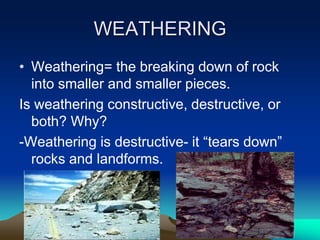
• Weathering= the breaking down of rock
into smaller and smaller pieces.
Is weathering constructive, destructive, or
both? Why?
-Weathering is destructive- it “tears down”
rocks and landforms.
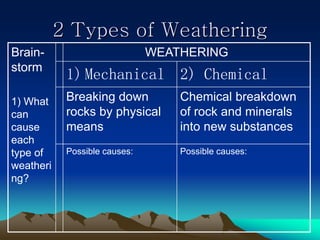
2 Types of Weathering
Brain-
storm
1) What
can
cause
each
type of
weatheri
ng?
WEATHERING
1) Mechanical 2) Chemical
Breaking down
rocks by physical
means
Chemical breakdown
of rock and minerals
into new substances
Possible causes: Possible causes:
MECHANICAL WEATHERING
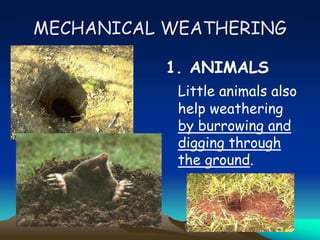
1. ANIMALS
Little animals also
help weathering
by burrowing and
digging through
the ground.
MECHANICAL WEATHERING
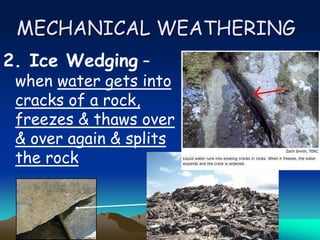
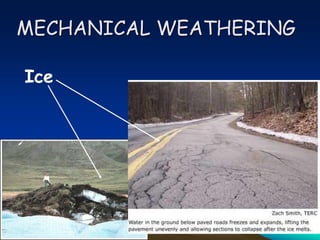
2. Ice Wedging –
when water gets into
cracks of a rock,
freezes & thaws over
& over again & splits
the rock
MECHANICAL WEATHERING
Ice
MECHANICAL WEATHERING
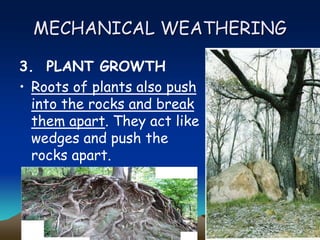
3. PLANT GROWTH
• Roots of plants also push
into the rocks and break
them apart. They act like
wedges and push the
rocks apart.
MECHANICAL WEATHERING
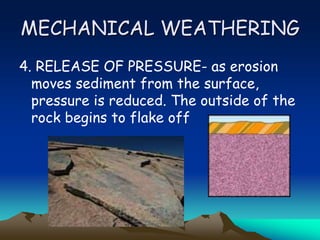
4. RELEASE OF PRESSURE- as erosion
moves sediment from the surface,
pressure is reduced. The outside of the
rock begins to flake off
MECHANICAL WEATHERING
NONLIVING CAUSES
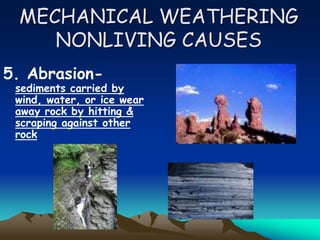
5. Abrasion-
sediments carried by
wind, water, or ice wear
away rock by hitting &
scraping against other
rock
Abrasion
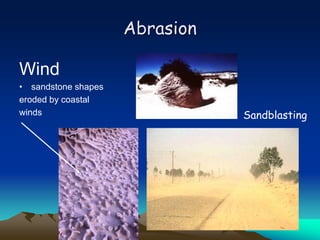
Wind
• sandstone shapes
eroded by coastal
winds Sandblasting
Abrasion
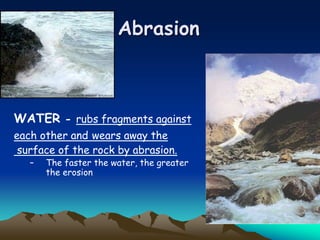
WATER - rubs fragments against
each other and wears away the
surface of the rock by abrasion.
– The faster the water, the greater
the erosion
Abrasion
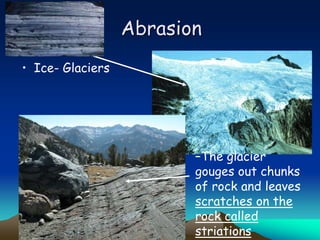
• Ice- Glaciers
–The glacier
gouges out chunks
of rock and leaves
scratches on the
rock called
striations
CHEMICAL WEATHERING
• CHEMICAL WEATHERING
the chemical breakdown of rock
and minerals into new substances
CHEMICAL WEATHERING
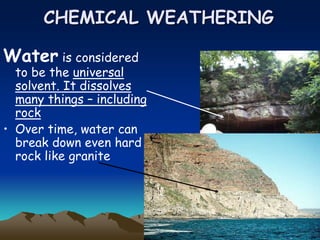
Water is considered
to be the universal
solvent. It dissolves
many things – including
rock
• Over time, water can
break down even hard
rock like granite
CHEMICAL WEATHERING
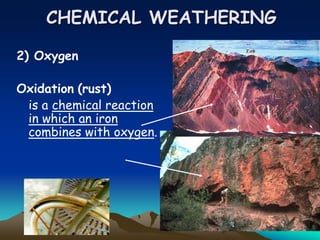
2) Oxygen
Oxidation (rust)
is a chemical reaction
in which an iron
combines with oxygen.
CHEMICAL WEATHERING
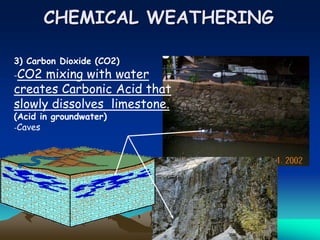
3) Carbon Dioxide (CO2)
-CO2 mixing with water
creates Carbonic Acid that
slowly dissolves limestone.
(Acid in groundwater)
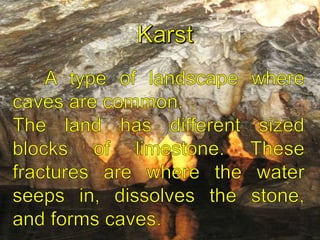
-Caves
CHEMICAL WEATHERING
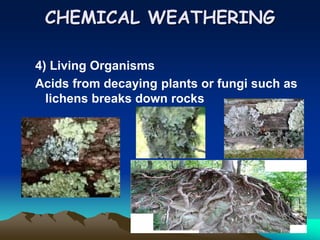
4) Living Organisms
Acids from decaying plants or fungi such as
lichens breaks down rocks
CHEMICAL WEATHERING
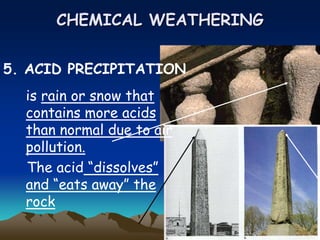
is rain or snow that
contains more acids
than normal due to air
pollution.
The acid “dissolves”
and “eats away” the
rock
5. ACID PRECIPITATION
WEATHERING
How does
weathering
change the
surface of
the Earth?
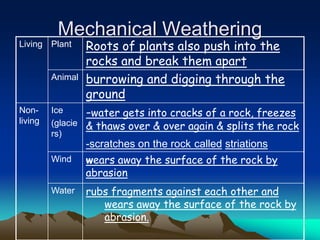
Mechanical Weathering
Living Plant Roots of plants also push into the
rocks and break them apart
Animal burrowing and digging through the
ground
Non-
living
Ice
(glacie
rs)
-water gets into cracks of a rock, freezes
& thaws over & over again & splits the rock
-scratches on the rock called striations
Wind wears away the surface of the rock by
abrasion
Water rubs fragments against each other and
wears away the surface of the rock by
abrasion.
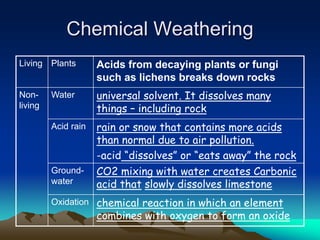
Chemical Weathering
Living Plants Acids from decaying plants or fungi
such as lichens breaks down rocks
Non-
living
Water universal solvent. It dissolves many
things – including rock
Acid rain rain or snow that contains more acids
than normal due to air pollution.
-acid “dissolves” or “eats away” the rock
Ground-
water
CO2 mixing with water creates Carbonic
acid that slowly dissolves limestone
Oxidation chemical reaction in which an element
combines with oxygen to form an oxide
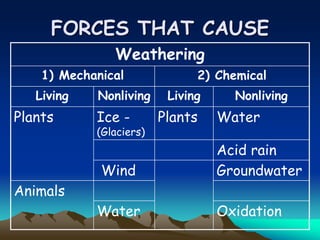
FORCES THAT CAUSE
Weathering
1) Mechanical 2) Chemical
Living Nonliving Living Nonliving
Plants Ice -
(Glaciers)
Plants Water
Acid rain
Wind Groundwater
Animals
Water Oxidation
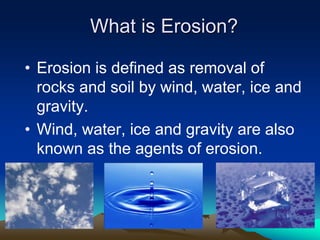
What is Erosion?
• Erosion is defined as removal of
rocks and soil by wind, water, ice and
gravity.
• Wind, water, ice and gravity are also
known as the agents of erosion.
Weathering vs. Erosion
Weathering involves two processes
[physical, chemical]
that often work together to break down
rocks. Both processes occur in place. No
movement is involved in weathering.
Wind Erosion
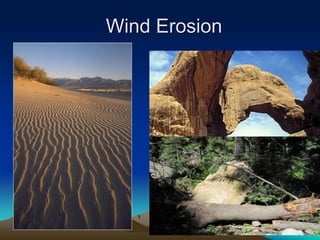
Wind Erosion
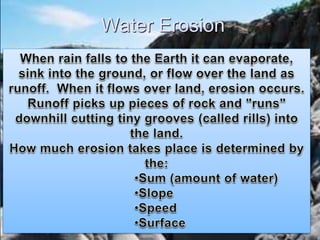
Water Erosion
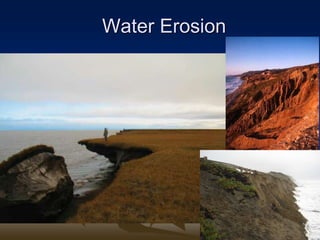
Water Erosion
Ice Erosion
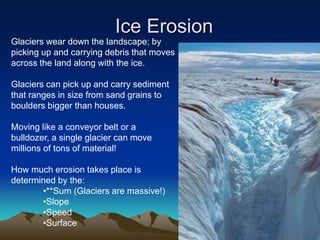
Glaciers wear down the landscape; by
picking up and carrying debris that moves
across the land along with the ice.
Glaciers can pick up and carry sediment
that ranges in size from sand grains to
boulders bigger than houses.
Moving like a conveyor belt or a
bulldozer, a single glacier can move
millions of tons of material!
How much erosion takes place is
determined by the:
•**Sum (Glaciers are massive!)
•Slope
•Speed
•Surface
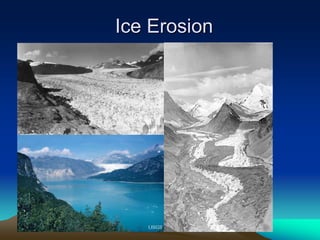
Ice Erosion
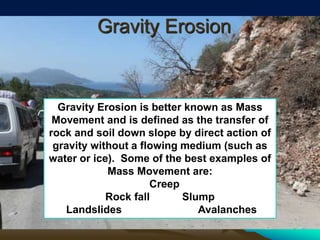
Gravity Erosion
Gravity Erosion is better known as Mass
Movement and is defined as the transfer of
rock and soil down slope by direct action of
gravity without a flowing medium (such as
water or ice). Some of the best examples of
Mass Movement are:
Creep
Rock fall Slump
Landslides Avalanches
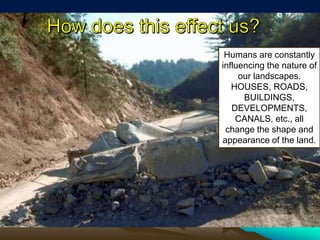
Humans are constantly
influencing the nature of
our landscapes.
HOUSES, ROADS,
BUILDINGS,
DEVELOPMENTS,
CANALS, etc., all
change the shape and
appearance of the land.

Weathering

  • 1.
  • 2.
    WEATHERING • Weathering= thebreaking down of rock into smaller and smaller pieces. Is weathering constructive, destructive, or both? Why? -Weathering is destructive- it “tears down” rocks and landforms.
  • 3.
    2 Types ofWeathering Brain- storm 1) What can cause each type of weatheri ng? WEATHERING 1) Mechanical 2) Chemical Breaking down rocks by physical means Chemical breakdown of rock and minerals into new substances Possible causes: Possible causes:
  • 4.
    MECHANICAL WEATHERING 1. ANIMALS Littleanimals also help weathering by burrowing and digging through the ground.
  • 5.
    MECHANICAL WEATHERING 2. IceWedging – when water gets into cracks of a rock, freezes & thaws over & over again & splits the rock
  • 6.
  • 7.
    MECHANICAL WEATHERING 3. PLANTGROWTH • Roots of plants also push into the rocks and break them apart. They act like wedges and push the rocks apart.
  • 8.
    MECHANICAL WEATHERING 4. RELEASEOF PRESSURE- as erosion moves sediment from the surface, pressure is reduced. The outside of the rock begins to flake off
  • 9.
    MECHANICAL WEATHERING NONLIVING CAUSES 5.Abrasion- sediments carried by wind, water, or ice wear away rock by hitting & scraping against other rock
  • 10.
    Abrasion Wind • sandstone shapes erodedby coastal winds Sandblasting
  • 11.
    Abrasion WATER - rubsfragments against each other and wears away the surface of the rock by abrasion. – The faster the water, the greater the erosion
  • 12.
    Abrasion • Ice- Glaciers –Theglacier gouges out chunks of rock and leaves scratches on the rock called striations
  • 13.
    CHEMICAL WEATHERING • CHEMICALWEATHERING the chemical breakdown of rock and minerals into new substances
  • 14.
    CHEMICAL WEATHERING Water isconsidered to be the universal solvent. It dissolves many things – including rock • Over time, water can break down even hard rock like granite
  • 15.
    CHEMICAL WEATHERING 2) Oxygen Oxidation(rust) is a chemical reaction in which an iron combines with oxygen.
  • 16.
    CHEMICAL WEATHERING 3) CarbonDioxide (CO2) -CO2 mixing with water creates Carbonic Acid that slowly dissolves limestone. (Acid in groundwater) -Caves
  • 17.
    CHEMICAL WEATHERING 4) LivingOrganisms Acids from decaying plants or fungi such as lichens breaks down rocks
  • 18.
    CHEMICAL WEATHERING is rainor snow that contains more acids than normal due to air pollution. The acid “dissolves” and “eats away” the rock 5. ACID PRECIPITATION
  • 19.
  • 20.
    Mechanical Weathering Living PlantRoots of plants also push into the rocks and break them apart Animal burrowing and digging through the ground Non- living Ice (glacie rs) -water gets into cracks of a rock, freezes & thaws over & over again & splits the rock -scratches on the rock called striations Wind wears away the surface of the rock by abrasion Water rubs fragments against each other and wears away the surface of the rock by abrasion.
  • 21.
    Chemical Weathering Living PlantsAcids from decaying plants or fungi such as lichens breaks down rocks Non- living Water universal solvent. It dissolves many things – including rock Acid rain rain or snow that contains more acids than normal due to air pollution. -acid “dissolves” or “eats away” the rock Ground- water CO2 mixing with water creates Carbonic acid that slowly dissolves limestone Oxidation chemical reaction in which an element combines with oxygen to form an oxide
  • 22.
    FORCES THAT CAUSE Weathering 1)Mechanical 2) Chemical Living Nonliving Living Nonliving Plants Ice - (Glaciers) Plants Water Acid rain Wind Groundwater Animals Water Oxidation
  • 24.
    What is Erosion? •Erosion is defined as removal of rocks and soil by wind, water, ice and gravity. • Wind, water, ice and gravity are also known as the agents of erosion.
  • 25.
    Weathering vs. Erosion Weatheringinvolves two processes [physical, chemical] that often work together to break down rocks. Both processes occur in place. No movement is involved in weathering.
  • 26.
  • 27.
  • 28.
  • 29.
  • 30.
    Ice Erosion Glaciers weardown the landscape; by picking up and carrying debris that moves across the land along with the ice. Glaciers can pick up and carry sediment that ranges in size from sand grains to boulders bigger than houses. Moving like a conveyor belt or a bulldozer, a single glacier can move millions of tons of material! How much erosion takes place is determined by the: •**Sum (Glaciers are massive!) •Slope •Speed •Surface
  • 31.
  • 32.
    Gravity Erosion Gravity Erosionis better known as Mass Movement and is defined as the transfer of rock and soil down slope by direct action of gravity without a flowing medium (such as water or ice). Some of the best examples of Mass Movement are: Creep Rock fall Slump Landslides Avalanches
  • 34.
    Humans are constantly influencingthe nature of our landscapes. HOUSES, ROADS, BUILDINGS, DEVELOPMENTS, CANALS, etc., all change the shape and appearance of the land.