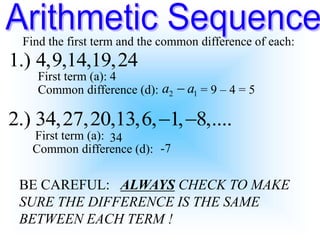
Find the first term and the common difference of each:
1.) 4,9,14,19,24
First term (a): 4
Common difference (d): 2 1
a a
 = 9 – 4 = 5
2.) 34,27,20,13,6, 1, 8,....
 
First term (a): 34
Common difference (d): -7
BE CAREFUL: ALWAYS CHECK TO MAKE
SURE THE DIFFERENCE IS THE SAME
BETWEEN EACH TERM !
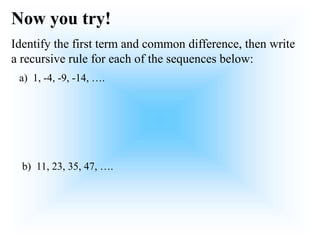
Now you try!
Identify the first term and common difference, then write
a recursive rule for each of the sequences below:
b) 11, 23, 35, 47, ….
a) 1, -4, -9, -14, ….
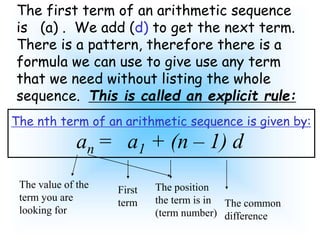
The first term of an arithmetic sequence
is (a) . We add (d) to get the next term.
There is a pattern, therefore there is a
formula we can use to give use any term
that we need without listing the whole
sequence. This is called an explicit rule:
The nth term of an arithmetic sequence is given by:
The value of the
term you are
looking for
First
term
The position
the term is in
(term number)
The common
difference
an = a1 + (n – 1) d
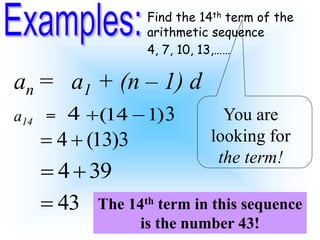
Find the 14th term of the
arithmetic sequence
4, 7, 10, 13,……
(14 1)
 
4
4 (13)3
 
4 39
 
43

an = a1 + (n – 1) d
a14 = 3 You are
looking for
the term!
The 14th term in this sequence
is the number 43!
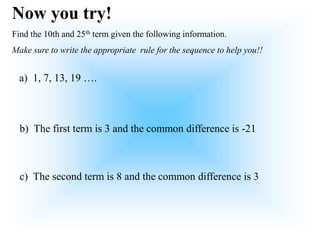
Now you try!
Find the 10th and 25th term given the following information.
Make sure to write the appropriate rule for the sequence to help you!!
a) 1, 7, 13, 19 ….
c) The second term is 8 and the common difference is 3
b) The first term is 3 and the common difference is -21
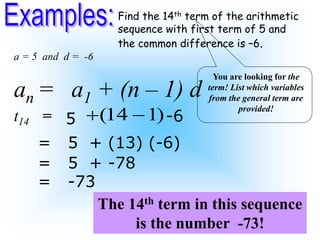
Find the 14th term of the arithmetic
sequence with first term of 5 and
the common difference is –6.
(14 1)
 
an = a1 + (n – 1) d
t14 =
You are looking for the
term! List which variables
from the general term are
provided!
The 14th term in this sequence
is the number -73!
a = 5 and d = -6
5 -6
= 5 + (13) (-6)
= 5 + -78
= -73
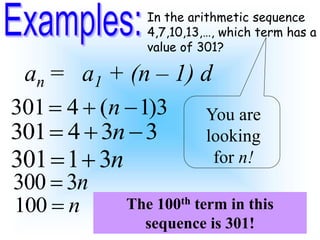
In the arithmetic sequence
4,7,10,13,…, which term has a
value of 301?
301 4 ( 1)3
n
  
301 4 3 3
n
  
301 1 3n
 
300 3n

100 n

an = a1 + (n – 1) d
You are
looking
for n!
The 100th term in this
sequence is 301!
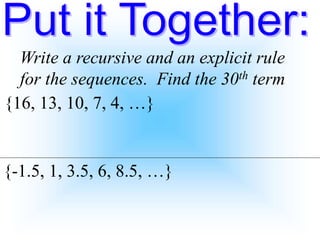
Write a recursive and an explicit rule
for the sequences. Find the 30th term
{16, 13, 10, 7, 4, …}
{-1.5, 1, 3.5, 6, 8.5, …}
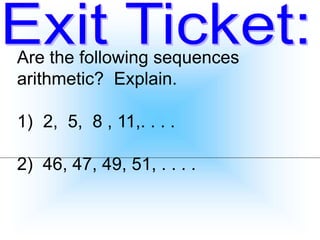
Are the following sequences
arithmetic? Explain.
1) 2, 5, 8 , 11,. . . .
2) 46, 47, 49, 51, . . . .

arithmetic sequences explicit.ppt

  • 2.
    Find the firstterm and the common difference of each: 1.) 4,9,14,19,24 First term (a): 4 Common difference (d): 2 1 a a  = 9 – 4 = 5 2.) 34,27,20,13,6, 1, 8,....   First term (a): 34 Common difference (d): -7 BE CAREFUL: ALWAYS CHECK TO MAKE SURE THE DIFFERENCE IS THE SAME BETWEEN EACH TERM !
  • 3.
    Now you try! Identifythe first term and common difference, then write a recursive rule for each of the sequences below: b) 11, 23, 35, 47, …. a) 1, -4, -9, -14, ….
  • 4.
    The first termof an arithmetic sequence is (a) . We add (d) to get the next term. There is a pattern, therefore there is a formula we can use to give use any term that we need without listing the whole sequence. This is called an explicit rule: The nth term of an arithmetic sequence is given by: The value of the term you are looking for First term The position the term is in (term number) The common difference an = a1 + (n – 1) d
  • 5.
    Find the 14thterm of the arithmetic sequence 4, 7, 10, 13,…… (14 1)   4 4 (13)3   4 39   43  an = a1 + (n – 1) d a14 = 3 You are looking for the term! The 14th term in this sequence is the number 43!
  • 6.
    Now you try! Findthe 10th and 25th term given the following information. Make sure to write the appropriate rule for the sequence to help you!! a) 1, 7, 13, 19 …. c) The second term is 8 and the common difference is 3 b) The first term is 3 and the common difference is -21
  • 7.
    Find the 14thterm of the arithmetic sequence with first term of 5 and the common difference is –6. (14 1)   an = a1 + (n – 1) d t14 = You are looking for the term! List which variables from the general term are provided! The 14th term in this sequence is the number -73! a = 5 and d = -6 5 -6 = 5 + (13) (-6) = 5 + -78 = -73
  • 8.
    In the arithmeticsequence 4,7,10,13,…, which term has a value of 301? 301 4 ( 1)3 n    301 4 3 3 n    301 1 3n   300 3n  100 n  an = a1 + (n – 1) d You are looking for n! The 100th term in this sequence is 301!
  • 9.
    Write a recursiveand an explicit rule for the sequences. Find the 30th term {16, 13, 10, 7, 4, …} {-1.5, 1, 3.5, 6, 8.5, …}
  • 10.
    Are the followingsequences arithmetic? Explain. 1) 2, 5, 8 , 11,. . . . 2) 46, 47, 49, 51, . . . .