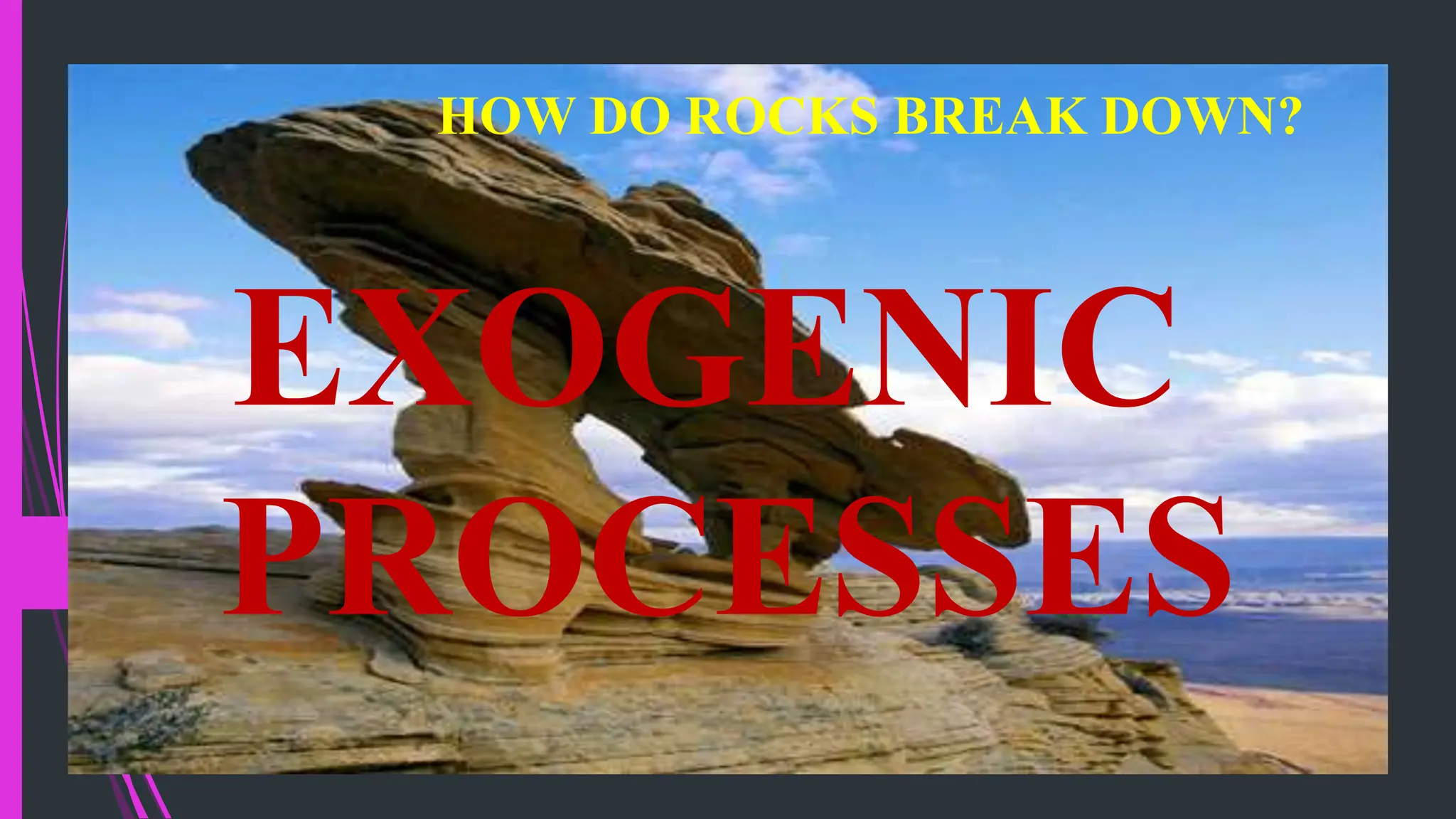
HOW DO ROCKS BREAK DOWN?
EXOGENIC
PROCESSES
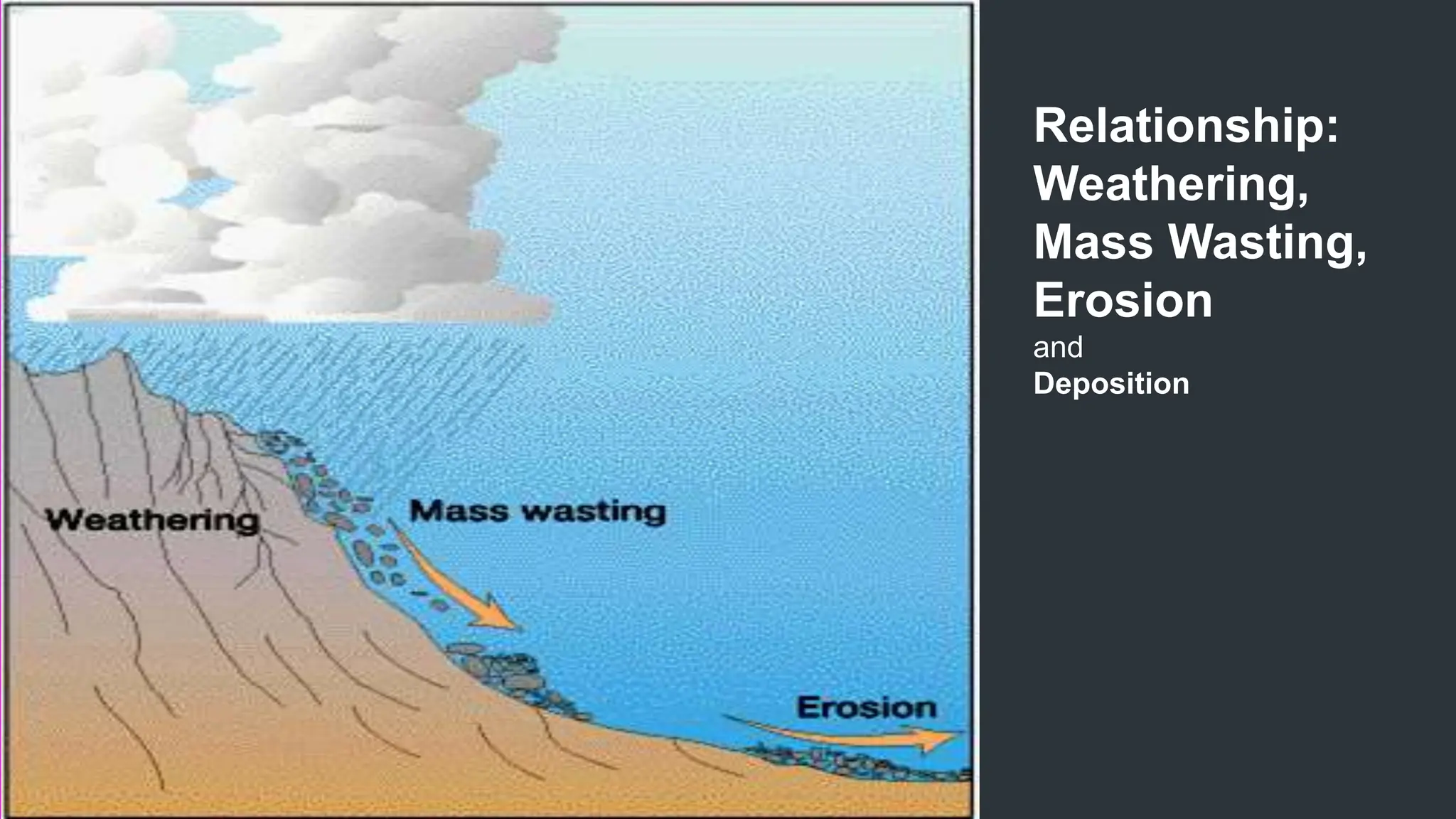
Relationship:
Weathering,
Mass Wasting,
Erosion
and
Deposition
WEATHERING AND EROSION ARE BOTH KNOWN AS
LEVELING FORCES - WHICH MEANS THEY WEAR DOWN
AND REMOVE ROCKS THAT ARE EXPOSED ON EARTH'S
SURFACE.
WEATHERING IS THE BREAKUP OF ROCKS AT EARTH'S
SURFACE DUE TO EXPOSURE TO THE ATMOSPHERE.
In particular, the two substances that do the most damage
to rocks are:
- Oxygen
- Water
The presence of just water and oxygen in the atmosphere is
enough to break down all rocks given enough time.
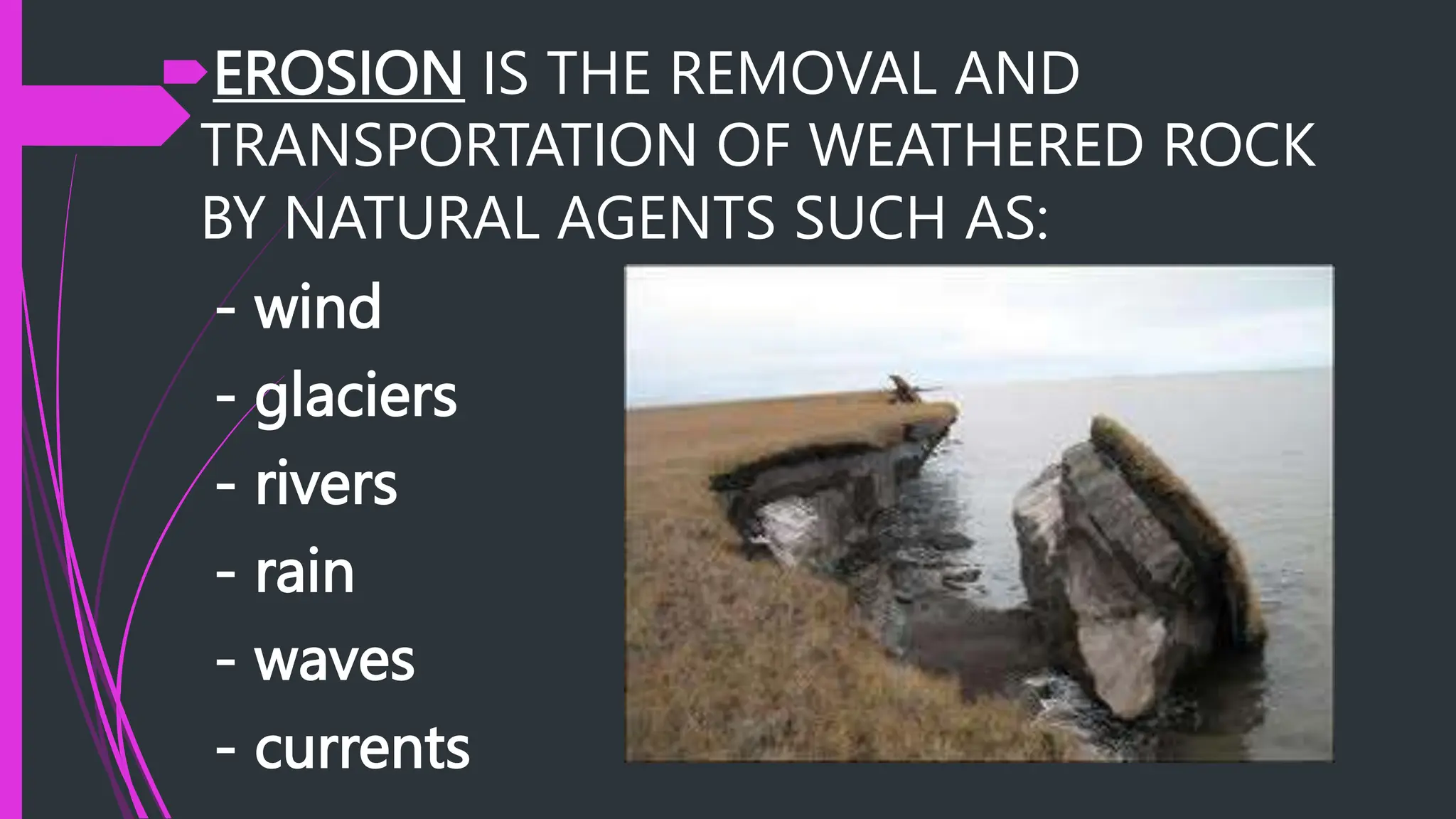
EROSION IS THE REMOVAL AND
TRANSPORTATION OF WEATHERED ROCK
BY NATURAL AGENTS SUCH AS:
- wind
- glaciers
- rivers
- rain
- waves
- currents
WEATHERING
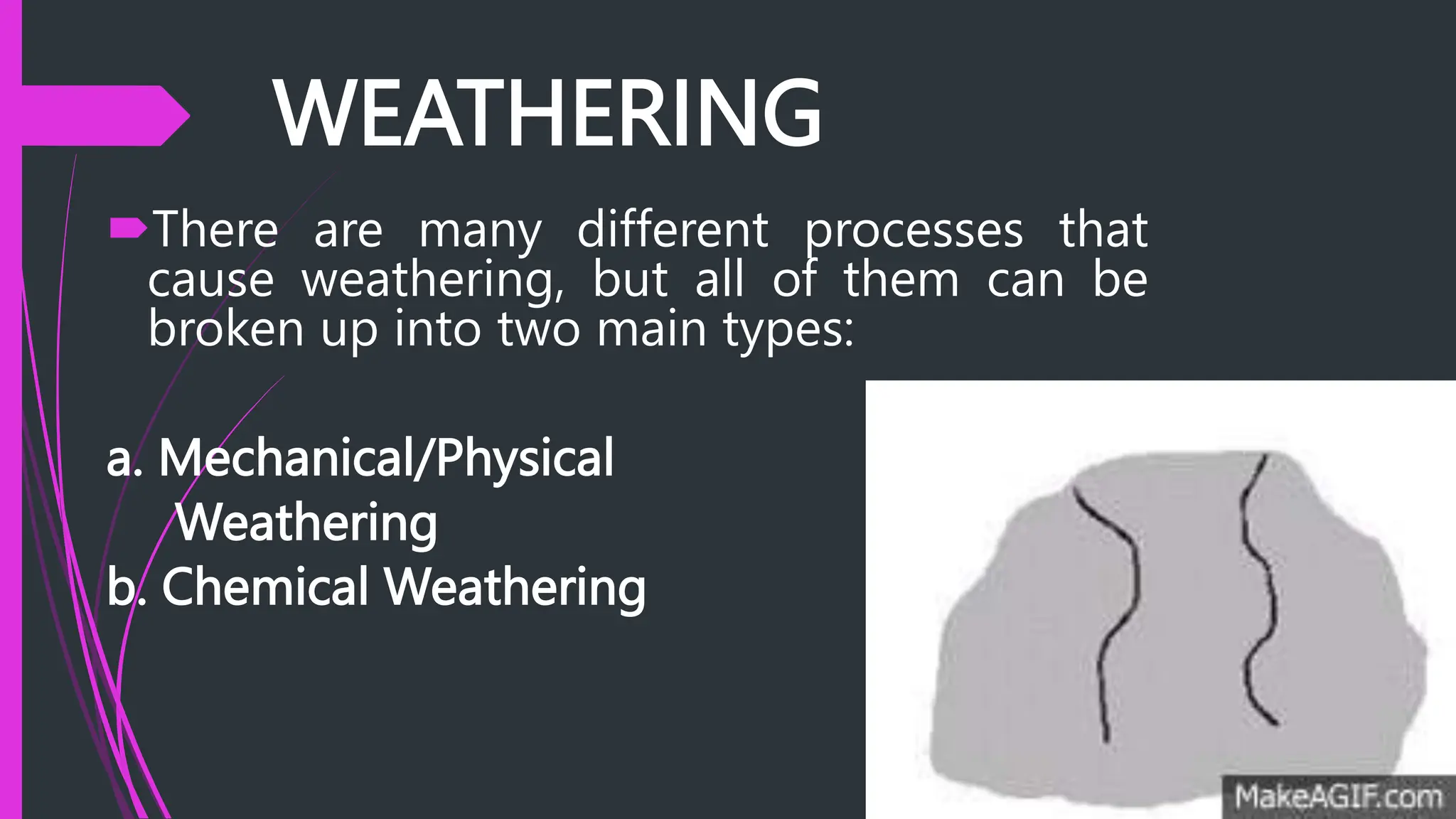
There are many different processes that
cause weathering, but all of them can be
broken up into two main types:
a. Mechanical/Physical
Weathering
b. Chemical Weathering
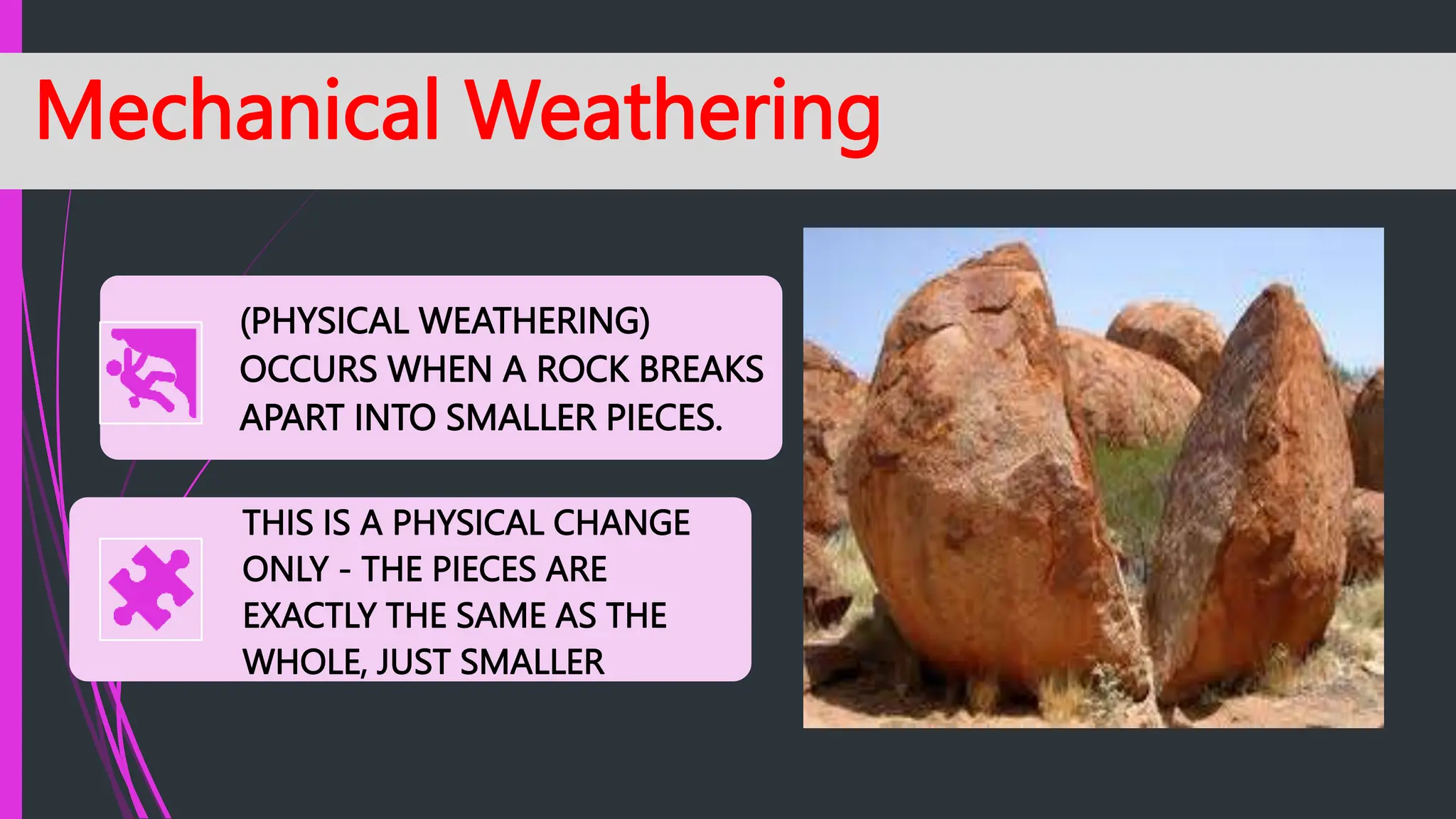
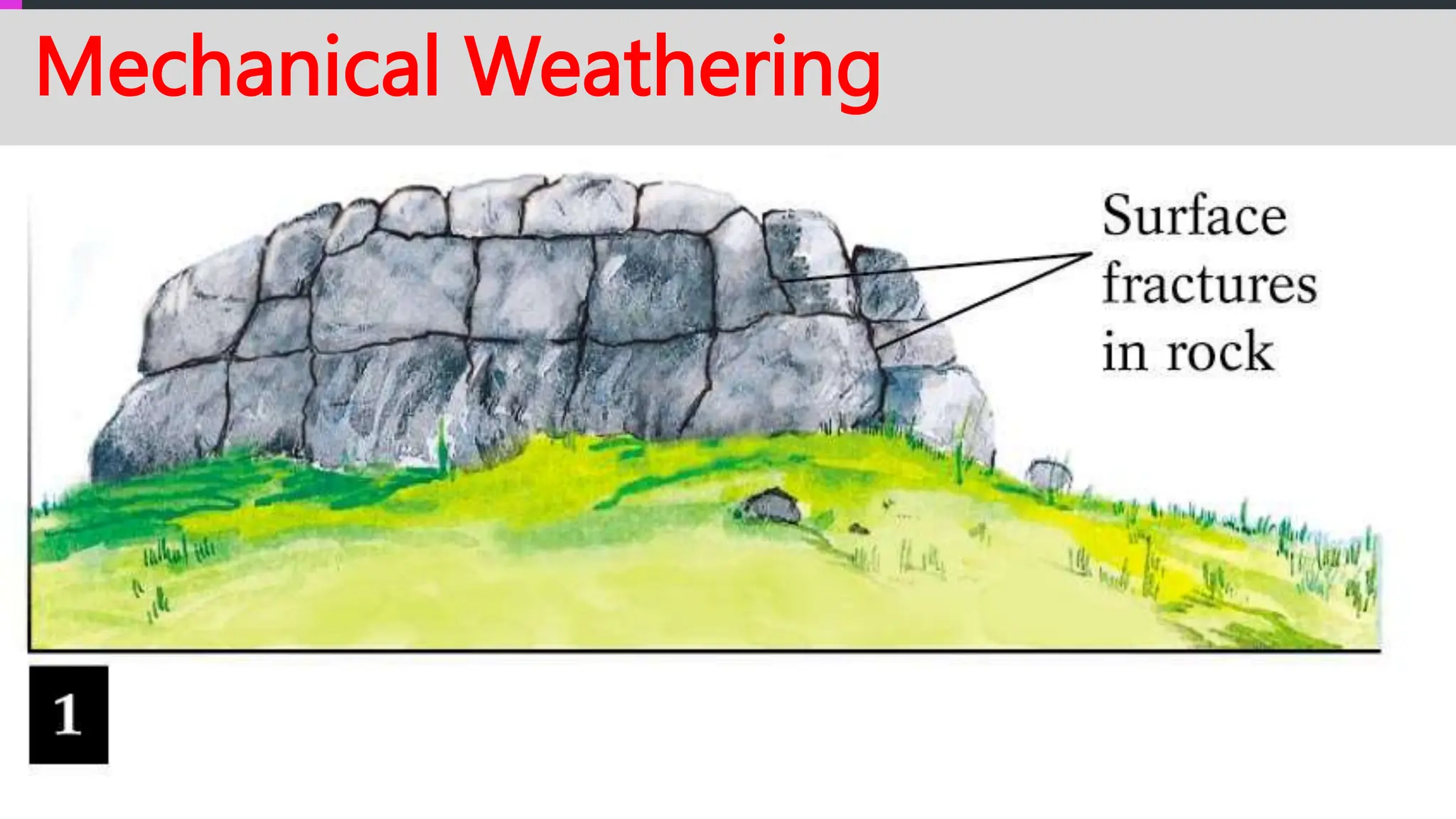
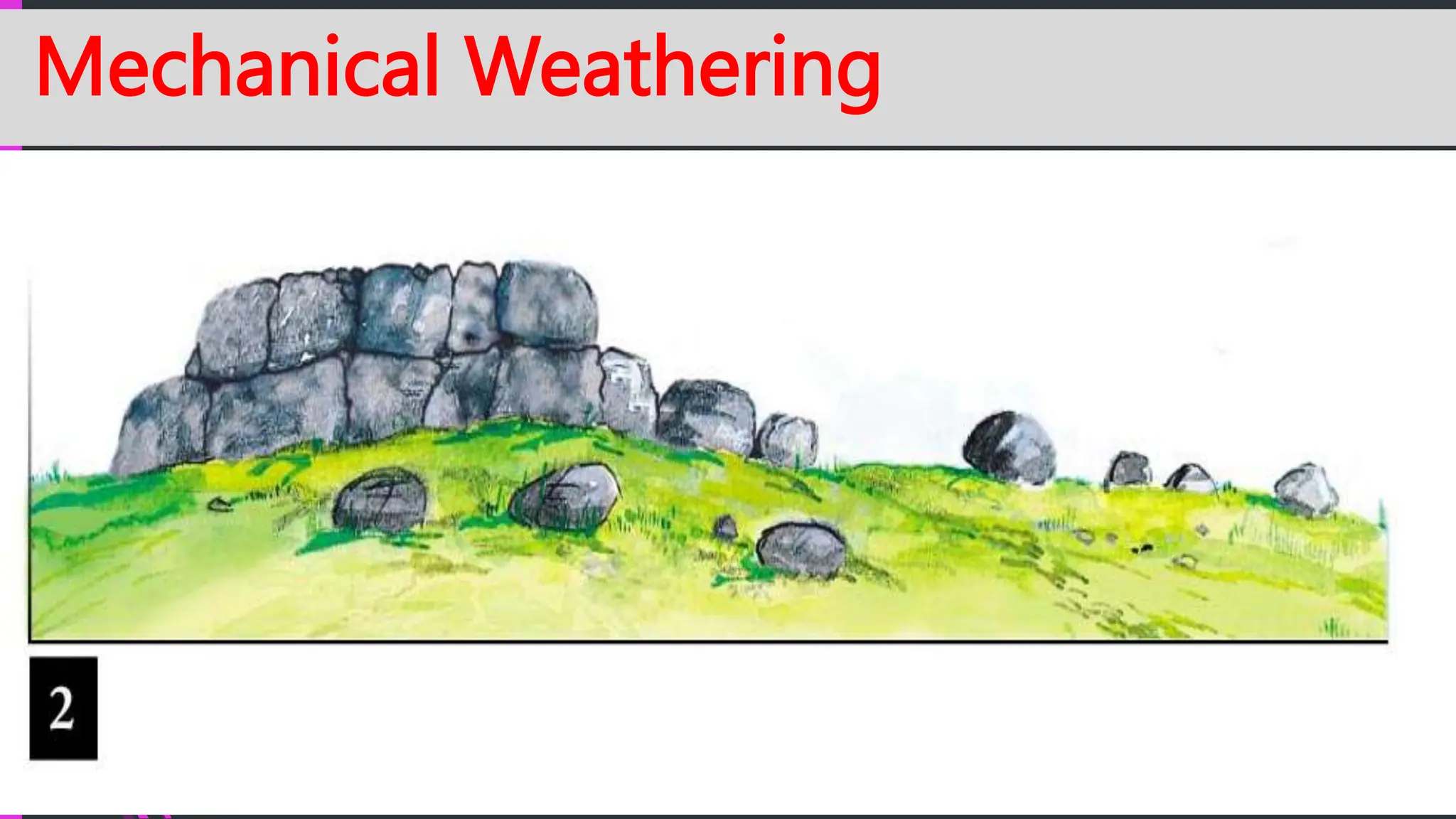
(PHYSICAL WEATHERING)
OCCURS WHEN A ROCK BREAKS
APART INTO SMALLER PIECES.
THIS IS A PHYSICAL CHANGE
ONLY - THE PIECES ARE
EXACTLY THE SAME AS THE
WHOLE, JUST SMALLER
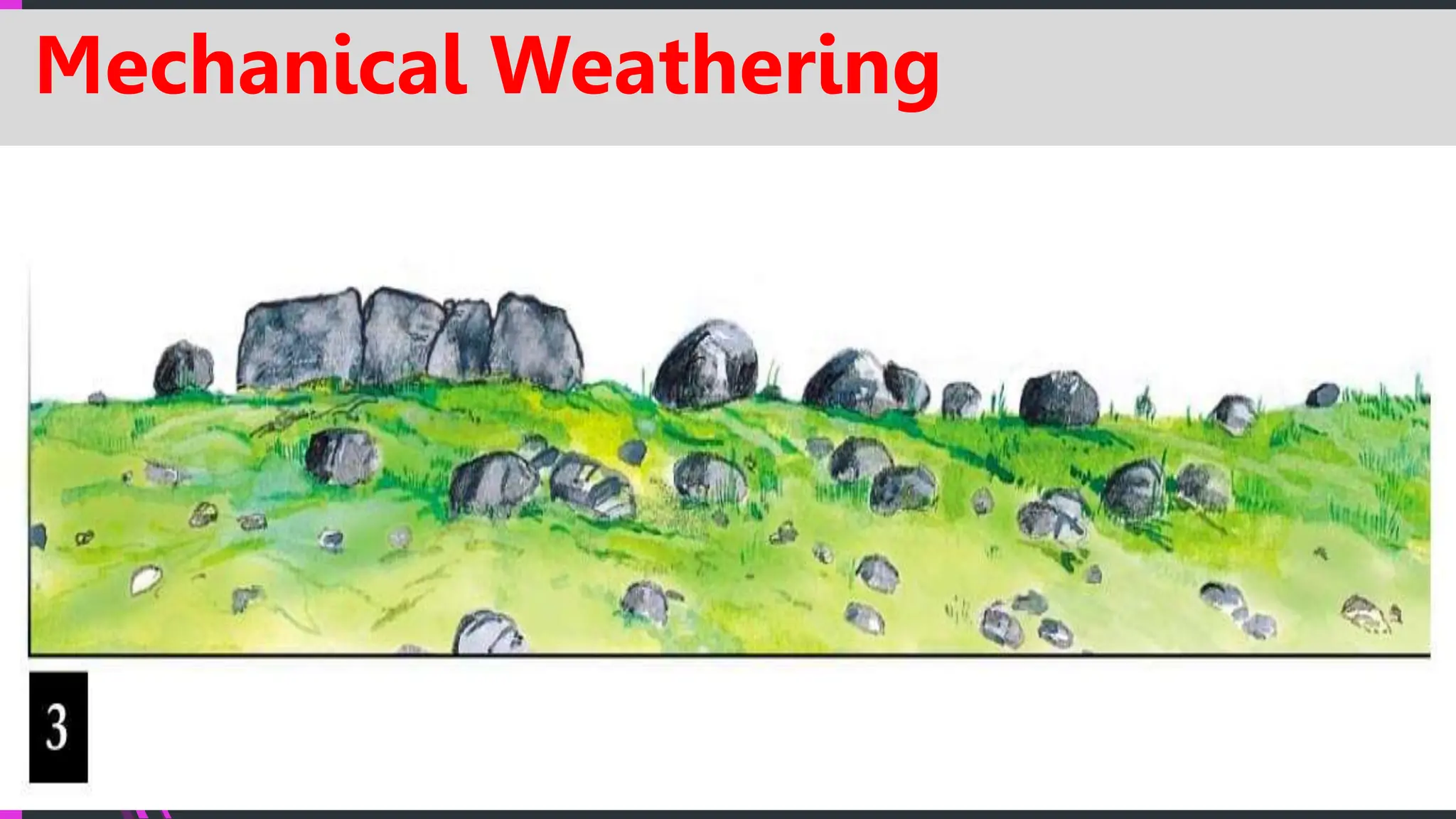
Mechanical Weathering
MECHANICAL WEATHERING CAN HAPPEN IN
SEVERAL DIFFERENT WAYS:
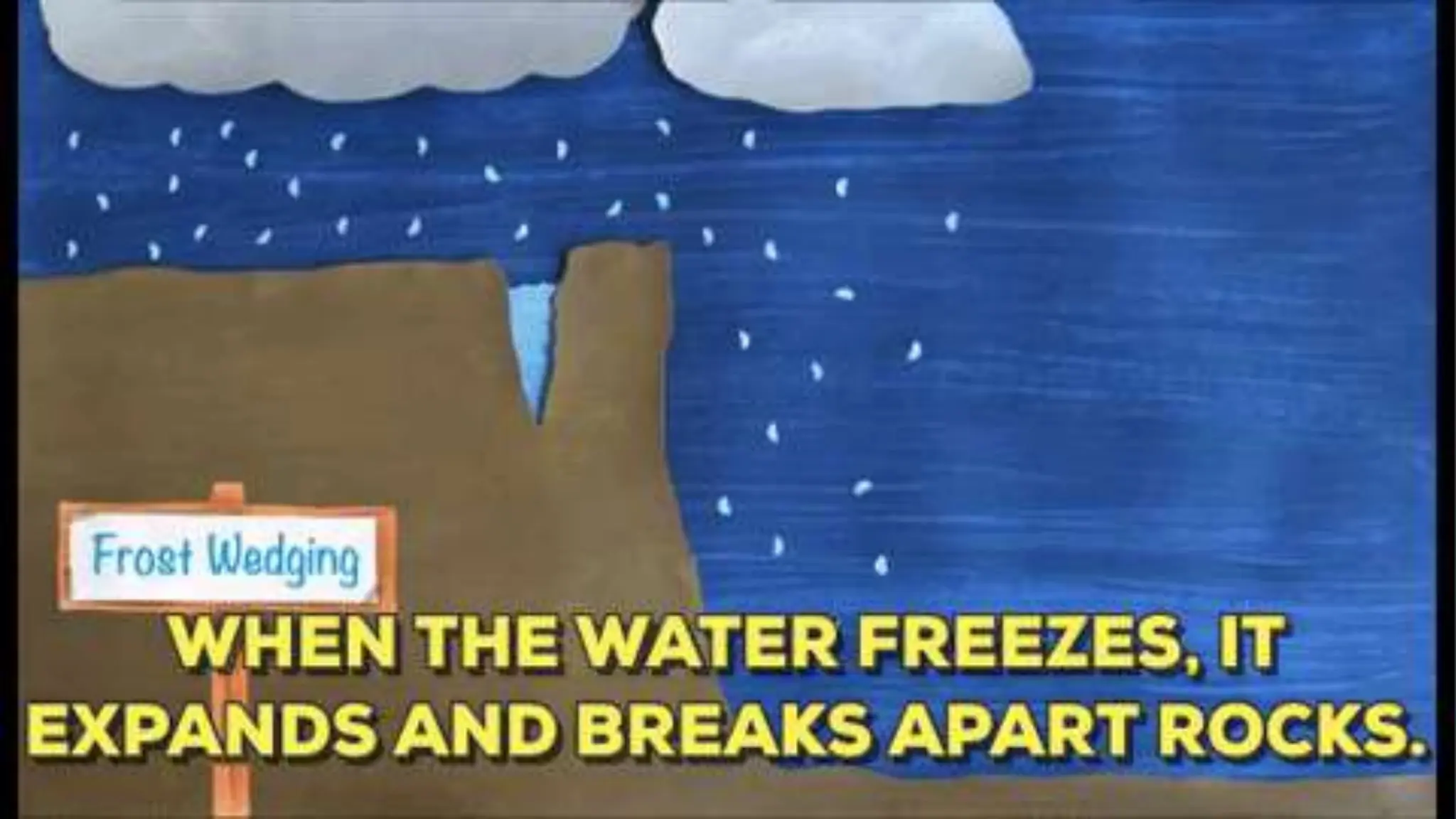
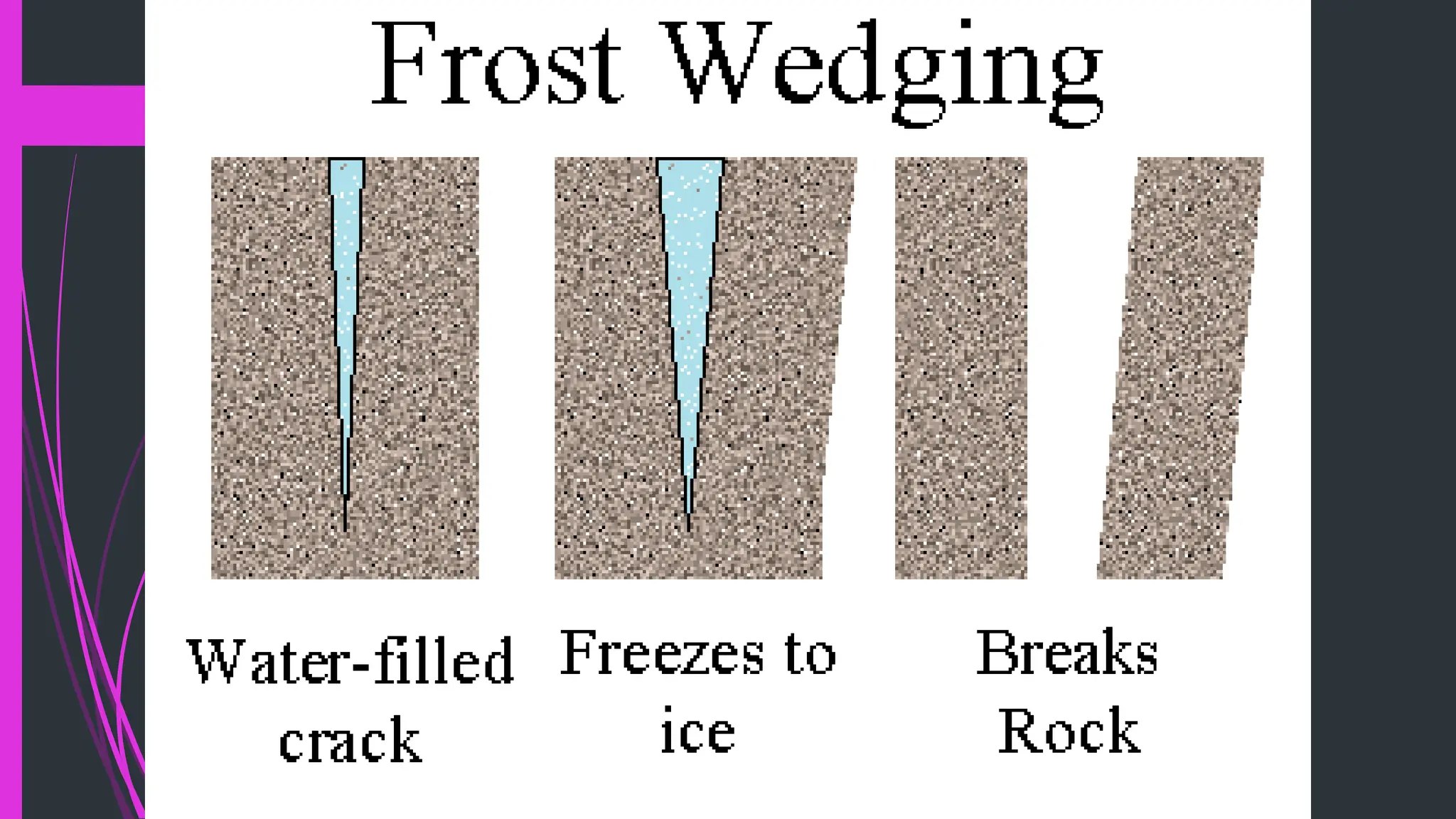
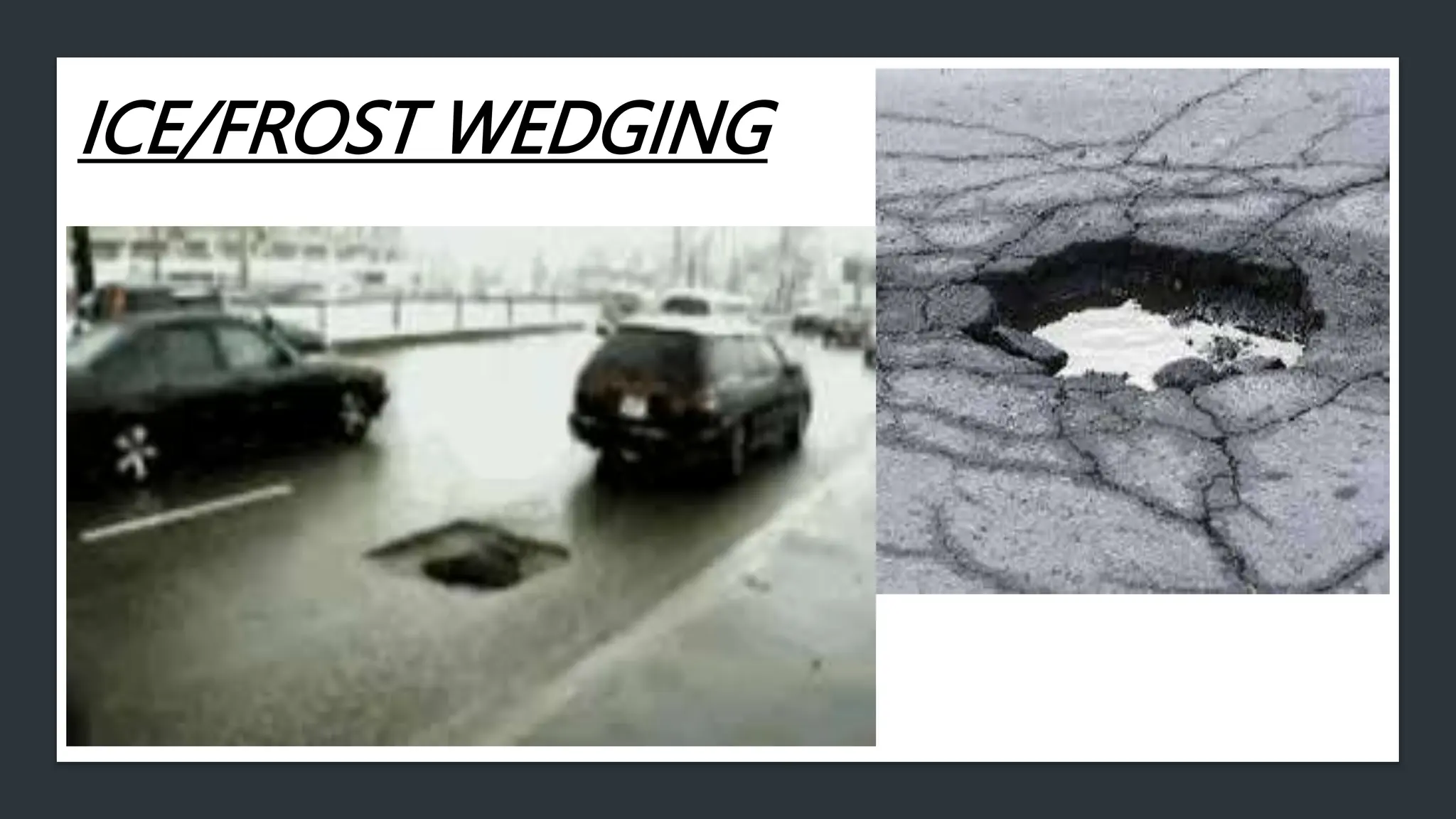
ICE/FROST WEDGING
- WATER IS A VERY UINQUE SUBSTANCE IN
THAT IT EXPANDS WHEN IT FREEZES.
- As water expands it puts great pressure on the
walls of anything containing it, including any rocks
which happen to be surrounding it.
ICE/FROST WEDGING
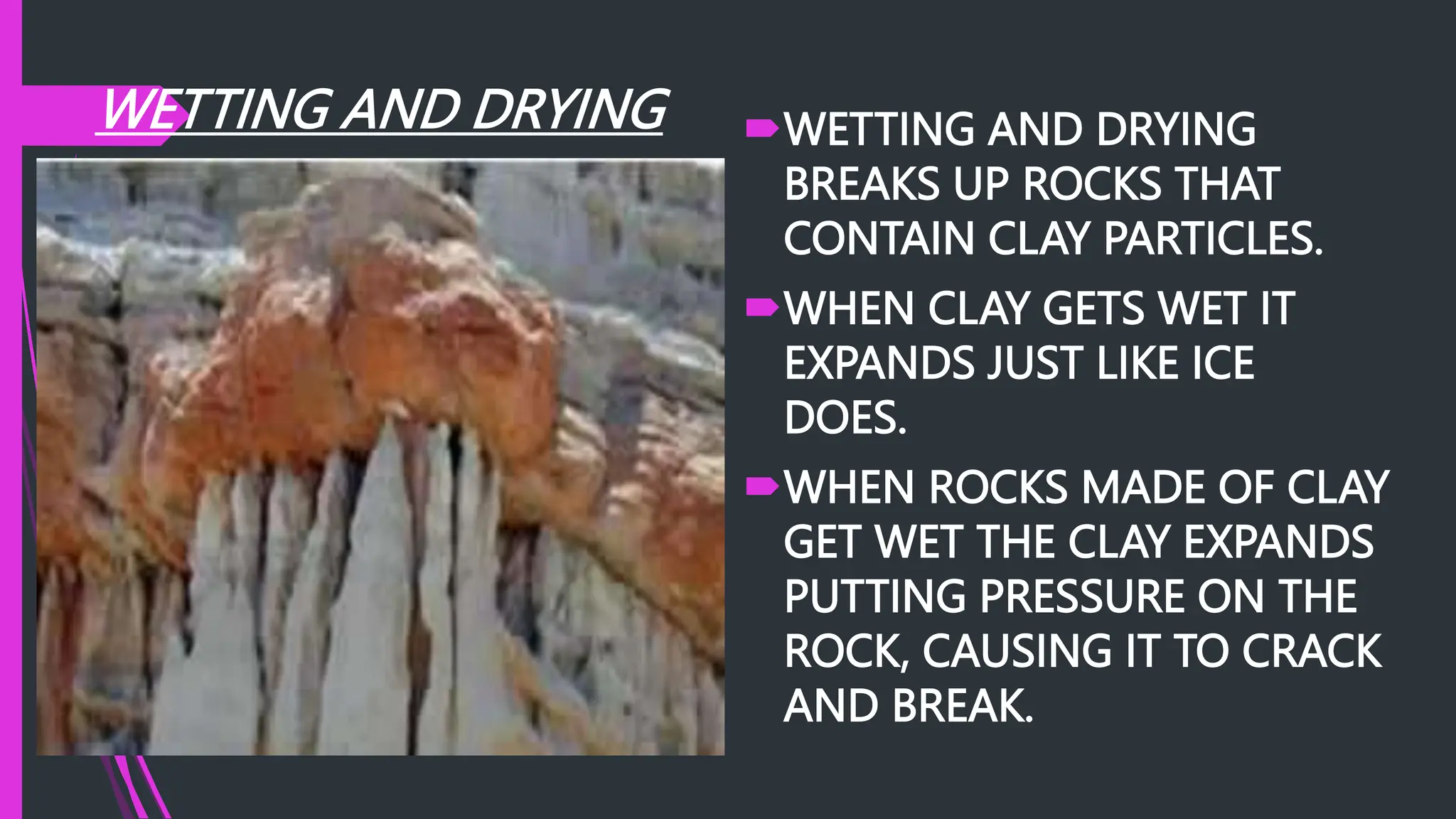
WETTING AND DRYING WETTING AND DRYING
BREAKS UP ROCKS THAT
CONTAIN CLAY PARTICLES.
WHEN CLAY GETS WET IT
EXPANDS JUST LIKE ICE
DOES.
WHEN ROCKS MADE OF CLAY
GET WET THE CLAY EXPANDS
PUTTING PRESSURE ON THE
ROCK, CAUSING IT TO CRACK
AND BREAK.
PLANT AND ANIMAL ACTION
(BIOLOGICAL WEATHERING)
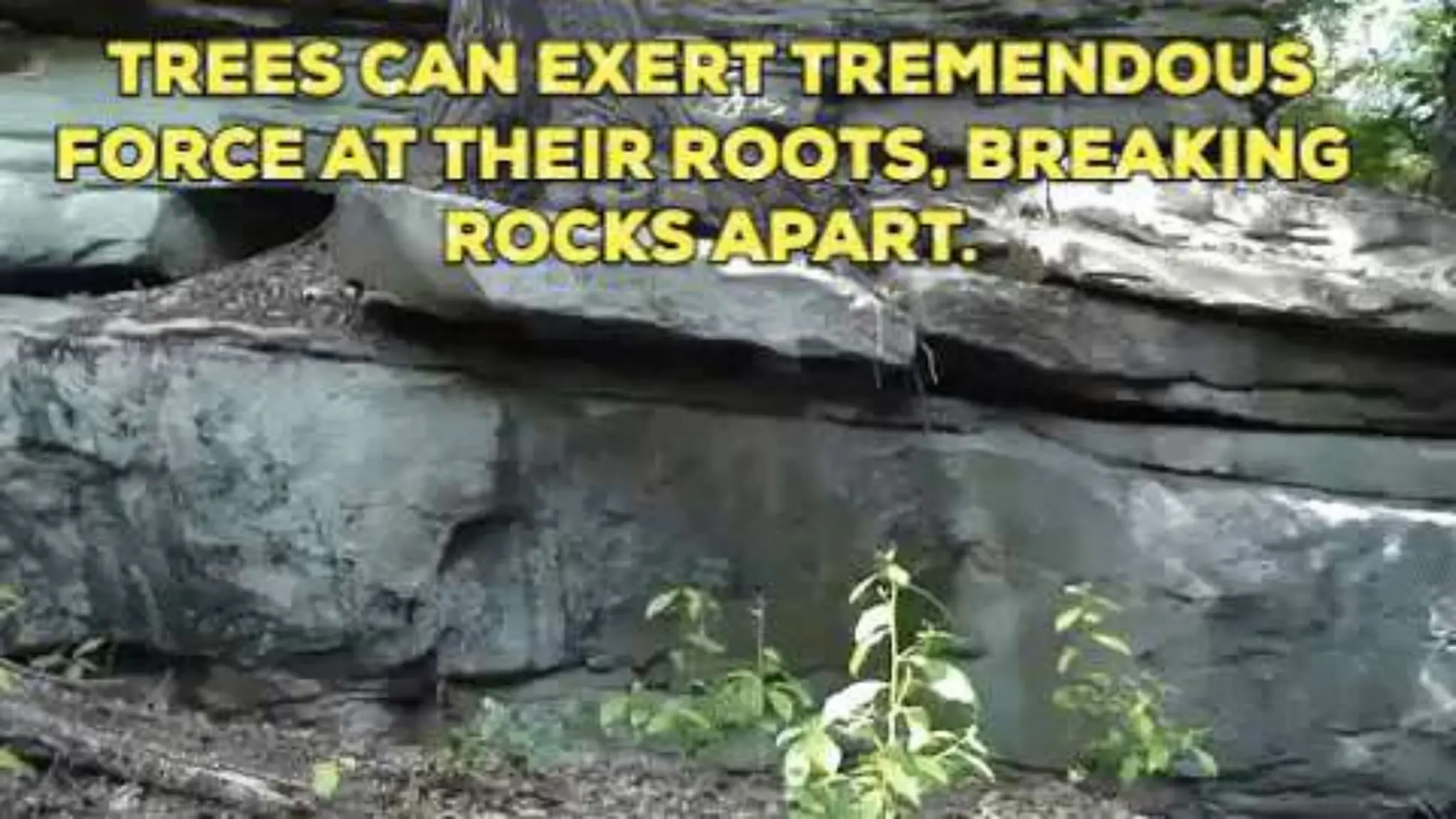
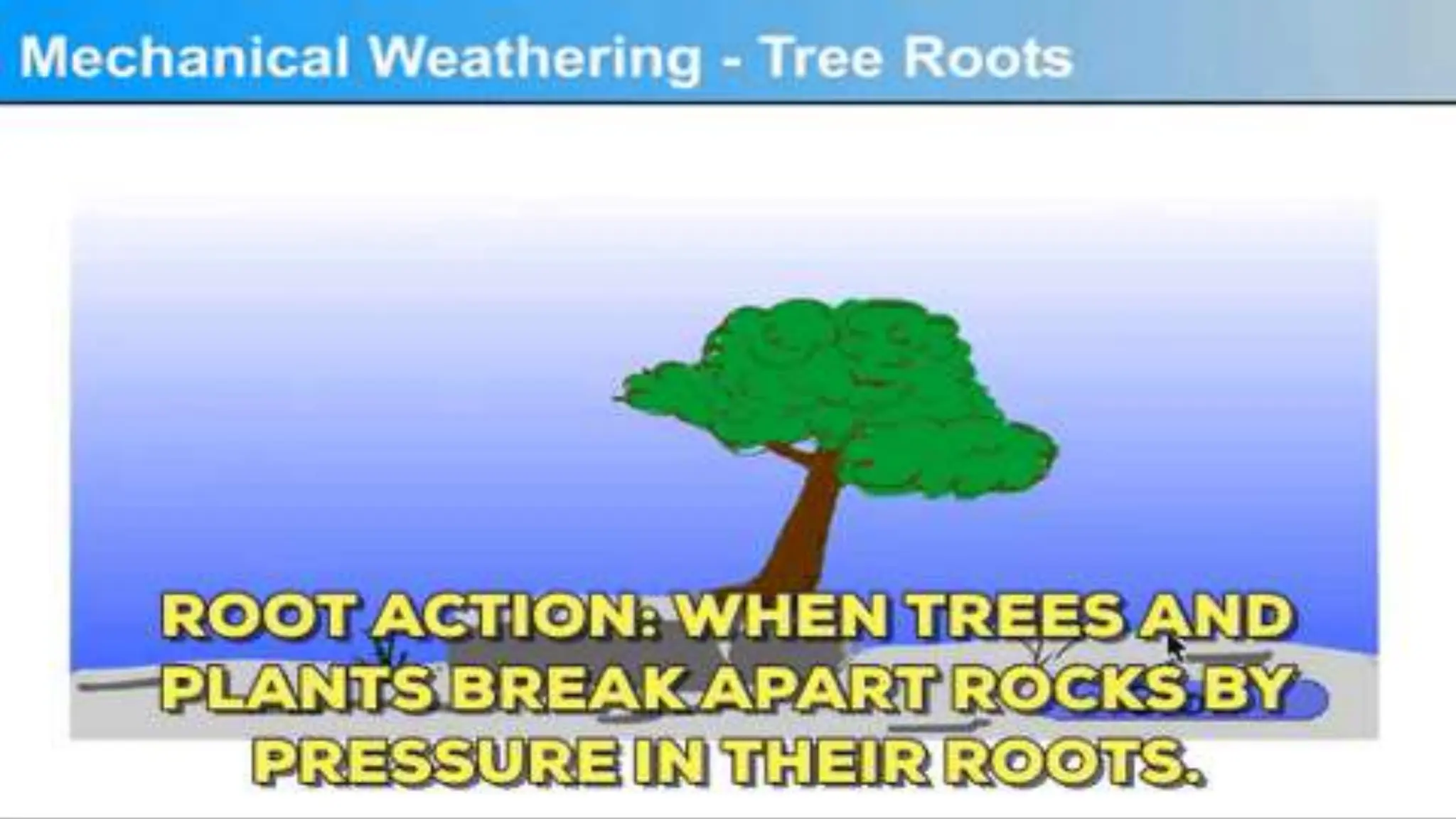
PLANT ROOTS GROW DOWN INTO
ROCK.
AS THEY GROW, THEY WIDEN PUTTING
PRESSURE ON SURROUNDING ROCK,
CAUSING IT TO CRACK AND BREAK.
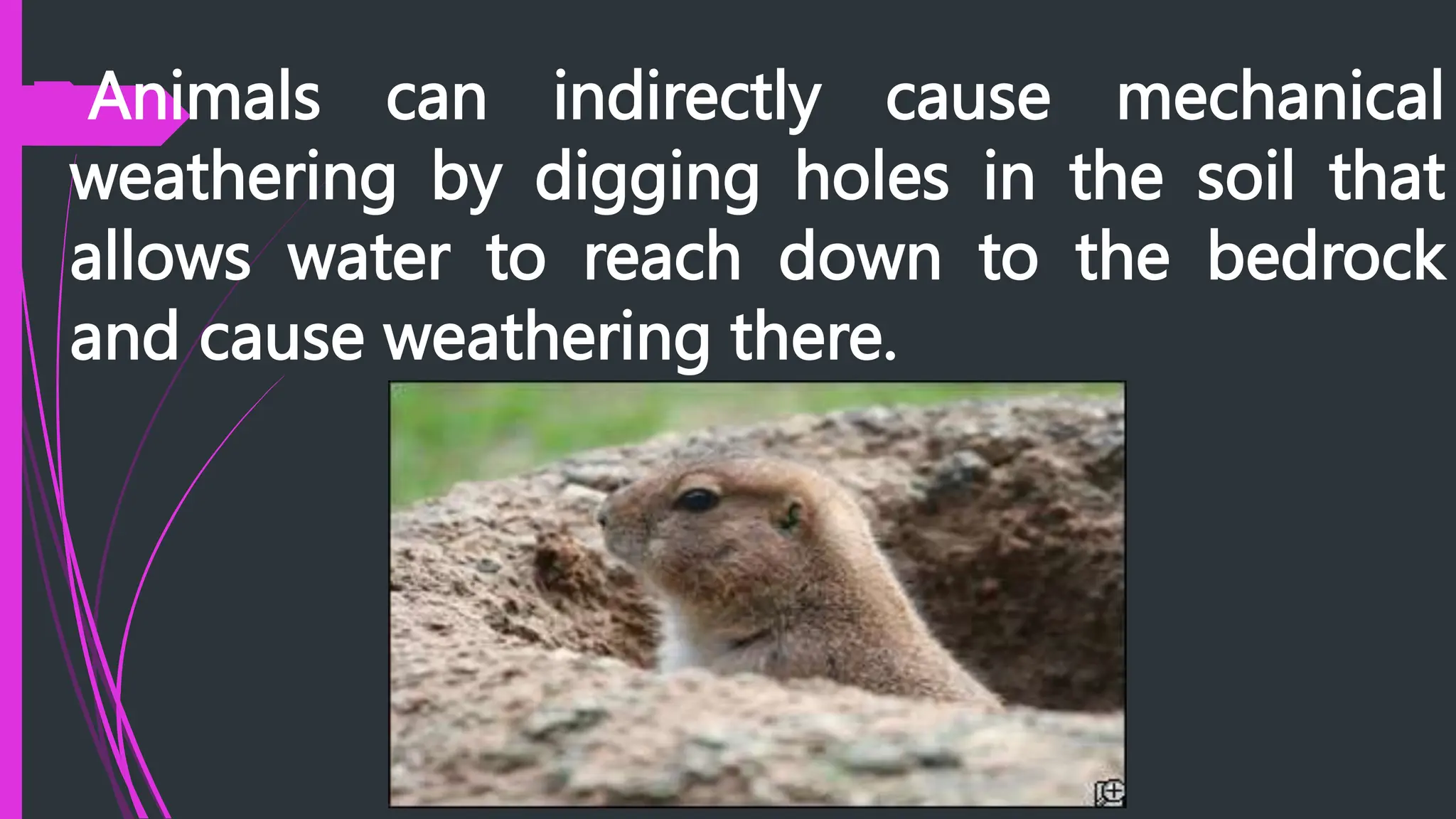
Animals can indirectly cause mechanical
weathering by digging holes in the soil that
allows water to reach down to the bedrock
and cause weathering there.
CHEMICAL WEATHERING
IS A CHEMICAL CHANGE THAT CAUSES
THE ROCK TO BREAK. AS A RESULT, THE
BROKEN PIECES ARE CHEMICALLY
DIFFERENT FROM THE ORIGINAL
ROCK.
Different methods of Chemical Weathering:
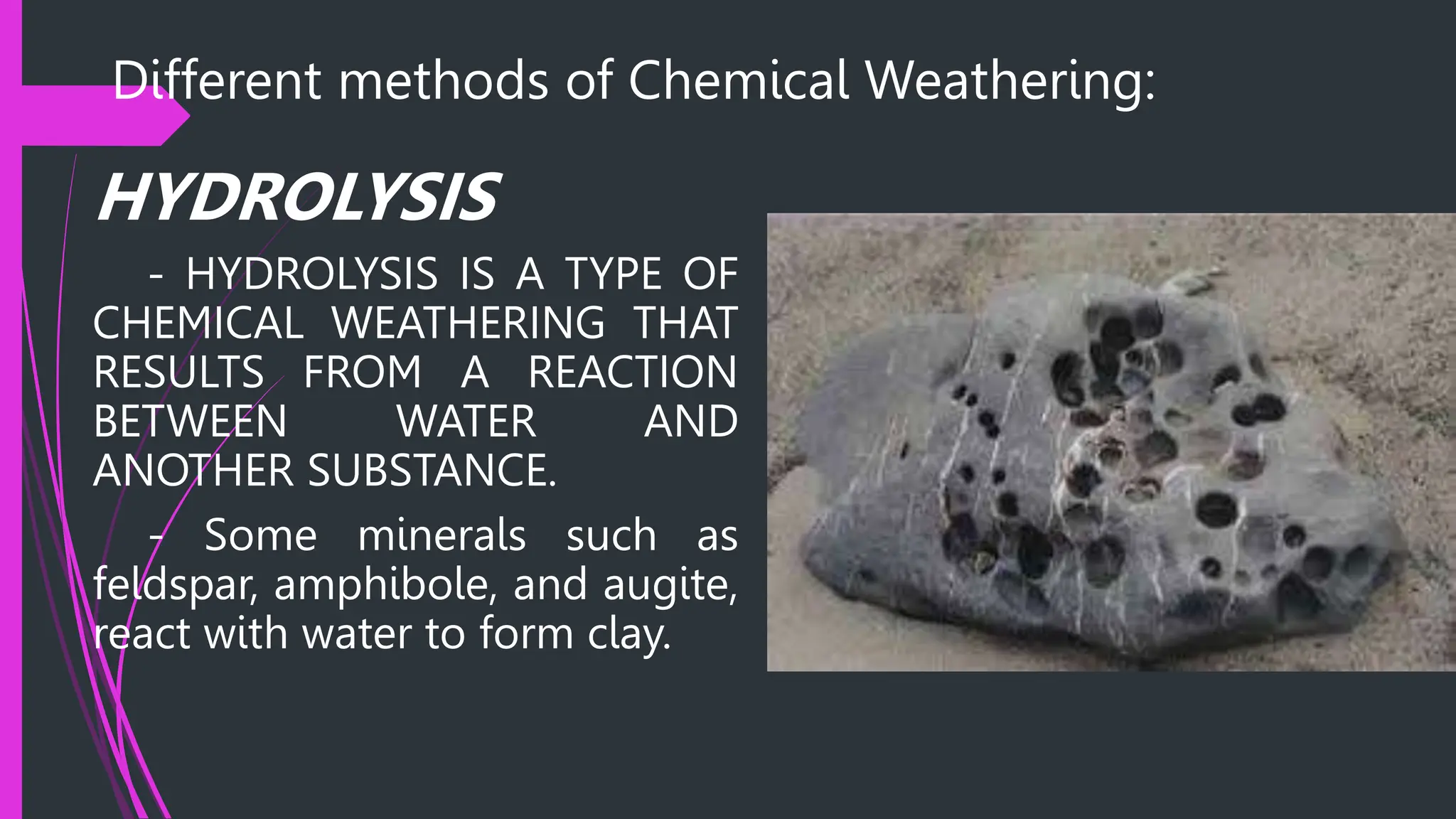
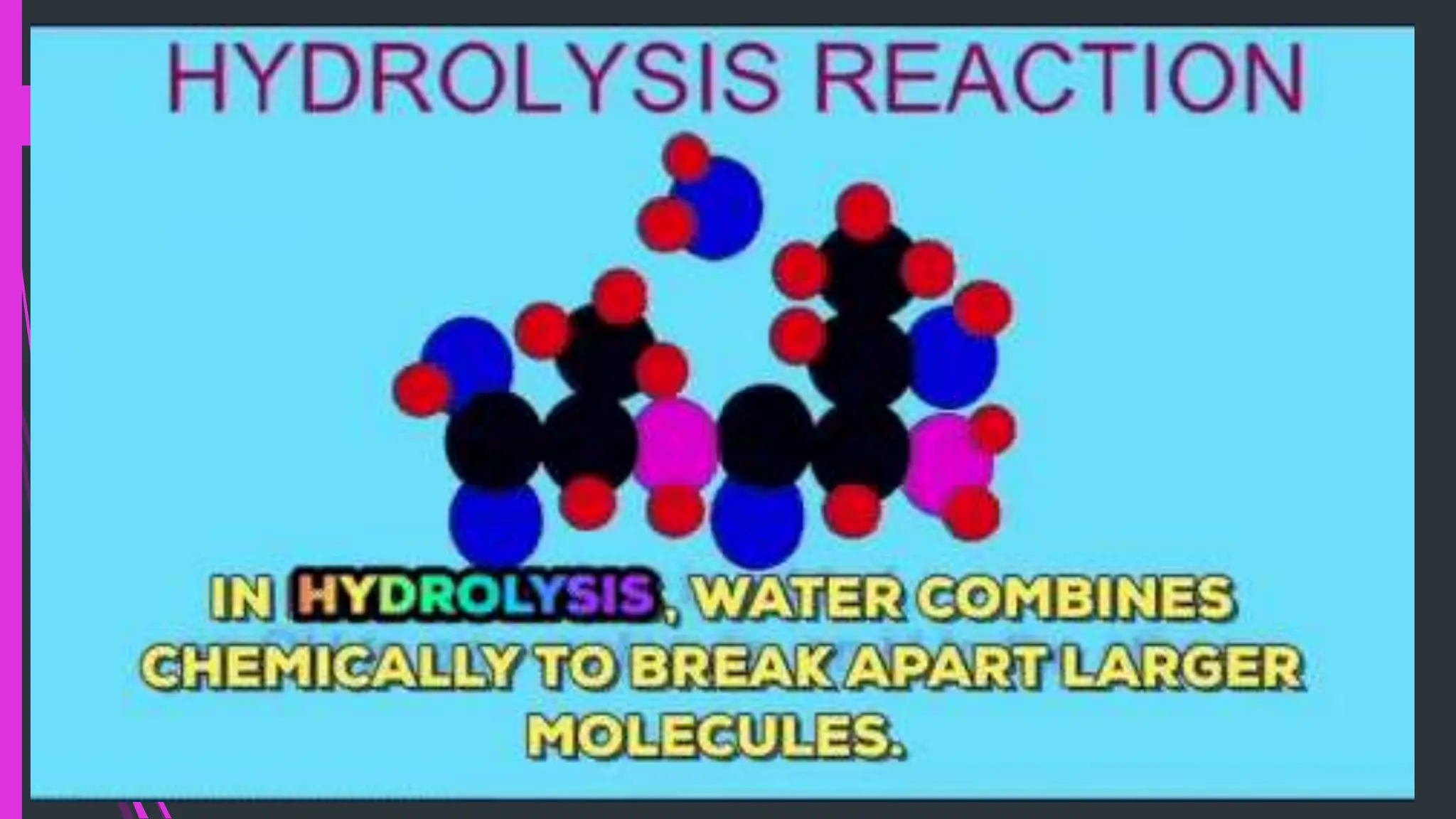
HYDROLYSIS
- HYDROLYSIS IS A TYPE OF
CHEMICAL WEATHERING THAT
RESULTS FROM A REACTION
BETWEEN WATER AND
ANOTHER SUBSTANCE.
- Some minerals such as
feldspar, amphibole, and augite,
react with water to form clay.
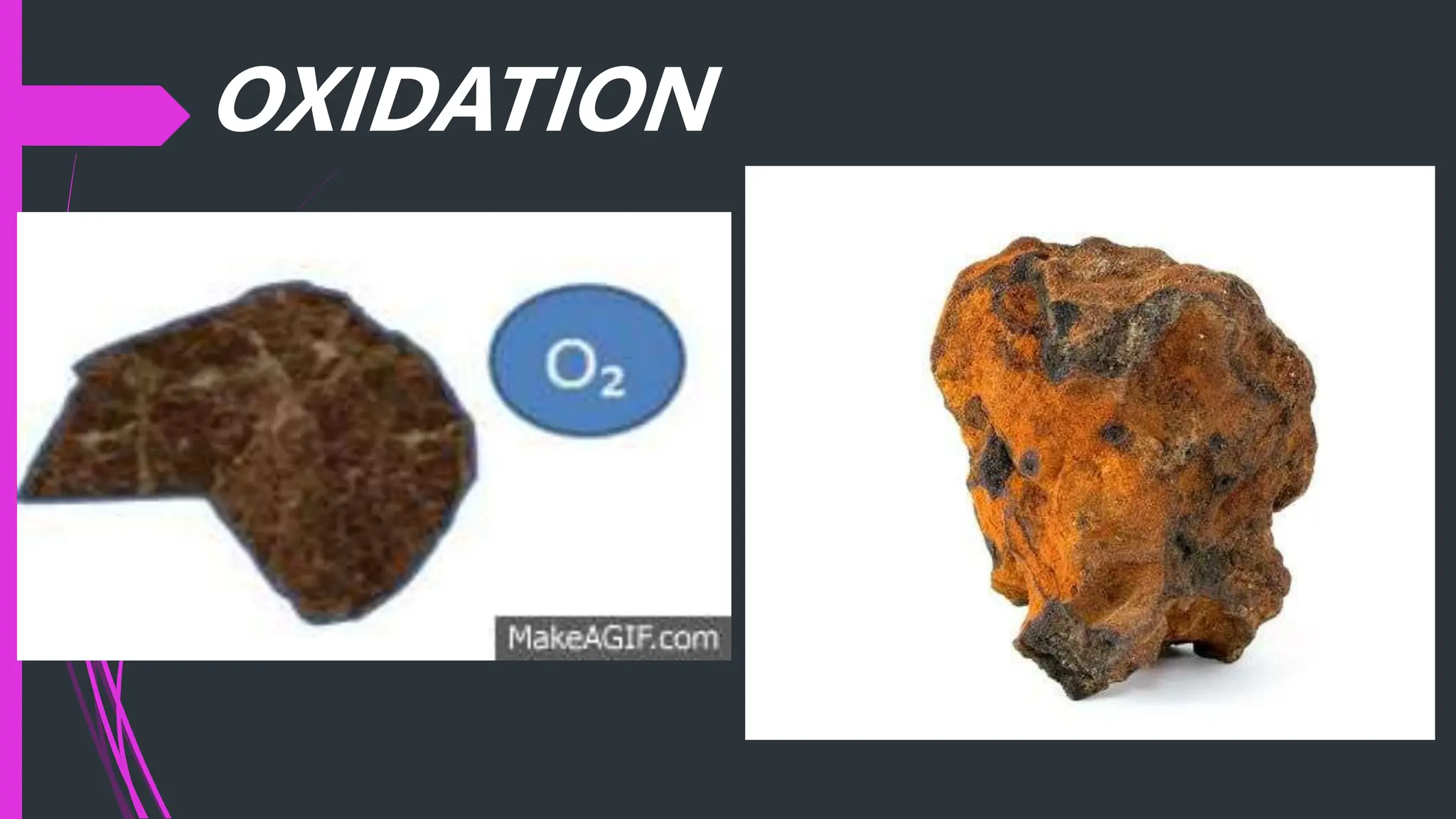
OXIDATION IS A TYPE OF CHEMICAL WEATHERING
RESULTING FROM A REACTION BETWEEN OXYGEN
AND ANOTHER SUBSTANCE.
Oxidation reactions are the reason that many things
rust over time. Minerals and metals that contain iron
react with oxygen to form a reddish color of
rust. When both oxygen and water are present the
iron containing minerals react to form a more
brownish rust.
OXIDATION
OXIDATION
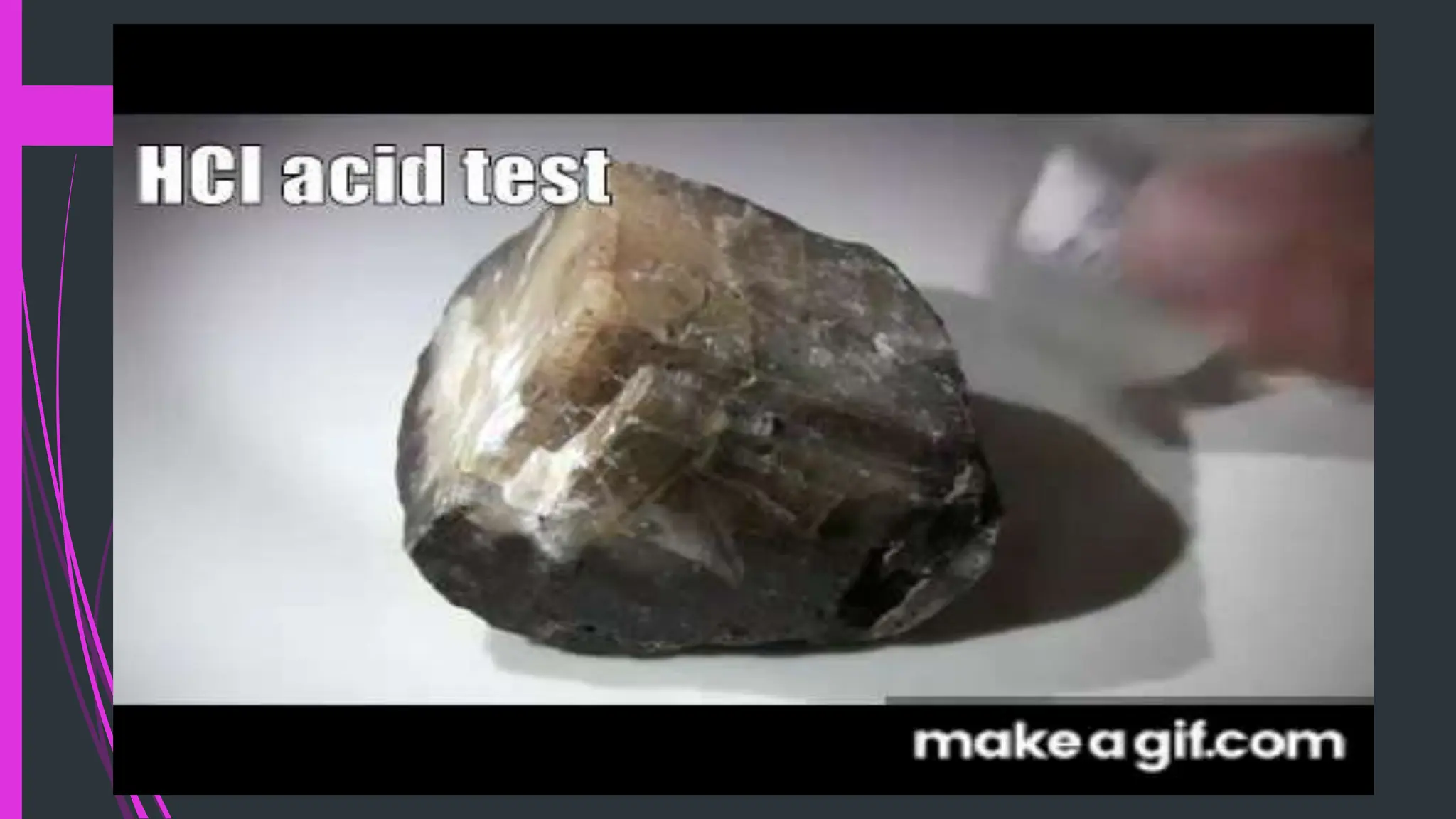
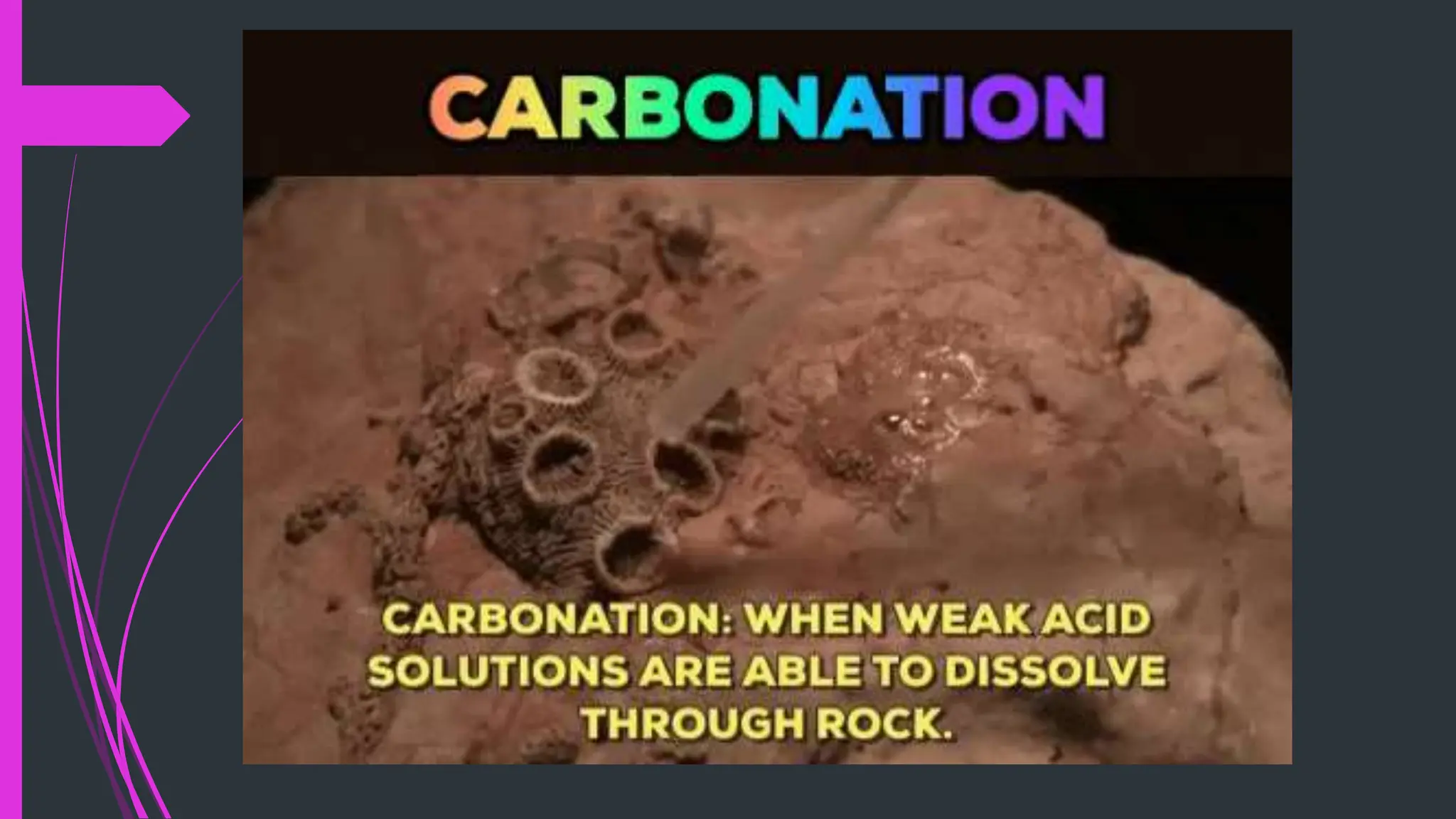
ACIDS
ACIDS REACT WITH MANY DIFFERENT MINERALS CAUSING
THEM TO DISSOLVE. ROCKS THAT CONTAIN THESE MINERALS
CRACK AND BREAK WHEN EXPOSED TO ACIDS.
One common way occurs when CO2 is dissolved in water,
which creates carbonic acid, the acid in soda. It can also enter
the soil as decaying plants dissolve in rainwater.
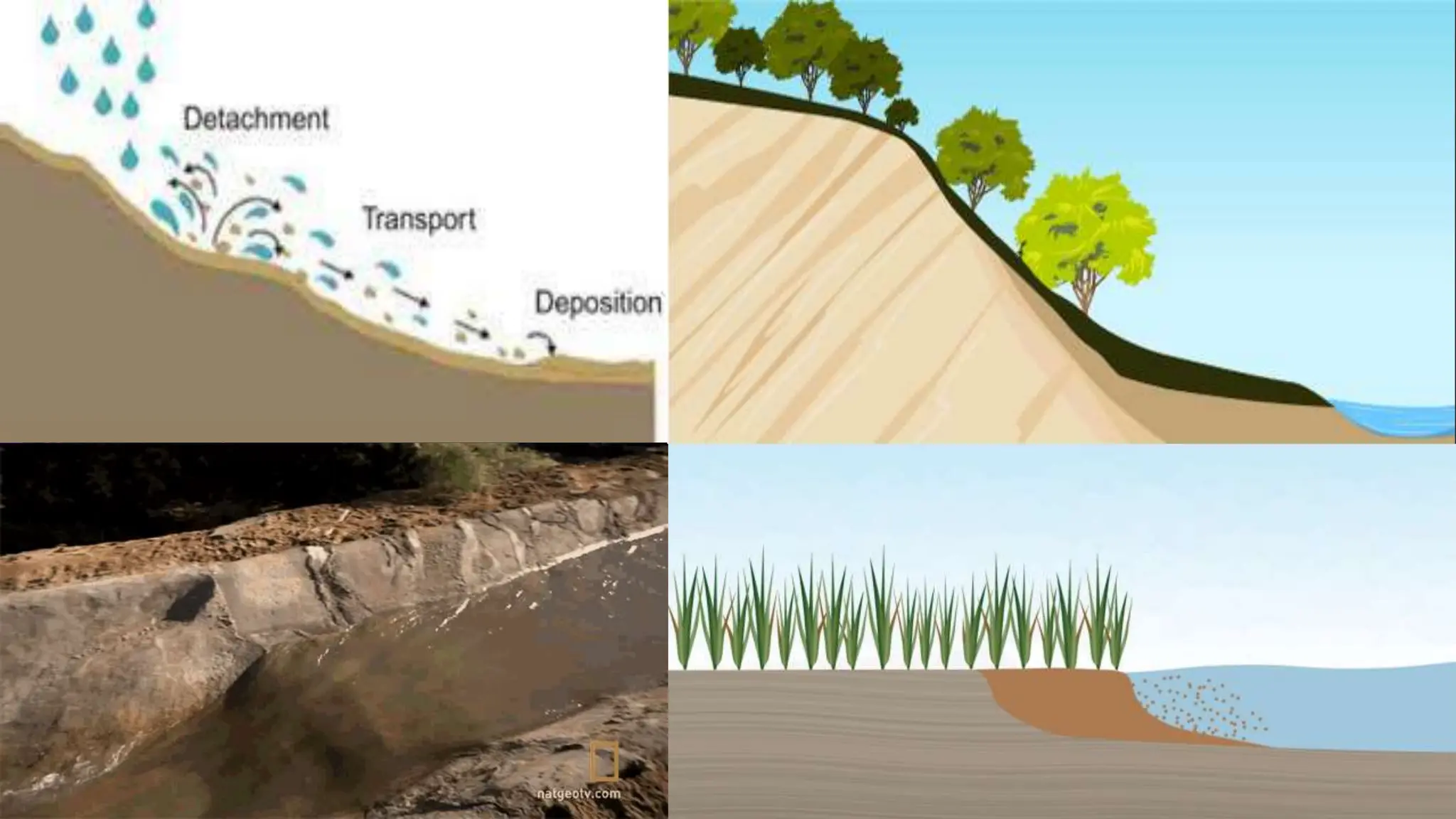
Erosion
is the separation and removal of weathered
rocks due to different agents like water, wind,
and glacier that causes transportation of the
material to where they are deposited. Plants,
animals, and humans play an important role in
the erosional process.
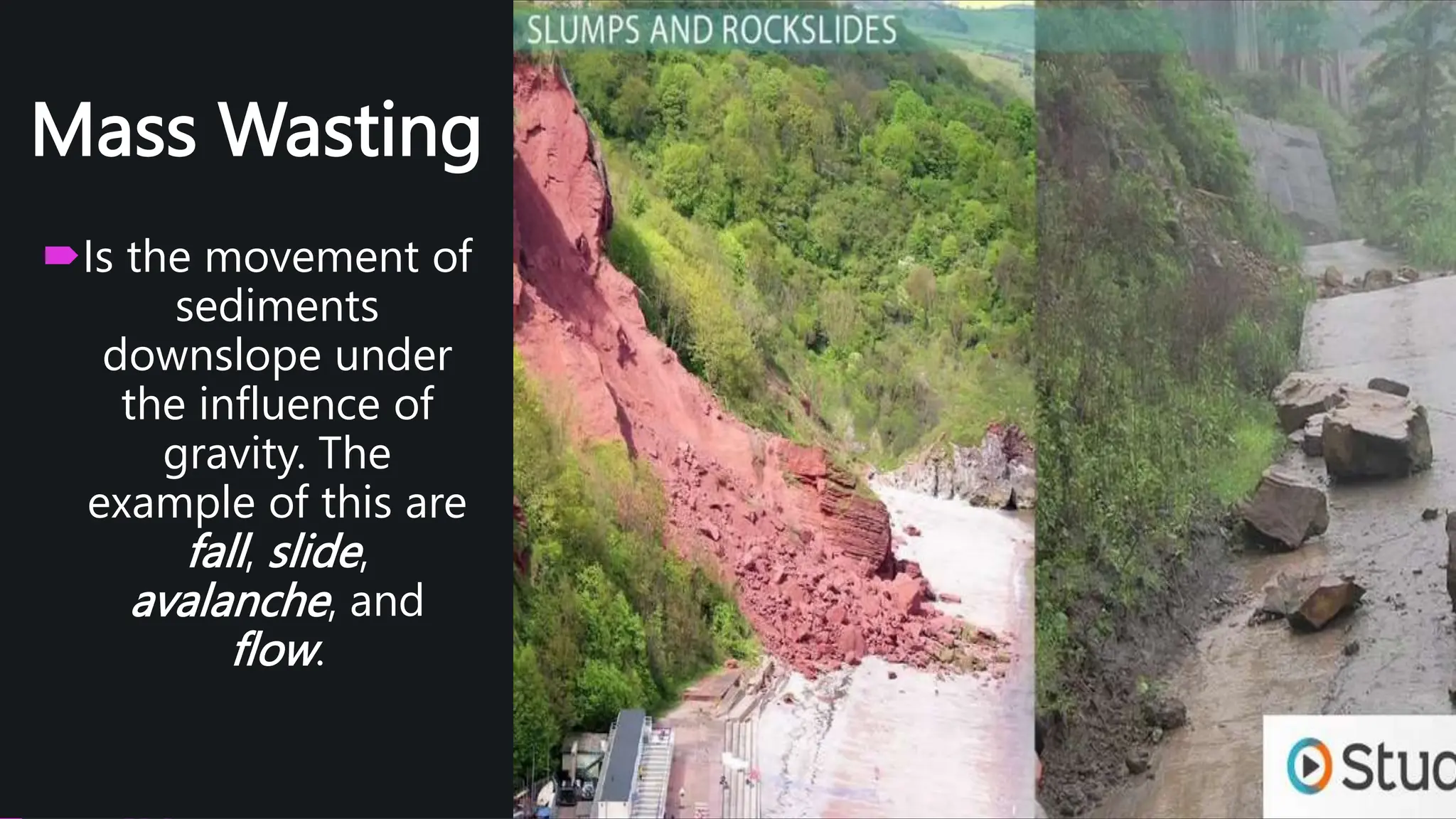
Mass Wasting
Is the movement of
sediments
downslope under
the influence of
gravity. The

example of this are
fall, slide,
avalanche, and
flow.
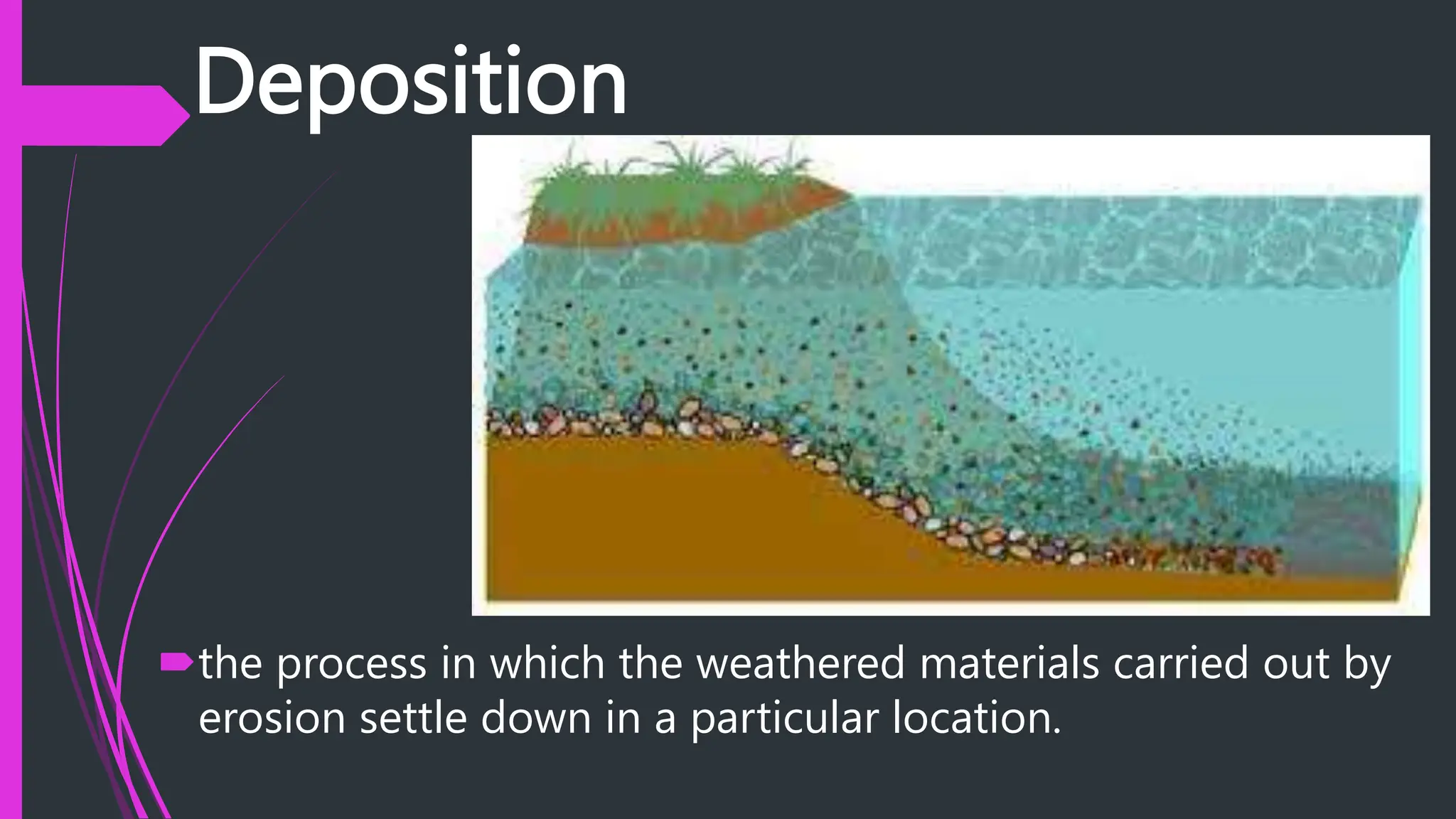
Deposition
the process in which the weathered materials carried out by
erosion settle down in a particular location.
Module 5 - Exogenic Processes-EARTH SCIENCE.pptx

Module 5 - Exogenic Processes-EARTH SCIENCE.pptx

  • 1.
    HOW DO ROCKSBREAK DOWN? EXOGENIC PROCESSES
  • 2.
  • 3.
    WEATHERING AND EROSIONARE BOTH KNOWN AS LEVELING FORCES - WHICH MEANS THEY WEAR DOWN AND REMOVE ROCKS THAT ARE EXPOSED ON EARTH'S SURFACE. WEATHERING IS THE BREAKUP OF ROCKS AT EARTH'S SURFACE DUE TO EXPOSURE TO THE ATMOSPHERE. In particular, the two substances that do the most damage to rocks are: - Oxygen - Water The presence of just water and oxygen in the atmosphere is enough to break down all rocks given enough time.
  • 4.
    EROSION IS THEREMOVAL AND TRANSPORTATION OF WEATHERED ROCK BY NATURAL AGENTS SUCH AS: - wind - glaciers - rivers - rain - waves - currents
  • 5.
    WEATHERING There are manydifferent processes that cause weathering, but all of them can be broken up into two main types: a. Mechanical/Physical Weathering b. Chemical Weathering
  • 6.
    (PHYSICAL WEATHERING) OCCURS WHENA ROCK BREAKS APART INTO SMALLER PIECES. THIS IS A PHYSICAL CHANGE ONLY - THE PIECES ARE EXACTLY THE SAME AS THE WHOLE, JUST SMALLER Mechanical Weathering
  • 7.
  • 8.
  • 9.
  • 10.
    MECHANICAL WEATHERING CANHAPPEN IN SEVERAL DIFFERENT WAYS: ICE/FROST WEDGING - WATER IS A VERY UINQUE SUBSTANCE IN THAT IT EXPANDS WHEN IT FREEZES. - As water expands it puts great pressure on the walls of anything containing it, including any rocks which happen to be surrounding it.
  • 13.
  • 14.
    WETTING AND DRYINGWETTING AND DRYING BREAKS UP ROCKS THAT CONTAIN CLAY PARTICLES. WHEN CLAY GETS WET IT EXPANDS JUST LIKE ICE DOES. WHEN ROCKS MADE OF CLAY GET WET THE CLAY EXPANDS PUTTING PRESSURE ON THE ROCK, CAUSING IT TO CRACK AND BREAK.
  • 15.
    PLANT AND ANIMALACTION (BIOLOGICAL WEATHERING) PLANT ROOTS GROW DOWN INTO ROCK. AS THEY GROW, THEY WIDEN PUTTING PRESSURE ON SURROUNDING ROCK, CAUSING IT TO CRACK AND BREAK.
  • 18.
    Animals can indirectlycause mechanical weathering by digging holes in the soil that allows water to reach down to the bedrock and cause weathering there.
  • 19.
    CHEMICAL WEATHERING IS ACHEMICAL CHANGE THAT CAUSES THE ROCK TO BREAK. AS A RESULT, THE BROKEN PIECES ARE CHEMICALLY DIFFERENT FROM THE ORIGINAL ROCK.
  • 20.
    Different methods ofChemical Weathering: HYDROLYSIS - HYDROLYSIS IS A TYPE OF CHEMICAL WEATHERING THAT RESULTS FROM A REACTION BETWEEN WATER AND ANOTHER SUBSTANCE. - Some minerals such as feldspar, amphibole, and augite, react with water to form clay.
  • 22.
    OXIDATION IS ATYPE OF CHEMICAL WEATHERING RESULTING FROM A REACTION BETWEEN OXYGEN AND ANOTHER SUBSTANCE. Oxidation reactions are the reason that many things rust over time. Minerals and metals that contain iron react with oxygen to form a reddish color of rust. When both oxygen and water are present the iron containing minerals react to form a more brownish rust. OXIDATION
  • 23.
  • 24.
    ACIDS ACIDS REACT WITHMANY DIFFERENT MINERALS CAUSING THEM TO DISSOLVE. ROCKS THAT CONTAIN THESE MINERALS CRACK AND BREAK WHEN EXPOSED TO ACIDS. One common way occurs when CO2 is dissolved in water, which creates carbonic acid, the acid in soda. It can also enter the soil as decaying plants dissolve in rainwater.
  • 27.
    Erosion is the separationand removal of weathered rocks due to different agents like water, wind, and glacier that causes transportation of the material to where they are deposited. Plants, animals, and humans play an important role in the erosional process.
  • 29.
    Mass Wasting Is themovement of sediments downslope under the influence of gravity. The example of this are fall, slide, avalanche, and flow.
  • 30.
    Deposition the process inwhich the weathered materials carried out by erosion settle down in a particular location.