Presented by
Name : Sorna
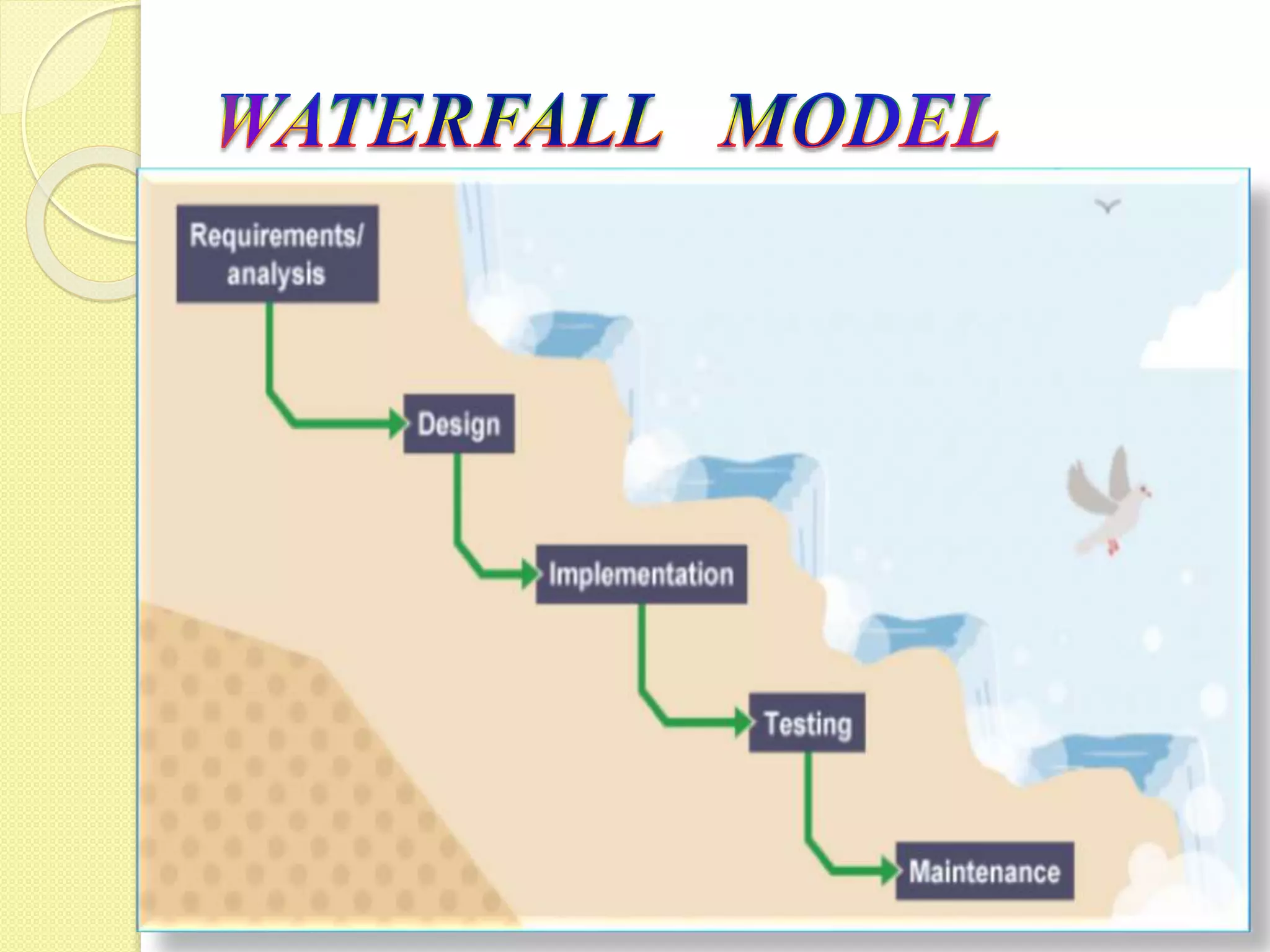
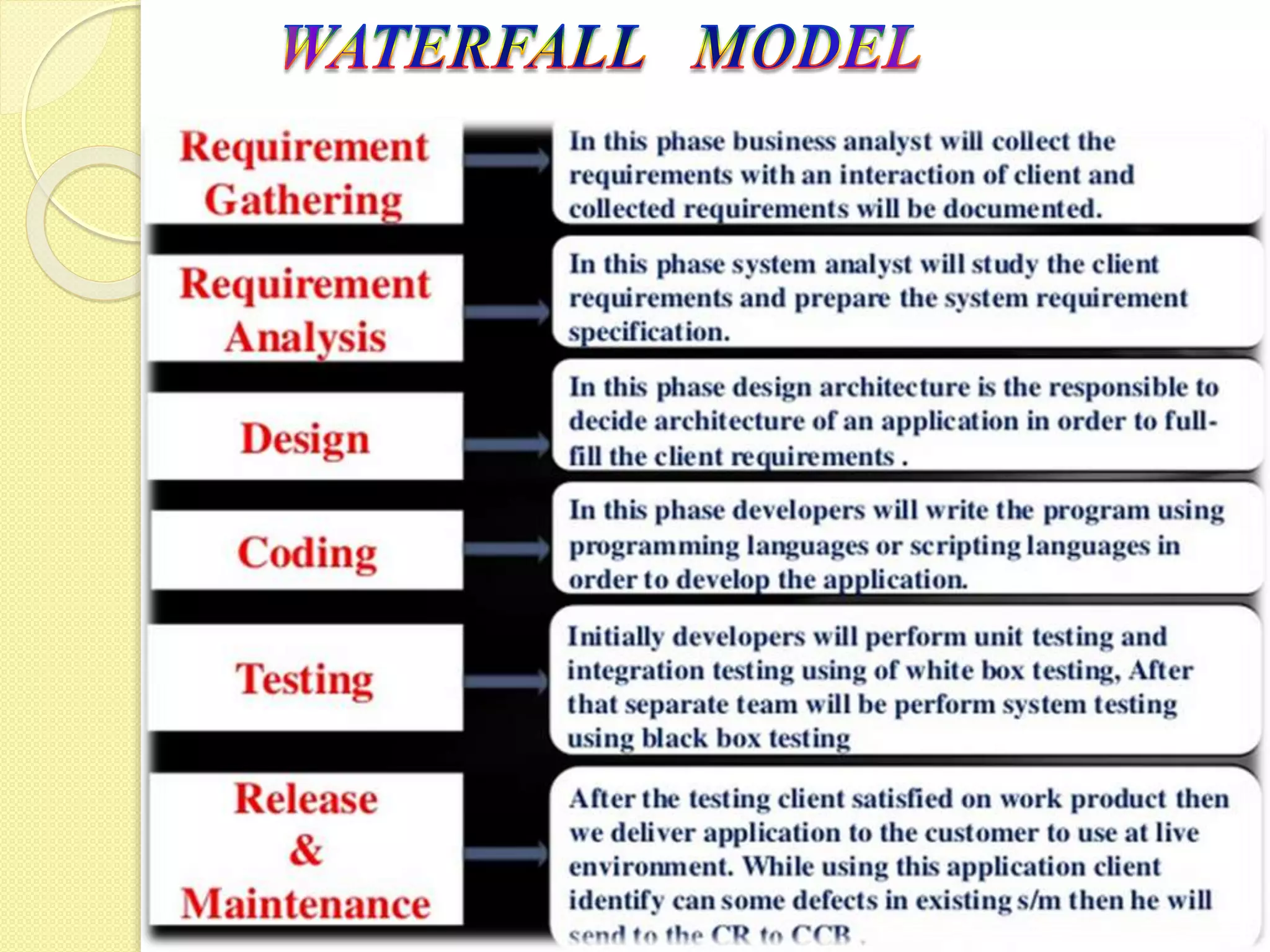
 Waterfall Model is a sequential model that
divides software development into different
phases.
 Each phase is designed for performing specific
activity during SDLC phase. It was introduced in
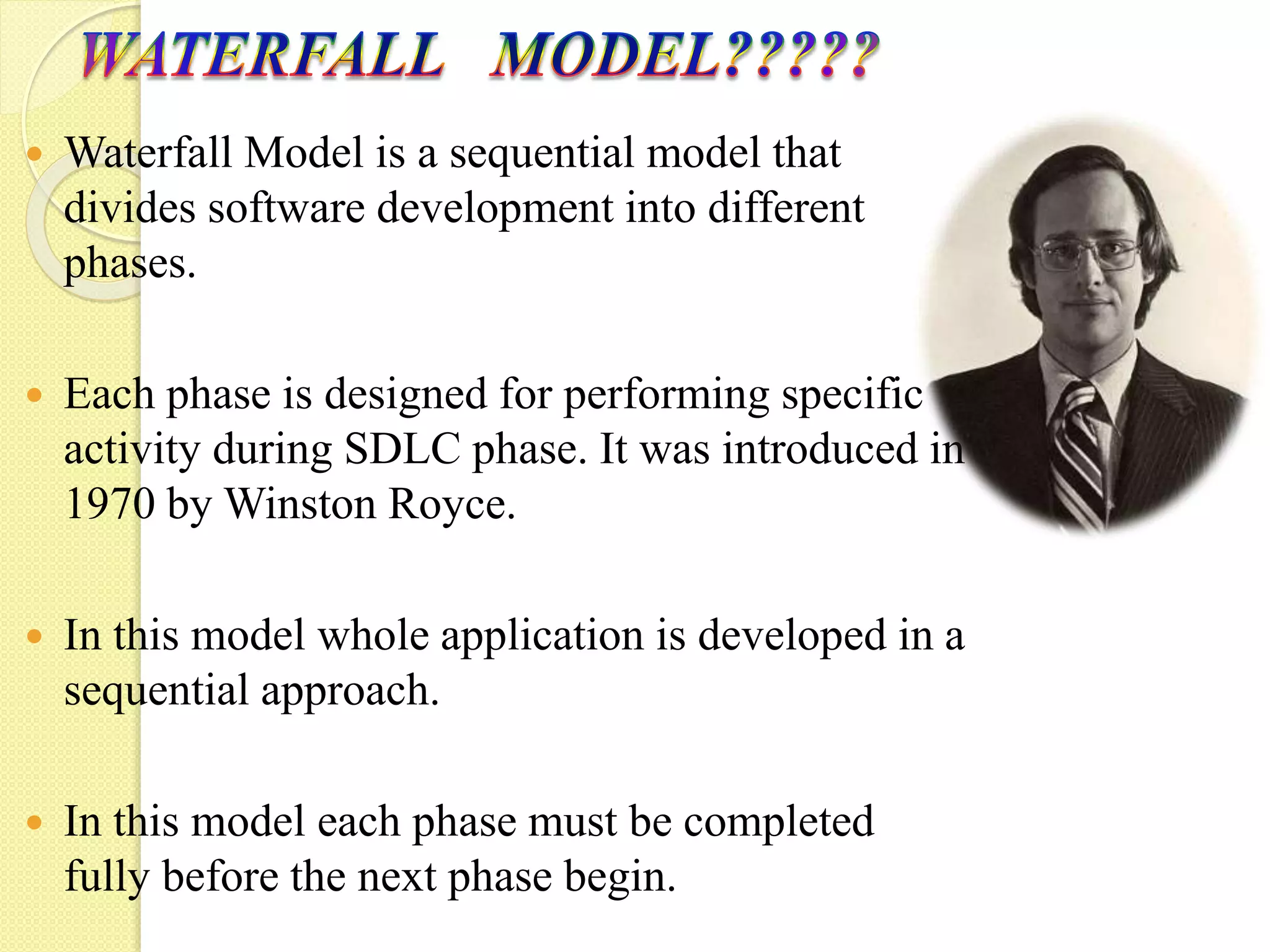
1970 by Winston Royce.
 In this model whole application is developed in a
sequential approach.
 In this model each phase must be completed
fully before the next phase begin.
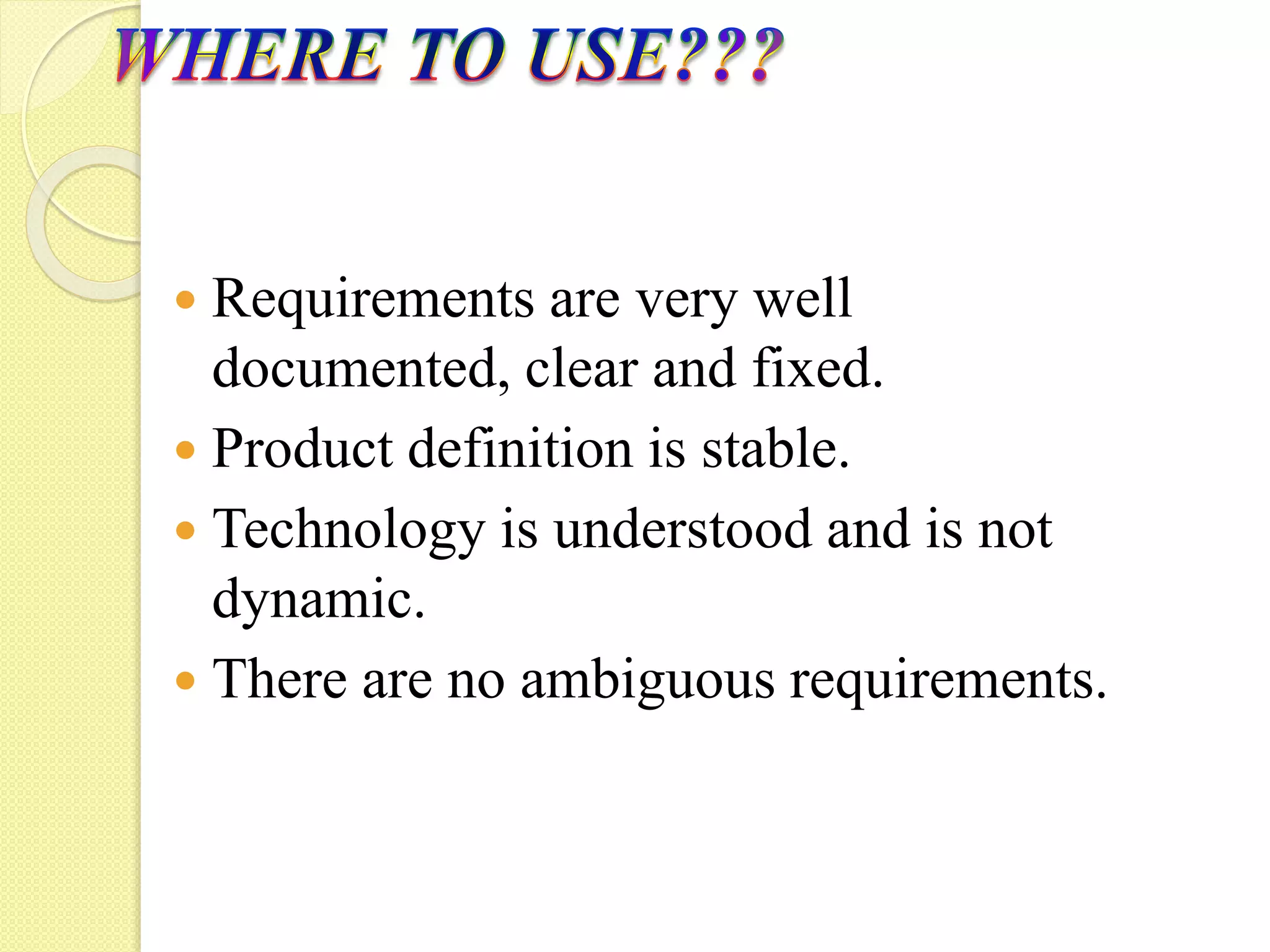
 Requirements are very well
documented, clear and fixed.
 Product definition is stable.
 Technology is understood and is not
dynamic.
 There are no ambiguous requirements.
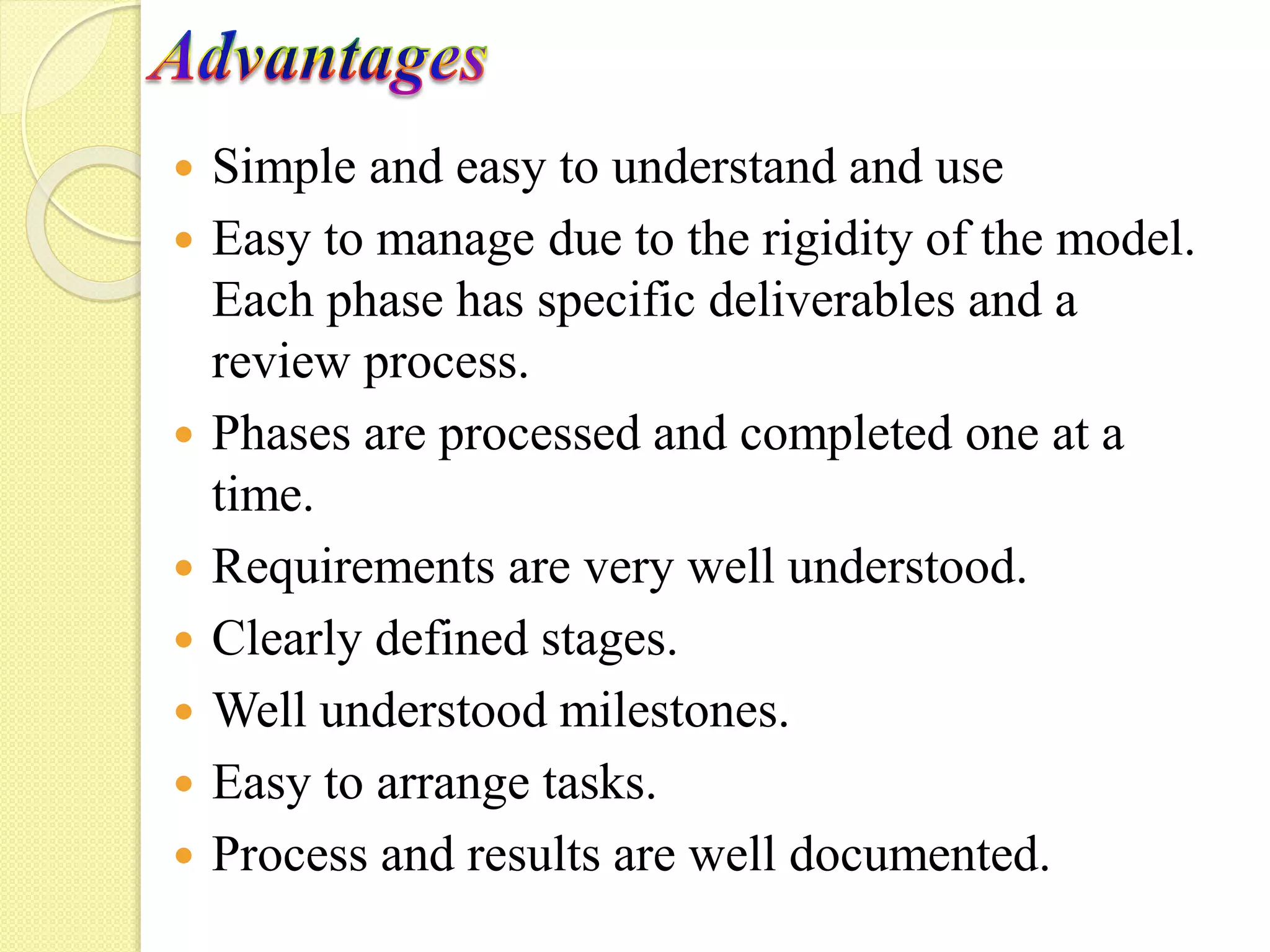
 Simple and easy to understand and use
 Easy to manage due to the rigidity of the model.
Each phase has specific deliverables and a
review process.
 Phases are processed and completed one at a
time.
 Requirements are very well understood.
 Clearly defined stages.
 Well understood milestones.
 Easy to arrange tasks.
 Process and results are well documented.
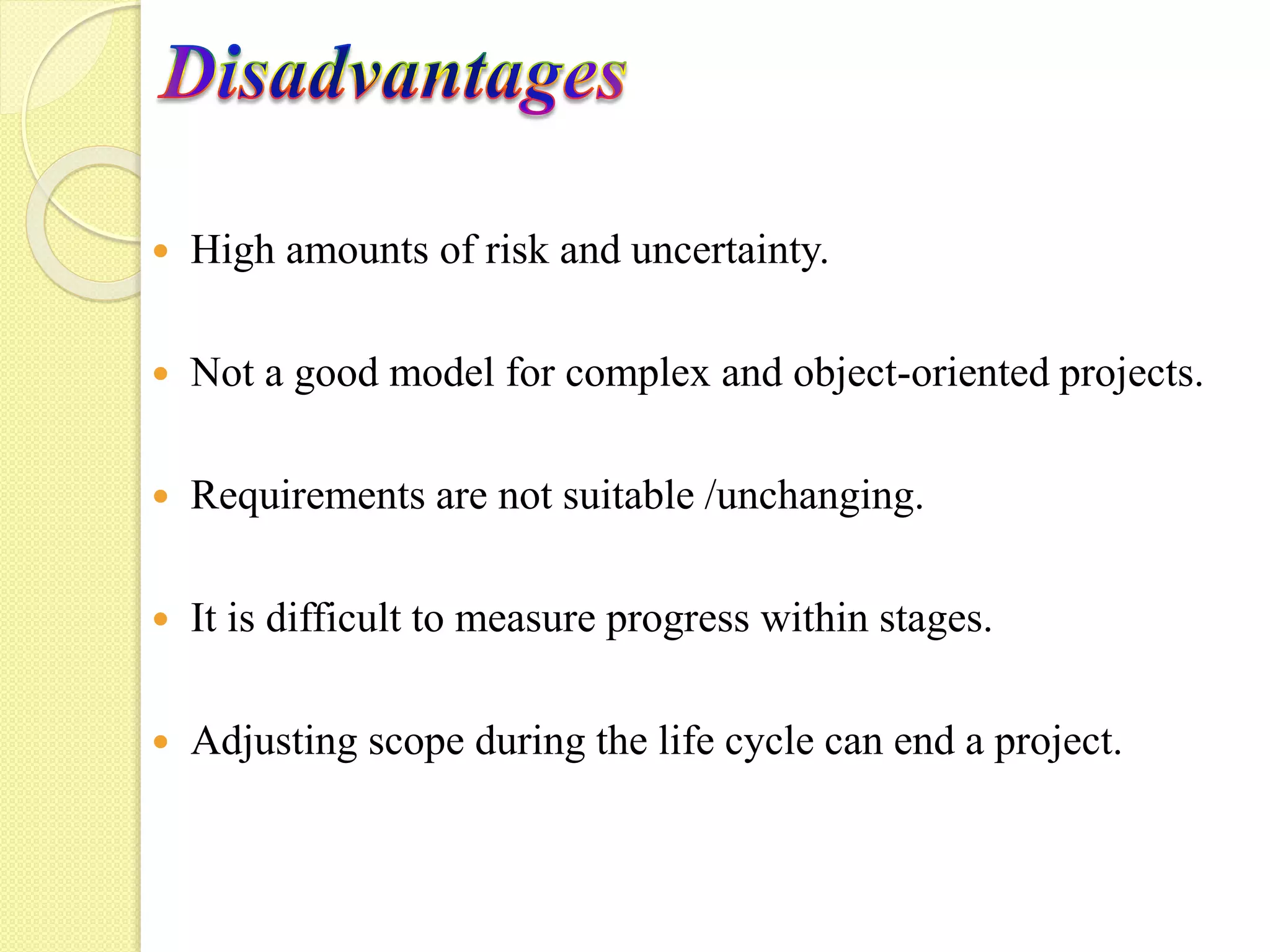
 High amounts of risk and uncertainty.
 Not a good model for complex and object-oriented projects.
 Requirements are not suitable /unchanging.
 It is difficult to measure progress within stages.
 Adjusting scope during the life cycle can end a project.
 The Waterfall Model is generally suitable for
projects where requirements, performance
and processes can be described relatively
accurately in the planning phase and also
need few changes in the course of
development.
Any Questions?
Waterfall Model

Waterfall Model

  • 1.
  • 2.
     Waterfall Modelis a sequential model that divides software development into different phases.  Each phase is designed for performing specific activity during SDLC phase. It was introduced in 1970 by Winston Royce.  In this model whole application is developed in a sequential approach.  In this model each phase must be completed fully before the next phase begin.
  • 3.
     Requirements arevery well documented, clear and fixed.  Product definition is stable.  Technology is understood and is not dynamic.  There are no ambiguous requirements.
  • 6.
     Simple andeasy to understand and use  Easy to manage due to the rigidity of the model. Each phase has specific deliverables and a review process.  Phases are processed and completed one at a time.  Requirements are very well understood.  Clearly defined stages.  Well understood milestones.  Easy to arrange tasks.  Process and results are well documented.
  • 7.
     High amountsof risk and uncertainty.  Not a good model for complex and object-oriented projects.  Requirements are not suitable /unchanging.  It is difficult to measure progress within stages.  Adjusting scope during the life cycle can end a project.
  • 8.
     The WaterfallModel is generally suitable for projects where requirements, performance and processes can be described relatively accurately in the planning phase and also need few changes in the course of development.
  • 9.