Waterfall Model
Presented By
Md. Zabirul Islam (1507110)
Tanim Ahmed (1507113)
Md. Motaleb Hossen Manik (1507114)
5/9/2018
CONTENTS
 Introduction
 What is Waterfall Model
 Real Life Example
 Stages
 Scenario
 When to use Waterfall Model
 Advantages
 Disadvantages
 Conclusion
 QA
5/9/2018 2
INTRODUCTION
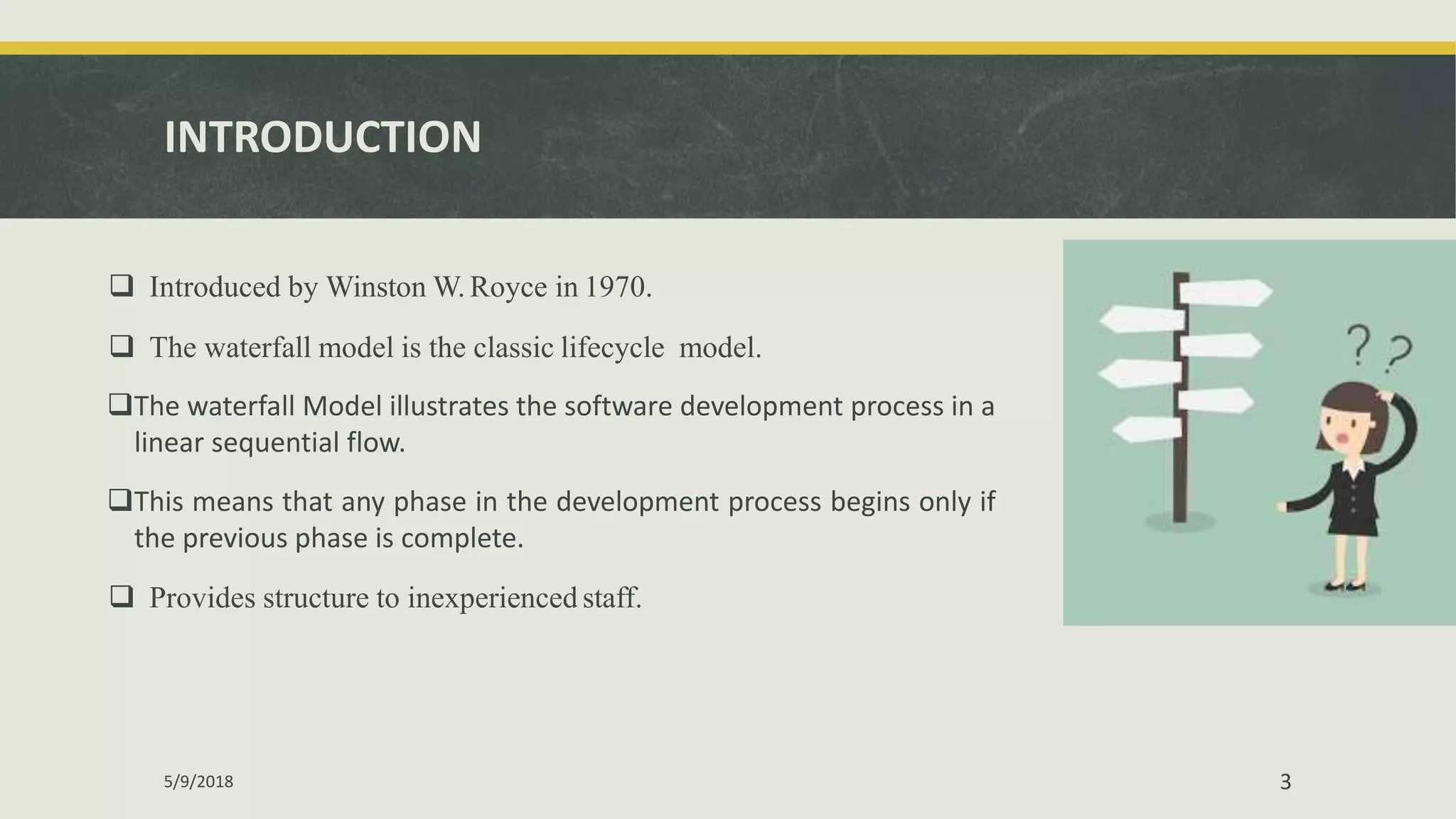
 Introduced by Winston W. Royce in 1970.
 The waterfall model is the classic lifecycle model.
The waterfall Model illustrates the software development process in a
linear sequential flow.
This means that any phase in the development process begins only if
the previous phase is complete.
 Provides structure to inexperienced staff.
5/9/2018 3
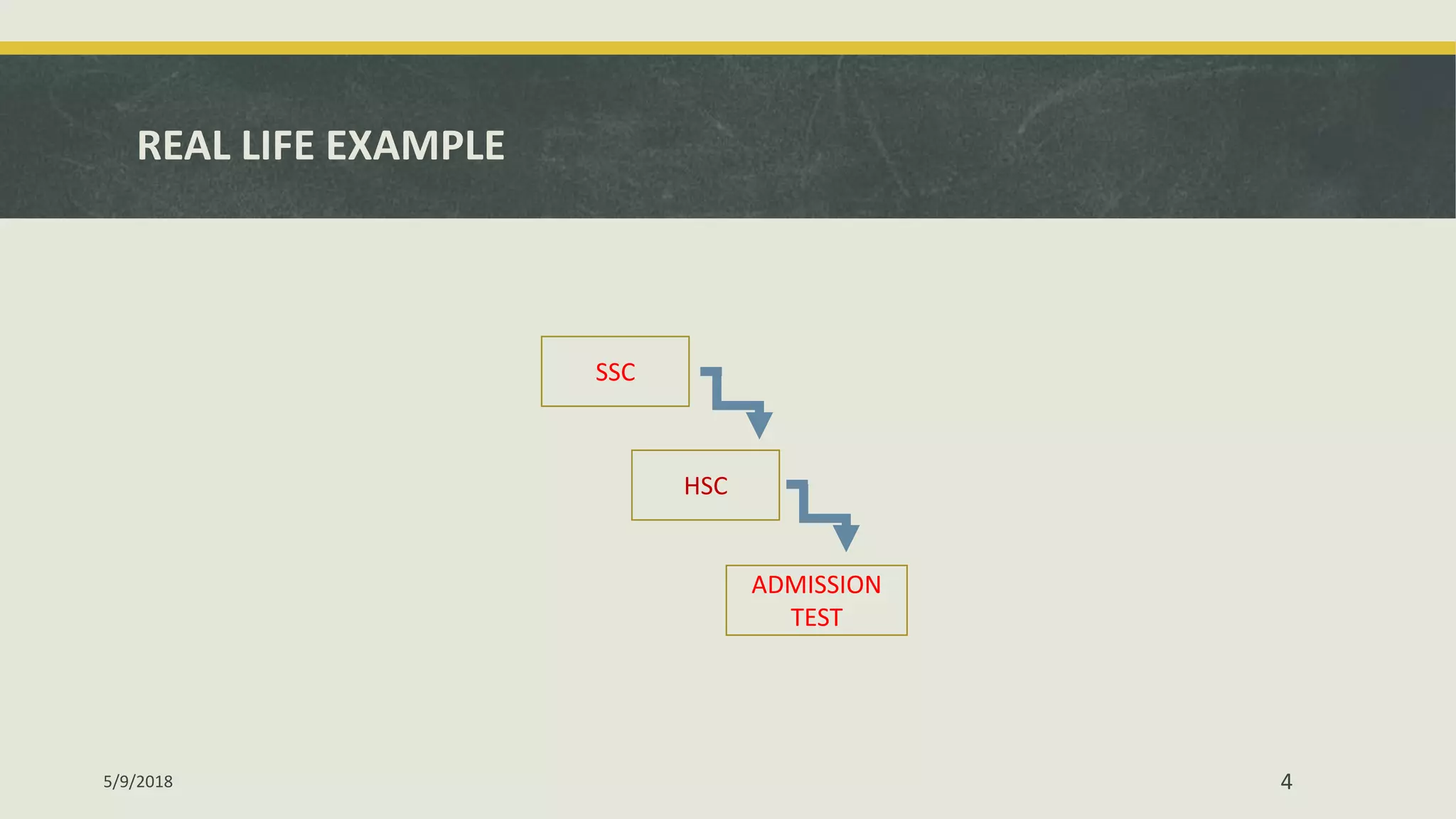
REAL LIFE EXAMPLE
5/9/2018 4
HSC
ADMISSION
TEST
SSC
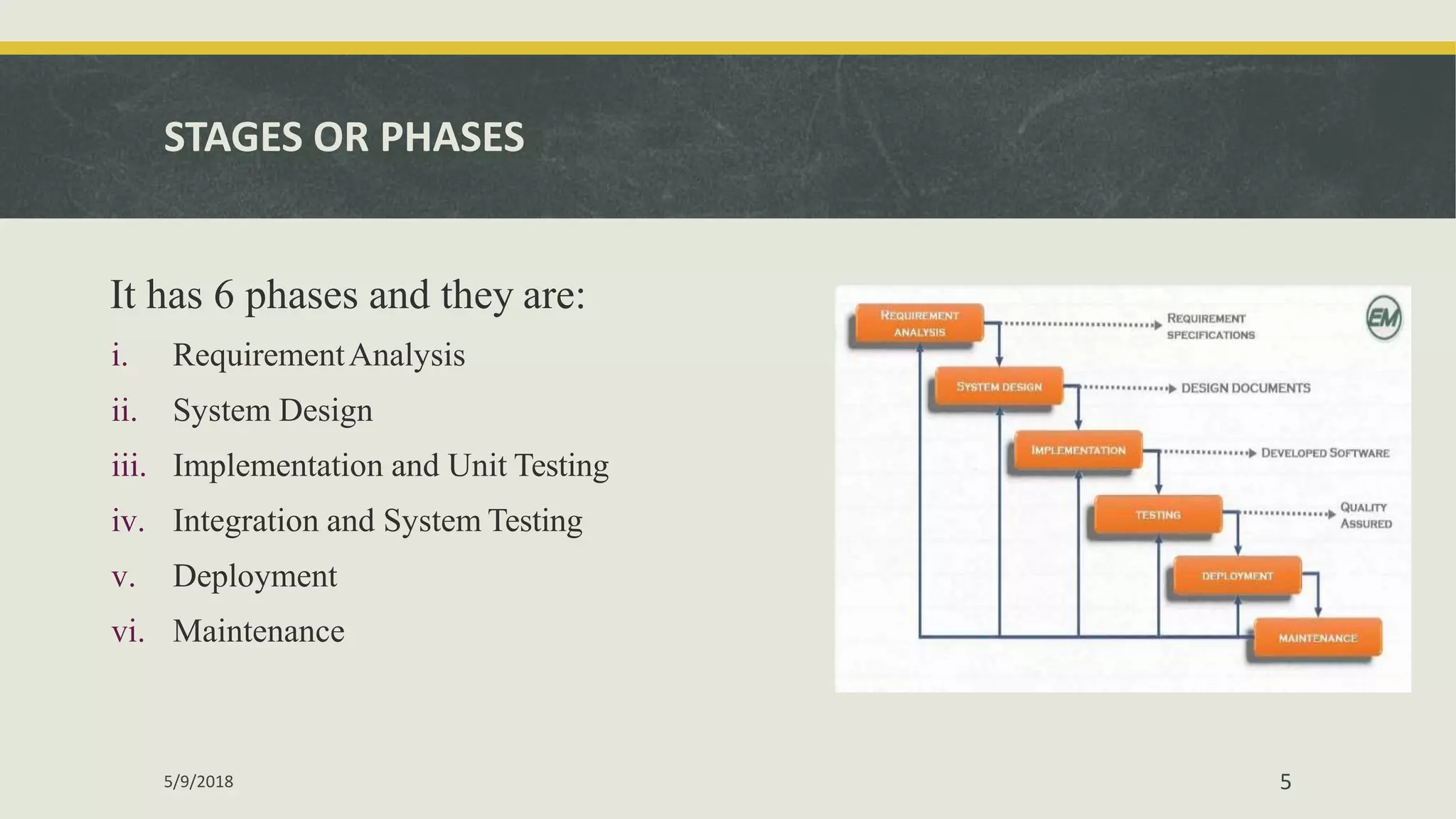
STAGES OR PHASES
It has 6 phases and they are:
i. RequirementAnalysis
ii. System Design
iii. Implementation and Unit Testing
iv. Integration and System Testing
v. Deployment
vi. Maintenance
5/9/2018 5
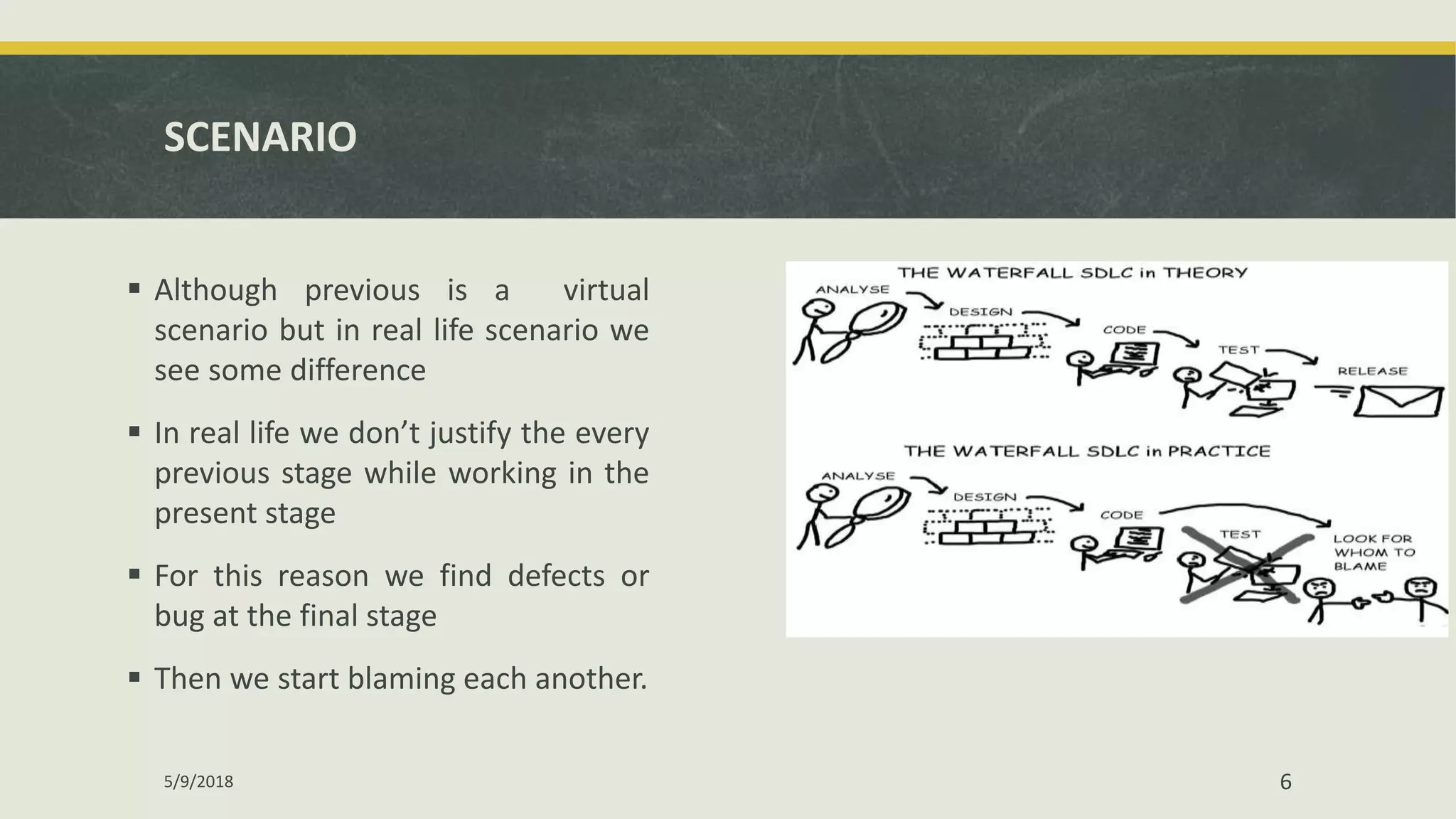
SCENARIO
 Although previous is a virtual
scenario but in real life scenario we
see some difference
 In real life we don’t justify the every
previous stage while working in the
present stage
 For this reason we find defects or
bug at the final stage
 Then we start blaming each another.
5/9/2018 6
WHEN TO USE THE WATERFALL MODEL?
 Requirements Are Very WellKnown and Fixed.
 Product Definition Is Stable.
 Technology Is Understood.
 The Client Has High Confidence In The Organization.
 The Project Is Short.
 New Version Of An Existing Product.
5/9/2018
7
ADVANTAGES
18
UniversityofEducationOkara
Campus
 Easy to understand, easy to implementation ,easy to use
 It helps to find error earlier
 Works well when quality is more important than cost or schedule
 Milestones are clear
 Testing is done at every stage.
 Process and results are well documented.
85/9/2018
DISADVANTAGES
 Poor model for long and ongoing projects
 Difficult to go back for changing
 No software produces until finalization
 Not good for OOP and complex projects
5/9/2018 9
CONTINUE…
 Difficult to estimate time, cost
 Constant testing needed
 Not suitable for frequently changeable projects
5/9/2018 10
CONCLUSION
 May the wrong choice will not be discovered until final stage
 But can be used for small ,trivial projects
 Where requirements are known before starting
Example: Mobile game development (Pure Waterfall Model)
 Again Canonical for space, medical and life-critical systems i.e. flight control
software, airbag systems, etc.
5/9/2018 11
REFERENCES
1) https://www.oxagile.com/company/blog/the-waterfall-model/
2) https://xbsoftware.com/blog/software-development-life-cycle-waterfall-model/
3) http://istqbexamcertification.com/what-is-waterfall-model-advantages-disadvantages-
and-when-to-use-it/
4) https://study.com/academy/lesson/waterfall-model-advantages-disadvantages.html
5/9/2018 12
5/9/2018 13
5/9/2018 14

Waterfall model is a classical life cycle model.

  • 1.
    Waterfall Model Presented By Md.Zabirul Islam (1507110) Tanim Ahmed (1507113) Md. Motaleb Hossen Manik (1507114) 5/9/2018
  • 2.
    CONTENTS  Introduction  Whatis Waterfall Model  Real Life Example  Stages  Scenario  When to use Waterfall Model  Advantages  Disadvantages  Conclusion  QA 5/9/2018 2
  • 3.
    INTRODUCTION  Introduced byWinston W. Royce in 1970.  The waterfall model is the classic lifecycle model. The waterfall Model illustrates the software development process in a linear sequential flow. This means that any phase in the development process begins only if the previous phase is complete.  Provides structure to inexperienced staff. 5/9/2018 3
  • 4.
    REAL LIFE EXAMPLE 5/9/20184 HSC ADMISSION TEST SSC
  • 5.
    STAGES OR PHASES Ithas 6 phases and they are: i. RequirementAnalysis ii. System Design iii. Implementation and Unit Testing iv. Integration and System Testing v. Deployment vi. Maintenance 5/9/2018 5
  • 6.
    SCENARIO  Although previousis a virtual scenario but in real life scenario we see some difference  In real life we don’t justify the every previous stage while working in the present stage  For this reason we find defects or bug at the final stage  Then we start blaming each another. 5/9/2018 6
  • 7.
    WHEN TO USETHE WATERFALL MODEL?  Requirements Are Very WellKnown and Fixed.  Product Definition Is Stable.  Technology Is Understood.  The Client Has High Confidence In The Organization.  The Project Is Short.  New Version Of An Existing Product. 5/9/2018 7
  • 8.
    ADVANTAGES 18 UniversityofEducationOkara Campus  Easy tounderstand, easy to implementation ,easy to use  It helps to find error earlier  Works well when quality is more important than cost or schedule  Milestones are clear  Testing is done at every stage.  Process and results are well documented. 85/9/2018
  • 9.
    DISADVANTAGES  Poor modelfor long and ongoing projects  Difficult to go back for changing  No software produces until finalization  Not good for OOP and complex projects 5/9/2018 9
  • 10.
    CONTINUE…  Difficult toestimate time, cost  Constant testing needed  Not suitable for frequently changeable projects 5/9/2018 10
  • 11.
    CONCLUSION  May thewrong choice will not be discovered until final stage  But can be used for small ,trivial projects  Where requirements are known before starting Example: Mobile game development (Pure Waterfall Model)  Again Canonical for space, medical and life-critical systems i.e. flight control software, airbag systems, etc. 5/9/2018 11
  • 12.
    REFERENCES 1) https://www.oxagile.com/company/blog/the-waterfall-model/ 2) https://xbsoftware.com/blog/software-development-life-cycle-waterfall-model/ 3)http://istqbexamcertification.com/what-is-waterfall-model-advantages-disadvantages- and-when-to-use-it/ 4) https://study.com/academy/lesson/waterfall-model-advantages-disadvantages.html 5/9/2018 12
  • 13.
  • 14.