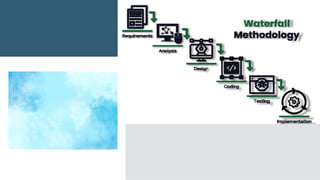
Waterfall
Model
INTRODUCTION
• The Waterfall Model was the first Process Model to be
introduced.
• It is also referred to as a linear-sequential life cycle model.
• It is very simple to understand and use. In a waterfall model,
each phase must be completed before the next phase can
begin and there is no overlapping in the phases.
• The Waterfall model is the earliest SDLC approach that was
used for software development.
DIFFERENT PHASES OF THE
WATERFALL MODEL
REQUIREMENT
GATHERING AND
ANALYSIS
All possible requirements of the system to be
developed are captured in this phase and
documented in a requirement specification
document
SYSTEM DESIGN
The requirement specifications from first phase are studied in this phase and the system design is
prepared. This system design helps in specifying hardware and system requirements and helps in defining
the overall system architecture
IMPLEMENTATION
The requirement specifications from first phase are studied in this
phase and the system design is prepared. This system design
helps in specifying hardware and system requirements and helps
in defining the overall system architecture
APPLICATION
Requirements are very well documented, clear and fixed
Technology is understood and is not dynamic
There are no ambiguous requirements
Availability of ample resources required to support the product
The project is short
Product definition is stable
THANK YOU

WaterFall Model basic presentation with applications

  • 1.
  • 2.
    INTRODUCTION • The WaterfallModel was the first Process Model to be introduced. • It is also referred to as a linear-sequential life cycle model. • It is very simple to understand and use. In a waterfall model, each phase must be completed before the next phase can begin and there is no overlapping in the phases. • The Waterfall model is the earliest SDLC approach that was used for software development.
  • 3.
    DIFFERENT PHASES OFTHE WATERFALL MODEL
  • 4.
    REQUIREMENT GATHERING AND ANALYSIS All possiblerequirements of the system to be developed are captured in this phase and documented in a requirement specification document
  • 5.
    SYSTEM DESIGN The requirementspecifications from first phase are studied in this phase and the system design is prepared. This system design helps in specifying hardware and system requirements and helps in defining the overall system architecture
  • 6.
    IMPLEMENTATION The requirement specificationsfrom first phase are studied in this phase and the system design is prepared. This system design helps in specifying hardware and system requirements and helps in defining the overall system architecture
  • 8.
    APPLICATION Requirements are verywell documented, clear and fixed Technology is understood and is not dynamic There are no ambiguous requirements Availability of ample resources required to support the product The project is short Product definition is stable
  • 9.