WaterFall Model
BY
K DIVYAVANI
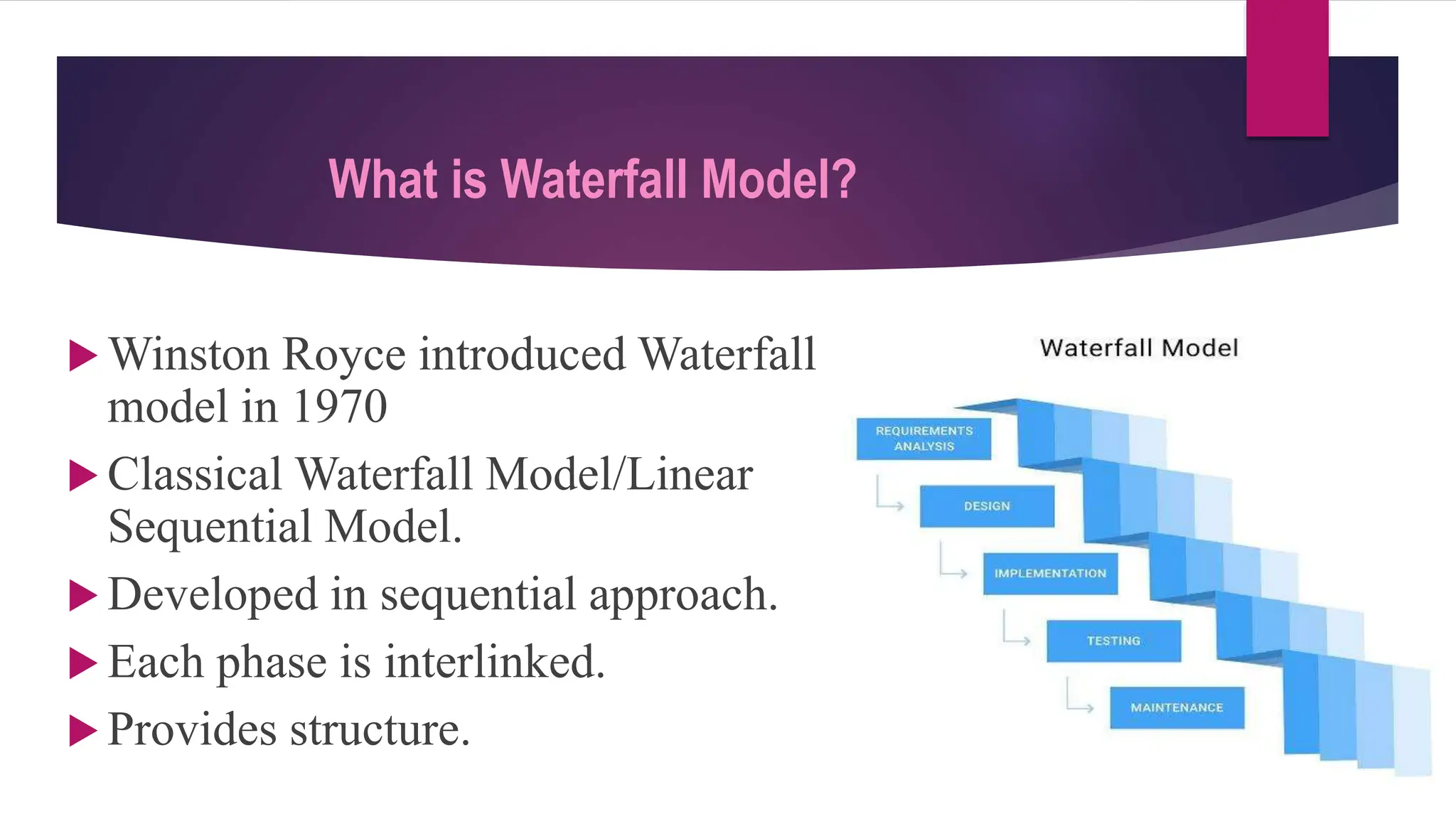
What is Waterfall Model?
 Winston Royce introduced Waterfall
model in 1970
 Classical Waterfall Model/Linear
Sequential Model.
 Developed in sequential approach.
 Each phase is interlinked.
 Provides structure.
When to use?
 Requirements are well defined.
 Product definition is stable.
 Technology is understood.
 The project is short.
 New version of an existing project.
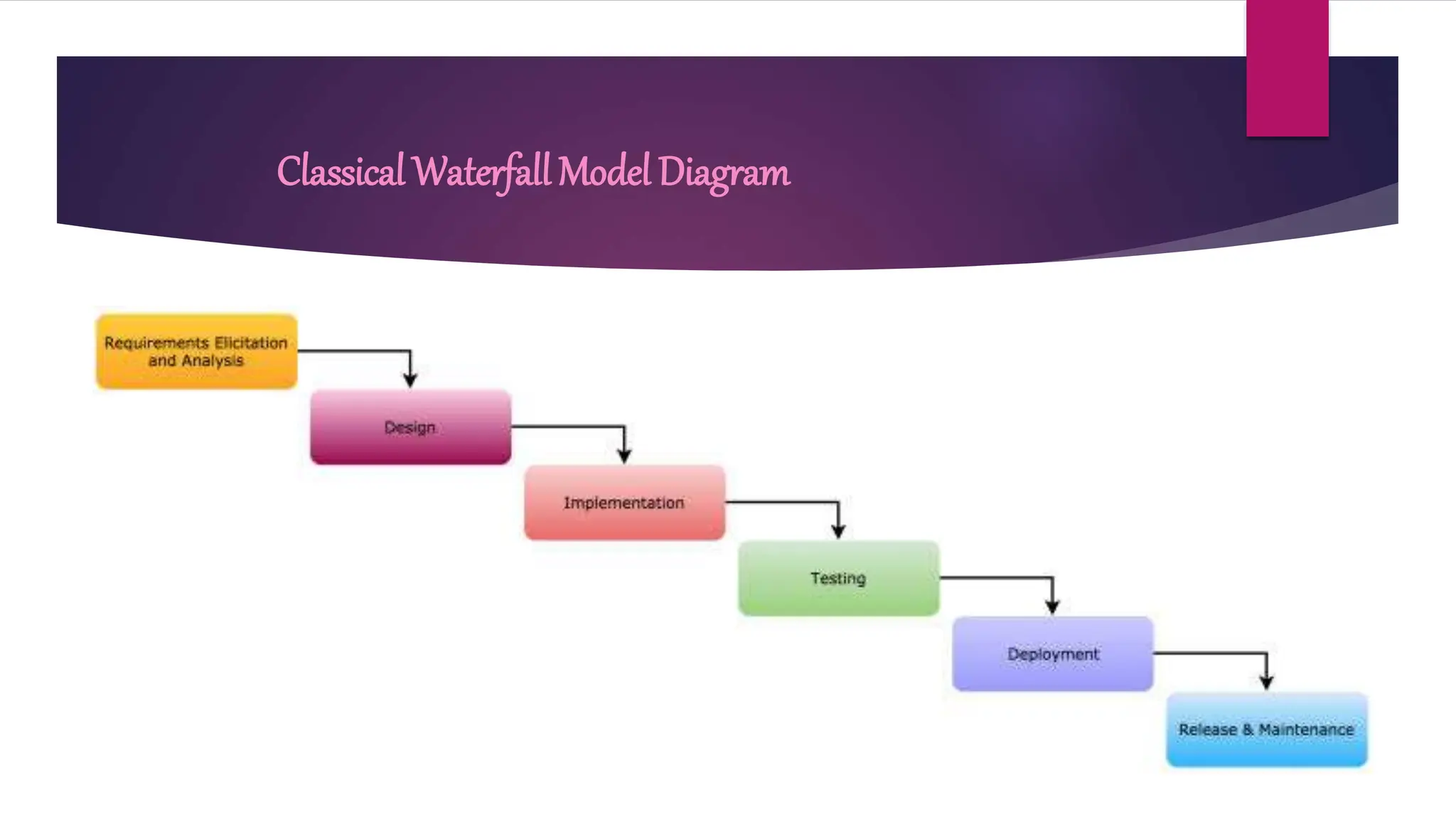
Classical Waterfall Model Diagram
ADVANTAGES
 Easy to understand.
 Individual process.
 Properly defined.
 Clear milestones.
 Properly documented.
 Reinforces good habits.
 Works for short projects.
DISADVANTAGES
 No feedback path.
 Difficult to accommodate change requests.
 No overlapping of phases.
 Limited flexibility.
 Limited stakeholder involvement.
 Late defect detection.
 Lengthy development cycle.
 Not suitable for complex projects.
Thank You.

Waterfall Model Presentation By K Divya Vani

  • 1.
  • 2.
    What is WaterfallModel?  Winston Royce introduced Waterfall model in 1970  Classical Waterfall Model/Linear Sequential Model.  Developed in sequential approach.  Each phase is interlinked.  Provides structure.
  • 3.
    When to use? Requirements are well defined.  Product definition is stable.  Technology is understood.  The project is short.  New version of an existing project.
  • 4.
  • 5.
    ADVANTAGES  Easy tounderstand.  Individual process.  Properly defined.  Clear milestones.  Properly documented.  Reinforces good habits.  Works for short projects.
  • 6.
    DISADVANTAGES  No feedbackpath.  Difficult to accommodate change requests.  No overlapping of phases.  Limited flexibility.  Limited stakeholder involvement.  Late defect detection.  Lengthy development cycle.  Not suitable for complex projects.
  • 7.