STRUCTURE OF WATER 
Submed to :- Dr. D. N. Bajad 
Submitted by :- Parmeshwar. E. Kate
Introduction 
• Water is relatively small inorganic molecule, 
but organic life is highly dependent on this tiny 
molecule. 
• It is the only substance on the earth that occurs 
abundantly in all three physical states (gas, 
liquid and solid).
Function 
• Regulator of body temperature 
• Solvent 
• Carrier of nutrients and waste products 
• Reactant and reaction medium 
• Lubricant and plasticizer 
• Stabilizer of biopolymer conformation 
• Facilitator of the dynamic behavior of 
macromolecules (e.g. catalytic activity)
Water Molecule 
• Some the unusual properties of water are due 
strong intermolecular attractive forces among 
molecules of water.
• The unusual properties of water can be explained 
from nature of water molecules. 
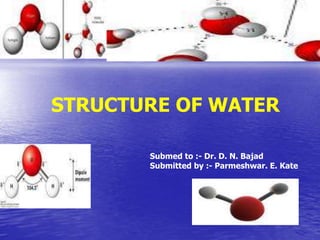
• In formation of water molecule, two hydrogen 
atoms form covalent bonds with oxygen. 
• The highly electronegative oxygen of the water 
molecule pulls the single electron from each of 
the two covalently bonded hydrogen atoms 
towards its self, as a result each hydrogen atom 
becomes partially positively charged and oxygen 
becomes partially negatively charged.
• Consequently, resultant covalent bond formed 
between oxygen and hydrogen atoms acquires 
partial ionic character. 
• The bond angle of individual water molecule 
in vapor state
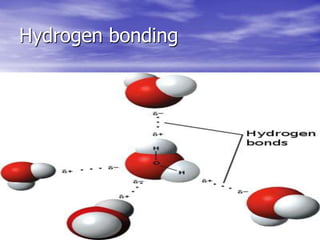
Hydrogen bonding
Association of Water 
Molecules 
• The shape of water molecule and the partial polar 
nature of the O-H bond in the water molecule 
create intermolecular attraction force. 
• Such inter molecular attraction, results in to 
formation of hydrogen bonds between the water 
molecules. 
• Therefore, water molecules associate with 
considerable tenacity.
• Each water molecule involves in four hydrogen bonds with 
neighboring water molecules. 
• Multiple hydrogen bonding between water molecules, forms 
a structure of three-dimensional network 
• Existence of three-dimensional hydrogen bonded structure 
of water is responsible for many of its unusual properties. 
• The extra energy needed to break intermolecular hydrogen 
bonds. 
• This leads to large values for heat capacity, melting point, 
boiling point, surface tension, and enthalpies of various 
phase transitions of water.
• The dielectric constant (permittivity) of water is 
influenced by hydrogen bonding. 
• Hydrogen-bonded multi-molecular dipoles increase the 
permittivity of water. 
• The hydrogen bonded arrangement of water molecules 
is highly dynamic, allowing individual molecules to 
alter their hydrogen-bonding relationships with 
neighboring molecules. 
• This phenomenon facilitates mobility and fluidity of 
water.
• The open, hydrogen-bonded, tetrahedral structure 
of water molecules in ice is responsible for low 
density of water in ice form . 
• The extent of intermolecular hydrogen bonding 
among water molecules depends on temperature. 
• With input of heat melting of ice occurs; that is, 
some hydrogen bonds are broken distance 
between nearest neighbor increases.
• The latter factor predominates at temperatures 
between 0 and 4°C, which causes net increase 
in density. 
• Further warming increasing distance between 
nearest neighbors (thermal expansion) 
predominates above 4°C, which causes net 
decrease in density.

Water structure

  • 1.
    STRUCTURE OF WATER Submed to :- Dr. D. N. Bajad Submitted by :- Parmeshwar. E. Kate
  • 2.
    Introduction • Wateris relatively small inorganic molecule, but organic life is highly dependent on this tiny molecule. • It is the only substance on the earth that occurs abundantly in all three physical states (gas, liquid and solid).
  • 3.
    Function • Regulatorof body temperature • Solvent • Carrier of nutrients and waste products • Reactant and reaction medium • Lubricant and plasticizer • Stabilizer of biopolymer conformation • Facilitator of the dynamic behavior of macromolecules (e.g. catalytic activity)
  • 4.
    Water Molecule •Some the unusual properties of water are due strong intermolecular attractive forces among molecules of water.
  • 5.
    • The unusualproperties of water can be explained from nature of water molecules. • In formation of water molecule, two hydrogen atoms form covalent bonds with oxygen. • The highly electronegative oxygen of the water molecule pulls the single electron from each of the two covalently bonded hydrogen atoms towards its self, as a result each hydrogen atom becomes partially positively charged and oxygen becomes partially negatively charged.
  • 6.
    • Consequently, resultantcovalent bond formed between oxygen and hydrogen atoms acquires partial ionic character. • The bond angle of individual water molecule in vapor state
  • 7.
  • 8.
    Association of Water Molecules • The shape of water molecule and the partial polar nature of the O-H bond in the water molecule create intermolecular attraction force. • Such inter molecular attraction, results in to formation of hydrogen bonds between the water molecules. • Therefore, water molecules associate with considerable tenacity.
  • 9.
    • Each watermolecule involves in four hydrogen bonds with neighboring water molecules. • Multiple hydrogen bonding between water molecules, forms a structure of three-dimensional network • Existence of three-dimensional hydrogen bonded structure of water is responsible for many of its unusual properties. • The extra energy needed to break intermolecular hydrogen bonds. • This leads to large values for heat capacity, melting point, boiling point, surface tension, and enthalpies of various phase transitions of water.
  • 10.
    • The dielectricconstant (permittivity) of water is influenced by hydrogen bonding. • Hydrogen-bonded multi-molecular dipoles increase the permittivity of water. • The hydrogen bonded arrangement of water molecules is highly dynamic, allowing individual molecules to alter their hydrogen-bonding relationships with neighboring molecules. • This phenomenon facilitates mobility and fluidity of water.
  • 11.
    • The open,hydrogen-bonded, tetrahedral structure of water molecules in ice is responsible for low density of water in ice form . • The extent of intermolecular hydrogen bonding among water molecules depends on temperature. • With input of heat melting of ice occurs; that is, some hydrogen bonds are broken distance between nearest neighbor increases.
  • 12.
    • The latterfactor predominates at temperatures between 0 and 4°C, which causes net increase in density. • Further warming increasing distance between nearest neighbors (thermal expansion) predominates above 4°C, which causes net decrease in density.