Wellcome to my
presentation
Topic
Imbibition , water potential , turgor pressure, osmotic pressure
,deffusion pressure deficit.
Presented by ---
Md NAYEEM HASAN
Imbibition
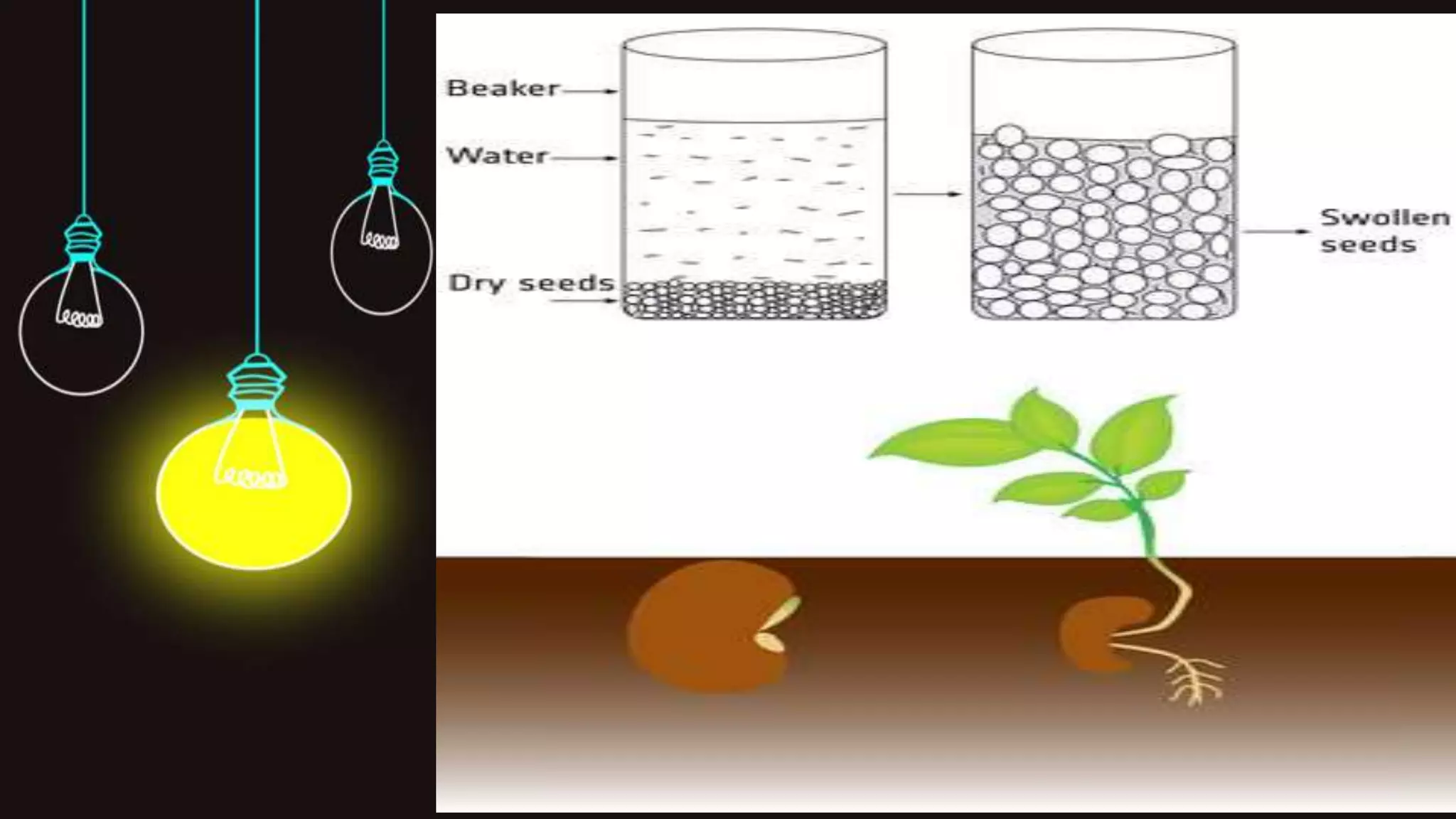
• Imbibition is a special type of diffusion when
water is absorbed by solids-colloids causing an
enormous increase in volume. Examples
include the absorption of water by seeds and
dry wood.
Imbibition
• Imbibition is the absorption of water by hydrophilic colloids.
Examples of plant material which exhibit imbibition are dry seeds
before germination.
• Different types of organic substances have different imbibing
capacities.
• Proteins have a very high imbibing capacity,starch less and
cellulose least.
• That is why proteinaceous pea seeds swell more on imbibition
than starchy wheat seeds.
• Certain substances if placed in a particular
liquid absorb it and swell up.
• For example , when piece of dry wood or
dry seeds are placed in water they absorb
the water quickly and swell up
considerably so that their volume is
increased.
• These substances are called as imbibes and
the phenomenon as imbibition these exists
certain force of attraction in between the
imbibing and the imbibed substances.
• In plants this is because of the presence
of a large number of hydrophilic
colloids both in living as well as dead
cells in the form of proteins,
carbohydrates ,such as starch ,cellulose
, pectic substances etc. which have
strong attraction towards water.
Role of imbibition in plants life
• Imbibition plays a very important role in
the life of the plants –
• The first step in the absorption of water by
the roots of higher plants is the imbibition
of water by the cell walls of the root hairs.
• Imbibition of water is very essential for
dry seeds before they start germination.
As a result of imbibition a pressure is
developed which is called as imbibition as
imbibition pressure.
Water potential
• Water potential is the potential energy of water per
unit volume relative to pure water in reference
conditions. Water potential quantifies the tendency
of water to move from one area to another due
to osmosis, gravity, mechanical pressure, or matrix
effects such as capillary action (which is caused
by surface tension). The concept of water potential
has proved useful in understanding and computing
water movement within plants, animals, and soil.
Water potential is typically expressed in potential
energy per unit volume and very often is
represented by the Greek letter ψ
• Water potential integrates a variety of
different potential drivers of water
movement, which may operate in the same or
different directions. Within complex
biological systems, many potential factors
may be operating simultaneously. For
example, the addition of solutes lowers the
potential (negative vector), while an increase
in pressure increases the potential (positive
vector). If flow is not restricted, water will
move from an area of higher water potential
to an area that is lower potential. A common
example is water with a dissolved salt, such
as sea water or the fluid in a living cell. These
solutions have negative water potential,
relative to the pure water reference.
Turgor pressure
• Turgor pressure is the main pressure of the
cell contents against the cell wall in plant cell.
• Plant need water to maintain turgor pressure.
• Turgor pressure caused by fluid pushing
against the cell wall.
• Without it plants will wilt
Osmotic pressure
• Osmotic pressure is directly
proportional to the concentration of
dissolved solutes in the solution.
More concentrated solution has
higher osmotic pressure then its
pure solvent.
Osmotic potential
• The potential of water molecules to
move from a hypotonic solution to a
hypertonic solution across a semi
permeable membrane.
Diffusion pressure deficit (DPD) or suction
pressure
• It is related with osmotic pressure and turgor
pressure of cell sap.
• The difference between diffusion pressure of pure
water and solution is called diffusion pressure
deficit.
• In other word DPD of the cell sap or the cells is a
measure of the ability of the cells to absorb water
and hence it is often calledas the suction pressure.
• If the solution is more concentrated its DPD
increases but it decreases with the dilution of the
solution.
Imbibition and water potential .

Imbibition and water potential .

  • 1.
  • 2.
    Topic Imbibition , waterpotential , turgor pressure, osmotic pressure ,deffusion pressure deficit.
  • 3.
    Presented by --- MdNAYEEM HASAN
  • 4.
    Imbibition • Imbibition isa special type of diffusion when water is absorbed by solids-colloids causing an enormous increase in volume. Examples include the absorption of water by seeds and dry wood.
  • 6.
    Imbibition • Imbibition isthe absorption of water by hydrophilic colloids. Examples of plant material which exhibit imbibition are dry seeds before germination. • Different types of organic substances have different imbibing capacities. • Proteins have a very high imbibing capacity,starch less and cellulose least. • That is why proteinaceous pea seeds swell more on imbibition than starchy wheat seeds.
  • 7.
    • Certain substancesif placed in a particular liquid absorb it and swell up. • For example , when piece of dry wood or dry seeds are placed in water they absorb the water quickly and swell up considerably so that their volume is increased. • These substances are called as imbibes and the phenomenon as imbibition these exists certain force of attraction in between the imbibing and the imbibed substances.
  • 8.
    • In plantsthis is because of the presence of a large number of hydrophilic colloids both in living as well as dead cells in the form of proteins, carbohydrates ,such as starch ,cellulose , pectic substances etc. which have strong attraction towards water.
  • 9.
    Role of imbibitionin plants life • Imbibition plays a very important role in the life of the plants – • The first step in the absorption of water by the roots of higher plants is the imbibition of water by the cell walls of the root hairs. • Imbibition of water is very essential for dry seeds before they start germination. As a result of imbibition a pressure is developed which is called as imbibition as imbibition pressure.
  • 10.
    Water potential • Waterpotential is the potential energy of water per unit volume relative to pure water in reference conditions. Water potential quantifies the tendency of water to move from one area to another due to osmosis, gravity, mechanical pressure, or matrix effects such as capillary action (which is caused by surface tension). The concept of water potential has proved useful in understanding and computing water movement within plants, animals, and soil. Water potential is typically expressed in potential energy per unit volume and very often is represented by the Greek letter ψ
  • 11.
    • Water potentialintegrates a variety of different potential drivers of water movement, which may operate in the same or different directions. Within complex biological systems, many potential factors may be operating simultaneously. For example, the addition of solutes lowers the potential (negative vector), while an increase in pressure increases the potential (positive vector). If flow is not restricted, water will move from an area of higher water potential to an area that is lower potential. A common example is water with a dissolved salt, such as sea water or the fluid in a living cell. These solutions have negative water potential, relative to the pure water reference.
  • 13.
    Turgor pressure • Turgorpressure is the main pressure of the cell contents against the cell wall in plant cell. • Plant need water to maintain turgor pressure. • Turgor pressure caused by fluid pushing against the cell wall. • Without it plants will wilt
  • 15.
    Osmotic pressure • Osmoticpressure is directly proportional to the concentration of dissolved solutes in the solution. More concentrated solution has higher osmotic pressure then its pure solvent.
  • 16.
    Osmotic potential • Thepotential of water molecules to move from a hypotonic solution to a hypertonic solution across a semi permeable membrane.
  • 17.
    Diffusion pressure deficit(DPD) or suction pressure • It is related with osmotic pressure and turgor pressure of cell sap. • The difference between diffusion pressure of pure water and solution is called diffusion pressure deficit. • In other word DPD of the cell sap or the cells is a measure of the ability of the cells to absorb water and hence it is often calledas the suction pressure. • If the solution is more concentrated its DPD increases but it decreases with the dilution of the solution.