Want to know how to use Blackboard?
Use Blackboard.
How do you use
Blackboard?
You just use Blackboard.
The problems BA
Some new staff can’t
make it to face-to-face
training sessions
Some new staff don’t
[think they] need
formal training
Some new staff only
need Blackboard for
specific tasks
All staff seemed to lack
awareness about the
online help available
The proposed solution
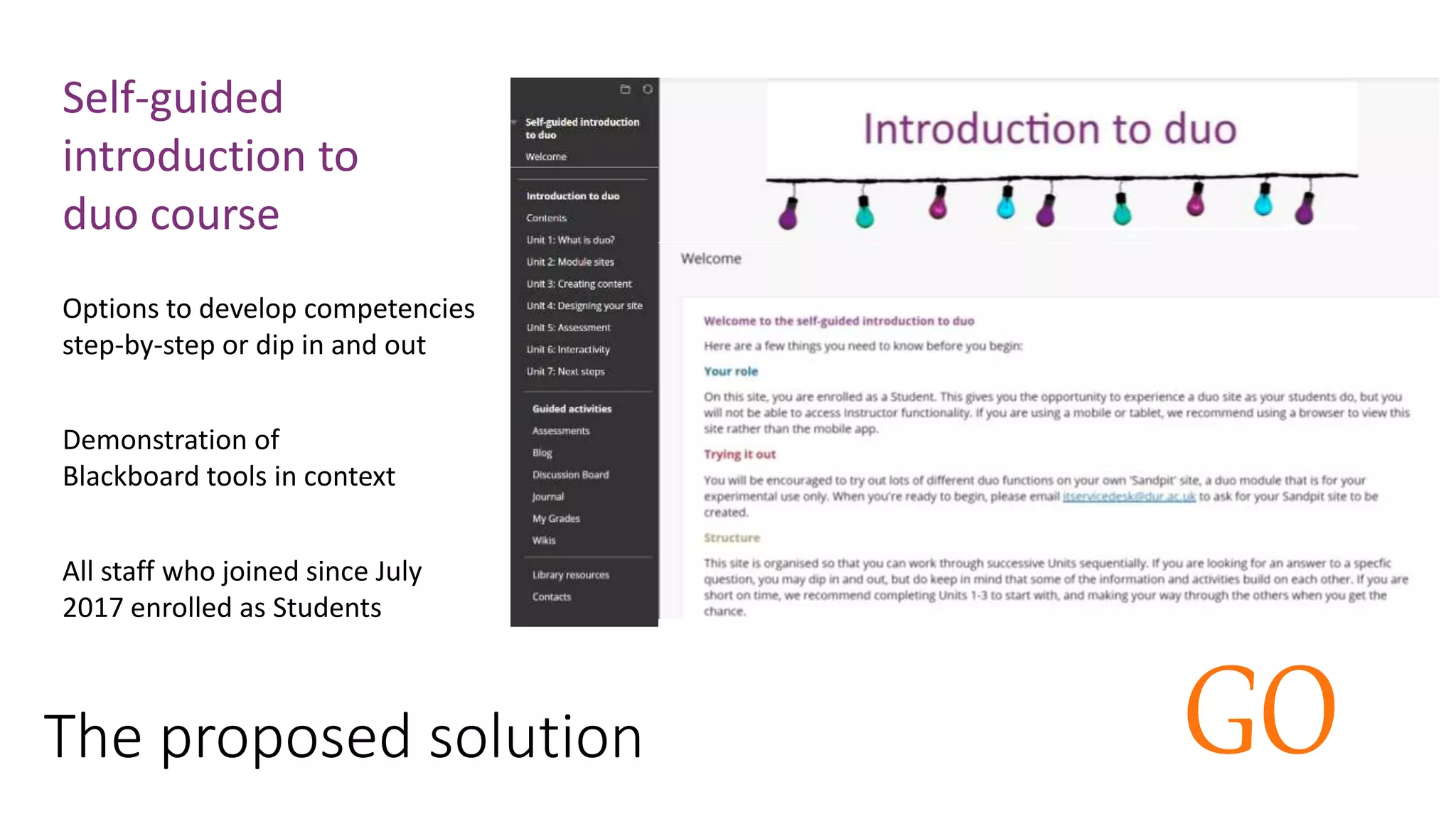
Self-guided
introduction to
duo course
GO
Options to develop competencies
step-by-step or dip in and out
Demonstration of
Blackboard tools in context
All staff who joined since July
2017 enrolled as Students
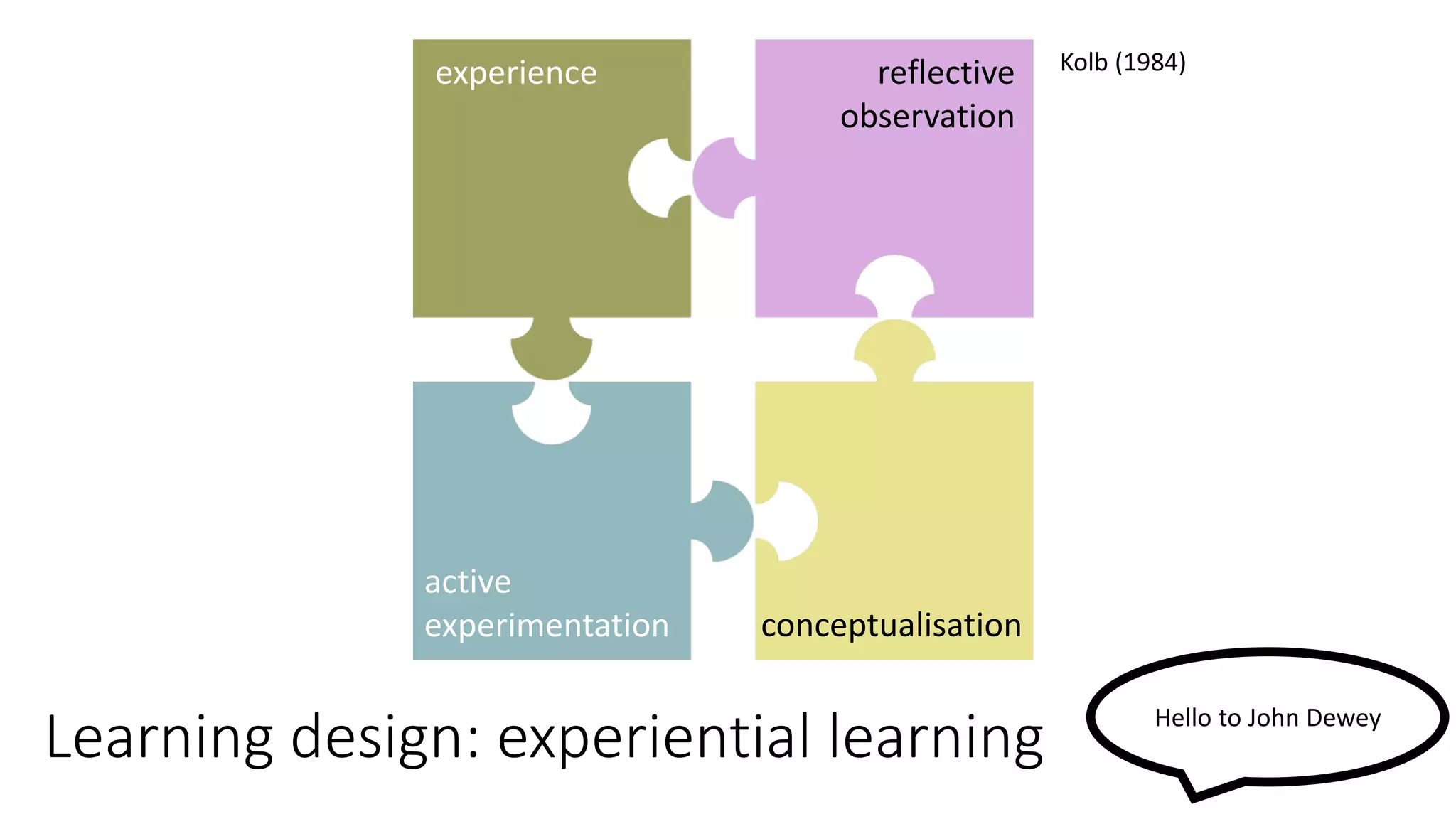
Learning design: experiential learning
Kolb (1984)experience reflective
observation
conceptualisation
active
experimentation
Hello to John Dewey
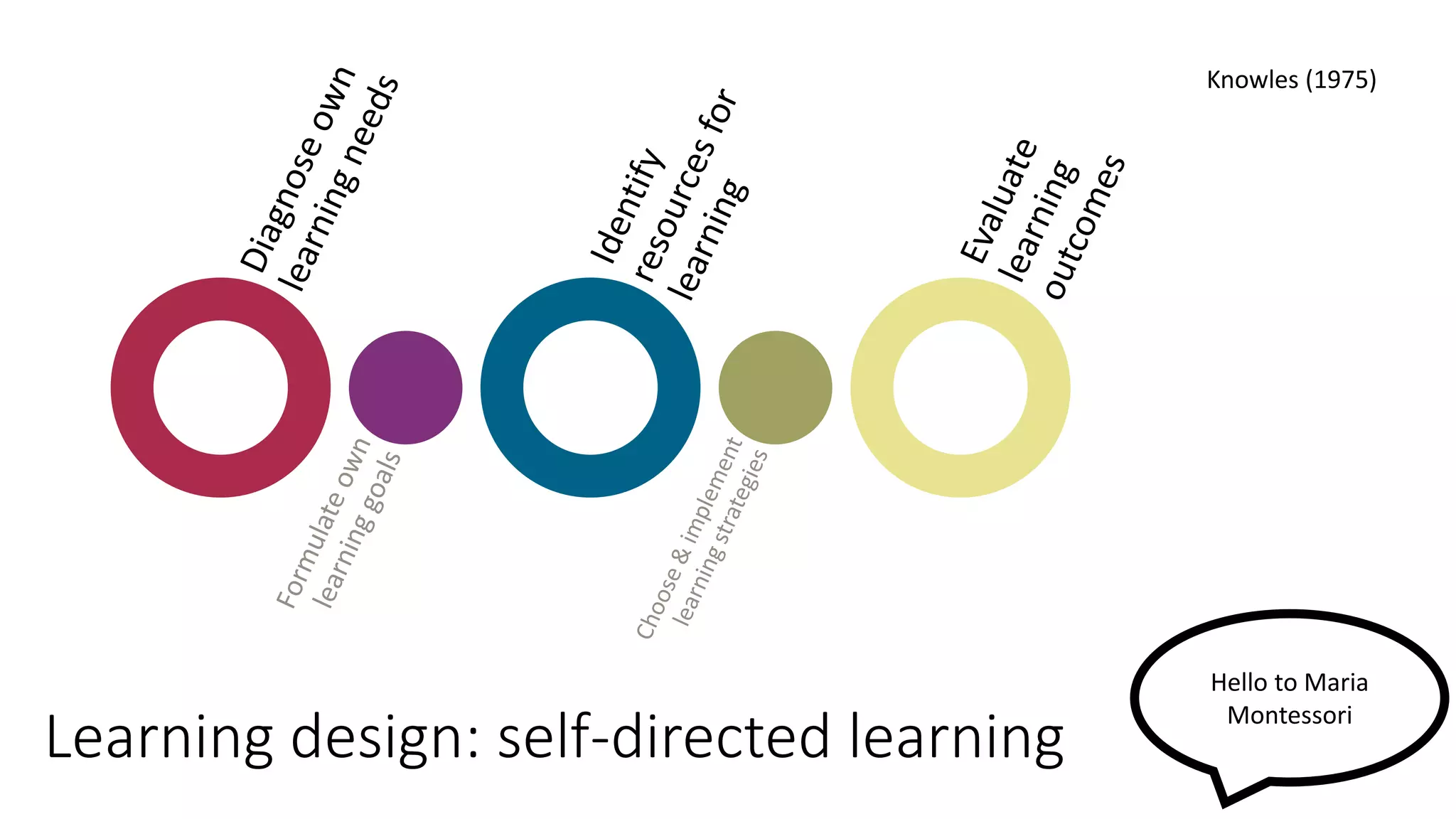
Learning design: self-directed learning
Knowles (1975)
Hello to Maria
Montessori
Learning design: connectivism
‘Learning is a process of connecting
specialized nodes or information sources’
(Seimans, 2005)
Hello to Simon
Downes
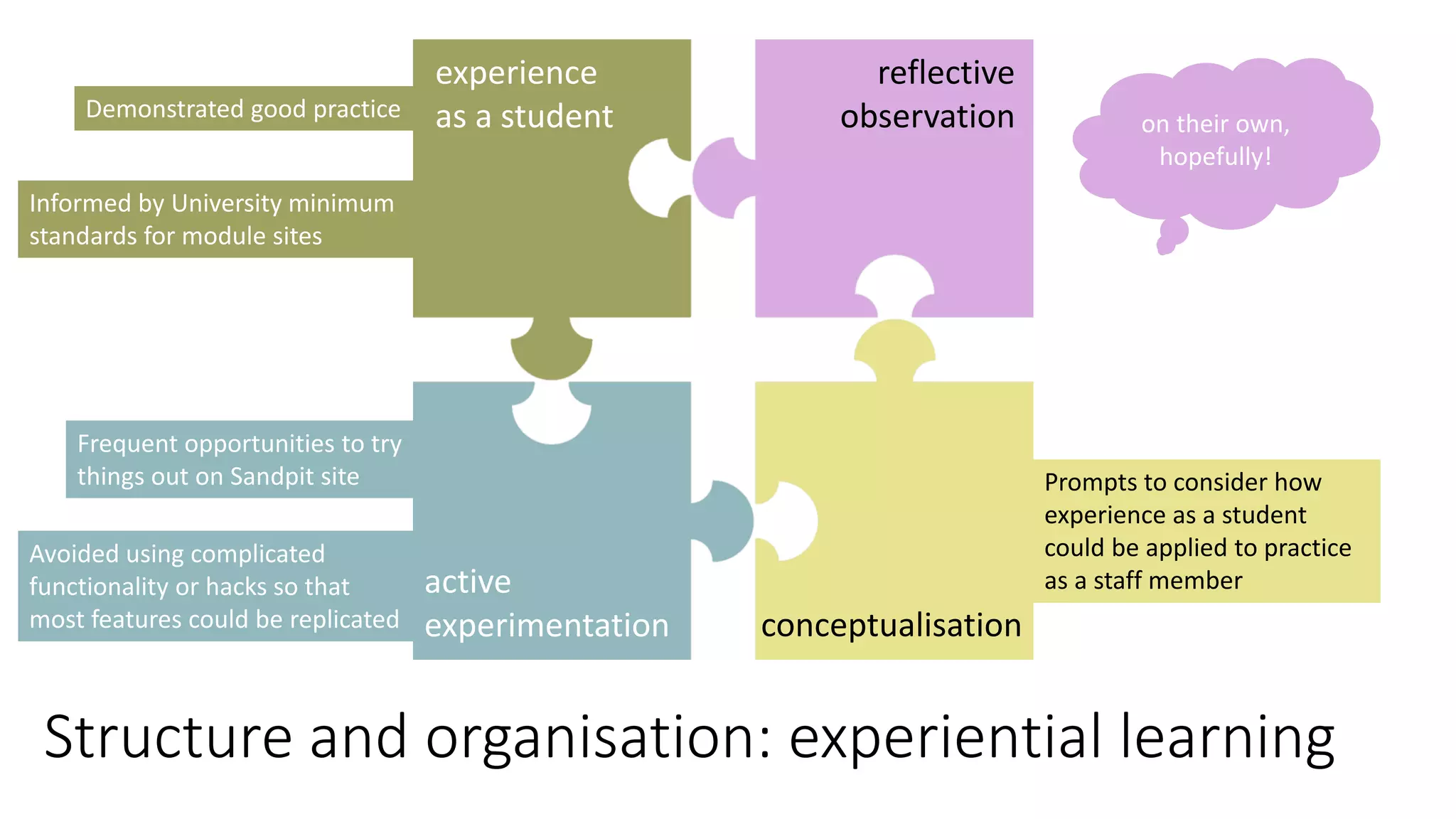
Structure and organisation: experiential learning
experience
as a student
reflective
observation
conceptualisation
active
experimentation
Avoided using complicated
functionality or hacks so that
most features could be replicated
Informed by University minimum
standards for module sites
Demonstrated good practice
Prompts to consider how
experience as a student
could be applied to practice
as a staff member
on their own,
hopefully!
Frequent opportunities to try
things out on Sandpit site
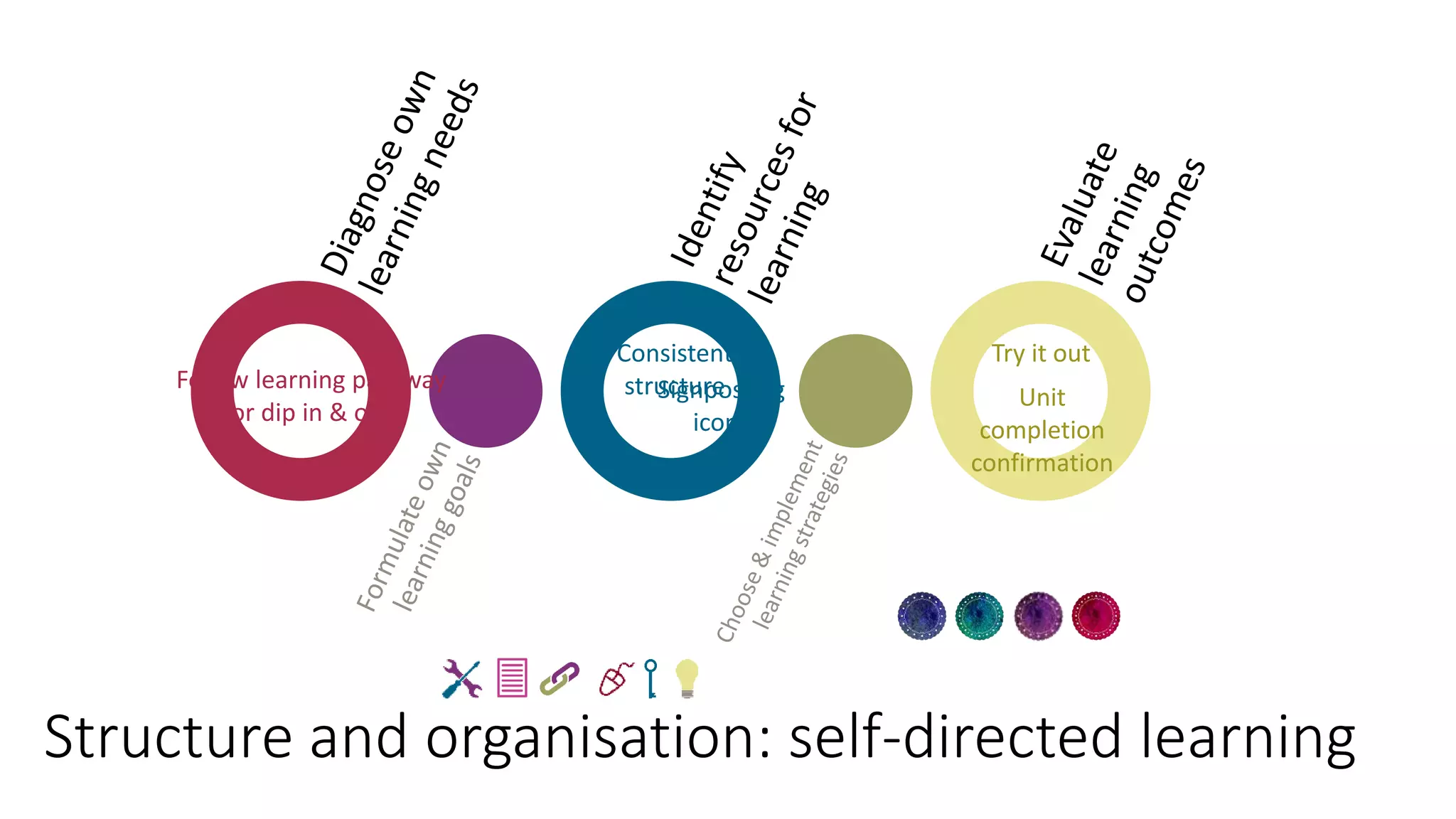
Structure and organisation: self-directed learning
Follow learning pathway
or dip in & out
Consistent
structureSignposting
icons
Try it out
Unit
completion
confirmation
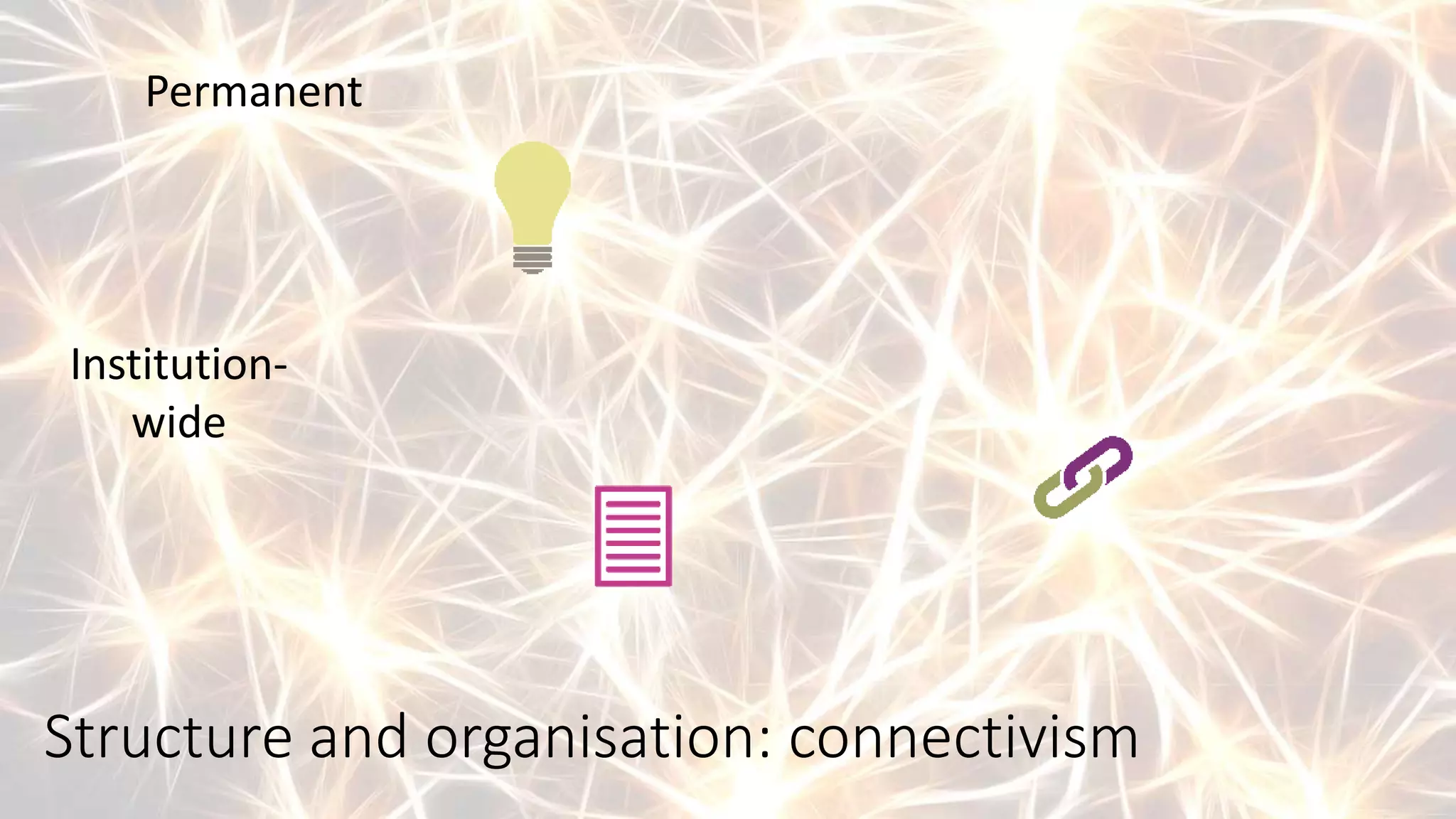
Structure and organisation: connectivism
Permanent
Institution-
wide
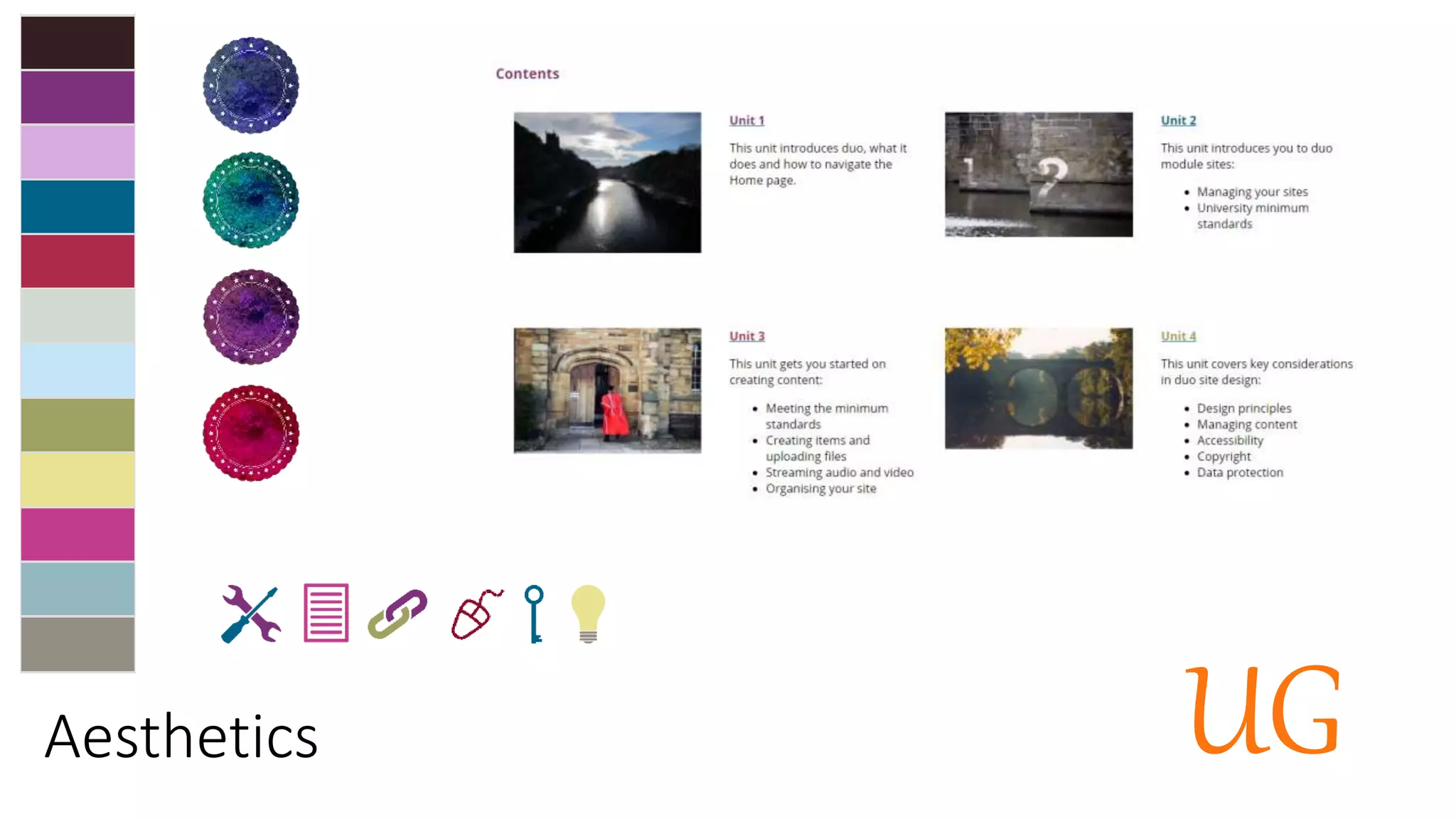
Aesthetics UG
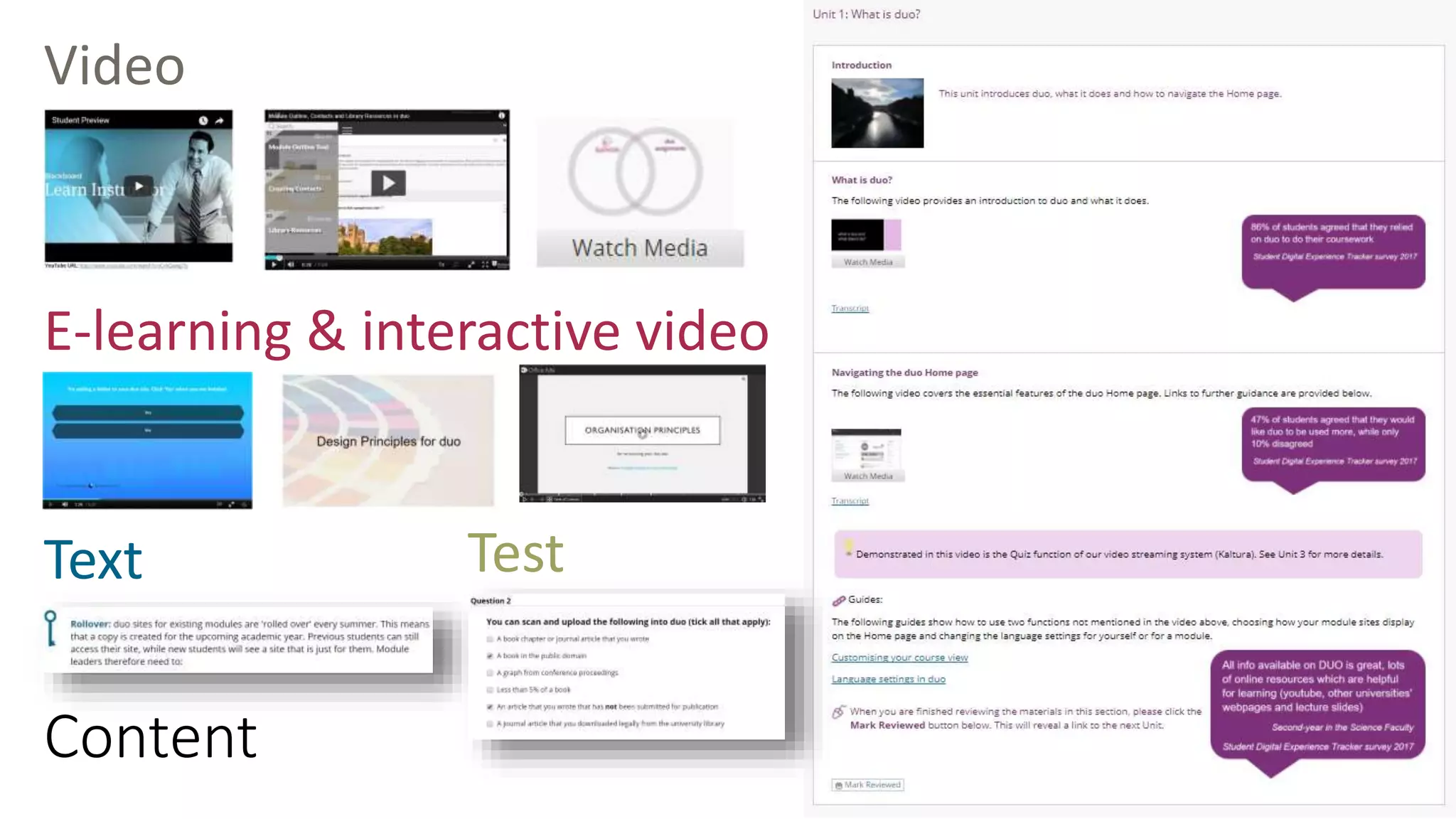
Content
Video
E-learning & interactive video
Text Test
Connections
Guides and videos on our
Digital Learning & Teaching site
Guides and videos on the
Blackboard Help site
Guidance & resources on
University and external sites
Research and scholarship
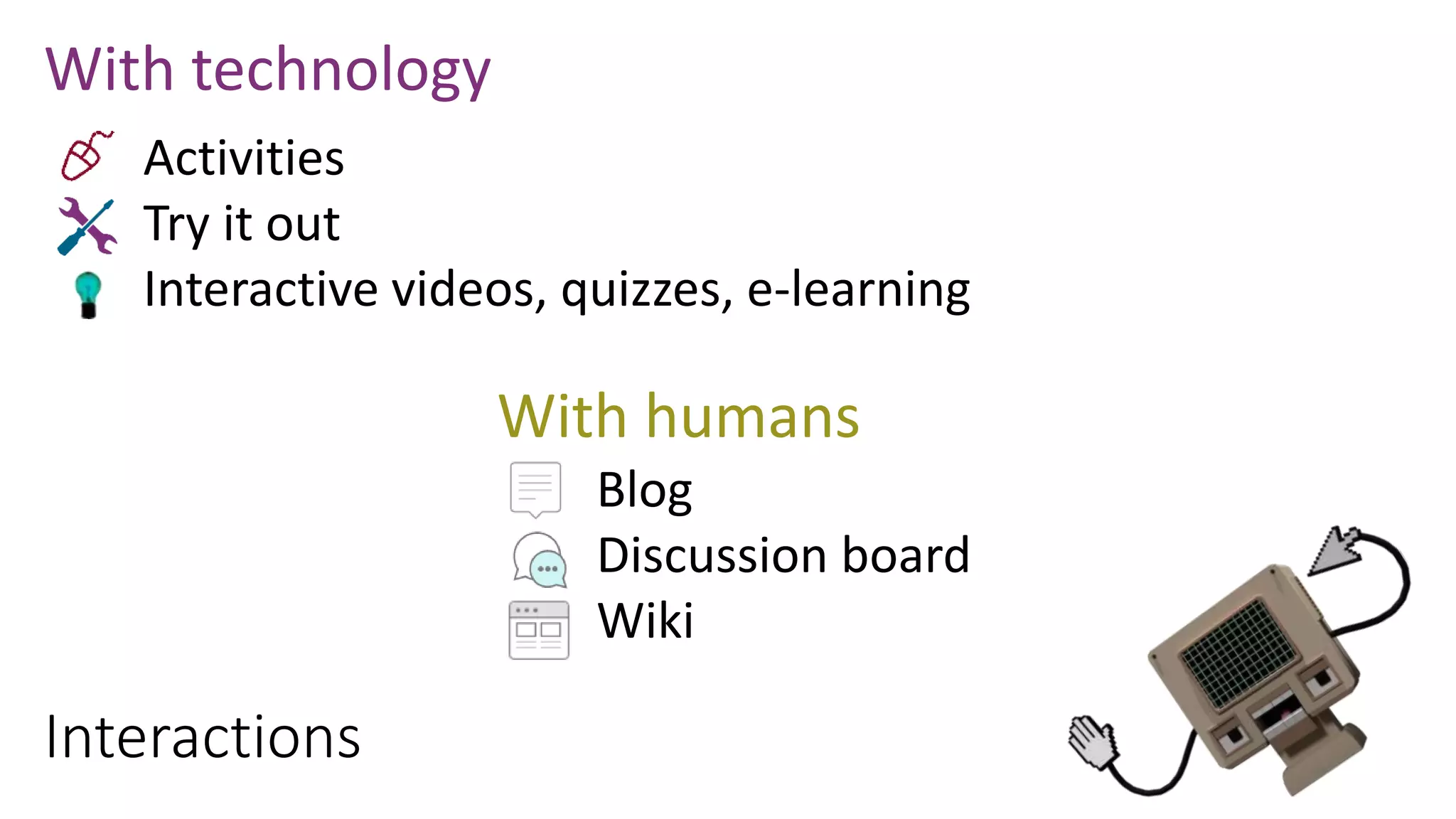
Interactions
Activities
Try it out
Interactive videos, quizzes, e-learning
With technology
Blog
Discussion board
Wiki
With humans
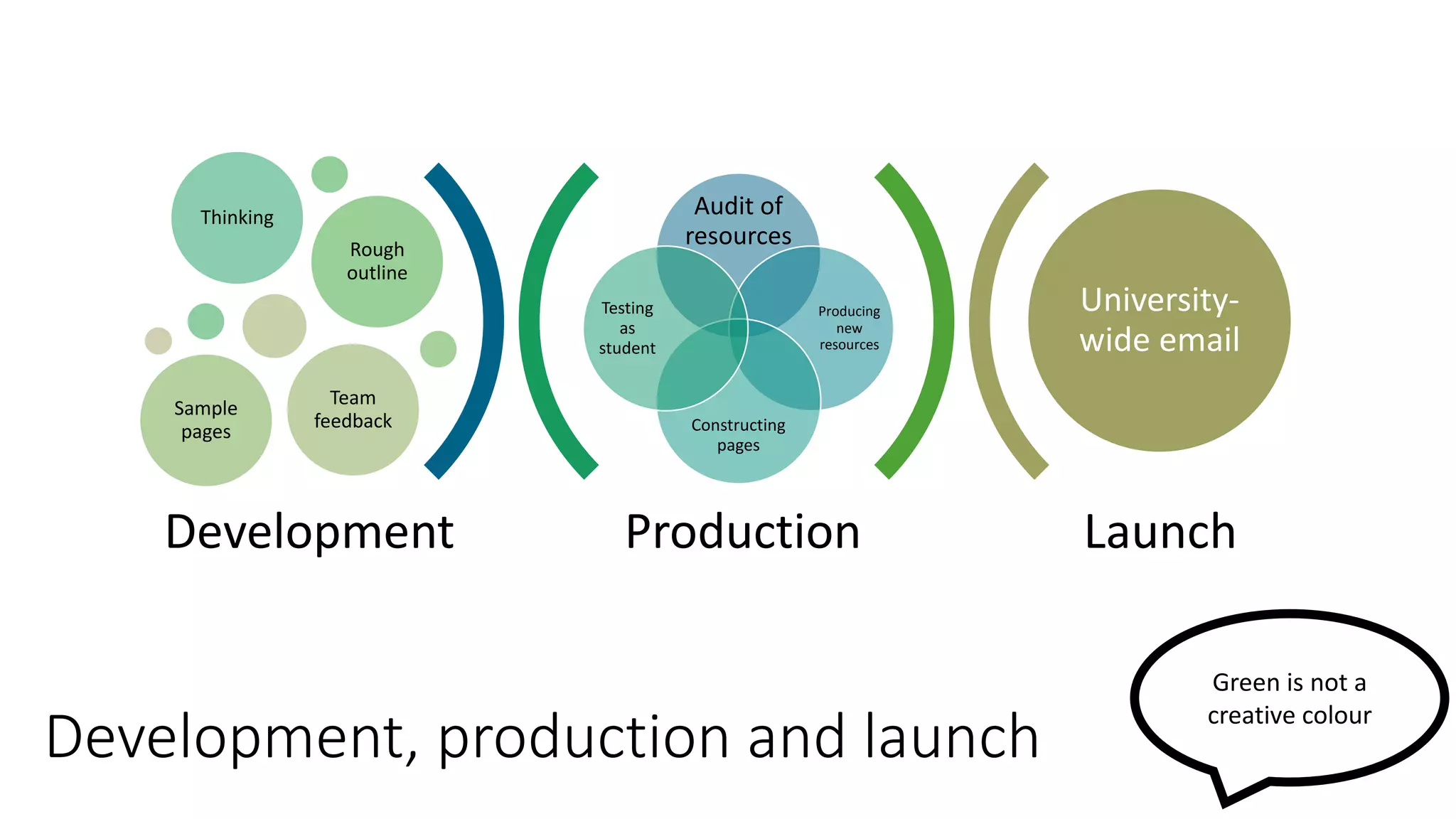
Development, production and launch
Production Launch
Audit of
resources
Producing
new
resources
Constructing
pages
Testing
as
student
Thinking
Rough
outline
Sample
pages
Team
feedback
University-
wide email
Development
Green is not a
creative colour
What the users did: course stats
Launch
25 Sept
Email
6 Oct
1 Nov Survey sent
1 Dec
Wow look, a
line graph!
What the users did: course stats
62 visited more than
just the first page
18 return visitors
4 more than twice
0 posts
on blog, journal, wiki, discussion board
296 hits in
content areas
79unique
visitors
12% of enrolled users
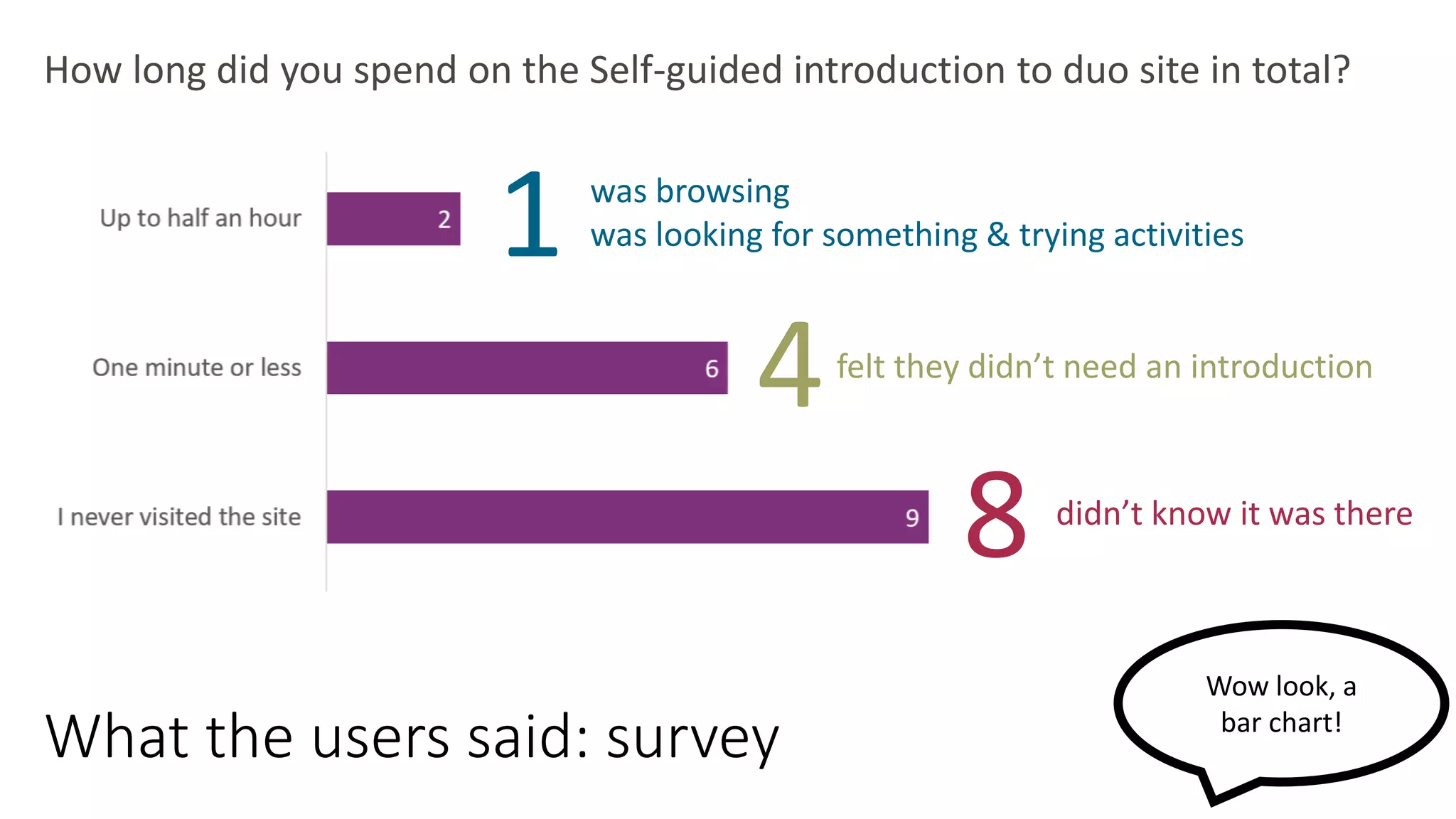
What the users said: survey
8 didn’t know it was there
Wow look, a
bar chart!
1 was browsing
was looking for something & trying activities
4felt they didn’t need an introduction
How long did you spend on the Self-guided introduction to duo site in total?
What the users said
No ‘Disagree/Strongly disagree’ for any of the quality questions.
One person asked for closed captions rather than transcripts.Survey
One ‘Very useful’ vote on the site itselfEvaluation
One face-to-face session attendee said ‘The self-training
made this session somewhat redundant.’Feedback
Lessons learnt
Welcome page could be more inviting
Some elements of Blackboard just aren’t very nice to look at
As topics got more complex, the pages got messier
Digital style!
THE
UGLY
Lessons learnt
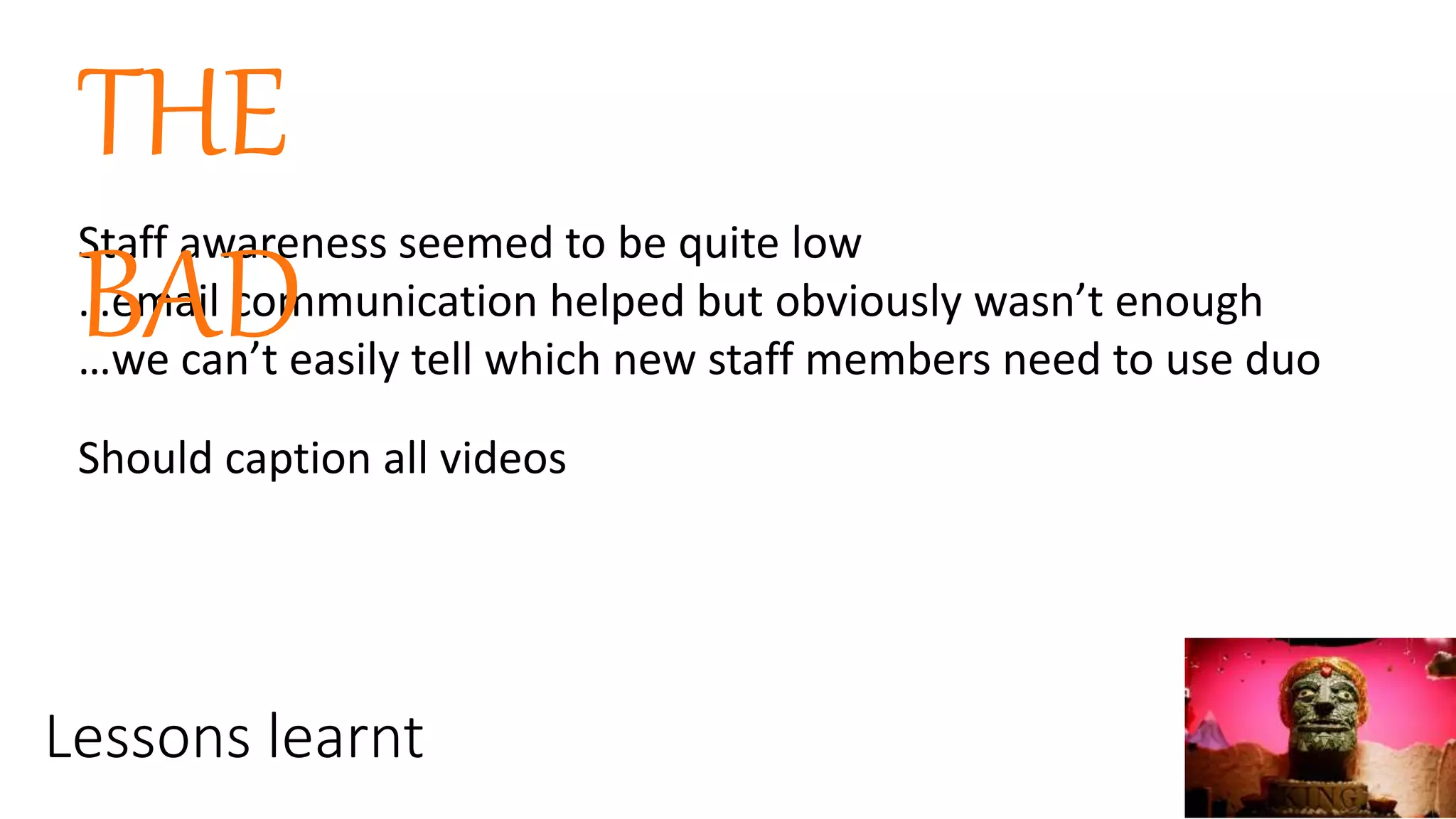
Staff awareness seemed to be quite low
…email communication helped but obviously wasn’t enough
…we can’t easily tell which new staff members need to use duo
THE
BAD
Should caption all videos
Lessons learnt
Opportunity to check completeness of existing resources
…which helped to fill in gaps
…and avoid replication
TH
E
Those who engaged found it useful
Using only resources available to all University staff
meant that it was low-cost and less time-intensive
GREAT
ER
GO
OD
Questions
References
Knowles, M. (1975) Self-Directed Learning: A Guide for Learners and Teachers. New York: Association Press.
Kolb, D. (2015) Experiential learning : experience as the source of learning and development. 2nd edn. Upper Saddle River,
New Jersey: Pearson Education.
Seimans, G. (2005) ‘Connectivism: A Learning Theory for the Digital Age’. International Journal of Instructional Technology
and Distance Learning, 2(1).
Images
Computery guy: Deviant Art/CoolioArt
Lego figure: Flickr/Andrew Becraft (edited: transparent background)
All of other images sourced from copyright- and attribution-waived sites
@crnolangrant

Want to know how to use Blackboard? Use Blackboard.

  • 1.
    Want to knowhow to use Blackboard? Use Blackboard. How do you use Blackboard? You just use Blackboard.
  • 2.
    The problems BA Somenew staff can’t make it to face-to-face training sessions Some new staff don’t [think they] need formal training Some new staff only need Blackboard for specific tasks All staff seemed to lack awareness about the online help available
  • 3.
    The proposed solution Self-guided introductionto duo course GO Options to develop competencies step-by-step or dip in and out Demonstration of Blackboard tools in context All staff who joined since July 2017 enrolled as Students
  • 4.
    Learning design: experientiallearning Kolb (1984)experience reflective observation conceptualisation active experimentation Hello to John Dewey
  • 5.
    Learning design: self-directedlearning Knowles (1975) Hello to Maria Montessori
  • 6.
    Learning design: connectivism ‘Learningis a process of connecting specialized nodes or information sources’ (Seimans, 2005) Hello to Simon Downes
  • 7.
    Structure and organisation:experiential learning experience as a student reflective observation conceptualisation active experimentation Avoided using complicated functionality or hacks so that most features could be replicated Informed by University minimum standards for module sites Demonstrated good practice Prompts to consider how experience as a student could be applied to practice as a staff member on their own, hopefully! Frequent opportunities to try things out on Sandpit site
  • 8.
    Structure and organisation:self-directed learning Follow learning pathway or dip in & out Consistent structureSignposting icons Try it out Unit completion confirmation
  • 9.
    Structure and organisation:connectivism Permanent Institution- wide
  • 10.
  • 11.
  • 12.
    Connections Guides and videoson our Digital Learning & Teaching site Guides and videos on the Blackboard Help site Guidance & resources on University and external sites Research and scholarship
  • 13.
    Interactions Activities Try it out Interactivevideos, quizzes, e-learning With technology Blog Discussion board Wiki With humans
  • 14.
    Development, production andlaunch Production Launch Audit of resources Producing new resources Constructing pages Testing as student Thinking Rough outline Sample pages Team feedback University- wide email Development Green is not a creative colour
  • 15.
    What the usersdid: course stats Launch 25 Sept Email 6 Oct 1 Nov Survey sent 1 Dec Wow look, a line graph!
  • 16.
    What the usersdid: course stats 62 visited more than just the first page 18 return visitors 4 more than twice 0 posts on blog, journal, wiki, discussion board 296 hits in content areas 79unique visitors 12% of enrolled users
  • 17.
    What the userssaid: survey 8 didn’t know it was there Wow look, a bar chart! 1 was browsing was looking for something & trying activities 4felt they didn’t need an introduction How long did you spend on the Self-guided introduction to duo site in total?
  • 18.
    What the userssaid No ‘Disagree/Strongly disagree’ for any of the quality questions. One person asked for closed captions rather than transcripts.Survey One ‘Very useful’ vote on the site itselfEvaluation One face-to-face session attendee said ‘The self-training made this session somewhat redundant.’Feedback
  • 19.
    Lessons learnt Welcome pagecould be more inviting Some elements of Blackboard just aren’t very nice to look at As topics got more complex, the pages got messier Digital style! THE UGLY
  • 20.
    Lessons learnt Staff awarenessseemed to be quite low …email communication helped but obviously wasn’t enough …we can’t easily tell which new staff members need to use duo THE BAD Should caption all videos
  • 21.
    Lessons learnt Opportunity tocheck completeness of existing resources …which helped to fill in gaps …and avoid replication TH E Those who engaged found it useful Using only resources available to all University staff meant that it was low-cost and less time-intensive GREAT ER GO OD
  • 22.
    Questions References Knowles, M. (1975)Self-Directed Learning: A Guide for Learners and Teachers. New York: Association Press. Kolb, D. (2015) Experiential learning : experience as the source of learning and development. 2nd edn. Upper Saddle River, New Jersey: Pearson Education. Seimans, G. (2005) ‘Connectivism: A Learning Theory for the Digital Age’. International Journal of Instructional Technology and Distance Learning, 2(1). Images Computery guy: Deviant Art/CoolioArt Lego figure: Flickr/Andrew Becraft (edited: transparent background) All of other images sourced from copyright- and attribution-waived sites @crnolangrant

Editor's Notes

  • #10 Connectivist Perpetual site for staff to access whenever they need to Flags where guidance for using the current item can be found Points to practical guidance on our blog Points to further scholarship and advice Connects new staff across the institution (theoretically!)
  • #11 University colour palette Icons Images White space BUT…Blackboard
  • #12 Video Interactive video E-learning Text items mostly reserved for important advice Quiz
  • #21 change in category didn’t seem to make a difference (but would they know how to sort by term anyway? Also we couldn’t automatically choose to enrol staff who would use duo and those who wouldn’t