WHAT IS
PROCESSER?

Processor which is also called the central processing unit
(CPU)
interprets and carries out the basic instructions that operate
a computer..
• The operating system views each processor
  as a separate processor.
      multi-core processor
     ɷ it is a processor with a single chip
        with two or more separate processor
        cores.
THE COMMON MULTI-CORE PROCESSOR ARE DUAL-
 CORE AND QUAD-CORE.
• A dual-core processor is a chip that contains TWO separate
  processor cores.
• A quad-core processor is a chip with FOUR separate processor
  cores.
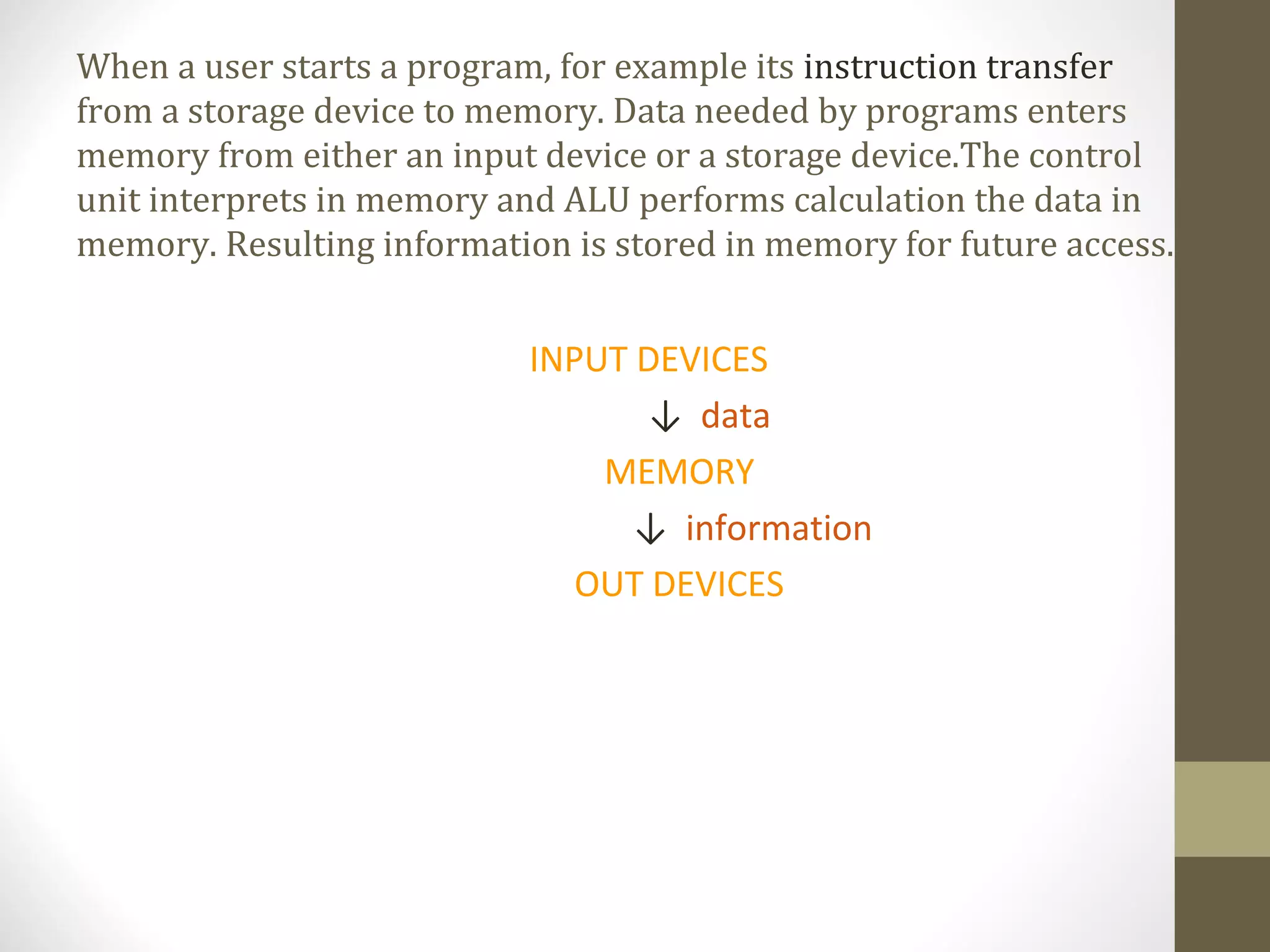
When a user starts a program, for example its instruction transfer
from a storage device to memory. Data needed by programs enters
memory from either an input device or a storage device.The control
unit interprets in memory and ALU performs calculation the data in
memory. Resulting information is stored in memory for future access...


                            INPUT DEVICES
                                   ↓ data
                                MEMORY
                                  ↓ information
                               OUT DEVICES
• Processors contain a control unit and an
  arithematic logic unit (ALU).
• These two components work together to
  perform processing operations.
THE CONTROL UNIT
• Is the component of the processor that directs
  and coordinates most of the operations in the
  computer.
• It interprets each instruction issued by a
  program and then initiates the appropriate
  action to carry out instruction.
• There are a few types of internal components that control
  units direct such as:
   a) arithematic logic unit
   b) registers
   c) buses
Parallel processing
• is a method that uses multiple processors simultaneously to
  execute a single program or task
• it divides a single problem into portion so that multiple
  processor work on their assigned portion of the problem at
  the same time.
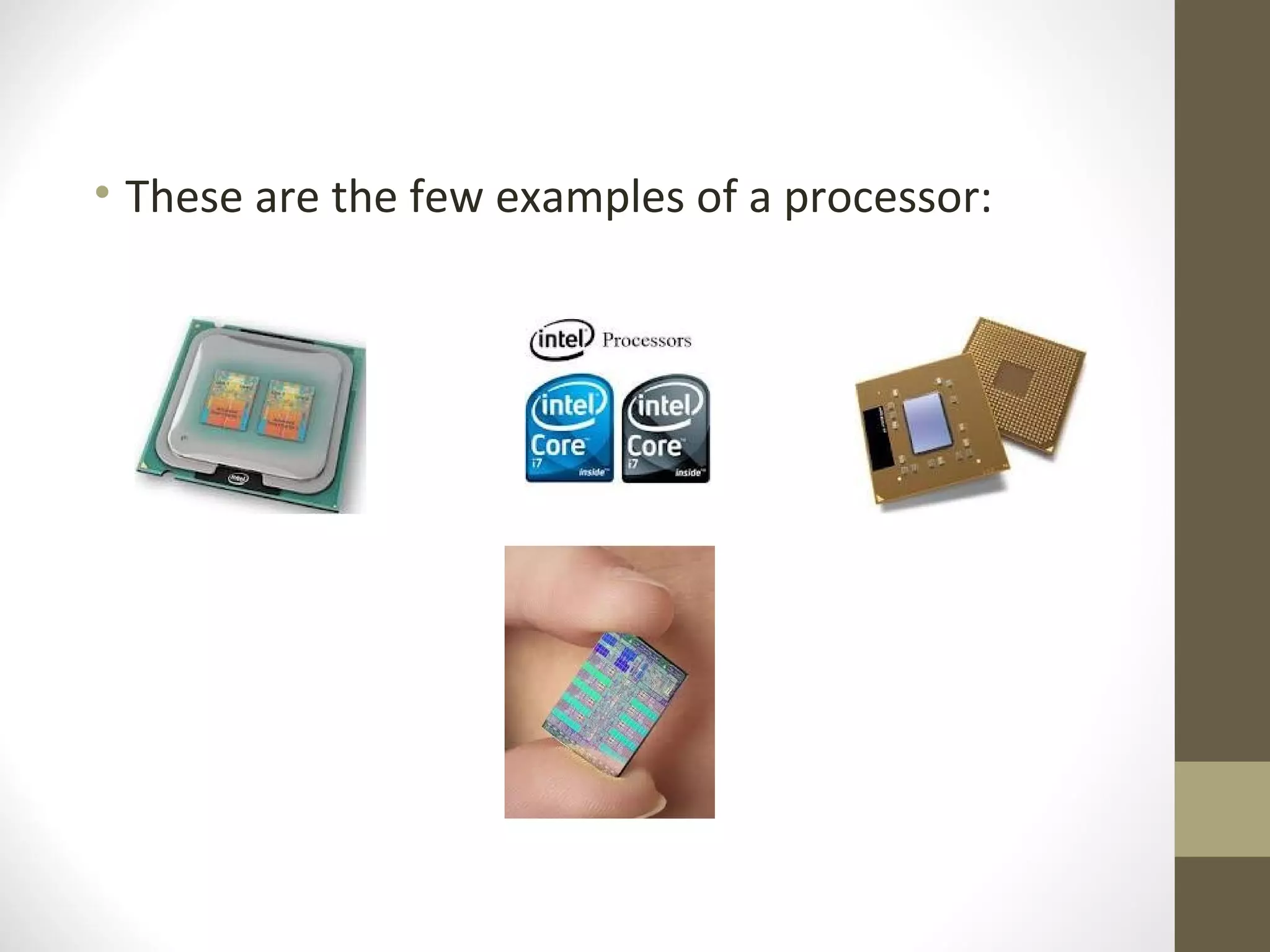
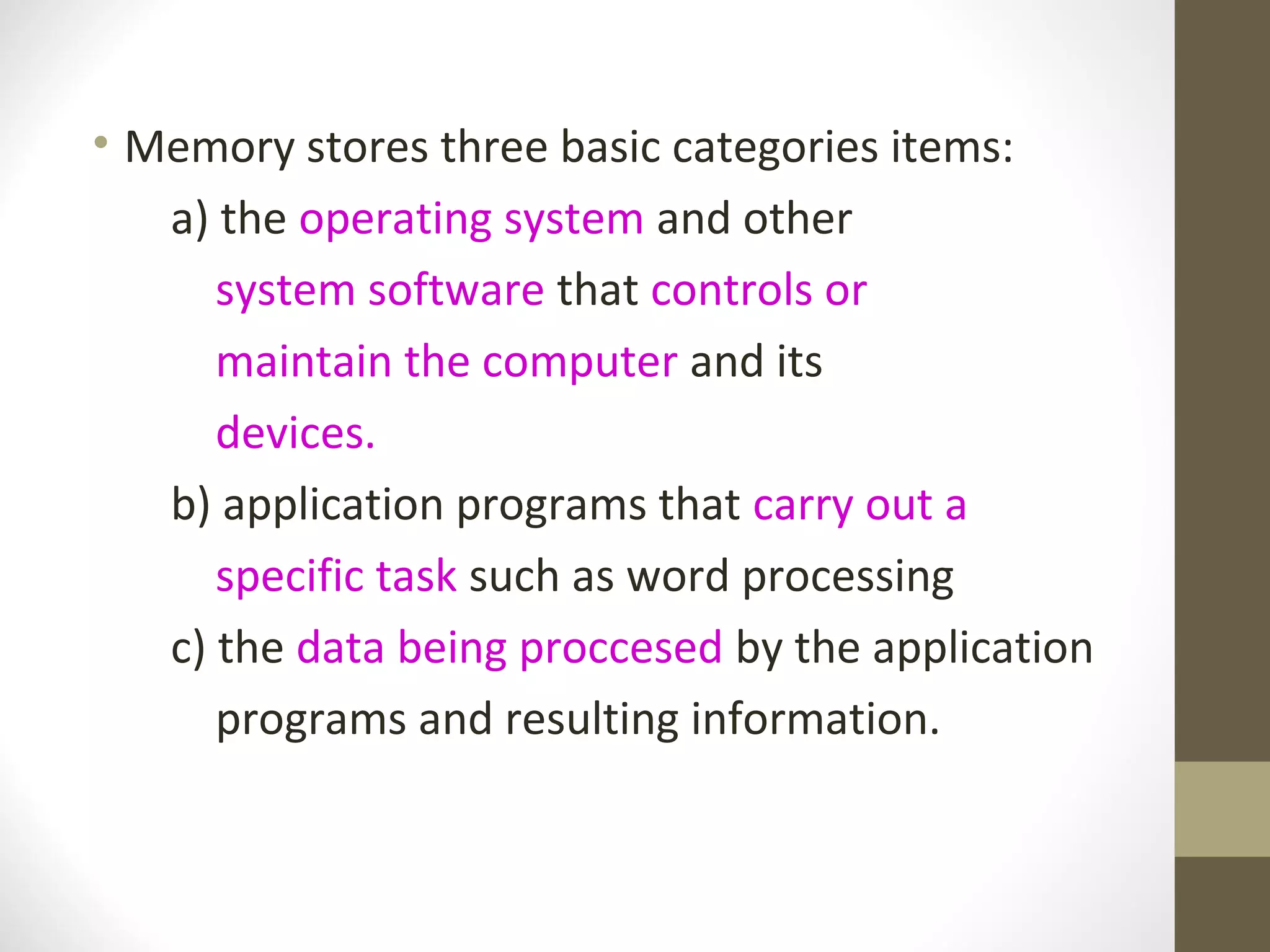
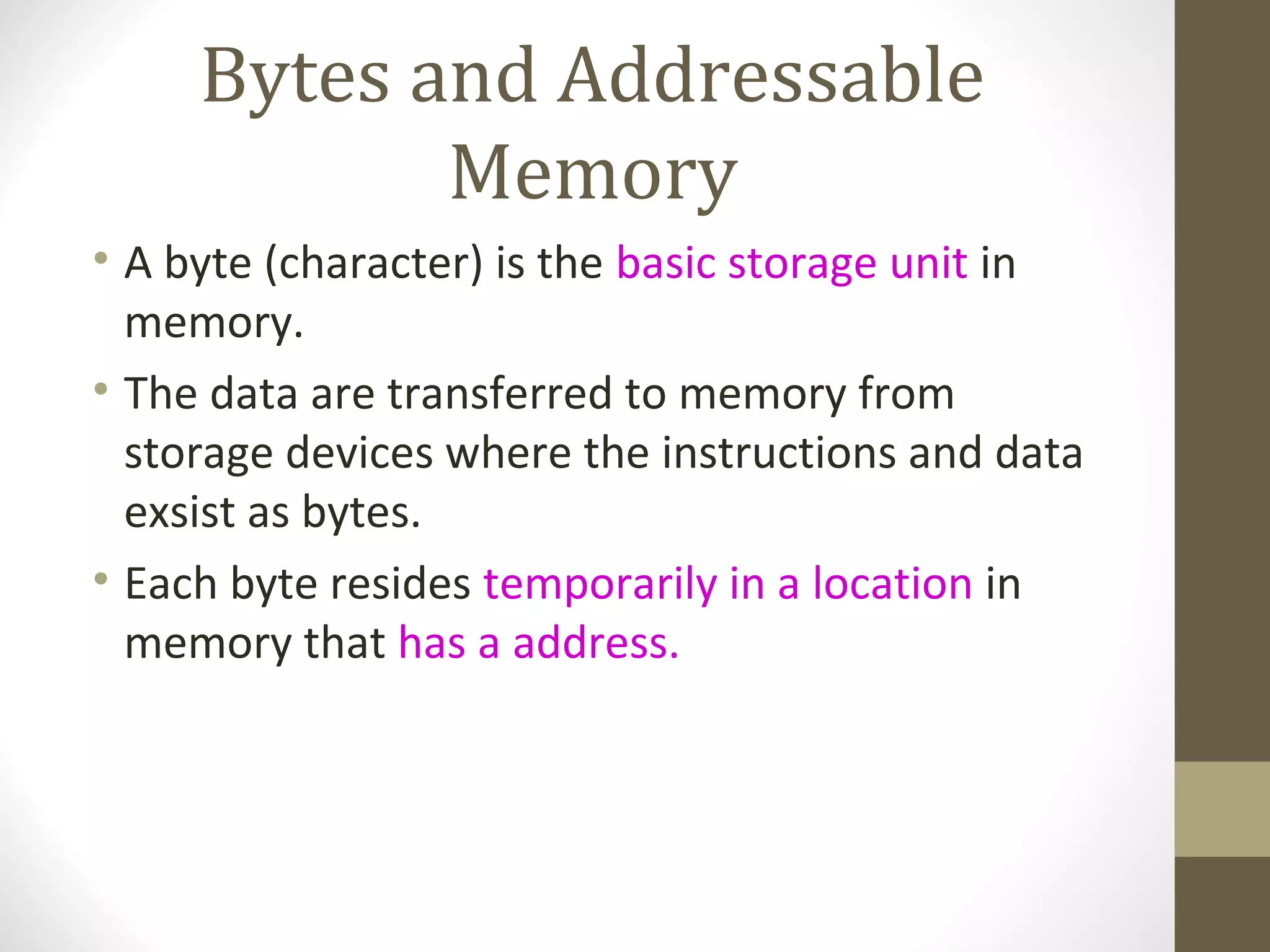
• These are the few examples of a processor:
MEMORY
• It consists of electronic components that store
  instructions waiting to be executed by the
  processor.
• The role of memory is to store both data and
  programs which is known as the stored
  programs concept.
• Memory stores three basic categories items:
   a) the operating system and other
      system software that controls or
      maintain the computer and its
      devices.
   b) application programs that carry out a
      specific task such as word processing
   c) the data being proccesed by the application
      programs and resulting information.
Bytes and Addressable
            Memory
• A byte (character) is the basic storage unit in
  memory.
• The data are transferred to memory from
  storage devices where the instructions and data
  exsist as bytes.
• Each byte resides temporarily in a location in
  memory that has a address.
Types Of Memory
• There are two types of memory:
   a) volatile
   b) non-volatile
• When the computer's power is turned off
  volatile memory loses its contents.
• Non-volatile, by contrast, does not loses its
  contents when the power is removed from the
  computer.
• Thus, volatile memory is temporary and non-
  volatile memory is permenant.
• RAM is the most common type of volatile
  memory.
• Examples of non-volatile include ROM, flash
  memory, and CMOS.
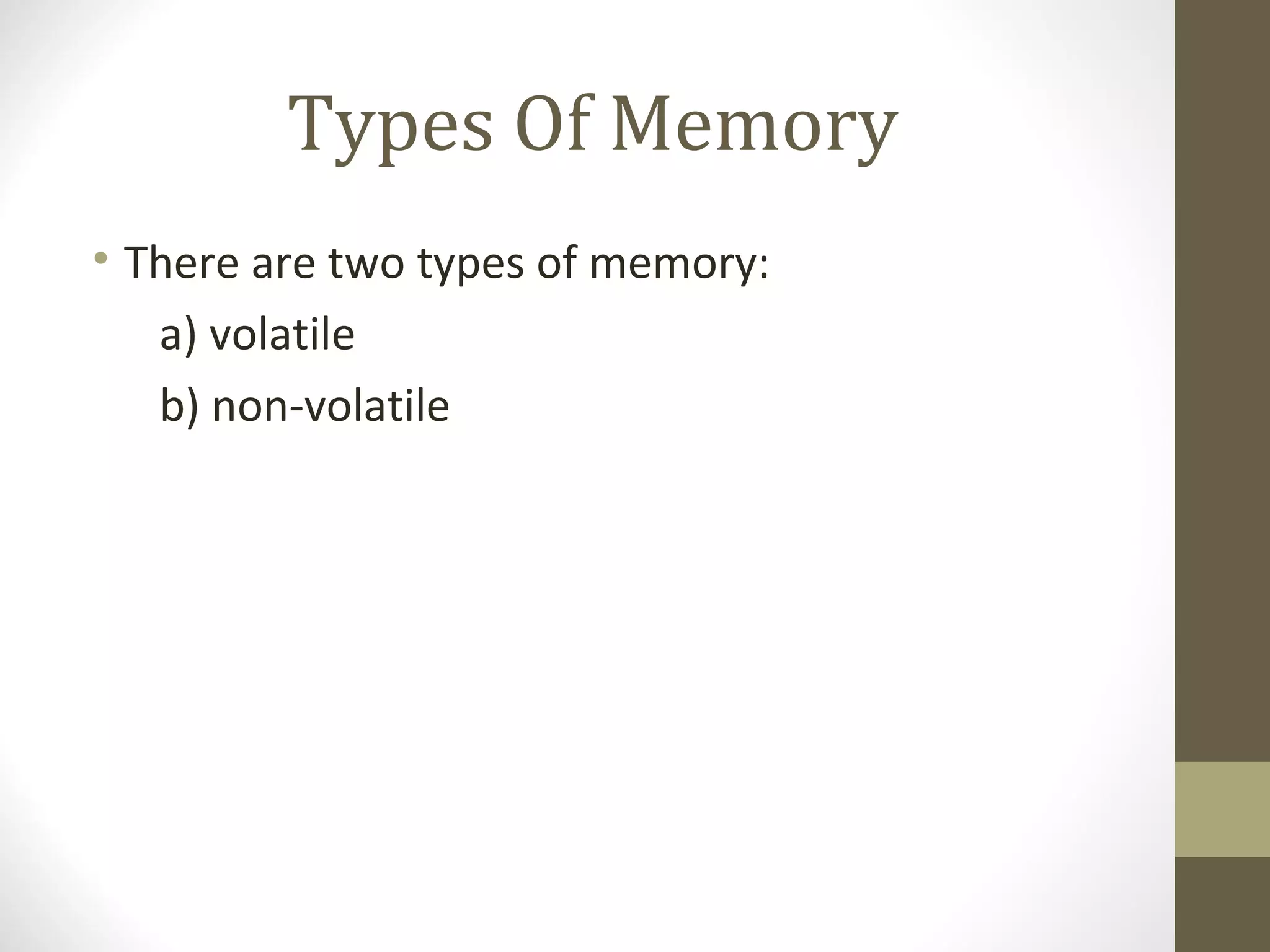
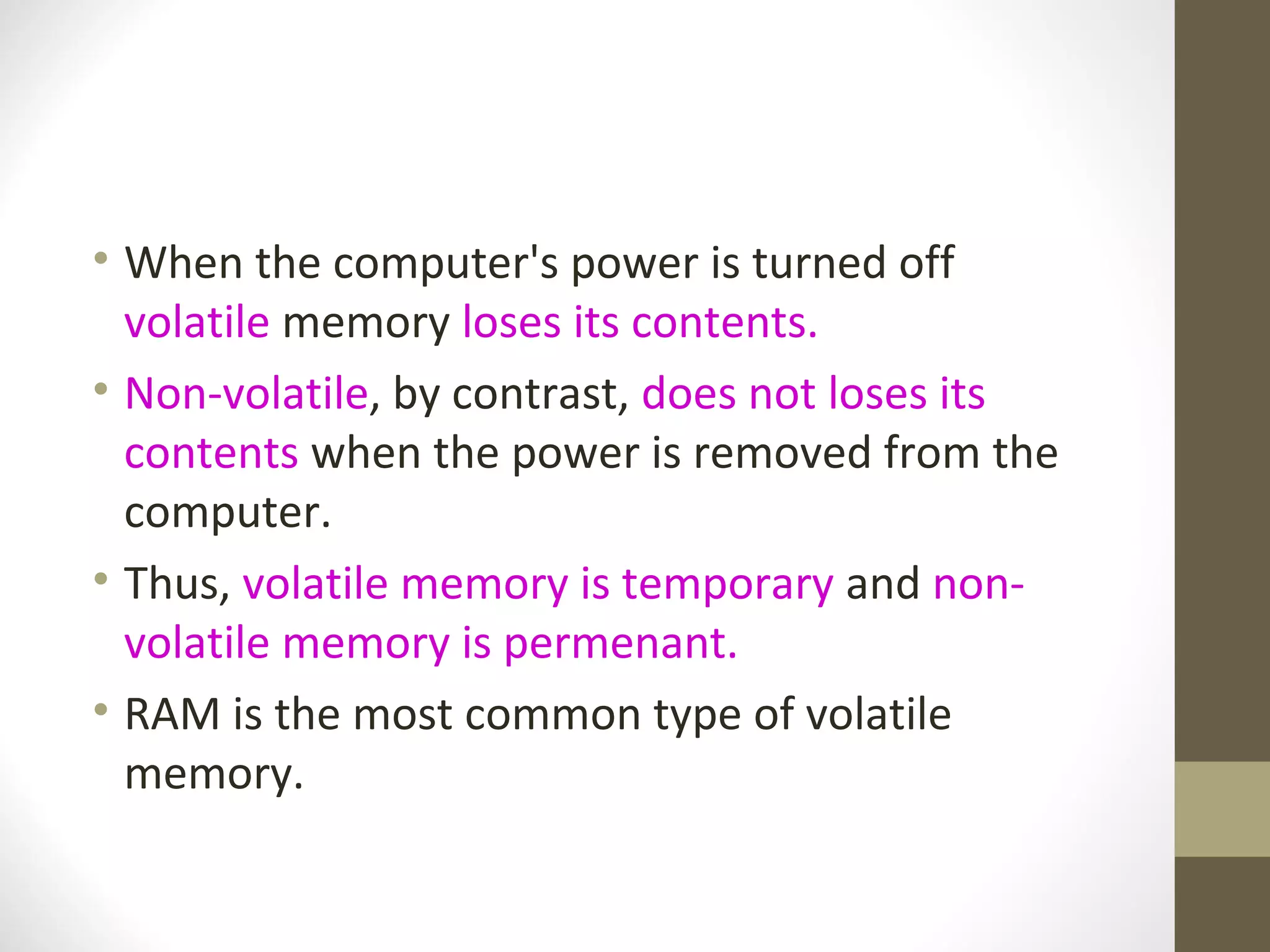
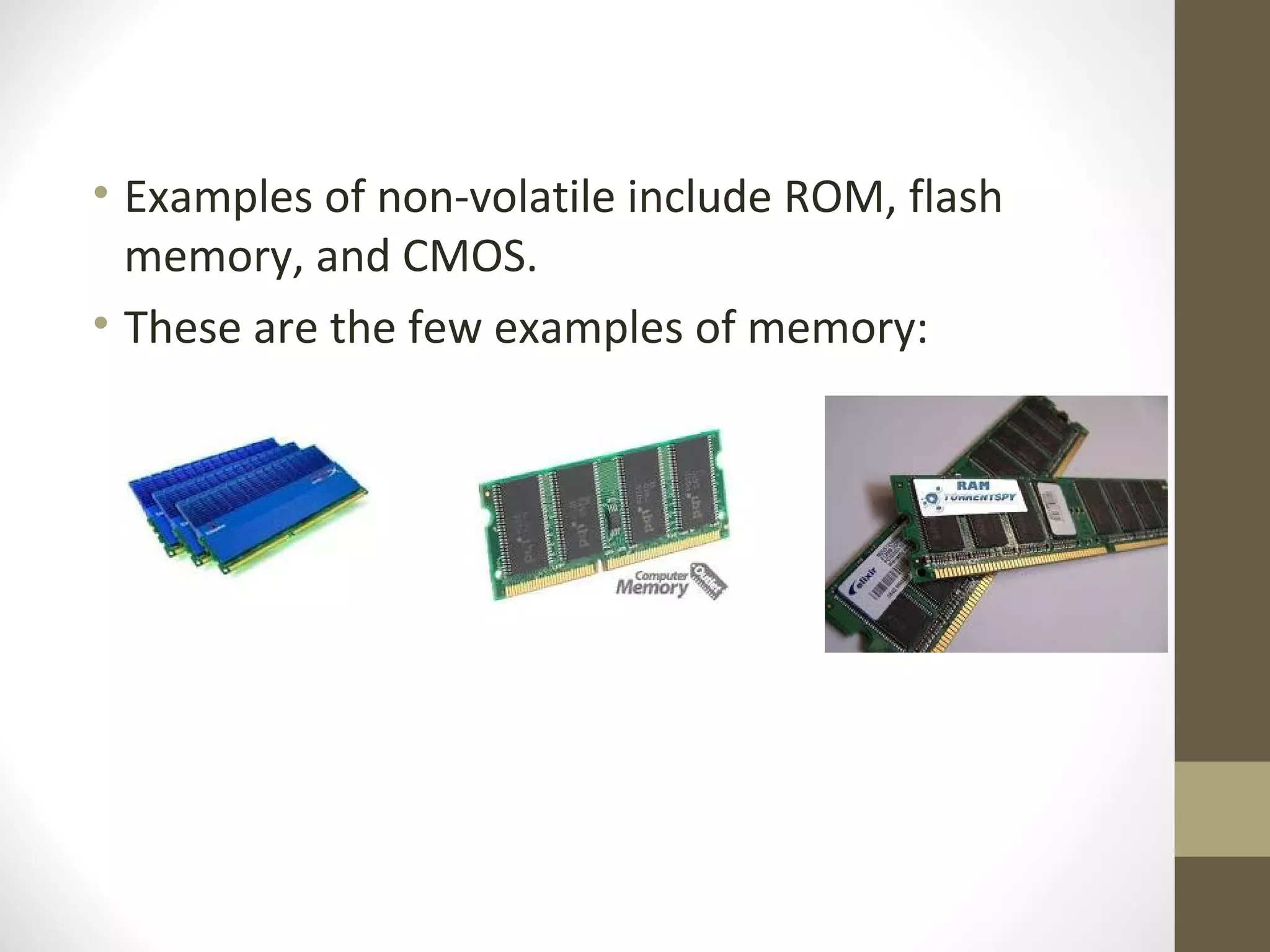
• These are the few examples of memory:

Power Supply

  • 1.
    WHAT IS PROCESSER? Processor whichis also called the central processing unit (CPU) interprets and carries out the basic instructions that operate a computer..
  • 2.
    • The operatingsystem views each processor as a separate processor. multi-core processor ɷ it is a processor with a single chip with two or more separate processor cores.
  • 3.
    THE COMMON MULTI-COREPROCESSOR ARE DUAL- CORE AND QUAD-CORE. • A dual-core processor is a chip that contains TWO separate processor cores. • A quad-core processor is a chip with FOUR separate processor cores.
  • 4.
    When a userstarts a program, for example its instruction transfer from a storage device to memory. Data needed by programs enters memory from either an input device or a storage device.The control unit interprets in memory and ALU performs calculation the data in memory. Resulting information is stored in memory for future access... INPUT DEVICES ↓ data MEMORY ↓ information OUT DEVICES
  • 5.
    • Processors containa control unit and an arithematic logic unit (ALU). • These two components work together to perform processing operations.
  • 6.
    THE CONTROL UNIT •Is the component of the processor that directs and coordinates most of the operations in the computer. • It interprets each instruction issued by a program and then initiates the appropriate action to carry out instruction.
  • 7.
    • There area few types of internal components that control units direct such as: a) arithematic logic unit b) registers c) buses
  • 8.
    Parallel processing • isa method that uses multiple processors simultaneously to execute a single program or task • it divides a single problem into portion so that multiple processor work on their assigned portion of the problem at the same time.
  • 9.
    • These arethe few examples of a processor:
  • 10.
    MEMORY • It consistsof electronic components that store instructions waiting to be executed by the processor. • The role of memory is to store both data and programs which is known as the stored programs concept.
  • 11.
    • Memory storesthree basic categories items: a) the operating system and other system software that controls or maintain the computer and its devices. b) application programs that carry out a specific task such as word processing c) the data being proccesed by the application programs and resulting information.
  • 12.
    Bytes and Addressable Memory • A byte (character) is the basic storage unit in memory. • The data are transferred to memory from storage devices where the instructions and data exsist as bytes. • Each byte resides temporarily in a location in memory that has a address.
  • 13.
    Types Of Memory •There are two types of memory: a) volatile b) non-volatile
  • 14.
    • When thecomputer's power is turned off volatile memory loses its contents. • Non-volatile, by contrast, does not loses its contents when the power is removed from the computer. • Thus, volatile memory is temporary and non- volatile memory is permenant. • RAM is the most common type of volatile memory.
  • 15.
    • Examples ofnon-volatile include ROM, flash memory, and CMOS. • These are the few examples of memory: