VIDEO DEMO
VOLAR APPROACH TO WRIST
PRESENTER :DR. MADHAVAN
LESSON PLAN
• INTRODUCTION
• INDICATIONS
• APPROACH STEPS
• OTHER VOLAR APPROACH'S
• VIDEO
• STRUCTURES AT RISK
OBJECTIVES
At the end of the class all the students
able to know
1.Indications
2.Volar approaches to the wrist in details
3.Structures at risk
INTRODUCTION
• The volar approach to the wrist is one of the most used approaches in
the wrist to address the distal end radius fracture fixation, carpal tunnel
release ,to tackle the carpal bones pathologies .
INDICATIONS
1. Decompression of median nerve
2. Flexor tendon synovectomy
3. Carpal tunnel tumor excision
4. Tendon repair
5. Drainage of sepsis tracking up from
the mid-palmar space
6. ORIF
APPROACH STEPS
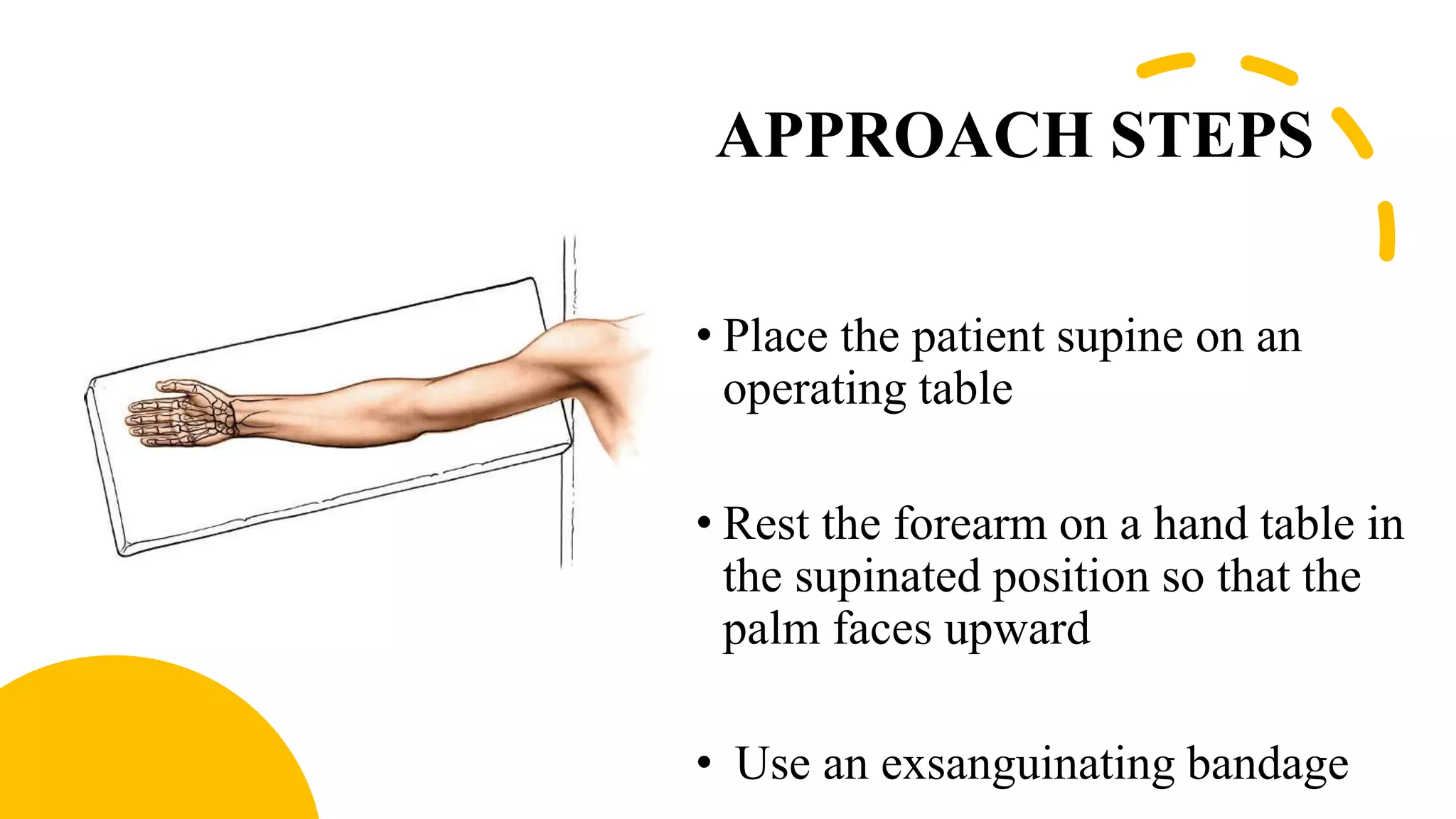
• Place the patient supine on an
operating table
• Rest the forearm on a hand table in
the supinated position so that the
palm faces upward
• Use an exsanguinating bandage
• Begin the incision just to the
ulnar side of the thenar crease
• Curve it proximally, remaining
just to the ulnar side of the thenar
crease
• Then, curve the incision toward
the ulnar side of the forearm so
that the flexion crease is not
crossed transversely
• The skin is retracted,
and the deep fascia and
tendon of the palmaris
longus are inspected
• The deep fascia is
incised The palmaris
longus is retracted
toward the ulna,
revealing the median
nerve as it enters the
carpal tunnel
The transverse carpal
ligament is released on the
ulnar side of the nerve to
avoid damage to the motor
branch of the thenar
muscle
The median nerve is
retracted radially and
the flexor tendons are
retracted toward the
ulna, revealing the
distal radius and joint
capsule. An incision
then is made into the
capsule to expose the
carpus.
VOLAR
TRANSVERSE
INCISION
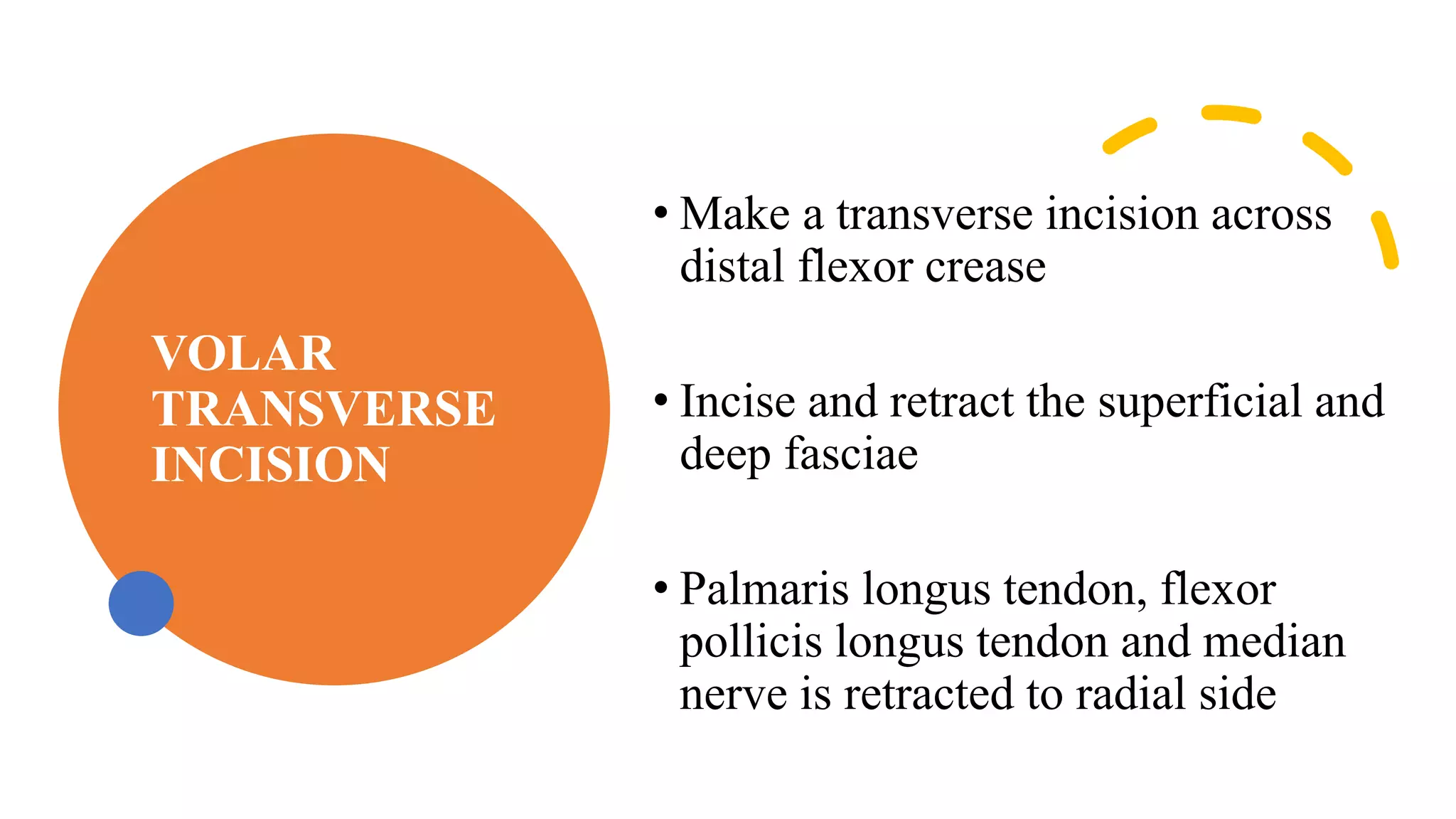
• Make a transverse incision across
distal flexor crease
• Incise and retract the superficial and
deep fasciae
• Palmaris longus tendon, flexor
pollicis longus tendon and median
nerve is retracted to radial side
• Retract the flexor digitorum sublimis and profundus tendons to the
ulnar side
• Incise the joint capsule, exposing the distal end of the radius and the
lunate
OTHER VOLAR APPROACHES
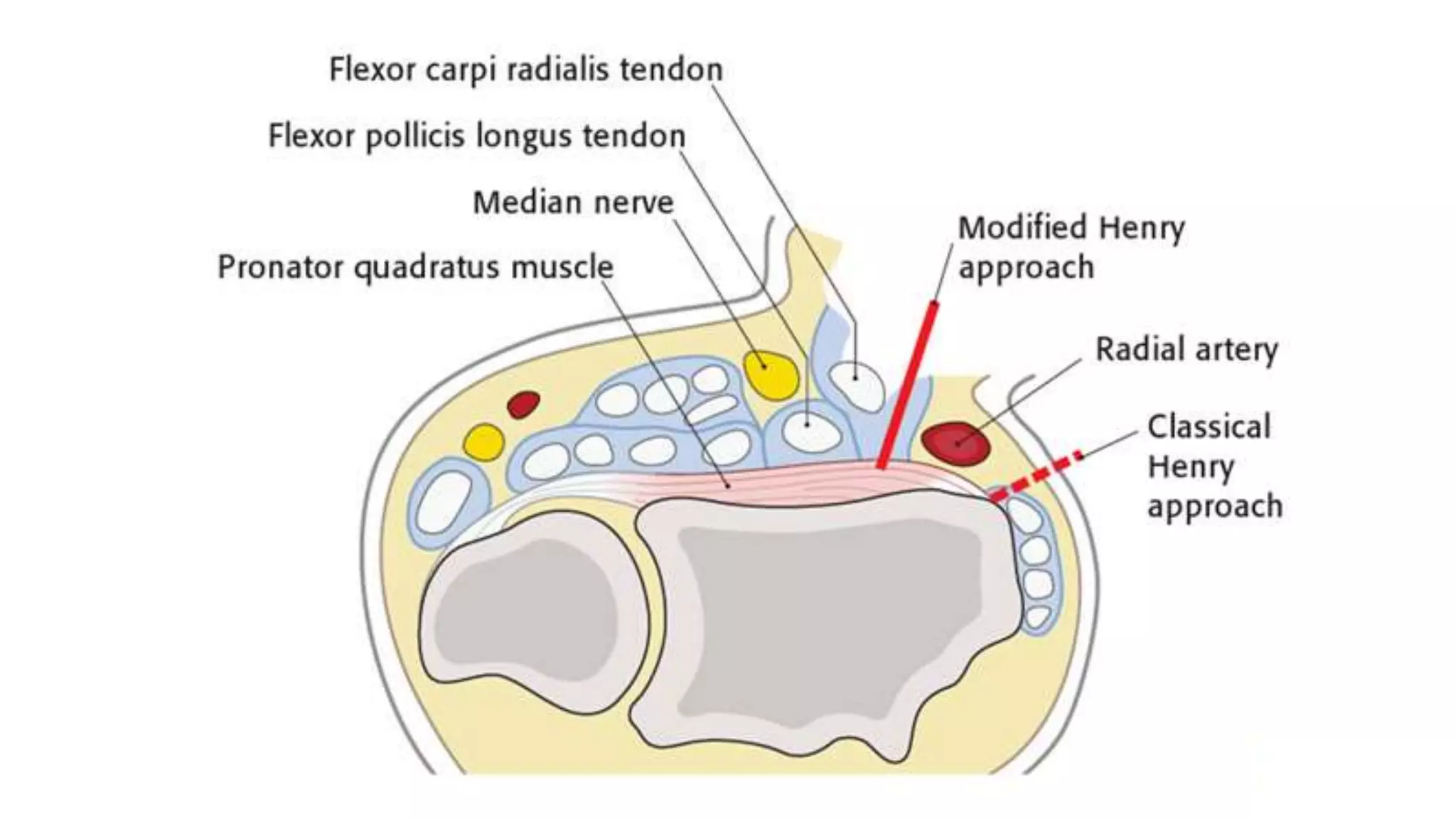
• The modified Henry approach
uses the plane between
flexor carpi radialis tendon and
the radial artery
• The classical Henry approach goes
between brachioradialis and the radial
artery, i.e., radial to the radial artery
• The main difference is in the modified
approach is ulnar to the radial artery
VIDEO
STRUCTURES AT RISK
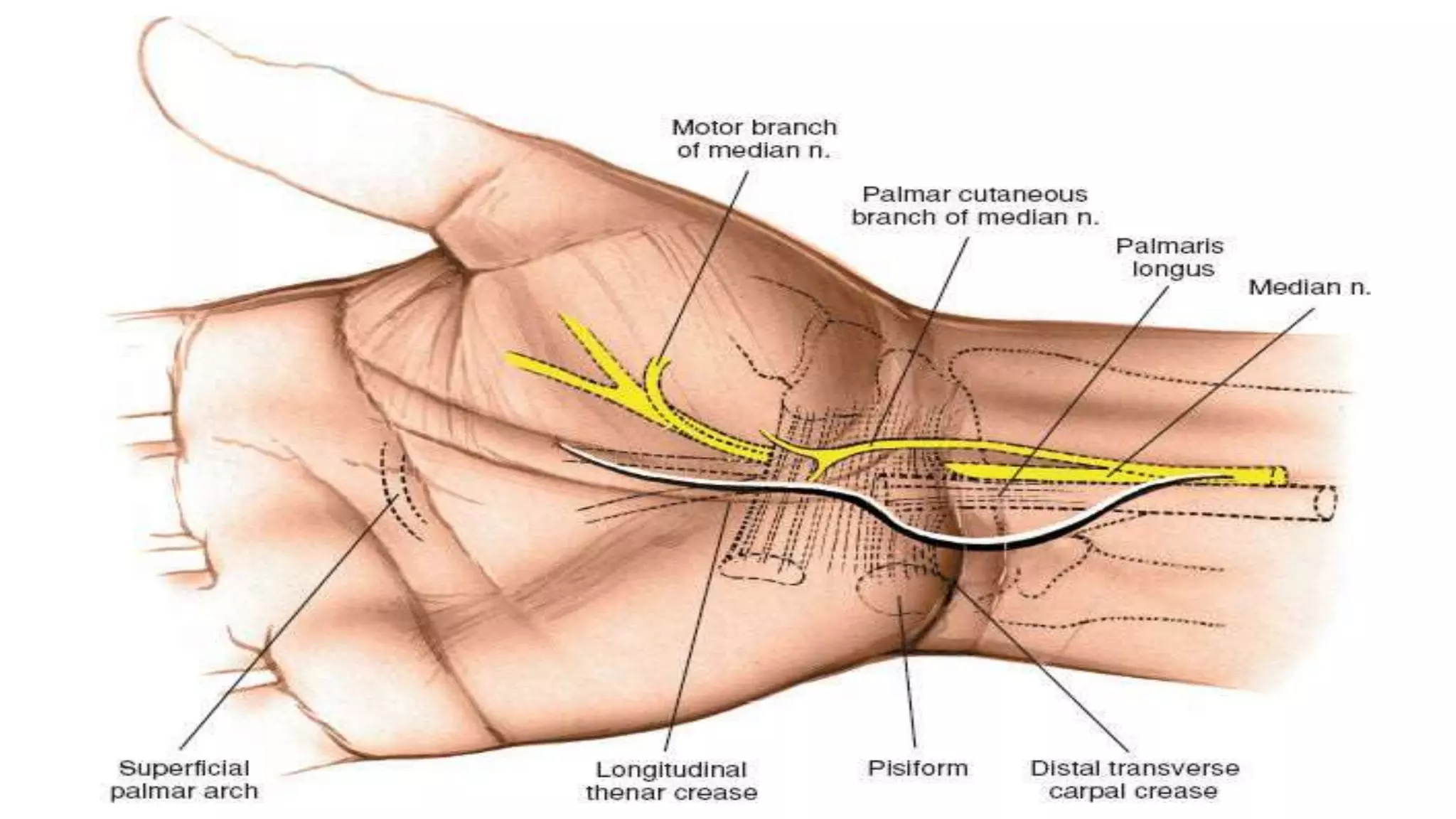
PALMAR CUTANEOUS BRANCH OF MEDIAN NERVE
• Arises 5 cm proximal to wrist joint
• Runs ulnar to FCR before crossing flexor
retinaculum
• Greatest threat if the incision not curved ulnarly
MOTOR BRANCH OF MEDIAN NERVE
• Risk minimized by incision made ulnar to median nerve
• The thenar motor branch (TMB) of the median nerve
(MN) - which is also referred to as the recurrent motor
branch of the median nerve
TMB motor innervation
to the thenar muscles
1.Opponens pollicis
2.Abductor pollicis brevis
3.Superficial part of flexor
pollicis brevis
SUPERFICIAL
PALMAR
ARCH
• Crosses palm at level of distal end
of outstretched thumb
• In danger if flexor retinaculum
blindly cut (can go too far distally)
• Avoid injury if retinaculum cut
under direct observation for its
entire length
VOLAR APPROACH TO WRIST.pptx

VOLAR APPROACH TO WRIST.pptx

  • 1.
    VIDEO DEMO VOLAR APPROACHTO WRIST PRESENTER :DR. MADHAVAN
  • 2.
    LESSON PLAN • INTRODUCTION •INDICATIONS • APPROACH STEPS • OTHER VOLAR APPROACH'S • VIDEO • STRUCTURES AT RISK
  • 3.
    OBJECTIVES At the endof the class all the students able to know 1.Indications 2.Volar approaches to the wrist in details 3.Structures at risk
  • 4.
    INTRODUCTION • The volarapproach to the wrist is one of the most used approaches in the wrist to address the distal end radius fracture fixation, carpal tunnel release ,to tackle the carpal bones pathologies .
  • 5.
    INDICATIONS 1. Decompression ofmedian nerve 2. Flexor tendon synovectomy 3. Carpal tunnel tumor excision 4. Tendon repair 5. Drainage of sepsis tracking up from the mid-palmar space 6. ORIF
  • 6.
    APPROACH STEPS • Placethe patient supine on an operating table • Rest the forearm on a hand table in the supinated position so that the palm faces upward • Use an exsanguinating bandage
  • 7.
    • Begin theincision just to the ulnar side of the thenar crease • Curve it proximally, remaining just to the ulnar side of the thenar crease • Then, curve the incision toward the ulnar side of the forearm so that the flexion crease is not crossed transversely
  • 9.
    • The skinis retracted, and the deep fascia and tendon of the palmaris longus are inspected
  • 10.
    • The deepfascia is incised The palmaris longus is retracted toward the ulna, revealing the median nerve as it enters the carpal tunnel
  • 11.
    The transverse carpal ligamentis released on the ulnar side of the nerve to avoid damage to the motor branch of the thenar muscle
  • 12.
    The median nerveis retracted radially and the flexor tendons are retracted toward the ulna, revealing the distal radius and joint capsule. An incision then is made into the capsule to expose the carpus.
  • 13.
    VOLAR TRANSVERSE INCISION • Make atransverse incision across distal flexor crease • Incise and retract the superficial and deep fasciae • Palmaris longus tendon, flexor pollicis longus tendon and median nerve is retracted to radial side
  • 14.
    • Retract theflexor digitorum sublimis and profundus tendons to the ulnar side • Incise the joint capsule, exposing the distal end of the radius and the lunate
  • 16.
    OTHER VOLAR APPROACHES •The modified Henry approach uses the plane between flexor carpi radialis tendon and the radial artery
  • 17.
    • The classicalHenry approach goes between brachioradialis and the radial artery, i.e., radial to the radial artery • The main difference is in the modified approach is ulnar to the radial artery
  • 19.
  • 20.
    STRUCTURES AT RISK PALMARCUTANEOUS BRANCH OF MEDIAN NERVE • Arises 5 cm proximal to wrist joint • Runs ulnar to FCR before crossing flexor retinaculum • Greatest threat if the incision not curved ulnarly
  • 22.
    MOTOR BRANCH OFMEDIAN NERVE • Risk minimized by incision made ulnar to median nerve • The thenar motor branch (TMB) of the median nerve (MN) - which is also referred to as the recurrent motor branch of the median nerve
  • 23.
    TMB motor innervation tothe thenar muscles 1.Opponens pollicis 2.Abductor pollicis brevis 3.Superficial part of flexor pollicis brevis
  • 24.
    SUPERFICIAL PALMAR ARCH • Crosses palmat level of distal end of outstretched thumb • In danger if flexor retinaculum blindly cut (can go too far distally) • Avoid injury if retinaculum cut under direct observation for its entire length