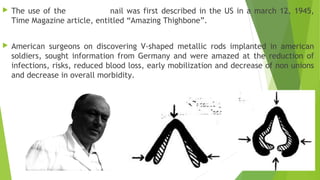
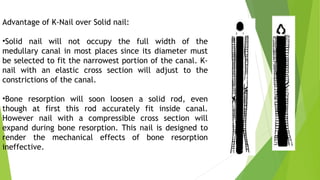
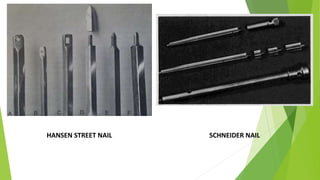
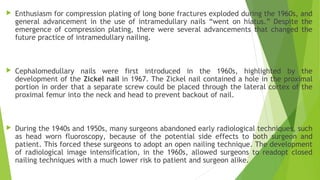
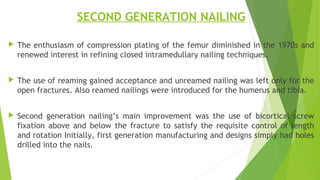
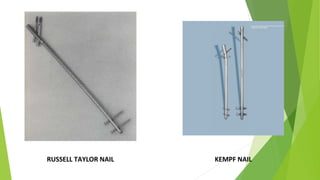
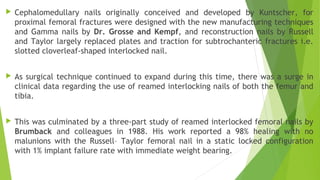
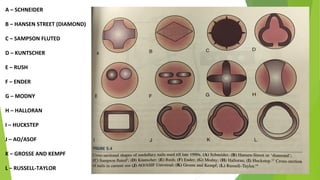
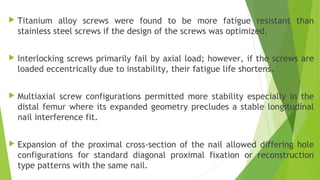
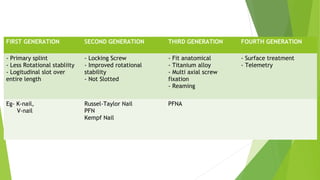
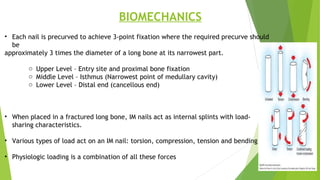
This document summarizes the evolution of intramedullary nails for long bone fracture fixation from the 16th century to modern times. It describes the early use of wooden sticks and ivory implants, the introduction of metallic rods during WWI, and the development of modern locked intramedullary nails in the mid-20th century. Key figures who advanced nail design include Kuntscher, who introduced reamed nailing in 1940, and Russell and Taylor, who developed the first closed section interlocking nail in the 1980s. The document outlines the progression from first to fourth generation nails, incorporating improvements in materials, locking mechanisms, and designs to optimize stability and healing.