Pedagogy
Topic : Trochlear Dysplasia
Dr.Madhavan
LESSON PLAN
• Name of the lecturer :Dr. MADHAVAN
• Date :25/08/2020
• Class: Orthopaedic Post Graduates, interns
• Number of students : 24
• Time :8mins
• Subject : Orthopaedics
• Topic :Trochlear Dysplasia
SPECIFIC LEARNING
OBJECTIVES
• Each Students should be able to
1. Describe the anatomy, radiological findings , Trochlear
dysplasia classification.
2. Describe the treatment for Trochlear dysplasia
At the end of the class, With out mistakes
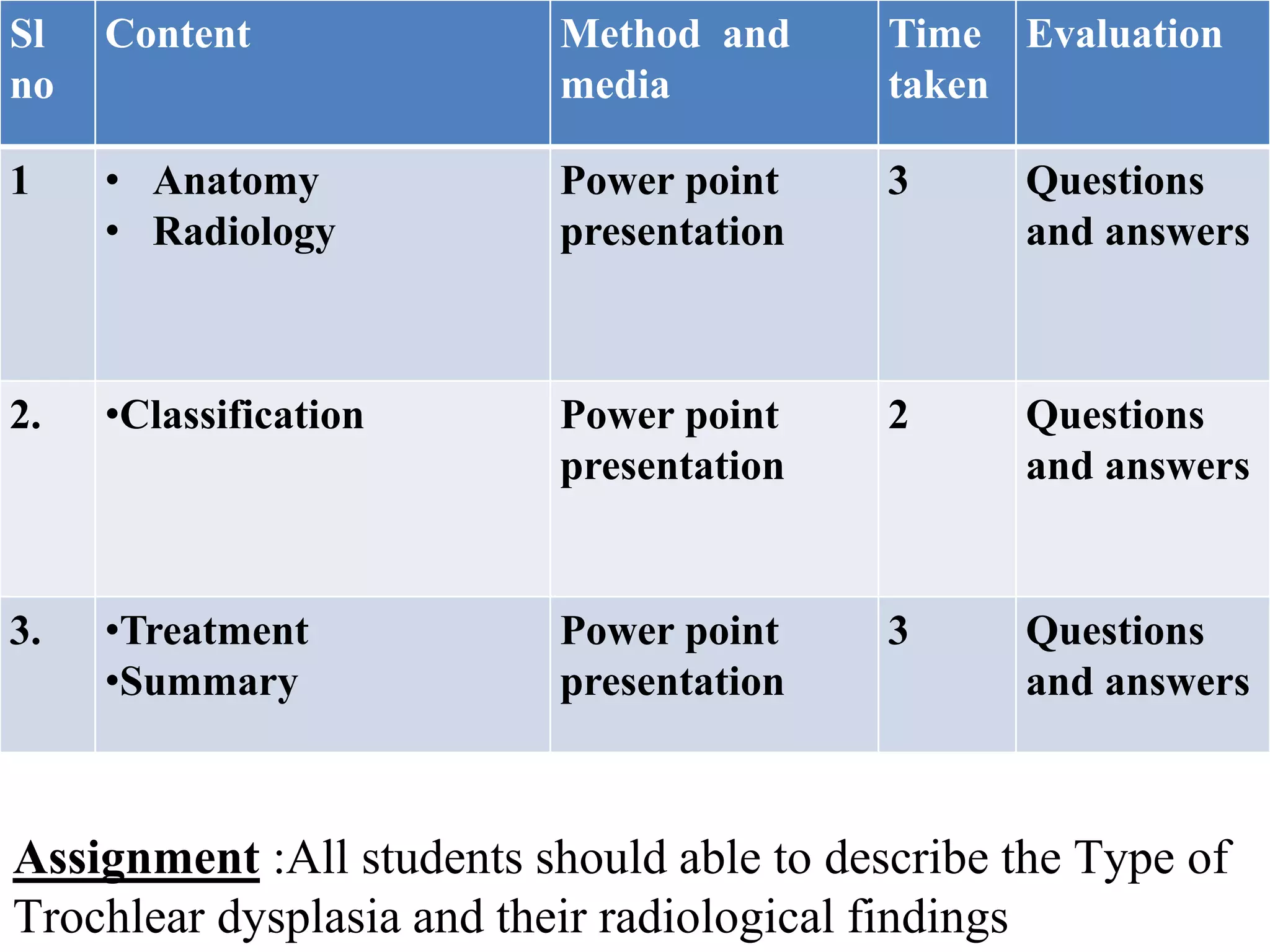
Sl
no
Content Method and
media
Time
taken
Evaluation
1 • Anatomy
• Radiology
Power point
presentation
3 Questions
and answers
2. •Classification Power point
presentation
2 Questions
and answers
3. •Treatment
•Summary
Power point
presentation
3 Questions
and answers
Assignment :All students should able to describe the Type of
Trochlear dysplasia and their radiological findings
• Trochlear groove consists of a shallow depression
5–6 mm
• Bound by the medial and the lateral femoral
articular surfaces
• Prominent lateral surface of trochlear groove
projects anteriorly
• Variation in the structural anatomy of the trochlear
groove predispose to maltracking
INTRODUCTION
Medial
Trochlear
edge
Lateral
Trochlear
edge
(anteriorly )
Skyline view
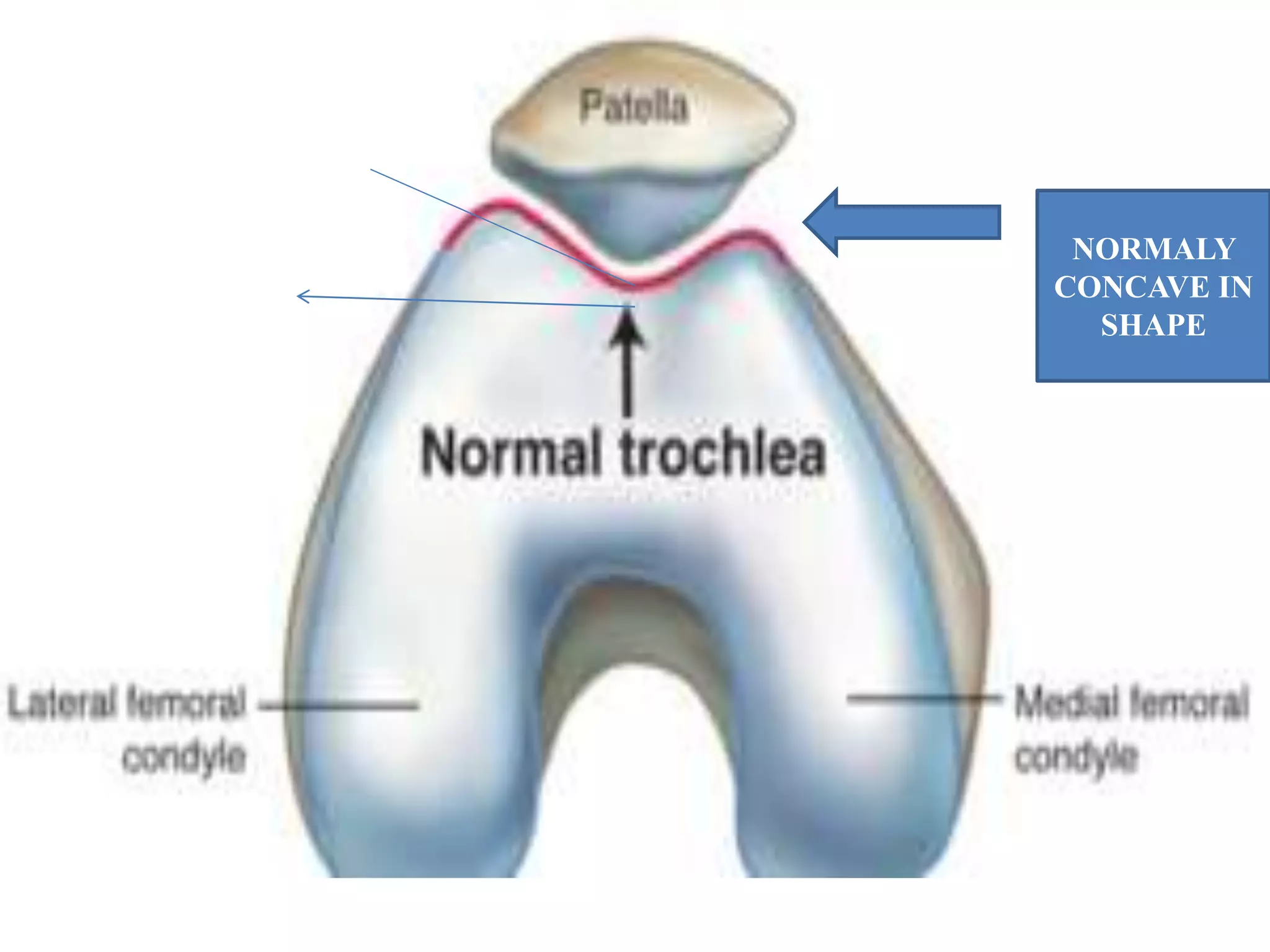
• The normal shape of the trochlear groove is concave
• This allows the patella to glide down the central
aspect of the distal femur
• This is important because the patella serves as a
fulcrum to increase the overall strength and
efficiency of the quadriceps muscles of the thigh
NORMALY
CONCAVE IN
SHAPE
• The MPFL acts as the major restraint to lateral
patellar translation from full extension through the
first 20°–70° of knee flexion
• The trochlea serves as the main restraint throughout
the flexion
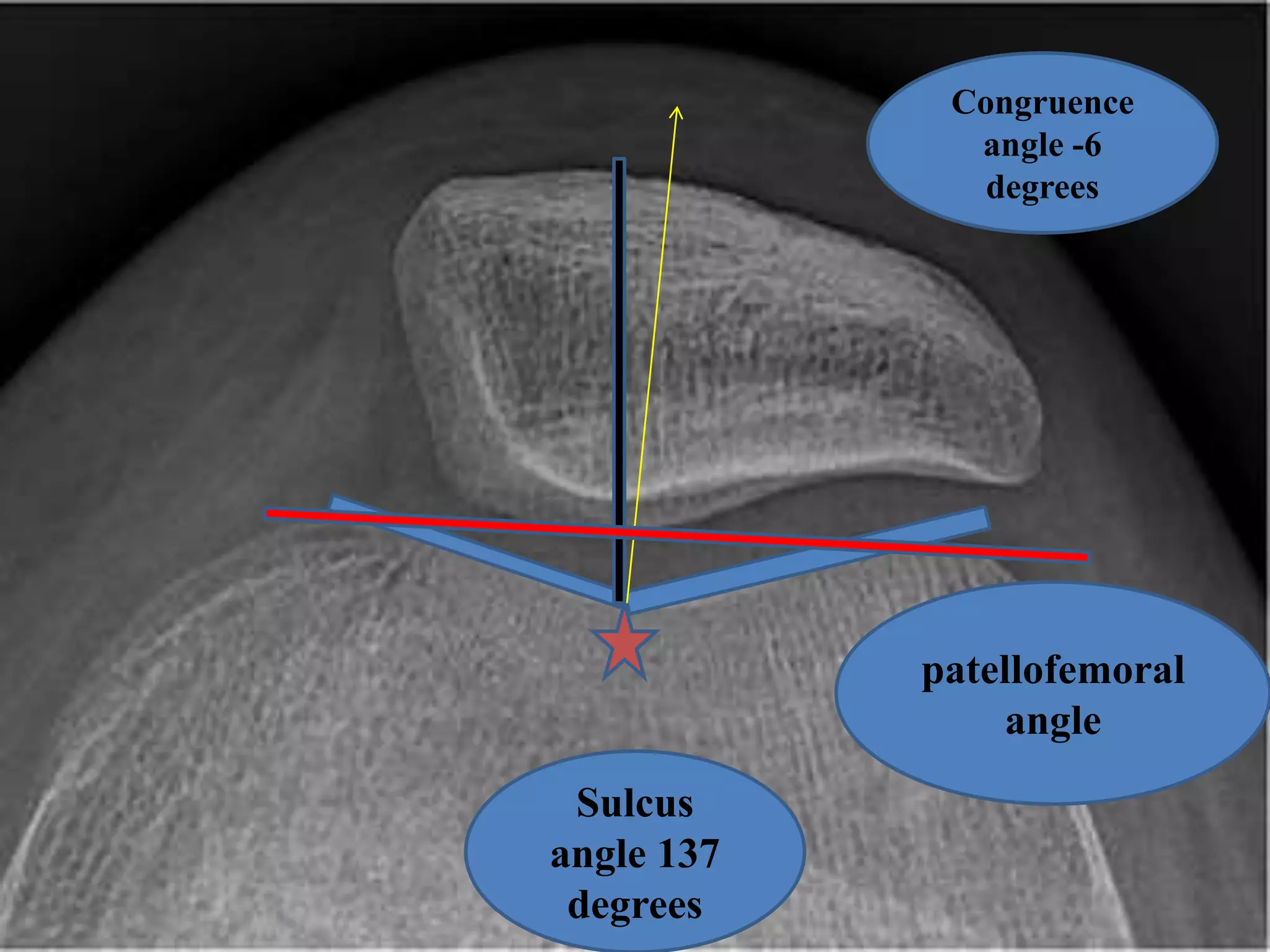
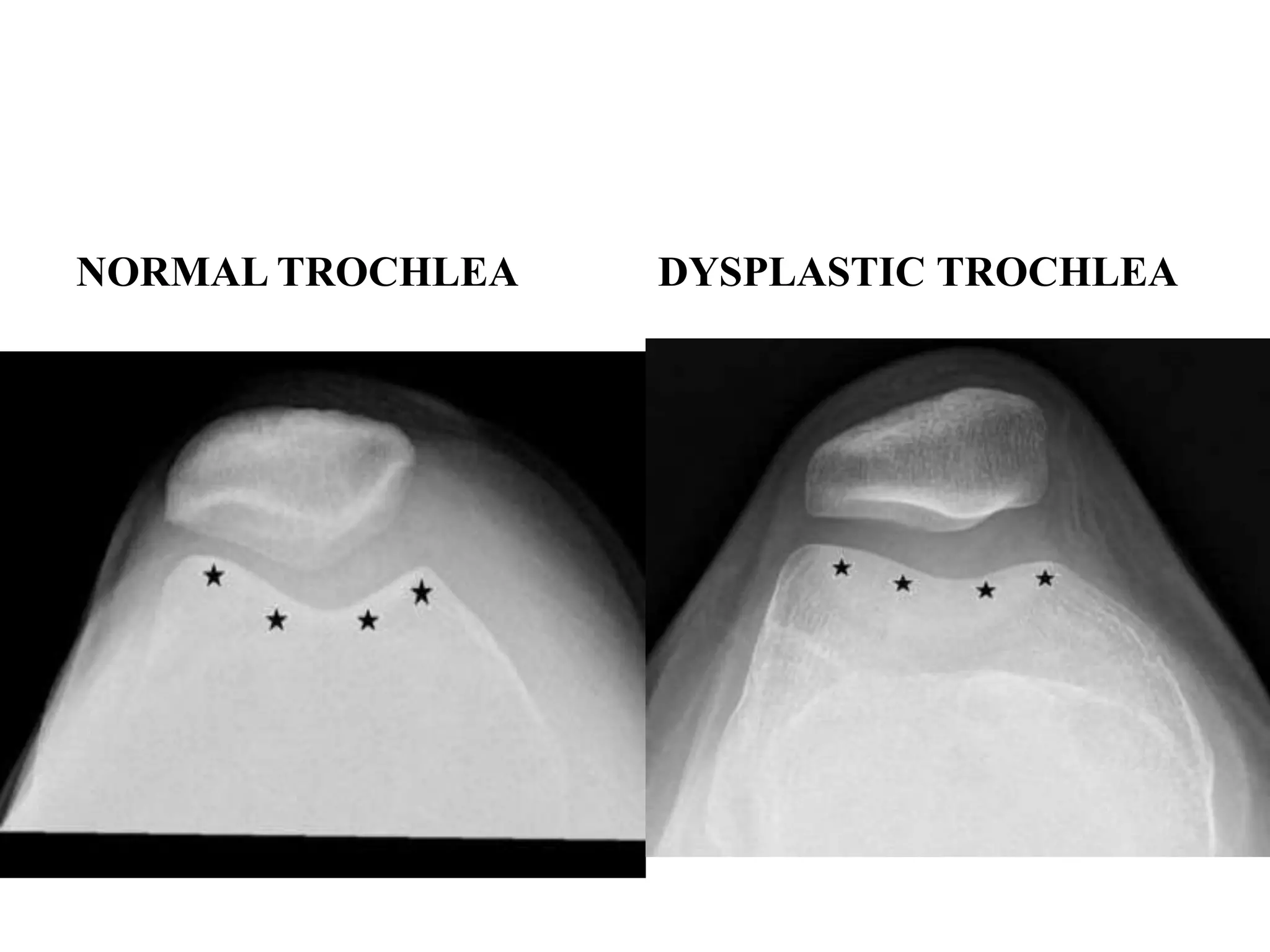
• A shallow trochlea is said to be dysplastic if the
sulcus angle, taken on an axial radiograph with the
knee flexed to 30°, is greater than 145°
Congruence
angle -6
degrees
Sulcus
angle 137
degrees
patellofemoral
angle
X-RAY VIEWS
INFRAPATELLER VIEW/ HUGHSTON
Angled 45 degrees cephalad
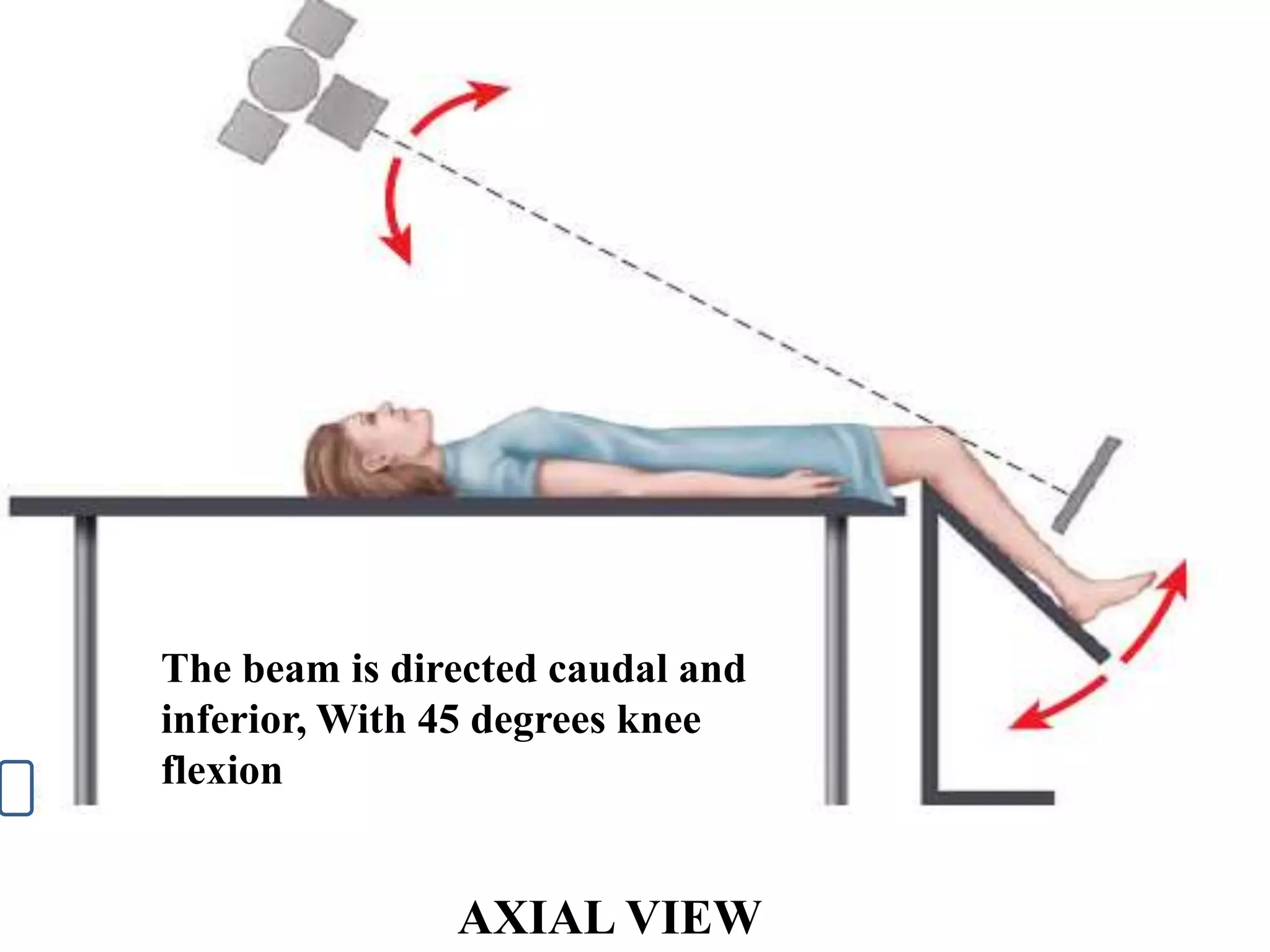
AXIAL VIEW
The beam is directed caudal and
inferior, With 45 degrees knee
flexion
Skyline view
Patella
Settegast view
• Trochlear dysplasia is one of the major anatomical
cause for recurrent patellar dislocation
• It has been reported to be present in 85–96% of
patients with a patellar dislocation events
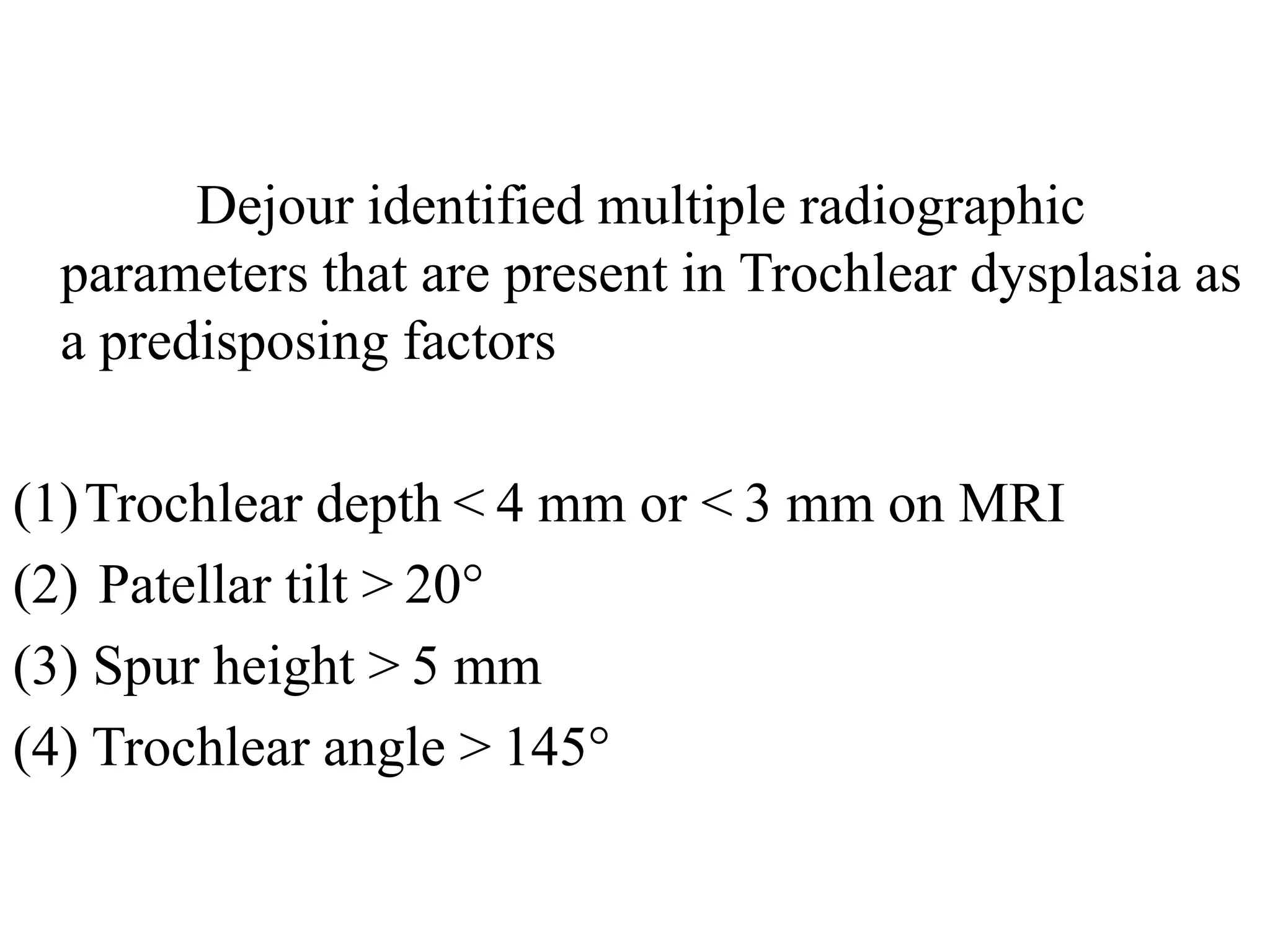
Dejour identified multiple radiographic
parameters that are present in Trochlear dysplasia as
a predisposing factors
(1)Trochlear depth < 4 mm or < 3 mm on MRI
(2) Patellar tilt > 20°
(3) Spur height > 5 mm
(4) Trochlear angle > 145°
TROCHLEAR DEPTH
<3 MM
MEANS
TROCHLEAR
DYSPLASIA
PATELLAR TILT
NORMAL TROCHLEA DYSPLASTIC TROCHLEA
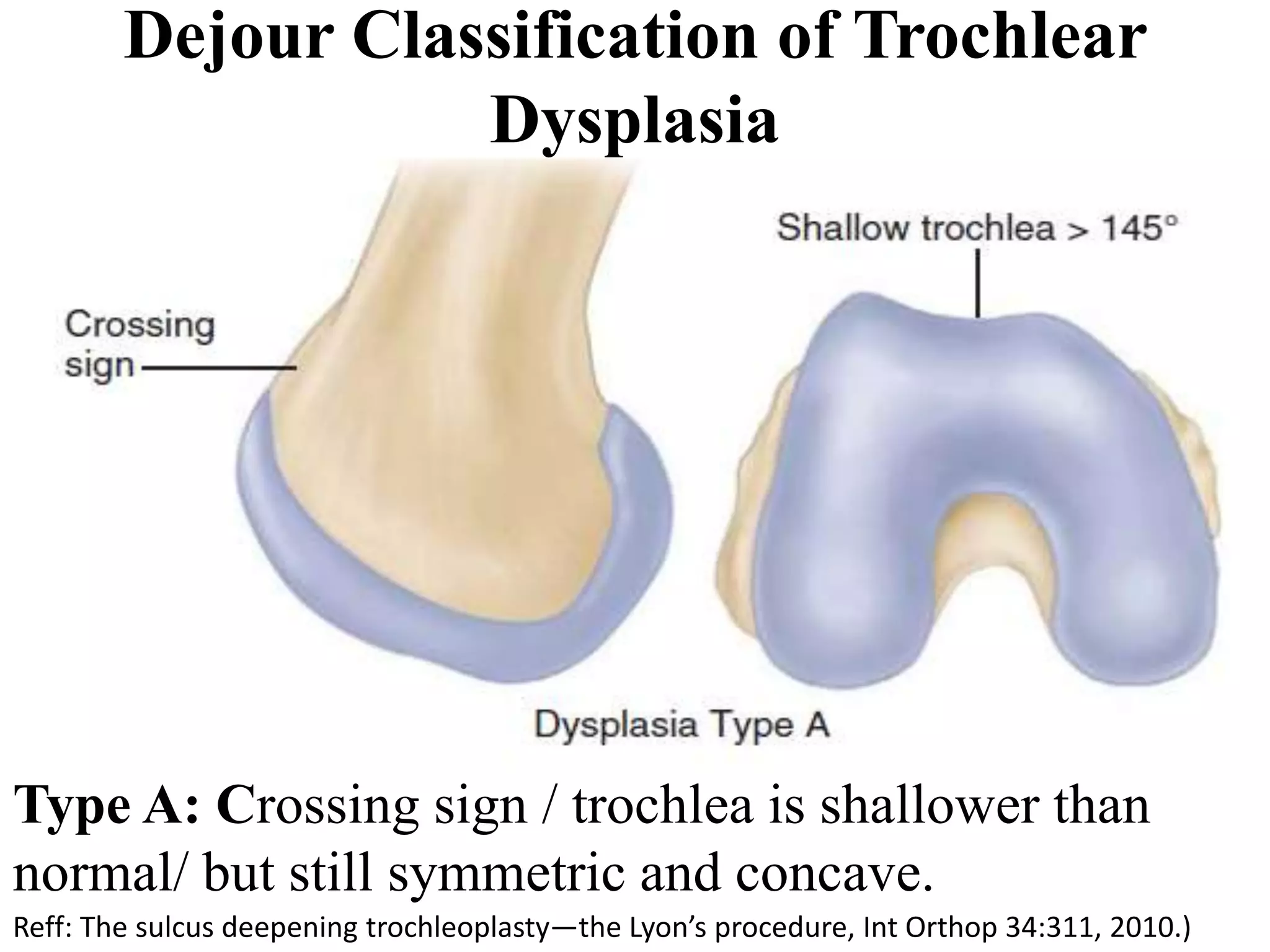
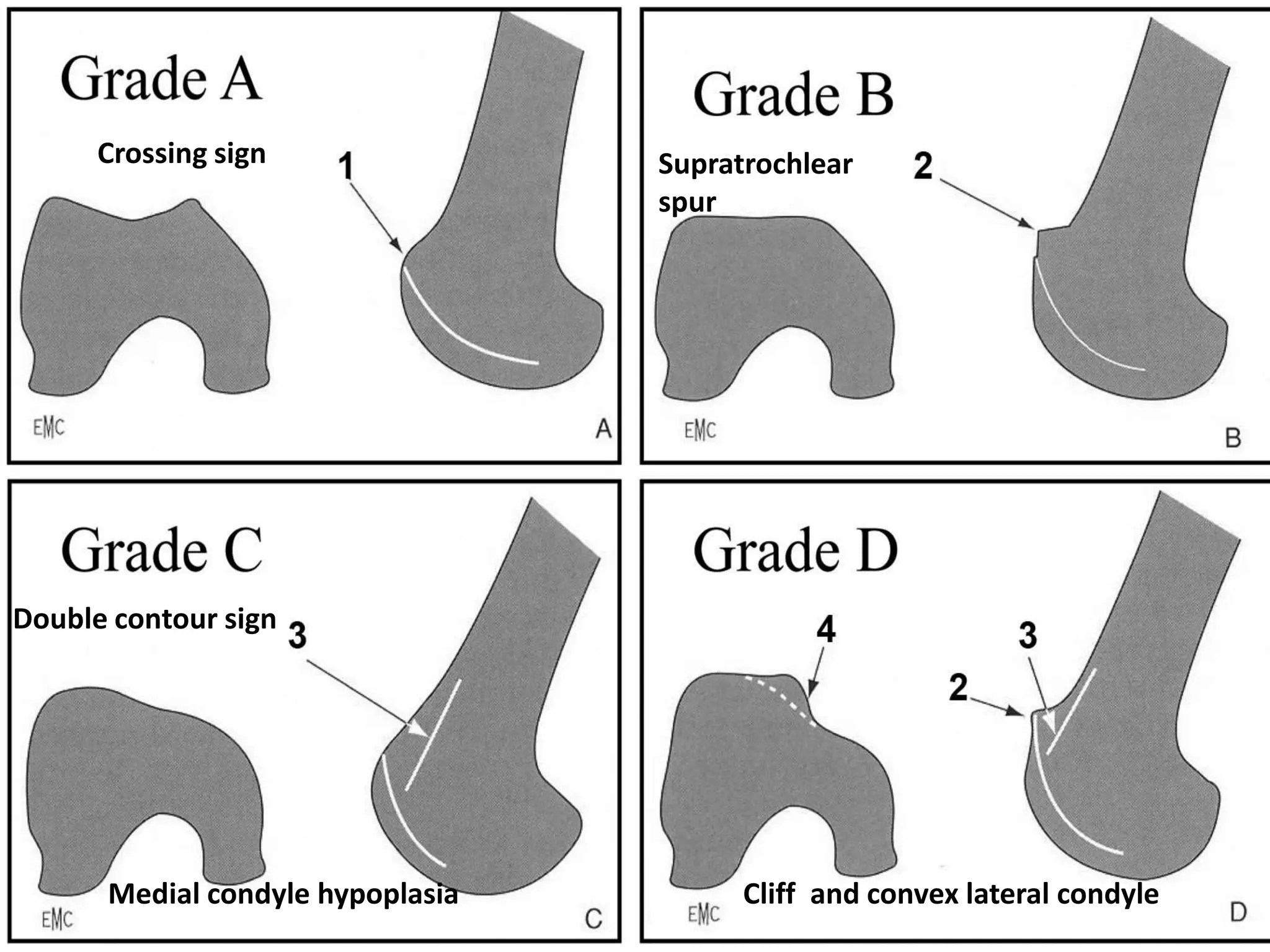
Dejour Classification of Trochlear
Dysplasia
Type A: Crossing sign / trochlea is shallower than
normal/ but still symmetric and concave.
Reff: The sulcus deepening trochleoplasty—the Lyon’s procedure, Int Orthop 34:311, 2010.)
CROSSING SIGN
• when the line of the Trochlear groove crosses the
anterior border of one of the condyle
Type B: Crossing sign + trochlear spur/ trochlea is flat
or convex in axial images.
Reff: The sulcus deepening trochleoplasty—the Lyon’s procedure, Int Orthop 34:311, 2010.)
Type C: Crossing sign + double-contour sign
representing sclerosis of the subchondral bone of the
medial hypoplastic facet/ lateral facet is convex
Reff: The sulcus deepening trochleoplasty—the Lyon’s procedure, Int Orthop 34:311, 2010.)
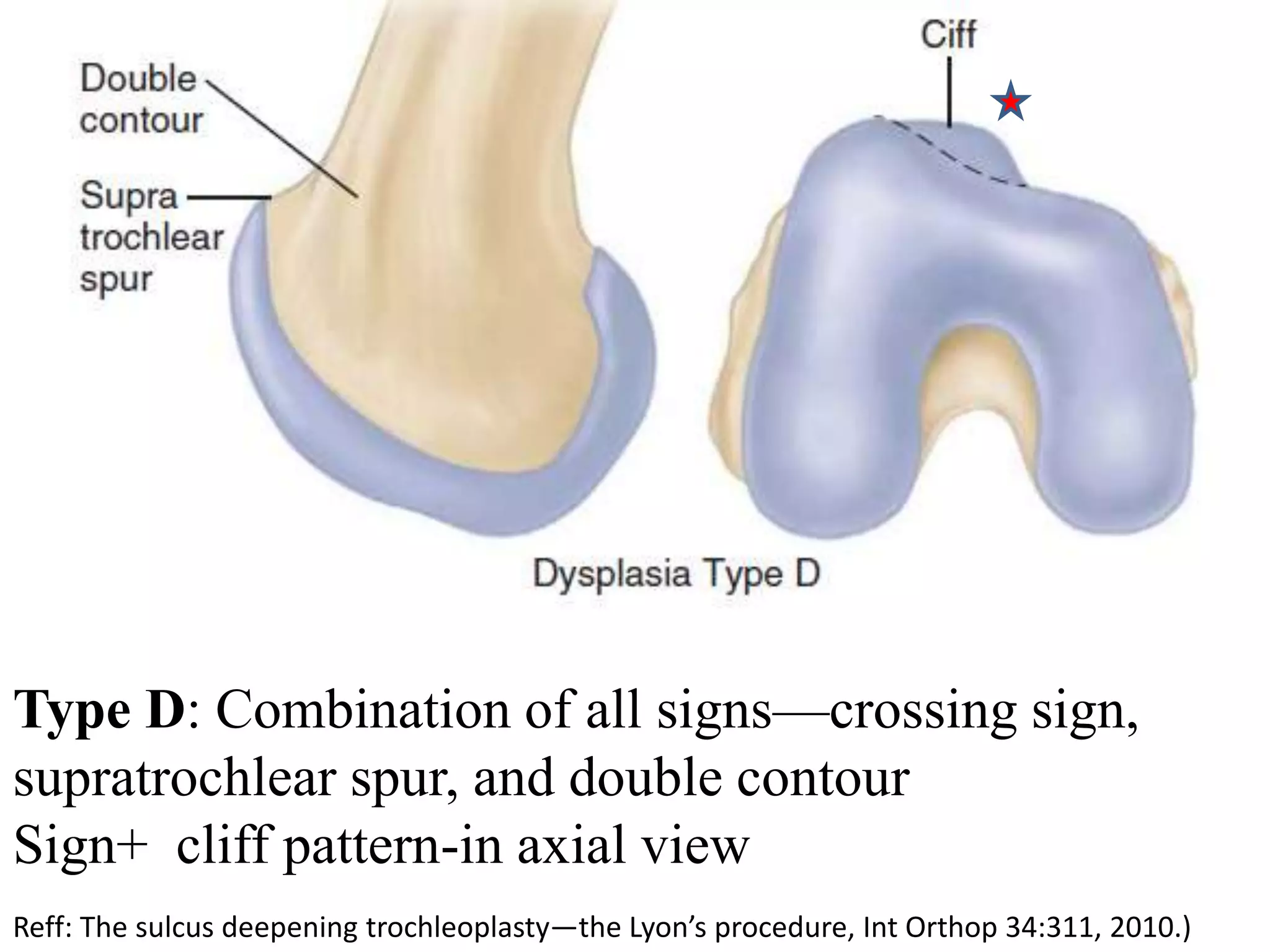
DOUBLE CONTOUR SIGN
• A double line at the anterior aspect of condyles that
occurs if the medial femoral condyle is hypoplastic
Type D: Combination of all signs—crossing sign,
supratrochlear spur, and double contour
Sign+ cliff pattern-in axial view
Reff: The sulcus deepening trochleoplasty—the Lyon’s procedure, Int Orthop 34:311, 2010.)
• Trochlear dysplasia: Crossing sign
• Sulcus angle >145 degrees
• MPFL reconstruction
• Trochleoplasty
TREATMENT
Dejour sulcus-deepening trochleoplasty
Type ?
SUBCHONDRAL
BONE CUT AND
MAKING A
DEFECT
FIXED WITH
BONE
STAPLES
Measuring the thickness
• below osteochondral edge
Before
After
Make a gentle cut with osteotome and remove the sub chondral bone with rongeur
SUMMARY
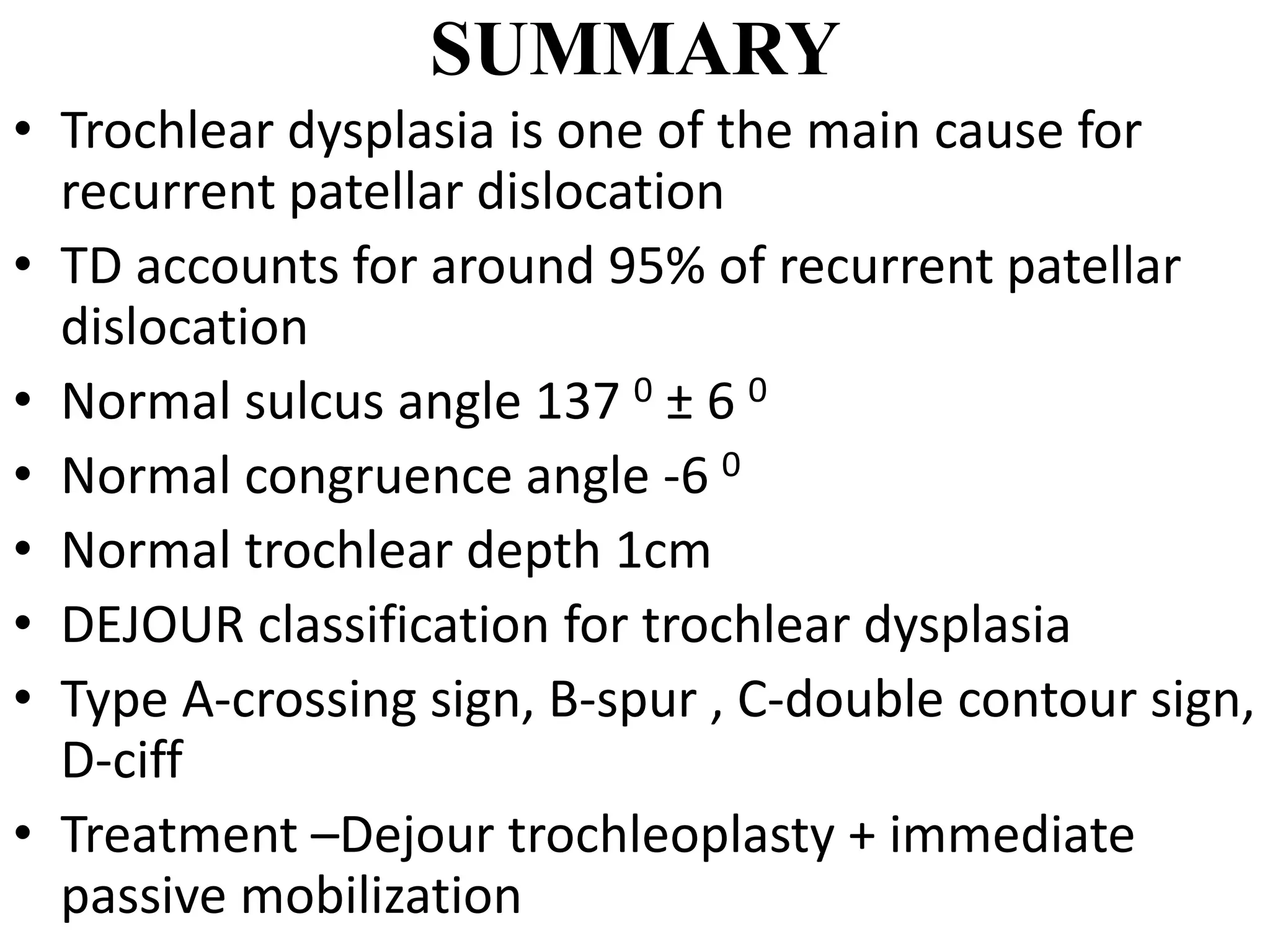
• Trochlear dysplasia is one of the main cause for
recurrent patellar dislocation
• TD accounts for around 95% of recurrent patellar
dislocation
• Normal sulcus angle 137 0 ± 6 0
• Normal congruence angle -6 0
• Normal trochlear depth 1cm
• DEJOUR classification for trochlear dysplasia
• Type A-crossing sign, B-spur , C-double contour sign,
D-ciff
• Treatment –Dejour trochleoplasty + immediate
passive mobilization
Crossing sign Supratrochlear
spur
Double contour sign
Medial condyle hypoplasia Cliff and convex lateral condyle
• Thank you

Trochlear dysplasia

  • 1.
    Pedagogy Topic : TrochlearDysplasia Dr.Madhavan
  • 2.
    LESSON PLAN • Nameof the lecturer :Dr. MADHAVAN • Date :25/08/2020 • Class: Orthopaedic Post Graduates, interns • Number of students : 24 • Time :8mins • Subject : Orthopaedics • Topic :Trochlear Dysplasia
  • 3.
    SPECIFIC LEARNING OBJECTIVES • EachStudents should be able to 1. Describe the anatomy, radiological findings , Trochlear dysplasia classification. 2. Describe the treatment for Trochlear dysplasia At the end of the class, With out mistakes
  • 4.
    Sl no Content Method and media Time taken Evaluation 1• Anatomy • Radiology Power point presentation 3 Questions and answers 2. •Classification Power point presentation 2 Questions and answers 3. •Treatment •Summary Power point presentation 3 Questions and answers Assignment :All students should able to describe the Type of Trochlear dysplasia and their radiological findings
  • 5.
    • Trochlear grooveconsists of a shallow depression 5–6 mm • Bound by the medial and the lateral femoral articular surfaces • Prominent lateral surface of trochlear groove projects anteriorly • Variation in the structural anatomy of the trochlear groove predispose to maltracking INTRODUCTION
  • 6.
  • 7.
    • The normalshape of the trochlear groove is concave • This allows the patella to glide down the central aspect of the distal femur • This is important because the patella serves as a fulcrum to increase the overall strength and efficiency of the quadriceps muscles of the thigh
  • 8.
  • 9.
    • The MPFLacts as the major restraint to lateral patellar translation from full extension through the first 20°–70° of knee flexion • The trochlea serves as the main restraint throughout the flexion • A shallow trochlea is said to be dysplastic if the sulcus angle, taken on an axial radiograph with the knee flexed to 30°, is greater than 145°
  • 10.
  • 11.
    X-RAY VIEWS INFRAPATELLER VIEW/HUGHSTON Angled 45 degrees cephalad
  • 12.
    AXIAL VIEW The beamis directed caudal and inferior, With 45 degrees knee flexion
  • 13.
  • 14.
    • Trochlear dysplasiais one of the major anatomical cause for recurrent patellar dislocation • It has been reported to be present in 85–96% of patients with a patellar dislocation events
  • 15.
    Dejour identified multipleradiographic parameters that are present in Trochlear dysplasia as a predisposing factors (1)Trochlear depth < 4 mm or < 3 mm on MRI (2) Patellar tilt > 20° (3) Spur height > 5 mm (4) Trochlear angle > 145°
  • 16.
  • 17.
  • 18.
  • 19.
    Dejour Classification ofTrochlear Dysplasia Type A: Crossing sign / trochlea is shallower than normal/ but still symmetric and concave. Reff: The sulcus deepening trochleoplasty—the Lyon’s procedure, Int Orthop 34:311, 2010.)
  • 20.
    CROSSING SIGN • whenthe line of the Trochlear groove crosses the anterior border of one of the condyle
  • 21.
    Type B: Crossingsign + trochlear spur/ trochlea is flat or convex in axial images. Reff: The sulcus deepening trochleoplasty—the Lyon’s procedure, Int Orthop 34:311, 2010.)
  • 22.
    Type C: Crossingsign + double-contour sign representing sclerosis of the subchondral bone of the medial hypoplastic facet/ lateral facet is convex Reff: The sulcus deepening trochleoplasty—the Lyon’s procedure, Int Orthop 34:311, 2010.)
  • 23.
    DOUBLE CONTOUR SIGN •A double line at the anterior aspect of condyles that occurs if the medial femoral condyle is hypoplastic
  • 24.
    Type D: Combinationof all signs—crossing sign, supratrochlear spur, and double contour Sign+ cliff pattern-in axial view Reff: The sulcus deepening trochleoplasty—the Lyon’s procedure, Int Orthop 34:311, 2010.)
  • 25.
    • Trochlear dysplasia:Crossing sign • Sulcus angle >145 degrees • MPFL reconstruction • Trochleoplasty
  • 26.
    TREATMENT Dejour sulcus-deepening trochleoplasty Type? SUBCHONDRAL BONE CUT AND MAKING A DEFECT FIXED WITH BONE STAPLES
  • 27.
    Measuring the thickness •below osteochondral edge
  • 28.
    Before After Make a gentlecut with osteotome and remove the sub chondral bone with rongeur
  • 29.
    SUMMARY • Trochlear dysplasiais one of the main cause for recurrent patellar dislocation • TD accounts for around 95% of recurrent patellar dislocation • Normal sulcus angle 137 0 ± 6 0 • Normal congruence angle -6 0 • Normal trochlear depth 1cm • DEJOUR classification for trochlear dysplasia • Type A-crossing sign, B-spur , C-double contour sign, D-ciff • Treatment –Dejour trochleoplasty + immediate passive mobilization
  • 30.
    Crossing sign Supratrochlear spur Doublecontour sign Medial condyle hypoplasia Cliff and convex lateral condyle
  • 31.