Vladimir Propp
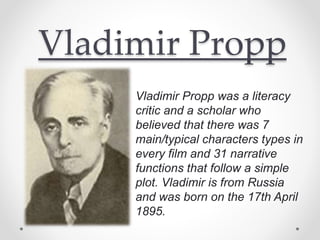
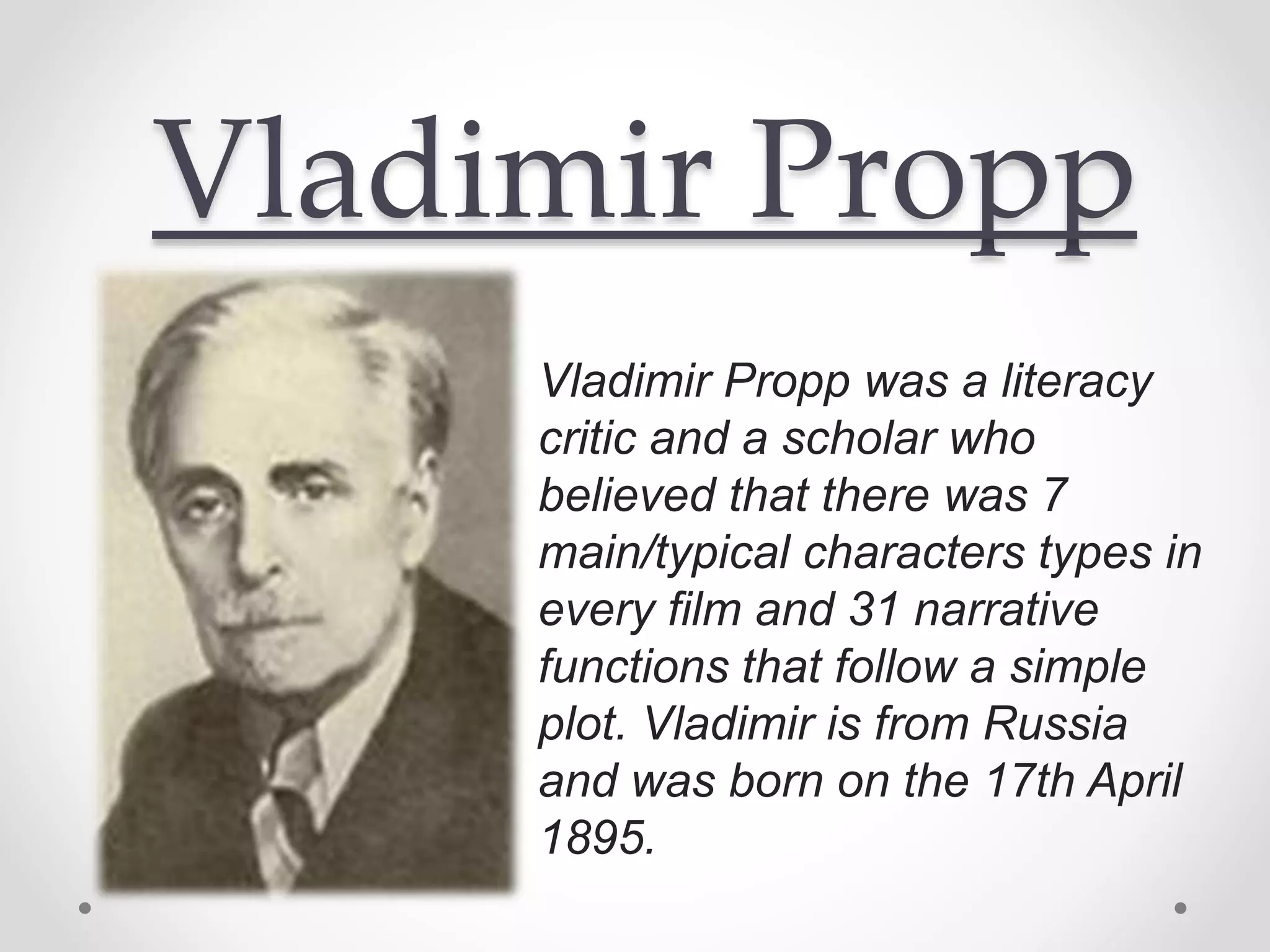
Vladimir Propp was a literacy
critic and a scholar who
believed that there was 7
main/typical characters types in
every film and 31 narrative
functions that follow a simple
plot. Vladimir is from Russia
and was born on the 17th April
1895.
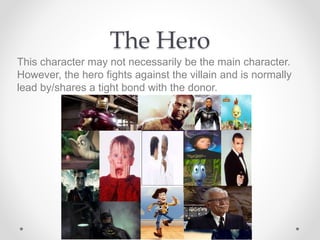
The Hero
This character may not necessarily be the main character.
However, the hero fights against the villain and is normally
lead by/shares a tight bond with the donor.
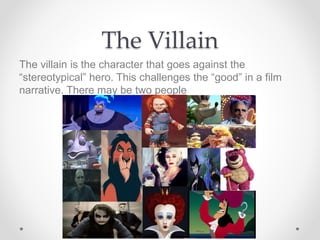
The Villain
The villain is the character that goes against the
“stereotypical” hero. This challenges the “good” in a film
narrative. There may be two people
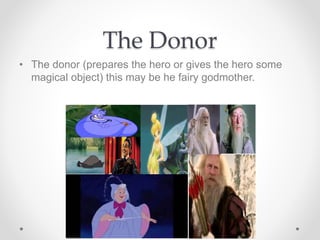
The Donor
• The donor (prepares the hero or gives the hero some
magical object) this may be he fairy godmother.
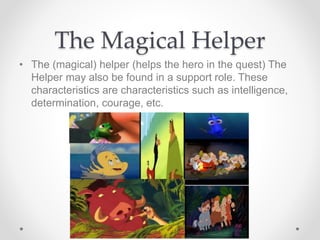
The Magical Helper
• The (magical) helper (helps the hero in the quest) The
Helper may also be found in a support role. These
characteristics are characteristics such as intelligence,
determination, courage, etc.
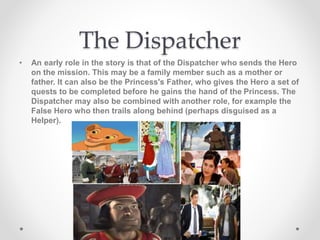
The Dispatcher
• An early role in the story is that of the Dispatcher who sends the Hero
on the mission. This may be a family member such as a mother or
father. It can also be the Princess's Father, who gives the Hero a set of
quests to be completed before he gains the hand of the Princess. The
Dispatcher may also be combined with another role, for example the
False Hero who then trails along behind (perhaps disguised as a
Helper).
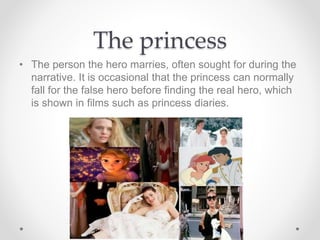
The princess
• The person the hero marries, often sought for during the
narrative. It is occasional that the princess can normally
fall for the false hero before finding the real hero, which
is shown in films such as princess diaries.
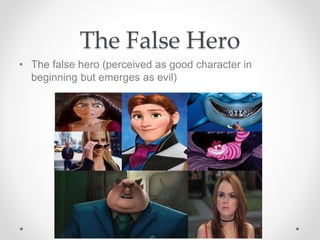
The False Hero
• The false hero (perceived as good character in
beginning but emerges as evil)
Narrative Theory
• Vladimir Propp’s theory was that there are 31 narrative
film plots to each film, which have storylines including
the 8 characters types. Each narrative has a different
conclusion. Vladimir Propp was a theorist who
researched narrative. In this theory, he believes that
there are only a certain amount of ways you can
manipulate a storyline
1st Sphere: Introduction
Assentation
Someone has gone missing 2. Interdiction: Hero is warned:
3. Violation of interdiction. 4. Reconnaissance: Villain seeks
something. 5. Delivery. The villain gains information 6.
Trickery: Villain attempts to deceive victim 7. Complicity:
Unwitting helping of the enemy
2nd Sphere: The body of
the story
• Villainy and Lack
The need is identified 9. Mediation. Hero discovers the lack
10. Counteraction: Hero chooses positive action 11.
Departure: Hero leaves on mission.
3rd Sphere: The Donor
Sequence
In the third sphere, the hero goes in search of a method by
which the solution may be reached, gaining the magical
agent from the Donor
- The hero is challenged to prove heroic qualities 13.
Reaction: Hero responds to test 14. Acquisition: Hero gains
magical item 15. Guidance: Hero reaches destination 16.
Struggle: Hero and villain do battle 17. Branding: Hero is
branded 18. Victory: Villain is defeated 29. Resolution:
Initial misfortune or lack is resolved.
4th Sphere: The Hero’s
Return
• Return
Hero sets out for home 21: Pursuit. Hero is chased 22.
Rescue: Pursuit ends 23. Arrival: Hero arrives
unrecognised 24. Claim: False hero makes unfounded
claim 25. Task: Difficult task is proposed to the hero 26.
Solution: Task is resolved 27. Recognition: Hero is
recognised 28. Exposure: False hero is exposed 29.
Transfiguration: Her is given a new appearance 30.
Punishment: Villain is punished 31: Wedding: Hero marries
and ascends the throne.
Richard played by Dougie
Rooks – (The Helper)
• Having looked at this narrative theory we have used it to
develop our plans for our short film.
• In the beginning of our film, an ‘old man’ is driving along and
notices a young girl sitting on a rock all alone on the moors at
night. So he offers her a lift home. Here it shows that he is
being kind and generous taking her home as he feels sorry
her because its late at night and she is very cold. This
emphasises that he is a ‘HELPER’ as he is giving her a lift
home. Overall Richard is a simple and main character, he
confirms Propp’s character type in the short by the way his
characteristic is like.

Vladimir propp

  • 1.
    Vladimir Propp Vladimir Proppwas a literacy critic and a scholar who believed that there was 7 main/typical characters types in every film and 31 narrative functions that follow a simple plot. Vladimir is from Russia and was born on the 17th April 1895.
  • 2.
    The Hero This charactermay not necessarily be the main character. However, the hero fights against the villain and is normally lead by/shares a tight bond with the donor.
  • 3.
    The Villain The villainis the character that goes against the “stereotypical” hero. This challenges the “good” in a film narrative. There may be two people
  • 4.
    The Donor • Thedonor (prepares the hero or gives the hero some magical object) this may be he fairy godmother.
  • 5.
    The Magical Helper •The (magical) helper (helps the hero in the quest) The Helper may also be found in a support role. These characteristics are characteristics such as intelligence, determination, courage, etc.
  • 6.
    The Dispatcher • Anearly role in the story is that of the Dispatcher who sends the Hero on the mission. This may be a family member such as a mother or father. It can also be the Princess's Father, who gives the Hero a set of quests to be completed before he gains the hand of the Princess. The Dispatcher may also be combined with another role, for example the False Hero who then trails along behind (perhaps disguised as a Helper).
  • 7.
    The princess • Theperson the hero marries, often sought for during the narrative. It is occasional that the princess can normally fall for the false hero before finding the real hero, which is shown in films such as princess diaries.
  • 8.
    The False Hero •The false hero (perceived as good character in beginning but emerges as evil)
  • 9.
    Narrative Theory • VladimirPropp’s theory was that there are 31 narrative film plots to each film, which have storylines including the 8 characters types. Each narrative has a different conclusion. Vladimir Propp was a theorist who researched narrative. In this theory, he believes that there are only a certain amount of ways you can manipulate a storyline
  • 10.
    1st Sphere: Introduction Assentation Someonehas gone missing 2. Interdiction: Hero is warned: 3. Violation of interdiction. 4. Reconnaissance: Villain seeks something. 5. Delivery. The villain gains information 6. Trickery: Villain attempts to deceive victim 7. Complicity: Unwitting helping of the enemy
  • 11.
    2nd Sphere: Thebody of the story • Villainy and Lack The need is identified 9. Mediation. Hero discovers the lack 10. Counteraction: Hero chooses positive action 11. Departure: Hero leaves on mission.
  • 12.
    3rd Sphere: TheDonor Sequence In the third sphere, the hero goes in search of a method by which the solution may be reached, gaining the magical agent from the Donor - The hero is challenged to prove heroic qualities 13. Reaction: Hero responds to test 14. Acquisition: Hero gains magical item 15. Guidance: Hero reaches destination 16. Struggle: Hero and villain do battle 17. Branding: Hero is branded 18. Victory: Villain is defeated 29. Resolution: Initial misfortune or lack is resolved.
  • 13.
    4th Sphere: TheHero’s Return • Return Hero sets out for home 21: Pursuit. Hero is chased 22. Rescue: Pursuit ends 23. Arrival: Hero arrives unrecognised 24. Claim: False hero makes unfounded claim 25. Task: Difficult task is proposed to the hero 26. Solution: Task is resolved 27. Recognition: Hero is recognised 28. Exposure: False hero is exposed 29. Transfiguration: Her is given a new appearance 30. Punishment: Villain is punished 31: Wedding: Hero marries and ascends the throne.
  • 14.
    Richard played byDougie Rooks – (The Helper) • Having looked at this narrative theory we have used it to develop our plans for our short film. • In the beginning of our film, an ‘old man’ is driving along and notices a young girl sitting on a rock all alone on the moors at night. So he offers her a lift home. Here it shows that he is being kind and generous taking her home as he feels sorry her because its late at night and she is very cold. This emphasises that he is a ‘HELPER’ as he is giving her a lift home. Overall Richard is a simple and main character, he confirms Propp’s character type in the short by the way his characteristic is like.