Vladimir Propp
Character theory and narrative structure
Who was Vladimir Propp?
 Vladimir Propp was a literary critic and a
scholar who founded the idea that a certain
type of character was to be used in every
narrative structure. His theory has influenced
many filmmakers to writing and producing
successful narratives. Propp also suggested that
all fairy tales follow a specific narrative
structure.
Vladimir Propp’s Character Theory:
 Propp suggested that every narrative has eight different character types, these character
types are:
 The villain — fights the hero in some way.
 The dispatcher — character who makes the villain’s evil known and sends the hero off.
 The (magical) helper — helps the hero in the quest.
 The princess or prize — the hero deserves her throughout the story but is unable to marry her
because of an unfair evil, usually because of the villain. The hero's journey is often ended when
he marries the princess, thereby beating the villain and resulting in a “happily ever after”
moment.
 Her father — gives the task to the hero, identifies the false hero, and marries the hero, often
sought for during the narrative. Propp noted that functionally, the princess and the father
cannot be clearly distinguished.
 The donor — prepares the hero or gives the hero some magical object.
 The hero or victim/seeker hero — reacts to the donor, weds the princess.
 False hero — takes credit for the hero’s actions or tries to marry the princess.
Application of the theory
 In the next slides I will demonstrate how Propp’s character types can be
applied to most modern-day films and thus film trailers.
The Villain
 This is the character who struggles against the hero. Typically,
with some sort of scarring. The villain will usually wear dark
and mysterious colours, and not very attractive. This is to juxtapose
between the hero and the villain; to highlight their differences.
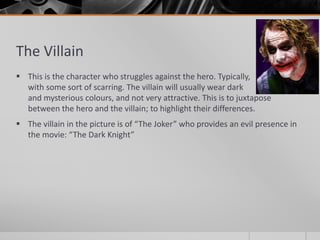
 The villain in the picture is of “The Joker” who provides an evil presence in
the movie: “The Dark Knight”
The Dispatcher
 The character who invites the hero to eliminate the
evil.
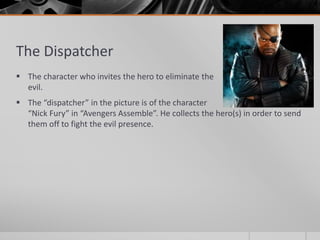
 The “dispatcher” in the picture is of the character
“Nick Fury” in “Avengers Assemble”. He collects the hero(s) in order to send
them off to fight the evil presence.
The Helper
 The character who helps the hero fight against evil.
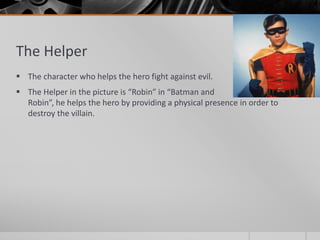
 The Helper in the picture is “Robin” in “Batman and
Robin”, he helps the hero by providing a physical presence in order to
destroy the villain.
The Princess
 The character who needs to be rescued from the evil
villain.
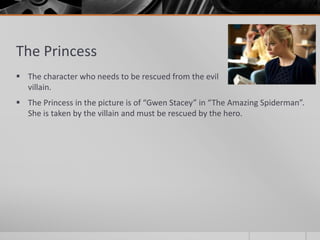
 The Princess in the picture is of “Gwen Stacey” in “The Amazing Spiderman”.
She is taken by the villain and must be rescued by the hero.
The Donor
 The character who offers some sort of help to the hero by
providing an object(s) that will help the hero in his/her quest.
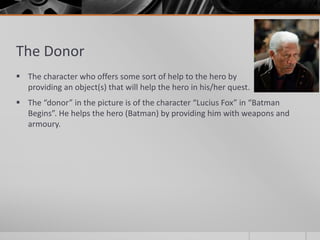
 The “donor” in the picture is of the character “Lucius Fox” in “Batman
Begins”. He helps the hero (Batman) by providing him with weapons and
armoury.
The Hero
 The most common character type
 The character who eliminates the villain and weds the
princess.
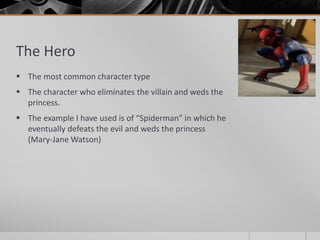
 The example I have used is of “Spiderman” in which he
eventually defeats the evil and weds the princess
(Mary-Jane Watson)

Vladmirr propp

  • 1.
    Vladimir Propp Character theoryand narrative structure
  • 2.
    Who was VladimirPropp?  Vladimir Propp was a literary critic and a scholar who founded the idea that a certain type of character was to be used in every narrative structure. His theory has influenced many filmmakers to writing and producing successful narratives. Propp also suggested that all fairy tales follow a specific narrative structure.
  • 3.
    Vladimir Propp’s CharacterTheory:  Propp suggested that every narrative has eight different character types, these character types are:  The villain — fights the hero in some way.  The dispatcher — character who makes the villain’s evil known and sends the hero off.  The (magical) helper — helps the hero in the quest.  The princess or prize — the hero deserves her throughout the story but is unable to marry her because of an unfair evil, usually because of the villain. The hero's journey is often ended when he marries the princess, thereby beating the villain and resulting in a “happily ever after” moment.  Her father — gives the task to the hero, identifies the false hero, and marries the hero, often sought for during the narrative. Propp noted that functionally, the princess and the father cannot be clearly distinguished.  The donor — prepares the hero or gives the hero some magical object.  The hero or victim/seeker hero — reacts to the donor, weds the princess.  False hero — takes credit for the hero’s actions or tries to marry the princess.
  • 4.
    Application of thetheory  In the next slides I will demonstrate how Propp’s character types can be applied to most modern-day films and thus film trailers.
  • 5.
    The Villain  Thisis the character who struggles against the hero. Typically, with some sort of scarring. The villain will usually wear dark and mysterious colours, and not very attractive. This is to juxtapose between the hero and the villain; to highlight their differences.  The villain in the picture is of “The Joker” who provides an evil presence in the movie: “The Dark Knight”
  • 6.
    The Dispatcher  Thecharacter who invites the hero to eliminate the evil.  The “dispatcher” in the picture is of the character “Nick Fury” in “Avengers Assemble”. He collects the hero(s) in order to send them off to fight the evil presence.
  • 7.
    The Helper  Thecharacter who helps the hero fight against evil.  The Helper in the picture is “Robin” in “Batman and Robin”, he helps the hero by providing a physical presence in order to destroy the villain.
  • 8.
    The Princess  Thecharacter who needs to be rescued from the evil villain.  The Princess in the picture is of “Gwen Stacey” in “The Amazing Spiderman”. She is taken by the villain and must be rescued by the hero.
  • 9.
    The Donor  Thecharacter who offers some sort of help to the hero by providing an object(s) that will help the hero in his/her quest.  The “donor” in the picture is of the character “Lucius Fox” in “Batman Begins”. He helps the hero (Batman) by providing him with weapons and armoury.
  • 10.
    The Hero  Themost common character type  The character who eliminates the villain and weds the princess.  The example I have used is of “Spiderman” in which he eventually defeats the evil and weds the princess (Mary-Jane Watson)