VLADIMIR PROPP’S CHARACTER THEORY
He noticed that many folk tales were similar in a variety of areas. He
identified a theory about characters and actions as narrative functions.
According the Propp, characters have a narrative function; they provide a
structure for the text.
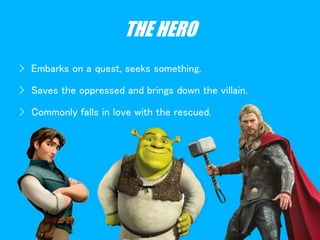
THE HERO
› Embarks on a quest, seeks something.
› Saves the oppressed and brings down the villain.
› Commonly falls in love with the rescued.
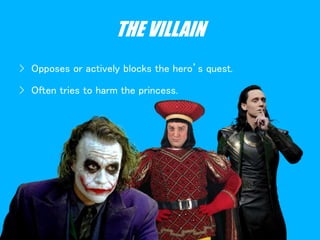
THE VILLAIN
› Opposes or actively blocks the hero’s quest.
› Often tries to harm the princess.
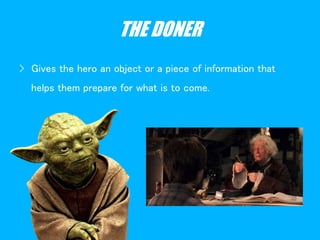
THE DONER
› Gives the hero an object or a piece of information that
helps them prepare for what is to come.
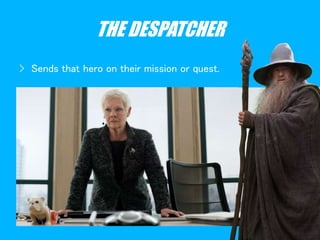
THE DESPATCHER
› Sends that hero on their mission or quest.
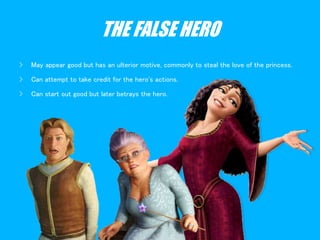
THE FALSE HERO
› May appear good but has an ulterior motive, commonly to steal the love of the princess.
› Can attempt to take credit for the hero's actions.
› Can start out good but later betrays the hero.
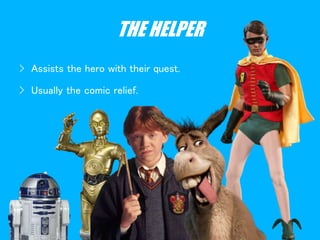
THE HELPER
› Assists the hero with their quest.
› Usually the comic relief.
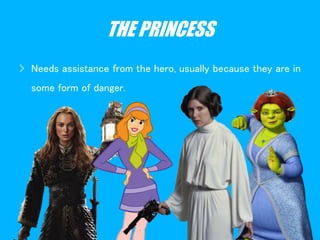
THE PRINCESS
› Needs assistance from the hero, usually because they are in
some form of danger.
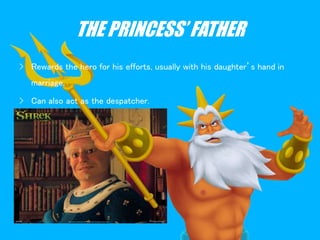
THE PRINCESS’ FATHER
› Rewards the hero for his efforts, usually with his daughter’s hand in
marriage.
› Can also act as the despatcher.
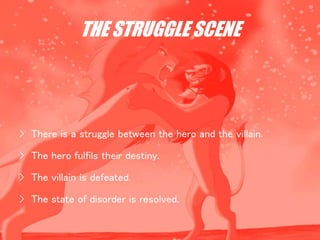
THE STRUGGLE SCENE
› There is a struggle between the hero and the villain.
› The hero fulfils their destiny.
› The villain is defeated.
› The state of disorder is resolved.
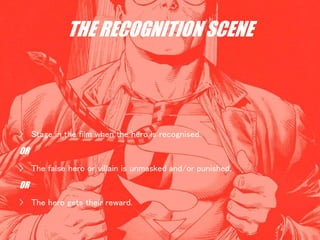
THE RECOGNITION SCENE
› Stage in the film when the hero is recognised.
OR
› The false hero or villain is unmasked and/or punished.
OR
› The hero gets their reward.

Propp

  • 1.
    VLADIMIR PROPP’S CHARACTERTHEORY He noticed that many folk tales were similar in a variety of areas. He identified a theory about characters and actions as narrative functions. According the Propp, characters have a narrative function; they provide a structure for the text.
  • 2.
    THE HERO › Embarkson a quest, seeks something. › Saves the oppressed and brings down the villain. › Commonly falls in love with the rescued.
  • 3.
    THE VILLAIN › Opposesor actively blocks the hero’s quest. › Often tries to harm the princess.
  • 4.
    THE DONER › Givesthe hero an object or a piece of information that helps them prepare for what is to come.
  • 5.
    THE DESPATCHER › Sendsthat hero on their mission or quest.
  • 6.
    THE FALSE HERO ›May appear good but has an ulterior motive, commonly to steal the love of the princess. › Can attempt to take credit for the hero's actions. › Can start out good but later betrays the hero.
  • 7.
    THE HELPER › Assiststhe hero with their quest. › Usually the comic relief.
  • 8.
    THE PRINCESS › Needsassistance from the hero, usually because they are in some form of danger.
  • 9.
    THE PRINCESS’ FATHER ›Rewards the hero for his efforts, usually with his daughter’s hand in marriage. › Can also act as the despatcher.
  • 10.
    THE STRUGGLE SCENE ›There is a struggle between the hero and the villain. › The hero fulfils their destiny. › The villain is defeated. › The state of disorder is resolved.
  • 11.
    THE RECOGNITION SCENE ›Stage in the film when the hero is recognised. OR › The false hero or villain is unmasked and/or punished. OR › The hero gets their reward.