Mise-En Scene
Setting 
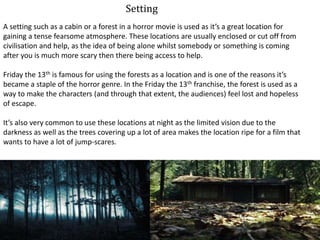
A setting such as a cabin or a forest in a horror movie is used as it’s a great location for 
gaining a tense fearsome atmosphere. These locations are usually enclosed or cut off from 
civilisation and help, as the idea of being alone whilst somebody or something is coming 
after you is much more scary then there being access to help. 
Friday the 13th is famous for using the forests as a location and is one of the reasons it’s 
became a staple of the horror genre. In the Friday the 13th franchise, the forest is used as a 
way to make the characters (and through that extent, the audiences) feel lost and hopeless 
of escape. 
It’s also very common to use these locations at night as the limited vision due to the 
darkness as well as the trees covering up a lot of area makes the location ripe for a film that 
wants to have a lot of jump-scares.
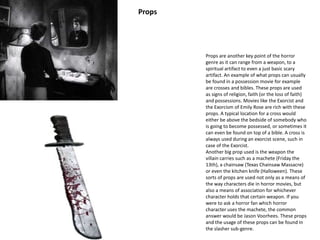
Props are another key point of the horror 
genre as it can range from a weapon, to a 
spiritual artifact to even a just basic scary 
artifact. An example of what props can usually 
be found in a possession movie for example 
are crosses and bibles. These props are used 
as signs of religion, faith (or the loss of faith) 
and possessions. Movies like the Exorcist and 
the Exorcism of Emily Rose are rich with these 
props. A typical location for a cross would 
either be above the bedside of somebody who 
is going to become possessed, or sometimes it 
can even be found on top of a bible. A cross is 
always used during an exorcist scene, such in 
case of the Exorcist. 
Another big prop used is the weapon the 
villain carries such as a machete (Friday the 
13th), a chainsaw (Texas Chainsaw Massacre) 
or even the kitchen knife (Halloween). These 
sorts of props are used not only as a means of 
the way characters die in horror movies, but 
also a means of association for whichever 
character holds that certain weapon. If you 
were to ask a horror fan which horror 
character uses the machete, the common 
answer would be Jason Voorhees. These props 
and the usage of these props can be found in 
the slasher sub-genre. 
Props
Lighting and Colours 
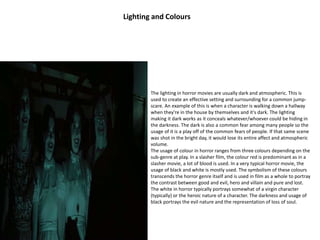
The lighting in horror movies are usually dark and atmospheric. This is 
used to create an effective setting and surrounding for a common jump-scare. 
An example of this is when a character is walking down a hallway 
when they're in the house by themselves and it's dark. The lighting 
making it dark works as it conceals whatever/whoever could be hiding in 
the darkness. The dark is also a common fear among many people so the 
usage of it is a play off of the common fears of people. If that same scene 
was shot in the bright day, it would lose its entire affect and atmospheric 
volume. 
The usage of colour in horror ranges from three colours depending on the 
sub-genre at play. In a slasher film, the colour red is predominant as in a 
slasher movie, a lot of blood is used. In a very typical horror movie, the 
usage of black and white is mostly used. The symbolism of these colours 
transcends the horror genre itself and is used in film as a whole to portray 
the contrast between good and evil, hero and villain and pure and lost. 
The white in horror typically portrays somewhat of a virgin character 
(typically) or the heroic nature of a character. The darkness and usage of 
black portrays the evil nature and the representation of loss of soul.
Costume, hair and make-up 
The apparel of characters is very important in the genre as that alone 
can determine the style of a character and whether or not the 
character is good or bad. 
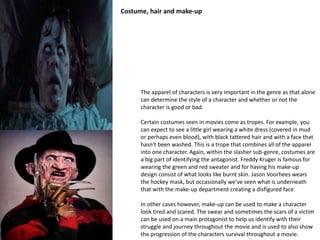
Certain costumes seen in movies come as tropes. For example, you 
can expect to see a little girl wearing a white dress (covered in mud 
or perhaps even blood), with black tattered hair and with a face that 
hasn't been washed. This is a trope that combines all of the apparel 
into one character. Again, within the slasher sub-genre, costumes are 
a big part of identifying the antagonist. Freddy Kruger is famous for 
wearing the green and red sweater and for having his make-up 
design consist of what looks like burnt skin. Jason Voorhees wears 
the hockey mask, but occasionally we've seen what is underneath 
that with the make-up department creating a disfigured face. 
In other cases however, make-up can be used to make a character 
look tired and scared. The swear and sometimes the scars of a victim 
can be used on a main protagonist to help us identify with their 
struggle and journey throughout the movie and is used to also show 
the progression of the characters survival throughout a movie.
Facial expressions and body language 
The use of facial expressions and body language are important to portray the fear that characters feel on-screen. This is important as the only 
way for us as an audience to feel fear through a character, is for that character to feel a certain degree of fear. 
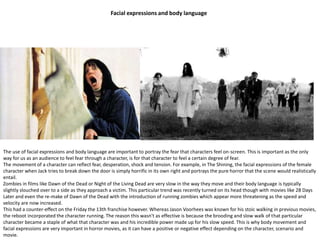
The movement of a character can reflect fear, desperation, shock and tension. For example, in The Shining, the facial expressions of the female 
character when Jack tries to break down the door is simply horrific in its own right and portrays the pure horror that the scene would realistically 
entail. 
Zombies in films like Dawn of the Dead or Night of the Living Dead are very slow in the way they move and their body language is typically 
slightly slouched over to a side as they approach a victim. This particular trend was recently turned on its head though with movies like 28 Days 
Later and even the re-make of Dawn of the Dead with the introduction of running zombies which appear more threatening as the speed and 
velocity are now increased. 
This had a counter-effect on the Friday the 13th franchise however. Whereas Jason Voorhees was known for his stoic walking in previous movies, 
the reboot incorporated the character running. The reason this wasn't as effective is because the brooding and slow walk of that particular 
character became a staple of what that character was and his incredible power made up for his slow speed. This is why body movement and 
facial expressions are very important in horror movies, as it can have a positive or negative effect depending on the character, scenario and 
movie.
Visual Effects 
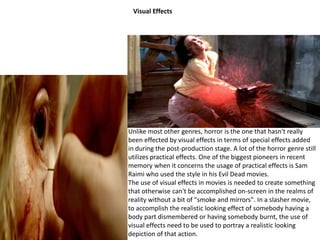
Unlike most other genres, horror is the one that hasn't really 
been effected by visual effects in terms of special effects added 
in during the post-production stage. A lot of the horror genre still 
utilizes practical effects. One of the biggest pioneers in recent 
memory when it concerns the usage of practical effects is Sam 
Raimi who used the style in his Evil Dead movies. 
The use of visual effects in movies is needed to create something 
that otherwise can't be accomplished on-screen in the realms of 
reality without a bit of "smoke and mirrors". In a slasher movie, 
to accomplish the realistic looking effect of somebody having a 
body part dismembered or having somebody burnt, the use of 
visual effects need to be used to portray a realistic looking 
depiction of that action.

Mise en scene in horror

  • 1.
  • 2.
    Setting A settingsuch as a cabin or a forest in a horror movie is used as it’s a great location for gaining a tense fearsome atmosphere. These locations are usually enclosed or cut off from civilisation and help, as the idea of being alone whilst somebody or something is coming after you is much more scary then there being access to help. Friday the 13th is famous for using the forests as a location and is one of the reasons it’s became a staple of the horror genre. In the Friday the 13th franchise, the forest is used as a way to make the characters (and through that extent, the audiences) feel lost and hopeless of escape. It’s also very common to use these locations at night as the limited vision due to the darkness as well as the trees covering up a lot of area makes the location ripe for a film that wants to have a lot of jump-scares.
  • 3.
    Props are anotherkey point of the horror genre as it can range from a weapon, to a spiritual artifact to even a just basic scary artifact. An example of what props can usually be found in a possession movie for example are crosses and bibles. These props are used as signs of religion, faith (or the loss of faith) and possessions. Movies like the Exorcist and the Exorcism of Emily Rose are rich with these props. A typical location for a cross would either be above the bedside of somebody who is going to become possessed, or sometimes it can even be found on top of a bible. A cross is always used during an exorcist scene, such in case of the Exorcist. Another big prop used is the weapon the villain carries such as a machete (Friday the 13th), a chainsaw (Texas Chainsaw Massacre) or even the kitchen knife (Halloween). These sorts of props are used not only as a means of the way characters die in horror movies, but also a means of association for whichever character holds that certain weapon. If you were to ask a horror fan which horror character uses the machete, the common answer would be Jason Voorhees. These props and the usage of these props can be found in the slasher sub-genre. Props
  • 4.
    Lighting and Colours The lighting in horror movies are usually dark and atmospheric. This is used to create an effective setting and surrounding for a common jump-scare. An example of this is when a character is walking down a hallway when they're in the house by themselves and it's dark. The lighting making it dark works as it conceals whatever/whoever could be hiding in the darkness. The dark is also a common fear among many people so the usage of it is a play off of the common fears of people. If that same scene was shot in the bright day, it would lose its entire affect and atmospheric volume. The usage of colour in horror ranges from three colours depending on the sub-genre at play. In a slasher film, the colour red is predominant as in a slasher movie, a lot of blood is used. In a very typical horror movie, the usage of black and white is mostly used. The symbolism of these colours transcends the horror genre itself and is used in film as a whole to portray the contrast between good and evil, hero and villain and pure and lost. The white in horror typically portrays somewhat of a virgin character (typically) or the heroic nature of a character. The darkness and usage of black portrays the evil nature and the representation of loss of soul.
  • 5.
    Costume, hair andmake-up The apparel of characters is very important in the genre as that alone can determine the style of a character and whether or not the character is good or bad. Certain costumes seen in movies come as tropes. For example, you can expect to see a little girl wearing a white dress (covered in mud or perhaps even blood), with black tattered hair and with a face that hasn't been washed. This is a trope that combines all of the apparel into one character. Again, within the slasher sub-genre, costumes are a big part of identifying the antagonist. Freddy Kruger is famous for wearing the green and red sweater and for having his make-up design consist of what looks like burnt skin. Jason Voorhees wears the hockey mask, but occasionally we've seen what is underneath that with the make-up department creating a disfigured face. In other cases however, make-up can be used to make a character look tired and scared. The swear and sometimes the scars of a victim can be used on a main protagonist to help us identify with their struggle and journey throughout the movie and is used to also show the progression of the characters survival throughout a movie.
  • 6.
    Facial expressions andbody language The use of facial expressions and body language are important to portray the fear that characters feel on-screen. This is important as the only way for us as an audience to feel fear through a character, is for that character to feel a certain degree of fear. The movement of a character can reflect fear, desperation, shock and tension. For example, in The Shining, the facial expressions of the female character when Jack tries to break down the door is simply horrific in its own right and portrays the pure horror that the scene would realistically entail. Zombies in films like Dawn of the Dead or Night of the Living Dead are very slow in the way they move and their body language is typically slightly slouched over to a side as they approach a victim. This particular trend was recently turned on its head though with movies like 28 Days Later and even the re-make of Dawn of the Dead with the introduction of running zombies which appear more threatening as the speed and velocity are now increased. This had a counter-effect on the Friday the 13th franchise however. Whereas Jason Voorhees was known for his stoic walking in previous movies, the reboot incorporated the character running. The reason this wasn't as effective is because the brooding and slow walk of that particular character became a staple of what that character was and his incredible power made up for his slow speed. This is why body movement and facial expressions are very important in horror movies, as it can have a positive or negative effect depending on the character, scenario and movie.
  • 7.
    Visual Effects Unlikemost other genres, horror is the one that hasn't really been effected by visual effects in terms of special effects added in during the post-production stage. A lot of the horror genre still utilizes practical effects. One of the biggest pioneers in recent memory when it concerns the usage of practical effects is Sam Raimi who used the style in his Evil Dead movies. The use of visual effects in movies is needed to create something that otherwise can't be accomplished on-screen in the realms of reality without a bit of "smoke and mirrors". In a slasher movie, to accomplish the realistic looking effect of somebody having a body part dismembered or having somebody burnt, the use of visual effects need to be used to portray a realistic looking depiction of that action.