Vitamins
Presented By
Group-6
Group Members
1. Nusrat jahan khan
Id -1321022646
2. Imrul Shahed
Id-1320662046
3.Mashiqur Rahman
Id-1320661046
VITAMIN A
• A yellow, fat-soluble, solid terpene
alcohol, obtained from carotene
and occurring in green and yellow
vegetables, egg yolk, etc.: essential
to growth, the protection of
epithelial tissue, and the prevention
of night blindness.
FUNCTIONS
• Vision
• Gene transcription
• Immune function
• Embroyonic development and reproduction
• Bone metabolism
• Haematopoieses
• Skin health
• Antioxidant activity
VITAMIN A
 Exits in 3 forms:
 all trans-retinol
 long chain fatty acyl ester of retinol (main storage form)
 retinal (the active form in the retina)
 Retinoic acid is also considered to be physiologically active
 Pro vitamin A or carotene can be converted to retinol in vivo
VISION CYCLE
Mechanism of Action
HYPERVITAMINOSIS A
• ACUTE:- caused by taking too
much vitamin A over a short
period of time
• CHRONIC:- occurs when too
much of the vitamin A is present
over a longer period
SYMPTOMS
• Abnormal softening of
the skull bone
(craniotabes -- infants
and children)
• Bone pain or swelling
• Bulging fontanelle
(infants)
• Changes in
consciousness
• Decreased appetite
• Headache
• Increased intracranial
pressure
• Irritability
• Liver damage
• Nausea
• Poor weight gain
• Skin and hair changes
• Cracking at corners of
the mouth
• Higher sensitivity
to sunlight
DEFICIENCY OF VITAMIN A
• rickets
• blindness
• xeropthalmia
• keratomalacia
• bitot's spot
• follicullar hyperkeratosis
• xerosis conjunctiva
• xerosis cornea
xeropthalmia KERATOMALACIA
BITOT'S SPOT
VITAMIN B
• B vitamins are a class of water-soluble vitamins that play important roles
in cell metabolism. There are eight B-group vitamins, which are essential for
bodily functions such as energy production and making red blood cells.
• The supplements which contain all eight are referred to as a vitamin B
complex . The eight B vitamins — B1, B2, B3, B5, B6, B7, B9, B12 — play an
important role in keeping our bodies running like well-oiled machines. These
essential nutrients help convert our food into fuel, allowing us to stay
energized throughout the day.
• The body has a limited capacity to store most of the B-group vitamins (except
B12 and folate, which are stored in the liver). For this reason, it is important
that adequate amounts of these vitamins be eaten regularly as part of a well-
balanced, nutritious diet.
Sources of vitamin B
Types of vitamin B
1. Vitamin B1 (thiamine)
2. Vitamin B2 (riboflavin)
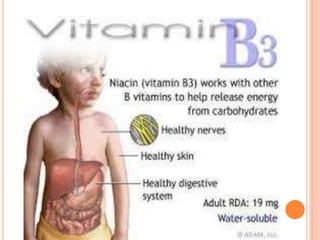
3. Vitamin B3 (niacin or nicotinic acid)
4. Vitamin B5 (pantothenic acid)
5. Vitamin B6(pyridoxine, pyridoxal, pyridoxamine)
6. Vitamin B7 (biotin)
7. Vitamin B9 (folic acid)
8. Vitamin B12(various cobalamins; commonly cyanocobalaminor methylcobalamin)
• Side effect :There are some reports of anaphylaxis caused by high-dose
thiamin injections into the vein or muscle.
• Sources : Whole grains, peanuts, beans , blackstrap molasses and wheat
germ
Thiamine
• Thiamine deficiency, causes beriberi.
, Wernicke's encephalopathy(impaired sensory
perception),
weakness and pain in the limbs,
periods of irregular heartbeat,
and edema (swelling of bodily tissues).
Heart failure and death may occur in advanced cases.
B2 Deficiency, causes ariboflavinosis.
Symptoms may include
cheilosis (cracks in the lips),
high sensitivity to sunlight,
angular cheilitis,
glossitis(inflammation of the tongue),
seborrheic dermatitis,
pharyngitis (sore throat),
hyperemia,
edema of the pharyngeal and oral mucosa.
• Side effect : The only adverse effects
associated with riboflavin comes from in vitro
studies showing the production of reactive
oxygen species(free radicals) when riboflavin
was exposed to intense visible and UV light
• Sources : Almonds, wild rice, milk, yogurt, eggs, Brussels sprouts, spinach and soybeans.
Riboflavin
Sources : Yeast, red meat, milk, eggs, beans and green
vegetables
Niacin Deficiency , along with a deficiency of
tryptophan causes pellagra. Symptoms include
aggression,
dermatitis,
insomnia,
weakness,
mental confusion,
diarrhea.
In advanced cases, pellagra may lead to dementia and death (the 3(+1) Ds: dermatitis,
diarrhea, dementia, and death).
Side effect: Intake of 3000 mg/day of nicotinamide and 1500 mg/day of nicotinic acid are
associated with nausea, vomiting, and signs
and symptoms of liver toxicity.
Nicotinic acid
Functions
Niacin is composed of two structures: nicotinic acid and nicotinamide. There are two co-
enzyme forms of niacin: nicotinamide adenine dinucleotide(NAD) and nicotinamide adenine
dinucleotide phosphate(NADP).
• VITAMIN B6 DEFICIENCY, IS A SEBORRHOEIC DERMATITIS-LIKE
ERUPTION,
ATROPHIC GLOSSITIS WITH ULCERATION,
ANGULAR CHEILITIS ,
CONJUNCTIVITIS ,
NEUROLOGIC SYMPTOMS OF SOMNOLENCE ,
NEUROPATHY,
SIDEROBLASTIC ANEMIA
SIDE EFFECT : PYRIDOXINE IN EXCESS OF THE RDI OVER LONG PERIODS OF TIME RESULT IN PAINFUL
AND ULTIMATELY IRREVERSIBLE NEUROLOGICAL PROBLEMS.
Sources : Chicken, turkey, tuna, salmon, sunflower seeds, cheese, brown rice and carrots
PLP
Vitamin B7 (biotin)
Functions :
Biotin plays a key role in the metabolism of lipids,
proteins and carbohydrates.
It is a critical co-enzyme of four carboxylases: acetyl CoA
carboxylase, which is involved in the synthesis of fatty
acids from acetate; propionyl CoA carboxylase, involved
in gluconeogenesis; β-methylcrotonyl CoA carboxylase,
involved in the metabolism of leucin .
its association with healthy hair, skin and nails, It may help people with diabetes
control high blood glucose levels
Biotin
Sources : Barley, liver, yeast, pork, chicken, fish, potatoes, cauliflower, egg yolks and nuts
Biotin Deficiency ,does not typically cause symptoms in adults but may lead to
impaired growth and neurological disorders in infants.
Multiple carboxylase deficiency, an inborn error of metabolism, can lead to biotin
deficiency even when dietary biotin intake is normal.
Sources :Dark leafy greens, asparagus, beets, salmon, root vegetables, milk, bulgur wheat
and beans
Daily requirement : Adults need 0.2mg of folic acid a day.
Folic acid deficiency ,results in a macrocytic anemia,
and elevated levels of homocysteine.
Deficiency in pregnant women can lead to birth defects
. Researchers have shown that folic acid might also slow the insidious effects of age
on the brain.
Side effect : Folic acid can lead to permanent neurological damage.
Functions :
Folic acid, known as folate in its natural form, is one of
the B-group vitamins. Folic acid acts as a co-enzyme in
the form of tetrahydrofolate(THF), which is involved in
the transfer of single-carbon units in the metabolism of
nucleic acids and amino acids.
folic acid
Sources : Fish, shellfish, dairy, eggs, beef and pork
Daily requirement :Adults need approximately
 0.0015mg a day of vitamin B12.
B12 Deficiency , results in a
macrocytic anemia,
elevated homocysteine,
peripheral neuropathy,
memory loss and other cognitive deficits.
autoimmune disease
symptoms of mania and psychosis .
In rare extreme cases, paralysis can result.
Side effect : Acne-like rash [causality is not conclusively established]
Vitamin C
• Also known as ascorbic acid
• Water-soluble
• Absorbed in intestine by an Na+ dependent
active transport (high concentrations use
passive transport)
• Also regulated by the kidneys (conservation
and excretion)
• Stored in pools throughout the body
Vitamin C
Source: http://biology.clc.uc.edu/courses/bio105/vitamin.htm
o It is readily absorbed from stomach & small
intestine
o Storage:
o Only small amounts of vitamin C are stored in the
body (1 gm)
o It is present in the tissues as ascorbic acid &
dehydro ascorbic acid
o Mainly found in retina, adrenal gland, pituitary &
thymus
Metabolism
BIOCHEMICAL FUNCTIONS
• Collagen formation: Post translational modification-
stabilisation and formation of collagen triple helix
• Bone formation
• Synthesis of serotonin (tryptophan)and homogentisic acid
(tyrosine)
• Iron & Hb metabolism:Enhances absorption of
ferrous form of iron;helps in Met Hb Hb
bile pigments
• Maturation of erythrocytes
DEFICIENCY SYMPTOMS
SCURVY
• Capillary fragility
• Sore gums;loose teeth
• Swollen joints &brittle bones
• Fragile blood vessels
• Impaired wound healing
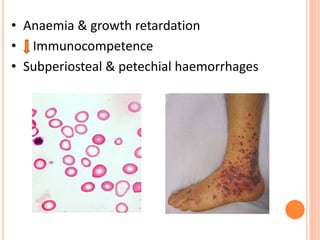
• Anaemia & growth retardation
• Immunocompetence
• Subperiosteal & petechial haemorrhages
What is Vitamin D?
• Fat Soluble Vitamin
• Found in food
• Absorbed through sunlight exposure
• Converted to hormone form through liver
and kidney
Two Major Forms of Vitamin D
• Vitamin D2, ergocalciferol
• Vitamin D3, cholecalciferol
Other Forms of Vitamin D
• Vitamin D1: molecular compound of
ergocalciferol with lumisterol, 1:1
• Vitamin D4: 22-dihydroergocalciferol
• Vitamin D5: sitocalciferol (made from 7-
dehydrosisterol)
What are the sources?
• Exposure to sunlight
• Cod Liver Oil, 1 Tbs: 1,360 IU
• Salmon, cooked, 3 1/2 oz: 360 IU
• Mackerel, cooked, 3 1/2 oz: 345 IU
• Sardines, canned in oil, drained, 3 1/2 oz: 270 IU
• Milk, nonfat, reduced fat, and whole, vitamin D fortified, 1 c: 98 IU
• Margarine, fortified, 1 Tbs: 60 IU
• Pudding, 1/2 c prepared from mix and made with vitamin D fortified
milk: 50 IU
• Dry cereal, Vitamin D fortified w/10% of the recommended daily
value, 3/4 c: 40-50 IU (other cereals may be fortified with more or
less vitamin D)
• Liver, beef, cooked, 3 1/2 oz: 30 IU
• Egg, 1 whole (vitamin D is present in the yolk): 25 IU
What does Vitamin D do?
• Maintain normal blood levels of Calcium
and Phosphorus
• Aids in absorption of calcium
• Promotes bone mineralization
• Prevents rickets in children and
Osteomalacia in adults
Role in immunomodulation
• Binds to nuclear Vitamin D receptors
(VDR)
• Immune enhancing and
immunosuppressive effects
• Increase activity of NKCs
• Increased production of cathelicidin
• Therepeutic Clinical Applications
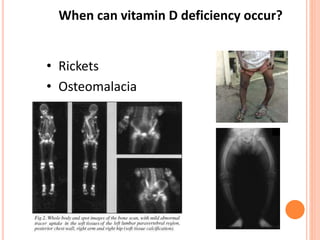
When can vitamin D deficiency occur?
• Rickets
• Osteomalacia
What is the health risk of too much vitamin
D?
• nausea
• vomiting
• poor appetite
• constipation
• weakness
• weight loss
A LITTLE ABOUT VITAMIN E...
Vitamin E is not a single substance but rather a family of fat
soluble vitamins.
tocopherols: alpha tocopherol, beta tocopherol, gamma
tocopherol, and delta tocopherol
tocotrienols: alpha, beta, gamma, and delta tocotrienol
Each vitamin has a specific function in the body.
FOOD SOURCES OF VITAMIN E
• Asparagus
• Avocado
• Eggs
• Milk
• Nuts, such as almonds and hazelnuts
• Seeds
• Spinach and other green leafy vegetables
• Unheated vegetable oils
• Wheat germ
• Wholegrain foods
FUNCTIONS IN THE BODY
• Protects your skin from ultraviolet light which promotes
healthy skin and slows down the aging of skin
• Acts like an antioxidant and prevents cell damage from free
radicals
o Free radicals are atoms or groups of atoms that can damage cellular
components such as DNA or parts of cells.
• Prevents oxidative stress [when oxygen containing
molecules become too reactive] by preventing oxygen
molecules from being too reactive
• Allows your cells to communicate effectively through a
process called "cell signaling"
• Helps protect against prostate cancer and Alzheimer's
disease
WHO
• People more than 55 years of age
• Very low birth weight infants
• Those who abuse alcohol and other drugs
• Those with:
o cystic fibrosis
o celiac disease
o hyperthyroidism
o malnutrition
o liver, gallbladder, or pancreatic disease
RECOMMENDED DIETARY ALLOWANCES
(RDAS) FOR VITAMIN E:
• Infants, 0-6 months: 4 milligrams
• Infants, 7-12 months: 5 milligrams
• Males and females, 1-3 years: 6 milligrams
• Males and females, 4-8 years: 7 milligrams
• Males and females, 9-13 years: 11 milligrams
• Males and females, 14 years and older: 15 milligrams
• Pregnant females, 18 years and older: 15 milligrams
• Lactating females, 18 years and older : 19 milligrams
DEFICIENCY SYMPTOMS AND EFFECTS
• Difficult to pinpoint deficiency in Vitamin E
• Fat malabsorption disorders are more likely to become
deficient
o The digestive tract requires fat to absorb vitamin E
• Problems that can arise from lack of Vitamin E are pancreatic
disease, gallbladder disease, liver disease, and celiac
disease.
• Peripheral Neuropathy: people who lack Vitamin E may
experience problems in their nervous system
DEFICIENCY SYMPTOMS AND EFFECTS CONT.
• Patients with Vitamin E deficiency may show signs and
symptoms of hyporeflexia that progress to ataxia, including
limitations in upward gaze.
• Patients with severe, prolonged vitamin E deficiency may
develop complete blindness, cardiac arrhythmia, and
dementia.
• Patients may present with profound muscle weakness and
visual-field constriction.
TOXICITY SYMPTOMS
Having too much Vitamin E can also be a problem.
If taken in excess amounts [3000 IU+] people may experience
intestinal cramps and diarrhea, fatigue, double vision, and
muscle weakness.
BIBLIOGRAPHY
1.
http://www.whfoods.com/genpage.php?tname=nutrient&dbid=11
1
2. http://dietary-
supplements.info.nih.gov/factsheets/vitamine.asp
3. http://emedicine.medscape.com/article/126187-overview
VITAMIN K
 Vitamin K is a group of lipophilic, hydrophobic vitamins.
 They are needed for the postranslation modification of proteins required
for blood coagulation,
 They are involved in metabolism pathways, in bone mineralisation, cell
growth, metabolism of blood vessel wall.
Vitamin K1
Vitamin K2
VITAMIN K
 Vitamin K1 (phylloquinon) – plant
origin
 Vitamin K2 (menaquinon) – normally
produced by bacteria in the large
intestine
 K1 a K2 are used differently in the
body
 K1 – used mainly for blood clothing
 K2 – important in non-coagulation
actions - as in metabolism and bone
mineralization, in cell growth,
metabolism of blood vessel walls
cells.
Synthetic derivatives of Vit.K
VITAMIN K - FUNCTION
 Cofactor of liver microsomal carboxylase which carboxylates glutamate
residues to g-carboxyglutamate during synthesis of prothrombin and
coagulation factors VII, IX a X (posttranslation reaction).
 Carboxylated glutamate chelates Ca2+ ions, permitting the binding of blood
clotting proteins to membranes.
 Forms the binding site for Ca2+ also in other proteins – osteocalcin.
PHYSIOLOGICAL EFFECTS OF VITAMIN K
 Vitamin K serves as an
essential cofactor for a
carboxylase that catalyzes
carboxylation of glutamic
acid residues on vitamin K-
dependent proteins. These
proteins are involved in:
1) Coagulation
2) Bone Mineralization
3) Cell growth
Deficiencies are very rare in humans except in newborns due to:
• insufficient gut bacteria
• poor placental transport of vitamin K
• low prothrombin synthetic capacity of neonatal liver
Newborns routinely receive vitamin K injection (0.5 -1 mg vitamin K) or 2 mg
orally, because human milk is very low in vitamin K (2.5 μg/L).
Bleeding episodes may occur in patients with low vitamin K status on long-term
antibiotic treatment (loss of colonic bacteria).
Vitamin K Deficiency
Hemorrhagic disease
of the newborn
GI Bleeding
VITAMIN K - DEFICIENCY
 Deficiency is caused by fat malabsorption or by the liver
failure.
 Blood clotting disorders – dangerous in newborns, life-
threatening bleeding (hemorrhagic disease of the newborn).
 Osteoporosis due to failed carboxylation of osteokalcin and
decreased activity of osteoblasts.
 Under normal circumstances there is not a shortage, vit. K is
abundant in the diet.
SOURCES OF VITAMIN K
 Green leafy vegetables
 vegetable oil
 broccoli
 cereals
http://health.allrefer.com/health/nutrition.html
COAGULATION
 The transformation of
liquid blood into a solid
gel
 Stops blood flow in the
damaged area
 Fibrin is the final protein
which produces a
meshwork to trap RBC
and other cells
VITAMIN K DEPENDENT COAGULATION
 Certain clotting factors/proteins require calcium to bind for
activation
 Calcium can only bind after gamma carboxylation of specific
glutamic acid residues in these proteins
 The reduced form of vitamin K2 (vitamin KH2) acts as a cofactor for
this carboxylation reaction.
 These proteins are known as “Vitamin K dependent” proteins
VITAMIN K DEPENDENT PROTEINS
 factor II (prothrombin)
 factor VII (proconvertin)
 factor IX (thromboplastin component)
 factor X (Stuart factor)
 protein C & protein S
 Protein Z
CLOTTING CASCADE
Vitamins

Vitamins

  • 1.
  • 2.
    Presented By Group-6 Group Members 1.Nusrat jahan khan Id -1321022646 2. Imrul Shahed Id-1320662046 3.Mashiqur Rahman Id-1320661046
  • 8.
    VITAMIN A • Ayellow, fat-soluble, solid terpene alcohol, obtained from carotene and occurring in green and yellow vegetables, egg yolk, etc.: essential to growth, the protection of epithelial tissue, and the prevention of night blindness.
  • 9.
    FUNCTIONS • Vision • Genetranscription • Immune function • Embroyonic development and reproduction • Bone metabolism • Haematopoieses • Skin health • Antioxidant activity
  • 10.
    VITAMIN A  Exitsin 3 forms:  all trans-retinol  long chain fatty acyl ester of retinol (main storage form)  retinal (the active form in the retina)  Retinoic acid is also considered to be physiologically active  Pro vitamin A or carotene can be converted to retinol in vivo
  • 11.
  • 12.
  • 13.
    HYPERVITAMINOSIS A • ACUTE:-caused by taking too much vitamin A over a short period of time • CHRONIC:- occurs when too much of the vitamin A is present over a longer period
  • 14.
    SYMPTOMS • Abnormal softeningof the skull bone (craniotabes -- infants and children) • Bone pain or swelling • Bulging fontanelle (infants) • Changes in consciousness • Decreased appetite • Headache • Increased intracranial pressure • Irritability • Liver damage • Nausea • Poor weight gain • Skin and hair changes • Cracking at corners of the mouth • Higher sensitivity to sunlight
  • 15.
    DEFICIENCY OF VITAMINA • rickets • blindness • xeropthalmia • keratomalacia • bitot's spot • follicullar hyperkeratosis • xerosis conjunctiva • xerosis cornea
  • 16.
  • 18.
    VITAMIN B • Bvitamins are a class of water-soluble vitamins that play important roles in cell metabolism. There are eight B-group vitamins, which are essential for bodily functions such as energy production and making red blood cells. • The supplements which contain all eight are referred to as a vitamin B complex . The eight B vitamins — B1, B2, B3, B5, B6, B7, B9, B12 — play an important role in keeping our bodies running like well-oiled machines. These essential nutrients help convert our food into fuel, allowing us to stay energized throughout the day. • The body has a limited capacity to store most of the B-group vitamins (except B12 and folate, which are stored in the liver). For this reason, it is important that adequate amounts of these vitamins be eaten regularly as part of a well- balanced, nutritious diet.
  • 19.
  • 20.
    Types of vitaminB 1. Vitamin B1 (thiamine) 2. Vitamin B2 (riboflavin) 3. Vitamin B3 (niacin or nicotinic acid) 4. Vitamin B5 (pantothenic acid) 5. Vitamin B6(pyridoxine, pyridoxal, pyridoxamine) 6. Vitamin B7 (biotin) 7. Vitamin B9 (folic acid) 8. Vitamin B12(various cobalamins; commonly cyanocobalaminor methylcobalamin)
  • 23.
    • Side effect:There are some reports of anaphylaxis caused by high-dose thiamin injections into the vein or muscle. • Sources : Whole grains, peanuts, beans , blackstrap molasses and wheat germ Thiamine • Thiamine deficiency, causes beriberi. , Wernicke's encephalopathy(impaired sensory perception), weakness and pain in the limbs, periods of irregular heartbeat, and edema (swelling of bodily tissues). Heart failure and death may occur in advanced cases.
  • 25.
    B2 Deficiency, causesariboflavinosis. Symptoms may include cheilosis (cracks in the lips), high sensitivity to sunlight, angular cheilitis, glossitis(inflammation of the tongue), seborrheic dermatitis, pharyngitis (sore throat), hyperemia, edema of the pharyngeal and oral mucosa. • Side effect : The only adverse effects associated with riboflavin comes from in vitro studies showing the production of reactive oxygen species(free radicals) when riboflavin was exposed to intense visible and UV light • Sources : Almonds, wild rice, milk, yogurt, eggs, Brussels sprouts, spinach and soybeans. Riboflavin
  • 27.
    Sources : Yeast,red meat, milk, eggs, beans and green vegetables Niacin Deficiency , along with a deficiency of tryptophan causes pellagra. Symptoms include aggression, dermatitis, insomnia, weakness, mental confusion, diarrhea. In advanced cases, pellagra may lead to dementia and death (the 3(+1) Ds: dermatitis, diarrhea, dementia, and death). Side effect: Intake of 3000 mg/day of nicotinamide and 1500 mg/day of nicotinic acid are associated with nausea, vomiting, and signs and symptoms of liver toxicity. Nicotinic acid Functions Niacin is composed of two structures: nicotinic acid and nicotinamide. There are two co- enzyme forms of niacin: nicotinamide adenine dinucleotide(NAD) and nicotinamide adenine dinucleotide phosphate(NADP).
  • 30.
    • VITAMIN B6DEFICIENCY, IS A SEBORRHOEIC DERMATITIS-LIKE ERUPTION, ATROPHIC GLOSSITIS WITH ULCERATION, ANGULAR CHEILITIS , CONJUNCTIVITIS , NEUROLOGIC SYMPTOMS OF SOMNOLENCE , NEUROPATHY, SIDEROBLASTIC ANEMIA SIDE EFFECT : PYRIDOXINE IN EXCESS OF THE RDI OVER LONG PERIODS OF TIME RESULT IN PAINFUL AND ULTIMATELY IRREVERSIBLE NEUROLOGICAL PROBLEMS. Sources : Chicken, turkey, tuna, salmon, sunflower seeds, cheese, brown rice and carrots PLP
  • 31.
    Vitamin B7 (biotin) Functions: Biotin plays a key role in the metabolism of lipids, proteins and carbohydrates. It is a critical co-enzyme of four carboxylases: acetyl CoA carboxylase, which is involved in the synthesis of fatty acids from acetate; propionyl CoA carboxylase, involved in gluconeogenesis; β-methylcrotonyl CoA carboxylase, involved in the metabolism of leucin . its association with healthy hair, skin and nails, It may help people with diabetes control high blood glucose levels Biotin Sources : Barley, liver, yeast, pork, chicken, fish, potatoes, cauliflower, egg yolks and nuts Biotin Deficiency ,does not typically cause symptoms in adults but may lead to impaired growth and neurological disorders in infants. Multiple carboxylase deficiency, an inborn error of metabolism, can lead to biotin deficiency even when dietary biotin intake is normal.
  • 33.
    Sources :Dark leafygreens, asparagus, beets, salmon, root vegetables, milk, bulgur wheat and beans Daily requirement : Adults need 0.2mg of folic acid a day. Folic acid deficiency ,results in a macrocytic anemia, and elevated levels of homocysteine. Deficiency in pregnant women can lead to birth defects . Researchers have shown that folic acid might also slow the insidious effects of age on the brain. Side effect : Folic acid can lead to permanent neurological damage. Functions : Folic acid, known as folate in its natural form, is one of the B-group vitamins. Folic acid acts as a co-enzyme in the form of tetrahydrofolate(THF), which is involved in the transfer of single-carbon units in the metabolism of nucleic acids and amino acids. folic acid
  • 35.
    Sources : Fish,shellfish, dairy, eggs, beef and pork Daily requirement :Adults need approximately  0.0015mg a day of vitamin B12. B12 Deficiency , results in a macrocytic anemia, elevated homocysteine, peripheral neuropathy, memory loss and other cognitive deficits. autoimmune disease symptoms of mania and psychosis . In rare extreme cases, paralysis can result. Side effect : Acne-like rash [causality is not conclusively established]
  • 37.
    Vitamin C • Alsoknown as ascorbic acid • Water-soluble • Absorbed in intestine by an Na+ dependent active transport (high concentrations use passive transport) • Also regulated by the kidneys (conservation and excretion) • Stored in pools throughout the body
  • 38.
  • 39.
    o It isreadily absorbed from stomach & small intestine o Storage: o Only small amounts of vitamin C are stored in the body (1 gm) o It is present in the tissues as ascorbic acid & dehydro ascorbic acid o Mainly found in retina, adrenal gland, pituitary & thymus Metabolism
  • 40.
    BIOCHEMICAL FUNCTIONS • Collagenformation: Post translational modification- stabilisation and formation of collagen triple helix • Bone formation • Synthesis of serotonin (tryptophan)and homogentisic acid (tyrosine)
  • 41.
    • Iron &Hb metabolism:Enhances absorption of ferrous form of iron;helps in Met Hb Hb bile pigments • Maturation of erythrocytes
  • 42.
    DEFICIENCY SYMPTOMS SCURVY • Capillaryfragility • Sore gums;loose teeth • Swollen joints &brittle bones • Fragile blood vessels • Impaired wound healing
  • 43.
    • Anaemia &growth retardation • Immunocompetence • Subperiosteal & petechial haemorrhages
  • 46.
    What is VitaminD? • Fat Soluble Vitamin • Found in food • Absorbed through sunlight exposure • Converted to hormone form through liver and kidney
  • 47.
    Two Major Formsof Vitamin D • Vitamin D2, ergocalciferol • Vitamin D3, cholecalciferol Other Forms of Vitamin D • Vitamin D1: molecular compound of ergocalciferol with lumisterol, 1:1 • Vitamin D4: 22-dihydroergocalciferol • Vitamin D5: sitocalciferol (made from 7- dehydrosisterol)
  • 48.
    What are thesources? • Exposure to sunlight • Cod Liver Oil, 1 Tbs: 1,360 IU • Salmon, cooked, 3 1/2 oz: 360 IU • Mackerel, cooked, 3 1/2 oz: 345 IU • Sardines, canned in oil, drained, 3 1/2 oz: 270 IU • Milk, nonfat, reduced fat, and whole, vitamin D fortified, 1 c: 98 IU • Margarine, fortified, 1 Tbs: 60 IU • Pudding, 1/2 c prepared from mix and made with vitamin D fortified milk: 50 IU • Dry cereal, Vitamin D fortified w/10% of the recommended daily value, 3/4 c: 40-50 IU (other cereals may be fortified with more or less vitamin D) • Liver, beef, cooked, 3 1/2 oz: 30 IU • Egg, 1 whole (vitamin D is present in the yolk): 25 IU
  • 49.
    What does VitaminD do? • Maintain normal blood levels of Calcium and Phosphorus • Aids in absorption of calcium • Promotes bone mineralization • Prevents rickets in children and Osteomalacia in adults
  • 50.
    Role in immunomodulation •Binds to nuclear Vitamin D receptors (VDR) • Immune enhancing and immunosuppressive effects • Increase activity of NKCs • Increased production of cathelicidin • Therepeutic Clinical Applications
  • 51.
    When can vitaminD deficiency occur? • Rickets • Osteomalacia
  • 52.
    What is thehealth risk of too much vitamin D? • nausea • vomiting • poor appetite • constipation • weakness • weight loss
  • 54.
    A LITTLE ABOUTVITAMIN E... Vitamin E is not a single substance but rather a family of fat soluble vitamins. tocopherols: alpha tocopherol, beta tocopherol, gamma tocopherol, and delta tocopherol tocotrienols: alpha, beta, gamma, and delta tocotrienol Each vitamin has a specific function in the body.
  • 55.
    FOOD SOURCES OFVITAMIN E • Asparagus • Avocado • Eggs • Milk • Nuts, such as almonds and hazelnuts • Seeds • Spinach and other green leafy vegetables • Unheated vegetable oils • Wheat germ • Wholegrain foods
  • 56.
    FUNCTIONS IN THEBODY • Protects your skin from ultraviolet light which promotes healthy skin and slows down the aging of skin • Acts like an antioxidant and prevents cell damage from free radicals o Free radicals are atoms or groups of atoms that can damage cellular components such as DNA or parts of cells. • Prevents oxidative stress [when oxygen containing molecules become too reactive] by preventing oxygen molecules from being too reactive • Allows your cells to communicate effectively through a process called "cell signaling" • Helps protect against prostate cancer and Alzheimer's disease
  • 58.
    WHO • People morethan 55 years of age • Very low birth weight infants • Those who abuse alcohol and other drugs • Those with: o cystic fibrosis o celiac disease o hyperthyroidism o malnutrition o liver, gallbladder, or pancreatic disease
  • 59.
    RECOMMENDED DIETARY ALLOWANCES (RDAS)FOR VITAMIN E: • Infants, 0-6 months: 4 milligrams • Infants, 7-12 months: 5 milligrams • Males and females, 1-3 years: 6 milligrams • Males and females, 4-8 years: 7 milligrams • Males and females, 9-13 years: 11 milligrams • Males and females, 14 years and older: 15 milligrams • Pregnant females, 18 years and older: 15 milligrams • Lactating females, 18 years and older : 19 milligrams
  • 60.
    DEFICIENCY SYMPTOMS ANDEFFECTS • Difficult to pinpoint deficiency in Vitamin E • Fat malabsorption disorders are more likely to become deficient o The digestive tract requires fat to absorb vitamin E • Problems that can arise from lack of Vitamin E are pancreatic disease, gallbladder disease, liver disease, and celiac disease. • Peripheral Neuropathy: people who lack Vitamin E may experience problems in their nervous system
  • 61.
    DEFICIENCY SYMPTOMS ANDEFFECTS CONT. • Patients with Vitamin E deficiency may show signs and symptoms of hyporeflexia that progress to ataxia, including limitations in upward gaze. • Patients with severe, prolonged vitamin E deficiency may develop complete blindness, cardiac arrhythmia, and dementia. • Patients may present with profound muscle weakness and visual-field constriction.
  • 62.
    TOXICITY SYMPTOMS Having toomuch Vitamin E can also be a problem. If taken in excess amounts [3000 IU+] people may experience intestinal cramps and diarrhea, fatigue, double vision, and muscle weakness.
  • 63.
  • 65.
    VITAMIN K  VitaminK is a group of lipophilic, hydrophobic vitamins.  They are needed for the postranslation modification of proteins required for blood coagulation,  They are involved in metabolism pathways, in bone mineralisation, cell growth, metabolism of blood vessel wall.
  • 66.
    Vitamin K1 Vitamin K2 VITAMINK  Vitamin K1 (phylloquinon) – plant origin  Vitamin K2 (menaquinon) – normally produced by bacteria in the large intestine  K1 a K2 are used differently in the body  K1 – used mainly for blood clothing  K2 – important in non-coagulation actions - as in metabolism and bone mineralization, in cell growth, metabolism of blood vessel walls cells. Synthetic derivatives of Vit.K
  • 67.
    VITAMIN K -FUNCTION  Cofactor of liver microsomal carboxylase which carboxylates glutamate residues to g-carboxyglutamate during synthesis of prothrombin and coagulation factors VII, IX a X (posttranslation reaction).  Carboxylated glutamate chelates Ca2+ ions, permitting the binding of blood clotting proteins to membranes.  Forms the binding site for Ca2+ also in other proteins – osteocalcin.
  • 68.
    PHYSIOLOGICAL EFFECTS OFVITAMIN K  Vitamin K serves as an essential cofactor for a carboxylase that catalyzes carboxylation of glutamic acid residues on vitamin K- dependent proteins. These proteins are involved in: 1) Coagulation 2) Bone Mineralization 3) Cell growth
  • 69.
    Deficiencies are veryrare in humans except in newborns due to: • insufficient gut bacteria • poor placental transport of vitamin K • low prothrombin synthetic capacity of neonatal liver Newborns routinely receive vitamin K injection (0.5 -1 mg vitamin K) or 2 mg orally, because human milk is very low in vitamin K (2.5 μg/L). Bleeding episodes may occur in patients with low vitamin K status on long-term antibiotic treatment (loss of colonic bacteria). Vitamin K Deficiency
  • 70.
    Vitamin K Deficiency Hemorrhagicdisease of the newborn GI Bleeding
  • 71.
    VITAMIN K -DEFICIENCY  Deficiency is caused by fat malabsorption or by the liver failure.  Blood clotting disorders – dangerous in newborns, life- threatening bleeding (hemorrhagic disease of the newborn).  Osteoporosis due to failed carboxylation of osteokalcin and decreased activity of osteoblasts.  Under normal circumstances there is not a shortage, vit. K is abundant in the diet.
  • 72.
    SOURCES OF VITAMINK  Green leafy vegetables  vegetable oil  broccoli  cereals http://health.allrefer.com/health/nutrition.html
  • 73.
    COAGULATION  The transformationof liquid blood into a solid gel  Stops blood flow in the damaged area  Fibrin is the final protein which produces a meshwork to trap RBC and other cells
  • 74.
    VITAMIN K DEPENDENTCOAGULATION  Certain clotting factors/proteins require calcium to bind for activation  Calcium can only bind after gamma carboxylation of specific glutamic acid residues in these proteins  The reduced form of vitamin K2 (vitamin KH2) acts as a cofactor for this carboxylation reaction.  These proteins are known as “Vitamin K dependent” proteins
  • 75.
    VITAMIN K DEPENDENTPROTEINS  factor II (prothrombin)  factor VII (proconvertin)  factor IX (thromboplastin component)  factor X (Stuart factor)  protein C & protein S  Protein Z
  • 76.