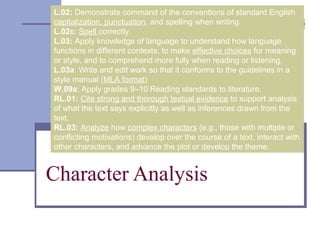
#9 I’ll read through the standards that will be scored, highlighting the underlined portions.
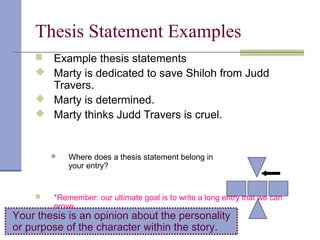
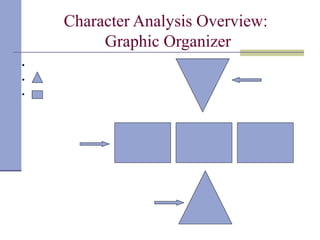
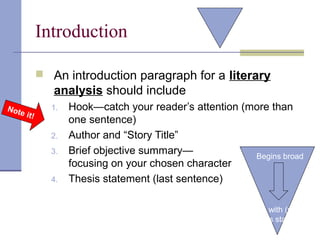
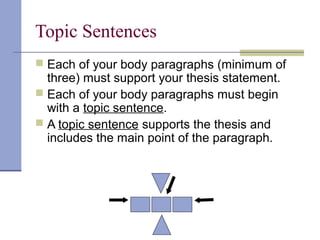
#11 A triangle because an introduction should begin broad and “narrow” to the writer’s main point (thesis).
1. Ask students to list strategies for “hooking” their audience.
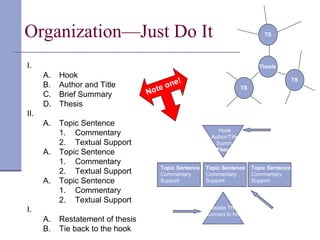
#14 For more advanced students, point out that points can sometimes overlap paragraphs so ORGANIZATION is key.
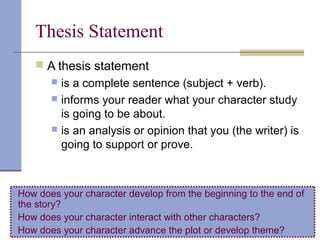
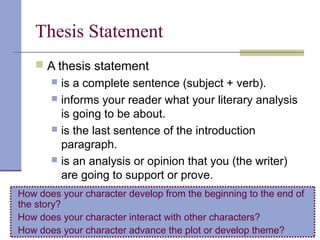
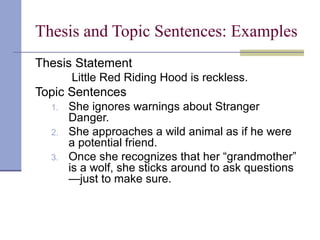
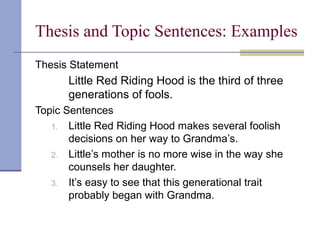
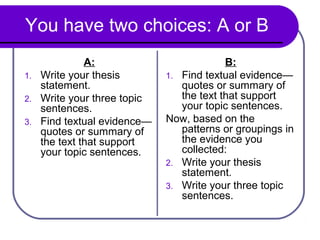
#16 Talk to students about who is discussed in each body paragraph. It’s probably important to point out that this sort of a thesis statement won’t work with their story.
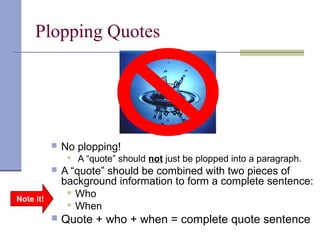
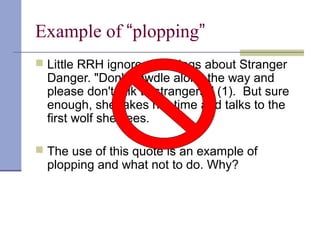
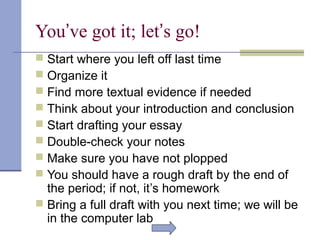
#22 Discuss “plopping”: there is no introduction to the quote, no background information, and while the quote is relevant, it is “plopped”.
Let students know that what’s written isn’t an example of a full paragraph, there would be more.
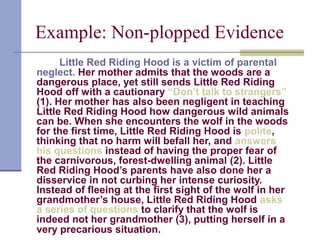
#23 Ask students what the different colors mean (blue=topic sentence, red=commentary, mustard=textual evidence). Emphasize how much is commentary/their own thoughts and explanation.
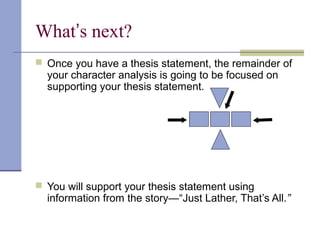
#31 It doesn’t matter what organizational structure they use, as long as they use one. Point out that the web doesn’t include a place for the intro or conclusion but they’ll need one.
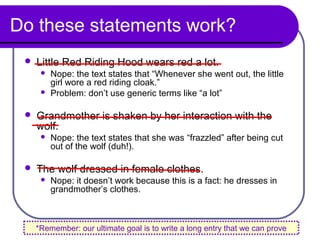
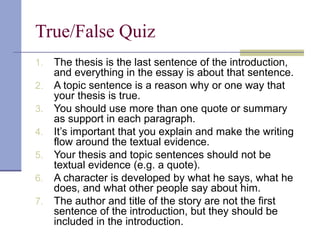
#33 When all students have finished the quiz, go through the statements. All of the answers are True. These are important things to remember.
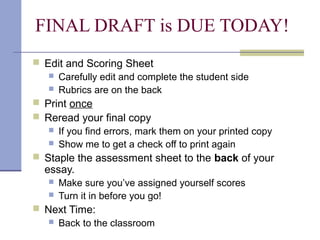
#34 I’ll step them through this slide one at a time, and then leave it up on the screen for the rest of the period.
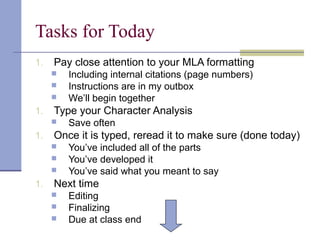
Homework: I’m hoping that most are finished by the end of the period; however, they can finish at home if they aren’t. The story can be found by Googling “Just Lather That’s All Full Text” if they need to access it at home.
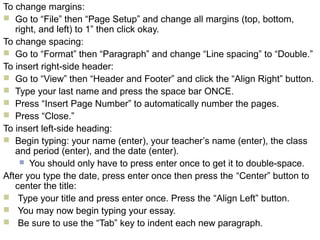
#36 Remind students to save in their network files.