NIACIN
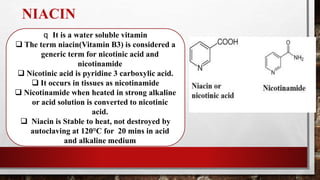
q It is a water soluble vitamin
 The term niacin(Vitamin B3) is considered a
generic term for nicotinic acid and
nicotinamide
 Nicotinic acid is pyridine 3 carboxylic acid.
 It occurs in tissues as nicotinamide
 Nicotinamide when heated in strong alkaline
or acid solution is converted to nicotinic
acid.
 Niacin is Stable to heat, not destroyed by
autoclaving at 120°C for 20 mins in acid
and alkaline medium
That white needle shaped crystals
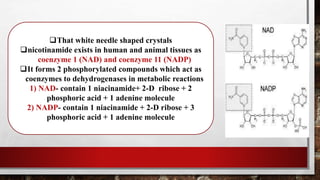
nicotinamide exists in human and animal tissues as
coenzyme 1 (NAD) and coenzyme 11 (NADP)
It forms 2 phosphorylated compounds which act as
coenzymes to dehydrogenases in metabolic reactions
1) NAD- contain 1 niacinamide+ 2-D ribose + 2
phosphoric acid + 1 adenine molecule
2) NADP- contain 1 niacinamide + 2-D ribose + 3
phosphoric acid + 1 adenine molecule
BIOSYNTHESIS
 Precursor – dietary tryptophan
 The coenzyme of niacin (NAD and NADP) can be
synthesized by the essential amino acid tryptophan
 Conversion of Niacin to nicotinamide takes place in
the kidney, brain and liver
 60mg of tryptophan is required to make 1mg
of niacin
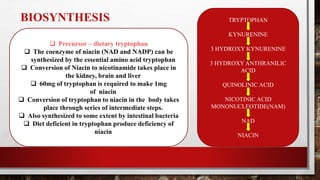
 Conversion of tryptophan to niacin in the body takes
place through series of intermediate steps.
 Also synthesized to some extent by intestinal bacteria
 Diet deficient in tryptophan produce deficiency of
niacin
TRYPTOPHAN
KYNURENINE
3 HYDROXY KYNURENINE
3 HYDROXY ANTHRANILIC
ACID
QUINOLINIC ACID
NICOTINIC ACID
MONONUCLEOTIDE(NAM)
NAD
NIACIN
ABSORPTION
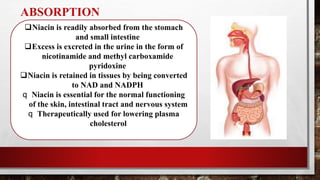
Niacin is readily absorbed from the stomach
and small intestine
Excess is excreted in the urine in the form of
nicotinamide and methyl carboxamide
pyridoxine
Niacin is retained in tissues by being converted
to NAD and NADPH
q Niacin is essential for the normal functioning
of the skin, intestinal tract and nervous system
q Therapeutically used for lowering plasma
cholesterol
FUNCTION
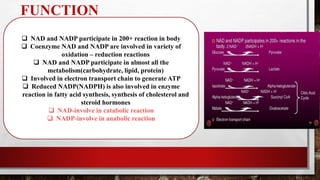
 NAD and NADP participate in 200+ reaction in body
 Coenzyme NAD and NADP are involved in variety of
oxidation – reduction reactions
 NAD and NADP participate in almost all the
metabolism(carbohydrate, lipid, protein)
 Involved in electron transport chain to generate ATP
 Reduced NADP(NADPH) is also involved in enzyme
reaction in fatty acid synthesis, synthesis of cholesterol and
steroid hormones
 NAD-involve in catabolic reaction
 NADP-involve in anabolic reaction
PYRIDOXINE
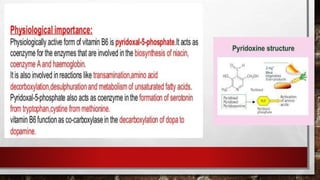
 Pyridoxine is a water soluble vitamin
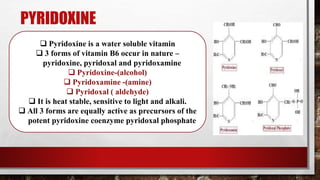
 3 forms of vitamin B6 occur in nature –
pyridoxine, pyridoxal and pyridoxamine
 Pyridoxine-(alcohol)
 Pyridoxamine -(amine)
 Pyridoxal ( aldehyde)
 It is heat stable, sensitive to light and alkali.
 All 3 forms are equally active as precursors of the
potent pyridoxine coenzyme pyridoxal phosphate
METABOLISM
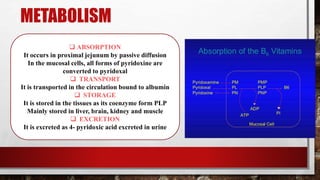
 ABSORPTION
It occurs in proximal jejunum by passive diffusion
In the mucosal cells, all forms of pyridoxine are
converted to pyridoxal
 TRANSPORT
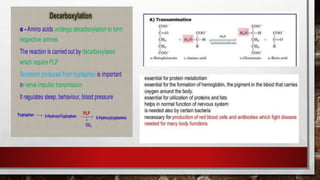
It is transported in the circulation bound to albumin
 STORAGE
It is stored in the tissues as its coenzyme form PLP
Mainly stored in liver, brain, kidney and muscle
 EXCRETION
It is excreted as 4- pyridoxic acid excreted in urine
vitamin-niacin and pyridoxin

vitamin-niacin and pyridoxin

  • 2.
    NIACIN q It isa water soluble vitamin  The term niacin(Vitamin B3) is considered a generic term for nicotinic acid and nicotinamide  Nicotinic acid is pyridine 3 carboxylic acid.  It occurs in tissues as nicotinamide  Nicotinamide when heated in strong alkaline or acid solution is converted to nicotinic acid.  Niacin is Stable to heat, not destroyed by autoclaving at 120°C for 20 mins in acid and alkaline medium
  • 3.
    That white needleshaped crystals nicotinamide exists in human and animal tissues as coenzyme 1 (NAD) and coenzyme 11 (NADP) It forms 2 phosphorylated compounds which act as coenzymes to dehydrogenases in metabolic reactions 1) NAD- contain 1 niacinamide+ 2-D ribose + 2 phosphoric acid + 1 adenine molecule 2) NADP- contain 1 niacinamide + 2-D ribose + 3 phosphoric acid + 1 adenine molecule
  • 4.
    BIOSYNTHESIS  Precursor –dietary tryptophan  The coenzyme of niacin (NAD and NADP) can be synthesized by the essential amino acid tryptophan  Conversion of Niacin to nicotinamide takes place in the kidney, brain and liver  60mg of tryptophan is required to make 1mg of niacin  Conversion of tryptophan to niacin in the body takes place through series of intermediate steps.  Also synthesized to some extent by intestinal bacteria  Diet deficient in tryptophan produce deficiency of niacin TRYPTOPHAN KYNURENINE 3 HYDROXY KYNURENINE 3 HYDROXY ANTHRANILIC ACID QUINOLINIC ACID NICOTINIC ACID MONONUCLEOTIDE(NAM) NAD NIACIN
  • 5.
    ABSORPTION Niacin is readilyabsorbed from the stomach and small intestine Excess is excreted in the urine in the form of nicotinamide and methyl carboxamide pyridoxine Niacin is retained in tissues by being converted to NAD and NADPH q Niacin is essential for the normal functioning of the skin, intestinal tract and nervous system q Therapeutically used for lowering plasma cholesterol
  • 6.
    FUNCTION  NAD andNADP participate in 200+ reaction in body  Coenzyme NAD and NADP are involved in variety of oxidation – reduction reactions  NAD and NADP participate in almost all the metabolism(carbohydrate, lipid, protein)  Involved in electron transport chain to generate ATP  Reduced NADP(NADPH) is also involved in enzyme reaction in fatty acid synthesis, synthesis of cholesterol and steroid hormones  NAD-involve in catabolic reaction  NADP-involve in anabolic reaction
  • 7.
    PYRIDOXINE  Pyridoxine isa water soluble vitamin  3 forms of vitamin B6 occur in nature – pyridoxine, pyridoxal and pyridoxamine  Pyridoxine-(alcohol)  Pyridoxamine -(amine)  Pyridoxal ( aldehyde)  It is heat stable, sensitive to light and alkali.  All 3 forms are equally active as precursors of the potent pyridoxine coenzyme pyridoxal phosphate
  • 8.
    METABOLISM  ABSORPTION It occursin proximal jejunum by passive diffusion In the mucosal cells, all forms of pyridoxine are converted to pyridoxal  TRANSPORT It is transported in the circulation bound to albumin  STORAGE It is stored in the tissues as its coenzyme form PLP Mainly stored in liver, brain, kidney and muscle  EXCRETION It is excreted as 4- pyridoxic acid excreted in urine