Download to read offline

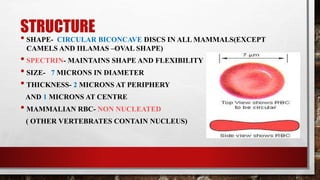
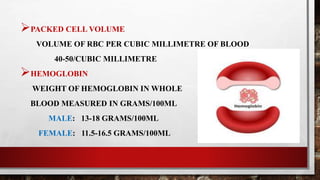
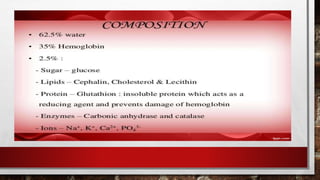
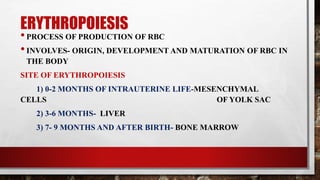
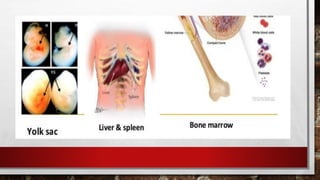
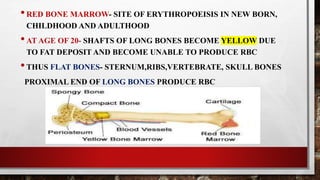
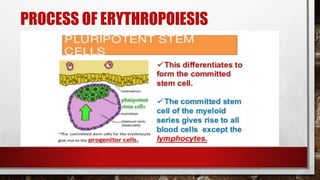
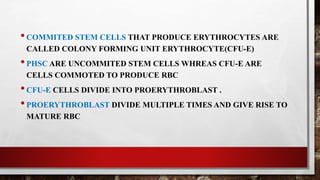
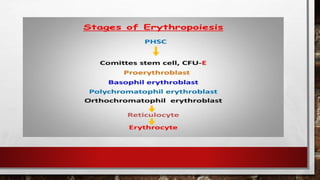
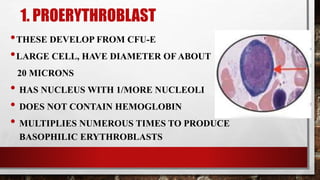
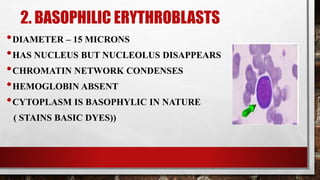
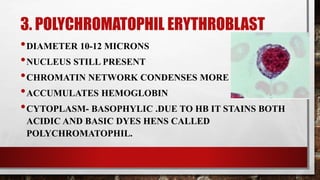
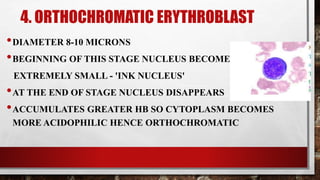
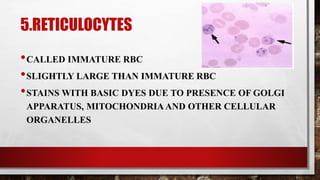
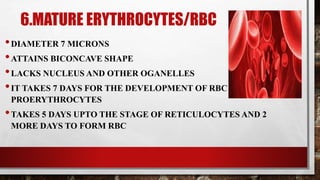
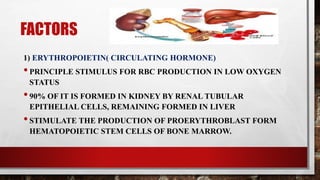
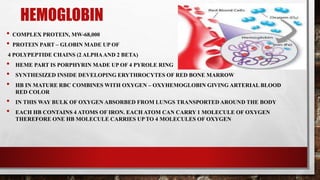
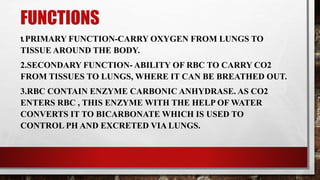


Erythrocytes, or red blood cells (RBCs), are circular biconcave cells that lack organelles and are primarily responsible for oxygen transport in the body, containing hemoglobin which gives blood its red color. The production of RBCs, known as erythropoiesis, occurs mainly in the bone marrow and involves several stages of development, from committed stem cells to mature erythrocytes over approximately seven days. Key factors influencing RBC production include erythropoietin, vitamin B12, and folic acid, while the lifespan of RBCs is about 120 days, with a negative feedback mechanism maintaining their constant levels.


